LLP@Tecnico
Class 7
Luis Caldas de Oliveira
Agenda for Class 7
• Q&A about Revenue Model
• Team Presentations: Revenue Model
Findings
• Summary about Partners
• Work for Next Week
Q&A REVENUE MODEL
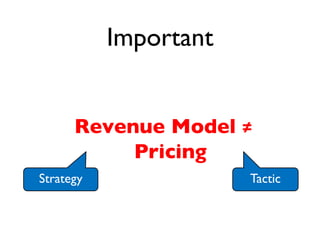
Important
Revenue Model ≠
Pricing
TacticStrategy
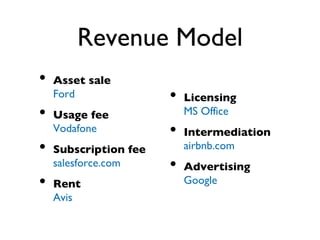
Revenue Model
• Asset sale
Ford
• Usage fee
Vodafone
• Subscription fee
salesforce.com
• Rent
Avis
• Licensing
MS Office
• Intermediation
airbnb.com
• Advertising
Google
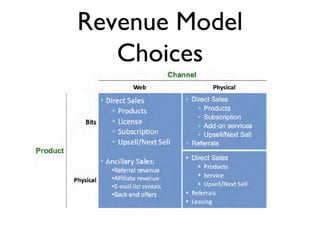
Revenue Model
Choices
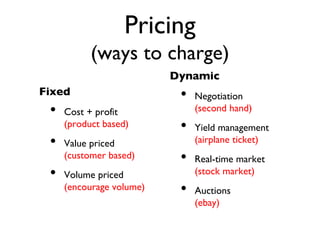
Pricing
(ways to charge)
Fixed
• Cost + profit
(product based)
• Value priced
(customer based)
• Volume priced
(encourage volume)
Dynamic
• Negotiation
(second hand)
• Yield management
(airplane ticket)
• Real-time market
(stock market)
• Auctions
(ebay)
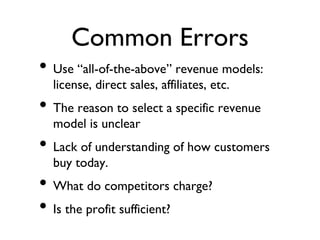
Common Errors
• Use “all-of-the-above” revenue models:
license, direct sales, affiliates, etc.
• The reason to select a specific revenue
model is unclear
• Lack of understanding of how customers
buy today.
• What do competitors charge?
• Is the profit sufficient?
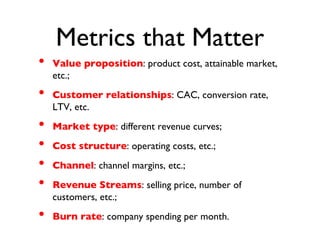
Metrics that Matter
• Value proposition: product cost, attainable market,
etc.;
• Customer relationships: CAC, conversion rate,
LTV, etc.
• Market type: different revenue curves;
• Cost structure: operating costs, etc.;
• Channel: channel margins, etc.;
• Revenue Streams: selling price, number of
customers, etc.;
• Burn rate: company spending per month.
TEAM PRESENTATIONS: REVENUE
MODELS
PARTNERS
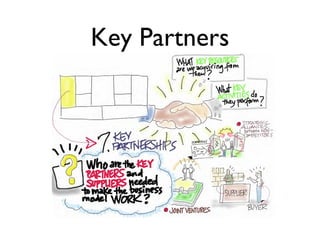
Key Partners
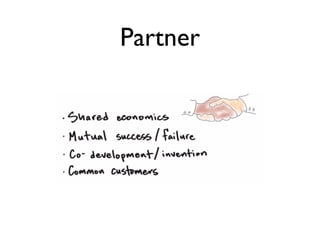
Partner
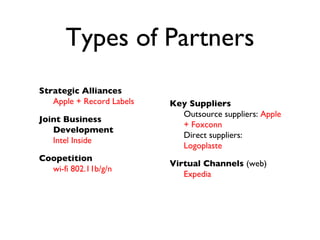
Types of Partners
Strategic Alliances
Apple + Record Labels
Joint Business
Development
Intel Inside
Coopetition
wi-fi 802.11b/g/n
Key Suppliers
Outsource suppliers: Apple
+ Foxconn
Direct suppliers:
Logoplaste
Virtual Channels (web)
Expedia
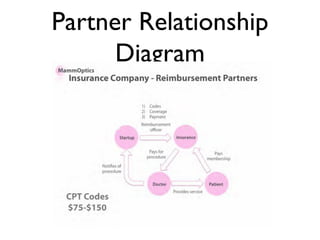
Partner Relationship
Diagram
NEXT WEEK
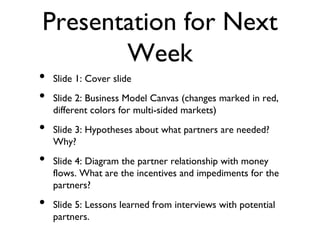
Presentation for Next
Week
• Slide 1: Cover slide
• Slide 2: Business Model Canvas (changes marked in red,
different colors for multi-sided markets)
• Slide 3: Hypotheses about what partners are needed?
Why?
• Slide 4: Diagram the partner relationship with money
flows. What are the incentives and impediments for the
partners?
• Slide 5: Lessons learned from interviews with potential
partners.
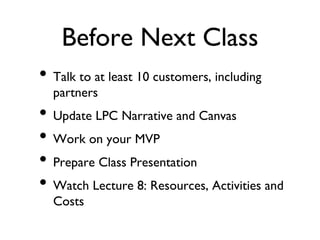
Before Next Class
• Talk to at least 10 customers, including
partners
• Update LPC Narrative and Canvas
• Work on your MVP
• Prepare Class Presentation
• Watch Lecture 8: Resources, Activities and
Costs
Obrigado

Llp tecnico-class7

  • 1.
  • 2.
    Agenda for Class7 • Q&A about Revenue Model • Team Presentations: Revenue Model Findings • Summary about Partners • Work for Next Week
  • 3.
  • 4.
  • 5.
    Revenue Model • Assetsale Ford • Usage fee Vodafone • Subscription fee salesforce.com • Rent Avis • Licensing MS Office • Intermediation airbnb.com • Advertising Google
  • 6.
  • 7.
    Pricing (ways to charge) Fixed •Cost + profit (product based) • Value priced (customer based) • Volume priced (encourage volume) Dynamic • Negotiation (second hand) • Yield management (airplane ticket) • Real-time market (stock market) • Auctions (ebay)
  • 8.
    Common Errors • Use“all-of-the-above” revenue models: license, direct sales, affiliates, etc. • The reason to select a specific revenue model is unclear • Lack of understanding of how customers buy today. • What do competitors charge? • Is the profit sufficient?
  • 9.
    Metrics that Matter •Value proposition: product cost, attainable market, etc.; • Customer relationships: CAC, conversion rate, LTV, etc. • Market type: different revenue curves; • Cost structure: operating costs, etc.; • Channel: channel margins, etc.; • Revenue Streams: selling price, number of customers, etc.; • Burn rate: company spending per month.
  • 10.
  • 12.
  • 13.
  • 14.
  • 15.
    Types of Partners StrategicAlliances Apple + Record Labels Joint Business Development Intel Inside Coopetition wi-fi 802.11b/g/n Key Suppliers Outsource suppliers: Apple + Foxconn Direct suppliers: Logoplaste Virtual Channels (web) Expedia
  • 16.
  • 17.
  • 18.
    Presentation for Next Week •Slide 1: Cover slide • Slide 2: Business Model Canvas (changes marked in red, different colors for multi-sided markets) • Slide 3: Hypotheses about what partners are needed? Why? • Slide 4: Diagram the partner relationship with money flows. What are the incentives and impediments for the partners? • Slide 5: Lessons learned from interviews with potential partners.
  • 19.
    Before Next Class •Talk to at least 10 customers, including partners • Update LPC Narrative and Canvas • Work on your MVP • Prepare Class Presentation • Watch Lecture 8: Resources, Activities and Costs
  • 20.