PROTEINS
Prepared By: Dr Sapna Smith Lal
Assistant Professor-Biochemistry
Sam Higginbottom University of Agriculture Technology and sciences-Prayagraj
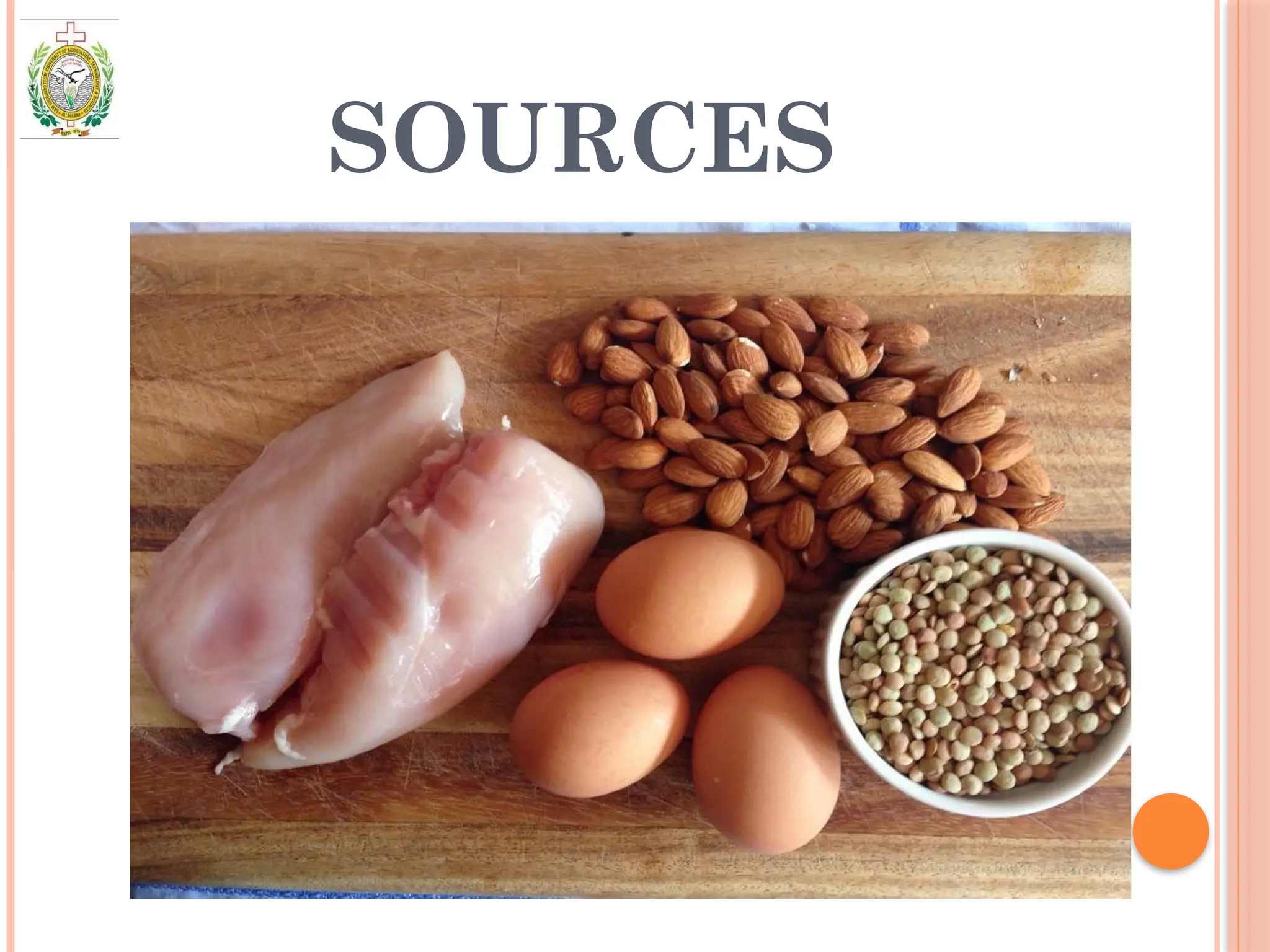
SOURCES
WHAT IS PROTEIN?
AMINO ACIDS ARE THE BUILDING
BLOCKS OF PROTEIN-
An Amino Acid Dipeptide
PEPTIDE BOND/LINKAGE
 Peptide bonds
are amide bonds
between the α-
carboxyl group of
one amino acid and
the α-amino group
of another with the
loss of a water
molecule.
GROUP TEST FOR
IDENTIFICATION OF PROTEINS
 A Biuret test is a chemical test
used to determine the presence
of a peptide bond in a
substance. In presence of an
alkaline solution, blue-colored
copper II ion can form a
complex with the peptide
bonds The colored coordination
complex is formed between
Cu2+ ion and carbonyl oxygen
(>C=O) and amide nitrogen
(=NH) of the peptide bond the
solution turns from to purple
colour.
Biurate Test
CLASSES OF PROTEINS
 On the Basis of Shape and Size
 On the bases of Solubility
 On the bases of Function
ON THE BASIS OF SHAPE AND SIZE
ON THE BASES OF SOLUBILITY
ON THE BASES OF FUNCTION
STRUCTURE OF PROTEIN
 Amino acids are organic compounds that contain
amino (−NH+3) and carboxylate −CO−2
functional groups, along with a side chain (R group)
specific to each amino acid.
 The elements present in every amino acid are carbon
(C), hydrogen (H), oxygen (O), and nitrogen (N)
 Amino acids are a set of 20 different molecules used to
build proteins. Proteins consist of one or more chains
of amino acids called polypeptides The amino acid
sequences of proteins are encoded in the genes.
TYPES OF AMINO ACID(ON
NUTRITIONAL BASES)
AMINO ACIDS
Amino acids are
molecules that
combine to
form proteins.
Amino acids and
proteins are the
building blocks
of life.
CLASSIFICATION OF 20 AMINO
ACIDS
TYPES OF AMINO ACIDS
(ON THE BASIS OF
FUNCTIONAL GROUP)
 The acidic amino acids
contain one amino and
two carboxyl groups each,
e.g. glutamic acid and
aspartic acid. The basic
amino acids have two
amino groups and one
carboyxl group, e.g. lysine
and arginine. The neutral
amino acids have one
amino group and one
carboxyl group e.g.
alanine, glycine, valine
and phenylalanine.
ACIDIC AMINO ACID
BASIC AMINO ACID
NEUTRAL AMINO ACID
DIGESTION & ABSORPTION OF
PROTEINS
Protein Absorption
 In adults, essentially all protein is absorbed as tripeptides,
dipeptides or amino acids and this process occurs in the duodenum
or proximal jejunum of the small intestine.
 The peptides and/or amino acids pass through the interstitial
brush border by facilitative diffusion or active transport.
 In Active transport, sodium and ATP are actively transport the
molecule through the cell membrane. The R group determines the
type of transporter used.
 Once passed through the membrane, the amino acids or peptides
are released into the intestinal blood stream and are transported to
the liver by the hepatic (liver) portal vein. This is known as the
enterohepatic circulation.
 In the liver,they are used to synthesize protein, nitrogen containing
compounds and form purine/pyrimidine bases. In some cases, they
may be converted to energy. The liver regulates the amino acid
levels in the blood. The amino acids that do not stay in the liver,
pass through and are transported to the rest of the body to be taken
up and utilized by other cells.
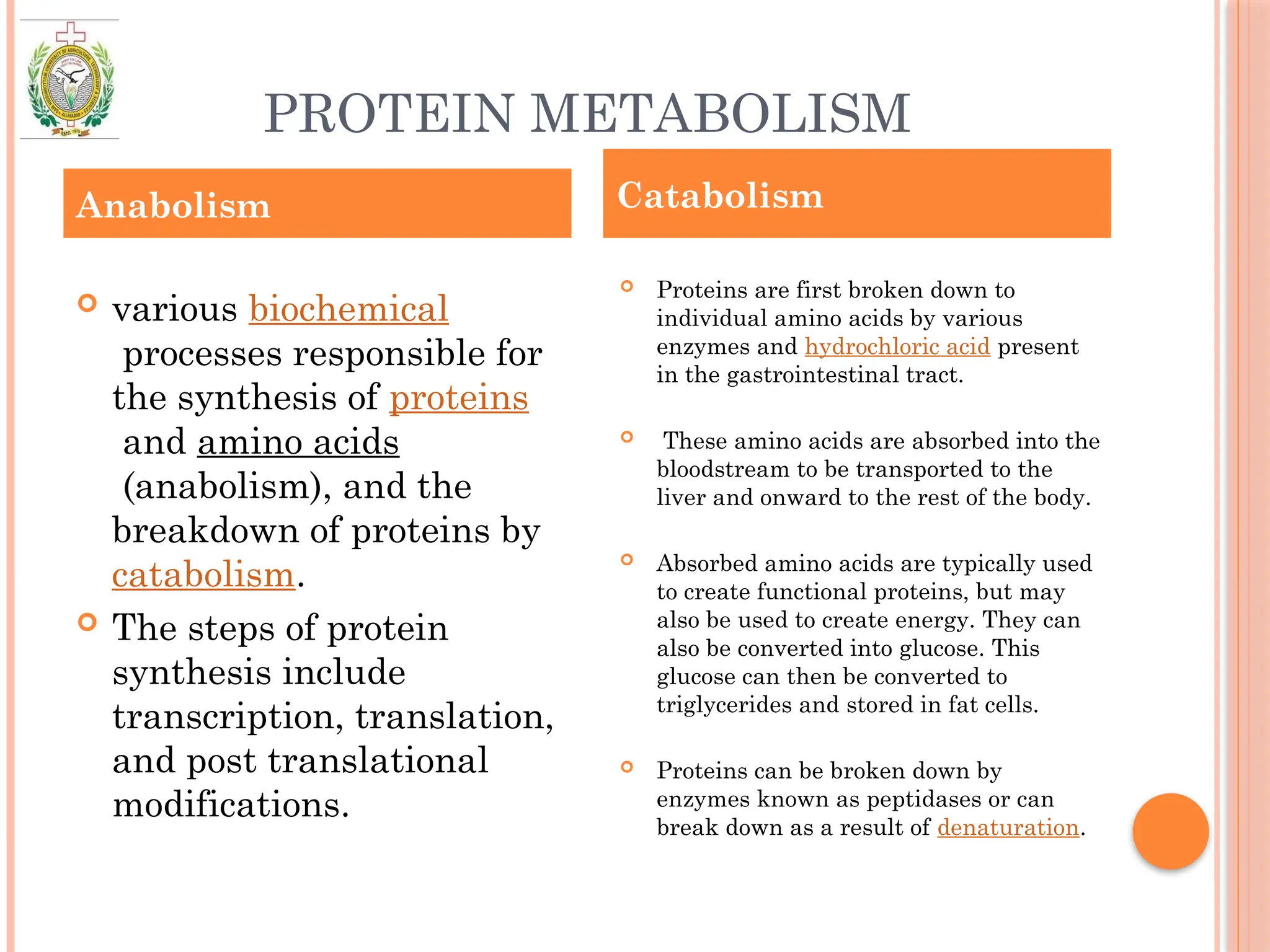
PROTEIN METABOLISM
 various biochemical
processes responsible for
the synthesis of proteins
and amino acids
(anabolism), and the
breakdown of proteins by
catabolism.
 The steps of protein
synthesis include
transcription, translation,
and post translational
modifications.
 Proteins are first broken down to
individual amino acids by various
enzymes and hydrochloric acid present
in the gastrointestinal tract.
 These amino acids are absorbed into the
bloodstream to be transported to the
liver and onward to the rest of the body.
 Absorbed amino acids are typically used
to create functional proteins, but may
also be used to create energy. They can
also be converted into glucose. This
glucose can then be converted to
triglycerides and stored in fat cells.
 Proteins can be broken down by
enzymes known as peptidases or can
break down as a result of denaturation.
Anabolism Catabolism
BIOLOGICAL ACTIVE COMPOUNDS
DERIVED FROM AMINO ACID AND
PROTEINS
 The amino acids are an important group of
compounds concerned in the biosynthesis of a
variety of nitrogen-containing plant metabolites,
including proteins, enzymes, nucleic acids,
hormones, chlorophyll, amines, alkaloids,
cyanogenic glycosides and glucosinolates.
 In humans, Amino acids are not only protein
precursors, but also precursors for numerous
other crucial compounds, such as polyamines,
S-adenosylmethionine, pantothenic acid,
and nucleotides.
CONT…..
 The hormones derived from amino acids
include catecholamines, serotonin,
melatonin, and the thyroid hormones
thyroxine and triiodothyronine.
 The basic structural unit of an antibody molecule
consists of four polypeptide chains, two
identical light (L) chains (each containing
about 220 amino acids) and two identical
heavy (H) chains (each usually containing
about 440 amino acids).
PROTEIN DISORDERS
PROTEIN UREA
 Proteinuria is a broad term used to describe
protein in the urine. It is a general term for the
presence of proteins, including albumin, globulin,
Bence-Jones protein, and mucoprotein in the urine.
 In healthy persons, urine contains
very little protein an excess is suggestive of illness.
 Excess protein in the urine often causes the urine
to become foamy (although this symptom may also
be caused by other conditions).
 Severe proteinuria can cause nephrotic syndrome
in which there is worsening swelling of the body.
HYPOPROTEINEMIA
 Hypoproteinemia is a condition in which a person
has very low protein levels in the blood. Common
symptoms include fatigue, weakness, and
susceptibility to infection.
 Hypoproteinaemia can be caused by malnutrition or
malabsorption due to intestinal disease, by excessive
loss of plasma protein either into urine (nephrotic
syndrome) or into the gut lumen (protein-losing
enteropathy), or by hepatic failure,
 Decreased serum protein reduces the oncotic pressure
of the blood, leading to loss of fluid from the
intravascular compartment, or the blood vessels, to the
interstitial tissues, resulting in edema. This is termed
as hypoproteinemia.
HYPERGAMMAGLOBULINEMIA
 refers to the overproduction of more than
one class of immunoglobulins by plasma
cells. It is most commonly associated with liver
disease, acute or chronic inflammation,
autoimmune disorders, and some malignancies.
 Chronic infections such as malaria, endocarditis,
trypanosomiasis, HIV, and infections associated
with cystic fibrosis increase circulating
immunoglobulin levels well above the normal
range.
ELECTROPHORESIS
Principal and pattern
PRINCIPAL
 Serum protein electrophoresis is an electrophoretic
method of separating proteins present in the serum to
various fractions based on their molecular weight and
electric charges. Electrophoresis had been widely
used in clinical medicine for aiding in diagnosis of
various clinical conditions like acute and chronic
inflammations, monoclonal gammopathies,
nephropathy, liver diseases, etc.
 Proteins are ampholytes that can acquire a
positive or negative charge depending on the
pH of the buffer in which the electrophoresis
takes place. If a mixture of charged particles is
exposed to an electric field, the molecules of the
substances begin to move.
PATTERN
 The electrophoretic
patterns of a series of
normal and
pathological human
sera and plasmas have
been obtained using the
schlieren scanning
method. From these
patterns the mobilities
and concentrations of the
electrophoretically
distinct protein
components have been
computed.
IN BORN ERROR OF AMINO
ACID METABOLISM
 Inborn errors of amino acid metabolism
are metabolic disorders which impair the
synthesis and degradation of amino acids.
 Inborn errors of amino acid metabolism result from
a mutation in the gene responsible for making the
enzyme involved in the amino acid synthesis
pathway.
 There are around 50 errors known so far, but
generally their incidence is very rare.
 Phenylketonuria is the most common one.
 Most of these errors are routinely tested right after
birth.
INBORN DISEASES OF AMINO ACID
METABOLISM
 Phenylketonuria (Most common)
 Maple Syrup Urine Disease
 Albinism
 Homocystinuria
 Alkaptonuria
PHENYLKETONURIA:
 Most Common disease of amino acid metabolism
 Due to deficiency of Phenylalanine hydroxylase
enzyme (PAH)
 Phenylketonuria, also called PKU, is a rare
inherited disorder that causes an amino acid
called phenylalanine to build up in the
body. PKU is caused by a change in the
phenylalanine hydroxylase (PAH) gene. This
gene helps create the enzyme needed to break
down phenylalanine.
 The signs and symptoms of PKU vary from mild to
severe. The most severe form of this disorder is
known as classic PKU. Infants with classic PKU
appear normal until they are a few months old.
Without treatment, these children develop
permanent intellectual disability. Seizures, delayed
development, behavioral problems, and psychiatric
disorders are also common. Untreated individuals
may have a musty or mouse-like odor as a side
effect of excess phenylalanine in the body. Children
with classic PKU tend to have lighter skin and hair
than unaffected family members and are also likely
to have skin disorders such as eczema.
 Less severe forms of this condition, sometimes
called variant PKU and non-PKU
hyperphenylalaninemia, have a smaller risk of
brain damage.
ALBINISM
PLASMA PROTEIN:
TYPES, FUNCTION AND
NORMAL VALUE
 Plasma proteins are proteins present
in the blood plasma and are produced
by the liver (except for
immunoglobulins)
 The proteins are produced by the
rough ER in hepatocytes and exported
into the blood via the Golgi complex

There are a number of different types
of plasma proteins, each serving
different specific functions:
 Albumins regulate the osmotic
pressure of the blood (and hence
moderate the osmotic pressure of body
fluids)
 Globulins participate in the immune
system (i.e. immunoglobulins) and also
act as transport proteins
 Fibrinogens are involved in the
clotting process (soluble fibrinogen can
form an insoluble fibrin clot)
 Low levels of other plasma proteins
have various functions (e.g. α-1-
antitrypsin neutralises
digestive trypsin)
NORMAL VALUE OF PLASMA
PROTEIN

PROTEIN: types and related disorder.pptx

  • 1.
    PROTEINS Prepared By: DrSapna Smith Lal Assistant Professor-Biochemistry Sam Higginbottom University of Agriculture Technology and sciences-Prayagraj
  • 2.
  • 4.
  • 5.
    AMINO ACIDS ARETHE BUILDING BLOCKS OF PROTEIN- An Amino Acid Dipeptide
  • 6.
    PEPTIDE BOND/LINKAGE  Peptidebonds are amide bonds between the α- carboxyl group of one amino acid and the α-amino group of another with the loss of a water molecule.
  • 7.
    GROUP TEST FOR IDENTIFICATIONOF PROTEINS  A Biuret test is a chemical test used to determine the presence of a peptide bond in a substance. In presence of an alkaline solution, blue-colored copper II ion can form a complex with the peptide bonds The colored coordination complex is formed between Cu2+ ion and carbonyl oxygen (>C=O) and amide nitrogen (=NH) of the peptide bond the solution turns from to purple colour. Biurate Test
  • 8.
    CLASSES OF PROTEINS On the Basis of Shape and Size  On the bases of Solubility  On the bases of Function
  • 9.
    ON THE BASISOF SHAPE AND SIZE
  • 10.
    ON THE BASESOF SOLUBILITY
  • 11.
    ON THE BASESOF FUNCTION
  • 12.
  • 13.
     Amino acidsare organic compounds that contain amino (−NH+3) and carboxylate −CO−2 functional groups, along with a side chain (R group) specific to each amino acid.  The elements present in every amino acid are carbon (C), hydrogen (H), oxygen (O), and nitrogen (N)  Amino acids are a set of 20 different molecules used to build proteins. Proteins consist of one or more chains of amino acids called polypeptides The amino acid sequences of proteins are encoded in the genes.
  • 15.
    TYPES OF AMINOACID(ON NUTRITIONAL BASES)
  • 17.
    AMINO ACIDS Amino acidsare molecules that combine to form proteins. Amino acids and proteins are the building blocks of life.
  • 20.
  • 21.
    TYPES OF AMINOACIDS (ON THE BASIS OF FUNCTIONAL GROUP)  The acidic amino acids contain one amino and two carboxyl groups each, e.g. glutamic acid and aspartic acid. The basic amino acids have two amino groups and one carboyxl group, e.g. lysine and arginine. The neutral amino acids have one amino group and one carboxyl group e.g. alanine, glycine, valine and phenylalanine.
  • 22.
  • 23.
  • 24.
  • 25.
  • 27.
    Protein Absorption  Inadults, essentially all protein is absorbed as tripeptides, dipeptides or amino acids and this process occurs in the duodenum or proximal jejunum of the small intestine.  The peptides and/or amino acids pass through the interstitial brush border by facilitative diffusion or active transport.  In Active transport, sodium and ATP are actively transport the molecule through the cell membrane. The R group determines the type of transporter used.  Once passed through the membrane, the amino acids or peptides are released into the intestinal blood stream and are transported to the liver by the hepatic (liver) portal vein. This is known as the enterohepatic circulation.  In the liver,they are used to synthesize protein, nitrogen containing compounds and form purine/pyrimidine bases. In some cases, they may be converted to energy. The liver regulates the amino acid levels in the blood. The amino acids that do not stay in the liver, pass through and are transported to the rest of the body to be taken up and utilized by other cells.
  • 28.
    PROTEIN METABOLISM  variousbiochemical processes responsible for the synthesis of proteins and amino acids (anabolism), and the breakdown of proteins by catabolism.  The steps of protein synthesis include transcription, translation, and post translational modifications.  Proteins are first broken down to individual amino acids by various enzymes and hydrochloric acid present in the gastrointestinal tract.  These amino acids are absorbed into the bloodstream to be transported to the liver and onward to the rest of the body.  Absorbed amino acids are typically used to create functional proteins, but may also be used to create energy. They can also be converted into glucose. This glucose can then be converted to triglycerides and stored in fat cells.  Proteins can be broken down by enzymes known as peptidases or can break down as a result of denaturation. Anabolism Catabolism
  • 29.
    BIOLOGICAL ACTIVE COMPOUNDS DERIVEDFROM AMINO ACID AND PROTEINS  The amino acids are an important group of compounds concerned in the biosynthesis of a variety of nitrogen-containing plant metabolites, including proteins, enzymes, nucleic acids, hormones, chlorophyll, amines, alkaloids, cyanogenic glycosides and glucosinolates.  In humans, Amino acids are not only protein precursors, but also precursors for numerous other crucial compounds, such as polyamines, S-adenosylmethionine, pantothenic acid, and nucleotides.
  • 30.
    CONT…..  The hormonesderived from amino acids include catecholamines, serotonin, melatonin, and the thyroid hormones thyroxine and triiodothyronine.  The basic structural unit of an antibody molecule consists of four polypeptide chains, two identical light (L) chains (each containing about 220 amino acids) and two identical heavy (H) chains (each usually containing about 440 amino acids).
  • 31.
  • 32.
    PROTEIN UREA  Proteinuriais a broad term used to describe protein in the urine. It is a general term for the presence of proteins, including albumin, globulin, Bence-Jones protein, and mucoprotein in the urine.  In healthy persons, urine contains very little protein an excess is suggestive of illness.  Excess protein in the urine often causes the urine to become foamy (although this symptom may also be caused by other conditions).  Severe proteinuria can cause nephrotic syndrome in which there is worsening swelling of the body.
  • 33.
    HYPOPROTEINEMIA  Hypoproteinemia isa condition in which a person has very low protein levels in the blood. Common symptoms include fatigue, weakness, and susceptibility to infection.  Hypoproteinaemia can be caused by malnutrition or malabsorption due to intestinal disease, by excessive loss of plasma protein either into urine (nephrotic syndrome) or into the gut lumen (protein-losing enteropathy), or by hepatic failure,  Decreased serum protein reduces the oncotic pressure of the blood, leading to loss of fluid from the intravascular compartment, or the blood vessels, to the interstitial tissues, resulting in edema. This is termed as hypoproteinemia.
  • 34.
    HYPERGAMMAGLOBULINEMIA  refers tothe overproduction of more than one class of immunoglobulins by plasma cells. It is most commonly associated with liver disease, acute or chronic inflammation, autoimmune disorders, and some malignancies.  Chronic infections such as malaria, endocarditis, trypanosomiasis, HIV, and infections associated with cystic fibrosis increase circulating immunoglobulin levels well above the normal range.
  • 35.
  • 36.
    PRINCIPAL  Serum proteinelectrophoresis is an electrophoretic method of separating proteins present in the serum to various fractions based on their molecular weight and electric charges. Electrophoresis had been widely used in clinical medicine for aiding in diagnosis of various clinical conditions like acute and chronic inflammations, monoclonal gammopathies, nephropathy, liver diseases, etc.  Proteins are ampholytes that can acquire a positive or negative charge depending on the pH of the buffer in which the electrophoresis takes place. If a mixture of charged particles is exposed to an electric field, the molecules of the substances begin to move.
  • 37.
    PATTERN  The electrophoretic patternsof a series of normal and pathological human sera and plasmas have been obtained using the schlieren scanning method. From these patterns the mobilities and concentrations of the electrophoretically distinct protein components have been computed.
  • 38.
    IN BORN ERROROF AMINO ACID METABOLISM
  • 39.
     Inborn errorsof amino acid metabolism are metabolic disorders which impair the synthesis and degradation of amino acids.  Inborn errors of amino acid metabolism result from a mutation in the gene responsible for making the enzyme involved in the amino acid synthesis pathway.  There are around 50 errors known so far, but generally their incidence is very rare.  Phenylketonuria is the most common one.  Most of these errors are routinely tested right after birth.
  • 40.
    INBORN DISEASES OFAMINO ACID METABOLISM  Phenylketonuria (Most common)  Maple Syrup Urine Disease  Albinism  Homocystinuria  Alkaptonuria
  • 41.
    PHENYLKETONURIA:  Most Commondisease of amino acid metabolism  Due to deficiency of Phenylalanine hydroxylase enzyme (PAH)  Phenylketonuria, also called PKU, is a rare inherited disorder that causes an amino acid called phenylalanine to build up in the body. PKU is caused by a change in the phenylalanine hydroxylase (PAH) gene. This gene helps create the enzyme needed to break down phenylalanine.
  • 42.
     The signsand symptoms of PKU vary from mild to severe. The most severe form of this disorder is known as classic PKU. Infants with classic PKU appear normal until they are a few months old. Without treatment, these children develop permanent intellectual disability. Seizures, delayed development, behavioral problems, and psychiatric disorders are also common. Untreated individuals may have a musty or mouse-like odor as a side effect of excess phenylalanine in the body. Children with classic PKU tend to have lighter skin and hair than unaffected family members and are also likely to have skin disorders such as eczema.  Less severe forms of this condition, sometimes called variant PKU and non-PKU hyperphenylalaninemia, have a smaller risk of brain damage.
  • 43.
  • 45.
  • 46.
     Plasma proteinsare proteins present in the blood plasma and are produced by the liver (except for immunoglobulins)  The proteins are produced by the rough ER in hepatocytes and exported into the blood via the Golgi complex  There are a number of different types of plasma proteins, each serving different specific functions:  Albumins regulate the osmotic pressure of the blood (and hence moderate the osmotic pressure of body fluids)  Globulins participate in the immune system (i.e. immunoglobulins) and also act as transport proteins  Fibrinogens are involved in the clotting process (soluble fibrinogen can form an insoluble fibrin clot)  Low levels of other plasma proteins have various functions (e.g. α-1- antitrypsin neutralises digestive trypsin)
  • 47.
    NORMAL VALUE OFPLASMA PROTEIN