Linked Stack and Linked Queue
Chapter 7
Outline
● Introduction
– Linked Stacks
– Linked Queues
● Operations on Linked Stacks and Linked Queues
– Linked Stack Operations
– Linked Queue Operations
– Algorithms for Push/Pop operations on a Linked Stack
– Algorithms for Insert/Delete operations in a Linked Queue
● Dynamic memory management and Linked Stacks
● Implementation of Linked Representations
● Applications
– Balancing Symbols
– Polynomial Representation
Introduction
● A linked stack is a linear list of elements commonly
implemented as a singly linked list whose start pointer
performs the role of the top pointer of a stack
● A linked queue is also a linear list of elements
commonly implemented as a singly linked list but with two
pointers viz., FRONT and REAR. The start pointer of the
singly linked list plays the role of FRONT while the pointer
to the last node is set to play the role of REAR.
Implementing Stack and Queue Using Linked List
6
1
2
3
4
5
A
B
E
D
G
F
Top = 6
1 2 3 4 5 6
B C
Front=1 Rear = 3
Stack[1:6] Queue[1:6]
B C G H
stack
Top
B C G H
queue
front rear
Operations of Linked Stack and
Linked Queue
Operations on Linked Stack
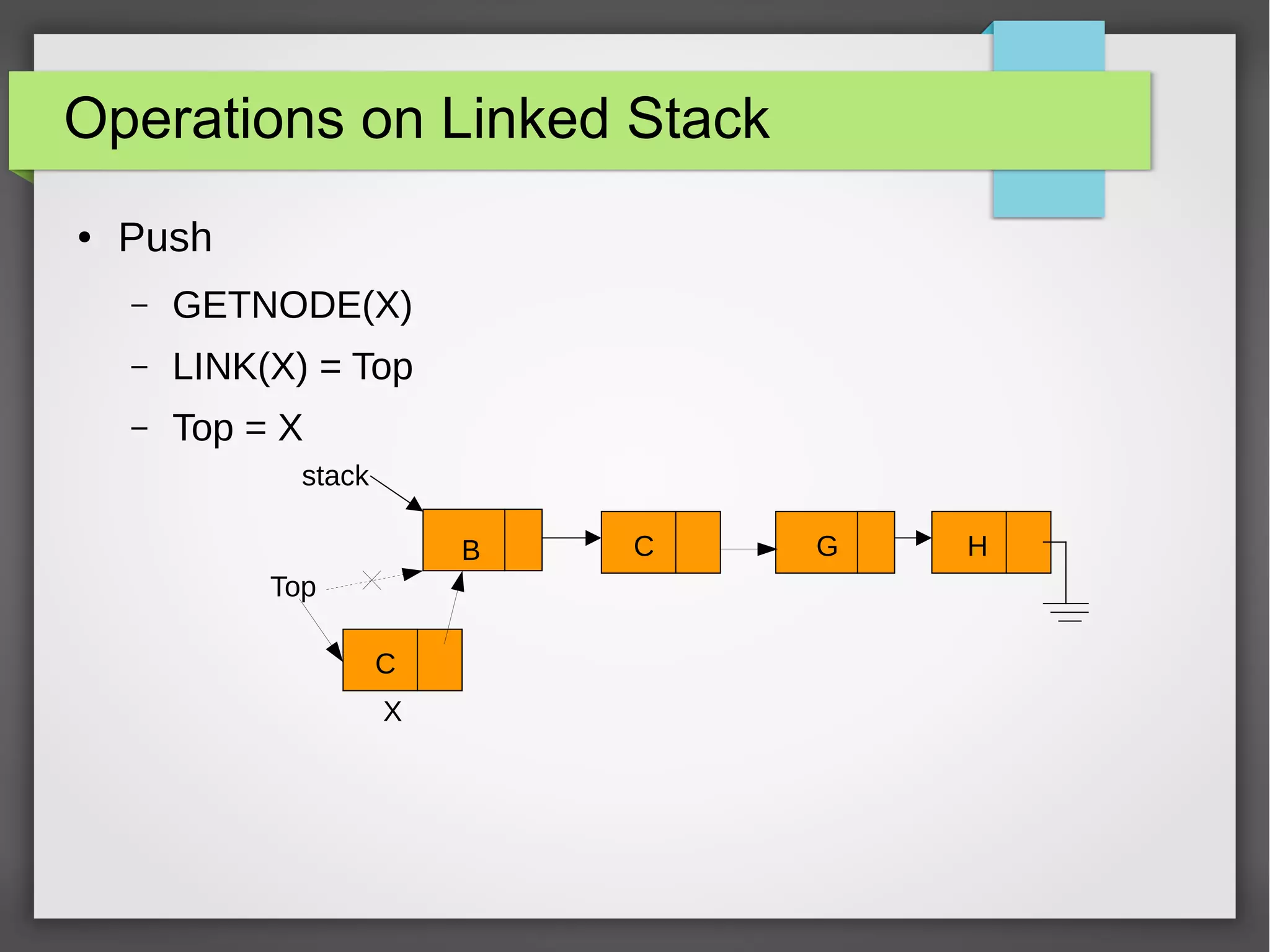
● Push
– GETNODE(X)
– LINK(X) = Top
– Top = X
B C G H
stack
Top
C
X
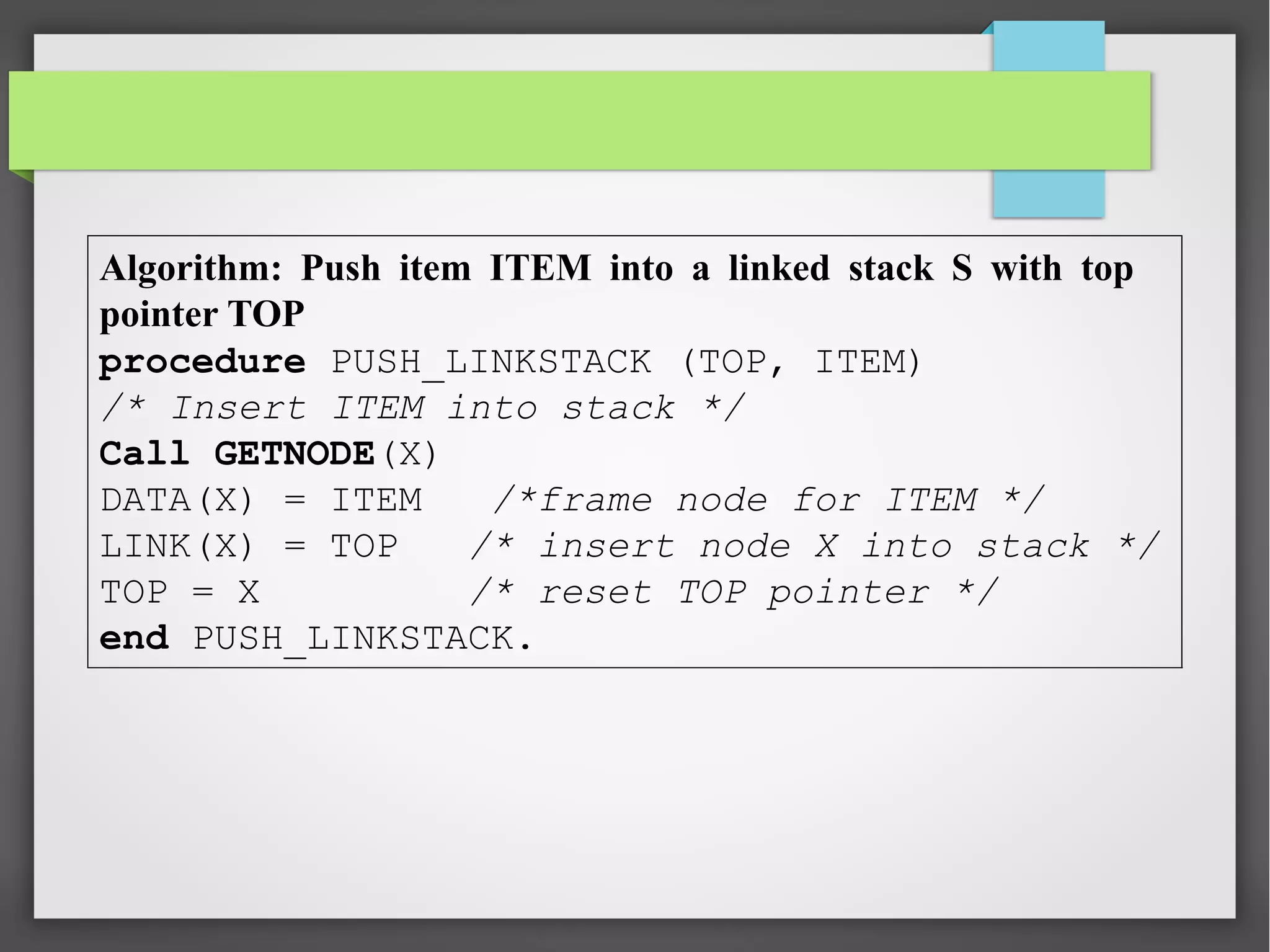
Algorithm: Push item ITEM into a linked stack S with top
pointer TOP
procedure PUSH_LINKSTACK (TOP, ITEM)
/* Insert ITEM into stack */
Call GETNODE(X)
DATA(X) = ITEM /*frame node for ITEM */
LINK(X) = TOP /* insert node X into stack */
TOP = X /* reset TOP pointer */
end PUSH_LINKSTACK.
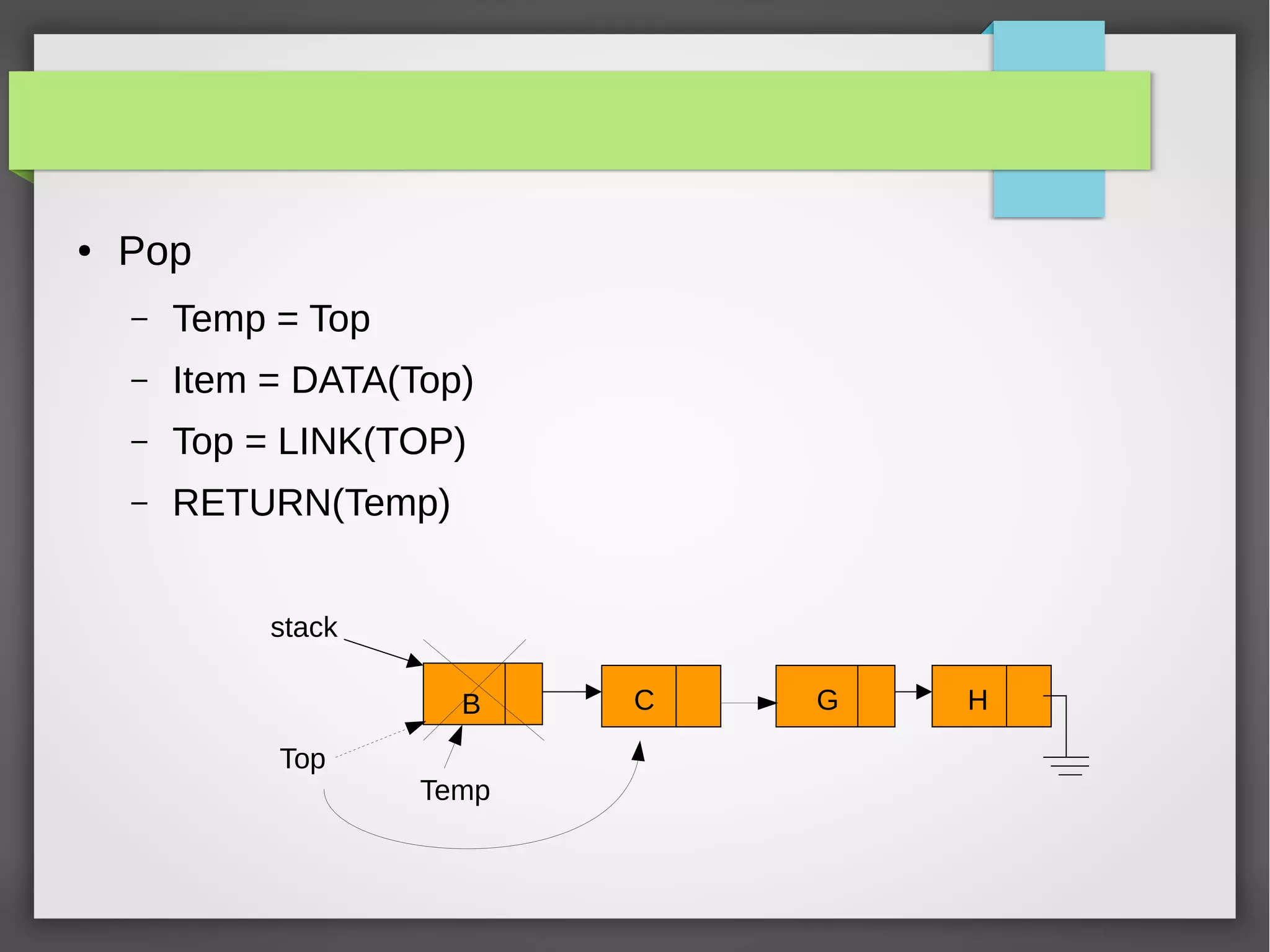
● Pop
– Temp = Top
– Item = DATA(Top)
– Top = LINK(TOP)
– RETURN(Temp)
B C G H
stack
Top
Temp
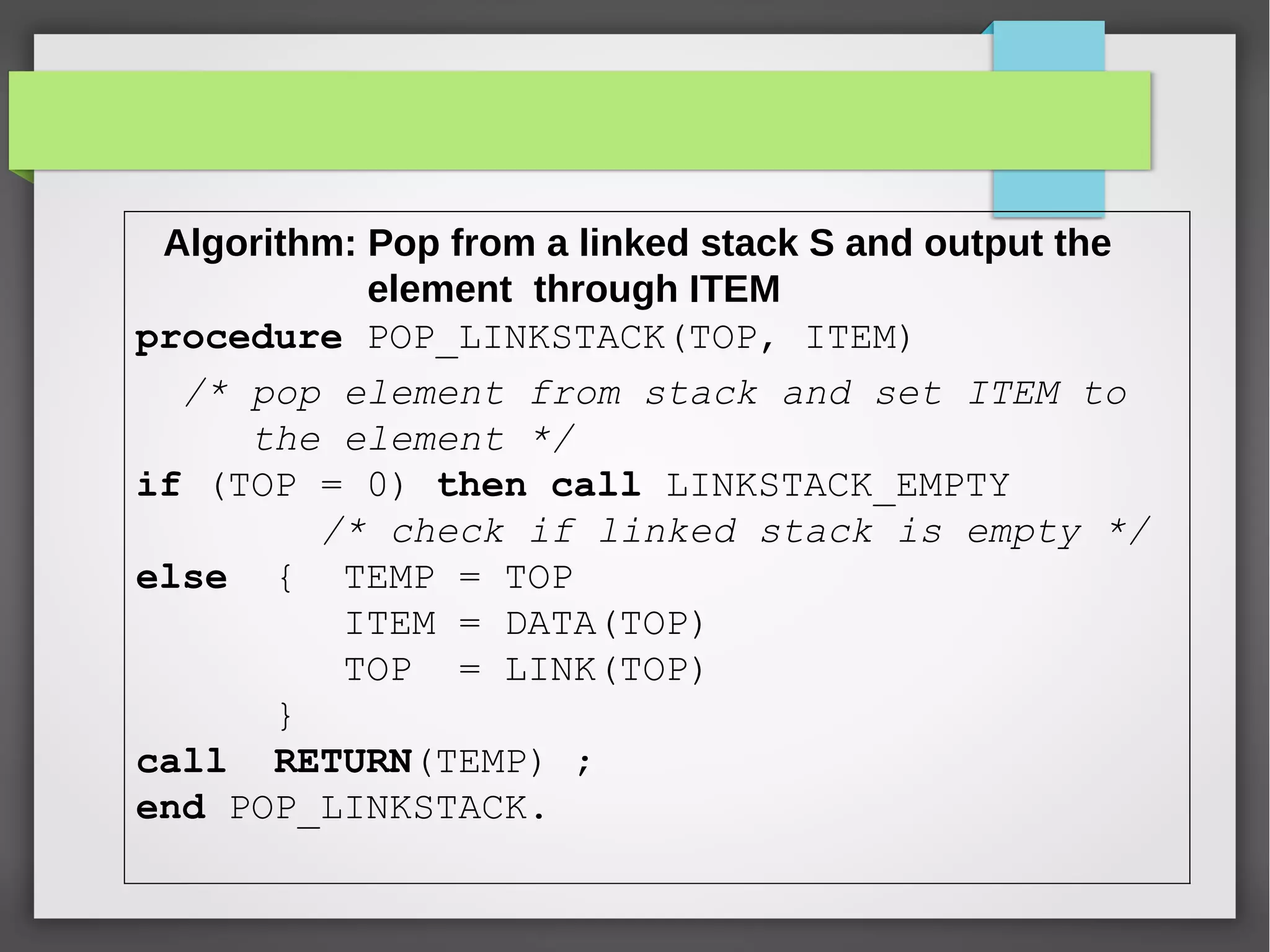
Algorithm: Pop from a linked stack S and output the
element through ITEM
procedure POP_LINKSTACK(TOP, ITEM)
/* pop element from stack and set ITEM to
the element */
if (TOP = 0) then call LINKSTACK_EMPTY
/* check if linked stack is empty */
else { TEMP = TOP
ITEM = DATA(TOP)
TOP = LINK(TOP)
}
call RETURN(TEMP) ;
end POP_LINKSTACK.
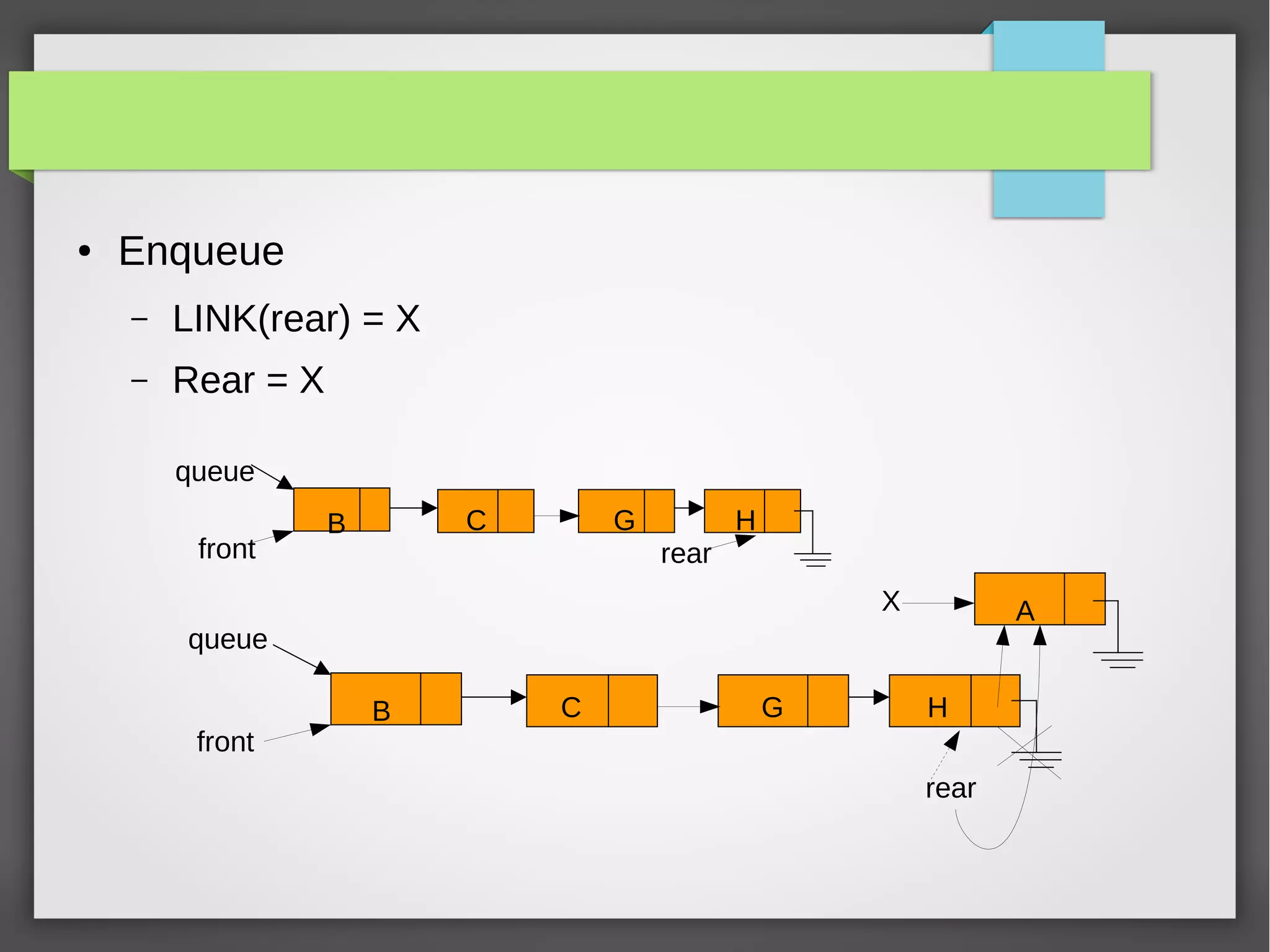
● Enqueue
– LINK(rear) = X
– Rear = X
B C G H
queue
front
rear
A
X
B C G H
queue
front rear
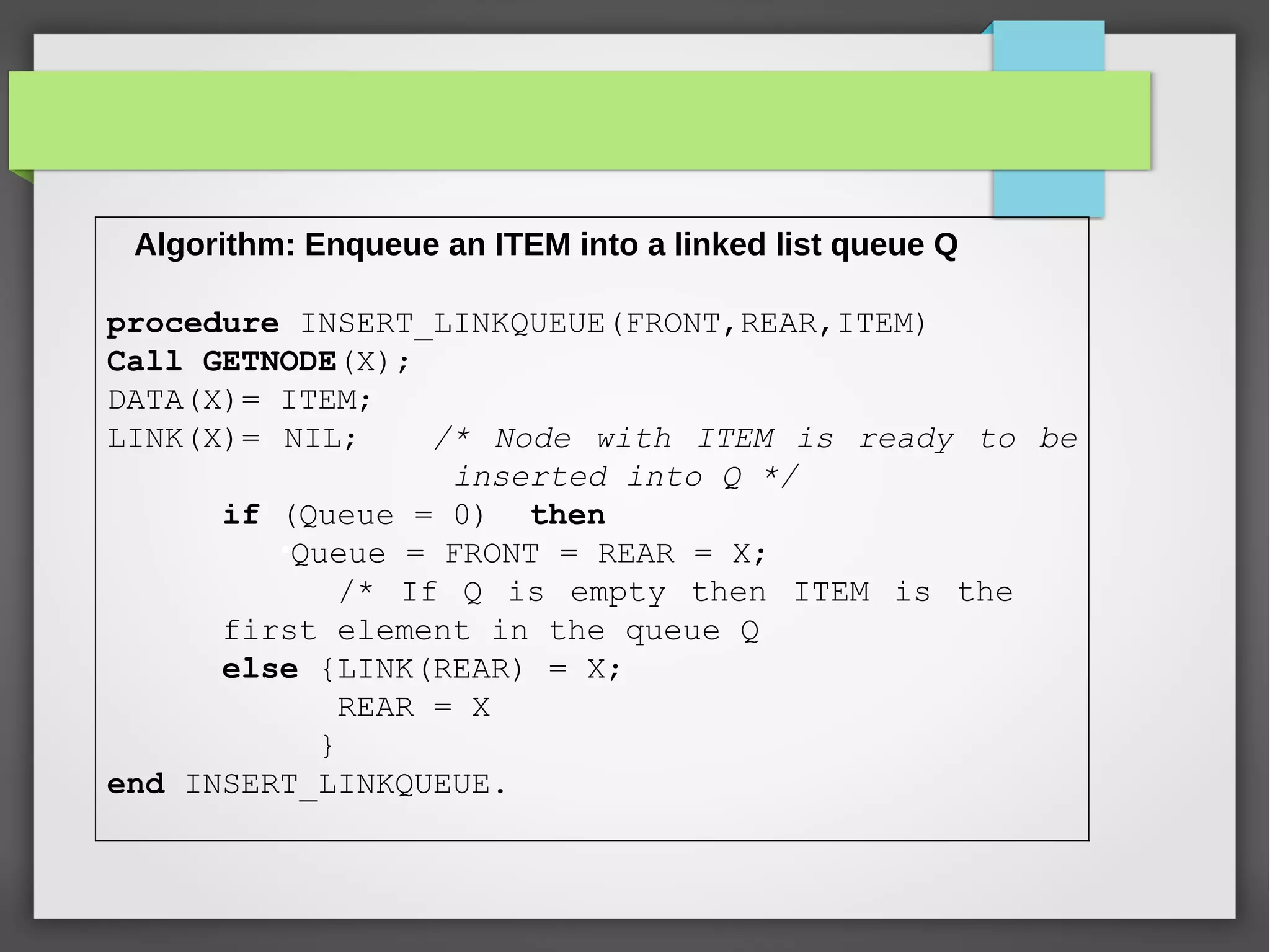
Algorithm: Enqueue an ITEM into a linked list queue Q
procedure INSERT_LINKQUEUE(FRONT,REAR,ITEM)
Call GETNODE(X);
DATA(X)= ITEM;
LINK(X)= NIL; /* Node with ITEM is ready to be
inserted into Q */
if (Queue = 0) then
•Queue = FRONT = REAR = X;
/* If Q is empty then ITEM is the
first element in the queue Q
else {LINK(REAR) = X;
REAR = X
}
end INSERT_LINKQUEUE.
● Dequeue
– Temp = front
– front = Link(front)
– Item = DATA(Temp)
– RETURN(Temp)
B C G H
queue
front rear
Temp
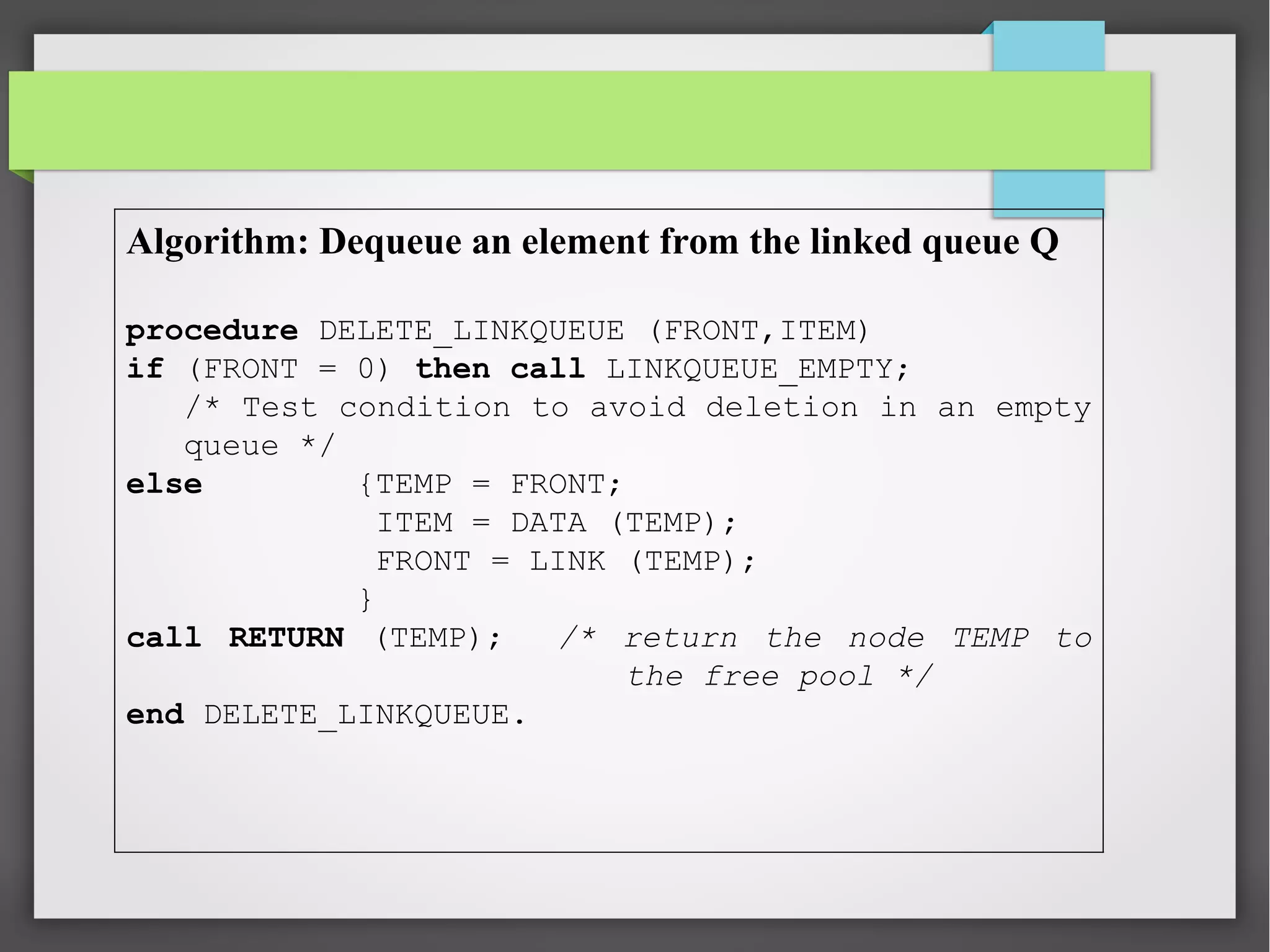
Algorithm: Dequeue an element from the linked queue Q
procedure DELETE_LINKQUEUE (FRONT,ITEM)
if (FRONT = 0) then call LINKQUEUE_EMPTY;
/* Test condition to avoid deletion in an empty
queue */
else {TEMP = FRONT;
ITEM = DATA (TEMP);
FRONT = LINK (TEMP);
}
call RETURN (TEMP); /* return the node TEMP to
the free pool */
end DELETE_LINKQUEUE.
Implementing Linked list Queue and stack
● Balancing Symbols
● Polynomial representation
Balancing symbols
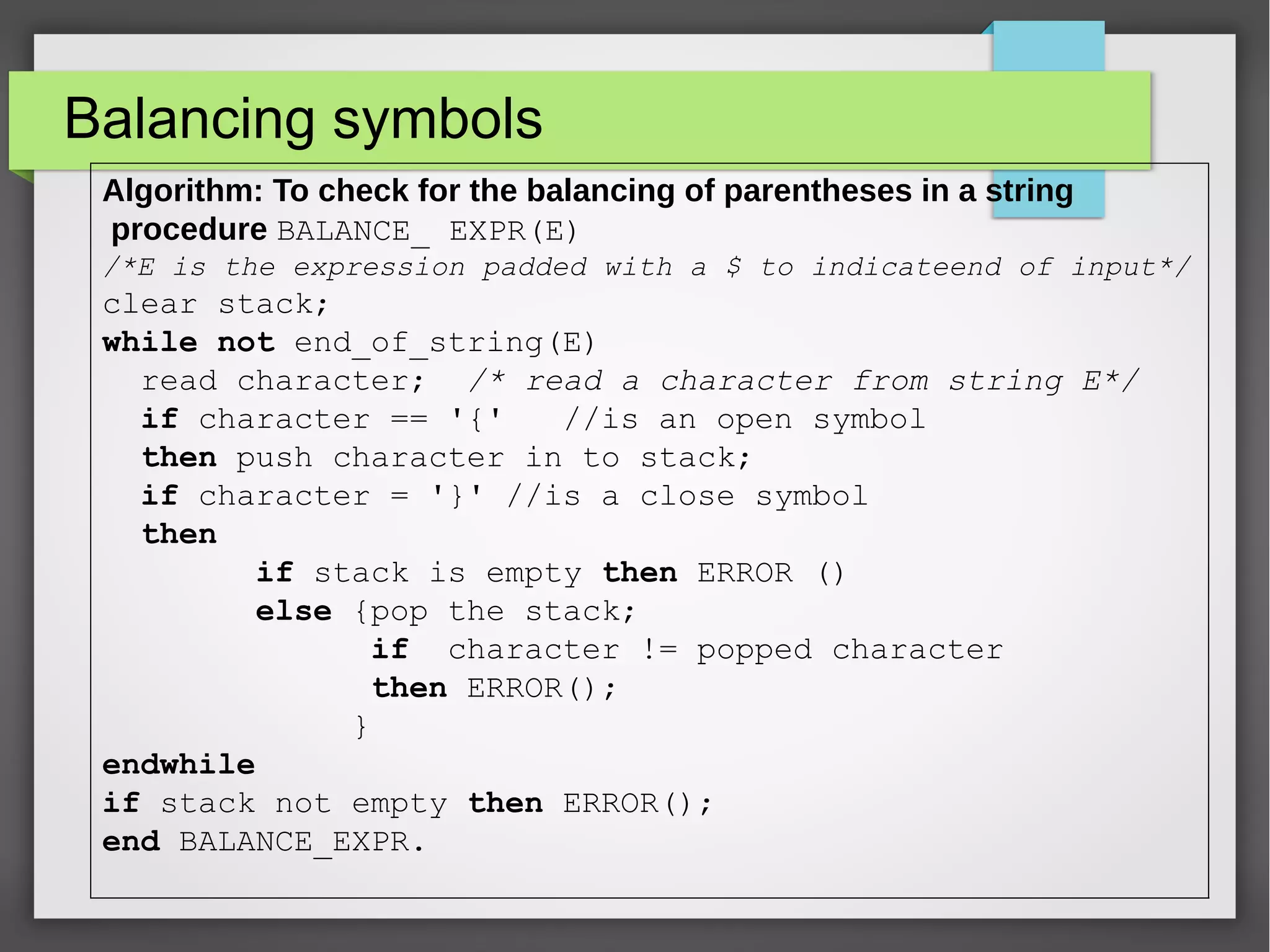
Algorithm: To check for the balancing of parentheses in a string
procedure BALANCE_ EXPR(E)
/*E is the expression padded with a $ to indicateend of input*/
clear stack;
while not end_of_string(E)
read character; /* read a character from string E*/
if character == '{' //is an open symbol
then push character in to stack;
if character = '}' //is a close symbol
then
if stack is empty then ERROR ()
else {pop the stack;
if character != popped character
then ERROR();
}
endwhile
if stack not empty then ERROR();
end BALANCE_EXPR.
Polynomial representation
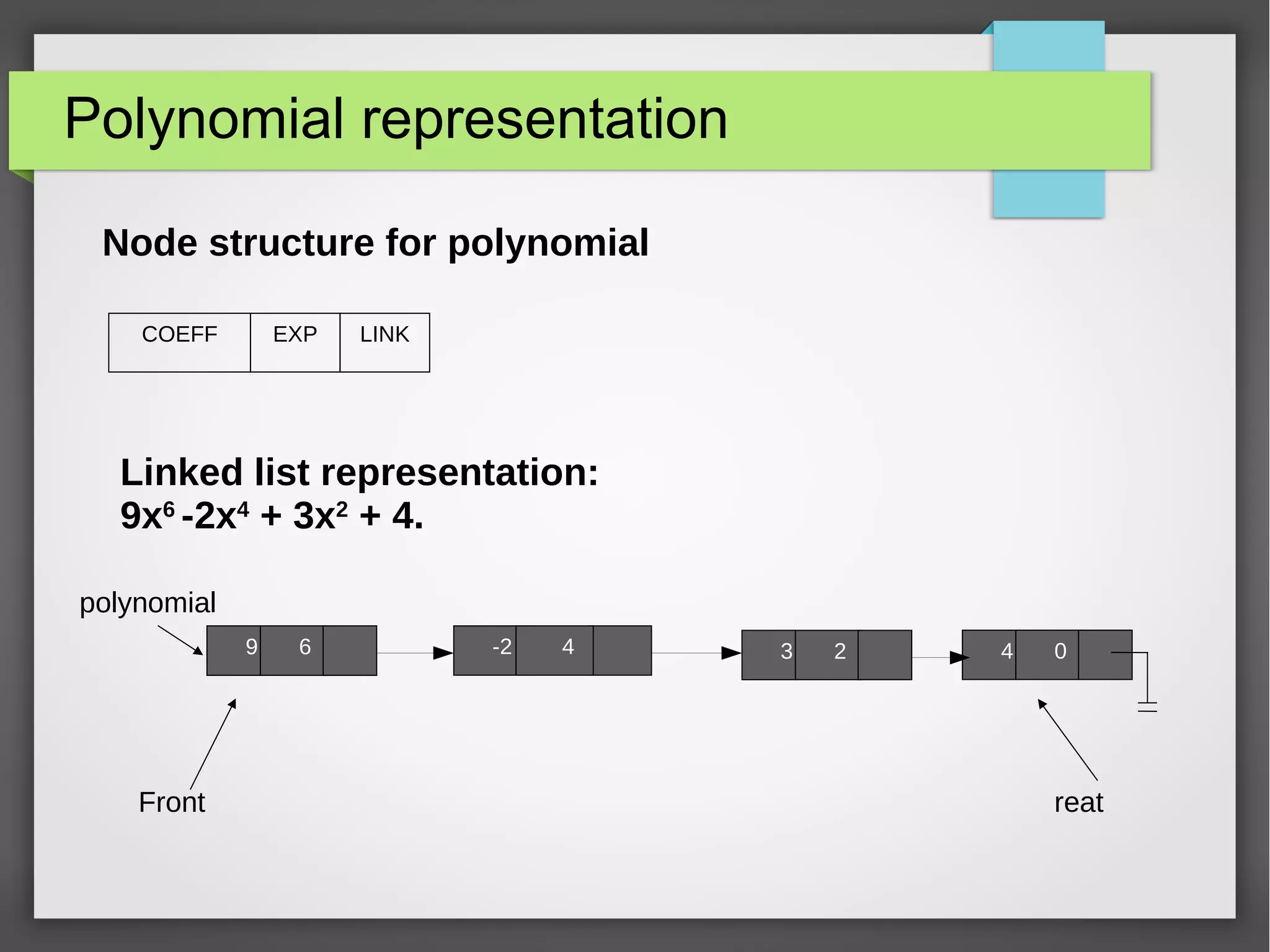
COEFF EXP LINK
9 6 3 2 4 0
-2 4
Node structure for polynomial
Linked list representation:
9x6
-2x4
+ 3x2
+ 4.
polynomial
Front reat

Linked stack-and-linked-queue

  • 1.
    Linked Stack andLinked Queue Chapter 7
  • 2.
    Outline ● Introduction – LinkedStacks – Linked Queues ● Operations on Linked Stacks and Linked Queues – Linked Stack Operations – Linked Queue Operations – Algorithms for Push/Pop operations on a Linked Stack – Algorithms for Insert/Delete operations in a Linked Queue ● Dynamic memory management and Linked Stacks ● Implementation of Linked Representations ● Applications – Balancing Symbols – Polynomial Representation
  • 3.
    Introduction ● A linkedstack is a linear list of elements commonly implemented as a singly linked list whose start pointer performs the role of the top pointer of a stack ● A linked queue is also a linear list of elements commonly implemented as a singly linked list but with two pointers viz., FRONT and REAR. The start pointer of the singly linked list plays the role of FRONT while the pointer to the last node is set to play the role of REAR.
  • 4.
    Implementing Stack andQueue Using Linked List 6 1 2 3 4 5 A B E D G F Top = 6 1 2 3 4 5 6 B C Front=1 Rear = 3 Stack[1:6] Queue[1:6] B C G H stack Top B C G H queue front rear
  • 5.
    Operations of LinkedStack and Linked Queue
  • 6.
    Operations on LinkedStack ● Push – GETNODE(X) – LINK(X) = Top – Top = X B C G H stack Top C X
  • 7.
    Algorithm: Push itemITEM into a linked stack S with top pointer TOP procedure PUSH_LINKSTACK (TOP, ITEM) /* Insert ITEM into stack */ Call GETNODE(X) DATA(X) = ITEM /*frame node for ITEM */ LINK(X) = TOP /* insert node X into stack */ TOP = X /* reset TOP pointer */ end PUSH_LINKSTACK.
  • 8.
    ● Pop – Temp= Top – Item = DATA(Top) – Top = LINK(TOP) – RETURN(Temp) B C G H stack Top Temp
  • 9.
    Algorithm: Pop froma linked stack S and output the element through ITEM procedure POP_LINKSTACK(TOP, ITEM) /* pop element from stack and set ITEM to the element */ if (TOP = 0) then call LINKSTACK_EMPTY /* check if linked stack is empty */ else { TEMP = TOP ITEM = DATA(TOP) TOP = LINK(TOP) } call RETURN(TEMP) ; end POP_LINKSTACK.
  • 10.
    ● Enqueue – LINK(rear)= X – Rear = X B C G H queue front rear A X B C G H queue front rear
  • 11.
    Algorithm: Enqueue anITEM into a linked list queue Q procedure INSERT_LINKQUEUE(FRONT,REAR,ITEM) Call GETNODE(X); DATA(X)= ITEM; LINK(X)= NIL; /* Node with ITEM is ready to be inserted into Q */ if (Queue = 0) then •Queue = FRONT = REAR = X; /* If Q is empty then ITEM is the first element in the queue Q else {LINK(REAR) = X; REAR = X } end INSERT_LINKQUEUE.
  • 12.
    ● Dequeue – Temp= front – front = Link(front) – Item = DATA(Temp) – RETURN(Temp) B C G H queue front rear Temp
  • 13.
    Algorithm: Dequeue anelement from the linked queue Q procedure DELETE_LINKQUEUE (FRONT,ITEM) if (FRONT = 0) then call LINKQUEUE_EMPTY; /* Test condition to avoid deletion in an empty queue */ else {TEMP = FRONT; ITEM = DATA (TEMP); FRONT = LINK (TEMP); } call RETURN (TEMP); /* return the node TEMP to the free pool */ end DELETE_LINKQUEUE.
  • 14.
    Implementing Linked listQueue and stack ● Balancing Symbols ● Polynomial representation
  • 15.
    Balancing symbols Algorithm: Tocheck for the balancing of parentheses in a string procedure BALANCE_ EXPR(E) /*E is the expression padded with a $ to indicateend of input*/ clear stack; while not end_of_string(E) read character; /* read a character from string E*/ if character == '{' //is an open symbol then push character in to stack; if character = '}' //is a close symbol then if stack is empty then ERROR () else {pop the stack; if character != popped character then ERROR(); } endwhile if stack not empty then ERROR(); end BALANCE_EXPR.
  • 16.
    Polynomial representation COEFF EXPLINK 9 6 3 2 4 0 -2 4 Node structure for polynomial Linked list representation: 9x6 -2x4 + 3x2 + 4. polynomial Front reat