
Summary
   What is Lightning Arrester.
   Types of Lighting Arrester.
    a- Expulsion type
    b- Valve type arrester
    c- Gapless metal-oxide type
   Classification of Lighting Arrester
    a- Station class
    b- Intermediate class
    c- Distribution class
    d- Secondary class
   Identification
   Standard Ratings
   Service Condition
    a- Normal Service Condition
    b- Abnormal Service Condition
What is Lightning Arrester
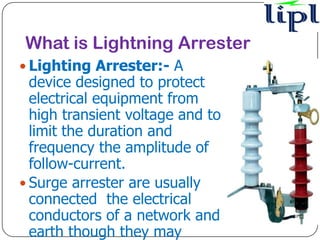
 Lighting Arrester:- A
  device designed to protect
  electrical equipment from
  high transient voltage and to
  limit the duration and
  frequency the amplitude of
  follow-current.
 Surge arrester are usually
  connected the electrical
  conductors of a network and
  earth though they may
Types of Lighting Arrester
Originally, three types of surge
 arresters. They are:
1. Expulsion type;
2. Valve type arrester;
3. Gapless metal-oxide type;

Ref-http://www.geindustrial.com/Newsletter/lightning_arresters_guide.pdf
Expulsion type
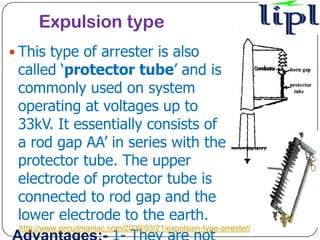
 This type of arrester is also
 called ‘protector tube’ and is
 commonly used on system
 operating at voltages up to
 33kV. It essentially consists of
 a rod gap AA’ in series with the
 protector tube. The upper
 electrode of protector tube is
 connected to rod gap and the
 lower electrode to the earth.
 http://www.circuitmaniac.com/2009/03/21/expulsion-type-arrester/
Valve Type Arrester
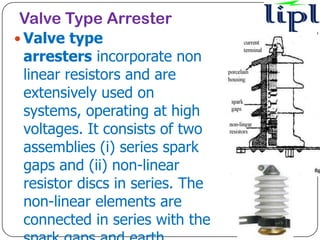
 Valve type
 arresters incorporate non
 linear resistors and are
 extensively used on
 systems, operating at high
 voltages. It consists of two
 assemblies (i) series spark
 gaps and (ii) non-linear
 resistor discs in series. The
 non-linear elements are
 connected in series with the
Gapless metal-oxide type
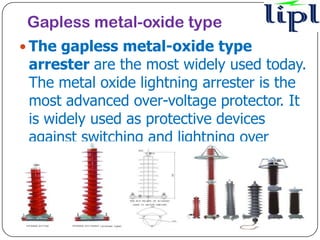
 The gapless metal-oxide type
 arrester are the most widely used today.
 The metal oxide lightning arrester is the
 most advanced over-voltage protector. It
 is widely used as protective devices
 against switching and lightning over
 voltages in power electrical systems such
 as power transformers
 ,distributors, generators, compensation
 capacitors.
Classification of Lighting Arrester
  There are four classifications of surge
    arresters.
 i. Station class
 ii. Intermediate class
 iii. Distribution class(heavy, normal and
      light duty)
 iv. Secondary class
  The station class surge arrester is the
    best because of its cost and overall
    protective quality and durability. It has
 Nominal discharge current-Peak
  value of lightning current impulse
  which is used to classify an arrester.
 Surge arrester are classified by their
  nominal discharge current.
 Station class for 10,000A arresters;
 Intermediate(Series A) for 5,000A
  arrester
 Distribution(Series B) for 5,000A
  arrester
 IS 15086-44-SURGE ARRESTER(Part-1),clause 3.1
Identification
 Surge arrester shall be identified by the
 following minimum information which
 shall appear on the rating
 plate(nameplate):
1- Rated Voltage;
2- Rated Frequency
3- Nominal Discharge Current(Specifying
 for the 5 000A arrester whether series A
 or B, and for the 10 000 A
 arrester, whether light or heavy duty)
4- Long-duration discharge class(for 10
 000 A heavy duty arrester)
5- Manufacturers name or trademark, type
Standard Ratings
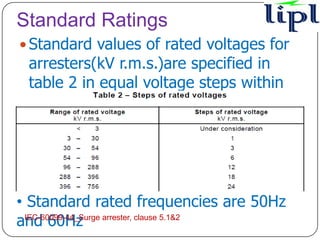
 Standard values of rated voltages for
 arresters(kV r.m.s.)are specified in
 table 2 in equal voltage steps within
 specified voltage ranges.


• Standard rated frequencies are 50Hz
and 60Hz
 IEC-60099-44_Surge arrester, clause 5.1&2
Service Condition
1- Normal service conditions:- Surge
 arresters which conform to this standard
 shall be suitable for normal operation
 under the following normal service
 condition;
  a- Ambient air temperature within the
 ranges of -40 C to +40 C;
  b- Solar radiation;
  c- Altitude not exceeding 1000m;
  d- Frequency of the A.C. power supply not
 less than 48 Hz and not exceeding 62 Hz.
  e- Wind speed ≤ 34 m/s
2- Abnormal service conditions:-
    Surge arrester subjected to other than normal
    application or service conditions may required
    special consideration in design, manufacture or
    application. The use of this standard in case of
    abnormal service conditions is subjected to
    agreement between the manufacture and the
    purchaser. A list of possible abnormal service
    condition is given.
   Temperature in excess of +40 C or below -40
     C.
   Altitude higher than 1000 m.
   Nominal system frequency below 48Hz or
    above 62Hz.
   Unusual transportation or storage.
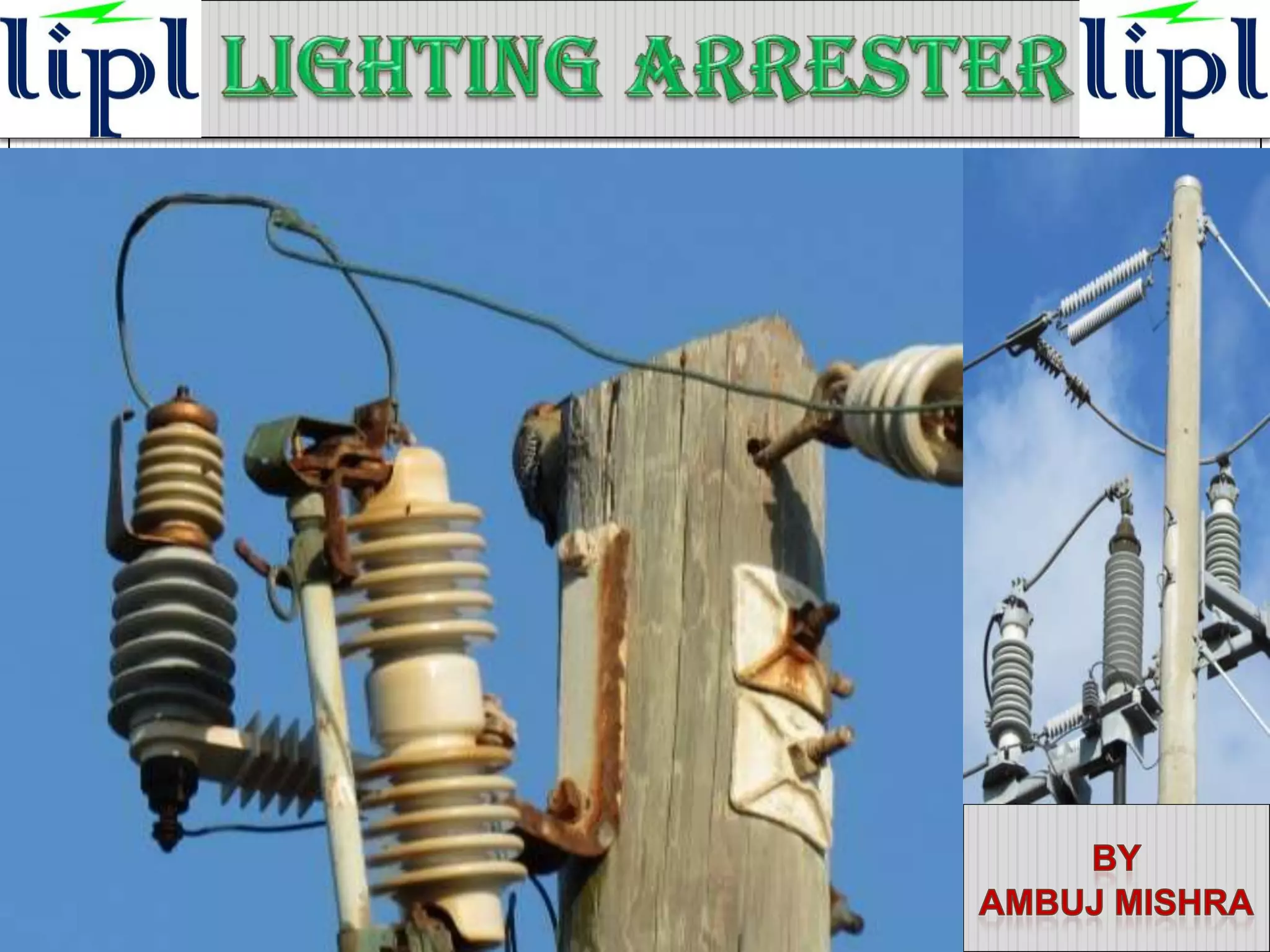
Lighting arrester

Lighting arrester

  • 2.
    Summary  What is Lightning Arrester.  Types of Lighting Arrester. a- Expulsion type b- Valve type arrester c- Gapless metal-oxide type  Classification of Lighting Arrester a- Station class b- Intermediate class c- Distribution class d- Secondary class  Identification  Standard Ratings  Service Condition a- Normal Service Condition b- Abnormal Service Condition
  • 3.
    What is LightningArrester  Lighting Arrester:- A device designed to protect electrical equipment from high transient voltage and to limit the duration and frequency the amplitude of follow-current.  Surge arrester are usually connected the electrical conductors of a network and earth though they may
  • 4.
    Types of LightingArrester Originally, three types of surge arresters. They are: 1. Expulsion type; 2. Valve type arrester; 3. Gapless metal-oxide type; Ref-http://www.geindustrial.com/Newsletter/lightning_arresters_guide.pdf
  • 5.
    Expulsion type  Thistype of arrester is also called ‘protector tube’ and is commonly used on system operating at voltages up to 33kV. It essentially consists of a rod gap AA’ in series with the protector tube. The upper electrode of protector tube is connected to rod gap and the lower electrode to the earth. http://www.circuitmaniac.com/2009/03/21/expulsion-type-arrester/
  • 6.
    Valve Type Arrester Valve type arresters incorporate non linear resistors and are extensively used on systems, operating at high voltages. It consists of two assemblies (i) series spark gaps and (ii) non-linear resistor discs in series. The non-linear elements are connected in series with the
  • 7.
    Gapless metal-oxide type The gapless metal-oxide type arrester are the most widely used today. The metal oxide lightning arrester is the most advanced over-voltage protector. It is widely used as protective devices against switching and lightning over voltages in power electrical systems such as power transformers ,distributors, generators, compensation capacitors.
  • 8.
    Classification of LightingArrester  There are four classifications of surge arresters. i. Station class ii. Intermediate class iii. Distribution class(heavy, normal and light duty) iv. Secondary class  The station class surge arrester is the best because of its cost and overall protective quality and durability. It has
  • 9.
     Nominal dischargecurrent-Peak value of lightning current impulse which is used to classify an arrester.  Surge arrester are classified by their nominal discharge current.  Station class for 10,000A arresters;  Intermediate(Series A) for 5,000A arrester  Distribution(Series B) for 5,000A arrester IS 15086-44-SURGE ARRESTER(Part-1),clause 3.1
  • 10.
    Identification  Surge arrestershall be identified by the following minimum information which shall appear on the rating plate(nameplate): 1- Rated Voltage; 2- Rated Frequency 3- Nominal Discharge Current(Specifying for the 5 000A arrester whether series A or B, and for the 10 000 A arrester, whether light or heavy duty) 4- Long-duration discharge class(for 10 000 A heavy duty arrester) 5- Manufacturers name or trademark, type
  • 11.
    Standard Ratings  Standardvalues of rated voltages for arresters(kV r.m.s.)are specified in table 2 in equal voltage steps within specified voltage ranges. • Standard rated frequencies are 50Hz and 60Hz IEC-60099-44_Surge arrester, clause 5.1&2
  • 12.
    Service Condition 1- Normalservice conditions:- Surge arresters which conform to this standard shall be suitable for normal operation under the following normal service condition; a- Ambient air temperature within the ranges of -40 C to +40 C; b- Solar radiation; c- Altitude not exceeding 1000m; d- Frequency of the A.C. power supply not less than 48 Hz and not exceeding 62 Hz. e- Wind speed ≤ 34 m/s
  • 13.
    2- Abnormal serviceconditions:- Surge arrester subjected to other than normal application or service conditions may required special consideration in design, manufacture or application. The use of this standard in case of abnormal service conditions is subjected to agreement between the manufacture and the purchaser. A list of possible abnormal service condition is given.  Temperature in excess of +40 C or below -40 C.  Altitude higher than 1000 m.  Nominal system frequency below 48Hz or above 62Hz.  Unusual transportation or storage.