6/5/2018 1
TERMINOLOGY
1.Introduction
2.Why LRT ?
3.Characteristics
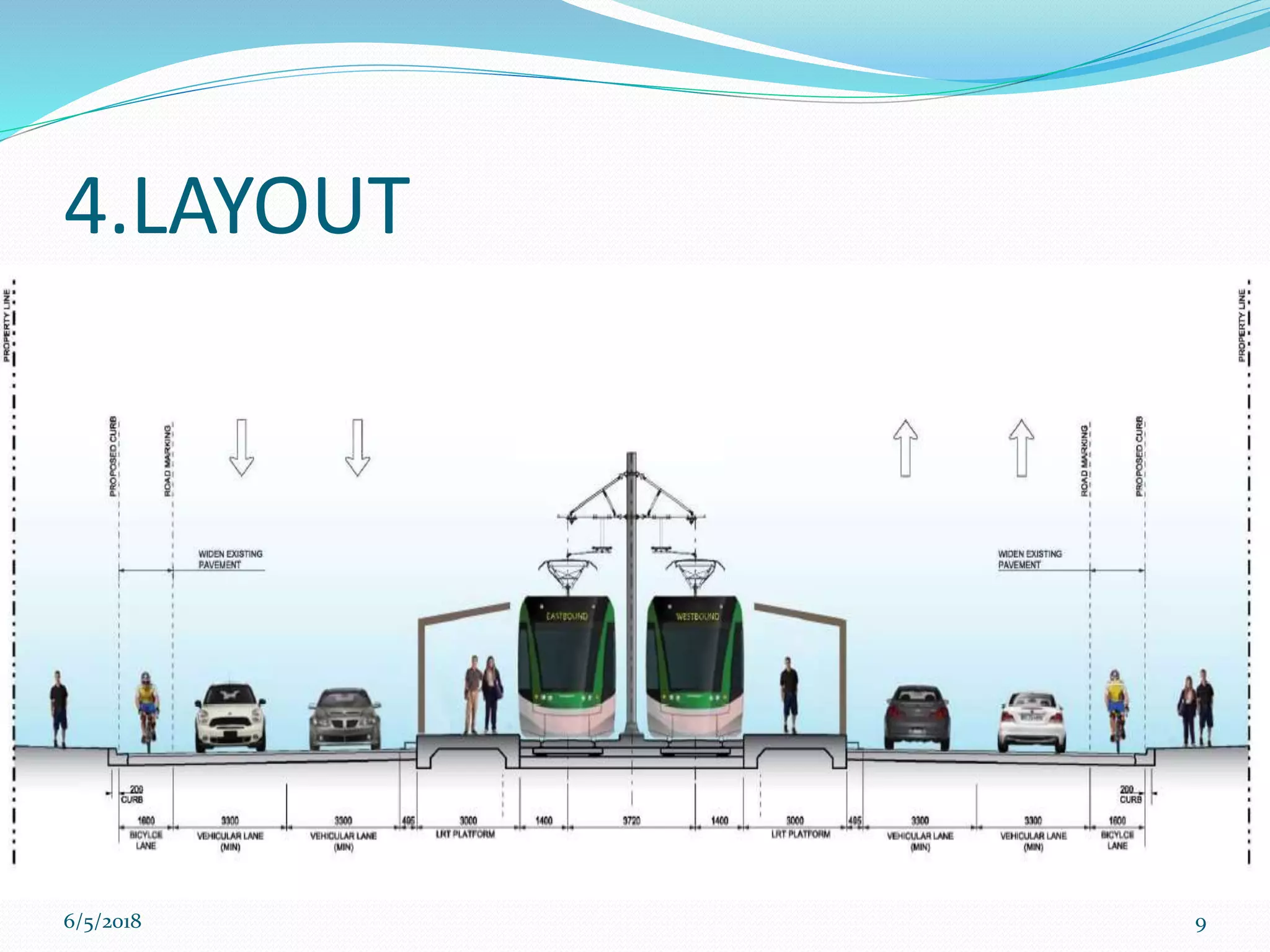
4.Layout
5. General Vehicle Characteristics
6.Vehicle comparison
7.Comparison
8.Advantages
9.Disadvantages
10.Conclusion
11.References
6/5/2018 2
1.INTRODUCTION
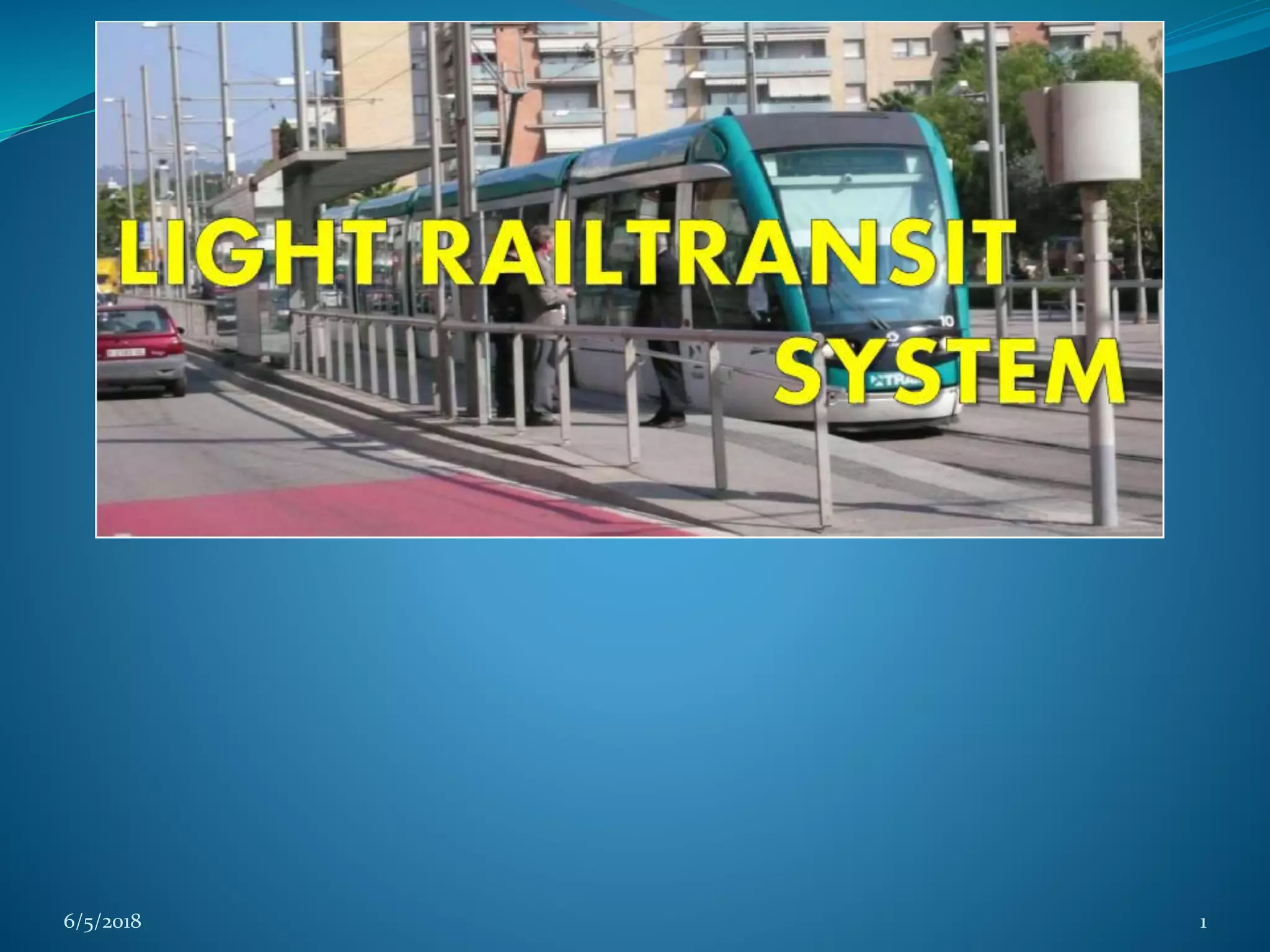
 Light Rail Transit(LRT) is a term applied to a variety
of public transport systems using buses to provide
faster, more efficient service than an ordinary heavy
rail system.
 It ensure fast, sustainable, reliable, secure and high
capacity service
 Light rail transit is a metropolitan electric railway
system characterized by its ability to operate single
cars or short trains along exclusive rights-of-way at
ground level, on aerial structures, in subways or,
occasionally, in streets, and to board and discharge
passengers at track or car-floor level.
6/5/2018 3
2.WHY LRT ?
 An affordable .
 Compared to HRT cost is less .
 More convenient.
 To increase the service quality of the rail.
 Reduces the emission of green house gases.
 Reduces the traffic congestion.
 Less energy consumption.
 Reduction of usage of fossil fuels
6/5/2018 4
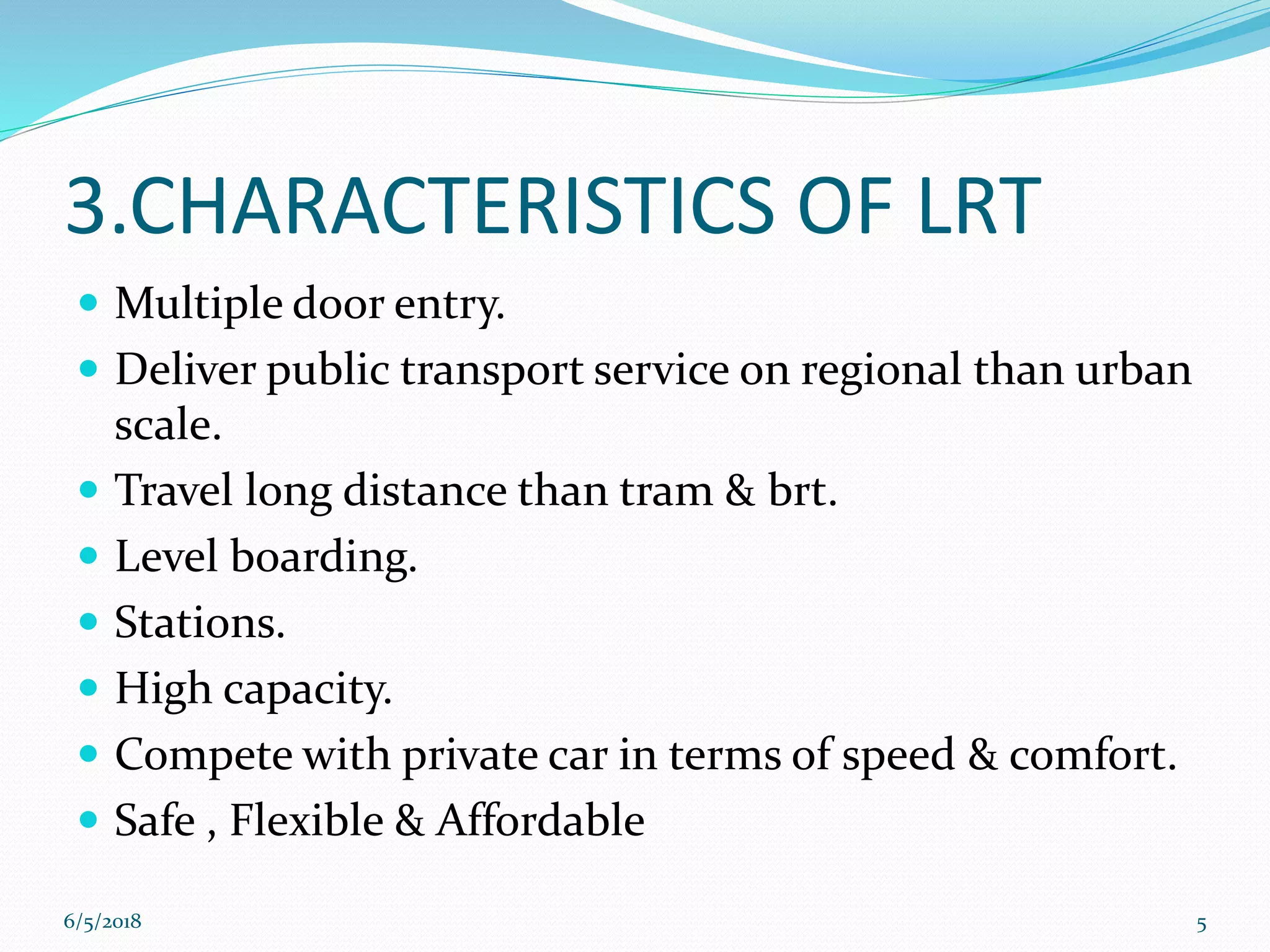
3.CHARACTERISTICS OF LRT
 Multiple door entry.
 Deliver public transport service on regional than urban
scale.
 Travel long distance than tram & brt.
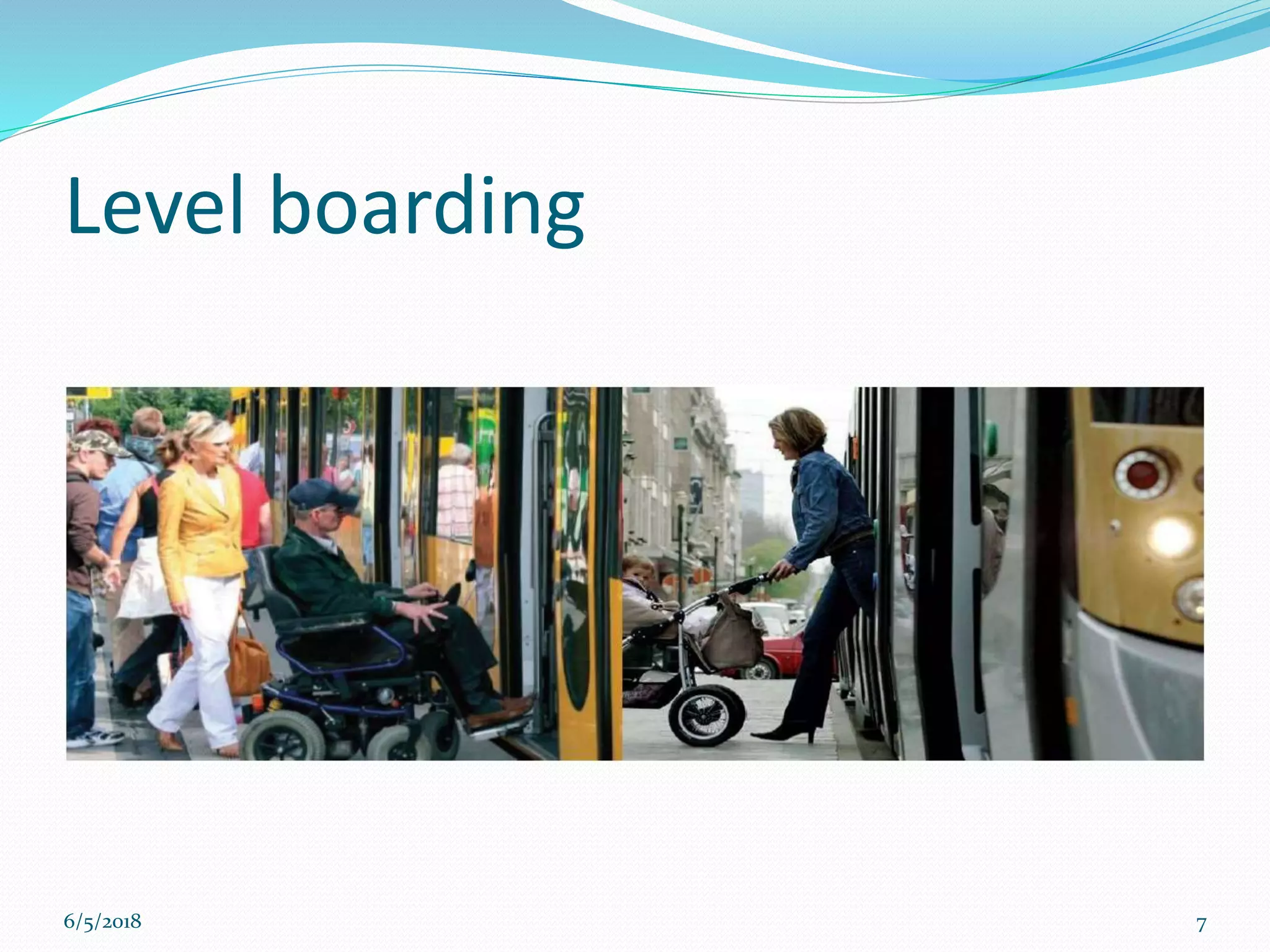
 Level boarding.
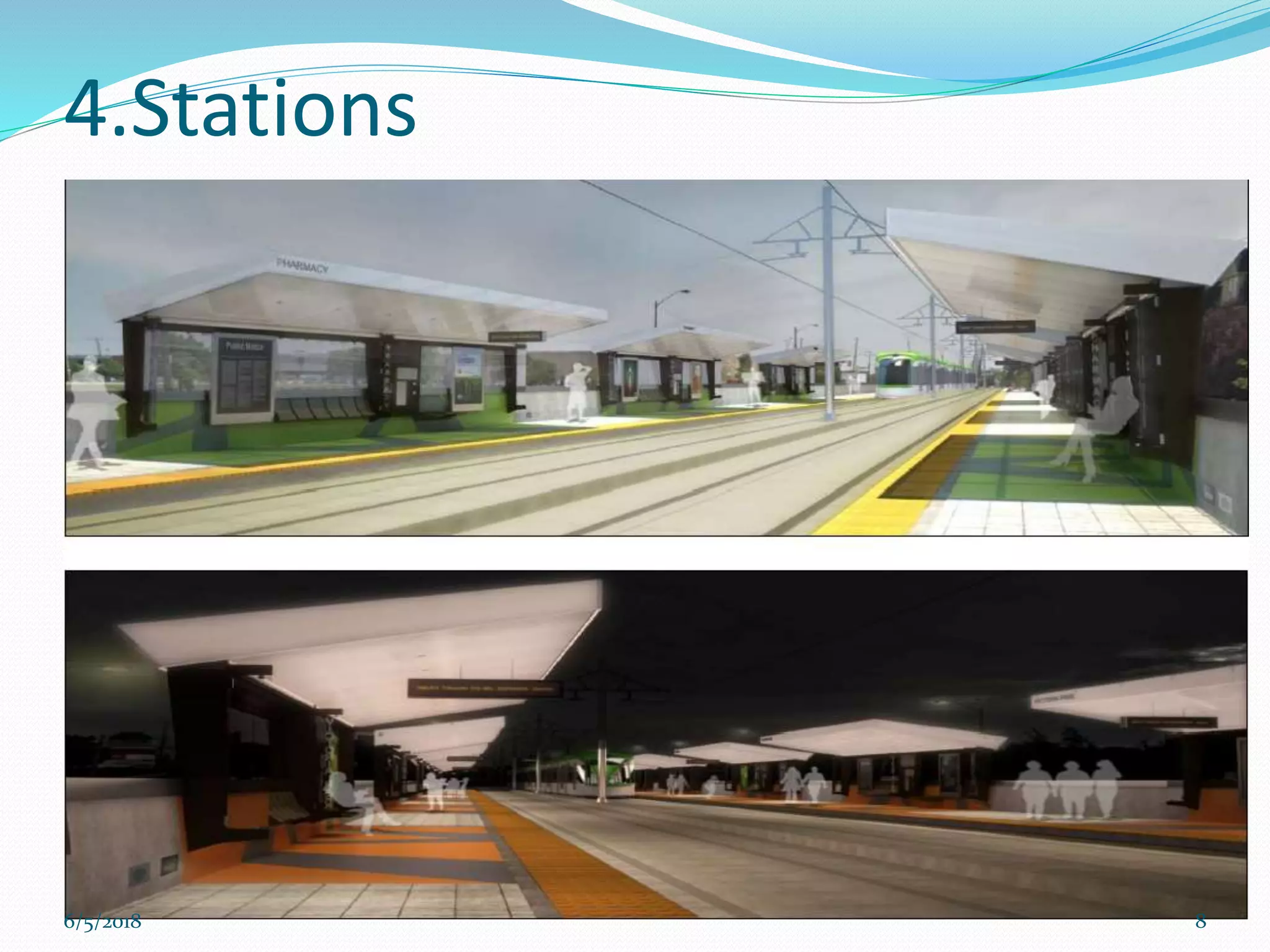
 Stations.
 High capacity.
 Compete with private car in terms of speed & comfort.
 Safe , Flexible & Affordable
6/5/2018 5
Multiple door entry
6/5/2018 6
Level boarding
6/5/2018 7
4.Stations
6/5/2018 8
4.LAYOUT
6/5/2018 9
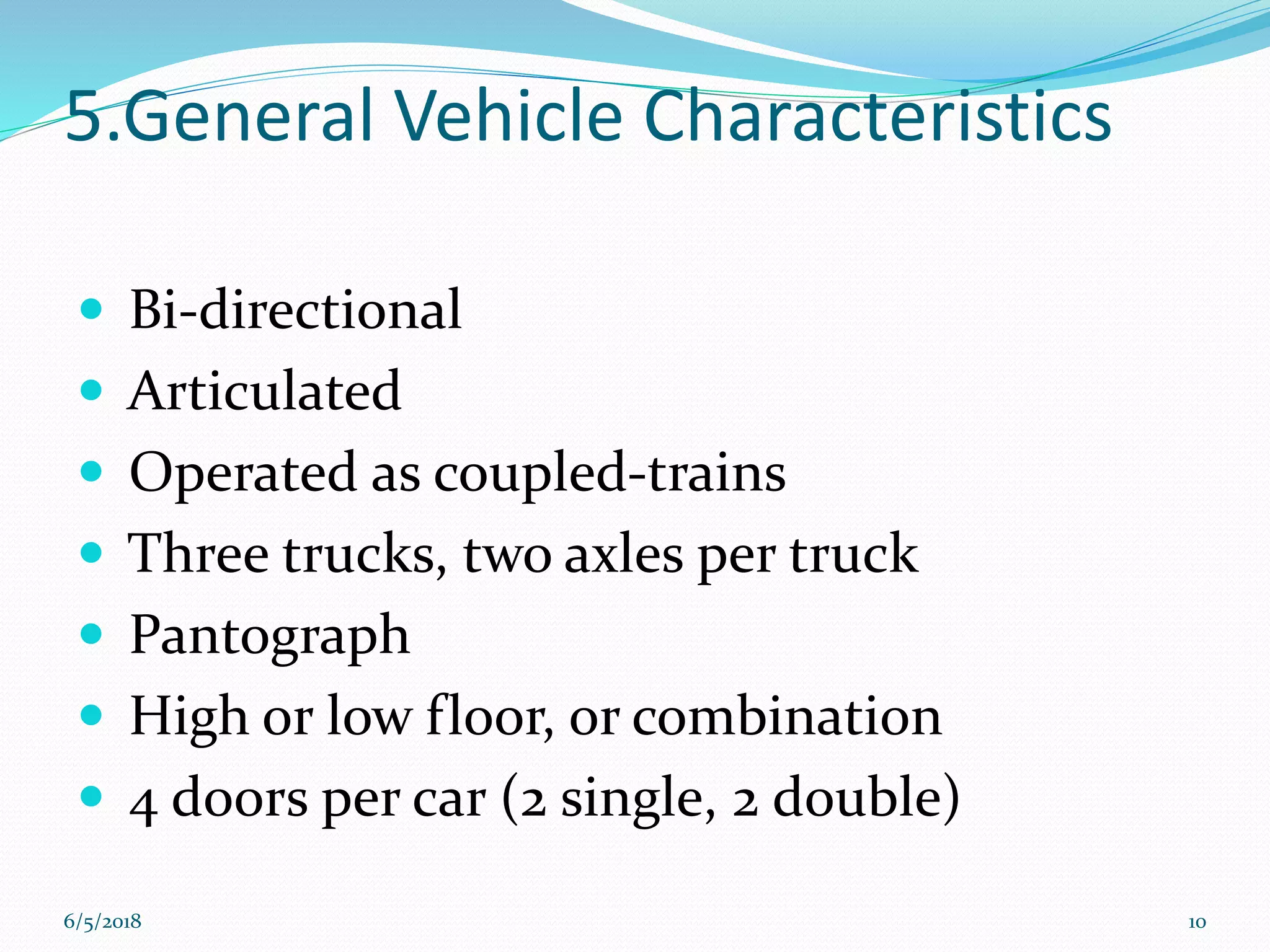
5.General Vehicle Characteristics
 Bi-directional
 Articulated
 Operated as coupled-trains
 Three trucks, two axles per truck
 Pantograph
 High or low floor, or combination
 4 doors per car (2 single, 2 double)
6/5/2018 10
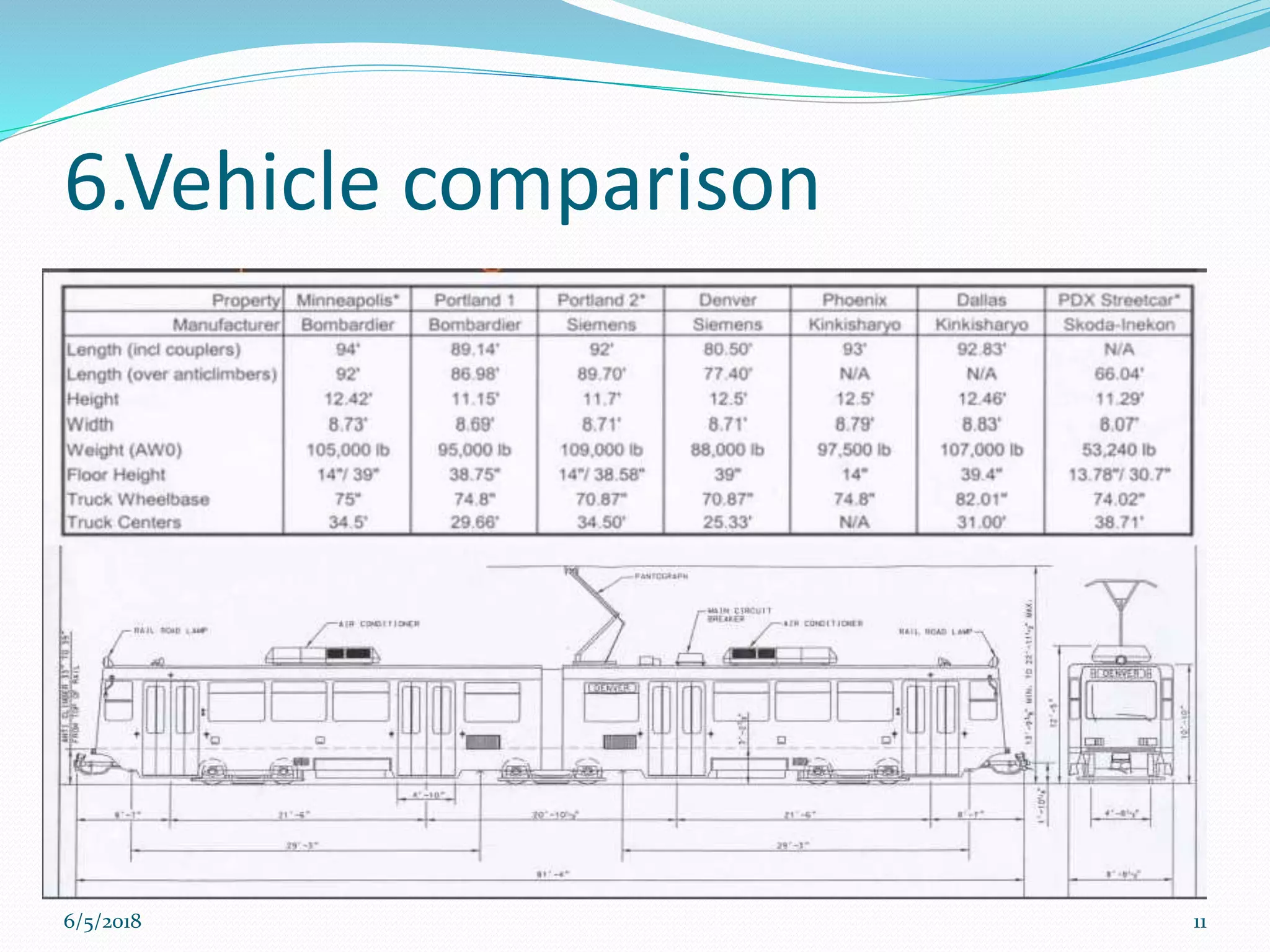
6.Vehicle comparison
6/5/2018 11
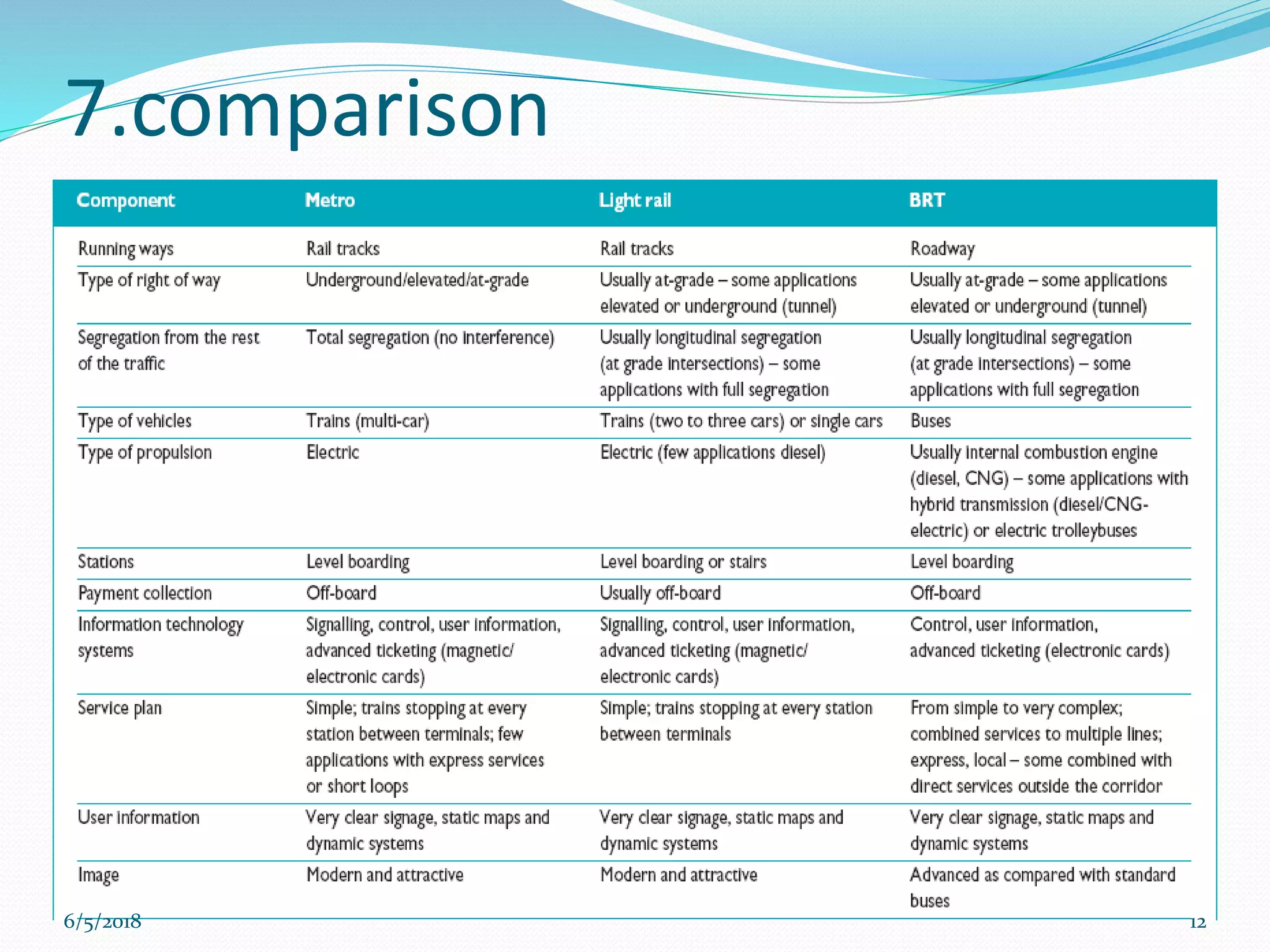
7.comparison
6/5/2018 12
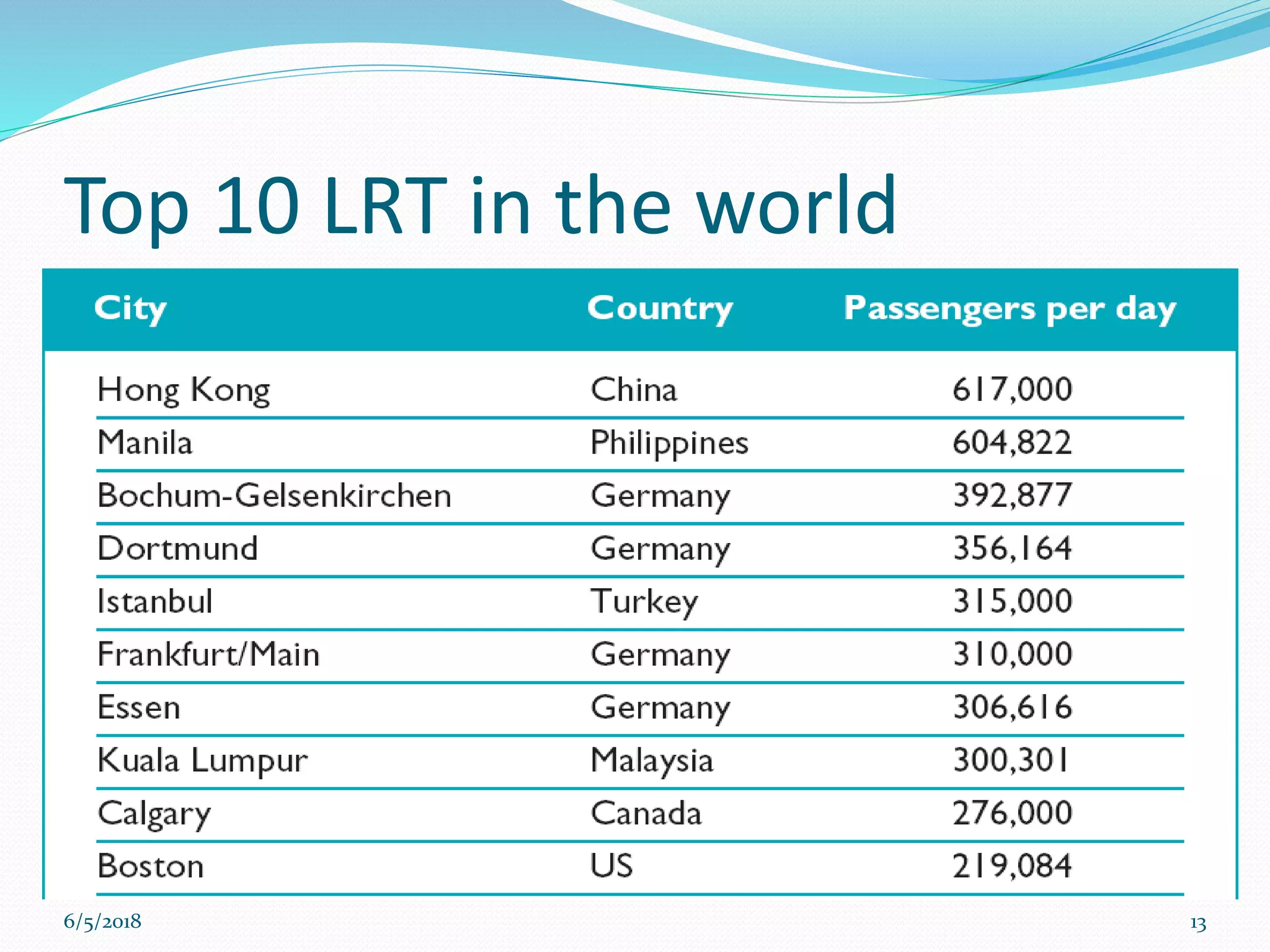
Top 10 LRT in the world
6/5/2018 13
8.Advantages
 Comfortable
 Higher passenger capacity
 Lower oparating cost per passenger
 Pollution free
 Less noice
 Good aesthetic apperance
 Reduce traffic condition
 Suit areas were level of demand for heavy rail is less
 Can run on heavy rail roots
6/5/2018 14
6/5/2018 15
9. Dis-advandages
 Higher capital cost
 Lower proportion of seats to standees
 Inflexibility of roots
 Over take cannot be done
 Disruption to traffic and cal business during
construction
6/5/2018 16
10.Conclusion
This review consists the study of implementation and
adoption of Light rail as an alternative mass transit
system. Light rail is suitable well for the developed
country and also for developing country like India.
Latest upgraded technology in LRT, more passenger’s
carrying capacity, Eco friendly mode and economical
features proves it mandatory option in transportation
of Indian era today. Furthermore, it can reduce the
problem of accidents, congestion and fuel
consumption. So, Light Rail Transit System seems to
be solution of most of the transport and traffic related
problem in India.
6/5/2018 17
11.References
 Wikipedia
 Howland, L., and R. T. Dunphy. Transit Sparks
Redevelopment In St. Louis and Chicago. Urban
Land, July 1996, pp. 43-46, 88-89.
 Bhattacharjee, S. R. and Goetz, A. R. (2012) “Impact of
light rail on traffic congestion in Denver” Journal of
Transport Geography 22 (2012), pp. 262–270.
 Boral, E. (2013) of “Tramway-an eco-friendly mode of
mass transportation: a case of Kolkata city.”
6/5/2018 18
6/5/2018 19

Light rail transit system

  • 1.
  • 2.
    TERMINOLOGY 1.Introduction 2.Why LRT ? 3.Characteristics 4.Layout 5.General Vehicle Characteristics 6.Vehicle comparison 7.Comparison 8.Advantages 9.Disadvantages 10.Conclusion 11.References 6/5/2018 2
  • 3.
    1.INTRODUCTION  Light RailTransit(LRT) is a term applied to a variety of public transport systems using buses to provide faster, more efficient service than an ordinary heavy rail system.  It ensure fast, sustainable, reliable, secure and high capacity service  Light rail transit is a metropolitan electric railway system characterized by its ability to operate single cars or short trains along exclusive rights-of-way at ground level, on aerial structures, in subways or, occasionally, in streets, and to board and discharge passengers at track or car-floor level. 6/5/2018 3
  • 4.
    2.WHY LRT ? An affordable .  Compared to HRT cost is less .  More convenient.  To increase the service quality of the rail.  Reduces the emission of green house gases.  Reduces the traffic congestion.  Less energy consumption.  Reduction of usage of fossil fuels 6/5/2018 4
  • 5.
    3.CHARACTERISTICS OF LRT Multiple door entry.  Deliver public transport service on regional than urban scale.  Travel long distance than tram & brt.  Level boarding.  Stations.  High capacity.  Compete with private car in terms of speed & comfort.  Safe , Flexible & Affordable 6/5/2018 5
  • 6.
  • 7.
  • 8.
  • 9.
  • 10.
    5.General Vehicle Characteristics Bi-directional  Articulated  Operated as coupled-trains  Three trucks, two axles per truck  Pantograph  High or low floor, or combination  4 doors per car (2 single, 2 double) 6/5/2018 10
  • 11.
  • 12.
  • 13.
    Top 10 LRTin the world 6/5/2018 13
  • 14.
    8.Advantages  Comfortable  Higherpassenger capacity  Lower oparating cost per passenger  Pollution free  Less noice  Good aesthetic apperance  Reduce traffic condition  Suit areas were level of demand for heavy rail is less  Can run on heavy rail roots 6/5/2018 14
  • 15.
  • 16.
    9. Dis-advandages  Highercapital cost  Lower proportion of seats to standees  Inflexibility of roots  Over take cannot be done  Disruption to traffic and cal business during construction 6/5/2018 16
  • 17.
    10.Conclusion This review consiststhe study of implementation and adoption of Light rail as an alternative mass transit system. Light rail is suitable well for the developed country and also for developing country like India. Latest upgraded technology in LRT, more passenger’s carrying capacity, Eco friendly mode and economical features proves it mandatory option in transportation of Indian era today. Furthermore, it can reduce the problem of accidents, congestion and fuel consumption. So, Light Rail Transit System seems to be solution of most of the transport and traffic related problem in India. 6/5/2018 17
  • 18.
    11.References  Wikipedia  Howland,L., and R. T. Dunphy. Transit Sparks Redevelopment In St. Louis and Chicago. Urban Land, July 1996, pp. 43-46, 88-89.  Bhattacharjee, S. R. and Goetz, A. R. (2012) “Impact of light rail on traffic congestion in Denver” Journal of Transport Geography 22 (2012), pp. 262–270.  Boral, E. (2013) of “Tramway-an eco-friendly mode of mass transportation: a case of Kolkata city.” 6/5/2018 18
  • 19.