LIFE STYLE RELATED DISEASES AND THEIR
PREVENTION
PRESENTED BY:
DIWYA KUMAR
7TH SEM. / B. PHARMACY
CONTENT:
• INTRODUCTION
• RESPONSIBLE FACTORS
• LIFE STYLE RELATED DISEASE
• CARDIOVASCULAR DISEASES
• DIABETES
• DEPRESSION
INTRODUCTION
A disease associated with the way a person or group of people
lives.
They are diseases that are caused partly by unhealthy behaviors
and partly by other factors.
Main Causes:
A person’s
–Habits
–Behaviours
–Practices
RESPONSIBLE FACTORS
A.Uncontrollable Risk factors
• Age
• Race
• Gender
• Heredity
RESPONSIBLE FACTORS
B. Controllable Risk Factors
• Diet and body weight
• Daily levels of physical activity
• Smoking and alcohol abuse
• Amount of sun exposure
• Chewing tobacco
• Sedentary life style
Life Style Related Diseases
• Cardiovascular diseases
• Stroke
• Diabetes
• Cancer
• Chronic obstructive Pulmonary disease
• Depression
• Musculoskeletal disorder
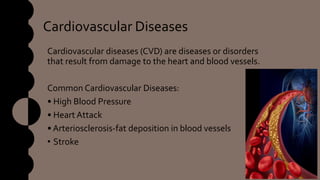
Cardiovascular Diseases
Cardiovascular diseases (CVD) are diseases or disorders
that result from damage to the heart and blood vessels.
Common Cardiovascular Diseases:
• High Blood Pressure
• Heart Attack
• Arteriosclerosis-fat deposition in blood vessels
• Stroke
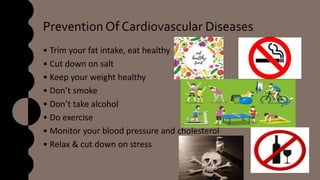
Prevention Of Cardiovascular Diseases
• Trim your fat intake, eat healthy
• Cut down on salt
• Keep your weight healthy
• Don’t smoke
• Don’t take alcohol
• Do exercise
• Monitor your blood pressure and cholesterol
• Relax & cut down on stress
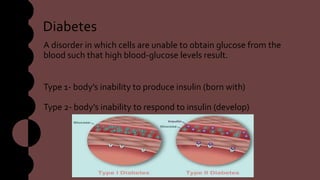
Diabetes
A disorder in which cells are unable to obtain glucose from the
blood such that high blood-glucose levels result.
Type 1- body’s inability to produce insulin (born with)
Type 2- body’s inability to respond to insulin (develop)
Prevention of Diabetes
Type 2 Diabetes can be prevented by
• Maintaining a healthy weight
• Avoiding smoking
• Reduction of Stress
• Avoiding Sedentary life
• Avoid Junk foods
• Exercise-that reduce insulin requirements
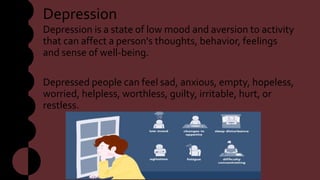
Depression
Depression is a state of low mood and aversion to activity
that can affect a person's thoughts, behavior, feelings
and sense of well-being.
Depressed people can feel sad, anxious, empty, hopeless,
worried, helpless, worthless, guilty, irritable, hurt, or
restless.
PREVENTION OF DEPRESSION
1. Healthy Eating-
• cut out the junk
• include amino-acid-rich foods—such as meat, dairy products,
• Complex carbohydrate help to stimulate the feel good
neurotransmitter serotonin.
2. Exercise-
• increases your body’s production of natural antidepressants.
Research has shown that exercise reduces stress, improves mood,
boosts self-esteem, and provides restful sleep.
3. Meditation-
• Meditation can help relieve anxiety that sometimes accompanies
depression.
4. Sleep-
• Proper sleep hygiene is an important part of a depression treatment
plan.
• Have a calming bedtime routine that helps you wind down and feel
fresh the next morning
5. Avoid Sedentary life-
• It may lead to depression, stay active , do your hobbies, read books,
take active part in social activity.
6. Relationship-
• The right network of friends and loved ones can help you overcome
your problems.
• Spending time with positive, supportive, and loving people can help
you through your darkest times
Life style related disease

Life style related disease

  • 1.
    LIFE STYLE RELATEDDISEASES AND THEIR PREVENTION PRESENTED BY: DIWYA KUMAR 7TH SEM. / B. PHARMACY
  • 2.
    CONTENT: • INTRODUCTION • RESPONSIBLEFACTORS • LIFE STYLE RELATED DISEASE • CARDIOVASCULAR DISEASES • DIABETES • DEPRESSION
  • 3.
    INTRODUCTION A disease associatedwith the way a person or group of people lives. They are diseases that are caused partly by unhealthy behaviors and partly by other factors. Main Causes: A person’s –Habits –Behaviours –Practices
  • 4.
    RESPONSIBLE FACTORS A.Uncontrollable Riskfactors • Age • Race • Gender • Heredity
  • 5.
    RESPONSIBLE FACTORS B. ControllableRisk Factors • Diet and body weight • Daily levels of physical activity • Smoking and alcohol abuse • Amount of sun exposure • Chewing tobacco • Sedentary life style
  • 6.
    Life Style RelatedDiseases • Cardiovascular diseases • Stroke • Diabetes • Cancer • Chronic obstructive Pulmonary disease • Depression • Musculoskeletal disorder
  • 7.
    Cardiovascular Diseases Cardiovascular diseases(CVD) are diseases or disorders that result from damage to the heart and blood vessels. Common Cardiovascular Diseases: • High Blood Pressure • Heart Attack • Arteriosclerosis-fat deposition in blood vessels • Stroke
  • 8.
    Prevention Of CardiovascularDiseases • Trim your fat intake, eat healthy • Cut down on salt • Keep your weight healthy • Don’t smoke • Don’t take alcohol • Do exercise • Monitor your blood pressure and cholesterol • Relax & cut down on stress
  • 9.
    Diabetes A disorder inwhich cells are unable to obtain glucose from the blood such that high blood-glucose levels result. Type 1- body’s inability to produce insulin (born with) Type 2- body’s inability to respond to insulin (develop)
  • 10.
    Prevention of Diabetes Type2 Diabetes can be prevented by • Maintaining a healthy weight • Avoiding smoking • Reduction of Stress • Avoiding Sedentary life • Avoid Junk foods • Exercise-that reduce insulin requirements
  • 11.
    Depression Depression is astate of low mood and aversion to activity that can affect a person's thoughts, behavior, feelings and sense of well-being. Depressed people can feel sad, anxious, empty, hopeless, worried, helpless, worthless, guilty, irritable, hurt, or restless.
  • 12.
    PREVENTION OF DEPRESSION 1.Healthy Eating- • cut out the junk • include amino-acid-rich foods—such as meat, dairy products, • Complex carbohydrate help to stimulate the feel good neurotransmitter serotonin. 2. Exercise- • increases your body’s production of natural antidepressants. Research has shown that exercise reduces stress, improves mood, boosts self-esteem, and provides restful sleep. 3. Meditation- • Meditation can help relieve anxiety that sometimes accompanies depression.
  • 13.
    4. Sleep- • Propersleep hygiene is an important part of a depression treatment plan. • Have a calming bedtime routine that helps you wind down and feel fresh the next morning 5. Avoid Sedentary life- • It may lead to depression, stay active , do your hobbies, read books, take active part in social activity. 6. Relationship- • The right network of friends and loved ones can help you overcome your problems. • Spending time with positive, supportive, and loving people can help you through your darkest times