LIFE SKILLS
PARISA KHAN
STUDENT COUNSELLOR
UNDERSTANDING LIFE
SKILLS
Life skills have been defined as “the abilities for
adaptive and positive behaviour that enable
individuals to deal effectively with the demands and
challenges of everyday life”(WHO).
‘Adaptive’ means that a person is flexible in approach
and is able to adjust in different circumstances.
‘Positive behaviour’ implies that a person is forward
looking and even in difficult situations, can find a ray
of hope and opportunities to find solutions.
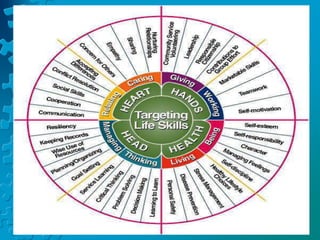
Life skills include psychosocial
competencies and interpersonal skills
that help people make informed decisions,
solve problems, think critically and
creatively, communicate effectively, build
healthy relationships, empathize with others,
and cope with managing their lives in
a healthy and productive manner.
WHY LIFE SKILLS?
“Learning The treasure Within”
• Learning to know.
• Learning to be.
• Learning to do.
• Learning to live together.
DEVELOPING AN IDENTITY
Self – awareness helps adolescents understand
themselves and establish their personal
identity. Lack of information and skills
prevent them from effectively exploring their
potential and establishing a positive image
and sound career
perspective.
MANAGING EMOTIONS
Adolescents have frequent mood changes
reflecting feelings of anger, sadness,
happiness, fear, shame, guilt, and love. Very
often, they are unable to understand the
emotional turmoil.
 They do not have a supportive environment in
order to share their concerns with others.
Counselling facilities are not available.
BUILDING
RELATIONSHIPS
As a part of growing up, adolescents redefine
their relationships with parents, and peers.
Adults have high expectations from them.
Adolescents need social skills for building
positive and healthy relationships with others.
They need to understand the importance of
mutual respect and socially defined boundaries
of every relationship.
RESISTING PEER
PRESSURE
• Find it difficult to resist peer pressure.
Some of them may yield to these
pressures and engage in experimentation.
• Aggressive self conduct; irresponsible
behaviour and substance abuse involve
greater risks with regard to physical and
mental health.
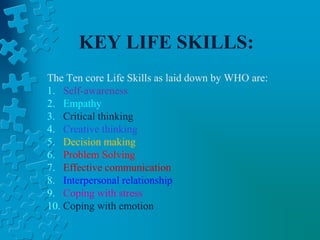
KEY LIFE SKILLS:
The Ten core Life Skills as laid down by WHO are:
1. Self-awareness
2. Empathy
3. Critical thinking
4. Creative thinking
5. Decision making
6. Problem Solving
7. Effective communication
8. Interpersonal relationship
9. Coping with stress
10. Coping with emotion
SELF AWARENESS
Self awareness includes recognition of
SELF, our strengths and weaknesses,
desires, likes and dislikes. Developing self
awareness can help us to recognize when
we are stressed or feel under pressure.
EMPATHY
Empathy is the ability to imagine what life
is like for another person. Empathy can
help us to accept others, who may be very
different than ourselves.
CRITICAL THINKING
It is the ability to analyze information and
experiences in an objective manner. Critical
thinking help us in recognizing and
assessing the factors that influence attitudes
and behavior, such as values and peer
pressure.
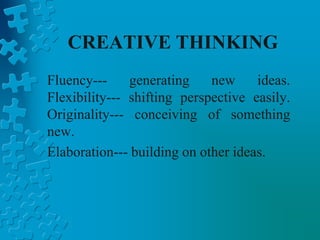
CREATIVE THINKING
Fluency--- generating new ideas.
Flexibility--- shifting perspective easily.
Originality--- conceiving of something
new.
Elaboration--- building on other ideas.
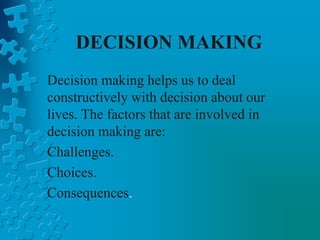
DECISION MAKING
Decision making helps us to deal
constructively with decision about our
lives. The factors that are involved in
decision making are:
Challenges.
Choices.
Consequences.
PROBLEM SOLVING
Problem Solving helps us to deal
constructively with problems in our lives.
Significant problems that are left
unresolved can cause mental stress and give
rise to physical strain.
INTERPERSONAL
RELATIONSHIPS
It helps us to relate in positive ways with
the people we interact with. It leads to
having a good relationship with family
members and being social.
EFFECTIVE
COMMUNICATION
The way we express ourselves, verbally
and non verbally, which is appropriate to
our cultures and situations.
COPING WITH STRESS
Recognizing the sources of stress in our
lives how it affects us and the ways we
control our stress levels, by changing our
environment, lifestyle or learn how to relax.
COPING WITH
EMOTIONS
Recognizing emotions within us and others.
Being aware how emotions influence
behavior and how to respond to emotions
appropriately. Intense emotions like anger
or sadness can have negative effects on
health if we don not respond to them
appropriately.
PERHAPS THE MOST IMPORTANT
LIFE SKILL IS THE ABILITY AND
THE WILLINGNESS TO LEARN.
PERSONAL SKILLS
Personal Skills are the essential life skills
we need to help maintain a healthy body
and mind coordination.
• How we recognize, manage and cope
with emotions.
• Good idea of your personality.
• How to keep mind healthy.
• Anger and stress can be detrimental to
our personal relationships. Learning and
recognizing about anger and stress and
managing our emotions can greatly
enhance the quality of our lives.
THANK YOU

LIFE SKILLS

  • 1.
  • 2.
    UNDERSTANDING LIFE SKILLS Life skillshave been defined as “the abilities for adaptive and positive behaviour that enable individuals to deal effectively with the demands and challenges of everyday life”(WHO). ‘Adaptive’ means that a person is flexible in approach and is able to adjust in different circumstances. ‘Positive behaviour’ implies that a person is forward looking and even in difficult situations, can find a ray of hope and opportunities to find solutions.
  • 3.
    Life skills includepsychosocial competencies and interpersonal skills that help people make informed decisions, solve problems, think critically and creatively, communicate effectively, build healthy relationships, empathize with others, and cope with managing their lives in a healthy and productive manner.
  • 4.
    WHY LIFE SKILLS? “LearningThe treasure Within” • Learning to know. • Learning to be. • Learning to do. • Learning to live together.
  • 5.
    DEVELOPING AN IDENTITY Self– awareness helps adolescents understand themselves and establish their personal identity. Lack of information and skills prevent them from effectively exploring their potential and establishing a positive image and sound career perspective.
  • 6.
    MANAGING EMOTIONS Adolescents havefrequent mood changes reflecting feelings of anger, sadness, happiness, fear, shame, guilt, and love. Very often, they are unable to understand the emotional turmoil.  They do not have a supportive environment in order to share their concerns with others. Counselling facilities are not available.
  • 7.
    BUILDING RELATIONSHIPS As a partof growing up, adolescents redefine their relationships with parents, and peers. Adults have high expectations from them. Adolescents need social skills for building positive and healthy relationships with others. They need to understand the importance of mutual respect and socially defined boundaries of every relationship.
  • 8.
    RESISTING PEER PRESSURE • Findit difficult to resist peer pressure. Some of them may yield to these pressures and engage in experimentation. • Aggressive self conduct; irresponsible behaviour and substance abuse involve greater risks with regard to physical and mental health.
  • 9.
    KEY LIFE SKILLS: TheTen core Life Skills as laid down by WHO are: 1. Self-awareness 2. Empathy 3. Critical thinking 4. Creative thinking 5. Decision making 6. Problem Solving 7. Effective communication 8. Interpersonal relationship 9. Coping with stress 10. Coping with emotion
  • 11.
    SELF AWARENESS Self awarenessincludes recognition of SELF, our strengths and weaknesses, desires, likes and dislikes. Developing self awareness can help us to recognize when we are stressed or feel under pressure.
  • 12.
    EMPATHY Empathy is theability to imagine what life is like for another person. Empathy can help us to accept others, who may be very different than ourselves.
  • 13.
    CRITICAL THINKING It isthe ability to analyze information and experiences in an objective manner. Critical thinking help us in recognizing and assessing the factors that influence attitudes and behavior, such as values and peer pressure.
  • 14.
    CREATIVE THINKING Fluency--- generatingnew ideas. Flexibility--- shifting perspective easily. Originality--- conceiving of something new. Elaboration--- building on other ideas.
  • 15.
    DECISION MAKING Decision makinghelps us to deal constructively with decision about our lives. The factors that are involved in decision making are: Challenges. Choices. Consequences.
  • 16.
    PROBLEM SOLVING Problem Solvinghelps us to deal constructively with problems in our lives. Significant problems that are left unresolved can cause mental stress and give rise to physical strain.
  • 17.
    INTERPERSONAL RELATIONSHIPS It helps usto relate in positive ways with the people we interact with. It leads to having a good relationship with family members and being social.
  • 18.
    EFFECTIVE COMMUNICATION The way weexpress ourselves, verbally and non verbally, which is appropriate to our cultures and situations.
  • 19.
    COPING WITH STRESS Recognizingthe sources of stress in our lives how it affects us and the ways we control our stress levels, by changing our environment, lifestyle or learn how to relax.
  • 20.
    COPING WITH EMOTIONS Recognizing emotionswithin us and others. Being aware how emotions influence behavior and how to respond to emotions appropriately. Intense emotions like anger or sadness can have negative effects on health if we don not respond to them appropriately.
  • 21.
    PERHAPS THE MOSTIMPORTANT LIFE SKILL IS THE ABILITY AND THE WILLINGNESS TO LEARN.
  • 22.
    PERSONAL SKILLS Personal Skillsare the essential life skills we need to help maintain a healthy body and mind coordination.
  • 23.
    • How werecognize, manage and cope with emotions. • Good idea of your personality. • How to keep mind healthy. • Anger and stress can be detrimental to our personal relationships. Learning and recognizing about anger and stress and managing our emotions can greatly enhance the quality of our lives.
  • 34.