Suresh Babu G
Asst Professor CTE Paippad
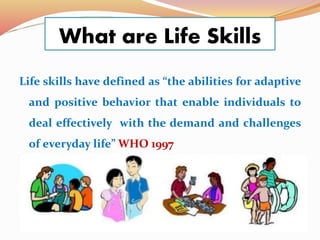
What are Life Skills
Life skills have defined as “the abilities for adaptive
and positive behavior that enable individuals to
deal effectively with the demand and challenges
of everyday life” WHO 1997
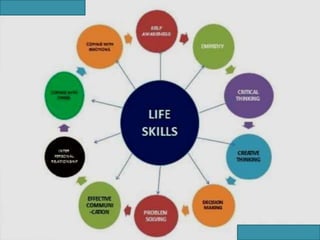
Life Skills
Life skills includes psychosocial competencies
and interpersonal skills that help people make
informed decisions , solve problems , thinks
critically and creatively , communicate effectively
, build healthy relationships , empathize with
others ,and cope with managing their lives in a
healthy and productive manner
Life Skill
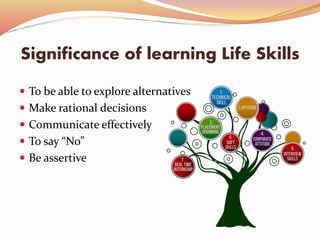
Significance of learning Life Skills
 To be able to explore alternatives
 Make rational decisions
 Communicate effectively
 To say “No”
 Be assertive
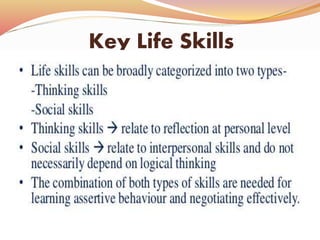
Key Life Skills
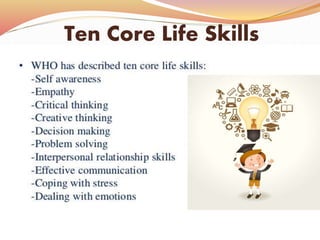
Ten Core Life Skills
Problem Solving Skill
Problems if left unresolved Mental & Physical Stress
 Allows to solve an issue, problem or conflict without
anger , intimidation , insubordination , aggressive
force or behavior
 Devising a plan in order to solve problems
 Examining a related problem
 Adjustment to a situation
Decision Making
 Abilities to assess available options
 Relating current situation to past similar situation
 Foresee the consequences of different decisions
No decision is also a decision
Critical Thinking
 Ability to analyze information and
experiences in objective manner
 Help adolescents to recognize and to
assess the factors influencing attitude and
behavior – value , pressures (peer ,family)
 Key to right attitude towards life
 Assists in developing responsible behavior
 Explore available alternatives
 Openness to experience
Self Awareness
 Body movement and gestures
 Taking responsibility for own behavior
 Being able to stand up for ones own values and
needs
 Awareness of mental process
 Knowing ones through , feelings and actions
Coping with emotions & stress
 Recognizing effects of emotions on others and
ourselves
 Being aware of how emotions influence behaviors
 Able to respond to emotions appropriately
 Recognizing sources of stress in our life
 Recognizing how these affect us
 Identifying ways that
help the control our levels of stress
 Learning how to relax
to minimize tensions
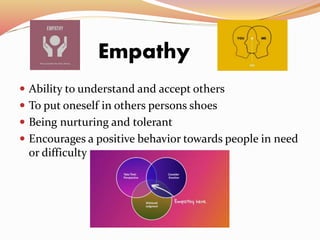
Empathy
 Ability to understand and accept others
 To put oneself in others persons shoes
 Being nurturing and tolerant
 Encourages a positive behavior towards people in need
or difficulty
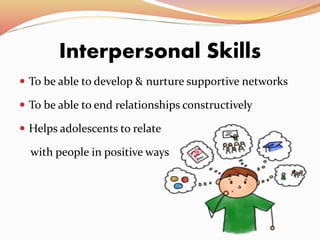
Interpersonal Skills
 To be able to develop & nurture supportive networks
 To be able to end relationships constructively
 Helps adolescents to relate
with people in positive ways
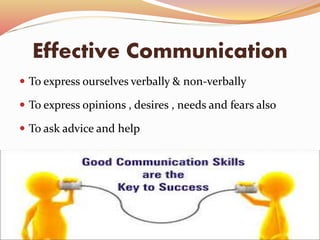
Effective Communication
 To express ourselves verbally & non-verbally
 To express opinions , desires , needs and fears also
 To ask advice and help
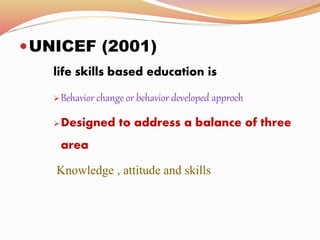
UNICEF (2001)
life skills based education is
Behavior change or behavior developed approch
Designed to address a balance of three
area
Knowledge , attitude and skills
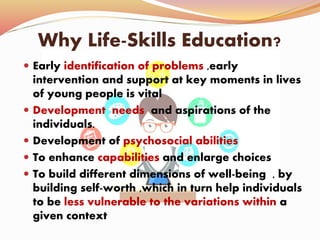
Why Life-Skills Education?
 Early identification of problems ,early
intervention and support at key moments in lives
of young people is vital
 Development needs and aspirations of the
individuals.
 Development of psychosocial abilities
 To enhance capabilities and enlarge choices
 To build different dimensions of well-being , by
building self-worth ,which in turn help individuals
to be less vulnerable to the variations within a
given context
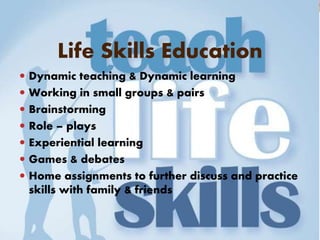
Life Skills Education
 Dynamic teaching & Dynamic learning
 Working in small groups & pairs
 Brainstorming
 Role – plays
 Experiential learning
 Games & debates
 Home assignments to further discuss and practice
skills with family & friends
Significance of life skill
education in children
 Early identification of problems , early intervention
and support at key moments in lives of young people
is vital
 Development needs and aspirations of the
individuals
 Development of psychosocial ability
 To enhance capacities and enlarge choices
 To built different dimensions of well being , by
building self image and self worth.
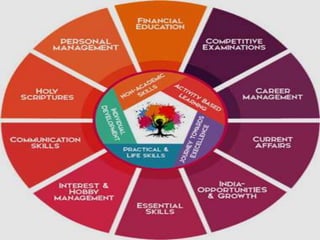
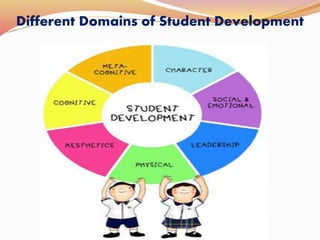
Different Domains of Student Development
How to impart life skill education
 Using dynamic teaching and learning process
 Exploring student ideas and knowledge
 Using active involvement methods
 Giving proper practices based on the proper life skill
 Using day to day situations
 Giving further discussion platforms
Thanks

Life skill education and teaching

  • 1.
    Suresh Babu G AsstProfessor CTE Paippad
  • 2.
    What are LifeSkills Life skills have defined as “the abilities for adaptive and positive behavior that enable individuals to deal effectively with the demand and challenges of everyday life” WHO 1997
  • 3.
    Life Skills Life skillsincludes psychosocial competencies and interpersonal skills that help people make informed decisions , solve problems , thinks critically and creatively , communicate effectively , build healthy relationships , empathize with others ,and cope with managing their lives in a healthy and productive manner
  • 4.
  • 5.
    Significance of learningLife Skills  To be able to explore alternatives  Make rational decisions  Communicate effectively  To say “No”  Be assertive
  • 6.
  • 7.
  • 9.
    Problem Solving Skill Problemsif left unresolved Mental & Physical Stress  Allows to solve an issue, problem or conflict without anger , intimidation , insubordination , aggressive force or behavior  Devising a plan in order to solve problems  Examining a related problem  Adjustment to a situation
  • 10.
    Decision Making  Abilitiesto assess available options  Relating current situation to past similar situation  Foresee the consequences of different decisions No decision is also a decision
  • 11.
    Critical Thinking  Abilityto analyze information and experiences in objective manner  Help adolescents to recognize and to assess the factors influencing attitude and behavior – value , pressures (peer ,family)  Key to right attitude towards life  Assists in developing responsible behavior  Explore available alternatives  Openness to experience
  • 12.
    Self Awareness  Bodymovement and gestures  Taking responsibility for own behavior  Being able to stand up for ones own values and needs  Awareness of mental process  Knowing ones through , feelings and actions
  • 13.
    Coping with emotions& stress  Recognizing effects of emotions on others and ourselves  Being aware of how emotions influence behaviors  Able to respond to emotions appropriately  Recognizing sources of stress in our life  Recognizing how these affect us  Identifying ways that help the control our levels of stress  Learning how to relax to minimize tensions
  • 14.
    Empathy  Ability tounderstand and accept others  To put oneself in others persons shoes  Being nurturing and tolerant  Encourages a positive behavior towards people in need or difficulty
  • 15.
    Interpersonal Skills  Tobe able to develop & nurture supportive networks  To be able to end relationships constructively  Helps adolescents to relate with people in positive ways
  • 16.
    Effective Communication  Toexpress ourselves verbally & non-verbally  To express opinions , desires , needs and fears also  To ask advice and help
  • 18.
    UNICEF (2001) life skillsbased education is Behavior change or behavior developed approch Designed to address a balance of three area Knowledge , attitude and skills
  • 19.
    Why Life-Skills Education? Early identification of problems ,early intervention and support at key moments in lives of young people is vital  Development needs and aspirations of the individuals.  Development of psychosocial abilities  To enhance capabilities and enlarge choices  To build different dimensions of well-being , by building self-worth ,which in turn help individuals to be less vulnerable to the variations within a given context
  • 21.
    Life Skills Education Dynamic teaching & Dynamic learning  Working in small groups & pairs  Brainstorming  Role – plays  Experiential learning  Games & debates  Home assignments to further discuss and practice skills with family & friends
  • 22.
    Significance of lifeskill education in children  Early identification of problems , early intervention and support at key moments in lives of young people is vital  Development needs and aspirations of the individuals  Development of psychosocial ability  To enhance capacities and enlarge choices  To built different dimensions of well being , by building self image and self worth.
  • 23.
    Different Domains ofStudent Development
  • 24.
    How to impartlife skill education  Using dynamic teaching and learning process  Exploring student ideas and knowledge  Using active involvement methods  Giving proper practices based on the proper life skill  Using day to day situations  Giving further discussion platforms
  • 25.