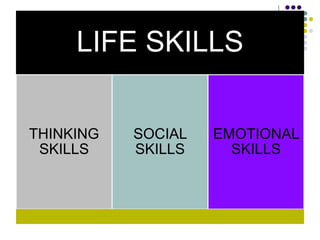
LIFE SKILLS
DEVELOPMENT
UNDERSTANDING
THE DEVELOPMENT OF
LIFE SKILLS
THE THIRSTY CROW
WHAT WERE THE THOUGHTS AND
FEELINGS OF THE CROW ?
 He was thirsty and knew that he was thirsty.
When he saw the low level of water, he felt
disappointed and knew that he was feeling
disappointed.
 This skill of knowing about self is called “self-
awareness”
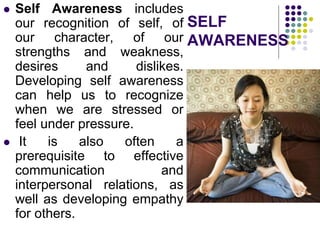
SELF
AWARENESS
 Self Awareness includes
our recognition of self, of
our character, of our
strengths and weakness,
desires and dislikes.
Developing self awareness
can help us to recognize
when we are stressed or
feel under pressure.
 It is also often a
prerequisite to effective
communication and
interpersonal relations, as
well as developing empathy
for others.
THE THIRSTY CROW
WHY WAS THE CROW DISAPPOINTED?
 Because he knew that he would not be able
to reach the water and quench his thirst.
 This kind of analytical thinking is called
“critical thinking”
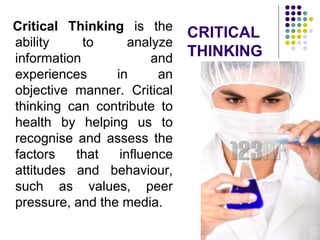
CRITICAL
THINKING
Critical Thinking is the
ability to analyze
information and
experiences in an
objective manner. Critical
thinking can contribute to
health by helping us to
recognise and assess the
factors that influence
attitudes and behaviour,
such as values, peer
pressure, and the media.
THE THIRSTY CROW
WHAT PROBLEM WAS THE CROW FACING
IN DRINKING THE WATER IN THE POT?
 He could not reach it at its present level; he
could not overturn or break the pot.
 This is an example of “critical thinking for
problem solving”.
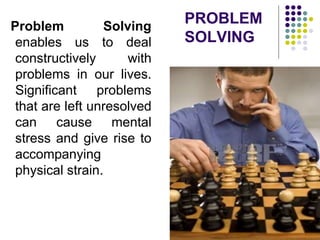
PROBLEM
SOLVING
Problem Solving
enables us to deal
constructively with
problems in our lives.
Significant problems
that are left unresolved
can cause mental
stress and give rise to
accompanying
physical strain.
THE THIRSTY CROW
WHAT DID THE CROW DO TO FIND A WAY OUT?
 He kept thinking and wanted to find a new way to
have a drink of water. He thought of using stones to
raise the water level.
 This is one example of “creative thinking” to solve
the problem ( problem solving skill ).
 He decided to use the stones -“decision making
skill”.
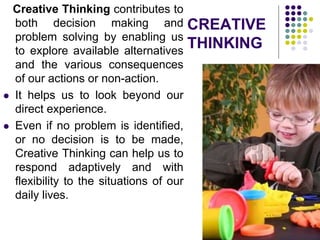
CREATIVE
THINKING
Creative Thinking contributes to
both decision making and
problem solving by enabling us
to explore available alternatives
and the various consequences
of our actions or non-action.
 It helps us to look beyond our
direct experience.
 Even if no problem is identified,
or no decision is to be made,
Creative Thinking can help us to
respond adaptively and with
flexibility to the situations of our
daily lives.
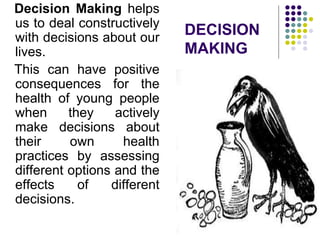
DECISION
MAKING
Decision Making helps
us to deal constructively
with decisions about our
lives.
This can have positive
consequences for the
health of young people
when they actively
make decisions about
their own health
practices by assessing
different options and the
effects of different
decisions.
LIFE SKILLS: DEFINITION
Life Skills are abilities for adaptive and
positive behaviour that enable individuals to
deal effectively with the demands and
challenges of everyday life.
Life Skills are abilities that facilitate the
physical, mental and emotional well-being of
an individual.
LIFE SKILLS
Ten core life skills are as
follows:
 Self Awareness
 Interpersonal
Relationships
 Critical Thinking
 Decision Making
 Dealing With Emotions
 Empathy
 Effective
Communication
 Creative Thinking
 Problem Solving
 Coping With Stress
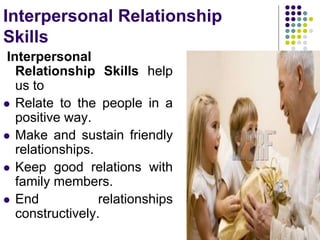
Interpersonal Relationship
Skills
Interpersonal
Relationship Skills help
us to
 Relate to the people in a
positive way.
 Make and sustain friendly
relationships.
 Keep good relations with
family members.
 End relationships
constructively.
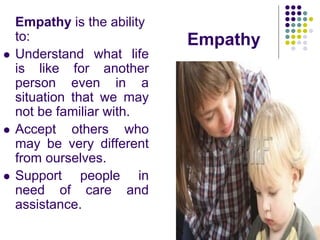
Empathy
Empathy is the ability
to:
 Understand what life
is like for another
person even in a
situation that we may
not be familiar with.
 Accept others who
may be very different
from ourselves.
 Support people in
need of care and
assistance.
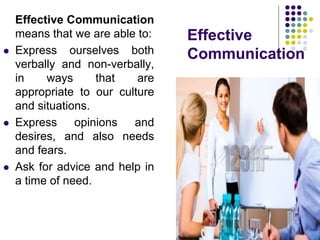
Effective
Communication
Effective Communication
means that we are able to:
 Express ourselves both
verbally and non-verbally,
in ways that are
appropriate to our culture
and situations.
 Express opinions and
desires, and also needs
and fears.
 Ask for advice and help in
a time of need.
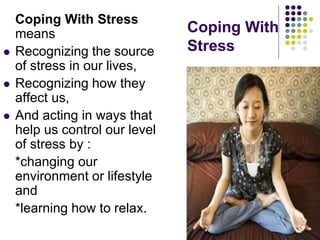
Coping With
Stress
Coping With Stress
means
 Recognizing the source
of stress in our lives,
 Recognizing how they
affect us,
 And acting in ways that
help us control our level
of stress by :
*changing our
environment or lifestyle
and
*learning how to relax.
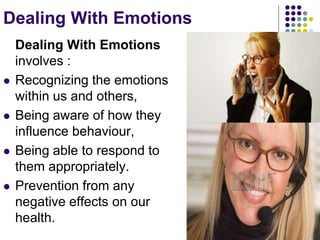
Dealing With Emotions
involves :
 Recognizing the emotions
within us and others,
 Being aware of how they
influence behaviour,
 Being able to respond to
them appropriately.
 Prevention from any
negative effects on our
health.
KEY MESSAGES
 Life skills help adolescents to behave in healthy
and positive ways.
 Various life skills work in conjunction.
 Many life skills are required to manage a
situation effectively.
 One skill may be utilized in many situations.
 Adolescents learn these skills from parents/
teachers/ significant others who act as their role
models.
 It requires some practice to utilise the most
appropriate combinations of life skills in a given
situation.
LIFE SKILLS
THINKING
SKILLS
SOCIAL
SKILLS
EMOTIONAL
SKILLS
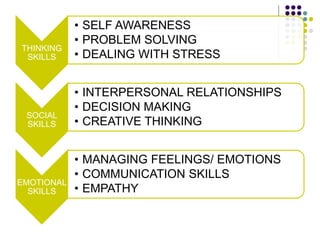
THINKING
SKILLS
• SELF AWARENESS
• PROBLEM SOLVING
• DEALING WITH STRESS
SOCIAL
SKILLS
• INTERPERSONAL RELATIONSHIPS
• DECISION MAKING
• CREATIVE THINKING
EMOTIONAL
SKILLS
• MANAGING FEELINGS/ EMOTIONS
• COMMUNICATION SKILLS
• EMPATHY
WHY SHOULD WE LEARN
LIFE SKILLS?
Life skills enable us :
To adapt to situations and people.
To produce quality results by using less time,
energy and resources.
 Life skills bring us greater acceptance by
others.
 Life skills bring us a healthy positive life.
Exercises
 Tell the situations in your life where you have
utilized the life skills.
 Which life skill do you use the most?
 Which life skill do you use the least?
 How these life skills are related?
 In what situations have you used life skills in
conjunction?

Understanding development of lifeskills

  • 1.
  • 2.
  • 3.
    THE THIRSTY CROW WHATWERE THE THOUGHTS AND FEELINGS OF THE CROW ?  He was thirsty and knew that he was thirsty. When he saw the low level of water, he felt disappointed and knew that he was feeling disappointed.  This skill of knowing about self is called “self- awareness”
  • 4.
    SELF AWARENESS  Self Awarenessincludes our recognition of self, of our character, of our strengths and weakness, desires and dislikes. Developing self awareness can help us to recognize when we are stressed or feel under pressure.  It is also often a prerequisite to effective communication and interpersonal relations, as well as developing empathy for others.
  • 5.
    THE THIRSTY CROW WHYWAS THE CROW DISAPPOINTED?  Because he knew that he would not be able to reach the water and quench his thirst.  This kind of analytical thinking is called “critical thinking”
  • 6.
    CRITICAL THINKING Critical Thinking isthe ability to analyze information and experiences in an objective manner. Critical thinking can contribute to health by helping us to recognise and assess the factors that influence attitudes and behaviour, such as values, peer pressure, and the media.
  • 7.
    THE THIRSTY CROW WHATPROBLEM WAS THE CROW FACING IN DRINKING THE WATER IN THE POT?  He could not reach it at its present level; he could not overturn or break the pot.  This is an example of “critical thinking for problem solving”.
  • 8.
    PROBLEM SOLVING Problem Solving enables usto deal constructively with problems in our lives. Significant problems that are left unresolved can cause mental stress and give rise to accompanying physical strain.
  • 9.
    THE THIRSTY CROW WHATDID THE CROW DO TO FIND A WAY OUT?  He kept thinking and wanted to find a new way to have a drink of water. He thought of using stones to raise the water level.  This is one example of “creative thinking” to solve the problem ( problem solving skill ).  He decided to use the stones -“decision making skill”.
  • 10.
    CREATIVE THINKING Creative Thinking contributesto both decision making and problem solving by enabling us to explore available alternatives and the various consequences of our actions or non-action.  It helps us to look beyond our direct experience.  Even if no problem is identified, or no decision is to be made, Creative Thinking can help us to respond adaptively and with flexibility to the situations of our daily lives.
  • 11.
    DECISION MAKING Decision Making helps usto deal constructively with decisions about our lives. This can have positive consequences for the health of young people when they actively make decisions about their own health practices by assessing different options and the effects of different decisions.
  • 12.
    LIFE SKILLS: DEFINITION LifeSkills are abilities for adaptive and positive behaviour that enable individuals to deal effectively with the demands and challenges of everyday life. Life Skills are abilities that facilitate the physical, mental and emotional well-being of an individual.
  • 13.
    LIFE SKILLS Ten corelife skills are as follows:  Self Awareness  Interpersonal Relationships  Critical Thinking  Decision Making  Dealing With Emotions  Empathy  Effective Communication  Creative Thinking  Problem Solving  Coping With Stress
  • 14.
    Interpersonal Relationship Skills Interpersonal Relationship Skillshelp us to  Relate to the people in a positive way.  Make and sustain friendly relationships.  Keep good relations with family members.  End relationships constructively.
  • 15.
    Empathy Empathy is theability to:  Understand what life is like for another person even in a situation that we may not be familiar with.  Accept others who may be very different from ourselves.  Support people in need of care and assistance.
  • 16.
    Effective Communication Effective Communication means thatwe are able to:  Express ourselves both verbally and non-verbally, in ways that are appropriate to our culture and situations.  Express opinions and desires, and also needs and fears.  Ask for advice and help in a time of need.
  • 17.
    Coping With Stress Coping WithStress means  Recognizing the source of stress in our lives,  Recognizing how they affect us,  And acting in ways that help us control our level of stress by : *changing our environment or lifestyle and *learning how to relax.
  • 18.
    Dealing With Emotions DealingWith Emotions involves :  Recognizing the emotions within us and others,  Being aware of how they influence behaviour,  Being able to respond to them appropriately.  Prevention from any negative effects on our health.
  • 19.
    KEY MESSAGES  Lifeskills help adolescents to behave in healthy and positive ways.  Various life skills work in conjunction.  Many life skills are required to manage a situation effectively.  One skill may be utilized in many situations.  Adolescents learn these skills from parents/ teachers/ significant others who act as their role models.  It requires some practice to utilise the most appropriate combinations of life skills in a given situation.
  • 20.
  • 21.
    THINKING SKILLS • SELF AWARENESS •PROBLEM SOLVING • DEALING WITH STRESS SOCIAL SKILLS • INTERPERSONAL RELATIONSHIPS • DECISION MAKING • CREATIVE THINKING EMOTIONAL SKILLS • MANAGING FEELINGS/ EMOTIONS • COMMUNICATION SKILLS • EMPATHY
  • 22.
    WHY SHOULD WELEARN LIFE SKILLS? Life skills enable us : To adapt to situations and people. To produce quality results by using less time, energy and resources.  Life skills bring us greater acceptance by others.  Life skills bring us a healthy positive life.
  • 23.
    Exercises  Tell thesituations in your life where you have utilized the life skills.  Which life skill do you use the most?  Which life skill do you use the least?  How these life skills are related?  In what situations have you used life skills in conjunction?