Life Skills Training Program
“We are guilty of many errors and many faults, but our
  worst crime is abandoning the children, neglecting the
 foundation of life. Many of the things we need, can wait.
The children cannot. Right now is the time his bones are
   being formed, his blood is being made and his senses
           are being developed to him we cannot answer
                       “Tomorrow”. His name is “Today”.

                                   Gabriela Mistral, 1948
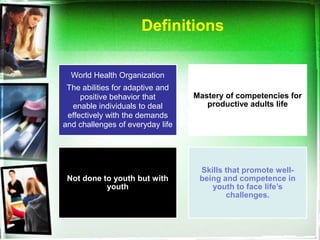
Definitions

  World Health Organization
 The abilities for adaptive and
     positive behavior that       Mastery of competencies for
  enable individuals to deal         productive adults life
 effectively with the demands
and challenges of everyday life


                                   Skills that promote well-
 Not done to youth but with        being and competence in
           youth                      youth to face life’s
                                          challenges.
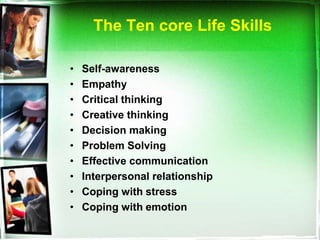
The Ten core Life Skills

•   Self-awareness
•   Empathy
•   Critical thinking
•   Creative thinking
•   Decision making
•   Problem Solving
•   Effective communication
•   Interpersonal relationship
•   Coping with stress
•   Coping with emotion
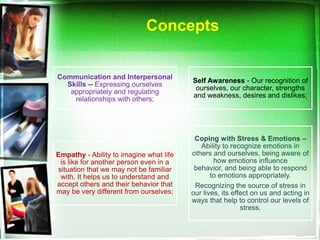
Concepts


Communication and Interpersonal
                                         Self Awareness - Our recognition of
  Skills -- Expressing ourselves
                                          ourselves, our character, strengths
   appropriately and regulating
                                         and weakness, desires and dislikes;
    relationships with others;


                                          Coping with Stress & Emotions –
                                            Ability to recognize emotions in
Empathy - Ability to imagine what life   others and ourselves, being aware of
 is like for another person even in a            how emotions influence
situation that we may not be familiar     behavior, and being able to respond
 with. It helps us to understand and            to emotions appropriately.
accept others and their behavior that     Recognizing the source of stress in
may be very different from ourselves;    our lives, its effect on us and acting in
                                         ways that help to control our levels of
                                                           stress.
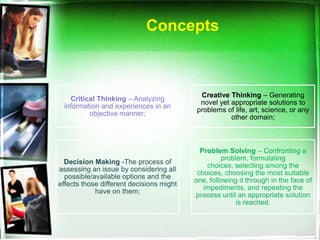
Concepts


                                           Creative Thinking – Generating
   Critical Thinking – Analyzing
                                           novel yet appropriate solutions to
 information and experiences in an
                                          problems of life, art, science, or any
         objective manner;
                                                     other domain;


                                            Problem Solving – Confronting a
                                                   problem, formulating
  Decision Making -The process of
                                              choices, selecting among the
assessing an issue by considering all
                                           choices, choosing the most suitable
  possible/available options and the
                                          one, following it through in the face of
effects those different decisions might
                                             impediments, and repeating the
            have on them;
                                          process until an appropriate solution
                                                        is reached.
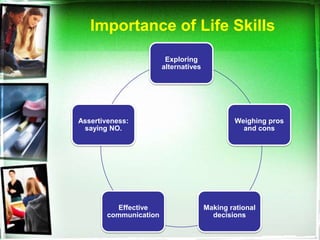
Importance of Life Skills
                         Exploring
                        alternatives


Assertiveness:                                 Weighing pros
 saying NO.                                      and cons


           Effective                   Making rational
        communication                    decisions
Need for Life Skills Training
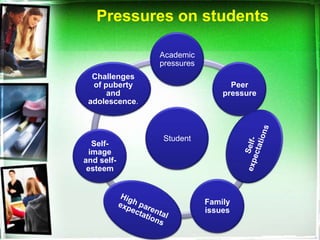
Pressures on students

                Academic
                pressures
  Challenges
  of puberty                      Peer
      and                       pressure
 adolescence.


                Student
  Self-
 image
and self-
 esteem


                            Family
                            issues
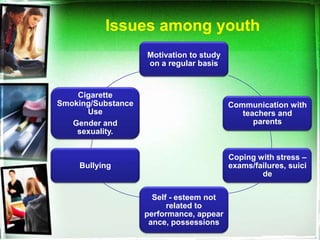
Issues among youth
                    Motivation to study
                    on a regular basis


    Cigarette
Smoking/Substance                         Communication with
      Use                                    teachers and
   Gender and                                   parents
    sexuality.


                                          Coping with stress –
    Bullying                              exams/failures, suici
                                                  de

                      Self - esteem not
                          related to
                    performance, appear
                     ance, possessions
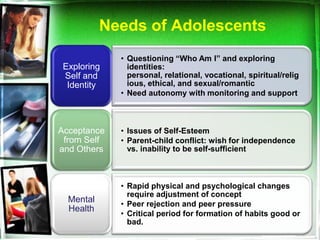
Needs of Adolescents
             • Questioning “Who Am I” and exploring
 Exploring     identities:
 Self and      personal, relational, vocational, spiritual/relig
  Identity     ious, ethical, and sexual/romantic
             • Need autonomy with monitoring and support


Acceptance   • Issues of Self-Esteem
 from Self   • Parent-child conflict: wish for independence
and Others     vs. inability to be self-sufficient


             • Rapid physical and psychological changes
               require adjustment of concept
  Mental     • Peer rejection and peer pressure
  Health
             • Critical period for formation of habits good or
               bad.
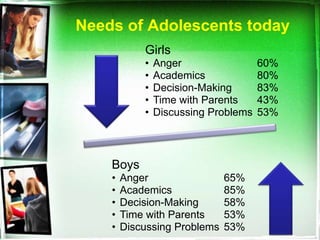
Needs of Adolescents today
            Girls
            •   Anger                 60%
            •   Academics             80%
            •   Decision-Making       83%
            •   Time with Parents     43%
            •   Discussing Problems   53%


    Boys
    •   Anger                 65%
    •   Academics             85%
    •   Decision-Making       58%
    •   Time with Parents     53%
    •   Discussing Problems   53%
LIFE SKILLS TRAINING FOR
   SCHOOL STUDENTS
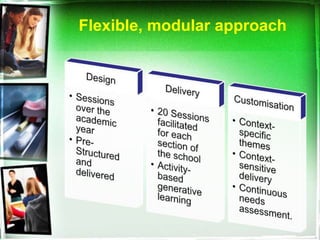
Flexible, modular approach
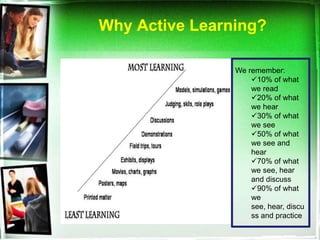
Why Active Learning?

                We remember:
                    10% of what
                    we read
                    20% of what
                    we hear
                    30% of what
                    we see
                    50% of what
                    we see and
                    hear
                    70% of what
                    we see, hear
                    and discuss
                    90% of what
                    we
                    see, hear, discu
                    ss and practice
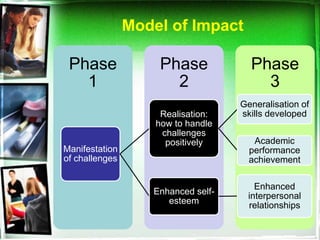
Model of Impact

 Phase               Phase            Phase
   1                   2                3
                                    Generalisation of
                     Realisation:   skills developed
                    how to handle
                     challenges
                      positively       Academic
Manifestation                         performance
of challenges                         achievement

                                       Enhanced
                   Enhanced self-    interpersonal
                      esteem         relationships
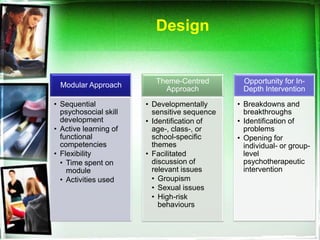
Design


                         Theme-Centred         Opportunity for In-
 Modular Approach
                           Approach            Depth Intervention

• Sequential           • Developmentally      • Breakdowns and
  psychosocial skill     sensitive sequence     breakthroughs
  development          • Identification of    • Identification of
• Active learning of     age-, class-, or       problems
  functional             school-specific      • Opening for
  competencies           themes                 individual- or group-
• Flexibility          • Facilitated            level
  • Time spent on        discussion of          psychotherapeutic
    module               relevant issues        intervention
  • Activities used      • Groupism
                         • Sexual issues
                         • High-risk
                           behaviours
BLUE PHOENIX CONSULTING PARTNERS
#544, 12th cross, 27th Main, I Phase J.P. Nagar,
Bangalore – 560078

Ph: +91 9880925873
raghavendra@bluephoenixpartners.com
www.bluephoenixpartners.com

Life skills training program

  • 1.
  • 2.
    “We are guiltyof many errors and many faults, but our worst crime is abandoning the children, neglecting the foundation of life. Many of the things we need, can wait. The children cannot. Right now is the time his bones are being formed, his blood is being made and his senses are being developed to him we cannot answer “Tomorrow”. His name is “Today”. Gabriela Mistral, 1948
  • 3.
    Definitions WorldHealth Organization The abilities for adaptive and positive behavior that Mastery of competencies for enable individuals to deal productive adults life effectively with the demands and challenges of everyday life Skills that promote well- Not done to youth but with being and competence in youth youth to face life’s challenges.
  • 4.
    The Ten coreLife Skills • Self-awareness • Empathy • Critical thinking • Creative thinking • Decision making • Problem Solving • Effective communication • Interpersonal relationship • Coping with stress • Coping with emotion
  • 5.
    Concepts Communication and Interpersonal Self Awareness - Our recognition of Skills -- Expressing ourselves ourselves, our character, strengths appropriately and regulating and weakness, desires and dislikes; relationships with others; Coping with Stress & Emotions – Ability to recognize emotions in Empathy - Ability to imagine what life others and ourselves, being aware of is like for another person even in a how emotions influence situation that we may not be familiar behavior, and being able to respond with. It helps us to understand and to emotions appropriately. accept others and their behavior that Recognizing the source of stress in may be very different from ourselves; our lives, its effect on us and acting in ways that help to control our levels of stress.
  • 6.
    Concepts Creative Thinking – Generating Critical Thinking – Analyzing novel yet appropriate solutions to information and experiences in an problems of life, art, science, or any objective manner; other domain; Problem Solving – Confronting a problem, formulating Decision Making -The process of choices, selecting among the assessing an issue by considering all choices, choosing the most suitable possible/available options and the one, following it through in the face of effects those different decisions might impediments, and repeating the have on them; process until an appropriate solution is reached.
  • 7.
    Importance of LifeSkills Exploring alternatives Assertiveness: Weighing pros saying NO. and cons Effective Making rational communication decisions
  • 8.
    Need for LifeSkills Training
  • 9.
    Pressures on students Academic pressures Challenges of puberty Peer and pressure adolescence. Student Self- image and self- esteem Family issues
  • 10.
    Issues among youth Motivation to study on a regular basis Cigarette Smoking/Substance Communication with Use teachers and Gender and parents sexuality. Coping with stress – Bullying exams/failures, suici de Self - esteem not related to performance, appear ance, possessions
  • 11.
    Needs of Adolescents • Questioning “Who Am I” and exploring Exploring identities: Self and personal, relational, vocational, spiritual/relig Identity ious, ethical, and sexual/romantic • Need autonomy with monitoring and support Acceptance • Issues of Self-Esteem from Self • Parent-child conflict: wish for independence and Others vs. inability to be self-sufficient • Rapid physical and psychological changes require adjustment of concept Mental • Peer rejection and peer pressure Health • Critical period for formation of habits good or bad.
  • 12.
    Needs of Adolescentstoday Girls • Anger 60% • Academics 80% • Decision-Making 83% • Time with Parents 43% • Discussing Problems 53% Boys • Anger 65% • Academics 85% • Decision-Making 58% • Time with Parents 53% • Discussing Problems 53%
  • 13.
    LIFE SKILLS TRAININGFOR SCHOOL STUDENTS
  • 14.
  • 15.
    Why Active Learning? We remember: 10% of what we read 20% of what we hear 30% of what we see 50% of what we see and hear 70% of what we see, hear and discuss 90% of what we see, hear, discu ss and practice
  • 16.
    Model of Impact Phase Phase Phase 1 2 3 Generalisation of Realisation: skills developed how to handle challenges positively Academic Manifestation performance of challenges achievement Enhanced Enhanced self- interpersonal esteem relationships
  • 17.
    Design Theme-Centred Opportunity for In- Modular Approach Approach Depth Intervention • Sequential • Developmentally • Breakdowns and psychosocial skill sensitive sequence breakthroughs development • Identification of • Identification of • Active learning of age-, class-, or problems functional school-specific • Opening for competencies themes individual- or group- • Flexibility • Facilitated level • Time spent on discussion of psychotherapeutic module relevant issues intervention • Activities used • Groupism • Sexual issues • High-risk behaviours
  • 18.
    BLUE PHOENIX CONSULTINGPARTNERS #544, 12th cross, 27th Main, I Phase J.P. Nagar, Bangalore – 560078 Ph: +91 9880925873 raghavendra@bluephoenixpartners.com www.bluephoenixpartners.com