LIFE SKILLs
Life skills are abilities for adaptive and
positive behaviour that enable individuals
to deal effectively with the demands and
challenges of everyday life. Life skills are
abilities that facilitate the physical,
mental and emotional well-being of an
individual .
The term ‘Life Skills’ refers to the skills you
need to make the most out of life.
Life skills are usually associated with
managing and living a better quality of life.
They help us to accomplish our ambitions and
live to our full potential.
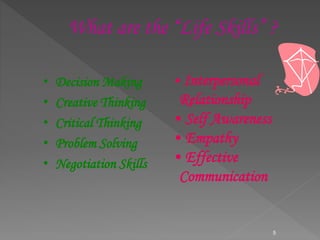
What are the “Life Skills” ?
• Decision Making
• Creative Thinking
• Critical Thinking
• Problem Solving
• Negotiation Skills
• Interpersonal
Relationship
• Self Awareness
• Empathy
• Effective
Communication
5
The term ‘Life Skills’ refers to the skills
you need to make the most out of life.
Life skills are usually associated with
managing and living a better quality of
life. They help us to accomplish our
ambitions and live to our full potential.
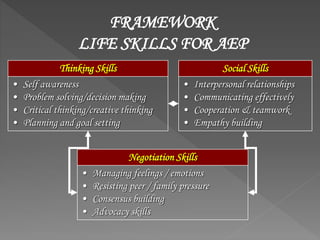
FRAMEWORK
LIFE SKILLS FOR AEP
Negotiation Skills
• Managing feelings / emotions
• Resisting peer / family pressure
• Consensus building
• Advocacy skills
Thinking Skills
• Self awareness
• Problem solving/decision making
• Critical thinking/creative thinking
• Planning and goal setting
Social Skills
• Interpersonal relationships
• Communicating effectively
• Cooperation & teamwork
• Empathy building
Attitude
In psychology, an attitude is an expression of favor or disfavor
toward a person, place, thing, or event (the attitude object).
Prominent psychologist Gordon Allport once described attitudes
"the most distinctive and indispensable concept in contemporary
social psychology."[Attitude can be formed from a person's past
and present .Key topics in the study of attitudes include attitude
measurement, attitude change, consumer behavior, and attitude-
behavior relationships
Self Awareness
Self-awareness includes our recognition of ourselves, of our
character, of our strengths and weaknesses, desires and
dislikes.
Developing self-awareness can help us to recognize when
we are stressed or feel under pressure.
It is also often a prerequisite to effective communication
and interpersonal relations, as well as for developing
empathy for others.
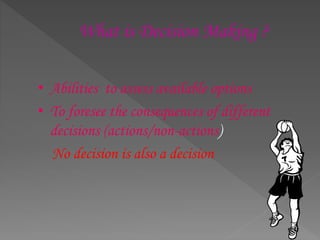
What is Decision Making ?
• Abilities to assess available options
• To foresee the consequences of different
decisions (actions/non-actions)
No decision is also a decision
Decision Making
Major Life Decisions
GOALS
Develop, Prioritize, attain
CHOICE
Of life style,study & food habits, hobbies
COPING UP
With stress, alcohol, drugs, STD, AIDS
CAREER
Choice of profession,further study
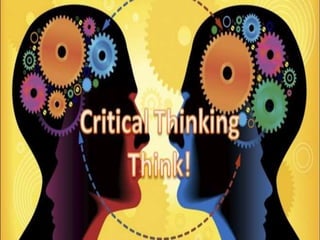
Critical Thinking
Critical thinking is an ability to analyze information
and experiences in an objective manner.
 Critical thinking can contribute to health by helping us
to recognize and assess the factors that influence attitudes
and behavior, such as values, peer pressure, and the media.
Creative Thinking
 Creative thinking contributes to both decision
making and problem solving by enabling us to explore
the available alternatives and various consequences of
our actions or non-action.
Problem Solving
Problem solving enables us to deal
constructively with problems in our lives.
Significant problems that are left
unresolved can cause mental stress and give
rise to accompanying physical strain.
Interpersonal relationship skills
Interpersonal relationship skills help us to relate in
positive ways with the people we interact with. This may
mean being able to make and keep friendly relationships,
which can be of great importance to our mental and social
well being.
It may mean keeping good relations with family
members, which are an important source of social support.
It may also mean being able to end relationships
constructively.
Empathy
Empathy is the ability to imagine what life is like
for another person, even in a situation that we
may not be familiar with.
. Empathy can help us to understand and accept
others, who may be very different from ourselves,
which can improve social interactions, for
example, in situations of ethnic or cultural
diversity.
Effective communication
Effective communication means that we are able
to express ourselves, both verbally and non-
verbally, in ways that are appropriate to our
cultures and situations.
This means being able to express opinions and
desires, but also needs and fears. And it may mean
being able to ask for advice and help in a time of
need.
Managing feelings and emotions
Managing feelings and emotions includes skills for
increasing internal locus of control for managing
emotions, anger and stress. This may mean that we take
action to reduce the sources of stress, for example, by
making changes to our physical environment or lifestyle.
Or it may mean learning how to relax, so that tensions
created by unavoidable stress do not give rise to health
problems.
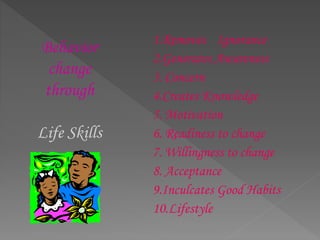
Behavior
change
through
Life Skills
1.Removes Ignorance
2.Generates Awareness
3. Concern
4.Creates Knowledge
5. Motivation
6. Readiness to change
7. Willingness to change
8. Acceptance
9.Inculcates Good Habits
10.Lifestyle
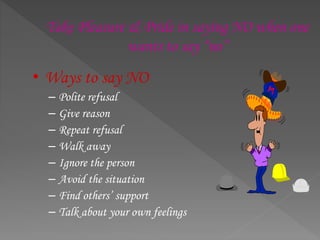
Take Pleasure & Pride in saying NO when one
wants to say “no”
• Ways to say NO
– Polite refusal
– Give reason
– Repeat refusal
– Walk away
– Ignore the person
– Avoid the situation
– Find others’ support
– Talk about your own feelings
• By knowing our positive qualities we are more sure of
ourselves and more able to accomplish things.
• Self-esteem is how a person feels about himself or
herself. Knowing oneself and feeling good about
oneself is an important aspect of the process of
growing up.
Content
• Low self-esteem especially among young girls, often results in
a variety of problems and difficulties. Therefore, it is
important that adolescents should be helped in improving
their self-esteem.
• By liking ourselves we feel good around other people and
better at anything we are doing.
• In every situation of life we use some skills
• Thinking “out of the box” can often find a solution
to a seemingly difficult problem.
• By critical thinking we can analyze all the pros and
cons of any situation.
Key messages
02. dhananjay kapse

02. dhananjay kapse

  • 2.
    LIFE SKILLs Life skillsare abilities for adaptive and positive behaviour that enable individuals to deal effectively with the demands and challenges of everyday life. Life skills are abilities that facilitate the physical, mental and emotional well-being of an individual .
  • 3.
    The term ‘LifeSkills’ refers to the skills you need to make the most out of life. Life skills are usually associated with managing and living a better quality of life. They help us to accomplish our ambitions and live to our full potential.

  • 5.
    What are the“Life Skills” ? • Decision Making • Creative Thinking • Critical Thinking • Problem Solving • Negotiation Skills • Interpersonal Relationship • Self Awareness • Empathy • Effective Communication 5
  • 6.
    The term ‘LifeSkills’ refers to the skills you need to make the most out of life. Life skills are usually associated with managing and living a better quality of life. They help us to accomplish our ambitions and live to our full potential.
  • 7.
    FRAMEWORK LIFE SKILLS FORAEP Negotiation Skills • Managing feelings / emotions • Resisting peer / family pressure • Consensus building • Advocacy skills Thinking Skills • Self awareness • Problem solving/decision making • Critical thinking/creative thinking • Planning and goal setting Social Skills • Interpersonal relationships • Communicating effectively • Cooperation & teamwork • Empathy building
  • 8.
    Attitude In psychology, anattitude is an expression of favor or disfavor toward a person, place, thing, or event (the attitude object). Prominent psychologist Gordon Allport once described attitudes "the most distinctive and indispensable concept in contemporary social psychology."[Attitude can be formed from a person's past and present .Key topics in the study of attitudes include attitude measurement, attitude change, consumer behavior, and attitude- behavior relationships
  • 9.
    Self Awareness Self-awareness includesour recognition of ourselves, of our character, of our strengths and weaknesses, desires and dislikes. Developing self-awareness can help us to recognize when we are stressed or feel under pressure. It is also often a prerequisite to effective communication and interpersonal relations, as well as for developing empathy for others.
  • 10.
    What is DecisionMaking ? • Abilities to assess available options • To foresee the consequences of different decisions (actions/non-actions) No decision is also a decision
  • 11.
    Decision Making Major LifeDecisions GOALS Develop, Prioritize, attain CHOICE Of life style,study & food habits, hobbies COPING UP With stress, alcohol, drugs, STD, AIDS CAREER Choice of profession,further study
  • 12.
    Critical Thinking Critical thinkingis an ability to analyze information and experiences in an objective manner.  Critical thinking can contribute to health by helping us to recognize and assess the factors that influence attitudes and behavior, such as values, peer pressure, and the media.
  • 14.
    Creative Thinking  Creativethinking contributes to both decision making and problem solving by enabling us to explore the available alternatives and various consequences of our actions or non-action.
  • 15.
    Problem Solving Problem solvingenables us to deal constructively with problems in our lives. Significant problems that are left unresolved can cause mental stress and give rise to accompanying physical strain.
  • 16.
    Interpersonal relationship skills Interpersonalrelationship skills help us to relate in positive ways with the people we interact with. This may mean being able to make and keep friendly relationships, which can be of great importance to our mental and social well being. It may mean keeping good relations with family members, which are an important source of social support. It may also mean being able to end relationships constructively.
  • 17.
    Empathy Empathy is theability to imagine what life is like for another person, even in a situation that we may not be familiar with. . Empathy can help us to understand and accept others, who may be very different from ourselves, which can improve social interactions, for example, in situations of ethnic or cultural diversity.
  • 18.
    Effective communication Effective communicationmeans that we are able to express ourselves, both verbally and non- verbally, in ways that are appropriate to our cultures and situations. This means being able to express opinions and desires, but also needs and fears. And it may mean being able to ask for advice and help in a time of need.
  • 19.
    Managing feelings andemotions Managing feelings and emotions includes skills for increasing internal locus of control for managing emotions, anger and stress. This may mean that we take action to reduce the sources of stress, for example, by making changes to our physical environment or lifestyle. Or it may mean learning how to relax, so that tensions created by unavoidable stress do not give rise to health problems.
  • 20.
    Behavior change through Life Skills 1.Removes Ignorance 2.GeneratesAwareness 3. Concern 4.Creates Knowledge 5. Motivation 6. Readiness to change 7. Willingness to change 8. Acceptance 9.Inculcates Good Habits 10.Lifestyle
  • 21.
    Take Pleasure &Pride in saying NO when one wants to say “no” • Ways to say NO – Polite refusal – Give reason – Repeat refusal – Walk away – Ignore the person – Avoid the situation – Find others’ support – Talk about your own feelings
  • 22.
    • By knowingour positive qualities we are more sure of ourselves and more able to accomplish things. • Self-esteem is how a person feels about himself or herself. Knowing oneself and feeling good about oneself is an important aspect of the process of growing up.
  • 23.
    Content • Low self-esteemespecially among young girls, often results in a variety of problems and difficulties. Therefore, it is important that adolescents should be helped in improving their self-esteem. • By liking ourselves we feel good around other people and better at anything we are doing.
  • 24.
    • In everysituation of life we use some skills • Thinking “out of the box” can often find a solution to a seemingly difficult problem. • By critical thinking we can analyze all the pros and cons of any situation. Key messages