
(ALEXANDRIA ENGINEERING
JOURNAL)
MADE BY-JASLEEN KAUR
CHANDIGARH UNIVERSITY
AUTOMATED NEW LICENSE
PLATE RECOGNITION IN EGYPT
Contents
 Introduction
 Methodology
 Experimental results
 Future work
 Conclusion
Proposed Technique
 Consists of three major parts
 Extraction of plate region
 Recognition of plate characters
 Database communication
Introduction
 Control of vehicles is becoming a big
problem.
 AVI systems are used for the purpose of
effective control.
 LPR is a form of AVI. It is an image
processing technology used to identify
vehicles by only their license plates
 Template matching methods
 Learning based methods
 Some previous algorithms have limiting
conditions like
 Limited vehicle speed
 Fixed type of license plate
 Fixed illumination
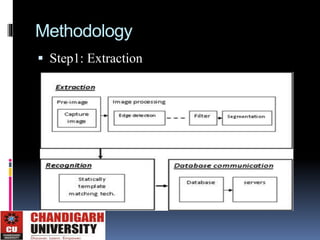
Methodology
 Step1: Extraction
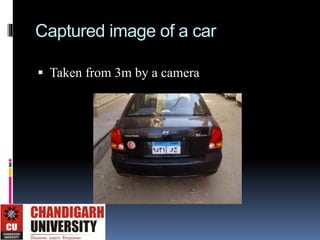
Captured image of a car
 Taken from 3m by a camera
 There are three types of car detection in
License Plat recognition system
 Sensor detection by using infrared sensors
 Image processing methods
 Loops techniques
Image Processing
 This stage is divided into two sub-stages:
 Detection Stage
 Segmentation Stage
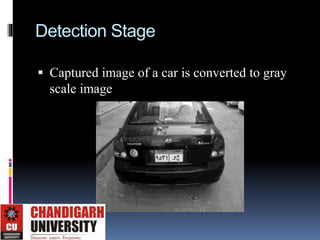
Detection Stage
 Captured image of a car is converted to gray
scale image
 Aim is to find the rectangles of plate vehicles
 Edge detection was applied by using Sobel
edge detector.
 Dilation
 Morphological algorithms
 Erosion
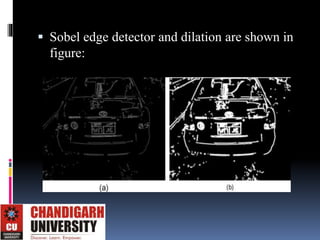
 Sobel edge detector and dilation are shown in
figure:
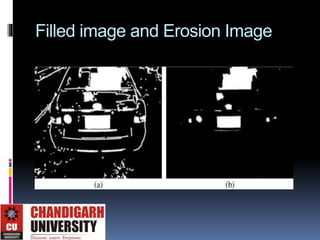
 Filling holes algorithm is used to fill the
rectangles that result from dilation process.
 Smoothing by eroding it using erosion
operation with square element to specify
candidate plate regions.
 However, there may be more than one
candidate region for plate location.
Filled image and Erosion Image
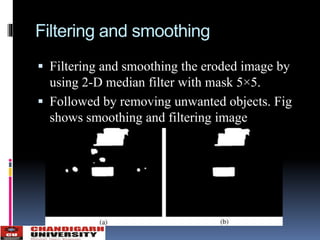
Filtering and smoothing
 Filtering and smoothing the eroded image by
using 2-D median filter with mask 5×5.
 Followed by removing unwanted objects. Fig
shows smoothing and filtering image
Criteria Tests
 Rectangle check
 Checking that the candidate regions for plate had
rectangle shape by compare white pixels count of
these regions to their areas with = ±5% tolerance
 If count of white pixels = ±5% area of these region
, this region may be a plate
 Else
 This region is not a plate
 Plate Dimension Check
 Egyptian plate had a fixed dimension with
Height= 17 cm
Width = 32 cm
So the ratio between heights to width is
approximately 1:2
 After rectangle check, the dimension check applied
on the success regions of rectangle shapes
 This region may be a plate else its not
Segmentation
 Objects or entities of interests are extracted
from an image for recognition processing.
 License plate is segmented into its constituent
parts obtaining the characters individually.
 The plate region is divided into three parts:
 1st part is the high part of plate region that contains
word of Egypt by Arabic and English.
 Background color of this region refers to type of
car
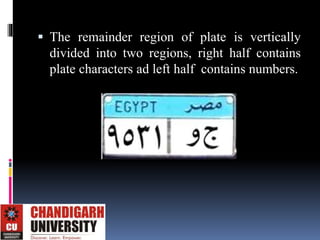
 The remainder region of plate is vertically
divided into two regions, right half contains
plate characters ad left half contains numbers.
 Each plate region of grey scale image and
original image was segmented into two parts
with a ratio 1:2 from height.
 Analyze the 1st part of original image using
color filter to obtain the type of car.
 Then use the 2nd part of grey scale image
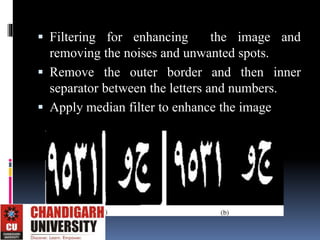
 Filtering for enhancing the image and
removing the noises and unwanted spots.
 Remove the outer border and then inner
separator between the letters and numbers.
 Apply median filter to enhance the image
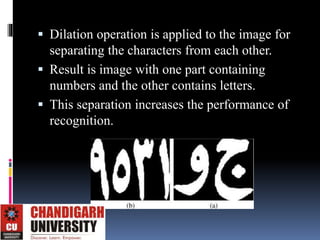
 Dilation operation is applied to the image for
separating the characters from each other.
 Result is image with one part containing
numbers and the other contains letters.
 This separation increases the performance of
recognition.
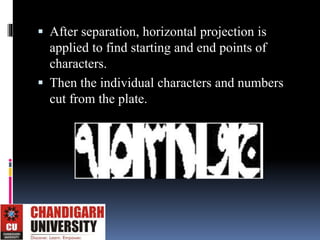
 After separation, horizontal projection is
applied to find starting and end points of
characters.
 Then the individual characters and numbers
cut from the plate.
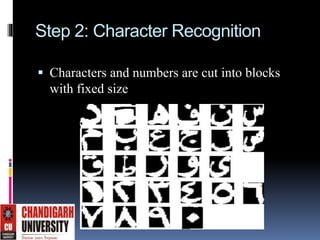
Step 2: Character Recognition
 Characters and numbers are cut into blocks
with fixed size
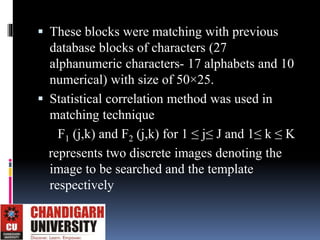
 These blocks were matching with previous
database blocks of characters (27
alphanumeric characters- 17 alphabets and 10
numerical) with size of 50×25.
 Statistical correlation method was used in
matching technique
F1 (j,k) and F2 (j,k) for 1 ≤ j≤ J and 1≤ k ≤ K
represents two discrete images denoting the
image to be searched and the template
respectively
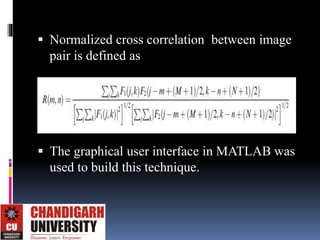
 Normalized cross correlation between image
pair is defined as
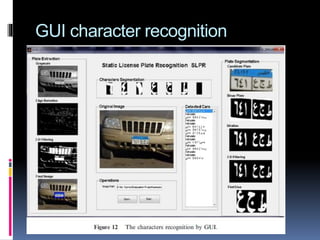
 The graphical user interface in MATLAB was
used to build this technique.
GUI character recognition
Step 3: Database Communication
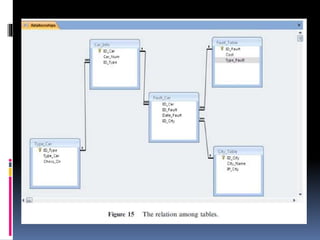
 DB was built using Microsoft access DB.
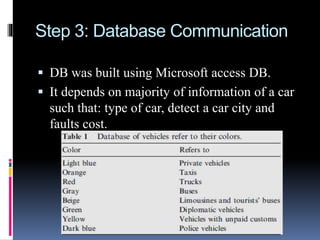
 It depends on majority of information of a car
such that: type of car, detect a car city and
faults cost.
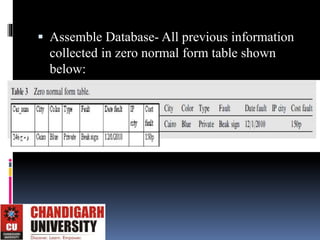
 Assemble Database- All previous information
collected in zero normal form table shown
below:
Networks and Servers
 UDP(User Datagram Protocol) was used to
send and receive data through wireless
network among the servers of the cities.
 By using UDP, computer applications and
datagram can send messages to other hosts on
the internet protocol (IP).
Experimental Results
 This technique had been experimented to
measure performance and accuracy of the
system.
 System was tested by 100 patterns under
several conditions.
 Identification was 91%
 Failed identification came from mostly motion
blurred or overlapped by other vehicles
bodies.
Future work and Conclusion
 Implementation works quite well however
there is still a room for improvement.
 This system was designed by GUI and UDP
under MATLAB software for recognizing new
license plate in Egypt.
 A video stream at real time was advantage of
this technique.
 Performance and accuracy were
excellent(91%)
License Plate recognition

License Plate recognition

  • 1.
    (ALEXANDRIA ENGINEERING JOURNAL) MADE BY-JASLEENKAUR CHANDIGARH UNIVERSITY AUTOMATED NEW LICENSE PLATE RECOGNITION IN EGYPT
  • 2.
    Contents  Introduction  Methodology Experimental results  Future work  Conclusion
  • 3.
    Proposed Technique  Consistsof three major parts  Extraction of plate region  Recognition of plate characters  Database communication
  • 4.
    Introduction  Control ofvehicles is becoming a big problem.  AVI systems are used for the purpose of effective control.  LPR is a form of AVI. It is an image processing technology used to identify vehicles by only their license plates
  • 5.
     Template matchingmethods  Learning based methods  Some previous algorithms have limiting conditions like  Limited vehicle speed  Fixed type of license plate  Fixed illumination
  • 6.
  • 7.
    Captured image ofa car  Taken from 3m by a camera
  • 8.
     There arethree types of car detection in License Plat recognition system  Sensor detection by using infrared sensors  Image processing methods  Loops techniques
  • 9.
    Image Processing  Thisstage is divided into two sub-stages:  Detection Stage  Segmentation Stage
  • 10.
    Detection Stage  Capturedimage of a car is converted to gray scale image
  • 11.
     Aim isto find the rectangles of plate vehicles  Edge detection was applied by using Sobel edge detector.  Dilation  Morphological algorithms  Erosion
  • 12.
     Sobel edgedetector and dilation are shown in figure:
  • 13.
     Filling holesalgorithm is used to fill the rectangles that result from dilation process.  Smoothing by eroding it using erosion operation with square element to specify candidate plate regions.  However, there may be more than one candidate region for plate location.
  • 14.
    Filled image andErosion Image
  • 15.
    Filtering and smoothing Filtering and smoothing the eroded image by using 2-D median filter with mask 5×5.  Followed by removing unwanted objects. Fig shows smoothing and filtering image
  • 16.
    Criteria Tests  Rectanglecheck  Checking that the candidate regions for plate had rectangle shape by compare white pixels count of these regions to their areas with = ±5% tolerance  If count of white pixels = ±5% area of these region , this region may be a plate  Else  This region is not a plate
  • 17.
     Plate DimensionCheck  Egyptian plate had a fixed dimension with Height= 17 cm Width = 32 cm So the ratio between heights to width is approximately 1:2  After rectangle check, the dimension check applied on the success regions of rectangle shapes  This region may be a plate else its not
  • 18.
    Segmentation  Objects orentities of interests are extracted from an image for recognition processing.  License plate is segmented into its constituent parts obtaining the characters individually.  The plate region is divided into three parts:  1st part is the high part of plate region that contains word of Egypt by Arabic and English.  Background color of this region refers to type of car
  • 19.
     The remainderregion of plate is vertically divided into two regions, right half contains plate characters ad left half contains numbers.
  • 20.
     Each plateregion of grey scale image and original image was segmented into two parts with a ratio 1:2 from height.  Analyze the 1st part of original image using color filter to obtain the type of car.  Then use the 2nd part of grey scale image
  • 21.
     Filtering forenhancing the image and removing the noises and unwanted spots.  Remove the outer border and then inner separator between the letters and numbers.  Apply median filter to enhance the image
  • 22.
     Dilation operationis applied to the image for separating the characters from each other.  Result is image with one part containing numbers and the other contains letters.  This separation increases the performance of recognition.
  • 23.
     After separation,horizontal projection is applied to find starting and end points of characters.  Then the individual characters and numbers cut from the plate.
  • 24.
    Step 2: CharacterRecognition  Characters and numbers are cut into blocks with fixed size
  • 25.
     These blockswere matching with previous database blocks of characters (27 alphanumeric characters- 17 alphabets and 10 numerical) with size of 50×25.  Statistical correlation method was used in matching technique F1 (j,k) and F2 (j,k) for 1 ≤ j≤ J and 1≤ k ≤ K represents two discrete images denoting the image to be searched and the template respectively
  • 26.
     Normalized crosscorrelation between image pair is defined as  The graphical user interface in MATLAB was used to build this technique.
  • 27.
  • 28.
    Step 3: DatabaseCommunication  DB was built using Microsoft access DB.  It depends on majority of information of a car such that: type of car, detect a car city and faults cost.
  • 29.
     Assemble Database-All previous information collected in zero normal form table shown below:
  • 31.
    Networks and Servers UDP(User Datagram Protocol) was used to send and receive data through wireless network among the servers of the cities.  By using UDP, computer applications and datagram can send messages to other hosts on the internet protocol (IP).
  • 32.
    Experimental Results  Thistechnique had been experimented to measure performance and accuracy of the system.  System was tested by 100 patterns under several conditions.  Identification was 91%  Failed identification came from mostly motion blurred or overlapped by other vehicles bodies.
  • 33.
    Future work andConclusion  Implementation works quite well however there is still a room for improvement.  This system was designed by GUI and UDP under MATLAB software for recognizing new license plate in Egypt.  A video stream at real time was advantage of this technique.  Performance and accuracy were excellent(91%)