L.O: STUDENTS WILL BE
ABLE TO EXPLAIN NETWORK
REDUNDANCY.
15-30 minutes (<1 class period)
DO NOW: READ
Unit 4 Lab 2: Reliable
Communication, Page 2
Given the enormous amount of data
traveling around, the Internet needs to be
reliable.
The Internet is made reliable by building
many redundant connections into the
physical systems of the Internet.
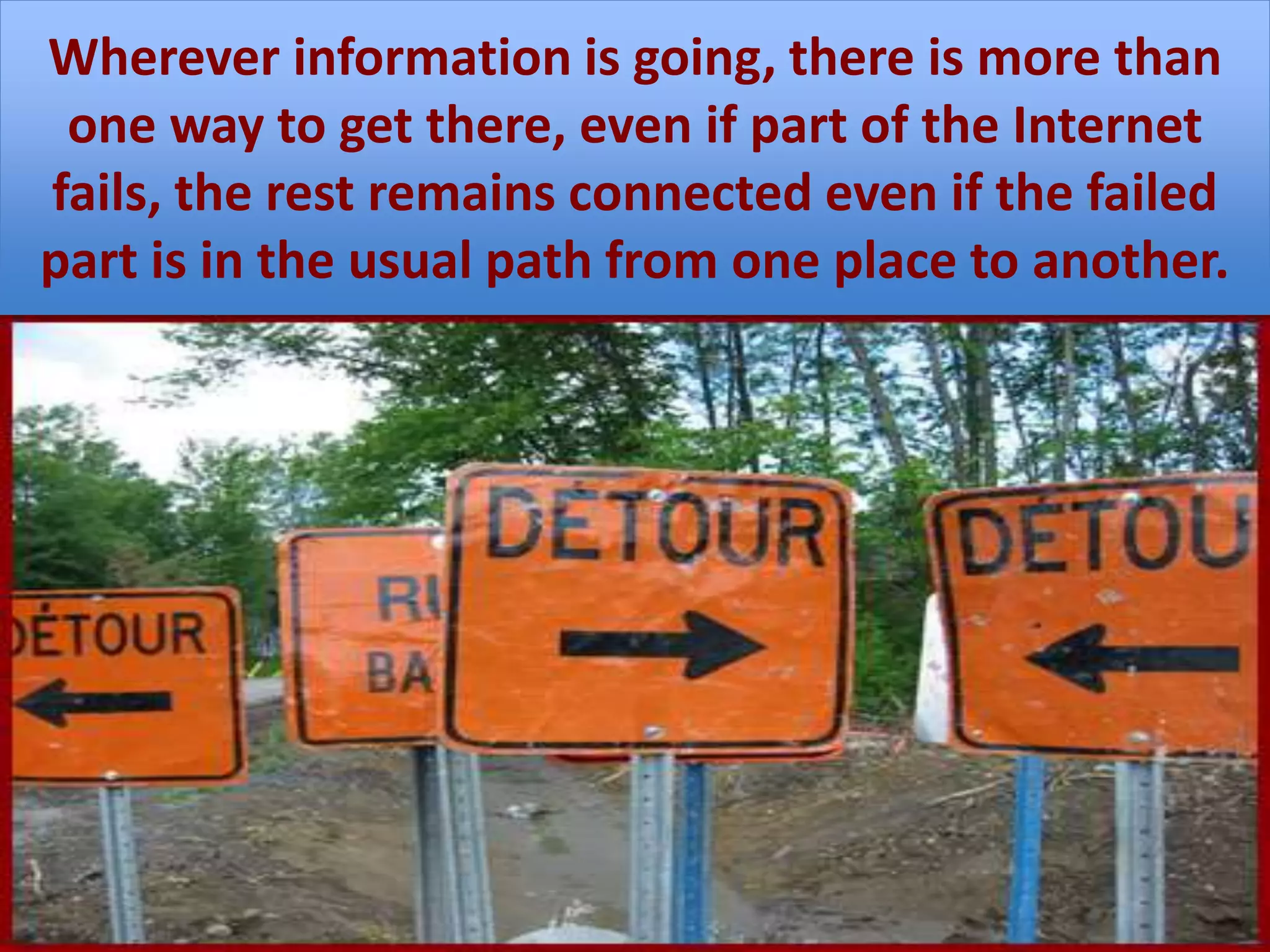
Wherever information is going, there is more than
one way to get there, even if part of the Internet
fails, the rest remains connected even if the failed
part is in the usual path from one place to another.
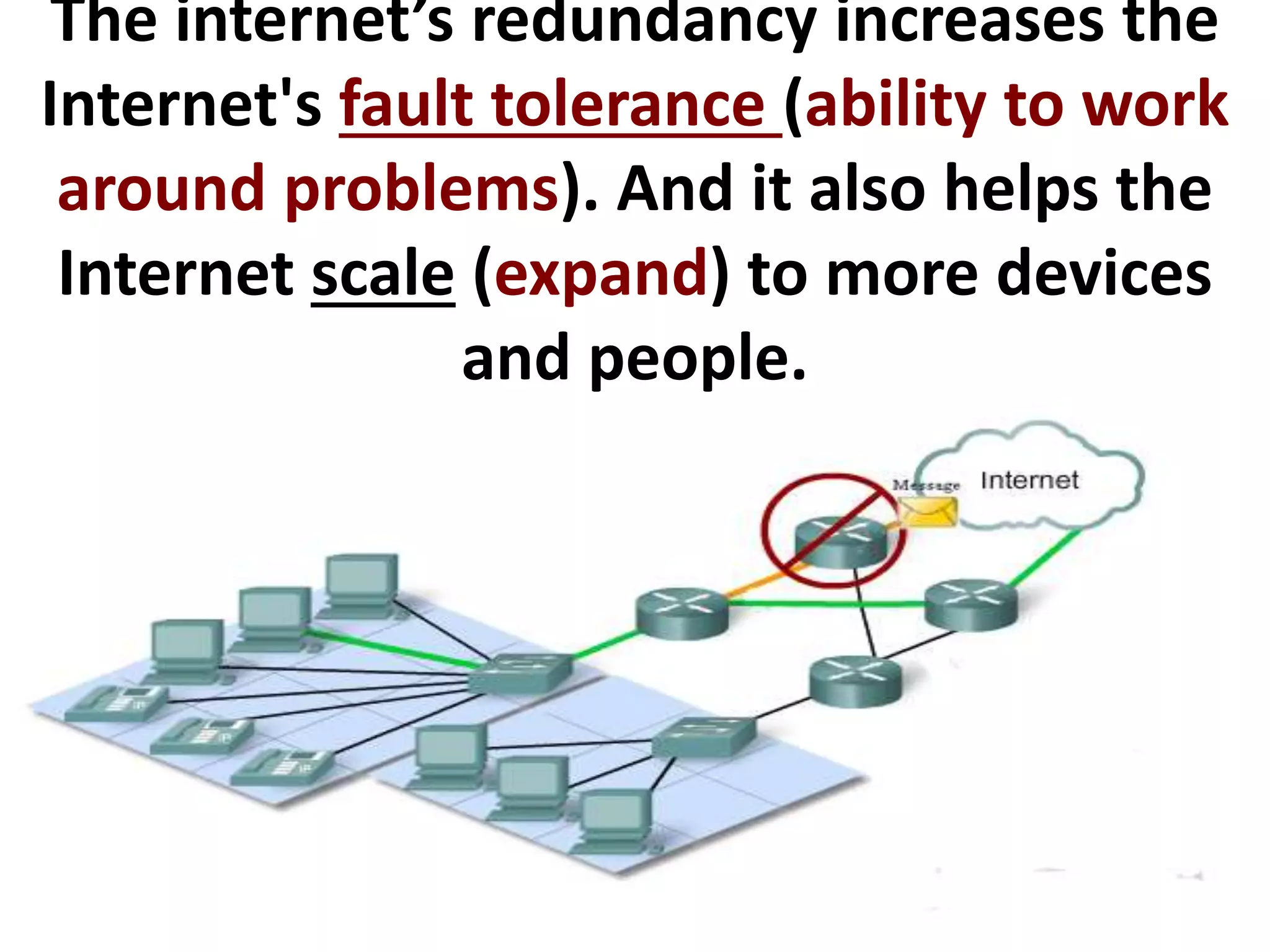
The internet’s redundancy increases the
Internet's fault tolerance (ability to work
around problems). And it also helps the
Internet scale (expand) to more devices
and people.
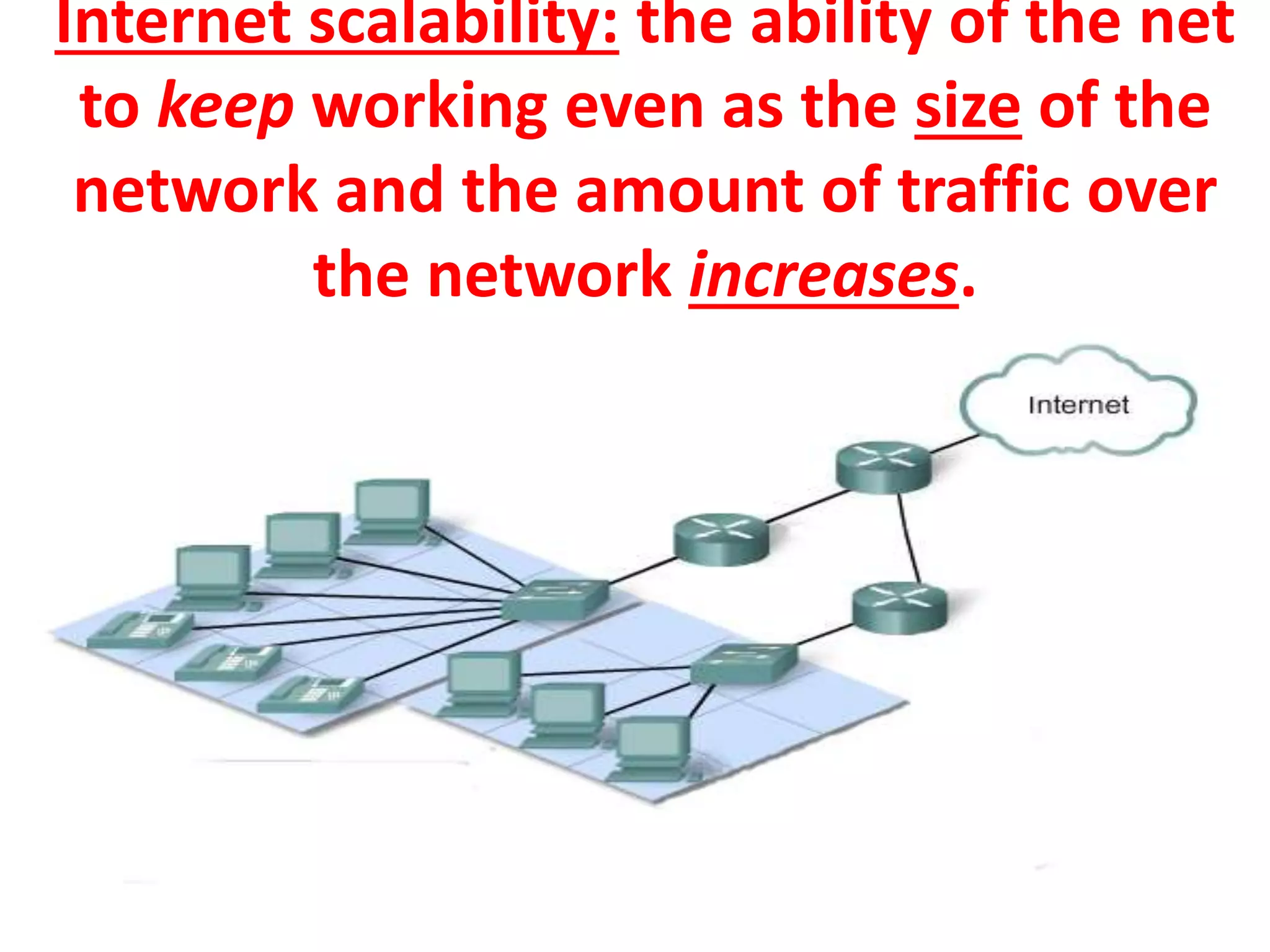
Internet scalability: the ability of the net
to keep working even as the size of the
network and the amount of traffic over
the network increases.
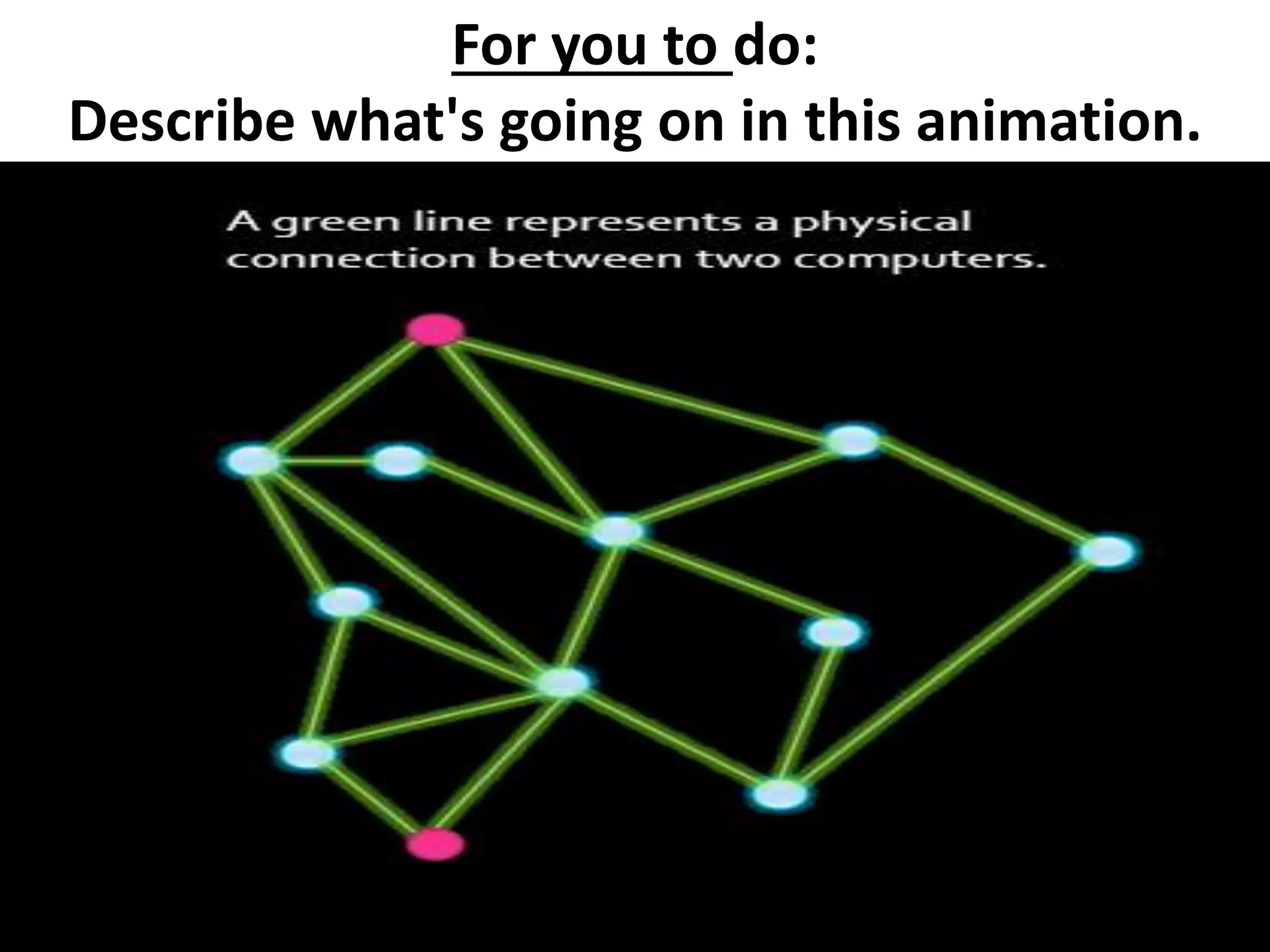
For you to do:
Describe what's going on in this animation.
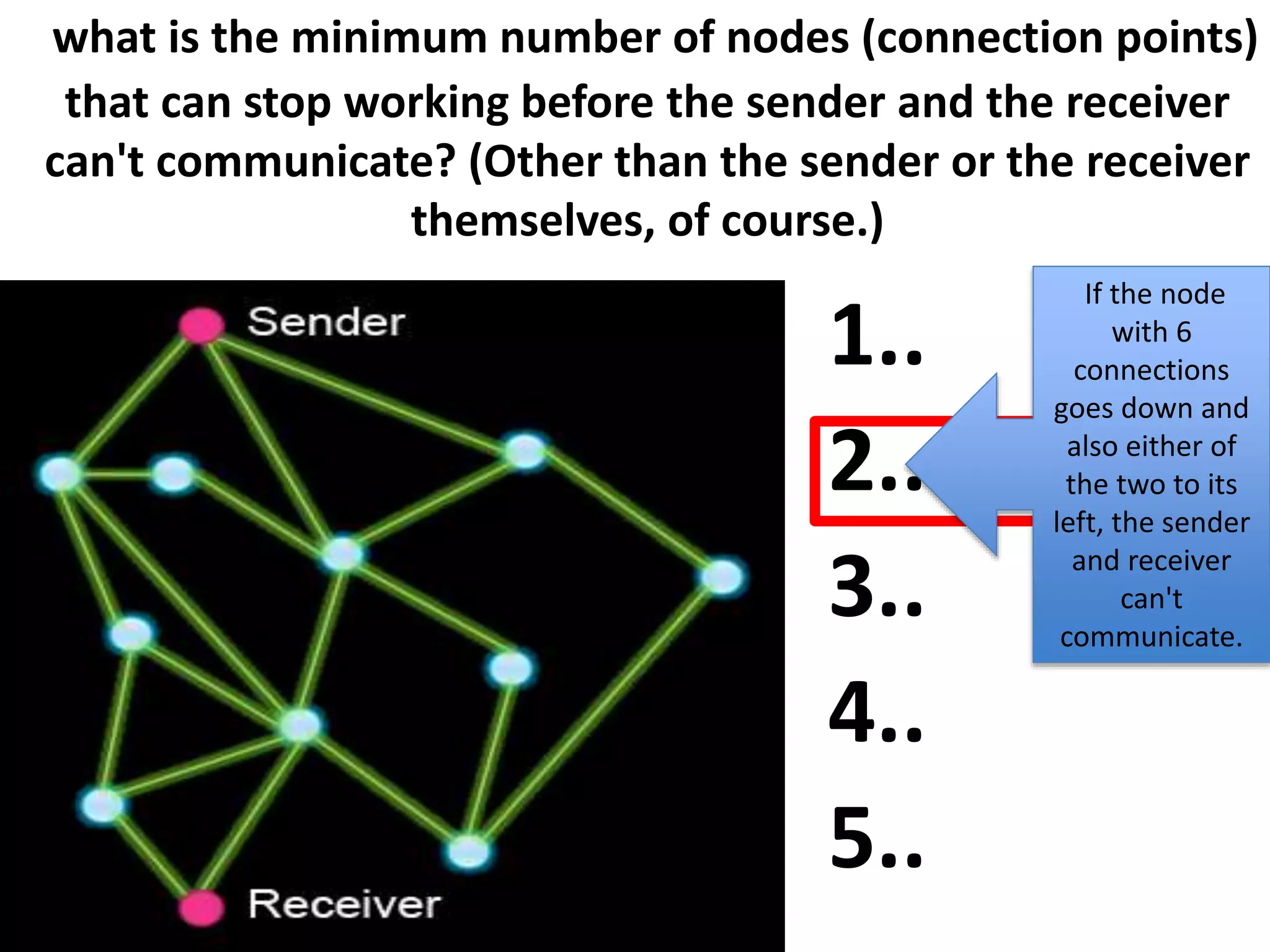
what is the minimum number of nodes (connection points)
that can stop working before the sender and the receiver
can't communicate? (Other than the sender or the receiver
themselves, of course.)
1..
2..
3..
4..
5..
If the node
with 6
connections
goes down and
also either of
the two to its
left, the sender
and receiver
can't
communicate.
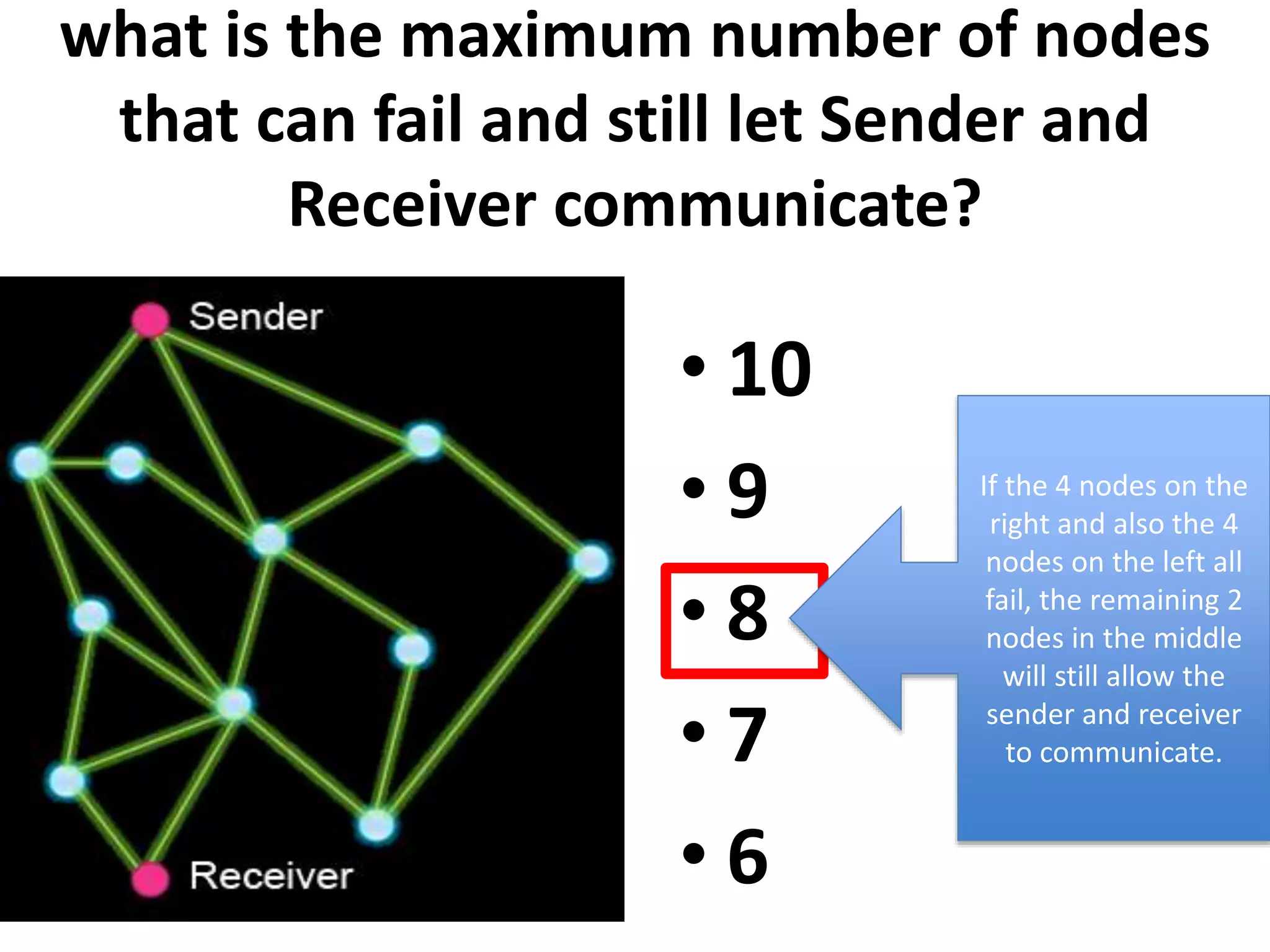
what is the maximum number of nodes
that can fail and still let Sender and
Receiver communicate?
• 10
• 9
• 8
• 7
• 6
If the 4 nodes on the
right and also the 4
nodes on the left all
fail, the remaining 2
nodes in the middle
will still allow the
sender and receiver
to communicate.
Enduring Understandings:
• EU 6.1 The Internet is a network
of autonomous systems.
• EU 6.2 Characteristics of the
Internet influence the systems
built on it.
Learning Objectives:
• LO 6.1.1 Explain the abstractions in the
Internet and how the Internet functions.
[P3]
• LO 6.2.1 Explain characteristics of the
Internet and the systems built on it. [P5]
• LO 6.2.2 Explain how the characteristics
of the Internet influence the systems
built on it. [P4]
Essential Knowledge:
1. EK 6.1.1A The Internet connects devices and
networks all over the world.
2. EK 6.1.1C Devices and networks that make up the
Internet are connected and communicate using
addresses and protocols.
3. EK 6.1.1D The Internet and the systems built on it
facilitate collaboration.
4. EK 6.1.1G The domain name system (DNS)
translates names to IP addresses
Essential Knowledge:
• 5. EK 6.2.1A The Internet and the
systems built on it are hierarchical and
redundant.
• 6. EK 6.2.1B The domain name syntax is
hierarchical.
• 7. EK 6.2.1C IP addresses are
hierarchical.
• 8. EK 6.2.2A Hierarchy and redundancy
help systems scale.
Essential Knowledge:
• 9. EK 6.2.2B The redundancy of routing (i.e.,
more than one way to route data) between
two points on the Internet increases the
reliability of the Internet and helps it scale to
more devices and more people.
• 10. EK 6.2.2C Hierarchy in the DNS helps
system scale.
• 11. EK 6.2.2I The size and speed of systems
affect their use.

Lesson4.7 u4 l2 network redundancy

  • 1.
    L.O: STUDENTS WILLBE ABLE TO EXPLAIN NETWORK REDUNDANCY. 15-30 minutes (<1 class period) DO NOW: READ Unit 4 Lab 2: Reliable Communication, Page 2
  • 2.
    Given the enormousamount of data traveling around, the Internet needs to be reliable. The Internet is made reliable by building many redundant connections into the physical systems of the Internet. Wherever information is going, there is more than one way to get there, even if part of the Internet fails, the rest remains connected even if the failed part is in the usual path from one place to another.
  • 3.
    The internet’s redundancyincreases the Internet's fault tolerance (ability to work around problems). And it also helps the Internet scale (expand) to more devices and people.
  • 4.
    Internet scalability: theability of the net to keep working even as the size of the network and the amount of traffic over the network increases.
  • 5.
    For you todo: Describe what's going on in this animation.
  • 6.
    what is theminimum number of nodes (connection points) that can stop working before the sender and the receiver can't communicate? (Other than the sender or the receiver themselves, of course.) 1.. 2.. 3.. 4.. 5.. If the node with 6 connections goes down and also either of the two to its left, the sender and receiver can't communicate.
  • 7.
    what is themaximum number of nodes that can fail and still let Sender and Receiver communicate? • 10 • 9 • 8 • 7 • 6 If the 4 nodes on the right and also the 4 nodes on the left all fail, the remaining 2 nodes in the middle will still allow the sender and receiver to communicate.
  • 8.
    Enduring Understandings: • EU6.1 The Internet is a network of autonomous systems. • EU 6.2 Characteristics of the Internet influence the systems built on it.
  • 9.
    Learning Objectives: • LO6.1.1 Explain the abstractions in the Internet and how the Internet functions. [P3] • LO 6.2.1 Explain characteristics of the Internet and the systems built on it. [P5] • LO 6.2.2 Explain how the characteristics of the Internet influence the systems built on it. [P4]
  • 10.
    Essential Knowledge: 1. EK6.1.1A The Internet connects devices and networks all over the world. 2. EK 6.1.1C Devices and networks that make up the Internet are connected and communicate using addresses and protocols. 3. EK 6.1.1D The Internet and the systems built on it facilitate collaboration. 4. EK 6.1.1G The domain name system (DNS) translates names to IP addresses
  • 11.
    Essential Knowledge: • 5.EK 6.2.1A The Internet and the systems built on it are hierarchical and redundant. • 6. EK 6.2.1B The domain name syntax is hierarchical. • 7. EK 6.2.1C IP addresses are hierarchical. • 8. EK 6.2.2A Hierarchy and redundancy help systems scale.
  • 12.
    Essential Knowledge: • 9.EK 6.2.2B The redundancy of routing (i.e., more than one way to route data) between two points on the Internet increases the reliability of the Internet and helps it scale to more devices and more people. • 10. EK 6.2.2C Hierarchy in the DNS helps system scale. • 11. EK 6.2.2I The size and speed of systems affect their use.

Editor's Notes

  • #2 Lab 2: Reliable Communication This lab offers an introduction to the Internet that covers the difference between the World Wide Web and the Internet, URLs, network redundancy, and domain name hierarchy. Optional pages include information on the history of the Internet and a very brief introduction to HTML. Page 2: Network Redundancy. Understand how network redundancy is accomplished on the Internet.
  • #3 Page 2: Network Redundancy. After students have worked through the questions on the lab page, you could use these questions for a group discussion: Are there any other two nodes whose failure would stop the message from going through? Either the two neighbor nodes of the receiver could fail or the right neighbor node of the receiver and the node above the left neighbor node of the receiver could fail. What is the minimum number of extra connections you'd have to add so that any two nodes could fail without preventing messages between any two other nodes? The answer is two. There are four vertices with only two neighbors; use one edge to connect any two of those, and another to connect the other two. (This will require "crossing" connections on the graph as it is drawn here, but this is ok and could offer an opportunity to remind students of what the elements of the graph represent.)
  • #4 Tips: Page 2: Network Redundancy. network redundancy What is the minimum number of nodes that can stop working before the sender and the receiver can't communicate? One way to answer this question is to note that the receiver has only two neighbors, so if those two nodes go down, it can't get any messages no matter where the sender is in the network. (The same argument applies to the sender, but since the sender has three neighbors and 3>2, it's the receiver that provides the answer to this question.) What is the maximum number of nodes that can fail and still let Sender and Receiver communicate? To answer this question, you can find the shortest path between the desired endpoints (which is the one through the two highly-connected central nodes) and then let all the other nodes fail.
  • #5 Page 2: Network Redundancy. network redundancy What is the minimum number of nodes that can stop working before the sender and the receiver can't communicate? One way to answer this question is to note that the receiver has only two neighbors, so if those two nodes go down, it can't get any messages no matter where the sender is in the network. (The same argument applies to the sender, but since the sender has three neighbors and 3>2, it's the receiver that provides the answer to this question.) What is the maximum number of nodes that can fail and still let Sender and Receiver communicate? To answer this question, you can find the shortest path between the desired endpoints (which is the one through the two highly-connected central nodes) and then let all the other nodes fail.
  • #6 Page 2: Network Redundancy. network redundancy What is the minimum number of nodes that can stop working before the sender and the receiver can't communicate? One way to answer this question is to note that the receiver has only two neighbors, so if those two nodes go down, it can't get any messages no matter where the sender is in the network. (The same argument applies to the sender, but since the sender has three neighbors and 3>2, it's the receiver that provides the answer to this question.) What is the maximum number of nodes that can fail and still let Sender and Receiver communicate? To answer this question, you can find the shortest path between the desired endpoints (which is the one through the two highly-connected central nodes) and then let all the other nodes fail.
  • #7 Page 2: Network Redundancy. network redundancy What is the minimum number of nodes that can stop working before the sender and the receiver can't communicate? One way to answer this question is to note that the receiver has only two neighbors, so if those two nodes go down, it can't get any messages no matter where the sender is in the network. (The same argument applies to the sender, but since the sender has three neighbors and 3>2, it's the receiver that provides the answer to this question.) What is the maximum number of nodes that can fail and still let Sender and Receiver communicate? To answer this question, you can find the shortest path between the desired endpoints (which is the one through the two highly-connected central nodes) and then let all the other nodes fail.
  • #8 Page 2: Network Redundancy. network redundancy What is the minimum number of nodes that can stop working before the sender and the receiver can't communicate? One way to answer this question is to note that the receiver has only two neighbors, so if those two nodes go down, it can't get any messages no matter where the sender is in the network. (The same argument applies to the sender, but since the sender has three neighbors and 3>2, it's the receiver that provides the answer to this question.) What is the maximum number of nodes that can fail and still let Sender and Receiver communicate? To answer this question, you can find the shortest path between the desired endpoints (which is the one through the two highly-connected central nodes) and then let all the other nodes fail.