L.O: STUDENTS WILL
REVIEW BIG IDEA 3: DATA
AND INFORMATION
DO NOW:
READ PAGE 21-26
EK 3.1.1A
Computers are used in an iterative and
interactive way when processing digital
information to gain insight and
knowledge.
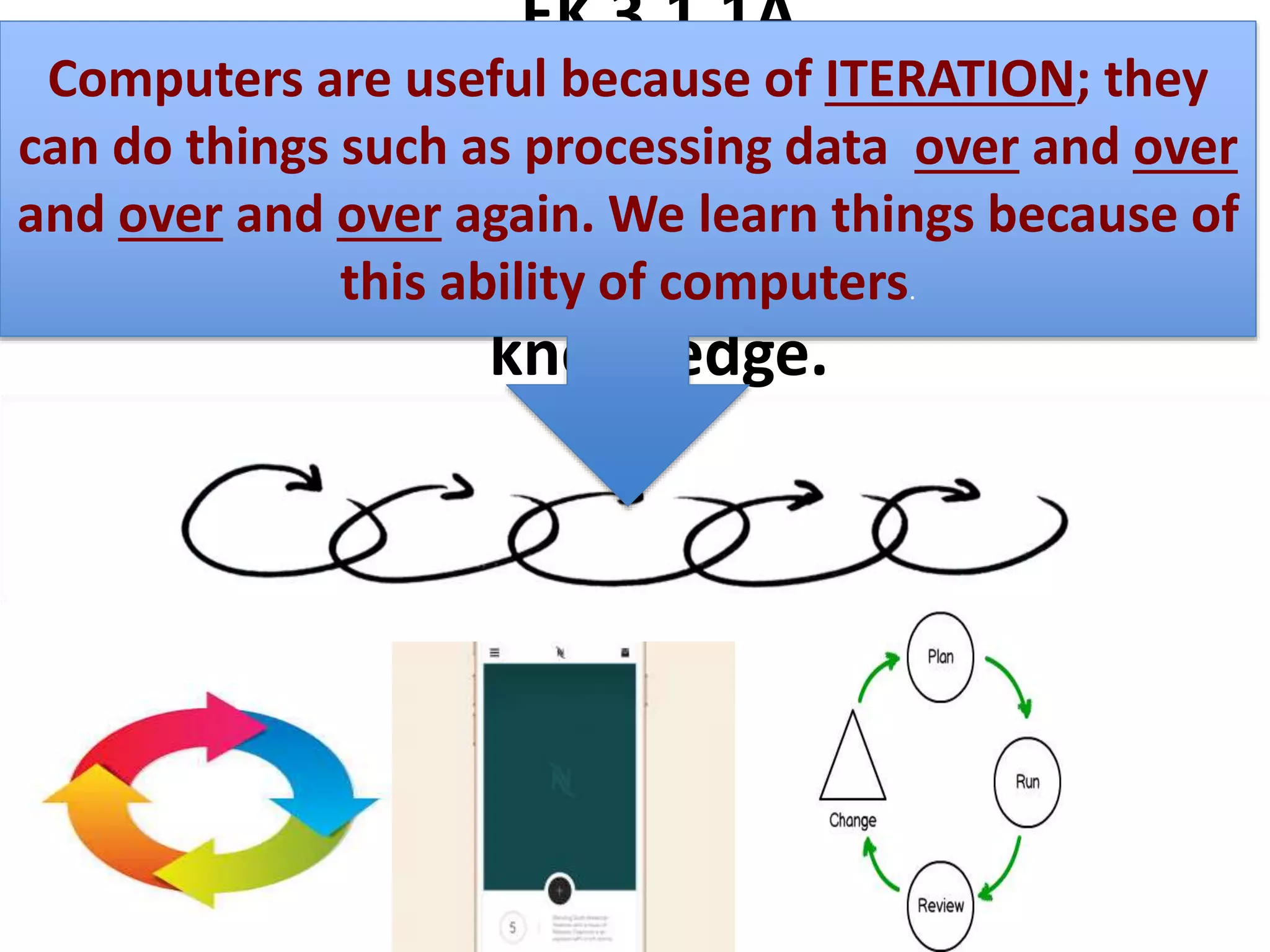
Computers are useful because of ITERATION; they
can do things such as processing data over and over
and over and over again. We learn things because of
this ability of computers.
EK 3.1.1B
Digital information can be filtered and cleaned
by using computers to process information.
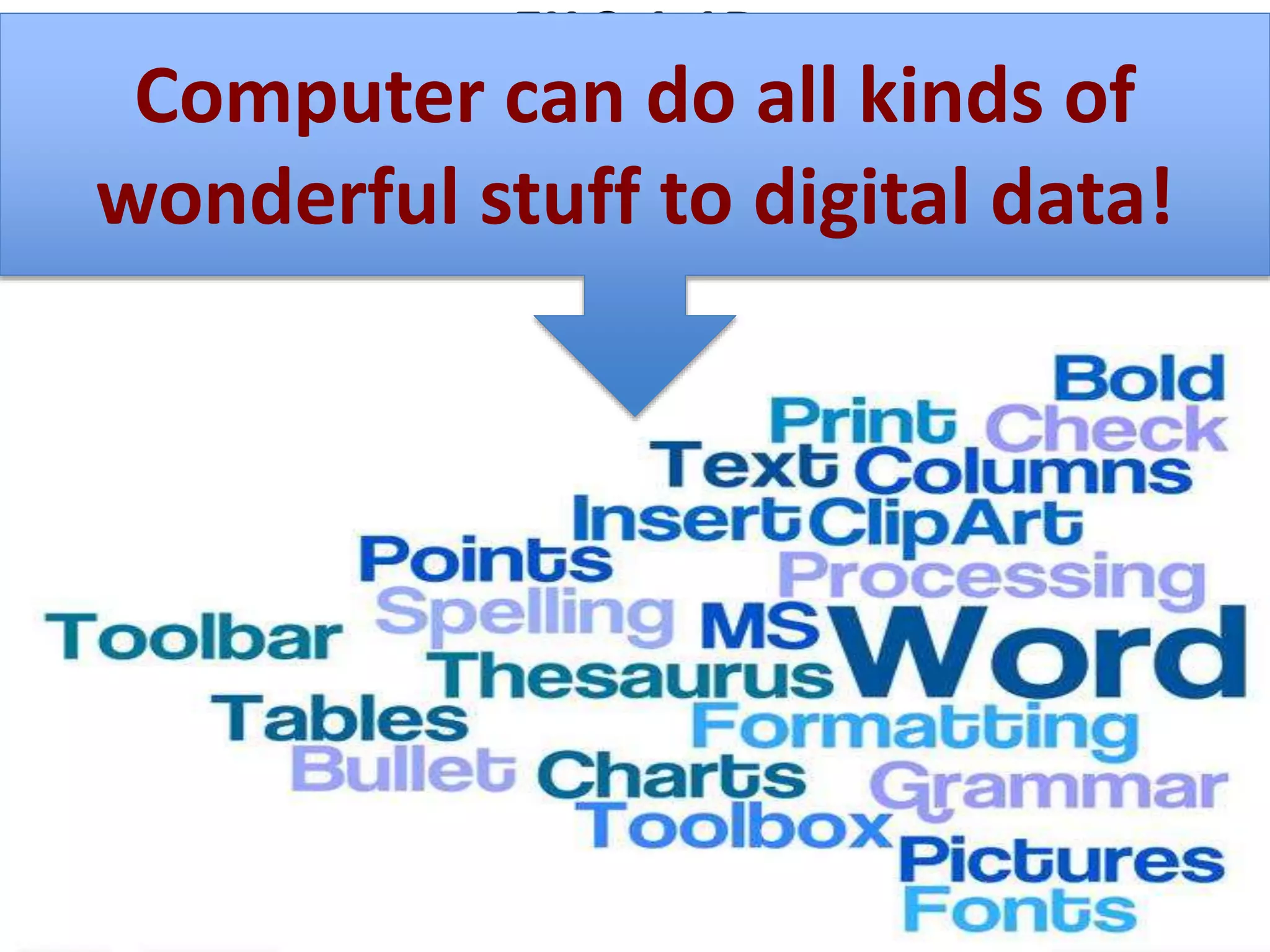
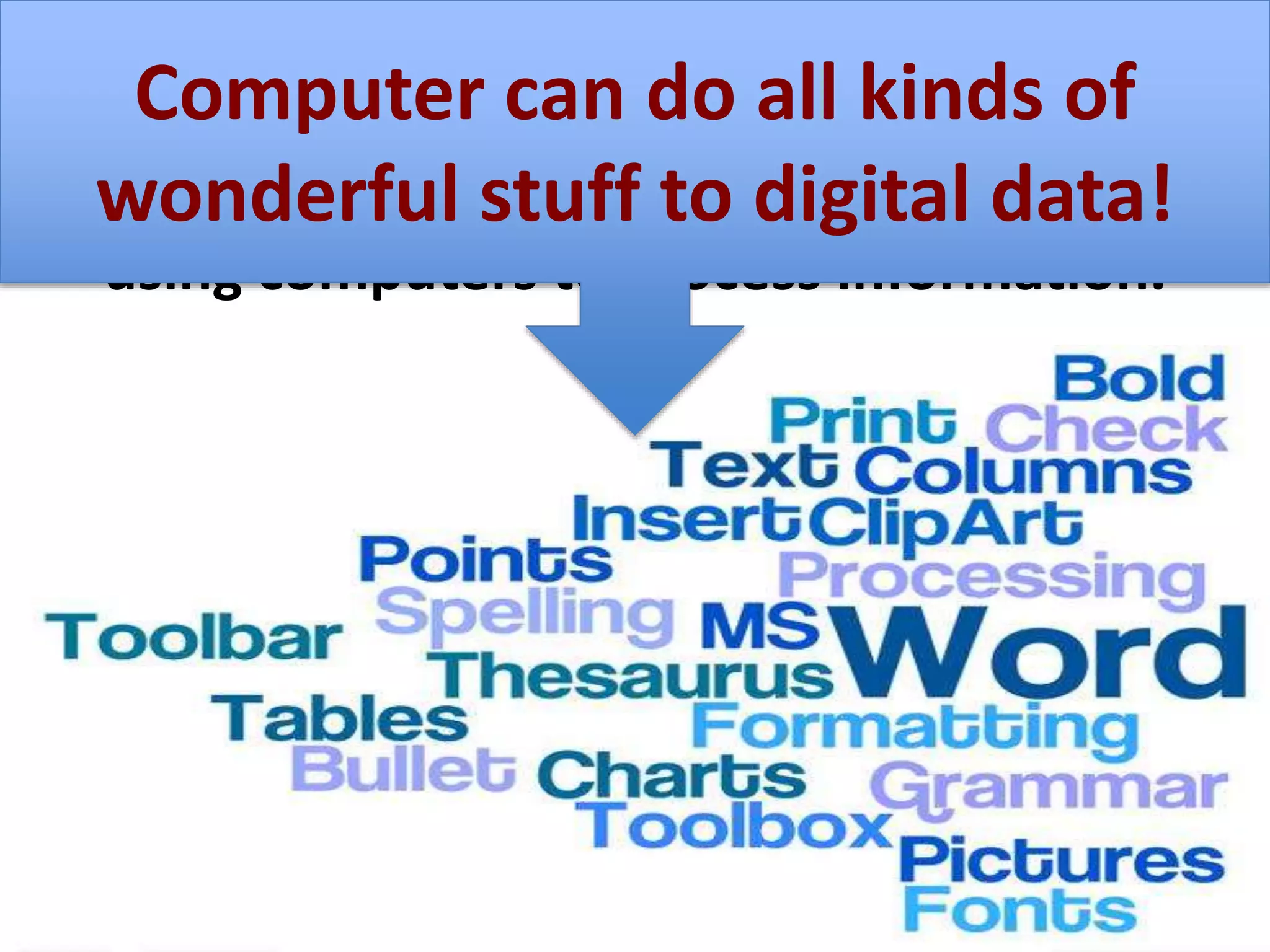
Computer can do all kinds of
wonderful stuff to digital data!
EK 3.1.1C
Combining data sources, clustering data, and
data classification are part of the process of
using computers to process information.
Computer can do all kinds of
wonderful stuff to digital data!
EK 3.1.1D
Insight and knowledge can be obtained from
translating and transforming digitally
represented information.
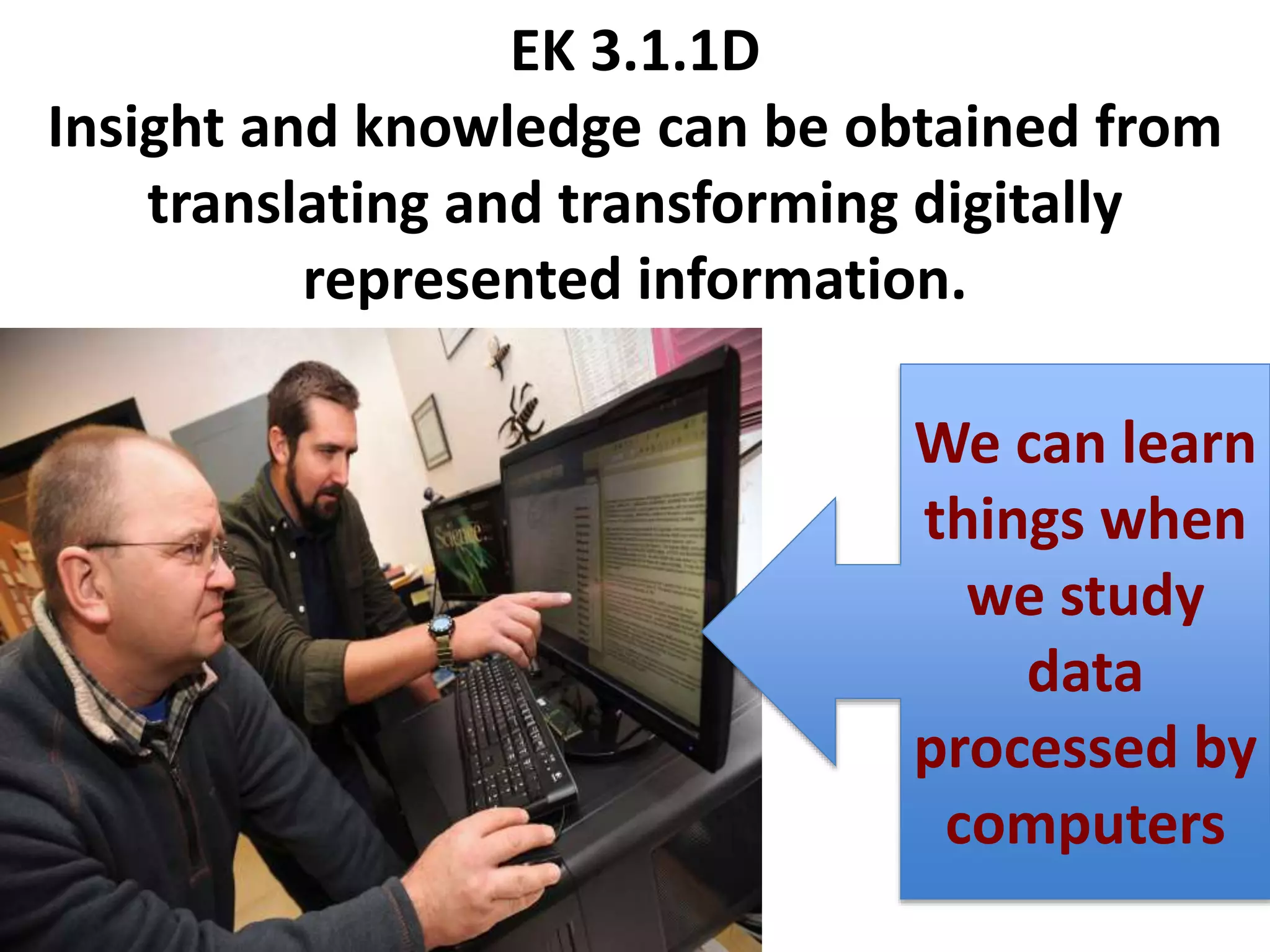
We can learn
things when
we study
data
processed by
computers
EK 3.1.1E
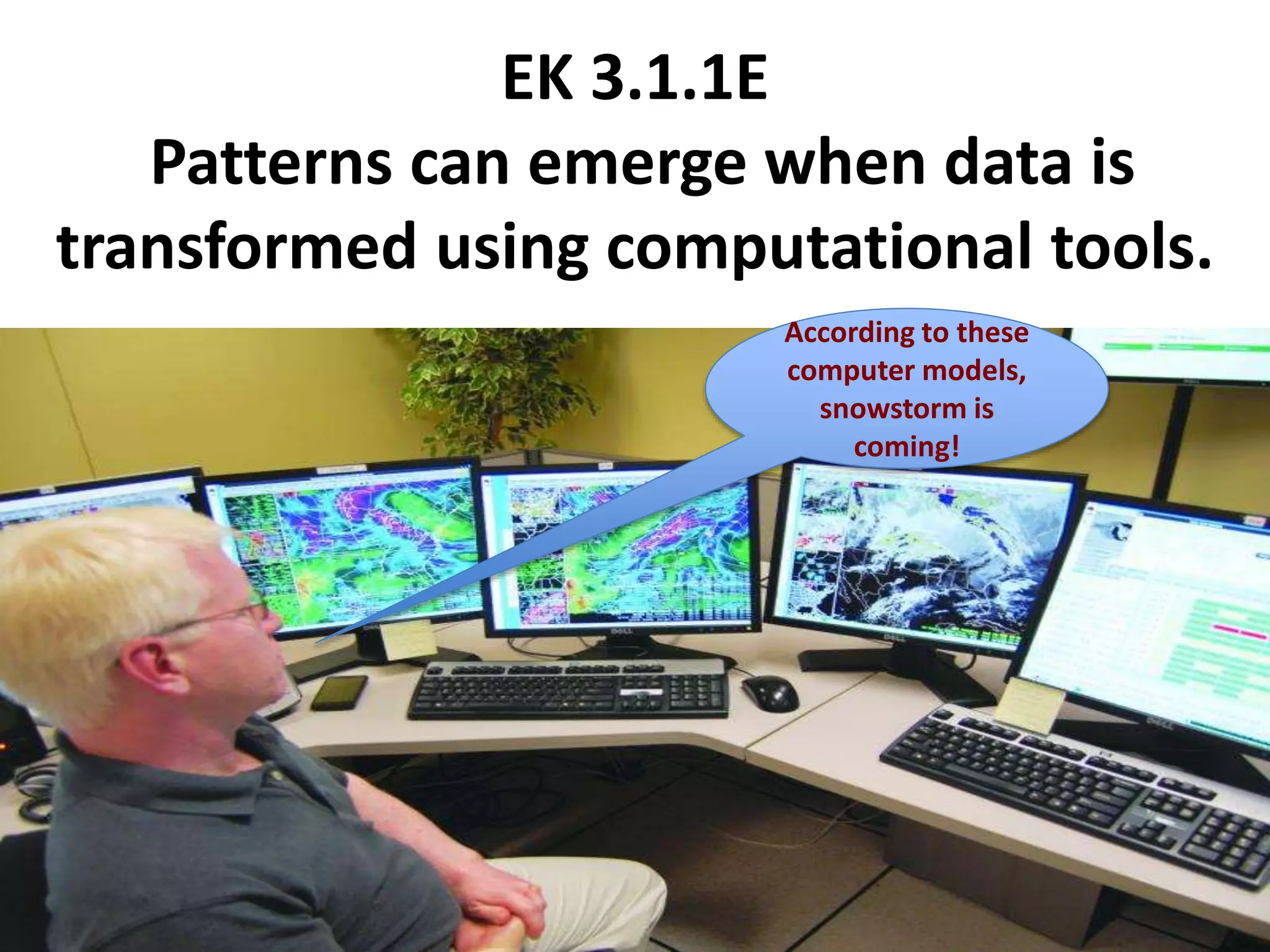
Patterns can emerge when data is
transformed using computational tools.
According to these
computer models,
snowstorm is
coming!
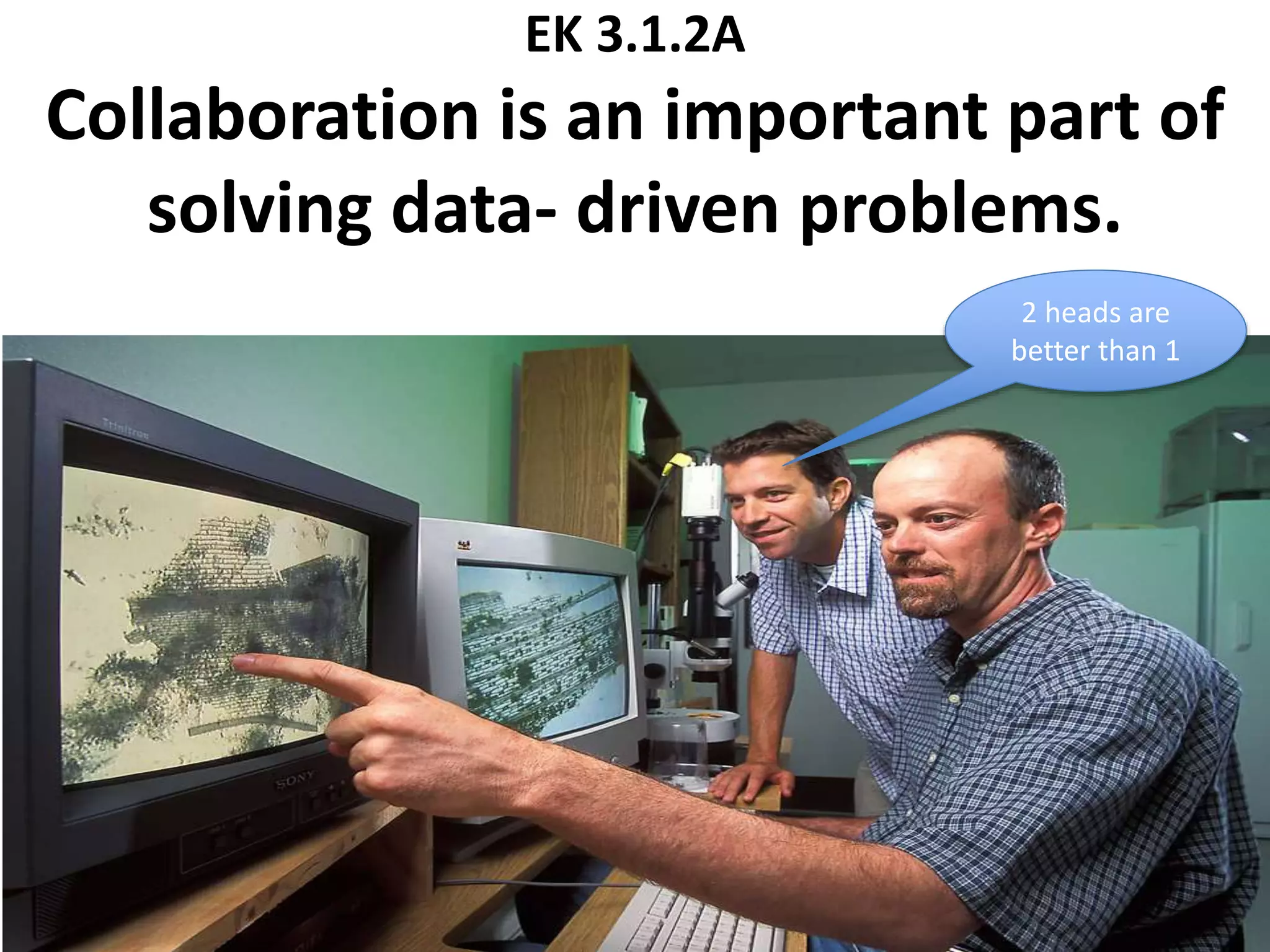
EK 3.1.2A
Collaboration is an important part of
solving data- driven problems.
2 heads are
better than 1
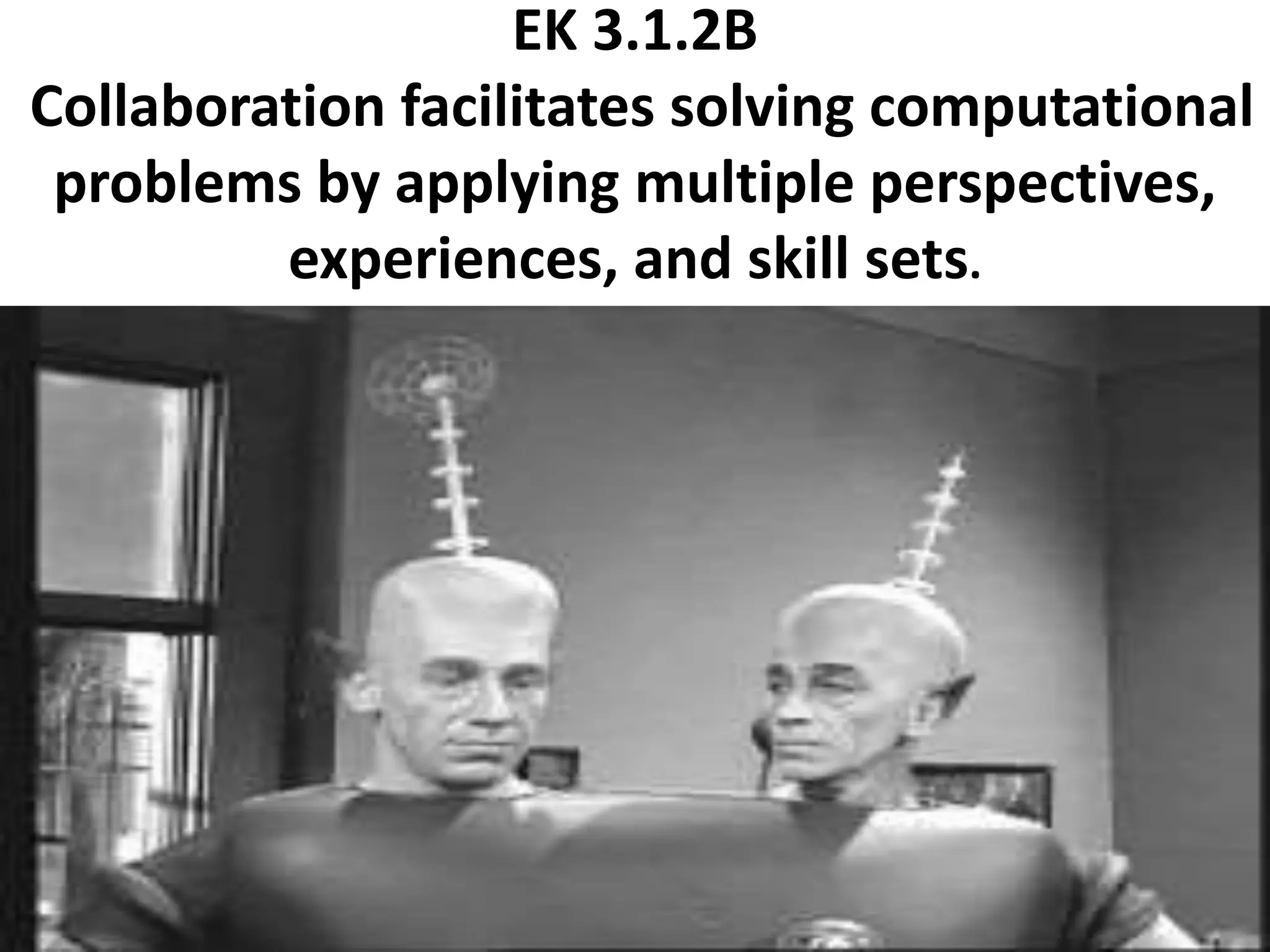
EK 3.1.2B
Collaboration facilitates solving computational
problems by applying multiple perspectives,
experiences, and skill sets.
EK 3.1.2C Communication between participants
working on data-driven problems gives rise to
enhanced insights and knowledge.
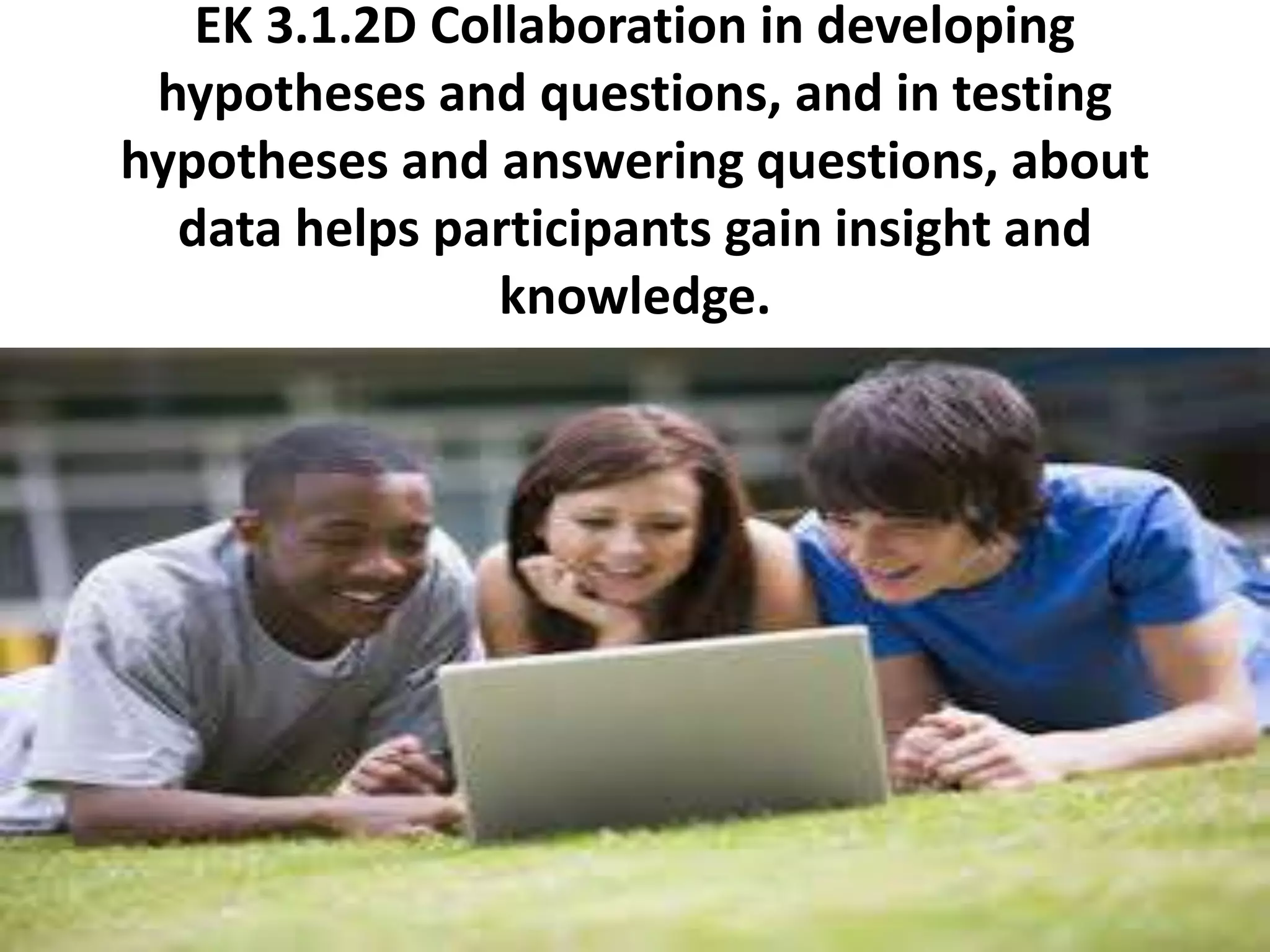
EK 3.1.2D Collaboration in developing
hypotheses and questions, and in testing
hypotheses and answering questions, about
data helps participants gain insight and
knowledge.
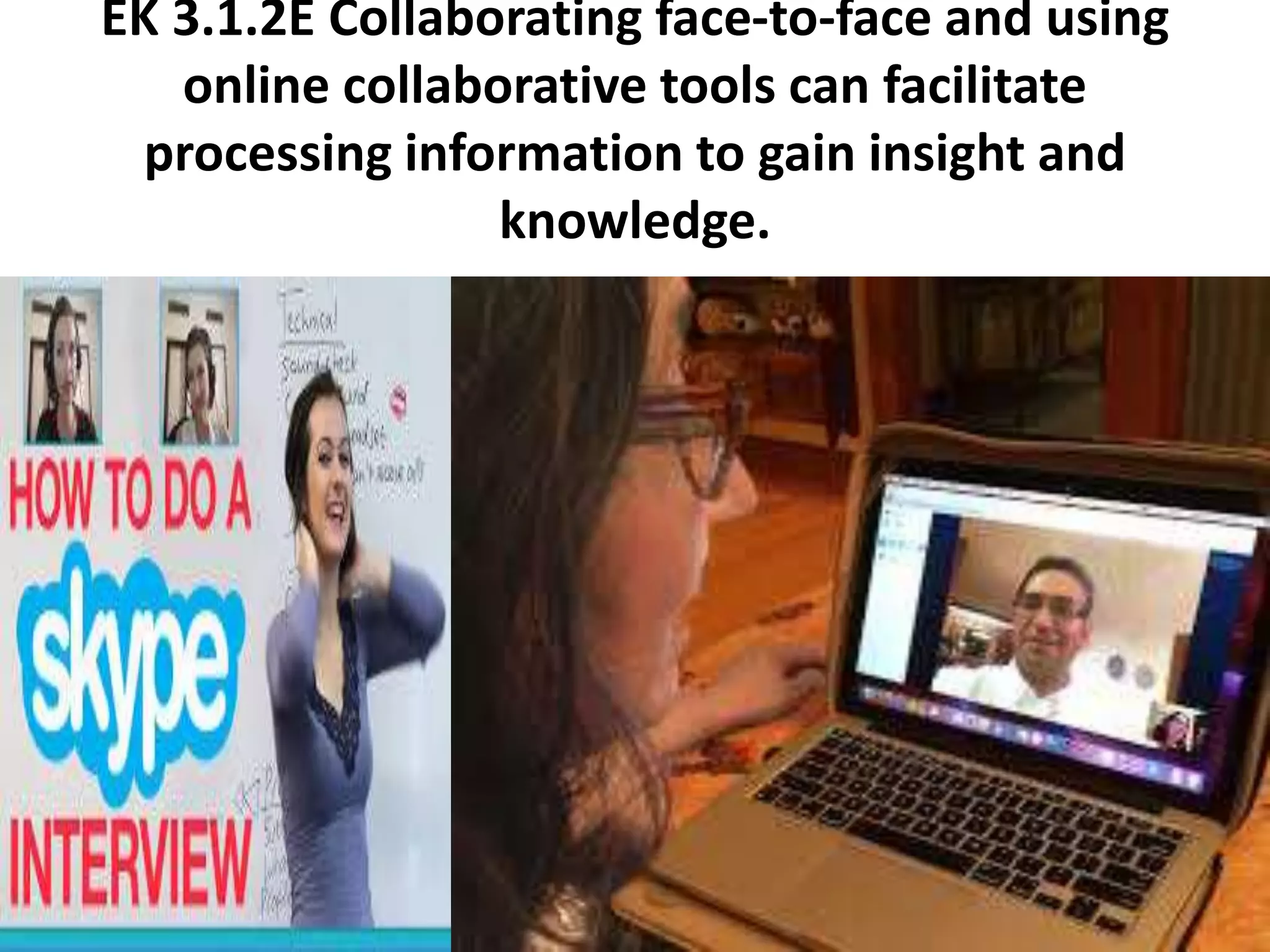
EK 3.1.2E Collaborating face-to-face and using
online collaborative tools can facilitate
processing information to gain insight and
knowledge.
EK 3.1.2F
Investigating large data sets collaboratively can
lead to insight and knowledge not obtained
when working alone
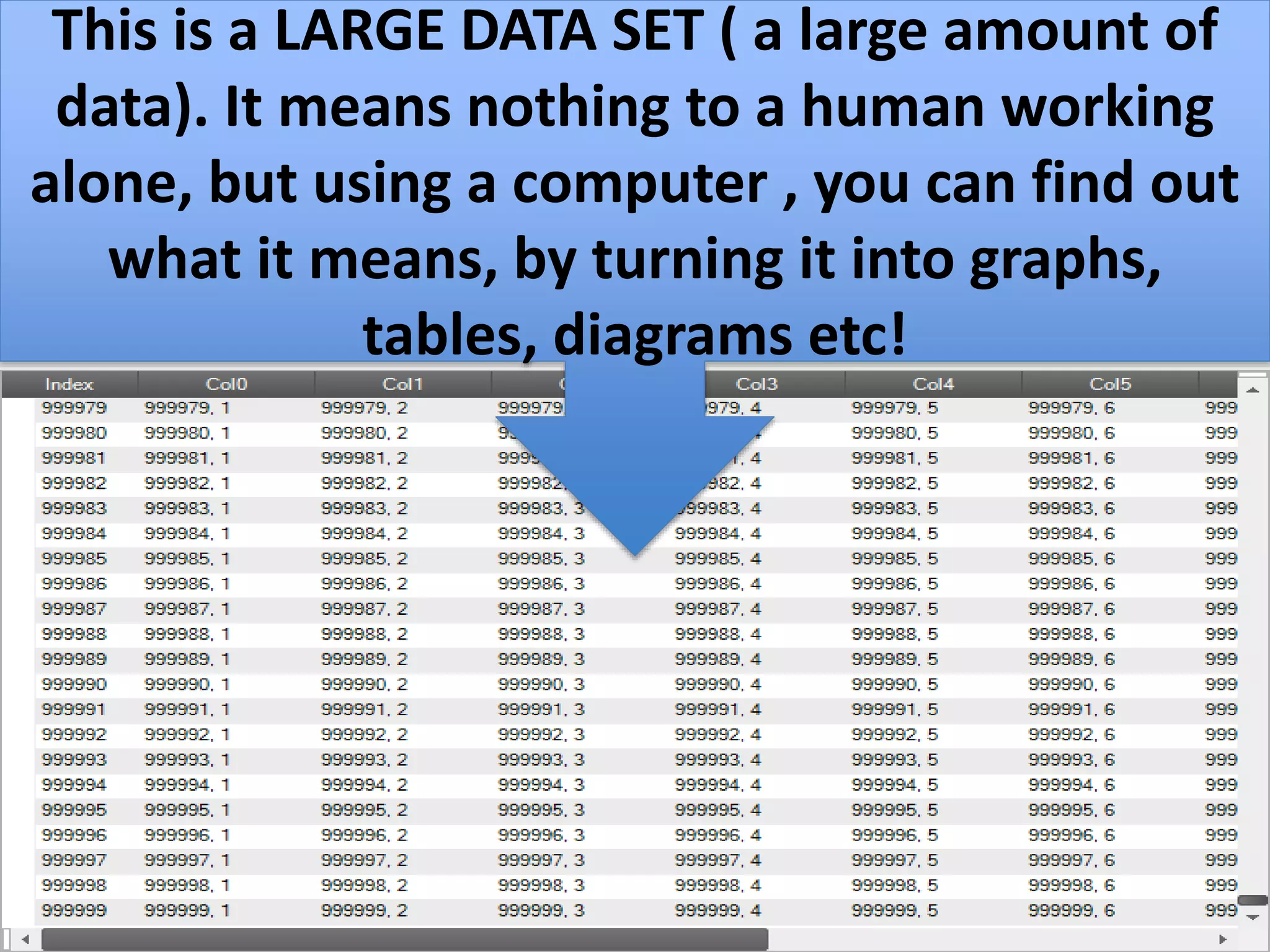
This is a LARGE DATA SET ( a large amount of
data). It means nothing to a human working
alone, but using a computer , you can find out
what it means, by turning it into graphs,
tables, diagrams etc!
EK 3.1.3A
Visualization tools and software can
communicate information about data.
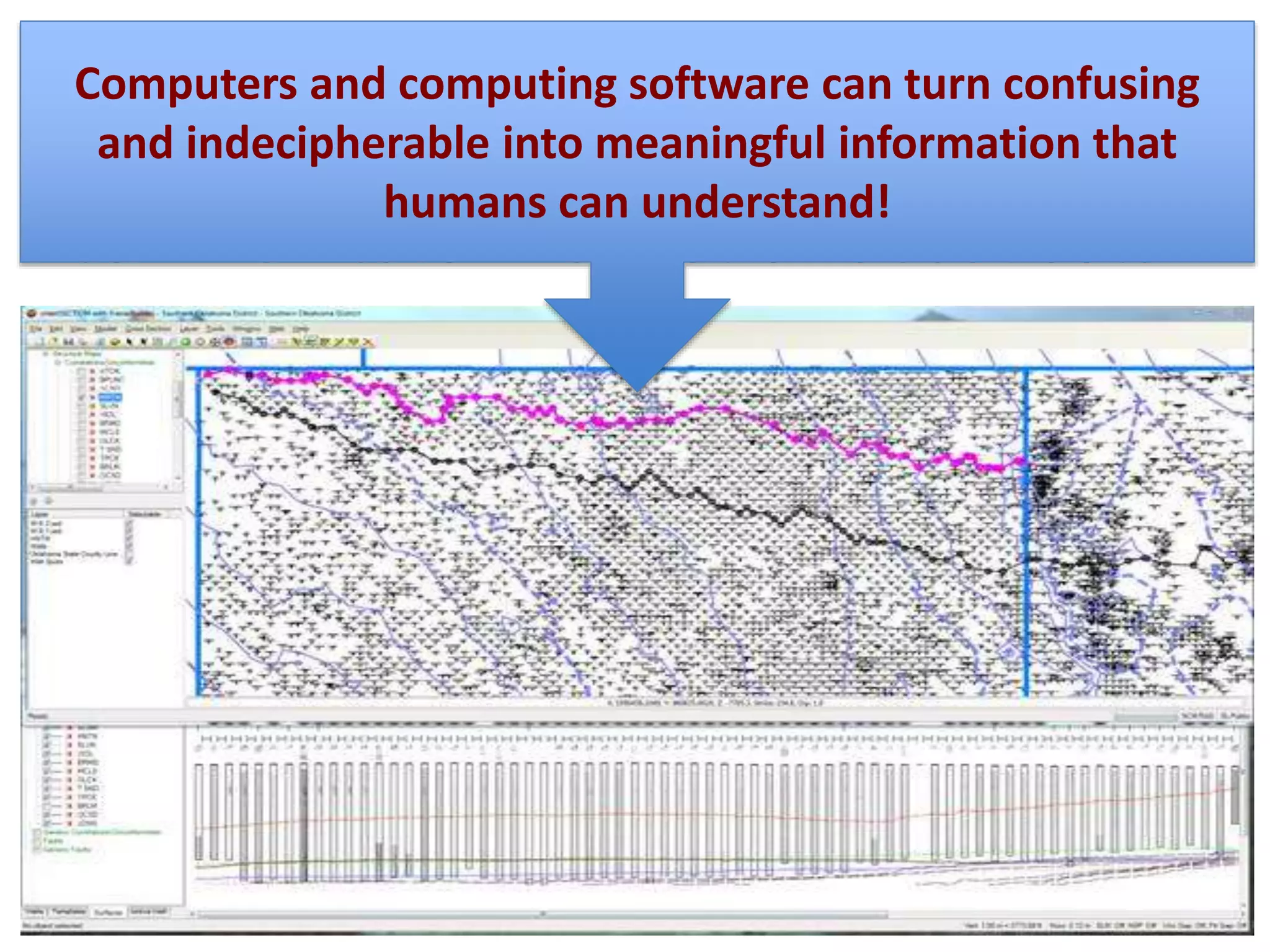
Computers and computing software can turn confusing
and indecipherable into meaningful information that
humans can understand!
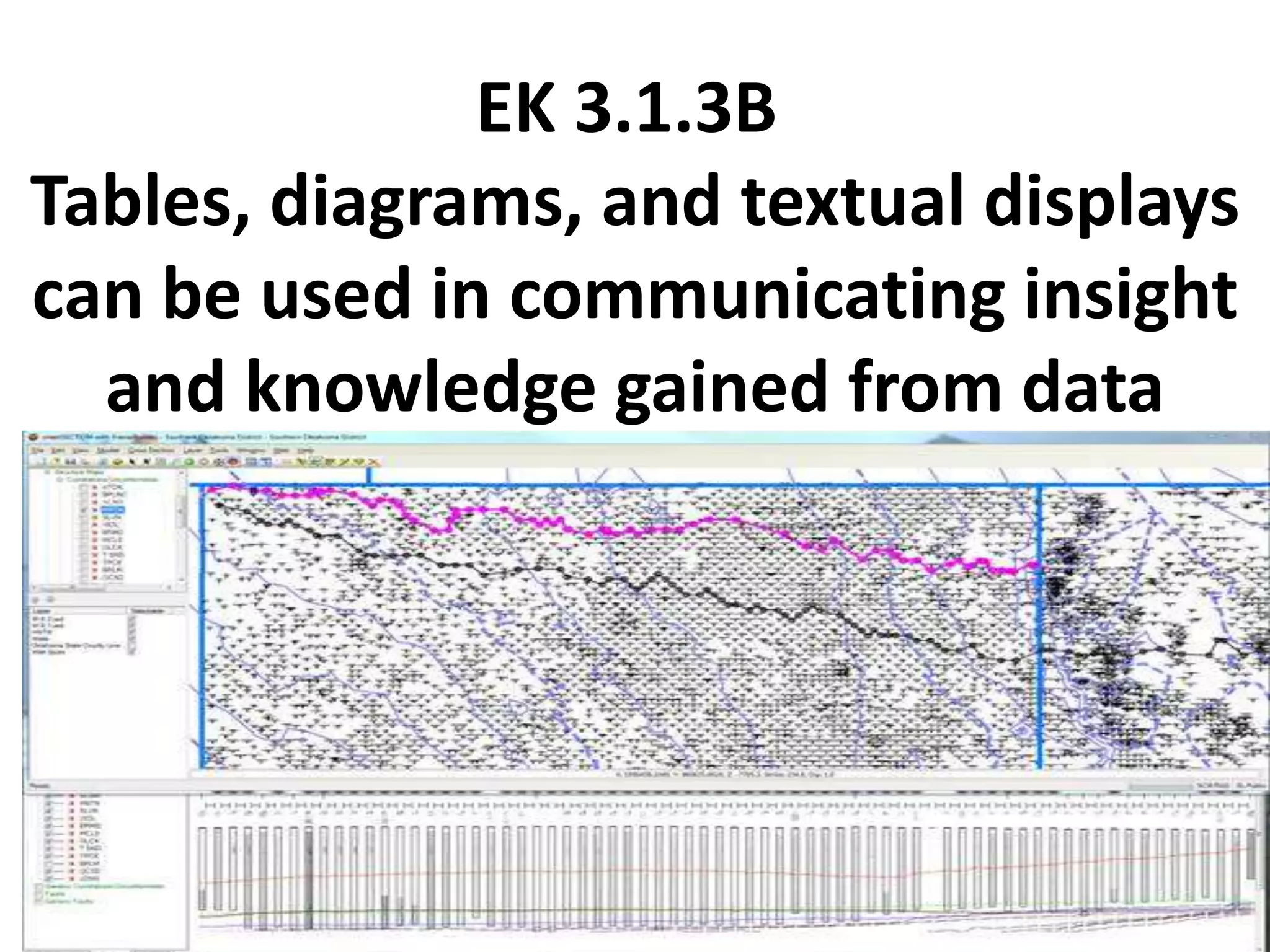
EK 3.1.3B
Tables, diagrams, and textual displays
can be used in communicating insight
and knowledge gained from data
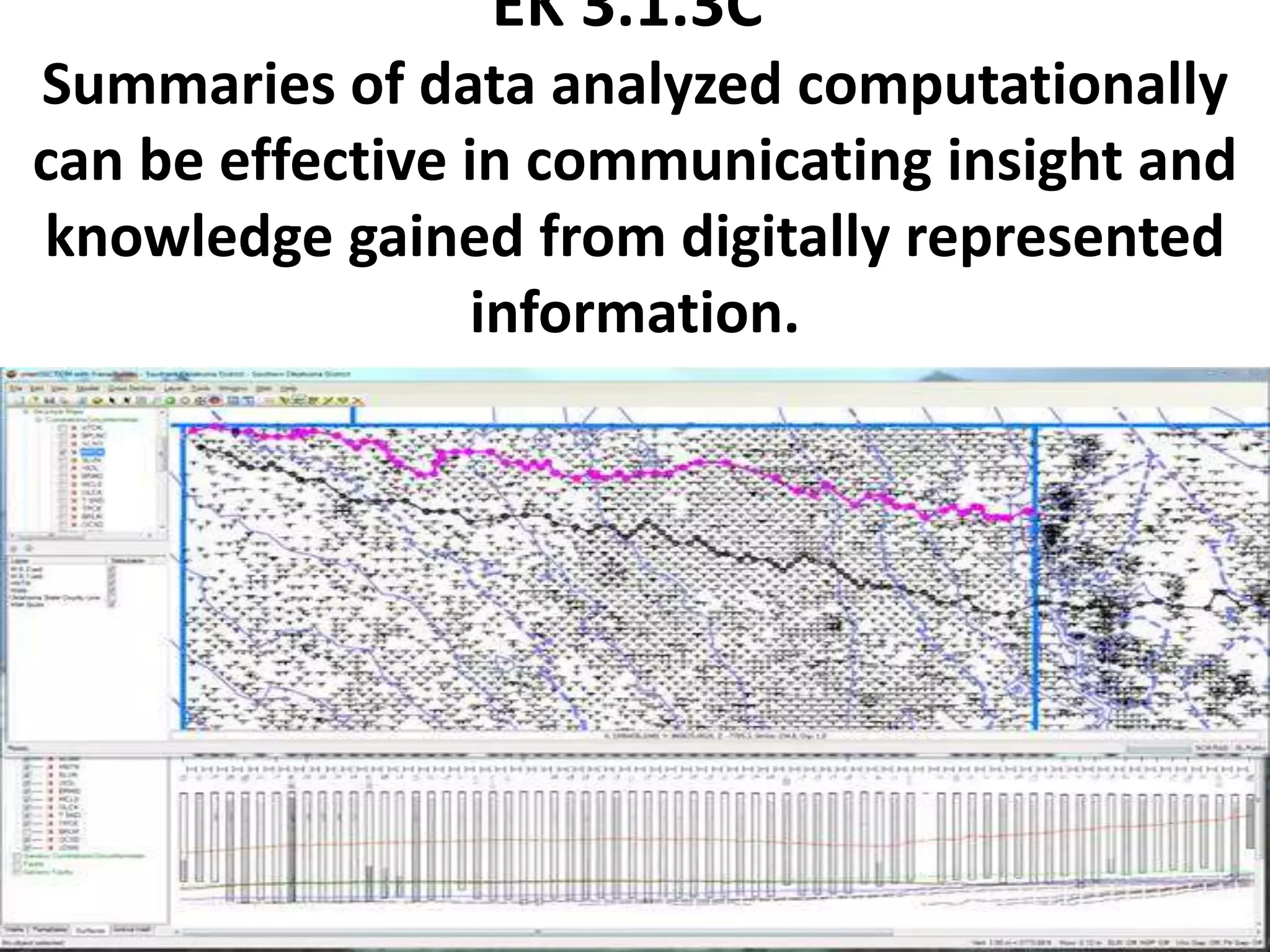
EK 3.1.3C
Summaries of data analyzed computationally
can be effective in communicating insight and
knowledge gained from digitally represented
information.
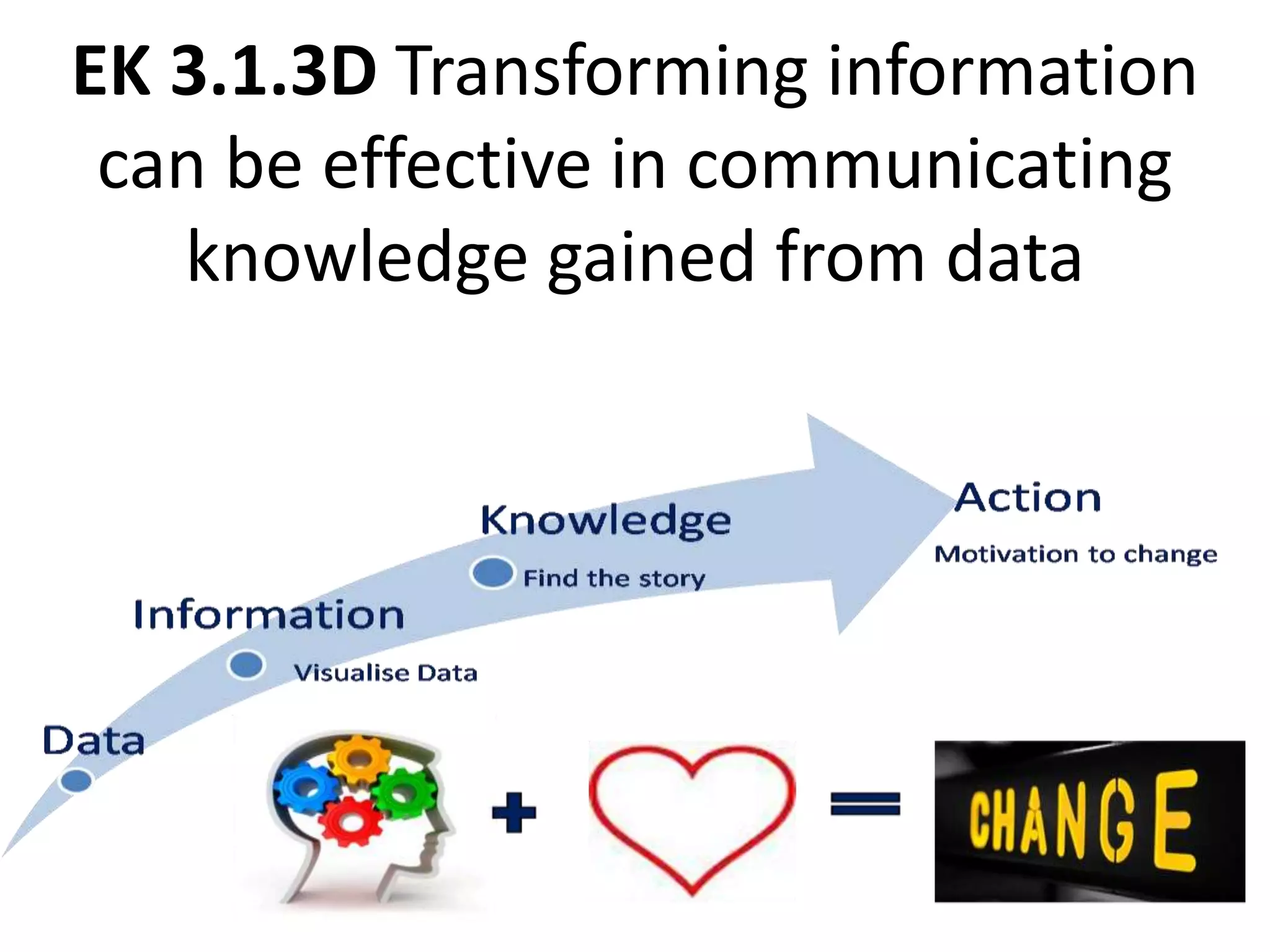
EK 3.1.3D Transforming information
can be effective in communicating
knowledge gained from data
EK 3.1.3E
Interactivity with data is an aspect of
communicating.
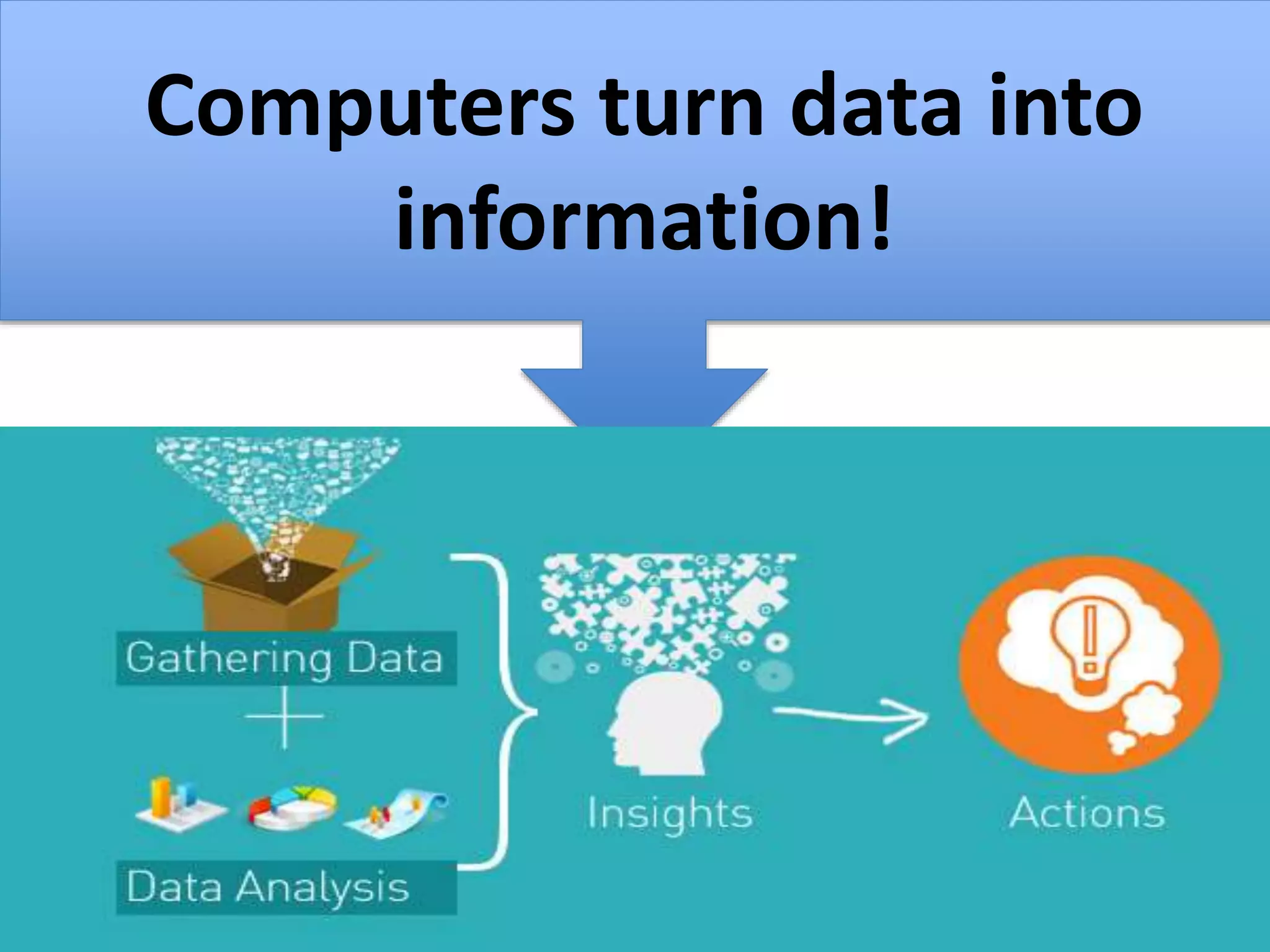
Computers turn data into
information!
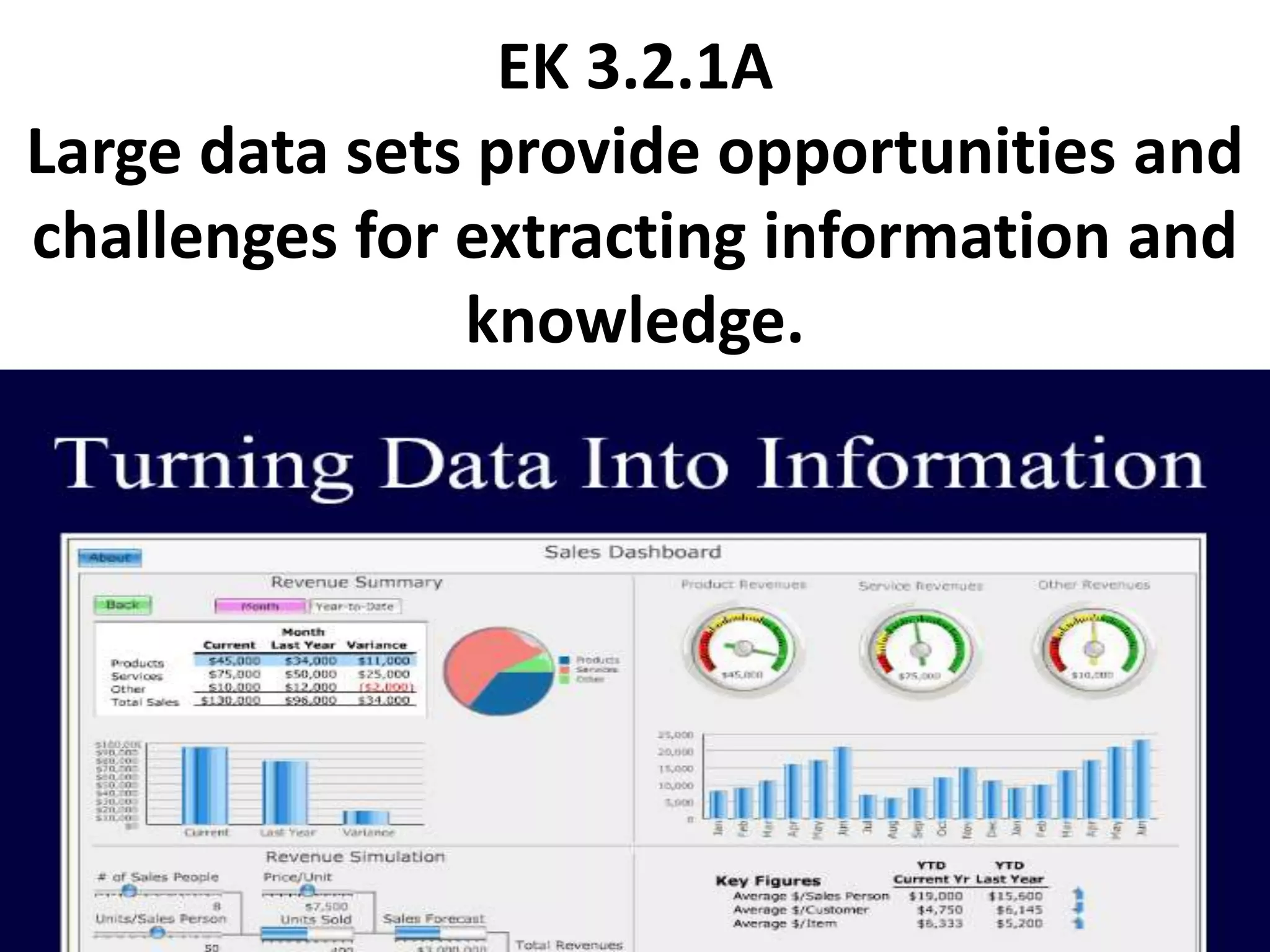
EK 3.2.1A
Large data sets provide opportunities and
challenges for extracting information and
knowledge.
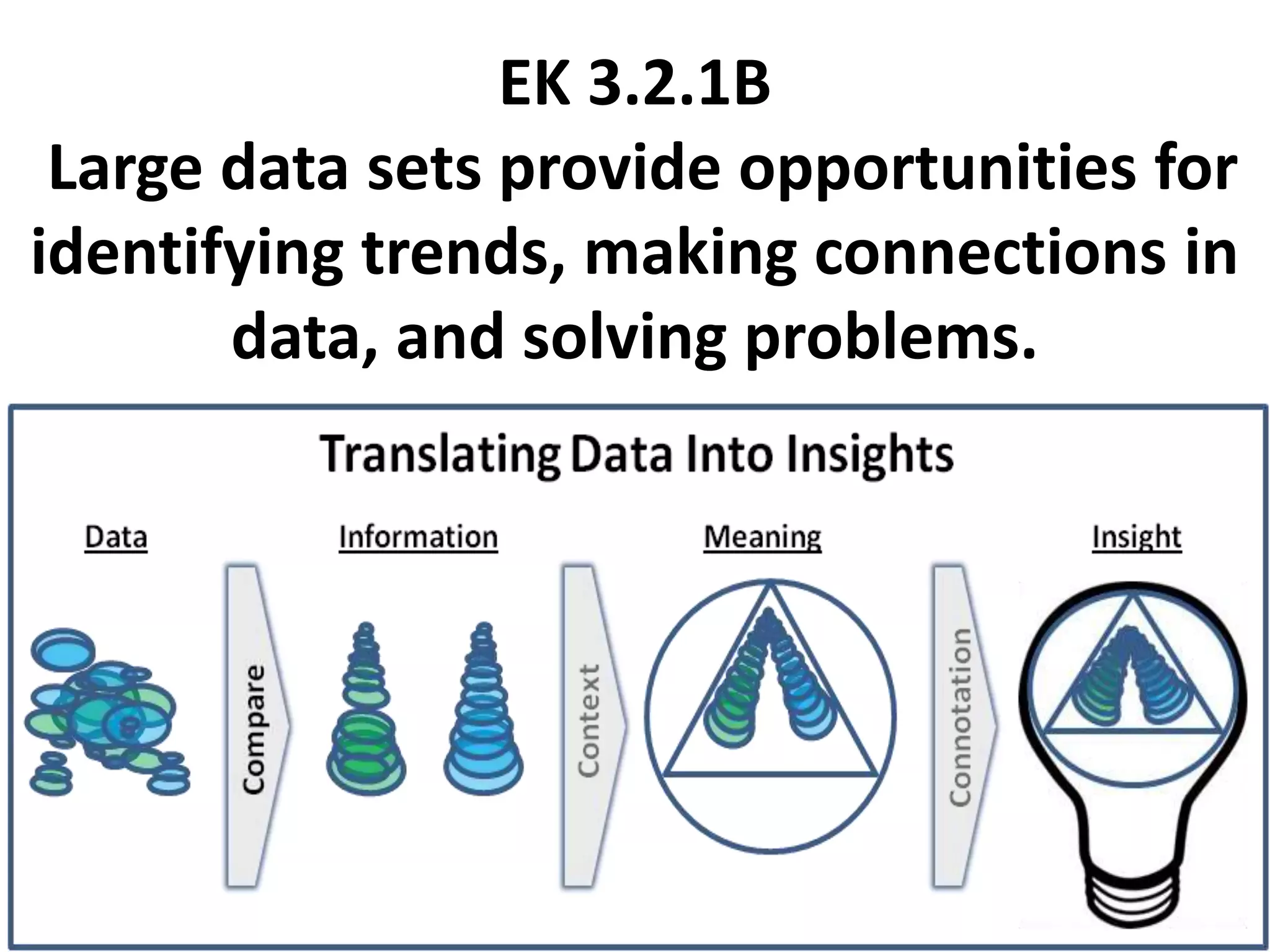
EK 3.2.1B
Large data sets provide opportunities for
identifying trends, making connections in
data, and solving problems.
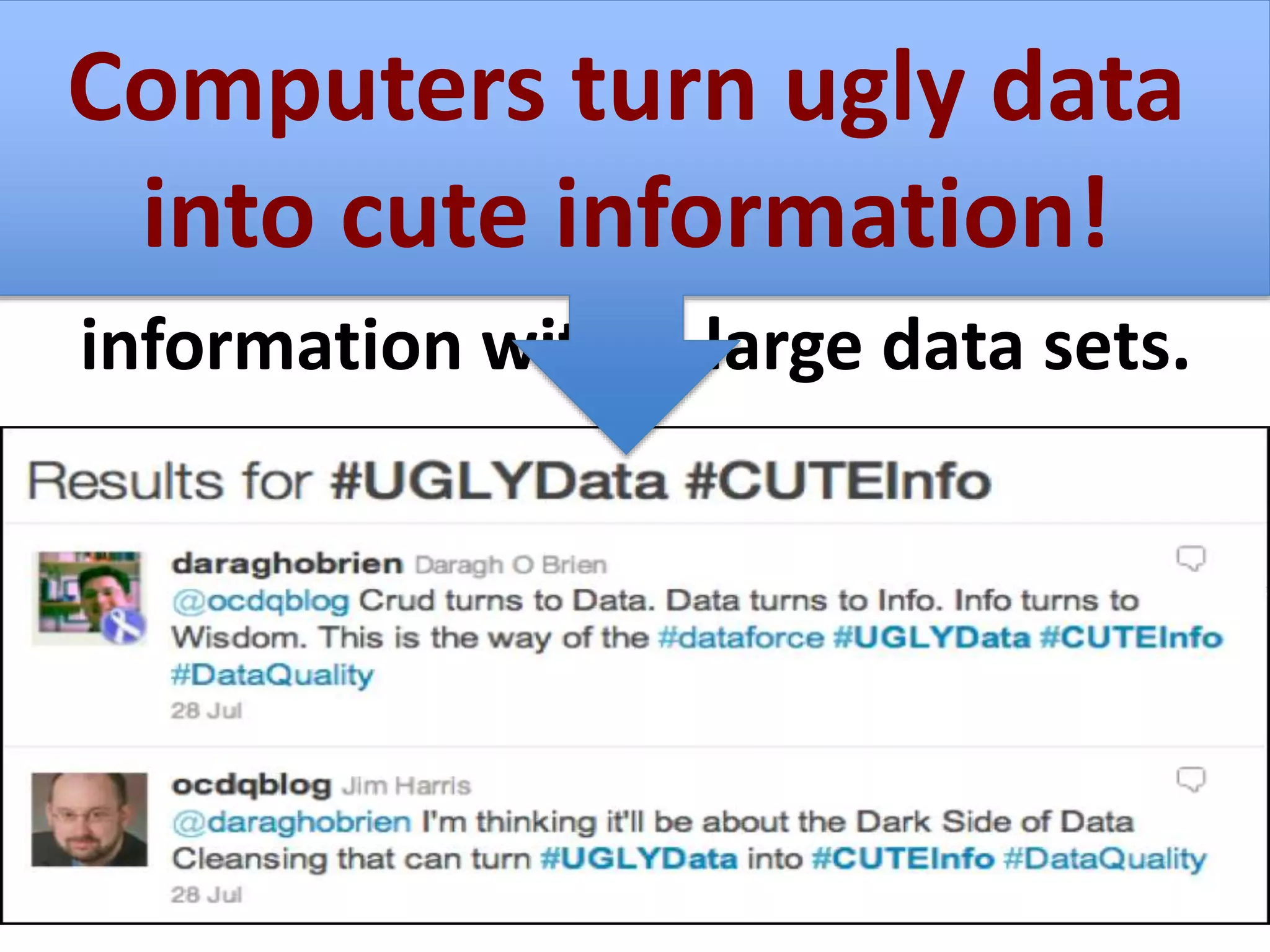
EK 3.2.1C
Computing tools facilitate the
discovery of connections in
information within large data sets.
Computers turn ugly data
into cute information!
EK 3.2.1D
Search tools are essential for
efficiently finding information.
EK 3.2.1E
Information filtering
systems are
important tools for
finding information
and recognizing
patterns in the
information.
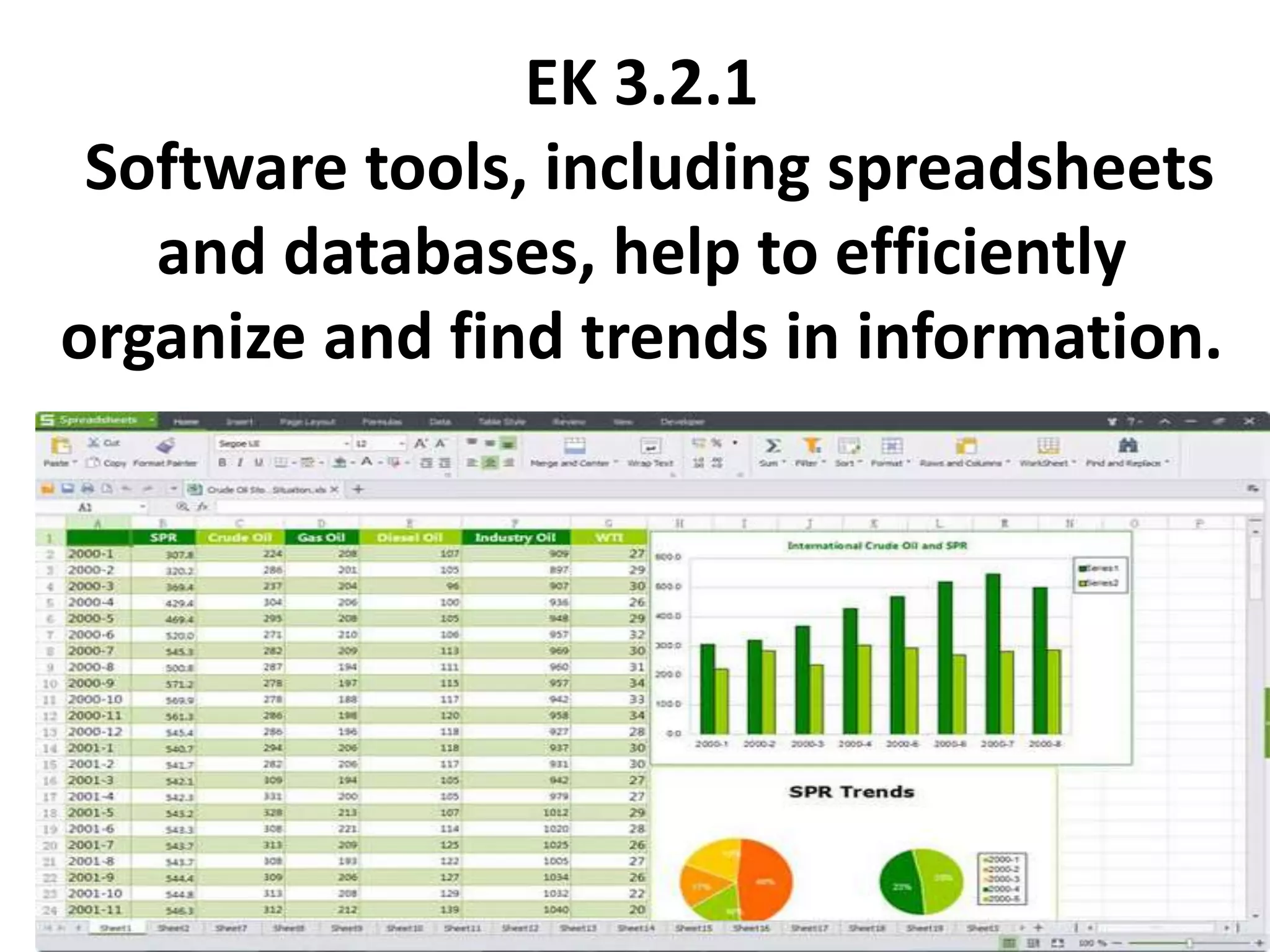
EK 3.2.1
Software tools, including spreadsheets
and databases, help to efficiently
organize and find trends in information.
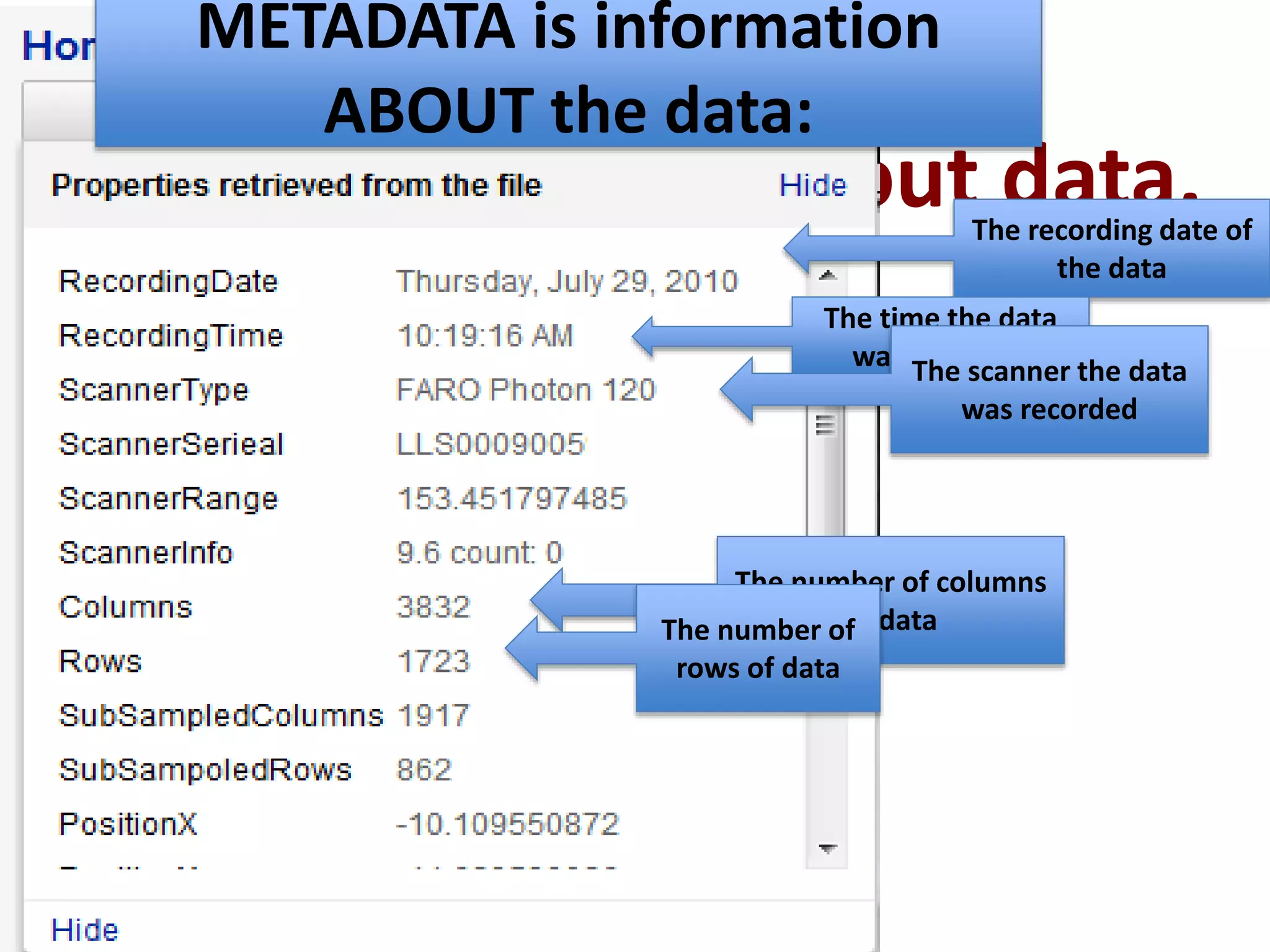
EK 3.2.1G
Metadata is data about data.The recording date of
the data
METADATA is information
ABOUT the data:
The time the data
was recordedThe scanner the data
was recorded
The number of columns
of dataThe number of
rows of data
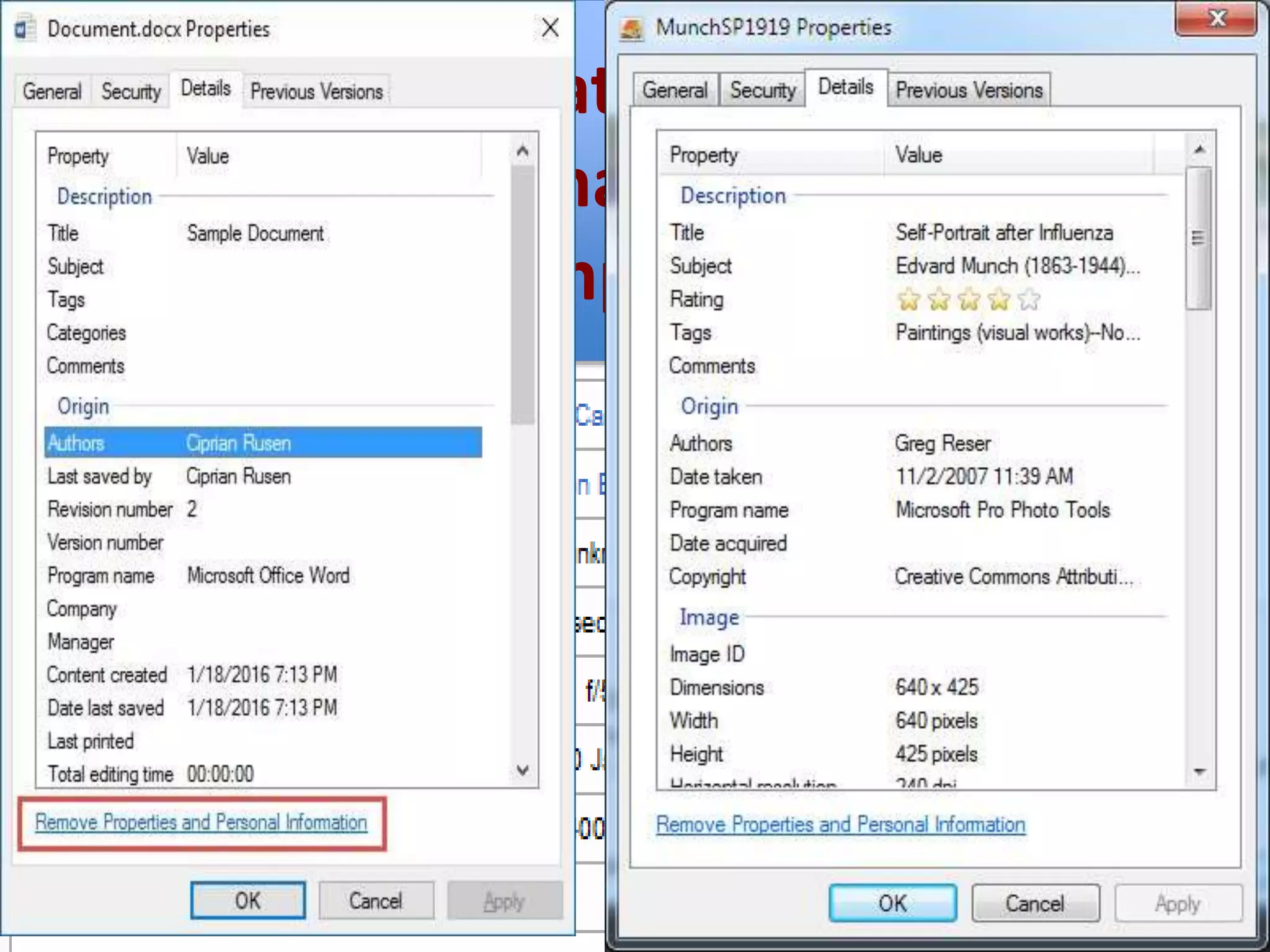
The camera
manufacturer and
camera model used to
record the data (picture)
The “author”.
(the
photographer)
The date & time the
data (picture) was
generated
The exposure
time of the
data
EK 3.2.1H Metadata can be descriptive
data about an image, a Web page, or
other complex objects.
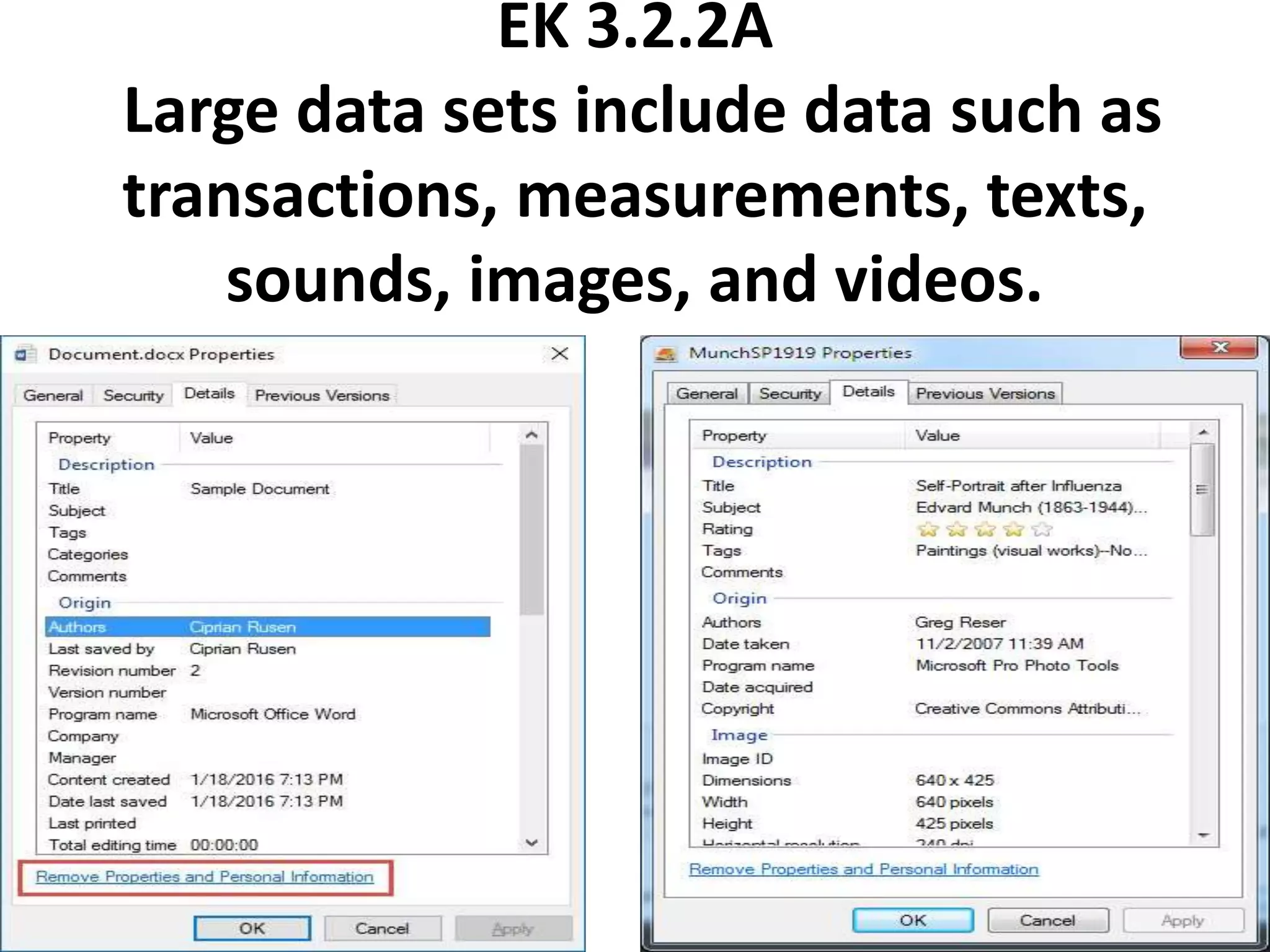
EK 3.2.2A
Large data sets include data such as
transactions, measurements, texts,
sounds, images, and videos.
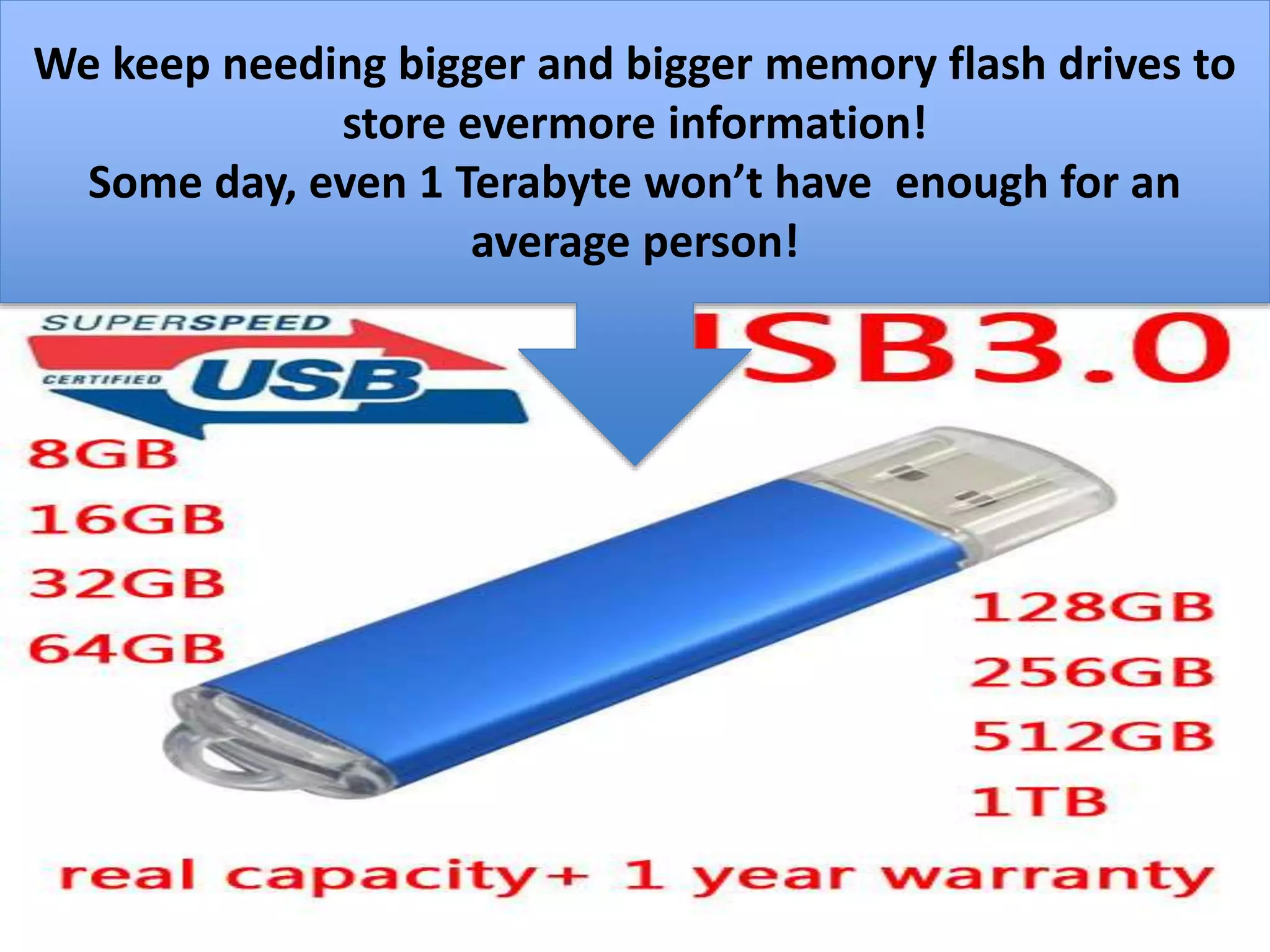
EK 3.2.2B
The storing, processing, and curating of
large data sets is challenging.
We keep needing bigger and bigger memory flash drives to
store evermore information!
Some day, even 1 Terabyte won’t have enough for an
average person!
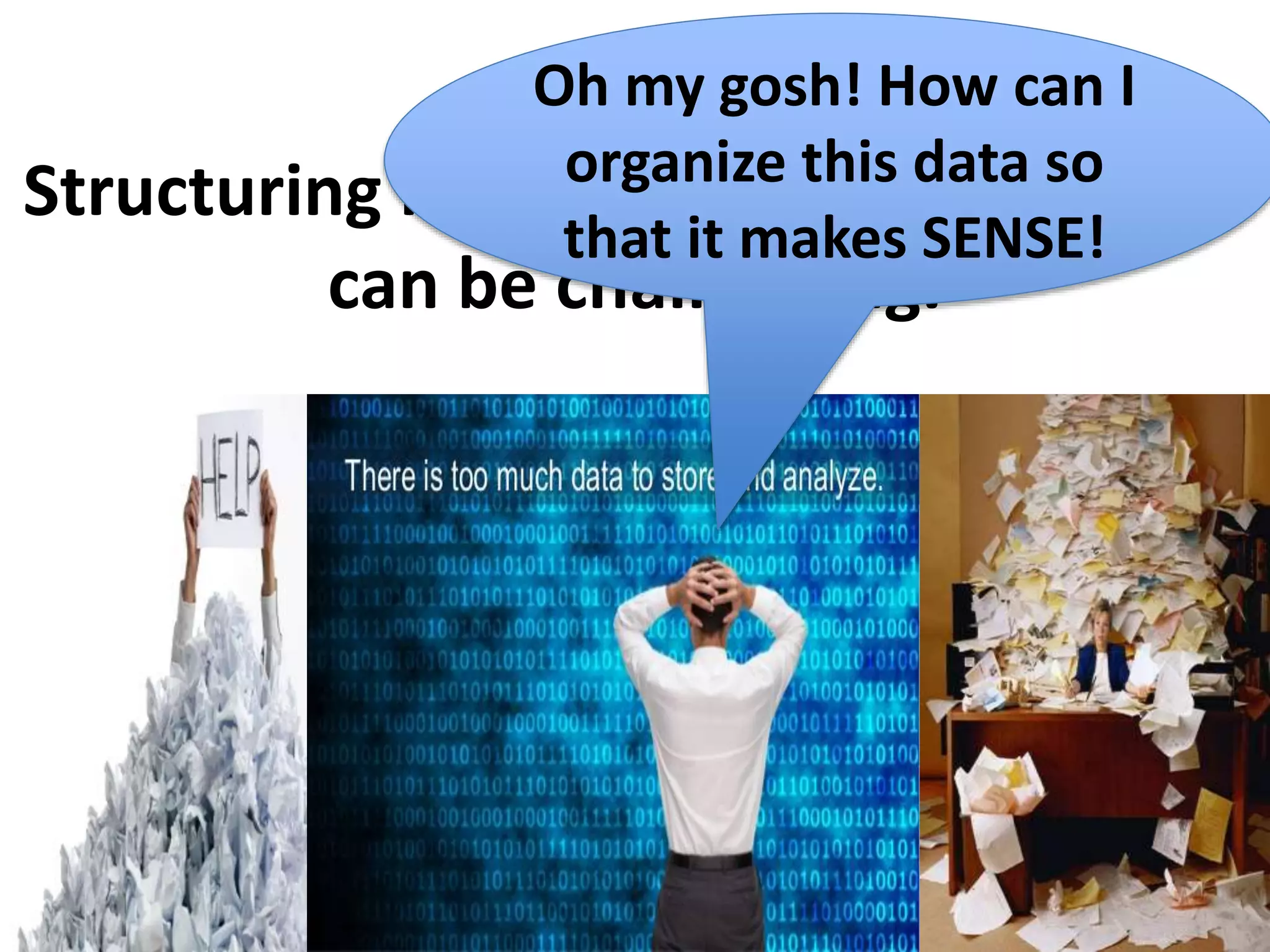
EK 3.2.2C
Structuring large data sets for analysis
can be challenging.
Oh my gosh! How can I
organize this data so
that it makes SENSE!
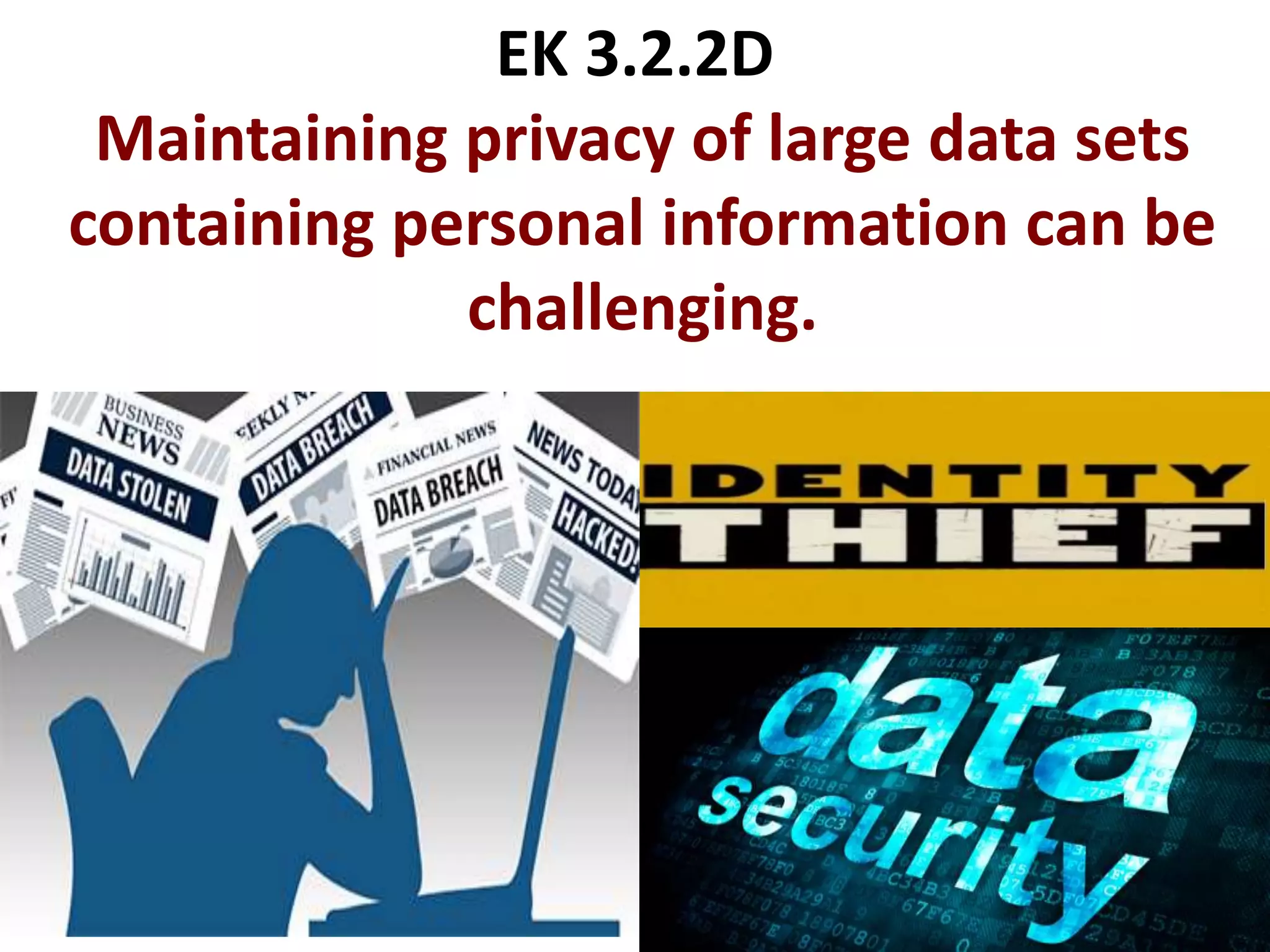
EK 3.2.2D
Maintaining privacy of large data sets
containing personal information can be
challenging.
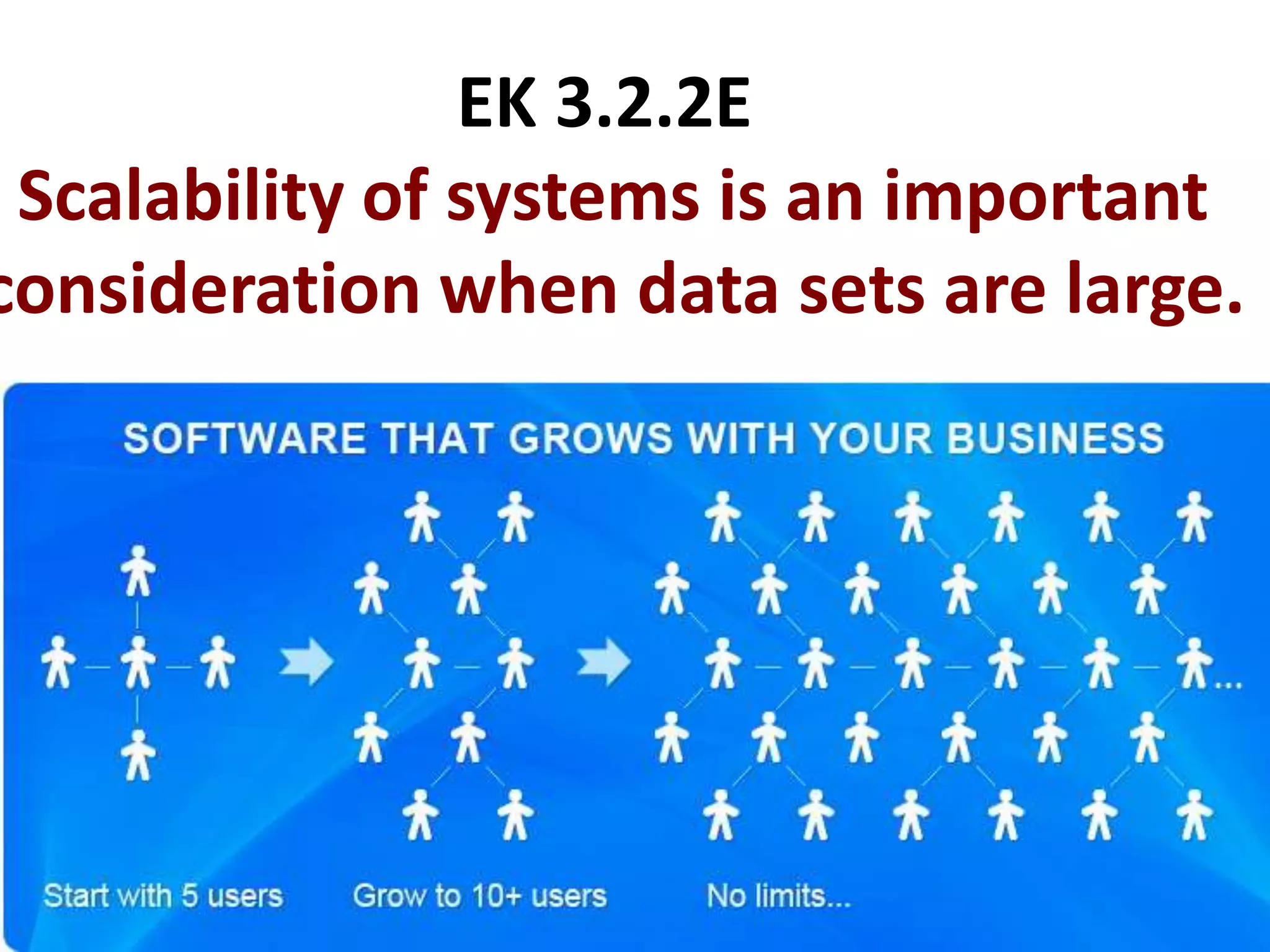
EK 3.2.2E
Scalability of systems is an important
consideration when data sets are large.
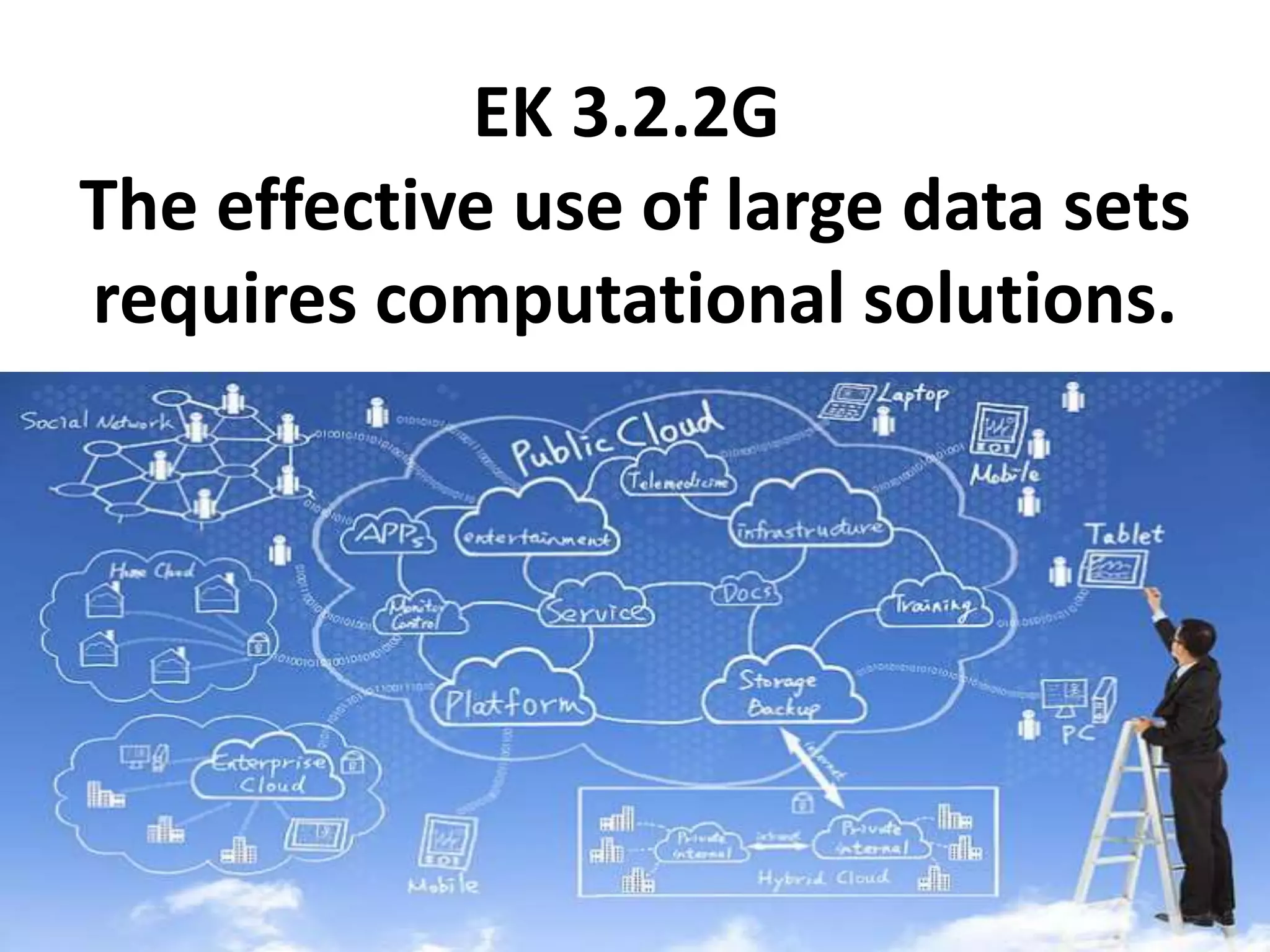
EK 3.2.2G
The effective use of large data sets
requires computational solutions.
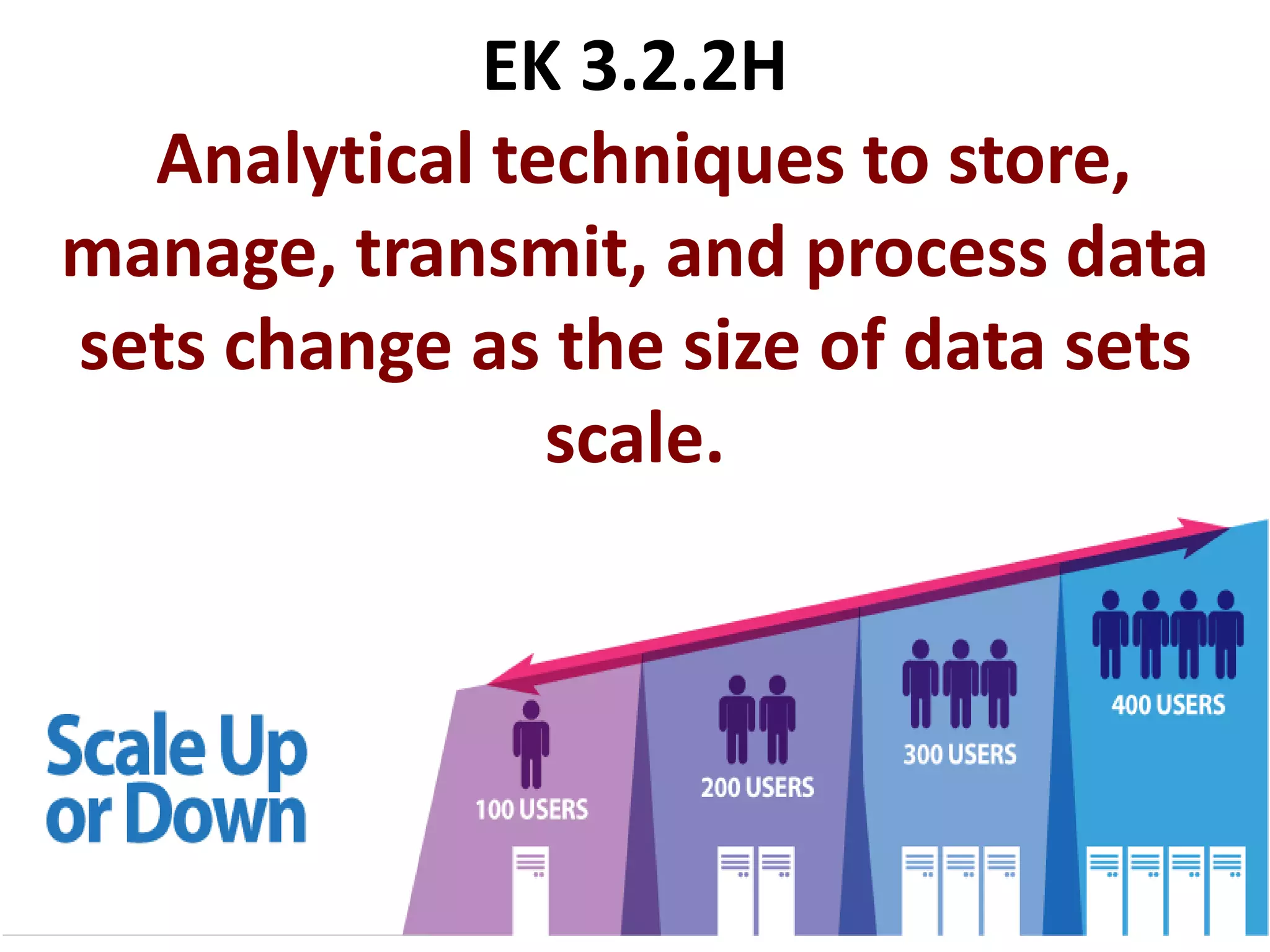
EK 3.2.2H
Analytical techniques to store,
manage, transmit, and process data
sets change as the size of data sets
scale.
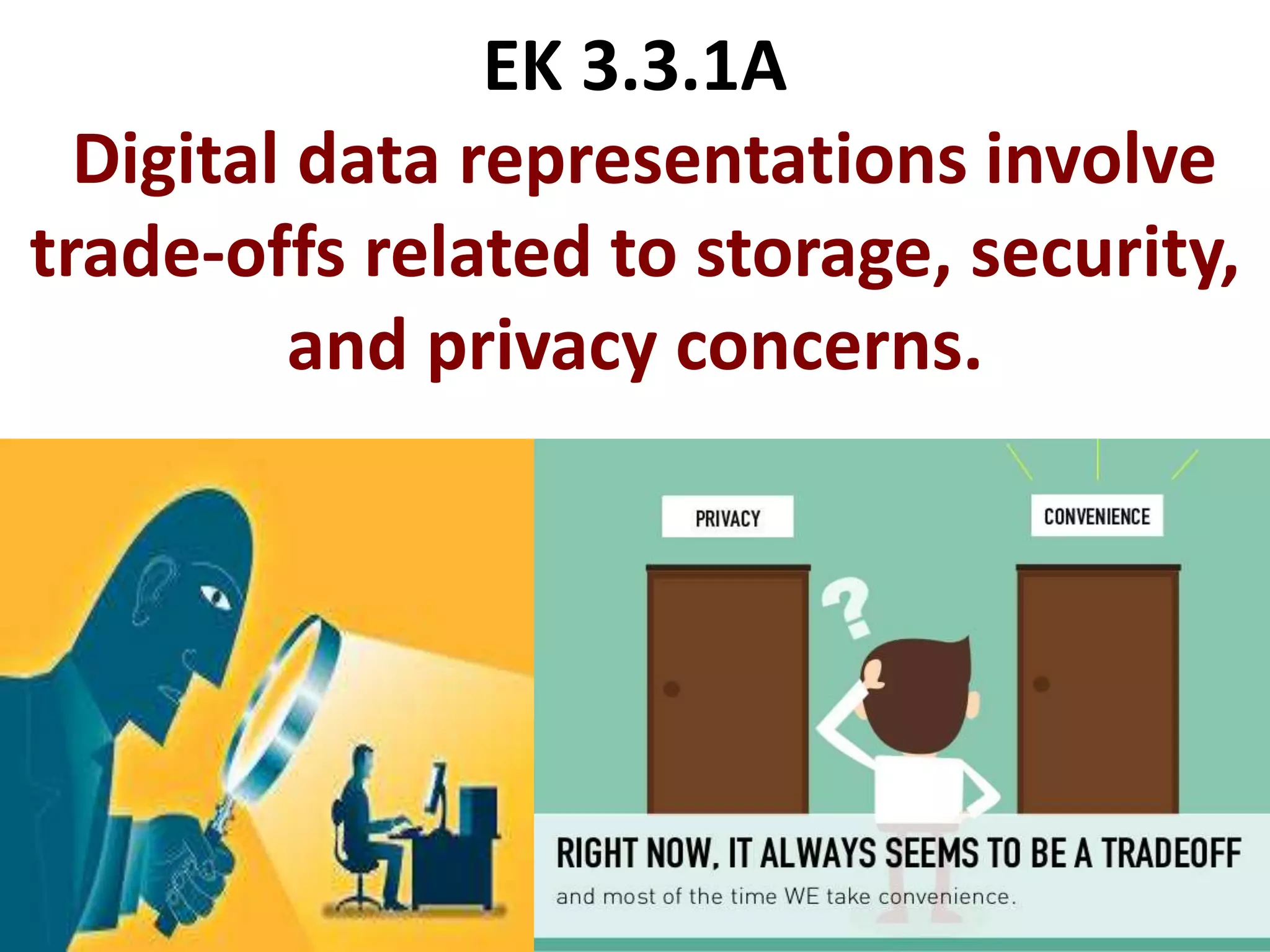
EK 3.3.1A
Digital data representations involve
trade-offs related to storage, security,
and privacy concerns.
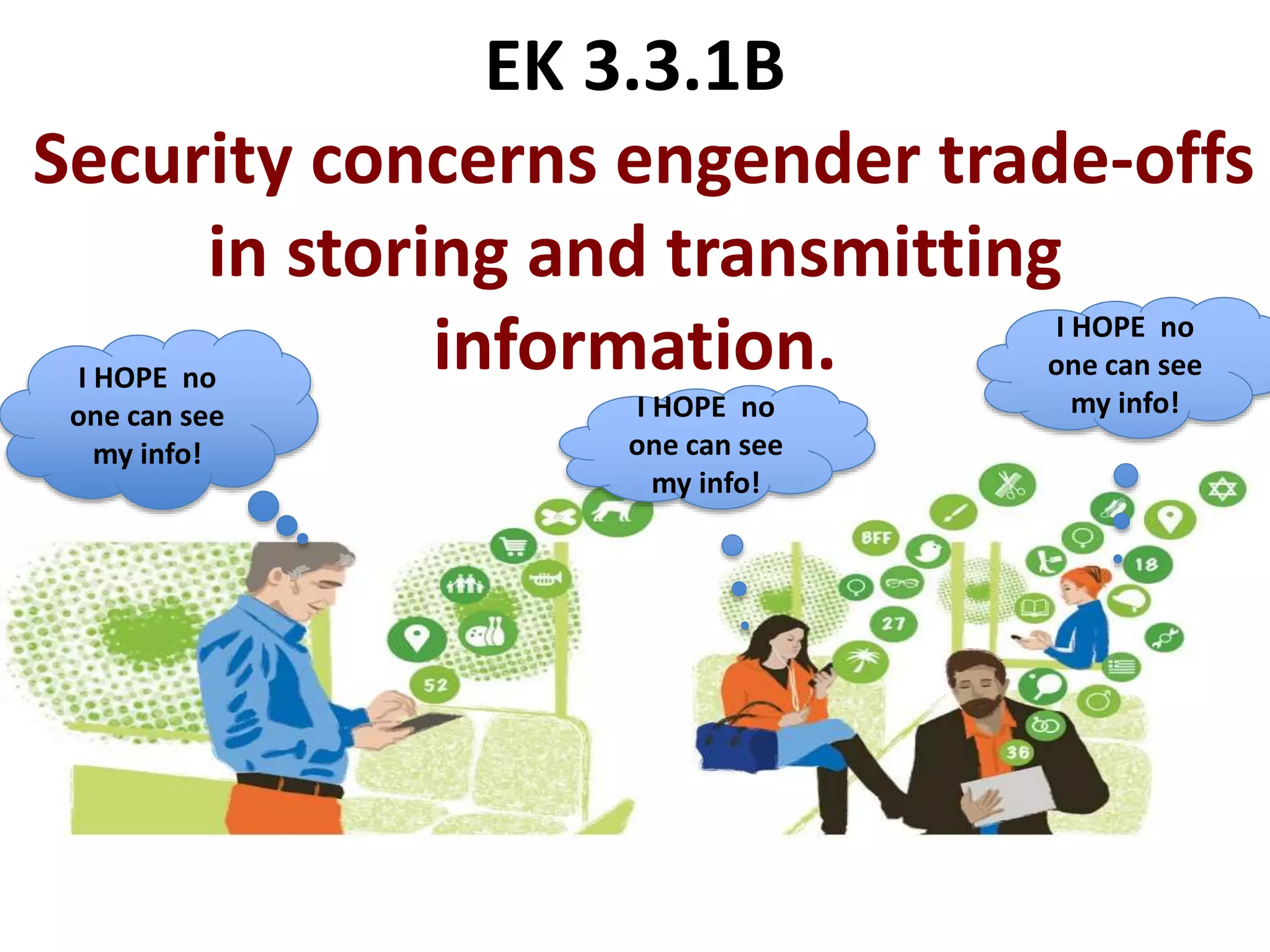
EK 3.3.1B
Security concerns engender trade-offs
in storing and transmitting
information.I HOPE no
one can see
my info!
I HOPE no
one can see
my info!
I HOPE no
one can see
my info!
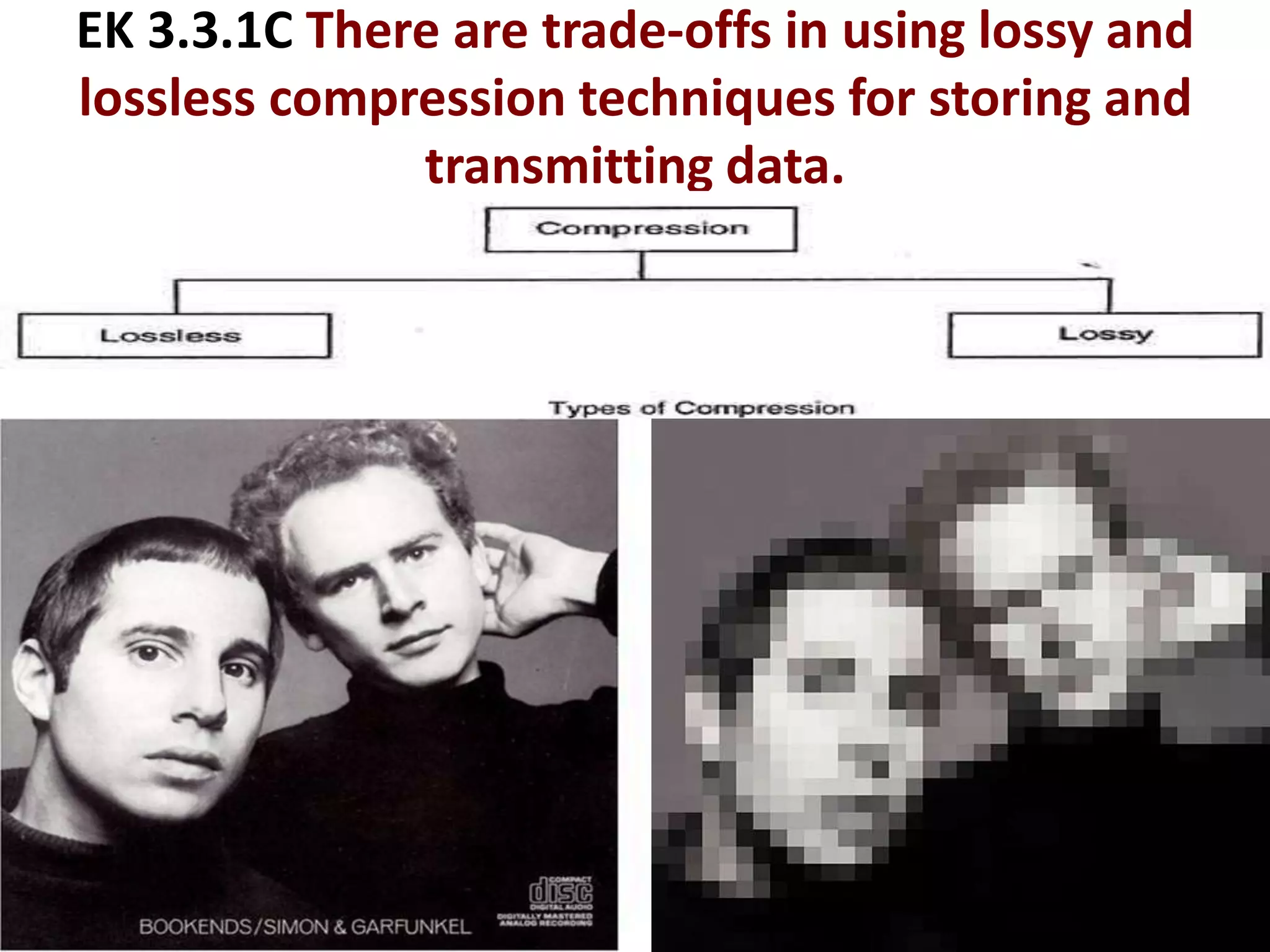
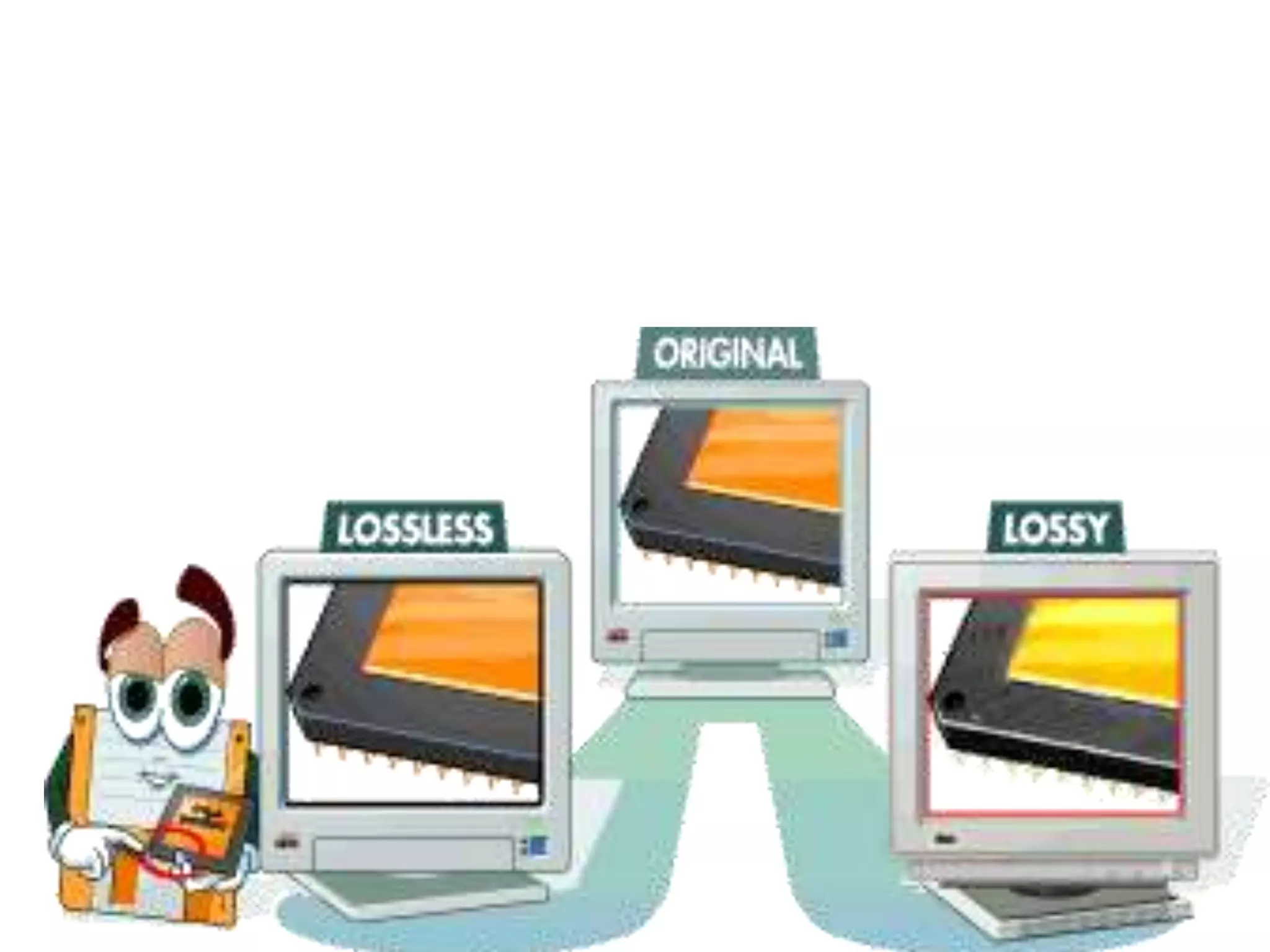
EK 3.3.1C There are trade-offs in using lossy and
lossless compression techniques for storing and
transmitting data.
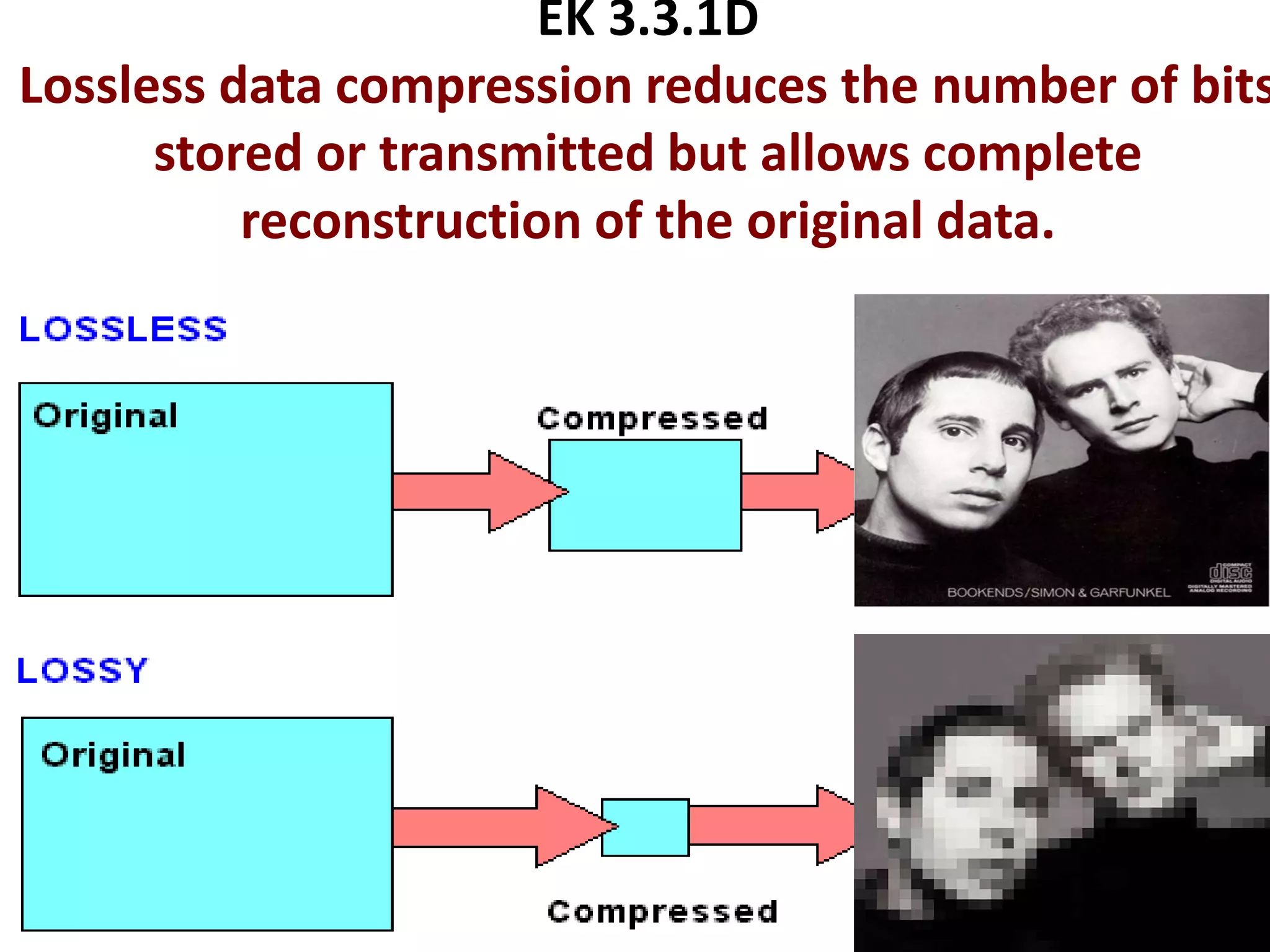
EK 3.3.1D
Lossless data compression reduces the number of bits
stored or transmitted but allows complete
reconstruction of the original data.
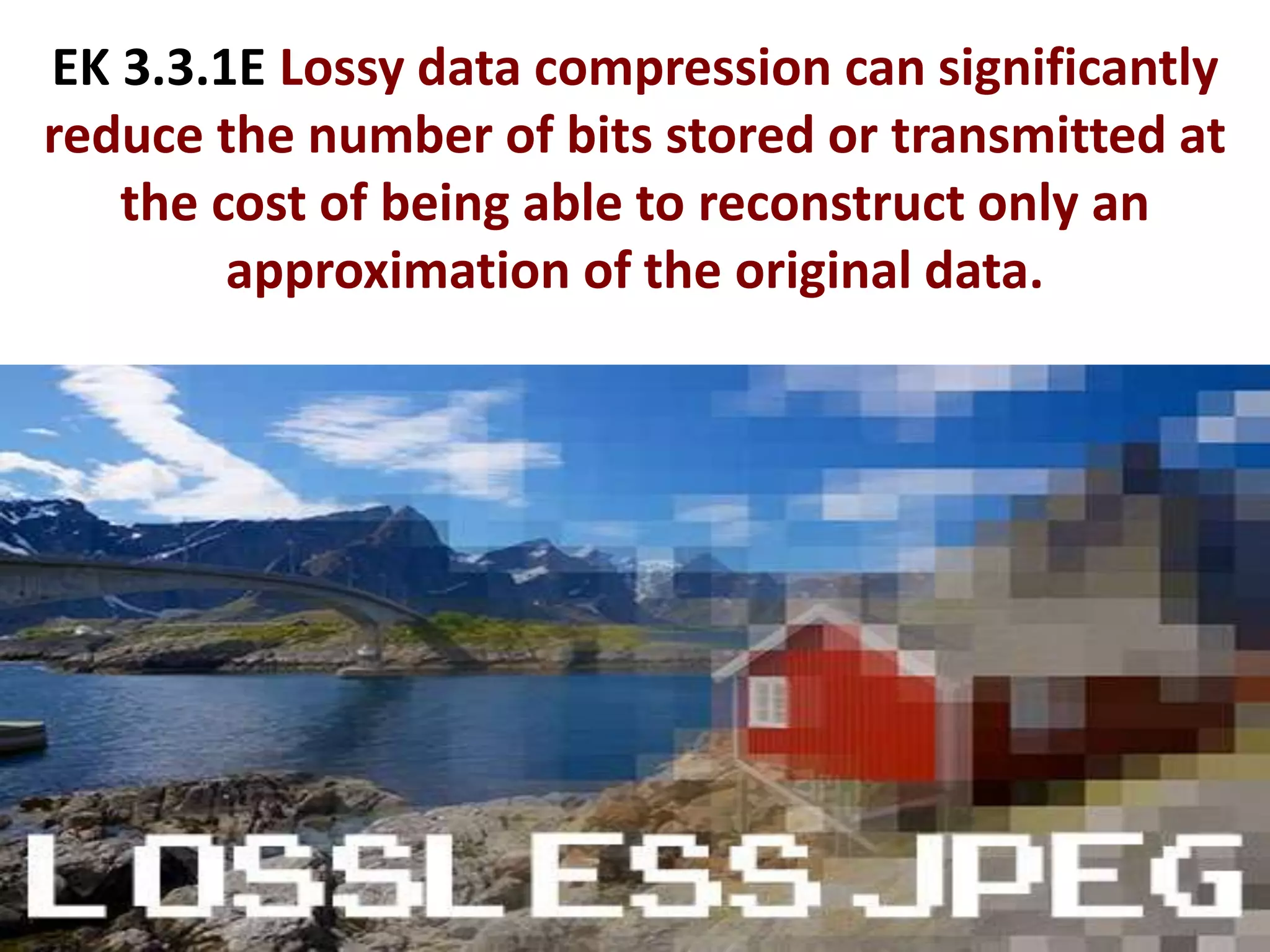
EK 3.3.1E Lossy data compression can significantly
reduce the number of bits stored or transmitted at
the cost of being able to reconstruct only an
approximation of the original data.
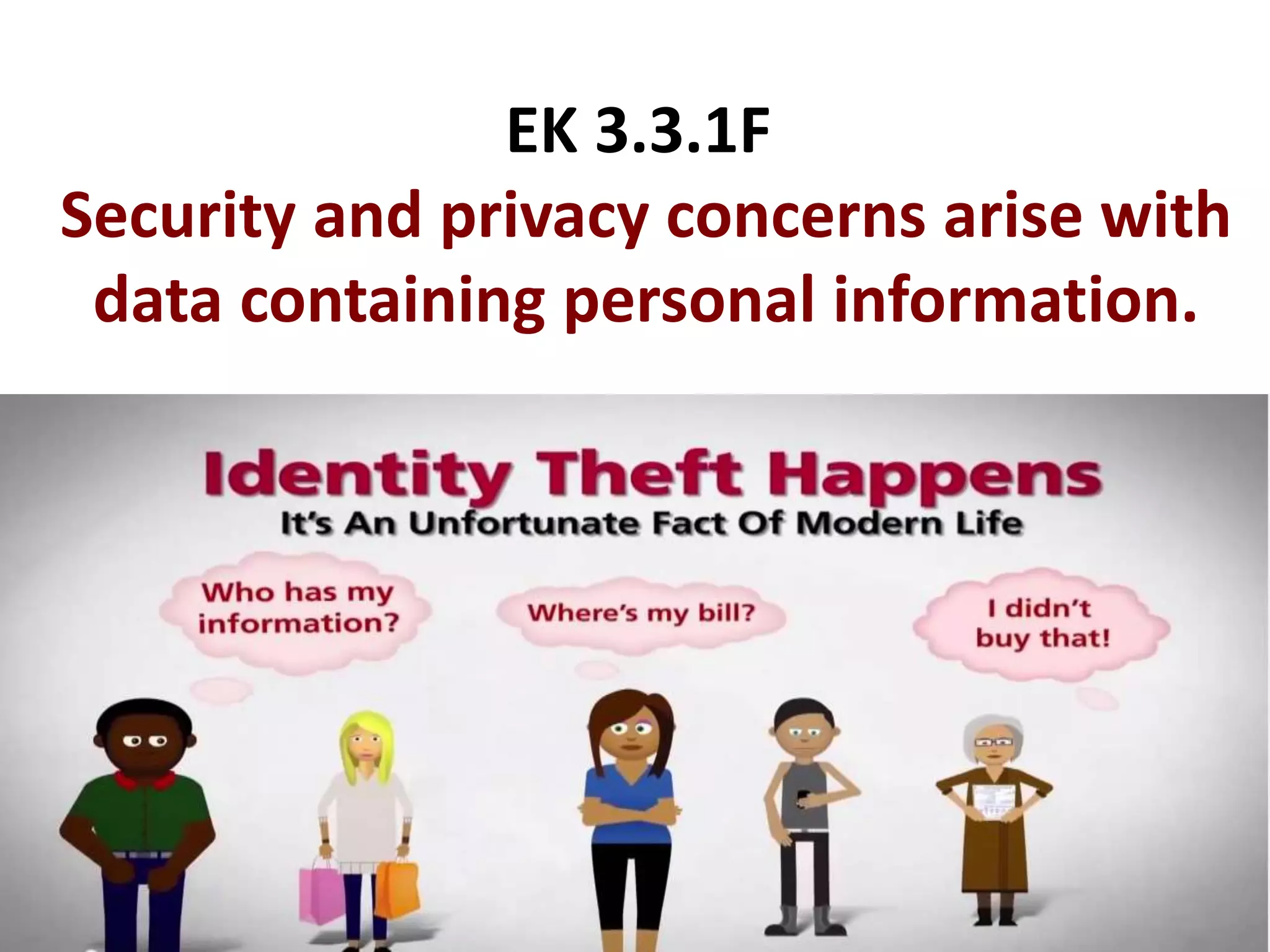
EK 3.3.1F
Security and privacy concerns arise with
data containing personal information.
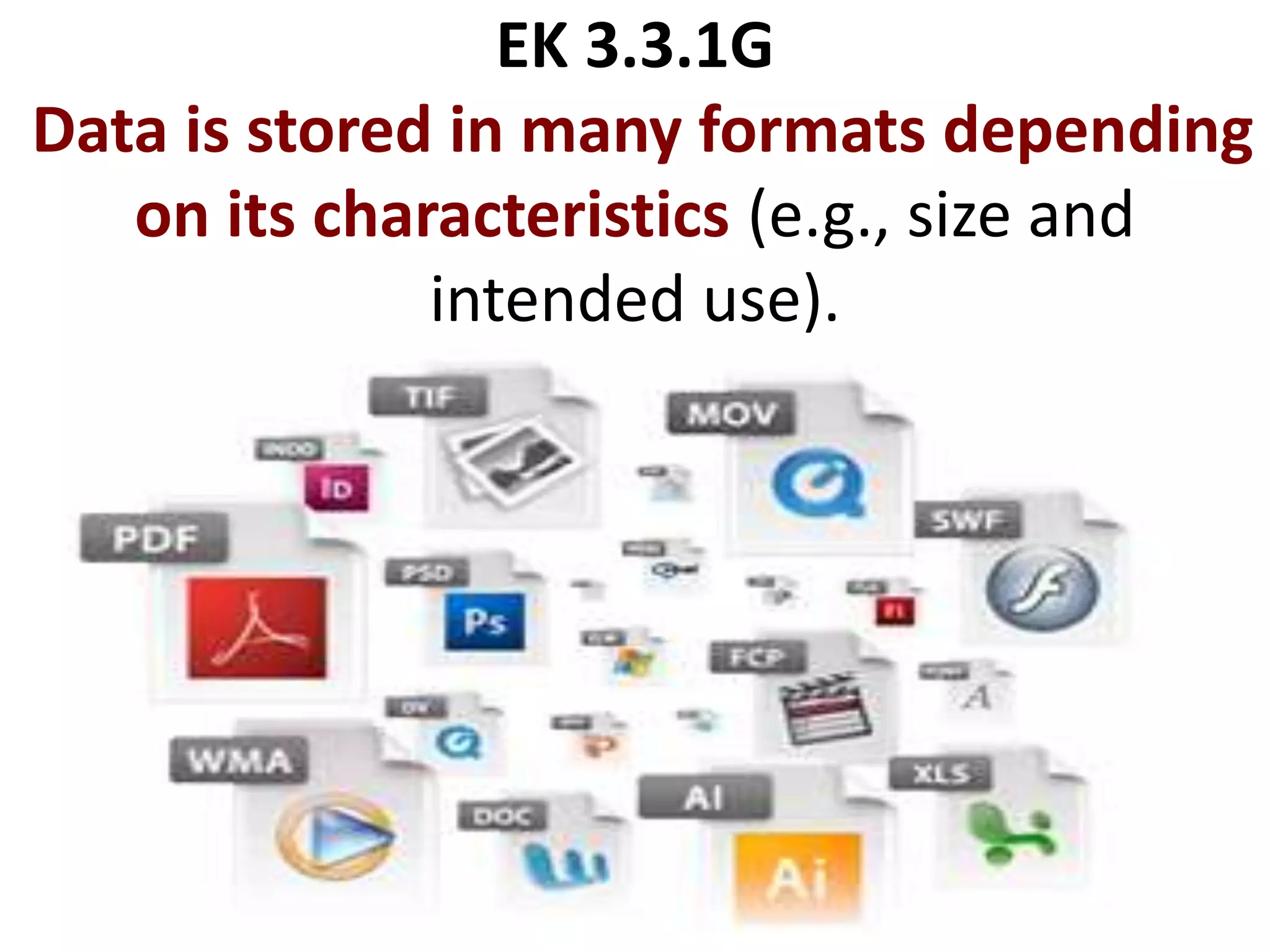
EK 3.3.1G
Data is stored in many formats depending
on its characteristics (e.g., size and
intended use).
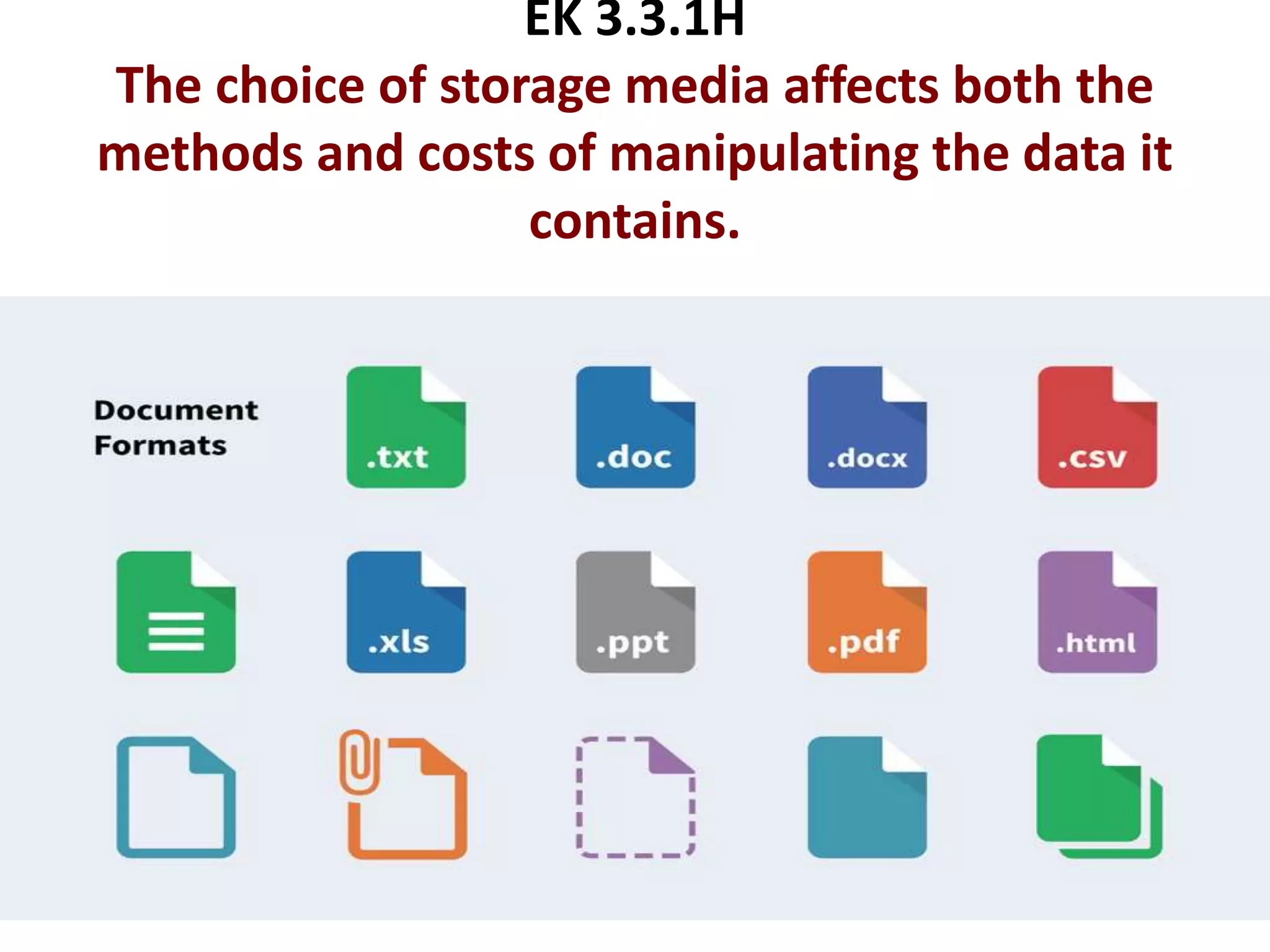
EK 3.3.1H
The choice of storage media affects both the
methods and costs of manipulating the data it
contains.
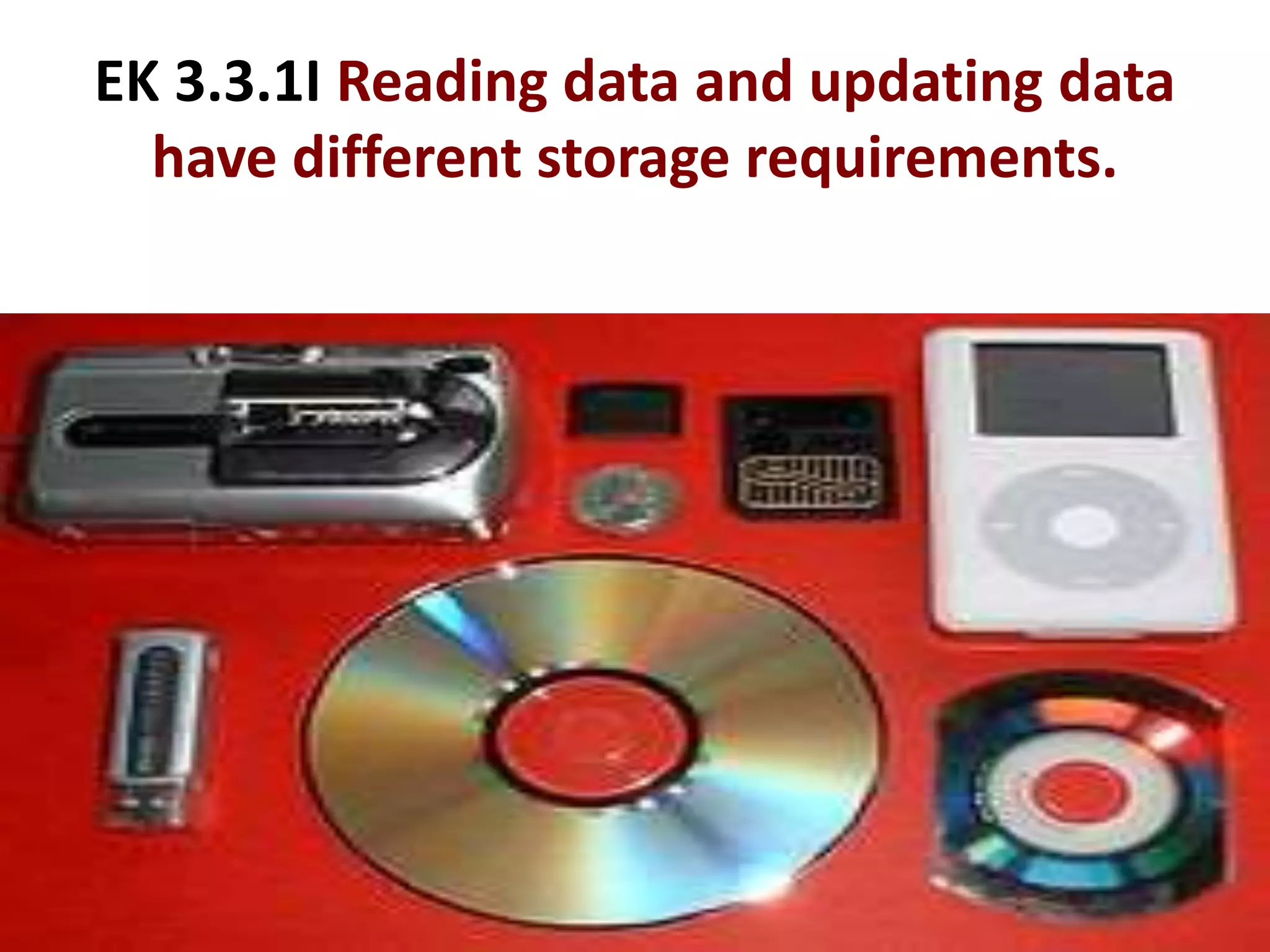
EK 3.3.1I Reading data and updating data
have different storage requirements.
Independent work:
complete the data and information
questions

Ap exam big idea 3 data and information

  • 1.
    L.O: STUDENTS WILL REVIEWBIG IDEA 3: DATA AND INFORMATION DO NOW: READ PAGE 21-26
  • 2.
    EK 3.1.1A Computers areused in an iterative and interactive way when processing digital information to gain insight and knowledge. Computers are useful because of ITERATION; they can do things such as processing data over and over and over and over again. We learn things because of this ability of computers.
  • 3.
    EK 3.1.1B Digital informationcan be filtered and cleaned by using computers to process information. Computer can do all kinds of wonderful stuff to digital data!
  • 4.
    EK 3.1.1C Combining datasources, clustering data, and data classification are part of the process of using computers to process information. Computer can do all kinds of wonderful stuff to digital data!
  • 5.
    EK 3.1.1D Insight andknowledge can be obtained from translating and transforming digitally represented information. We can learn things when we study data processed by computers
  • 6.
    EK 3.1.1E Patterns canemerge when data is transformed using computational tools. According to these computer models, snowstorm is coming!
  • 7.
    EK 3.1.2A Collaboration isan important part of solving data- driven problems. 2 heads are better than 1
  • 8.
    EK 3.1.2B Collaboration facilitatessolving computational problems by applying multiple perspectives, experiences, and skill sets.
  • 9.
    EK 3.1.2C Communicationbetween participants working on data-driven problems gives rise to enhanced insights and knowledge.
  • 10.
    EK 3.1.2D Collaborationin developing hypotheses and questions, and in testing hypotheses and answering questions, about data helps participants gain insight and knowledge.
  • 11.
    EK 3.1.2E Collaboratingface-to-face and using online collaborative tools can facilitate processing information to gain insight and knowledge.
  • 12.
    EK 3.1.2F Investigating largedata sets collaboratively can lead to insight and knowledge not obtained when working alone This is a LARGE DATA SET ( a large amount of data). It means nothing to a human working alone, but using a computer , you can find out what it means, by turning it into graphs, tables, diagrams etc!
  • 13.
    EK 3.1.3A Visualization toolsand software can communicate information about data. Computers and computing software can turn confusing and indecipherable into meaningful information that humans can understand!
  • 14.
    EK 3.1.3B Tables, diagrams,and textual displays can be used in communicating insight and knowledge gained from data
  • 15.
    EK 3.1.3C Summaries ofdata analyzed computationally can be effective in communicating insight and knowledge gained from digitally represented information.
  • 16.
    EK 3.1.3D Transforminginformation can be effective in communicating knowledge gained from data
  • 17.
    EK 3.1.3E Interactivity withdata is an aspect of communicating. Computers turn data into information!
  • 18.
    EK 3.2.1A Large datasets provide opportunities and challenges for extracting information and knowledge.
  • 19.
    EK 3.2.1B Large datasets provide opportunities for identifying trends, making connections in data, and solving problems.
  • 20.
    EK 3.2.1C Computing toolsfacilitate the discovery of connections in information within large data sets. Computers turn ugly data into cute information!
  • 21.
    EK 3.2.1D Search toolsare essential for efficiently finding information.
  • 22.
    EK 3.2.1E Information filtering systemsare important tools for finding information and recognizing patterns in the information.
  • 23.
    EK 3.2.1 Software tools,including spreadsheets and databases, help to efficiently organize and find trends in information.
  • 24.
    EK 3.2.1G Metadata isdata about data.The recording date of the data METADATA is information ABOUT the data: The time the data was recordedThe scanner the data was recorded The number of columns of dataThe number of rows of data
  • 25.
    The camera manufacturer and cameramodel used to record the data (picture) The “author”. (the photographer) The date & time the data (picture) was generated The exposure time of the data EK 3.2.1H Metadata can be descriptive data about an image, a Web page, or other complex objects.
  • 26.
    EK 3.2.2A Large datasets include data such as transactions, measurements, texts, sounds, images, and videos.
  • 27.
    EK 3.2.2B The storing,processing, and curating of large data sets is challenging. We keep needing bigger and bigger memory flash drives to store evermore information! Some day, even 1 Terabyte won’t have enough for an average person!
  • 28.
    EK 3.2.2C Structuring largedata sets for analysis can be challenging. Oh my gosh! How can I organize this data so that it makes SENSE!
  • 29.
    EK 3.2.2D Maintaining privacyof large data sets containing personal information can be challenging.
  • 30.
    EK 3.2.2E Scalability ofsystems is an important consideration when data sets are large.
  • 31.
    EK 3.2.2G The effectiveuse of large data sets requires computational solutions.
  • 32.
    EK 3.2.2H Analytical techniquesto store, manage, transmit, and process data sets change as the size of data sets scale.
  • 33.
    EK 3.3.1A Digital datarepresentations involve trade-offs related to storage, security, and privacy concerns.
  • 34.
    EK 3.3.1B Security concernsengender trade-offs in storing and transmitting information.I HOPE no one can see my info! I HOPE no one can see my info! I HOPE no one can see my info!
  • 35.
    EK 3.3.1C Thereare trade-offs in using lossy and lossless compression techniques for storing and transmitting data.
  • 36.
    EK 3.3.1D Lossless datacompression reduces the number of bits stored or transmitted but allows complete reconstruction of the original data.
  • 37.
    EK 3.3.1E Lossydata compression can significantly reduce the number of bits stored or transmitted at the cost of being able to reconstruct only an approximation of the original data.
  • 39.
    EK 3.3.1F Security andprivacy concerns arise with data containing personal information.
  • 40.
    EK 3.3.1G Data isstored in many formats depending on its characteristics (e.g., size and intended use).
  • 41.
    EK 3.3.1H The choiceof storage media affects both the methods and costs of manipulating the data it contains.
  • 42.
    EK 3.3.1I Readingdata and updating data have different storage requirements.
  • 43.
    Independent work: complete thedata and information questions