LESSON 1 - RULES - PRESENT PROGRESSIVE 
We use Present Progressive to talk about things that are happening now. 
Time Expressions 
now, right now, at the moment, at present, 
today, tonight, this... 
Look! Listen! 
"..." 
The Form Of The Verb 
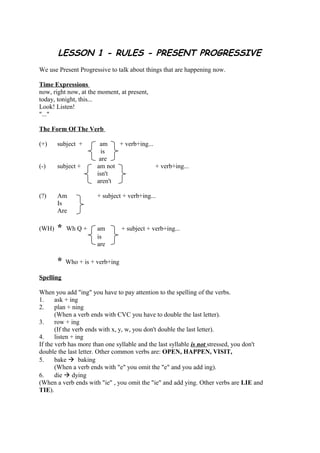
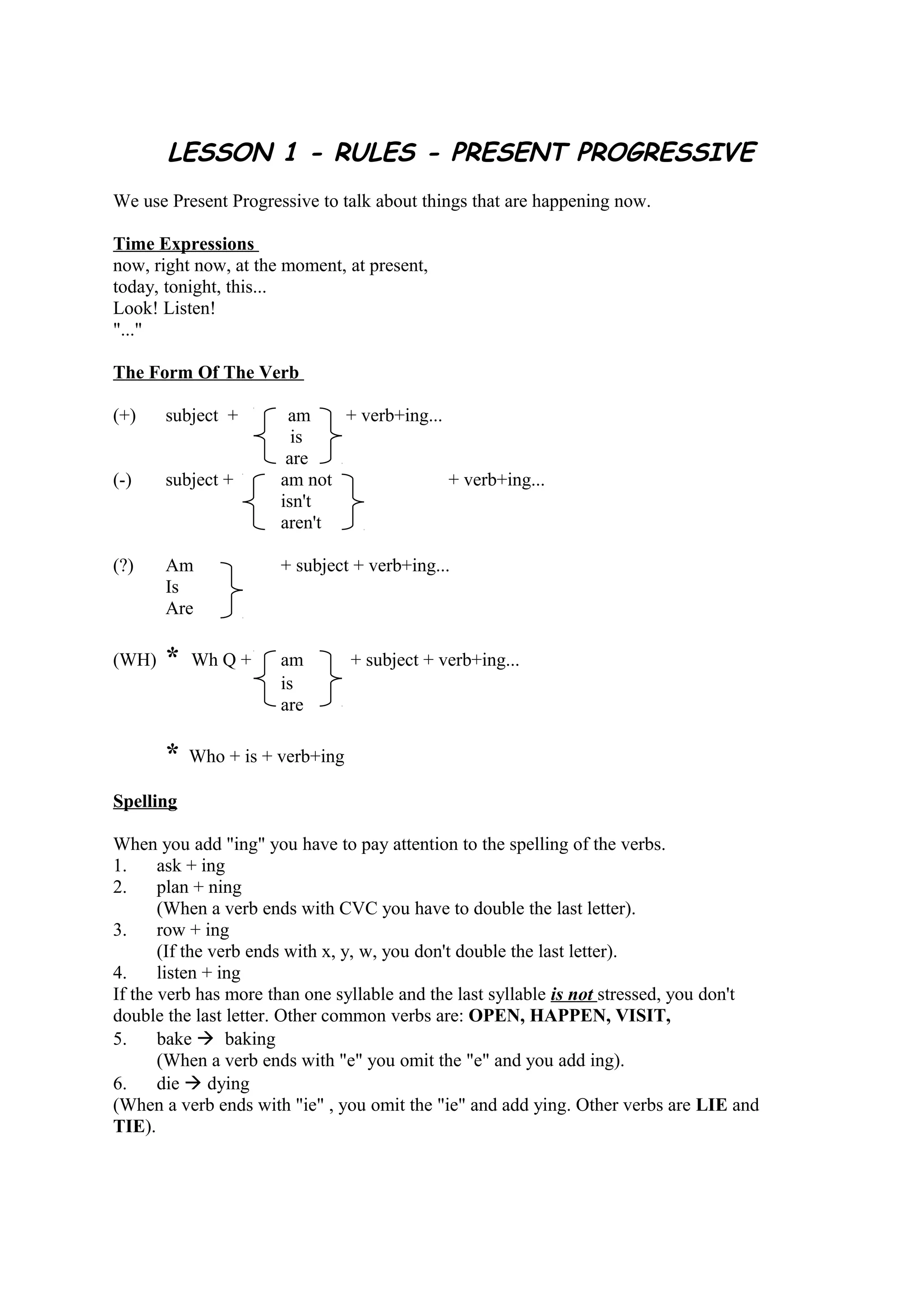
(+) subject + am + verb+ing... 
is 
are 
(-) subject + am not + verb+ing... 
isn't 
aren't 
(?) Am + subject + verb+ing... 
Is 
Are 
(WH) * Wh Q + am + subject + verb+ing... 
is 
are 
* Who + is + verb+ing 
Spelling 
When you add "ing" you have to pay attention to the spelling of the verbs. 
1. ask + ing 
2. plan + ning 
(When a verb ends with CVC you have to double the last letter). 
3. row + ing 
(If the verb ends with x, y, w, you don't double the last letter). 
4. listen + ing 
If the verb has more than one syllable and the last syllable is not stressed, you don't 
double the last letter. Other common verbs are: OPEN, HAPPEN, VISIT, 
5. bake  baking 
(When a verb ends with "e" you omit the "e" and you add ing). 
6. die  dying 
(When a verb ends with "ie" , you omit the "ie" and add ying. Other verbs are LIE and 
TIE).

Lesson1 rules-present prog

  • 1.
    LESSON 1 -RULES - PRESENT PROGRESSIVE We use Present Progressive to talk about things that are happening now. Time Expressions now, right now, at the moment, at present, today, tonight, this... Look! Listen! "..." The Form Of The Verb (+) subject + am + verb+ing... is are (-) subject + am not + verb+ing... isn't aren't (?) Am + subject + verb+ing... Is Are (WH) * Wh Q + am + subject + verb+ing... is are * Who + is + verb+ing Spelling When you add "ing" you have to pay attention to the spelling of the verbs. 1. ask + ing 2. plan + ning (When a verb ends with CVC you have to double the last letter). 3. row + ing (If the verb ends with x, y, w, you don't double the last letter). 4. listen + ing If the verb has more than one syllable and the last syllable is not stressed, you don't double the last letter. Other common verbs are: OPEN, HAPPEN, VISIT, 5. bake  baking (When a verb ends with "e" you omit the "e" and you add ing). 6. die  dying (When a verb ends with "ie" , you omit the "ie" and add ying. Other verbs are LIE and TIE).