Present Progressive
It is raining very hard outside.
Can you help me?
The copy machine isn’t working at this
moment.
Where?
What?
She is buying
groceries and talking
on the phone.
She is cooking
dinner and talking
on the phone.
She is riding a
bicycle and talking
on the phone.
She is doing
homework.
They are
cleaning the
bedroom.
She is running in
the park.
They are talking
on the phone.
She is wearing a white
dress and white
sandals.
Use:
1. The Present Continuous is used for actions
happening at the moment of speaking. For
example:
You are studying English at this moment.
2. The Present Continuous is also used for
processes happening around the present
time. For example:
It isn’t raining in Chimbote now.
The world is changing.
Present Progressive
I. Affirmative Form:
S+ V To Be + Verb–ing + C.
You are studying the Present
Continuous at the moment.
II.Negative Form:
S+ V To Be + not + Verb–ing + C.
You aren’t studying the Present
Simple at the moment.
EXERCISES:
D
S
C
A
E
T P R
III. Interrogative Form:
1.Yes/No Questions:
V To Be + S + Verb–ing + C?
Are you studying English now?
Yes, I am.
Are you wearing a dress today?
No, I’m not. I’m wearing a t-shirt
and pants.
Is Nataly wearing a dress today?
No, she isn’t. She is wearing pants.
2.Information Questions:
Wh- + V To Be + S + Verb–ing + C?
What are you doing now?
I am studying English .
What are you wearing today?
I am wearing ...
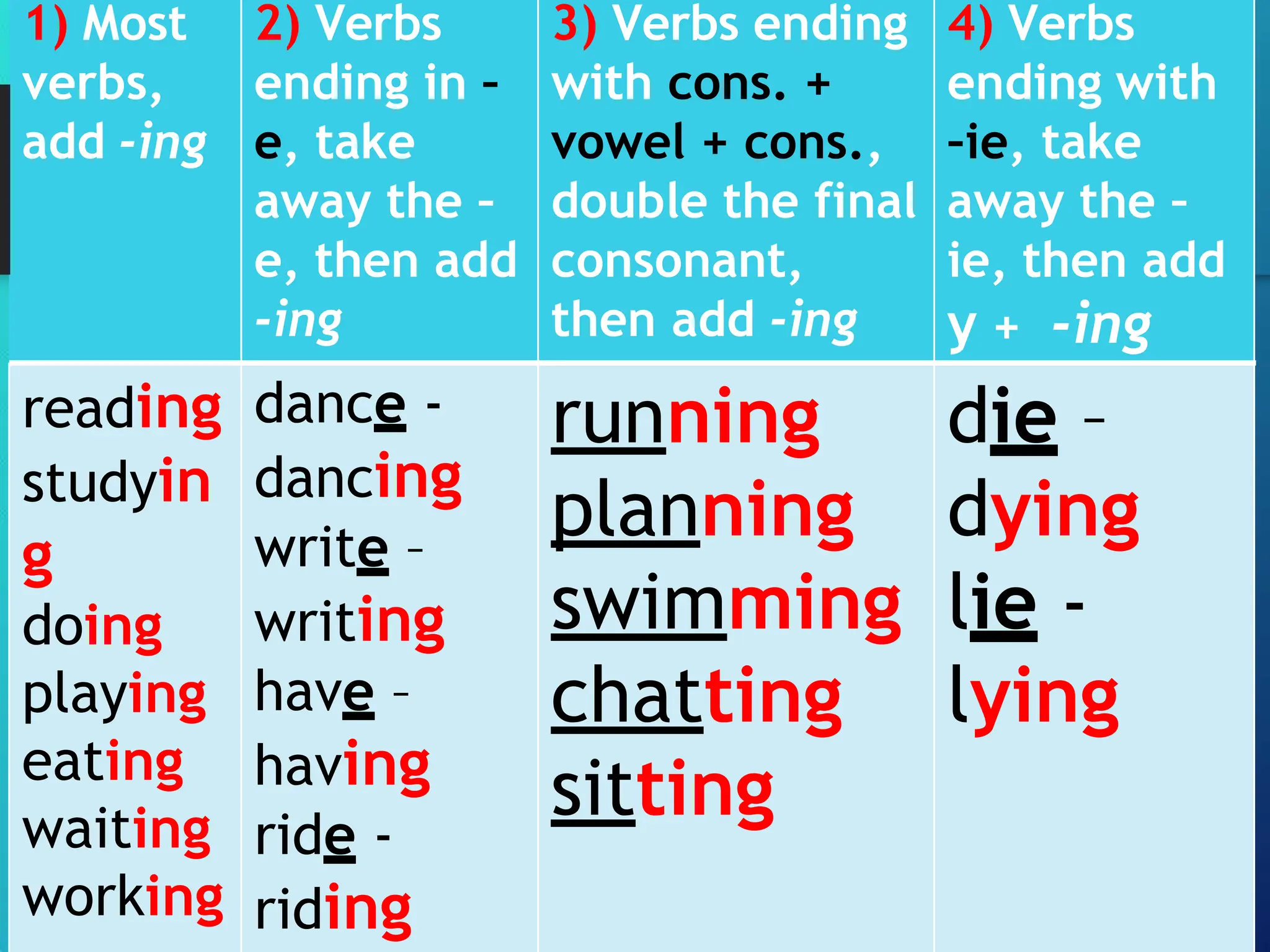
1) Most
verbs,
add -ing
2) Verbs
ending in –
e, take
away the –
e, then add
-ing
3) Verbs ending
with cons. +
vowel + cons.,
double the final
consonant,
then add -ing
4) Verbs
ending with
–ie, take
away the –
ie, then add
y + -ing
reading
studyin
g
doing
playing
eating
waiting
working
dance -
dancing
write –
writing
have –
having
ride -
riding
running
planning
swimming
chatting
sitting
die –
dying
lie -
lying
LISTEN LISTENING DRIVE DRIVING
PLAY PLAYING DRINK DRINKING
SAY SAYING SING SINGING
DO DOING PAINT PAINTING
GO GOING CRY CRYING
SLEEP SLEEPING WEAR WEARING
WATCH WATCHING BRUSH BRUSHING
MAKE MAKING EXERCISE EXERCISING
TAKE TAKING SEND SENDING
GET UP GETTING UP WAKE UP WAKING UP
What are the people in the picture
doing?
A
B C C
D
E F
Are we wearing our uniforms today?
are walking
am watching
Are these children playing at school?
is sleeping
Am I doing this exercise correctly?
Are the dog and the cat fighting outside?
Is he leaving with his sister right now?
Simple present and frequency adverbs
sometime
s
usually
always
never
rarely
PRESENT SIMPLE PRESENT
CONTINUOUS
(1) Affirmative Form
S + V + C S+ V T
o Be + V -ing + C
(2) Negative Form
S+ don’t/doesn’t + V INF. + S+ V T
o Be + not + V -ing + C
C
(3) Interrogative Form
a. Yes/ No Questions
Do/Does + S+ V INF. + C? V T
o Be + S+ V -ing + C?
b. Information Questions
Present progressive and simple present
doing
He
is
is watching
does he do
he’s crying
rarely cries watches
PRESENT PROGRESSIVE - cuarto año de secundaria

PRESENT PROGRESSIVE - cuarto año de secundaria

  • 1.
  • 2.
    It is rainingvery hard outside.
  • 3.
    Can you helpme? The copy machine isn’t working at this moment.
  • 4.
    Where? What? She is buying groceriesand talking on the phone. She is cooking dinner and talking on the phone.
  • 5.
    She is ridinga bicycle and talking on the phone. She is doing homework.
  • 6.
  • 7.
    She is runningin the park. They are talking on the phone.
  • 8.
    She is wearinga white dress and white sandals.
  • 9.
    Use: 1. The PresentContinuous is used for actions happening at the moment of speaking. For example: You are studying English at this moment. 2. The Present Continuous is also used for processes happening around the present time. For example: It isn’t raining in Chimbote now. The world is changing. Present Progressive
  • 10.
    I. Affirmative Form: S+V To Be + Verb–ing + C. You are studying the Present Continuous at the moment. II.Negative Form: S+ V To Be + not + Verb–ing + C. You aren’t studying the Present Simple at the moment.
  • 11.
  • 12.
    III. Interrogative Form: 1.Yes/NoQuestions: V To Be + S + Verb–ing + C? Are you studying English now? Yes, I am. Are you wearing a dress today? No, I’m not. I’m wearing a t-shirt and pants. Is Nataly wearing a dress today? No, she isn’t. She is wearing pants.
  • 13.
    2.Information Questions: Wh- +V To Be + S + Verb–ing + C? What are you doing now? I am studying English . What are you wearing today? I am wearing ...
  • 14.
    1) Most verbs, add -ing 2)Verbs ending in – e, take away the – e, then add -ing 3) Verbs ending with cons. + vowel + cons., double the final consonant, then add -ing 4) Verbs ending with –ie, take away the – ie, then add y + -ing reading studyin g doing playing eating waiting working dance - dancing write – writing have – having ride - riding running planning swimming chatting sitting die – dying lie - lying
  • 15.
    LISTEN LISTENING DRIVEDRIVING PLAY PLAYING DRINK DRINKING SAY SAYING SING SINGING DO DOING PAINT PAINTING GO GOING CRY CRYING SLEEP SLEEPING WEAR WEARING WATCH WATCHING BRUSH BRUSHING MAKE MAKING EXERCISE EXERCISING TAKE TAKING SEND SENDING GET UP GETTING UP WAKE UP WAKING UP
  • 17.
    What are thepeople in the picture doing? A B C C D E F
  • 18.
    Are we wearingour uniforms today? are walking
  • 19.
    am watching Are thesechildren playing at school?
  • 20.
    is sleeping Am Idoing this exercise correctly?
  • 21.
    Are the dogand the cat fighting outside? Is he leaving with his sister right now?
  • 22.
    Simple present andfrequency adverbs
  • 24.
  • 25.
    PRESENT SIMPLE PRESENT CONTINUOUS (1)Affirmative Form S + V + C S+ V T o Be + V -ing + C (2) Negative Form S+ don’t/doesn’t + V INF. + S+ V T o Be + not + V -ing + C C (3) Interrogative Form a. Yes/ No Questions Do/Does + S+ V INF. + C? V T o Be + S+ V -ing + C? b. Information Questions
  • 26.
    Present progressive andsimple present doing He is is watching does he do he’s crying rarely cries watches