Present Progressive or Continuous
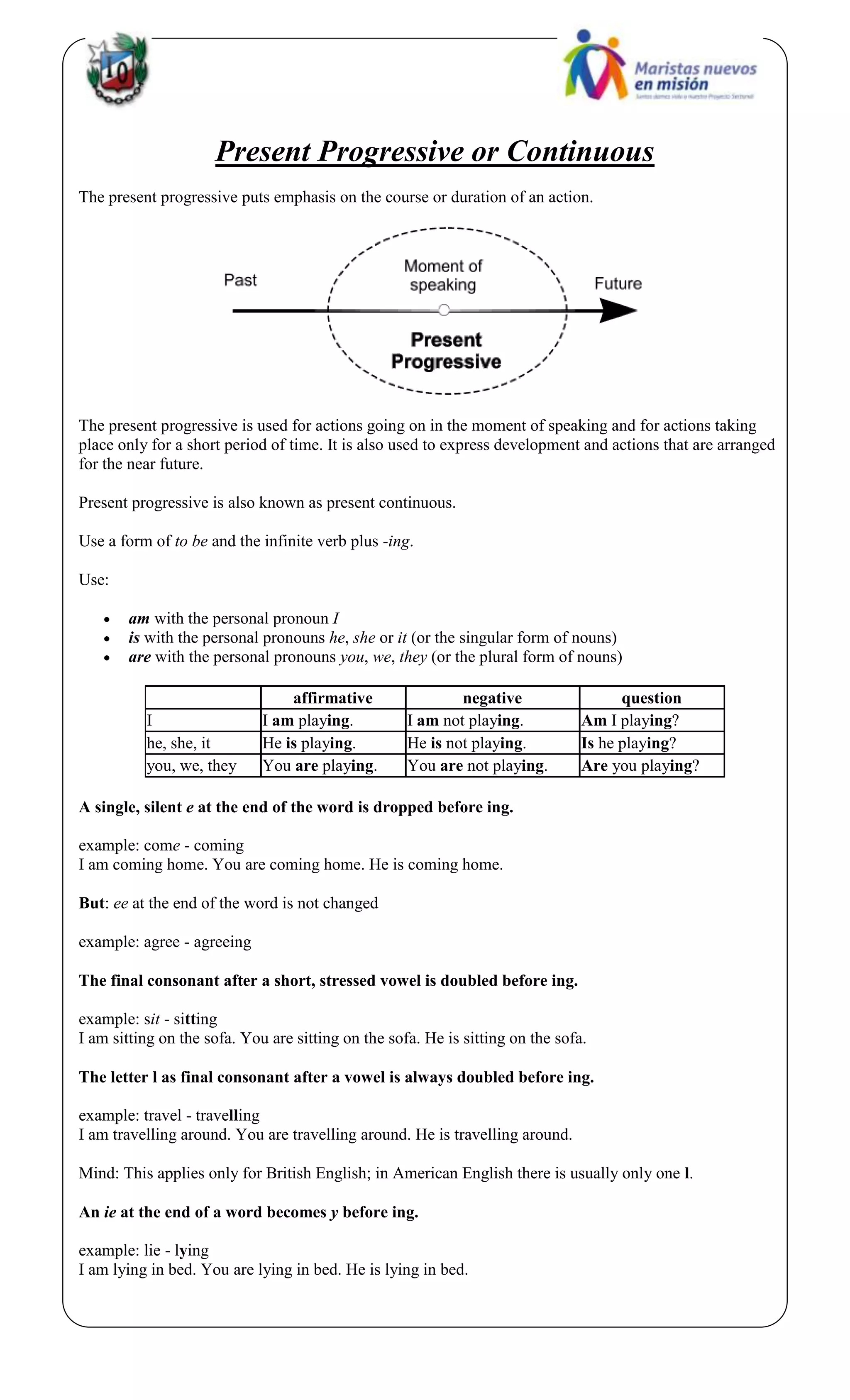
The present progressive puts emphasis on the course or duration of an action.
The present progressive is used for actions going on in the moment of speaking and for actions taking
place only for a short period of time. It is also used to express development and actions that are arranged
for the near future.
Present progressive is also known as present continuous.
Use a form of to be and the infinite verb plus -ing.
Use:
am with the personal pronoun I
is with the personal pronouns he, she or it (or the singular form of nouns)
are with the personal pronouns you, we, they (or the plural form of nouns)
affirmative negative question
I I am playing. I am not playing. Am I playing?
he, she, it He is playing. He is not playing. Is he playing?
you, we, they You are playing. You are not playing. Are you playing?
A single, silent e at the end of the word is dropped before ing.
example: come - coming
I am coming home. You are coming home. He is coming home.
But: ee at the end of the word is not changed
example: agree - agreeing
The final consonant after a short, stressed vowel is doubled before ing.
example: sit - sitting
I am sitting on the sofa. You are sitting on the sofa. He is sitting on the sofa.
The letter l as final consonant after a vowel is always doubled before ing.
example: travel - travelling
I am travelling around. You are travelling around. He is travelling around.
Mind: This applies only for British English; in American English there is usually only one l.
An ie at the end of a word becomes y before ing.
example: lie - lying
I am lying in bed. You are lying in bed. He is lying in bed.
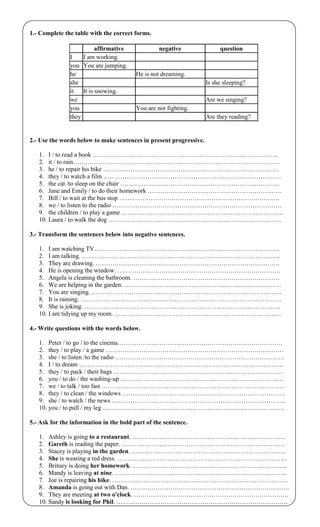
1.- Complete the table with the correct forms.
affirmative negative question
I I am working.
you You are jumping.
he He is not dreaming.
she Is she sleeping?
it It is snowing.
we Are we singing?
you You are not fighting.
they Are they reading?
2.- Use the words below to make sentences in present progressive.
1. I / to read a book ……………………………………………………………………………..
2. it / to rain………………………………………………………………………………………
3. he / to repair his bike …………………………………………………………………………
4. they / to watch a film ………………………………………………………………………….
5. the cat /to sleep on the chair ………………………………………………………………….
6. Jane and Emily / to do their homework ……………………………………………………….
7. Bill / to wait at the bus stop …………………………………………………………………..
8. we / to listen to the radio ………………………………………………………………………
9. the children / to play a game …………………………………………………………………...
10. Laura / to walk the dog ………………………………………………………………………..
3.- Transform the sentences below into negative sentences.
1. I am watching TV……………………………………………………………………………..
2. I am talking. …………………………………………………………………………………..
3. They are drawing. …………………………………………………………………………….
4. He is opening the window. ……………………………………………………………………
5. Angela is cleaning the bathroom. …………………………………………………………….
6. We are helping in the garden. …………………………………………………………………
7. You are singing. ……………………………………………………………………………….
8. It is raining. ……………………………………………………………………………………
9. She is joking. ………………………………………………………………………………….
10. I am tidying up my room. ……………………………………………………………………..
4.- Write questions with the words below.
1. Peter / to go / to the cinema…………………………………………………………………….
2. they / to play / a game ………………………………………………………………………….
3. she / to listen /to the radio ………………………………………………………………………
4. I / to dream ……………………………………………………………………………………..
5. they / to pack / their bags ………………………………………………………………………
6. you / to do / the washing-up ……………………………………………………………………
7. we / to talk / too fast ……………………………………………………………………………
8. they / to clean / the windows ……………………………………………………………………
9. she / to watch / the news ………………………………………………………………………...
10. you / to pull / my leg ……………………………………………………………………………
5.- Ask for the information in the bold part of the sentence.
1. Ashley is going to a restaurant. ……………………………………………………………….
2. Gareth is reading the paper. ……………………………………………………………………
3. Stacey is playing in the garden. ………………………………………………………………..
4. She is wearing a red dress. ………………………………………………………………………
5. Britney is doing her homework. ………………………………………………………………..
6. Mandy is leaving at nine. ……………………………………………………………………….
7. Joe is repairing his bike. …………………………………………………………………………
8. Amanda is going out with Dan. ………………………………………………………………….
9. They are meeting at two o'clock. ………………………………………………………………..
10. Sandy is looking for Phil. ……………………………………………………………………….
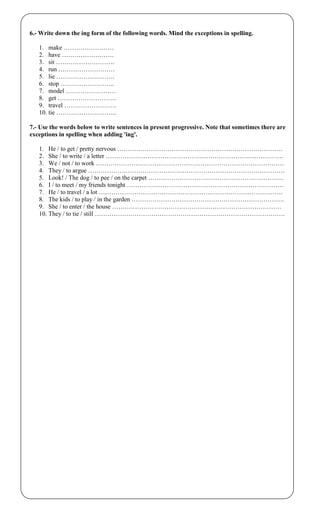
6.- Write down the ing form of the following words. Mind the exceptions in spelling.
1. make ……………………
2. have …………………….
3. sit ……………………….
4. run ………………………
5. lie ……………………….
6. stop ……………………..
7. model ……………………
8. get ……………………….
9. travel …………………….
10. tie ………………………..
7.- Use the words below to write sentences in present progressive. Note that sometimes there are
exceptions in spelling when adding 'ing'.
1. He / to get / pretty nervous …………………………………………………………………….
2. She / to write / a letter ………………………………………………………………………….
3. We / not / to work ………………………………………………………………………………
4. They / to argue ………………………………………………………………………………….
5. Look! / The dog / to pee / on the carpet ………………………………………………………..
6. I / to meet / my friends tonight …………………………………………………………………
7. He / to travel / a lot …………………………………………………………………………….
8. The kids / to play / in the garden ……………………………………………………………….
9. She / to enter / the house ………………………………………………………………………
10. They / to tie / still ……………………………………………………………………………….

Present continuous

  • 1.
    Present Progressive orContinuous The present progressive puts emphasis on the course or duration of an action. The present progressive is used for actions going on in the moment of speaking and for actions taking place only for a short period of time. It is also used to express development and actions that are arranged for the near future. Present progressive is also known as present continuous. Use a form of to be and the infinite verb plus -ing. Use: am with the personal pronoun I is with the personal pronouns he, she or it (or the singular form of nouns) are with the personal pronouns you, we, they (or the plural form of nouns) affirmative negative question I I am playing. I am not playing. Am I playing? he, she, it He is playing. He is not playing. Is he playing? you, we, they You are playing. You are not playing. Are you playing? A single, silent e at the end of the word is dropped before ing. example: come - coming I am coming home. You are coming home. He is coming home. But: ee at the end of the word is not changed example: agree - agreeing The final consonant after a short, stressed vowel is doubled before ing. example: sit - sitting I am sitting on the sofa. You are sitting on the sofa. He is sitting on the sofa. The letter l as final consonant after a vowel is always doubled before ing. example: travel - travelling I am travelling around. You are travelling around. He is travelling around. Mind: This applies only for British English; in American English there is usually only one l. An ie at the end of a word becomes y before ing. example: lie - lying I am lying in bed. You are lying in bed. He is lying in bed.
  • 2.
    1.- Complete thetable with the correct forms. affirmative negative question I I am working. you You are jumping. he He is not dreaming. she Is she sleeping? it It is snowing. we Are we singing? you You are not fighting. they Are they reading? 2.- Use the words below to make sentences in present progressive. 1. I / to read a book …………………………………………………………………………….. 2. it / to rain……………………………………………………………………………………… 3. he / to repair his bike ………………………………………………………………………… 4. they / to watch a film …………………………………………………………………………. 5. the cat /to sleep on the chair …………………………………………………………………. 6. Jane and Emily / to do their homework ………………………………………………………. 7. Bill / to wait at the bus stop ………………………………………………………………….. 8. we / to listen to the radio ……………………………………………………………………… 9. the children / to play a game …………………………………………………………………... 10. Laura / to walk the dog ……………………………………………………………………….. 3.- Transform the sentences below into negative sentences. 1. I am watching TV…………………………………………………………………………….. 2. I am talking. ………………………………………………………………………………….. 3. They are drawing. ……………………………………………………………………………. 4. He is opening the window. …………………………………………………………………… 5. Angela is cleaning the bathroom. ……………………………………………………………. 6. We are helping in the garden. ………………………………………………………………… 7. You are singing. ………………………………………………………………………………. 8. It is raining. …………………………………………………………………………………… 9. She is joking. …………………………………………………………………………………. 10. I am tidying up my room. …………………………………………………………………….. 4.- Write questions with the words below. 1. Peter / to go / to the cinema……………………………………………………………………. 2. they / to play / a game …………………………………………………………………………. 3. she / to listen /to the radio ……………………………………………………………………… 4. I / to dream …………………………………………………………………………………….. 5. they / to pack / their bags ……………………………………………………………………… 6. you / to do / the washing-up …………………………………………………………………… 7. we / to talk / too fast …………………………………………………………………………… 8. they / to clean / the windows …………………………………………………………………… 9. she / to watch / the news ………………………………………………………………………... 10. you / to pull / my leg …………………………………………………………………………… 5.- Ask for the information in the bold part of the sentence. 1. Ashley is going to a restaurant. ………………………………………………………………. 2. Gareth is reading the paper. …………………………………………………………………… 3. Stacey is playing in the garden. ……………………………………………………………….. 4. She is wearing a red dress. ……………………………………………………………………… 5. Britney is doing her homework. ……………………………………………………………….. 6. Mandy is leaving at nine. ………………………………………………………………………. 7. Joe is repairing his bike. ………………………………………………………………………… 8. Amanda is going out with Dan. …………………………………………………………………. 9. They are meeting at two o'clock. ……………………………………………………………….. 10. Sandy is looking for Phil. ……………………………………………………………………….
  • 3.
    6.- Write downthe ing form of the following words. Mind the exceptions in spelling. 1. make …………………… 2. have ……………………. 3. sit ………………………. 4. run ……………………… 5. lie ………………………. 6. stop …………………….. 7. model …………………… 8. get ………………………. 9. travel ……………………. 10. tie ……………………….. 7.- Use the words below to write sentences in present progressive. Note that sometimes there are exceptions in spelling when adding 'ing'. 1. He / to get / pretty nervous ……………………………………………………………………. 2. She / to write / a letter …………………………………………………………………………. 3. We / not / to work ……………………………………………………………………………… 4. They / to argue …………………………………………………………………………………. 5. Look! / The dog / to pee / on the carpet ……………………………………………………….. 6. I / to meet / my friends tonight ………………………………………………………………… 7. He / to travel / a lot ……………………………………………………………………………. 8. The kids / to play / in the garden ………………………………………………………………. 9. She / to enter / the house ……………………………………………………………………… 10. They / to tie / still ……………………………………………………………………………….