‫بية‬‫ر‬‫الع‬ ‫اهلجائية‬ ‫احلروف‬
‫كاهتا‬‫وحر‬ ‫أشكاهلا‬
ARABIC ALPHABET
THEIR SHAPES AND ASSOCIATED VOWEL
SOUNDS
Lesson#1
Lesson Objectives
In this part of the lesson#1 you will be learning the Arabic
alphabet and how they look like in different positions.
Part#1
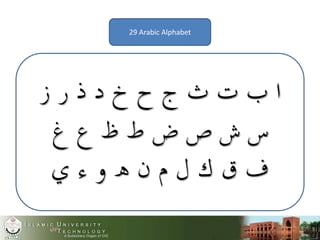
Arabic Alphabet
‫ز‬ ‫ر‬ ‫ذ‬ ‫د‬ ‫خ‬ ‫ح‬ ‫ج‬ ‫ث‬ ‫ت‬ ‫ب‬ ‫ا‬
‫غ‬ ‫ع‬ ‫ظ‬ ‫ط‬ ‫ض‬ ‫ص‬ ‫ش‬ ‫س‬
‫ي‬ ‫ء‬ ‫و‬ ‫ه‬ ‫ن‬ ‫م‬ ‫ل‬ ‫ك‬ ‫ق‬ ‫ف‬
29 Arabic Alphabet
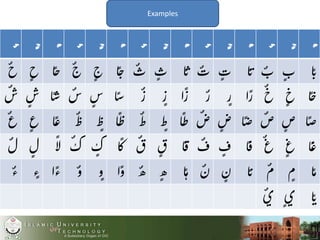
‫ا‬ IsolatedInitialMedialFinal
‫ا‬‫ــا‬‫ــا‬ ‫ا‬
َ
َ
َ
َ
َ
َ
َ
َ
َ
‫أ‬
َ
َ
َ‫ن‬
َ
َ
َ
َ‫ا‬ ‫ا‬َ‫ت‬ِ‫ك‬
ْ
‫ل‬ُ‫ا‬َ‫ت‬ِ‫ك‬
ْ
‫ل‬‫ا‬‫ا‬ُ ‫ا‬َ‫ت‬ِ‫ك‬
ْ
‫ل‬ُ‫ا‬
ِ‫ل‬َ‫أل‬‫ا‬‫ف‬Alif
ُ IsolatedInitialMedialFinal
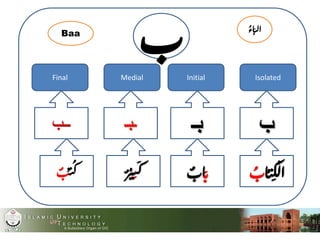
‫ب‬‫ـبـ‬‫ــب‬ ‫بـ‬
‫ت‬‫ك‬‫ب‬ َ‫ت‬ِ‫ك‬
ْ
‫ل‬‫ا‬‫ا‬ُ
َ
‫ك‬ِ‫ب‬ْ‫ي‬‫ر‬ َ‫ن‬ُ‫ا‬
َ‫ت‬‫ل‬‫ا‬‫اء‬Baa
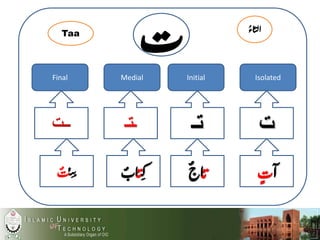
‫ت‬ IsolatedInitialMedialFinal
‫ت‬‫ـتـ‬‫ــت‬ ‫تـ‬
ْ‫ت‬ِ‫ب‬‫ت‬ ‫آ‬‫ت‬ِ‫ك‬َ‫ت‬ُ‫ا‬ َ‫ن‬‫اج‬
‫ت‬‫ل‬‫ا‬‫ا‬‫ء‬Taa
‫ث‬ IsolatedInitialMedialFinal
‫ث‬‫ـثـ‬‫ــث‬ ‫ثـ‬
‫ب‬َ‫ر‬َ‫ت‬‫ث‬ ‫ا‬َ‫ه‬ِ‫ل‬‫ث‬
َ
‫ك‬ْ‫ت‬‫ب‬
َ
‫ث‬ُْ‫و‬
‫ت‬‫ل‬‫ا‬‫ا‬‫ء‬Thaa
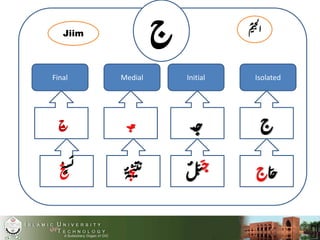
‫ج‬
IsolatedInitialMedialFinal
‫ج‬‫ـ‬‫ـج‬‫ــج‬ ‫ـ‬‫ج‬
ْ
‫ي‬ِ‫س‬
َ
‫ن‬‫ج‬ ‫ا‬َ‫ج‬‫ج‬
ْ
‫ي‬
َ‫ت‬
َ
‫ن‬َ‫ج‬‫ة‬
َ
‫ج‬‫ل‬
َ‫ت‬
ِ‫ج‬‫ل‬‫ا‬
ْ‫ي‬‫م‬Jiim
‫ح‬
IsolatedInitialMedialFinal
‫ح‬‫ـجـ‬‫ــح‬ ‫جـ‬
ْ
‫ي‬
َ
‫ف‬‫ح‬ َ‫ج‬
ْ
‫ل‬ِ‫إ‬‫ا‬‫ح‬
ْ
‫ل‬
َ
‫ا‬
َ
‫ح‬‫د‬ْ‫م‬
َ‫ح‬ِ‫ف‬‫د‬ْ‫ت‬
َ‫ج‬‫ل‬‫ا‬‫اء‬H`aa
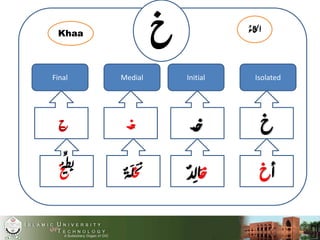
‫خ‬
IsolatedInitialMedialFinal
‫خ‬‫ـ‬‫ـج‬‫ــح‬ ‫ـ‬‫ج‬
ْ
‫ي‬
ِّ
‫ط‬ِ‫ب‬
‫خ‬ ‫أ‬‫خ‬
َ
‫ن‬
ْ‫ج‬
َ
‫ل‬‫ة‬ َ‫ج‬‫د‬ِ‫ال‬
َ‫ج‬‫ل‬‫ا‬‫اء‬Khaa
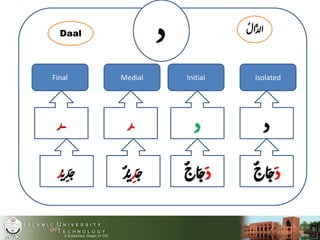
‫د‬
IsolatedInitialMedialFinal
‫د‬‫ـد‬‫ــد‬ ‫د‬
ْ‫ن‬ِ‫د‬َ‫ج‬‫د‬
َ‫د‬‫اج‬َ‫ج‬َ‫ج‬ِ‫د‬ْ‫ن‬‫د‬ َ‫د‬‫اج‬َ‫ج‬
‫الد‬‫ال‬Daal
‫ذ‬
IsolatedInitialMedialFinal
‫ذ‬‫ـذ‬‫ــذ‬ ‫ذ‬
ْ‫ن‬ِ‫ذ‬
َ
‫ل‬‫ذ‬ ِ‫ذ‬‫ر‬
ْ
‫ك‬
َ
‫ل‬ِ‫ذ‬ْ‫ن‬‫ذ‬
َ
‫ذ‬‫ي‬ِ‫ك‬
‫الذ‬‫ال‬Jaal
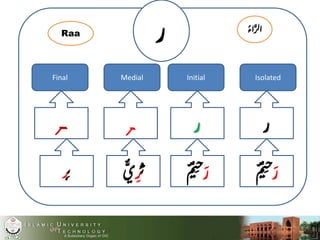
‫ر‬
IsolatedInitialMedialFinal
‫ر‬‫ـر‬‫ــر‬ ‫ر‬
ِ‫ت‬‫ر‬
َ‫ر‬
ْ‫ي‬ِ‫ج‬‫م‬َ‫ت‬ِ‫ر‬‫ي‬ َ‫ر‬
ْ‫ي‬ِ‫ج‬‫م‬
‫الر‬‫اء‬Raa
‫ز‬
IsolatedInitialMedialFinal
‫ز‬‫ـز‬‫ــز‬ ‫ز‬
ْ‫ت‬ ِ‫ز‬
َ
‫ع‬‫ز‬
َ
‫ز‬َ‫ر‬ْ‫و‬‫ق‬
َ
‫ع‬ِ‫ز‬ْ‫ت‬‫ز‬
َ
‫ز‬َ‫ر‬ْ‫و‬‫ق‬
‫الز‬
ْ
‫اي‬zaay
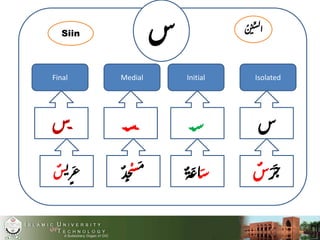
‫س‬
IsolatedInitialMedialFinal
‫س‬‫ـسـ‬‫ـس‬ ‫سـ‬
‫ن‬‫ر‬
َ
‫ع‬‫س‬ َ‫ر‬
َ
‫ج‬‫س‬
َ
‫م‬
ْ
‫س‬ِ‫ج‬‫د‬ َ‫س‬َ‫اع‬‫ة‬
ِّ
‫لس‬‫ا‬
ْ
‫ي‬‫ن‬Siin
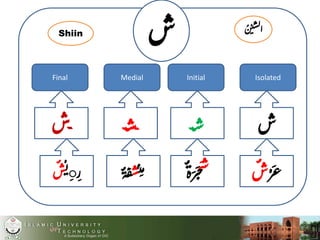
‫ش‬
IsolatedInitialMedialFinal
‫ش‬‫ـ‬‫ـس‬‫ـش‬ ‫ـ‬‫س‬
ْ
‫ن‬ َِ ِ‫ر‬‫ش‬ ْ‫ر‬
َ
‫ع‬‫ش‬ْ
‫ن‬ِ‫م‬‫ش‬‫ة‬َ‫ف‬
َ
‫ش‬
َ‫ج‬‫ة‬َ‫ر‬
ِّ
‫لس‬‫ا‬
ْ
‫ي‬‫ن‬Shiin
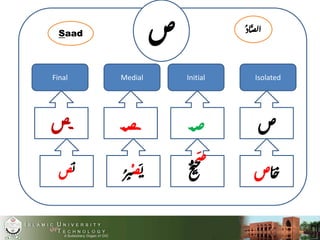
‫ص‬
IsolatedInitialMedialFinal
‫ص‬‫ـصـ‬‫ـص‬ ‫صـ‬
َ‫ب‬‫ص‬ ‫ا‬َ‫ج‬‫ص‬
َ‫ب‬ْ
‫ص‬‫ر‬ِ‫ي‬
َ
‫ص‬ِ‫ج‬‫ح‬
ْ
‫ي‬
‫ص‬‫ل‬‫ا‬‫اد‬Saad
‫ض‬
IsolatedInitialMedialFinal
‫ض‬‫ـ‬‫ـص‬‫ـض‬ ‫ـ‬‫ص‬
َ‫ب‬َ‫ب‬‫ض‬ َ‫ر‬ َ‫م‬‫ض‬
َ‫ب‬ْ
‫ض‬ُ ِ‫ر‬
َ‫ض‬ِ‫ع‬‫ف‬ْ‫ب‬
‫ص‬‫ل‬‫ا‬‫اد‬Daad
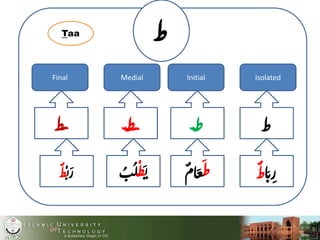
‫ط‬
IsolatedInitialMedialFinal
‫ط‬‫ـطـ‬‫ـط‬ ‫طـ‬
ْ‫ب‬َ‫ر‬‫ط‬ ‫ا‬َ‫ن‬ ِ‫ر‬‫ط‬
َ‫ب‬
ْ
‫ط‬‫ل‬‫ب‬
َ
‫ط‬‫ام‬ َ‫ع‬
Taa
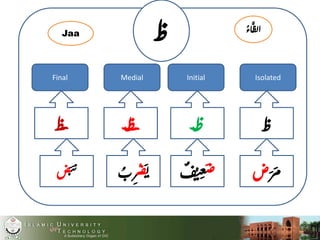
‫ظ‬
IsolatedInitialMedialFinal
‫ظ‬‫ـ‬‫ـط‬‫ـظ‬ ‫ـ‬‫ط‬
َ‫ب‬َ‫ب‬‫ض‬ َ‫ر‬ َ‫م‬‫ض‬
َ‫ب‬ْ
‫ض‬ُ ِ‫ر‬
َ‫ض‬ِ‫ع‬‫ف‬ْ‫ب‬
‫الط‬‫اء‬Jaa
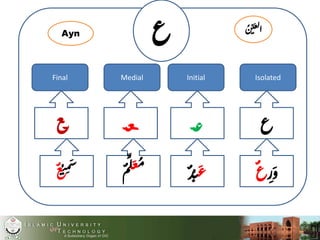
‫ع‬
IsolatedInitialMedialFinal
‫ع‬‫ـعـ‬‫ـع‬ ‫عـ‬
ْ‫ب‬ ِ‫م‬
َ
‫س‬‫ع‬ ِ‫ر‬َ‫و‬‫ع‬‫م‬َ‫ع‬
ِّ
‫ل‬‫م‬
َ
‫ع‬‫د‬ْ‫ت‬
َ
‫ع‬‫ل‬‫ا‬‫ن‬
ْ
‫ي‬Ayn
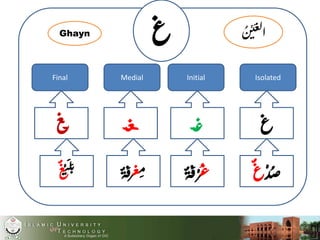
‫غ‬
IsolatedInitialMedialFinal
‫غ‬‫ـ‬‫ـع‬‫ـغ‬ ‫ـ‬‫ع‬
ْ‫ب‬
َ
‫ل‬َ‫ن‬‫غ‬
ْ‫د‬‫ص‬‫غ‬ِ‫م‬‫غ‬َ‫ف‬‫ر‬‫ة‬ ‫ع‬َ‫ف‬ْ‫ر‬‫ة‬
ْ
‫ي‬
َ
‫ع‬‫ل‬‫ا‬‫ن‬Ghayn
‫ف‬
IsolatedInitialMedialFinal
‫ف‬‫ـ‬‫ـف‬‫ـف‬ ‫ـ‬‫ف‬
ْ‫ب‬ ِ‫ع‬
َ‫ر‬‫ف‬ ‫ف‬َ‫ر‬ِ‫م‬ْ
‫ف‬َ‫ت‬‫اح‬ ِ‫ف‬‫ا‬َ‫ر‬‫ش‬
‫ا‬ َ‫ف‬‫ل‬‫ا‬‫ء‬Faa
‫ق‬
IsolatedInitialMedialFinal
‫ق‬‫ـ‬‫ـف‬‫ـق‬ ‫ـ‬‫ف‬
ْ‫ي‬ِ‫ف‬َ‫ر‬‫ق‬ ِ‫ر‬‫ق‬ِ‫م‬ْ
‫ق‬َ‫ر‬‫اض‬ ‫ف‬
َ
‫ط‬ْ‫ر‬‫اس‬
‫اف‬ َ‫ف‬‫ل‬‫ا‬Qaaf
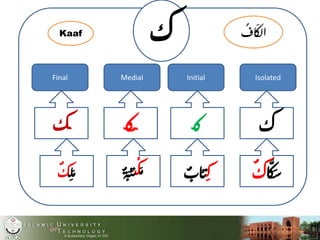
‫ك‬
IsolatedInitialMedialFinal
‫ك‬‫ـكـ‬‫ـك‬ ‫كـ‬
ِ‫ل‬َ‫م‬‫ك‬ ‫ك‬َ‫س‬‫ا‬‫ك‬َ‫م‬
ْ
‫ك‬َ‫ت‬‫ة‬َ‫ب‬ ِ‫ك‬‫ا‬َ‫ت‬ُ
‫اف‬
َ
‫ك‬‫ل‬‫ا‬Kaaf
‫ل‬
IsolatedInitialMedialFinal
‫ل‬‫ـلـ‬‫ـل‬ ‫لـ‬
َ‫م‬
َ
‫ج‬‫ل‬ ‫الل‬ِ‫ن‬
َ‫ف‬
َ
‫ل‬‫م‬
َ
‫ل‬َ‫ح‬ْ‫و‬‫ة‬
‫الم‬‫ل‬‫ا‬Laam
‫م‬
IsolatedInitialMedialFinal
‫م‬‫ـمـ‬‫ـم‬ ‫مـ‬
َ
‫ل‬
َ‫ف‬‫م‬ ‫الذ‬‫م‬
َ
‫ج‬َ‫م‬‫ل‬ َ‫م‬‫ك‬‫الن‬‫ة‬
ْ‫ي‬ِ‫م‬‫ل‬‫ا‬‫م‬Miim
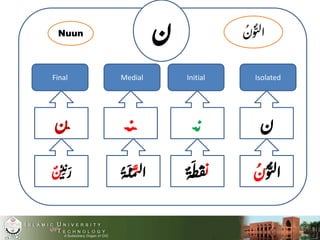
‫ن‬
IsolatedInitialMedialFinal
‫ن‬‫ـ‬‫ـت‬‫ـن‬ ‫ـ‬‫ن‬
ْ
‫ي‬ِ‫ن‬َ‫ر‬‫ن‬ ‫و‬‫ي‬‫ل‬‫ا‬‫ن‬‫ل‬‫ا‬‫ي‬ْ‫م‬‫ة‬
َ
‫ل‬ ‫ب‬
َ
‫ط‬ْ‫ق‬‫ة‬
‫ي‬‫ل‬‫ا‬‫ون‬Nuun
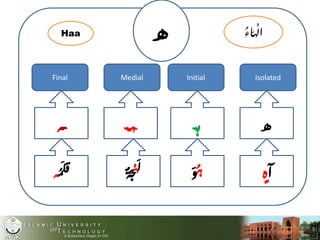
‫ه‬
IsolatedInitialMedialFinal
‫ه‬‫ـهـ‬‫ـه‬ ‫ـ‬‫ه‬
‫م‬
َ
‫ل‬
َ‫ف‬‫ه‬ ‫آ‬‫ه‬
َ
‫ل‬ْ
‫ه‬
َ‫ج‬‫ة‬ ‫ه‬َ‫و‬
‫ا‬َ‫ه‬
ْ
‫ال‬‫ء‬Haa
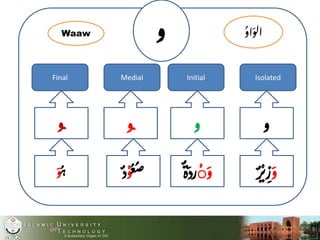
‫و‬
IsolatedInitialMedialFinal
‫و‬‫ـو‬‫ـو‬ ‫و‬
‫ه‬َ‫و‬
َ‫و‬ْ‫ت‬ ِ‫ز‬‫ر‬‫ع‬‫ض‬ْ‫و‬‫د‬
ْ
ََ‫و‬َ‫رد‬‫ة‬
‫او‬َ‫الو‬Waaw
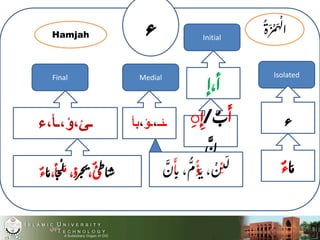
‫ء‬
Isolated
Initial
MedialFinal
‫ء‬‫ـئـ‬،‫ـؤ‬،‫بأ‬‫ـئ،ؤ،ـأ،ء‬
‫أ،إ‬
ِ‫ط‬‫ا‬ َ‫س‬،‫ئ‬‫ر‬‫ج‬‫ن‬
َ‫م‬،‫ؤ‬َ‫ج‬
ْ
‫ل‬،‫أ‬‫ا‬َ‫م‬‫ء‬ ‫ا‬َ‫م‬‫ء‬
َ
‫أ‬ُ/ِ‫إ‬َِ
‫ن‬ َ
‫ل‬ِ‫ي‬َ‫ن‬، ْ‫ن‬‫ؤ‬ِ‫ن‬،‫م‬
َ
‫أ‬‫ن‬
ْ‫م‬
َ‫ه‬
ْ
‫ل‬‫ا‬َ‫ز‬‫ة‬Hamjah
‫ي‬
IsolatedInitialMedialFinal
‫ي‬‫ـ‬‫ـت‬‫ـي‬ ‫ـ‬‫ن‬
ِ‫اب‬َ‫ت‬ِ‫ك‬
ْ
‫ي‬ ‫ا‬َ‫س‬‫ي‬
َ
‫ل‬ْ‫ت‬‫ل‬
َ‫ب‬‫ق‬
ْ‫ع‬ُ‫و‬
‫اء‬َ‫ت‬‫ل‬‫ا‬Yaa
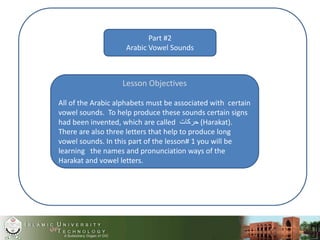
Part #2
Arabic Vowel Sounds
Lesson Objectives
All of the Arabic alphabets must be associated with certain
vowel sounds. To help produce these sounds certain signs
had been invented, which are called ‫حركات‬ (Harakat).
There are also three letters that help to produce long
vowel sounds. In this part of the lesson# 1 you will be
learning the names and pronunciation ways of the
Harakat and vowel letters.
Arabic Vowel Sings
1- Dammah ‫ــ‬ُ‫ـ‬‫ــ‬
1- Fathah ‫ــ‬َ‫ـــ‬
1- Kasrah ‫ــ‬ِ‫ـ‬‫ــ‬
1- Sukun ‫ــ‬ْ‫ـ‬‫ــ‬
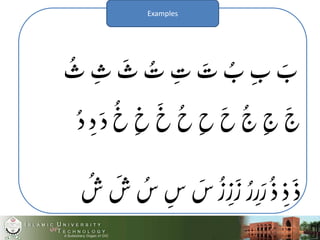
Examples
َ
‫ث‬‫ت‬ ِ‫ت‬ َ‫ت‬ُ ُِ َُ‫ث‬ ِ‫ث‬
ِ‫خ‬
َ
‫خ‬‫ح‬ ِ‫ح‬
َ
‫ح‬‫ج‬ ِ‫ج‬
َ
‫ج‬‫د‬ ِ‫د‬ َ‫د‬‫خ‬
َ
‫س‬‫ز‬ ِ‫ز‬
َ
‫ز‬‫ر‬ ِ‫ر‬َ‫ر‬‫ذ‬ ِ‫ذ‬
َ
‫ذ‬‫ش‬
َ
‫ش‬‫س‬ ِ‫س‬
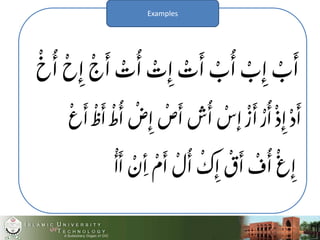
Examples
ْ‫ت‬ِ‫إ‬ ْ‫ت‬
َ
‫أ‬ ُْ‫أ‬ ُِْ‫إ‬ ُْ
َ
‫أ‬‫أ‬
ْ
‫ح‬ِ‫إ‬
ْ
‫ج‬
َ
‫أ‬ ْ‫ت‬‫أ‬
ْ
‫خ‬
َ
‫أ‬‫ش‬‫أ‬
ْ
‫إس‬
ْ
‫ز‬
َ
‫أ‬ ْ‫ر‬‫أ‬
ْ
‫ذ‬ِ‫إ‬ ْ‫د‬
َ
‫أ‬
ْ
‫ظ‬
َ
‫أ‬
ْ
‫ط‬‫أ‬
ْ
‫ض‬ِ‫إ‬
ْ
‫ص‬
ْ
‫ع‬
َ
‫أ‬
َ
‫أ‬
ْ
‫ل‬‫أ‬
ْ
‫ك‬ِ‫إ‬
ْ
‫ق‬
َ
‫أ‬
ْ
‫ف‬‫أ‬
ْ
‫غ‬ِ‫إ‬
ْ
‫أ‬
َ
‫أ‬
ْ
‫ن‬ِ‫أ‬
ْ
‫م‬
‫ــ‬
Fathatan, meaning two fathahs above a letter.
Tanwin of fathatn is pronounced like `an’, e.g. ( ‫ا‬‫ب‬ )
‫ــ‬
‫ــ‬
Dammatan, meaning two dammas above a letter.
Tanwin of dammatan is prononuced like `oon’ ,e.g.
( ُ( boon.
Kasratan, meaning two kasras under a letter.
Tanwin of kasratan is pronounce like `in’, e.g. ( ُ (
bin.
Tanwin is a ‫ن‬ with sukun ( ْ‫ـ‬‫ــ‬ ) which is only pronounced orally and does
not appear in written form. When we pronounce two fathas, two dammas
and two kasras at a letter, the sounds that come up are Tanwins.
Tanwin always takes place at the last letter of a word. The shape of this
letter does not change except for the case of fathatan as it requires extra
alif ( ‫ا‬ ( to be connected to the left of the letter it would take place upon.
Tanwin
Examples
‫ـ‬ ‫ـ‬ ً‫ـ‬ ‫ـ‬ ‫ـ‬ ً‫ـ‬ ‫ـ‬ ‫ـ‬ ً‫ـ‬ ‫ـ‬ ‫ـ‬ ً‫ـ‬ ‫ـ‬ ‫ـ‬ ً‫ـ‬
‫ح‬ ‫ح‬ ً‫ج‬‫ا‬ ‫ج‬ ‫ج‬ ً‫ج‬‫ا‬ ‫ث‬ ‫ث‬ ً‫ن‬‫ا‬ ‫ت‬ ‫ت‬ ً‫ن‬‫ا‬ ُ ُ ً‫ن‬‫ا‬
‫ش‬ ‫ش‬ ً‫س‬‫ا‬ ‫س‬ ‫س‬ ً‫س‬‫ا‬ ‫ز‬ ‫ز‬
ً
‫ز‬‫ا‬ ‫ر‬ ‫ر‬ ً‫ر‬‫ا‬ ‫خ‬ ‫خ‬ ً‫ج‬‫ا‬
‫ع‬ ‫ع‬ ً‫ع‬‫ا‬ ‫ظ‬ ‫ظ‬
ً
‫ط‬‫ا‬ ‫ط‬ ‫ط‬
ً
‫ط‬‫ا‬ ‫ض‬ ‫ض‬ ً‫ص‬‫ا‬ ‫ص‬ ‫ص‬ ً‫ص‬‫ا‬
‫ل‬ ‫ل‬
ً
‫ل‬ ‫ك‬ ‫ك‬
ً
‫ك‬‫ا‬ ‫ق‬ ‫ق‬ ً‫ف‬‫ا‬ ‫ف‬ ‫ف‬ ً‫ف‬‫ا‬ ‫غ‬ ‫غ‬ ً‫ع‬‫ا‬
‫ء‬ ‫ء‬ ً‫ء‬‫ا‬ ‫و‬ ‫و‬ ً‫و‬‫ا‬ ‫ه‬ ‫ه‬ ‫ا‬ً‫ه‬ ‫ن‬ ‫ن‬ ً‫ن‬‫ا‬ ‫م‬ ‫م‬ ‫ا‬ً‫م‬
‫ي‬ ‫ي‬ ً‫ن‬‫ا‬
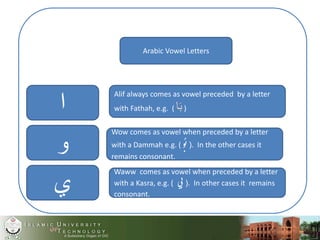
Arabic Vowel Letters
‫ا‬
Alif always comes as vowel preceded by a letter
with Fathah, e.g. ( ‫ا‬َ‫ب‬ )
‫و‬
‫ي‬
Wow comes as vowel when preceded by a letter
with a Dammah e.g. ( ‫و‬‫ث‬(. In the other cases it
remains consonant.
Waww comes as vowel when preceded by a letter
with a Kasra, e.g. ( ‫ي‬ِ‫ب‬ (. In other cases it remains
consonant.
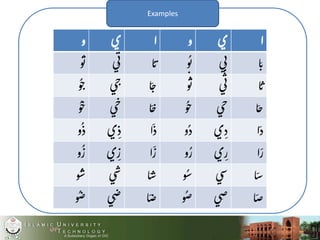
Examples
‫و‬ ‫ي‬ ‫ا‬ ‫و‬ ‫ي‬ ‫ا‬
‫و‬‫ث‬ ‫ي‬ِ‫ب‬ ‫ا‬َ‫ن‬ ‫و‬‫ث‬ ‫ي‬ِ‫ب‬ ‫ا‬َ‫ن‬
‫و‬‫ج‬ ‫ي‬ِ‫ج‬ ‫ا‬َ‫ج‬ ‫و‬‫ث‬ ‫ي‬ِ‫ب‬ ‫ا‬َ‫ن‬
‫و‬‫ج‬ ‫ي‬ِ‫ج‬ ‫ا‬َ‫ج‬ ‫و‬‫ج‬ ‫ي‬ِ‫ج‬ ‫ا‬َ‫ج‬
‫و‬‫ذ‬ ‫ي‬ ِ‫ذ‬ ‫ا‬
َ
‫ذ‬ ‫و‬‫د‬ ‫ي‬ ِ‫د‬ ‫ا‬َ‫د‬
‫و‬‫ز‬ ‫ي‬ ِ‫ز‬ ‫ا‬
َ
‫ز‬ ‫و‬‫ر‬ ‫ي‬ ِ‫ر‬ ‫ا‬َ‫ر‬
‫و‬‫ش‬ ‫ي‬ِ‫ش‬ ‫ا‬َ‫س‬ ‫و‬‫ش‬ ‫ي‬ِ‫ش‬ ‫ا‬َ‫س‬
‫و‬‫ض‬ ‫ي‬ِ‫ض‬ ‫ا‬َ‫ص‬ ‫و‬‫ض‬ ‫ي‬ِ‫ض‬ ‫ا‬َ‫ص‬
Vowel Letters
‫و‬ ‫ي‬ ‫ا‬ ‫و‬ ‫ي‬ ‫ا‬
‫و‬‫ظ‬ ‫ي‬ِ‫ط‬ ‫ا‬
َ
‫ط‬ ‫و‬‫ظ‬ ‫ي‬ِ‫ط‬ ‫ا‬
َ
‫ط‬
‫و‬‫غ‬ ‫ي‬
َ
‫غ‬ ‫ا‬ َ‫ع‬ ‫و‬‫غ‬ ‫ي‬ِ‫غ‬ ‫ا‬َ‫ع‬
‫و‬‫ق‬ ‫ي‬ِ‫ق‬ ‫ا‬َ‫ف‬ ‫و‬‫ق‬ ‫ي‬ِ‫ق‬ ‫ا‬َ‫ف‬
‫و‬‫ل‬ ‫ي‬ِ‫ل‬
َ
‫ل‬ ‫و‬‫ك‬ ‫ي‬ِ‫ك‬ ‫ا‬
َ
‫ك‬
‫و‬‫ث‬ ‫ي‬ِ‫ب‬ ‫ا‬َ‫ن‬ ‫و‬‫م‬ ‫ي‬ِ‫م‬ ‫ا‬َ‫م‬
‫و‬‫و‬ ‫ي‬ ِ‫و‬ ‫ا‬َ‫و‬ ‫و‬‫ه‬ ‫ي‬ِ‫ه‬ ‫ا‬َ‫ه‬
‫و‬‫ث‬ ‫ي‬ِ‫ب‬ ‫ا‬َ‫ن‬
Shaddah and how to use it with
Sun Letters
Lesson Objectives
In this section of the lesson # 1 you will be learning how to pronounce
a letter with Shaddah.
Shaddah and how to use it with
sun letters
"Shadda" represents the doubling of a letter and it is a small shape that
looks like the letter "Seen" and is put over the letter. as in
َّ‫ب‬َ‫ه‬(habba). Shaddah is frequently used in Arabic language,
especially when we pronounce a noun with a sun letter at the
beginning which is preceded by the article ‫.الـ‬ Up coming two
slides will show you what letters are the sun letters and how to use
Shaddah with them.
‫ب‬ ‫ا‬‫ت‬‫ث‬‫خ‬ ‫ح‬ ‫ج‬‫د‬‫ذ‬‫ر‬‫ز‬
‫س‬‫ش‬‫ص‬‫ض‬‫ظ‬ ‫ط‬‫غ‬ ‫ع‬
‫ك‬ ‫ق‬ ‫ف‬‫ل‬‫م‬‫ن‬‫ي‬ ‫ء‬ ‫و‬ ‫ه‬
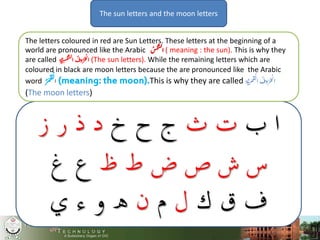
The sun letters and the moon letters
The letters coloured in red are Sun Letters. These letters at the beginning of a
world are pronounced like the Arabic ‫س‬
ْ
‫م‬‫لش‬‫ا‬ ( meaning : the sun). This is why they
are called ‫وف‬‫ر‬‫ج‬
ْ
‫ل‬‫ا‬‫ة‬‫ب‬ِ‫س‬
ْ
‫م‬‫لش‬‫ا‬ (The sun letters). While the remaining letters which are
coloured in black are moon letters because the are pronounced like the Arabic
word ‫ا‬‫ر‬ َ‫م‬
َ
‫ق‬
ْ
‫ل‬ (meaning: the moon).This is why they are called ِّ‫ي‬‫ر‬ َ‫م‬
َ
‫ق‬
ْ
‫ل‬‫ا‬‫وف‬ْ‫ر‬‫ج‬
ْ
‫ل‬‫ا‬‫ة‬
(The moon letters)
‫ا‬‫ت‬ْ‫ي‬َ‫ب‬ْ‫ل‬‫ا‬ْ‫ي‬ِّ‫الت‬‫َّوب‬‫ث‬‫ال‬‫ل‬َ‫ب‬َْ‫اْل‬َ‫ر‬ْ‫ج‬ْ‫احل‬‫ة‬‫ة‬َ‫م‬ْ‫ي‬َْ‫اْل‬
‫اء‬َ‫َّو‬‫الد‬‫ابة‬َ‫ب‬ُّ‫الذ‬َ‫ض‬ْ‫و‬َّ‫الر‬‫ة‬‫ة‬َ‫ر‬ْ‫ه‬َّ‫الز‬ْ‫ي‬َّ‫الس‬‫ف‬
‫س‬ْ‫َّم‬‫الش‬‫اد‬َّ‫ي‬َّ‫الص‬‫وء‬َّ‫الض‬‫ا‬‫ر‬ْ‫ي‬َّ‫ط‬‫ل‬‫ر‬ْ‫ه‬َّ‫ظ‬‫ال‬‫ا‬ْ‫ي‬َ‫ع‬ْ‫ل‬
‫اب‬‫ر‬‫غ‬ْ‫ل‬‫ا‬‫م‬َ‫ف‬ْ‫ل‬‫ا‬‫ر‬َ‫م‬َ‫ق‬ْ‫ل‬‫ا‬ِّ‫ك‬ْ‫ل‬‫ا‬‫اب‬َ‫ت‬‫م‬ْ‫ح‬َّ‫ل‬‫ال‬ْ‫ل‬‫ا‬‫ماء‬
‫س‬ْ‫ف‬َّ‫الن‬‫اء‬‫و‬َْ‫هل‬‫ا‬‫ر‬ْ‫ي‬ِّ‫ز‬َ‫و‬ْ‫ل‬‫ا‬‫م‬َ‫ر‬ْ‫ك‬َْ‫اْل‬ْ‫ي‬ِّ‫ت‬َ‫ي‬ْ‫ل‬‫ا‬‫م‬
Use of Shaddah with sun letters
The End

Arabic alphabet and their shapes