In the name of Allah,
The Most Gracious, The Most Merciful
1
ArabicInEnglish.com
Level – 0
Welcome to - LEVEL 0 – Arabic Language Course
Class # 6
‫العربيت‬ ‫اللغت‬ ‫دورة‬ ‫في‬ ‫بكم‬ ً‫ال‬‫وسهــ‬ ً‫ال‬‫أهــ‬–‫المبتدئ‬ ‫المستىي‬


2
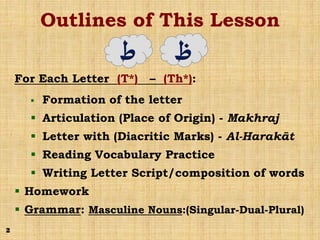
Outlines of This Lesson
For Each Letter (T*) – (Th*):
 Formation of the letter
 Articulation (Place of Origin) - Makhraj
 Letter with (Diacritic Marks) - Al-Harakāt
 Reading Vocabulary Practice
 Writing Letter Script/composition of words
 Homework
 Grammar: Masculine Nouns:(Singular-Dual-Plural)
3
4
(No actual equivalent sound in English):
 However, it's a strong sound of Tā' in order to sound like (Tah).
 The mark (*) means a Strong /Intensive pronunciation is required.
5
6
‫الحرف‬ ‫مخرج‬(‫ط‬)
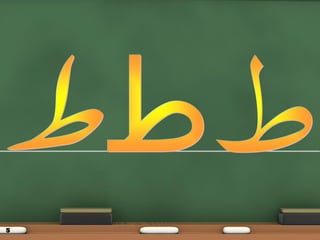
T * – )‫(طـا‬ ‫ط‬
One of the Interdental letters (Al-Huruf Al-Nit'iyyah). The sound comes
when the tip of the tongue touches the root of the upper incisors [i.e. tip
of tongue hits the gum line (exactly where the gum meets the teeth) of
the 2 front upper incisors].
Key Notes:
1. The most suitable method for familiarizing the correct
Makhraj, the place of origin, of a letter is to keep it
Sakin (quiescent) and add before it (Alif maftuh)Alif
having fathah. All the alphabet letters are kept in Sakin
(quiescent) for this purpose. E.g.
2. Majority ofArabic consonants should be recognized by
applying a shortArabic vowel fathah (a’). For example
the consonant shall be articulated as:
= (Tā’) or (Taa).
ْ‫َط‬‫أ‬ْ
‫ط‬ْ
‫ـا‬‫ـ‬‫ط‬ْ
‫ط‬
ْ‫الطاء‬(‫ط‬)-ْ‫منْالحروفْالنطعيةْالتي‬ْ
ْ‫تخرجْمنْطرفْاللسانْمنْجهةْظهرهْمعْماْيحاذيوْمنْأصول‬
‫الثنيتينْالعلويتين‬ْ
7
‫الحركات‬ ‫مع‬ ‫الحرف‬-‫التشكيل‬ ‫عالمات‬
The Sukūn
(Vowelless / Quiescent)
or a
(Short & Quiet Sound)
‫السكون‬ْ
8
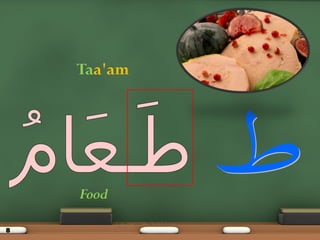
Taa'am
Food
9
Ta-Ha
Surah (20) in Al-Qur'an
10
ُ‫أ‬َ‫ر‬ِ‫ق‬ِ‫إ‬-ُ‫ب‬ُ‫ت‬ْ‫ك‬َ‫أ‬
‫الكلمت‬ ‫من‬ ‫مىقعت‬ ‫حسب‬ ‫الحرف‬ ‫كتابت‬
Shape/Writing of Letter Changes Based On Its Location In a Word
‫الكلمت‬ ‫أول‬ ‫في‬ ‫الحرف‬
Letter at beginning of word
Initial Position
‫الكلمت‬ ‫وسط‬ ‫في‬ ‫الحرف‬
Letter in middle of word
Medial Position 1
‫الكلمت‬ ‫أخر‬ ‫في‬ ‫الحرف‬
Letter at end of word
Final Position 2
‫طــ‬‫ــطــ‬-‫طــ‬‫ــط‬
ِ‫ط‬‫ل‬ْ‫ف‬‫ـ‬-Childِ‫ق‬‫ـ‬َ‫ط‬‫ار‬–‫ر‬ُ‫ش‬‫طـ‬‫ة‬
Police - Train
‫ـ‬‫ب‬‫ط‬Ducks -
1. Medial Position Letters: When preceded by a non-connecting letter, the letters in the medial position are the same as when they
are initial.
2. Final Position Letters: When preceded by a non-connecting letter, these letters in their final position are the same as when they
are independent.
Police
11
(No actual equivalent sound in English)
• Although it helps to pronounce th* as the sound of th in those.
• The mark (*) means a Strong /Intensive pronunciation is required.
12
13
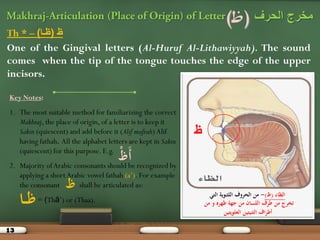
‫الحرف‬ ‫مخرج‬(‫ظ‬)
Th * – )‫(ظـا‬ ‫ظ‬
One of the Gingival letters (Al-Huruf Al-Lithawiyyah). The sound
comes when the tip of the tongue touches the edge of the upper
incisors.
Key Notes:
1. The most suitable method for familiarizing the correct
Makhraj, the place of origin, of a letter is to keep it
Sakin (quiescent) and add before it (Alif maftuh)Alif
having fathah. All the alphabet letters are kept in Sakin
(quiescent) for this purpose. E.g.
2. Majority ofArabic consonants should be recognized by
applying a shortArabic vowel fathah (a’). For example
the consonant shall be articulated as:
= (Thā’) or (Thaa).
ْ‫َظ‬‫أ‬ْ
‫ظ‬ْ
‫ـا‬‫ـ‬‫ظ‬ْ
‫ظ‬
ْ‫تخرجْمنْطرفْاللسانْمنْجهةْظهرهْو‬‫من‬ْ
ْ‫افْالثنيتينْالعلويتين‬‫ر‬‫أط‬ْ
ْ‫الظاء‬(‫ظ‬)-ْ‫ـويةْالتي‬‫ـ‬‫ث‬‫منْالحروفْالل‬ْ
14
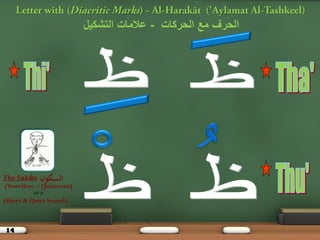
‫الحركات‬ ‫مع‬ ‫الحرف‬-‫التشكيل‬ ‫عالمات‬
The Sukūn
(Vowelless / Quiescent)
or a
(Short & Quiet Sound)
‫السكون‬ْ
15
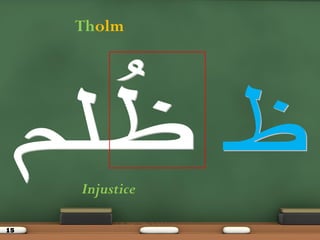
Tholm
Injustice
16
Al-Atheem
The Most Great
Sub7haan Rabiya Al-Atheem
(Glorified is Allah, the Most Great )
17
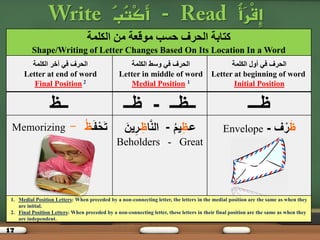
ُ‫أ‬َ‫ر‬ِ‫ق‬ِ‫إ‬-ُ‫ب‬ُ‫ت‬ْ‫ك‬َ‫أ‬
‫الكلمت‬ ‫من‬ ‫مىقعت‬ ‫حسب‬ ‫الحرف‬ ‫كتابت‬
Shape/Writing of Letter Changes Based On Its Location In a Word
‫الكلمت‬ ‫أول‬ ‫في‬ ‫الحرف‬
Letter at beginning of word
Initial Position
‫الكلمت‬ ‫وسط‬ ‫في‬ ‫الحرف‬
Letter in middle of word
Medial Position 1
‫الكلمت‬ ‫أخر‬ ‫في‬ ‫الحرف‬
Letter at end of word
Final Position 2
‫ظـــ‬‫ــظــ‬-‫ظــ‬‫ــظ‬
‫ظ‬‫ف‬‫ر‬-Envelope‫عـ‬ِ‫ظ‬ِ‫يم‬-‫ا‬َّ‫الن‬ِ‫ظ‬َِ‫ين‬‫ـر‬
Beholders - Great
‫ـ‬َ‫ف‬ْ‫ح‬َ‫ت‬ِِ‫ظ‬-ِMemorizing
1. Medial Position Letters: When preceded by a non-connecting letter, the letters in the medial position are the same as when they
are initial.
2. Final Position Letters: When preceded by a non-connecting letter, these letters in their final position are the same as when they
are independent.
18
19
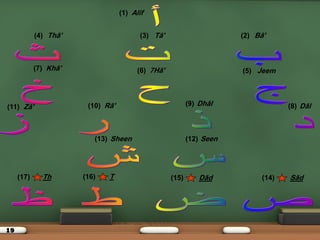
(1) Alif
(2) Bā'(3) Tā'(4) Thā'
(5) Jeem(7) Khā' (6) 7Hā'
(8) Dāl(9) Dhāl(10) Rā'(11) Zā'
(12) Seen(13) Sheen
(14) dāS(15) dāD(16) T(17) Th
20
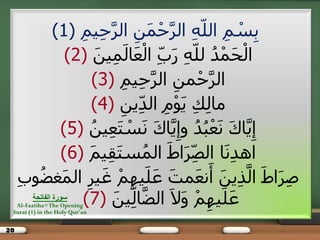
ِ‫ين‬ِ‫ح‬َّ‫الز‬ ِ‫ن‬َ‫و‬ْ‫ح‬َّ‫الز‬ ِ‫ه‬ّ‫ل‬‫ال‬ ِ‫ن‬ ْ‫س‬ِ‫ب‬(1)
َ‫ين‬ِ‫و‬َ‫ل‬‫ا‬َ‫ع‬ْ‫ل‬‫ا‬ ِّ‫ب‬َ‫ر‬ ِ‫ه‬ّ‫ل‬‫ل‬ ُ‫د‬ْ‫و‬َ‫ح‬ْ‫ل‬‫ا‬(2)
ِ‫ين‬ِ‫ح‬َّ‫الز‬ ِ‫ون‬ْ‫ح‬َّ‫الز‬(3)
ِ‫ين‬ِّ‫د‬‫ال‬ ِ‫م‬ْ‫ى‬َ‫ي‬ ِ‫ل‬ِ‫ل‬‫ها‬(4)
ُ‫ين‬ِ‫ع‬َ‫ت‬ ْ‫س‬َ‫ن‬ َ‫ك‬‫ا‬َّ‫ي‬ِ‫وإ‬ ُ‫د‬ُ‫ب‬ْ‫ع‬َ‫ن‬ َ‫ك‬‫ا‬َّ‫ي‬ِ‫إ‬(5)
َ‫ن‬‫ي‬ِ‫ق‬َ‫ت‬‫س‬ُ‫الو‬ َ‫ط‬‫ا‬َ‫ز‬ِّ‫ص‬‫ال‬ ‫ا‬َ‫ن‬ِ‫د‬‫اه‬(6)
ِ‫ب‬‫ى‬ُ‫ض‬‫غ‬َ‫و‬‫ال‬ ِ‫يز‬َ‫غ‬ ْ‫ن‬ِ‫يه‬َ‫ل‬َ‫ع‬ َ‫وت‬َ‫ع‬‫ن‬َ‫أ‬ َ‫ين‬ِ‫ذ‬َّ‫ل‬‫ا‬ َ‫ط‬‫ا‬َ‫ز‬ِ‫ص‬
َ‫ين‬ِّ‫ل‬‫ا‬َّ‫ض‬‫ال‬ َ‫ال‬َ‫و‬ ْ‫ن‬ِ‫يه‬َ‫ل‬َ‫ع‬(7)‫الفاتحت‬ ‫سىرة‬
Al-Faatiha=The Opening
Surat (1) in the Holy Qur'an
21
ْ
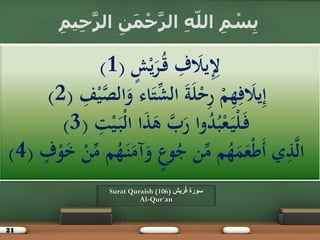
ْ ٍ‫ش‬‫ي‬َ‫ر‬ُ‫ـ‬‫ق‬ْ ِ‫ف‬ َ‫يَل‬ِِ‫ِل‬(1)
ْْ ِ‫ف‬‫ي‬َّ‫الص‬َ‫اءْو‬َ‫ت‬ِّ‫ْالش‬َ‫ة‬َ‫ل‬‫ح‬ِ‫ر‬ْ‫م‬ِ‫ه‬ِ‫ف‬ َ‫يَل‬ِ‫إ‬(2)
ِْ ِ‫ت‬‫ي‬َ‫ـ‬‫ب‬‫اْال‬َ‫ذ‬َ‫ْى‬َّ‫ب‬َ‫واْر‬ُ‫د‬ُ‫ب‬‫ع‬َ‫ـ‬‫ي‬‫ل‬َ‫ـ‬‫ف‬(3)
ِْ ٍ‫ف‬‫و‬َ‫خ‬ْ‫ن‬ِّ‫مْم‬ُ‫ه‬َ‫ـ‬‫ن‬َ‫آم‬َ‫ْو‬ٍ‫وع‬ُ‫نْج‬ِّ‫مْم‬ُ‫ه‬َ‫م‬َ‫ع‬‫َط‬‫أ‬ْ‫ي‬ِ‫ذ‬َّ‫ل‬‫ا‬(4)ْ
Surat Quraish (106) ‫سورة‬‫ريش‬ُ‫ق‬
Al-Qur'an
ِ‫يم‬ِ‫ح‬َّ‫ر‬‫ال‬ ِ‫ن‬َ‫م‬ْ‫ح‬َّ‫ر‬‫ال‬ ِ‫ه‬ّ‫ل‬‫ال‬ ِ‫م‬ ْ‫س‬ِ‫ب‬
22
ْ
َْ‫ن‬ِ‫ْم‬َ‫َّاس‬‫ن‬‫ْال‬َ‫ج‬ِ‫ر‬‫خ‬ُ‫ت‬ِ‫ْل‬ َ‫ك‬‫ي‬َ‫ل‬ِ‫إ‬ُْ‫اه‬َ‫ن‬‫ل‬َ‫َنز‬‫أ‬ٌْ‫اب‬َ‫ت‬ِ‫رْك‬َ‫ل‬‫ا‬
ْ ِ‫اط‬َ‫ر‬ِ‫ىْص‬َ‫ل‬ِ‫إ‬ْ‫م‬ِ‫ه‬ِّ‫ب‬َ‫ْر‬ِ‫ن‬‫ذ‬ِ‫إ‬ِ‫ب‬ِْ‫ر‬‫ُّو‬‫ن‬‫ىْال‬َ‫ل‬ِ‫إ‬ْ ِ‫ات‬َ‫م‬ُ‫ل‬ُّ‫ظ‬‫ال‬
ِْ‫يد‬ِ‫م‬َ‫ح‬‫ْال‬ِ‫ز‬‫ي‬ِ‫ز‬َ‫ع‬‫ال‬(1)ْ
Surat Ibrahim (14:1) ‫سورة‬‫إبراهيم‬
Al-Qur'an
ِ‫يم‬ِ‫ح‬َّ‫ر‬‫ال‬ ِ‫ن‬َ‫م‬ْ‫ح‬َّ‫ر‬‫ال‬ ِ‫ه‬ّ‫ل‬‫ال‬ ِ‫م‬ ْ‫س‬ِ‫ب‬
23
1. Write one whole column of the 2 letters.
2. Write these words 5 times each (or more).
3. Bring one “Sura” name including or starting with
the letters (T *) and (Th *).
24
‫حنو‬
2525
Masculine Nouns: Singular, Dual, Plural
‫المذكرة‬ ‫األسماء‬( :‫المفرد‬-‫المثنى‬–‫الجمع‬)
Muslim (S)
Muslimaan (D)
Muslimoon (P) ‫جمع‬
‫مفرد‬
‫مثنى‬
Moamen (S)
Moamenaan (D)
Moamenoon (P) ‫جمع‬
‫مفرد‬
‫مثنى‬
References
 Dr.Muhammad.I.Surty. (2008). “Towards Understanding Qur’anic Arabic” - QAF –
Qur’anic Arabic Foundation Book Publication – 4th Edition. UK.
 Dr. Rehab.M. Shyqaqi. (2009). “7hilyat Al-Tilawah Fi Tajween Al-Qur’an ‫ح‬‫حح‬‫ح‬
‫ح‬‫ح‬‫ح‬‫حح‬‫ح‬‫ح‬‫حح‬‫ح‬‫ح‬ ‫حح‬ ‫ح‬‫ح‬‫ح‬‫ح‬‫حح‬‫ح‬” – Rawaih Almamlakah Library Book Publication –
3rd Edition. Saudi Arabia.
 Dr. Muhammad Ratib An-Nabulsi. Syria. Encyclopedia for Islamic Sciences,
Publications Online 2010, website:
 The Islamic Emirate. (n.d.). UAE. Pronunciation of the Letters. Islamic Emirate
Online Article. Retrieved December 2010, from:
 About Tajweed.com. (2010).The Articulation points and places of Articulation for
the Arabic Letters. About Tajweed Online Article. Retrieved December 2010, from:
 Miscellaneous Arabic grammatical material was obtained from:” ‫في‬ ‫االساسية‬ ‫القواعد‬
‫الصرف‬ ‫و‬ ‫;”النحو‬ A High School Level Arabic grammar book issued By: Egyptian
Ministry of Education in1991. Addition to ‫العربية‬ ‫اللغة‬ ‫قواعد‬“ ” By: Saudi Arabian
Ministry of Education in 2008.
 Supplications (Dua’a) - Fortification of the Muslim (Hisnul Muslim) ‫المسلم‬ ‫.حصن‬
Retrieved 2010 from:
26
http://www.nabulsi.com/blue/ar/
http://www.islamicemirate.com/
http://www.abouttajweed.com/index.htm
http://www.islamic-knowledge.com/Hisn_al_Muslim/Hisn_Al_Muslim.htm
27
Jazakum Allah Khira ‫خيرا‬ ‫هللا‬ ‫جزاكم‬

Arabic level-0-class-6

  • 1.
    In the nameof Allah, The Most Gracious, The Most Merciful 1 ArabicInEnglish.com Level – 0 Welcome to - LEVEL 0 – Arabic Language Course Class # 6 ‫العربيت‬ ‫اللغت‬ ‫دورة‬ ‫في‬ ‫بكم‬ ً‫ال‬‫وسهــ‬ ً‫ال‬‫أهــ‬–‫المبتدئ‬ ‫المستىي‬  
  • 2.
    2 Outlines of ThisLesson For Each Letter (T*) – (Th*):  Formation of the letter  Articulation (Place of Origin) - Makhraj  Letter with (Diacritic Marks) - Al-Harakāt  Reading Vocabulary Practice  Writing Letter Script/composition of words  Homework  Grammar: Masculine Nouns:(Singular-Dual-Plural)
  • 3.
  • 4.
    4 (No actual equivalentsound in English):  However, it's a strong sound of Tā' in order to sound like (Tah).  The mark (*) means a Strong /Intensive pronunciation is required.
  • 5.
  • 6.
    6 ‫الحرف‬ ‫مخرج‬(‫ط‬) T *– )‫(طـا‬ ‫ط‬ One of the Interdental letters (Al-Huruf Al-Nit'iyyah). The sound comes when the tip of the tongue touches the root of the upper incisors [i.e. tip of tongue hits the gum line (exactly where the gum meets the teeth) of the 2 front upper incisors]. Key Notes: 1. The most suitable method for familiarizing the correct Makhraj, the place of origin, of a letter is to keep it Sakin (quiescent) and add before it (Alif maftuh)Alif having fathah. All the alphabet letters are kept in Sakin (quiescent) for this purpose. E.g. 2. Majority ofArabic consonants should be recognized by applying a shortArabic vowel fathah (a’). For example the consonant shall be articulated as: = (Tā’) or (Taa). ْ‫َط‬‫أ‬ْ ‫ط‬ْ ‫ـا‬‫ـ‬‫ط‬ْ ‫ط‬ ْ‫الطاء‬(‫ط‬)-ْ‫منْالحروفْالنطعيةْالتي‬ْ ْ‫تخرجْمنْطرفْاللسانْمنْجهةْظهرهْمعْماْيحاذيوْمنْأصول‬ ‫الثنيتينْالعلويتين‬ْ
  • 7.
    7 ‫الحركات‬ ‫مع‬ ‫الحرف‬-‫التشكيل‬‫عالمات‬ The Sukūn (Vowelless / Quiescent) or a (Short & Quiet Sound) ‫السكون‬ْ
  • 8.
  • 9.
  • 10.
    10 ُ‫أ‬َ‫ر‬ِ‫ق‬ِ‫إ‬-ُ‫ب‬ُ‫ت‬ْ‫ك‬َ‫أ‬ ‫الكلمت‬ ‫من‬ ‫مىقعت‬‫حسب‬ ‫الحرف‬ ‫كتابت‬ Shape/Writing of Letter Changes Based On Its Location In a Word ‫الكلمت‬ ‫أول‬ ‫في‬ ‫الحرف‬ Letter at beginning of word Initial Position ‫الكلمت‬ ‫وسط‬ ‫في‬ ‫الحرف‬ Letter in middle of word Medial Position 1 ‫الكلمت‬ ‫أخر‬ ‫في‬ ‫الحرف‬ Letter at end of word Final Position 2 ‫طــ‬‫ــطــ‬-‫طــ‬‫ــط‬ ِ‫ط‬‫ل‬ْ‫ف‬‫ـ‬-Childِ‫ق‬‫ـ‬َ‫ط‬‫ار‬–‫ر‬ُ‫ش‬‫طـ‬‫ة‬ Police - Train ‫ـ‬‫ب‬‫ط‬Ducks - 1. Medial Position Letters: When preceded by a non-connecting letter, the letters in the medial position are the same as when they are initial. 2. Final Position Letters: When preceded by a non-connecting letter, these letters in their final position are the same as when they are independent. Police
  • 11.
    11 (No actual equivalentsound in English) • Although it helps to pronounce th* as the sound of th in those. • The mark (*) means a Strong /Intensive pronunciation is required.
  • 12.
  • 13.
    13 ‫الحرف‬ ‫مخرج‬(‫ظ‬) Th *– )‫(ظـا‬ ‫ظ‬ One of the Gingival letters (Al-Huruf Al-Lithawiyyah). The sound comes when the tip of the tongue touches the edge of the upper incisors. Key Notes: 1. The most suitable method for familiarizing the correct Makhraj, the place of origin, of a letter is to keep it Sakin (quiescent) and add before it (Alif maftuh)Alif having fathah. All the alphabet letters are kept in Sakin (quiescent) for this purpose. E.g. 2. Majority ofArabic consonants should be recognized by applying a shortArabic vowel fathah (a’). For example the consonant shall be articulated as: = (Thā’) or (Thaa). ْ‫َظ‬‫أ‬ْ ‫ظ‬ْ ‫ـا‬‫ـ‬‫ظ‬ْ ‫ظ‬ ْ‫تخرجْمنْطرفْاللسانْمنْجهةْظهرهْو‬‫من‬ْ ْ‫افْالثنيتينْالعلويتين‬‫ر‬‫أط‬ْ ْ‫الظاء‬(‫ظ‬)-ْ‫ـويةْالتي‬‫ـ‬‫ث‬‫منْالحروفْالل‬ْ
  • 14.
    14 ‫الحركات‬ ‫مع‬ ‫الحرف‬-‫التشكيل‬‫عالمات‬ The Sukūn (Vowelless / Quiescent) or a (Short & Quiet Sound) ‫السكون‬ْ
  • 15.
  • 16.
    16 Al-Atheem The Most Great Sub7haanRabiya Al-Atheem (Glorified is Allah, the Most Great )
  • 17.
    17 ُ‫أ‬َ‫ر‬ِ‫ق‬ِ‫إ‬-ُ‫ب‬ُ‫ت‬ْ‫ك‬َ‫أ‬ ‫الكلمت‬ ‫من‬ ‫مىقعت‬‫حسب‬ ‫الحرف‬ ‫كتابت‬ Shape/Writing of Letter Changes Based On Its Location In a Word ‫الكلمت‬ ‫أول‬ ‫في‬ ‫الحرف‬ Letter at beginning of word Initial Position ‫الكلمت‬ ‫وسط‬ ‫في‬ ‫الحرف‬ Letter in middle of word Medial Position 1 ‫الكلمت‬ ‫أخر‬ ‫في‬ ‫الحرف‬ Letter at end of word Final Position 2 ‫ظـــ‬‫ــظــ‬-‫ظــ‬‫ــظ‬ ‫ظ‬‫ف‬‫ر‬-Envelope‫عـ‬ِ‫ظ‬ِ‫يم‬-‫ا‬َّ‫الن‬ِ‫ظ‬َِ‫ين‬‫ـر‬ Beholders - Great ‫ـ‬َ‫ف‬ْ‫ح‬َ‫ت‬ِِ‫ظ‬-ِMemorizing 1. Medial Position Letters: When preceded by a non-connecting letter, the letters in the medial position are the same as when they are initial. 2. Final Position Letters: When preceded by a non-connecting letter, these letters in their final position are the same as when they are independent.
  • 18.
  • 19.
    19 (1) Alif (2) Bā'(3)Tā'(4) Thā' (5) Jeem(7) Khā' (6) 7Hā' (8) Dāl(9) Dhāl(10) Rā'(11) Zā' (12) Seen(13) Sheen (14) dāS(15) dāD(16) T(17) Th
  • 20.
    20 ِ‫ين‬ِ‫ح‬َّ‫الز‬ ِ‫ن‬َ‫و‬ْ‫ح‬َّ‫الز‬ ِ‫ه‬ّ‫ل‬‫ال‬ِ‫ن‬ ْ‫س‬ِ‫ب‬(1) َ‫ين‬ِ‫و‬َ‫ل‬‫ا‬َ‫ع‬ْ‫ل‬‫ا‬ ِّ‫ب‬َ‫ر‬ ِ‫ه‬ّ‫ل‬‫ل‬ ُ‫د‬ْ‫و‬َ‫ح‬ْ‫ل‬‫ا‬(2) ِ‫ين‬ِ‫ح‬َّ‫الز‬ ِ‫ون‬ْ‫ح‬َّ‫الز‬(3) ِ‫ين‬ِّ‫د‬‫ال‬ ِ‫م‬ْ‫ى‬َ‫ي‬ ِ‫ل‬ِ‫ل‬‫ها‬(4) ُ‫ين‬ِ‫ع‬َ‫ت‬ ْ‫س‬َ‫ن‬ َ‫ك‬‫ا‬َّ‫ي‬ِ‫وإ‬ ُ‫د‬ُ‫ب‬ْ‫ع‬َ‫ن‬ َ‫ك‬‫ا‬َّ‫ي‬ِ‫إ‬(5) َ‫ن‬‫ي‬ِ‫ق‬َ‫ت‬‫س‬ُ‫الو‬ َ‫ط‬‫ا‬َ‫ز‬ِّ‫ص‬‫ال‬ ‫ا‬َ‫ن‬ِ‫د‬‫اه‬(6) ِ‫ب‬‫ى‬ُ‫ض‬‫غ‬َ‫و‬‫ال‬ ِ‫يز‬َ‫غ‬ ْ‫ن‬ِ‫يه‬َ‫ل‬َ‫ع‬ َ‫وت‬َ‫ع‬‫ن‬َ‫أ‬ َ‫ين‬ِ‫ذ‬َّ‫ل‬‫ا‬ َ‫ط‬‫ا‬َ‫ز‬ِ‫ص‬ َ‫ين‬ِّ‫ل‬‫ا‬َّ‫ض‬‫ال‬ َ‫ال‬َ‫و‬ ْ‫ن‬ِ‫يه‬َ‫ل‬َ‫ع‬(7)‫الفاتحت‬ ‫سىرة‬ Al-Faatiha=The Opening Surat (1) in the Holy Qur'an
  • 21.
    21 ْ ْ ٍ‫ش‬‫ي‬َ‫ر‬ُ‫ـ‬‫ق‬ْ ِ‫ف‬َ‫يَل‬ِِ‫ِل‬(1) ْْ ِ‫ف‬‫ي‬َّ‫الص‬َ‫اءْو‬َ‫ت‬ِّ‫ْالش‬َ‫ة‬َ‫ل‬‫ح‬ِ‫ر‬ْ‫م‬ِ‫ه‬ِ‫ف‬ َ‫يَل‬ِ‫إ‬(2) ِْ ِ‫ت‬‫ي‬َ‫ـ‬‫ب‬‫اْال‬َ‫ذ‬َ‫ْى‬َّ‫ب‬َ‫واْر‬ُ‫د‬ُ‫ب‬‫ع‬َ‫ـ‬‫ي‬‫ل‬َ‫ـ‬‫ف‬(3) ِْ ٍ‫ف‬‫و‬َ‫خ‬ْ‫ن‬ِّ‫مْم‬ُ‫ه‬َ‫ـ‬‫ن‬َ‫آم‬َ‫ْو‬ٍ‫وع‬ُ‫نْج‬ِّ‫مْم‬ُ‫ه‬َ‫م‬َ‫ع‬‫َط‬‫أ‬ْ‫ي‬ِ‫ذ‬َّ‫ل‬‫ا‬(4)ْ Surat Quraish (106) ‫سورة‬‫ريش‬ُ‫ق‬ Al-Qur'an ِ‫يم‬ِ‫ح‬َّ‫ر‬‫ال‬ ِ‫ن‬َ‫م‬ْ‫ح‬َّ‫ر‬‫ال‬ ِ‫ه‬ّ‫ل‬‫ال‬ ِ‫م‬ ْ‫س‬ِ‫ب‬
  • 22.
    22 ْ َْ‫ن‬ِ‫ْم‬َ‫َّاس‬‫ن‬‫ْال‬َ‫ج‬ِ‫ر‬‫خ‬ُ‫ت‬ِ‫ْل‬ َ‫ك‬‫ي‬َ‫ل‬ِ‫إ‬ُْ‫اه‬َ‫ن‬‫ل‬َ‫َنز‬‫أ‬ٌْ‫اب‬َ‫ت‬ِ‫رْك‬َ‫ل‬‫ا‬ ْ ِ‫اط‬َ‫ر‬ِ‫ىْص‬َ‫ل‬ِ‫إ‬ْ‫م‬ِ‫ه‬ِّ‫ب‬َ‫ْر‬ِ‫ن‬‫ذ‬ِ‫إ‬ِ‫ب‬ِْ‫ر‬‫ُّو‬‫ن‬‫ىْال‬َ‫ل‬ِ‫إ‬ِْ‫ات‬َ‫م‬ُ‫ل‬ُّ‫ظ‬‫ال‬ ِْ‫يد‬ِ‫م‬َ‫ح‬‫ْال‬ِ‫ز‬‫ي‬ِ‫ز‬َ‫ع‬‫ال‬(1)ْ Surat Ibrahim (14:1) ‫سورة‬‫إبراهيم‬ Al-Qur'an ِ‫يم‬ِ‫ح‬َّ‫ر‬‫ال‬ ِ‫ن‬َ‫م‬ْ‫ح‬َّ‫ر‬‫ال‬ ِ‫ه‬ّ‫ل‬‫ال‬ ِ‫م‬ ْ‫س‬ِ‫ب‬
  • 23.
    23 1. Write onewhole column of the 2 letters. 2. Write these words 5 times each (or more). 3. Bring one “Sura” name including or starting with the letters (T *) and (Th *).
  • 24.
  • 25.
    2525 Masculine Nouns: Singular,Dual, Plural ‫المذكرة‬ ‫األسماء‬( :‫المفرد‬-‫المثنى‬–‫الجمع‬) Muslim (S) Muslimaan (D) Muslimoon (P) ‫جمع‬ ‫مفرد‬ ‫مثنى‬ Moamen (S) Moamenaan (D) Moamenoon (P) ‫جمع‬ ‫مفرد‬ ‫مثنى‬
  • 26.
    References  Dr.Muhammad.I.Surty. (2008).“Towards Understanding Qur’anic Arabic” - QAF – Qur’anic Arabic Foundation Book Publication – 4th Edition. UK.  Dr. Rehab.M. Shyqaqi. (2009). “7hilyat Al-Tilawah Fi Tajween Al-Qur’an ‫ح‬‫حح‬‫ح‬ ‫ح‬‫ح‬‫ح‬‫حح‬‫ح‬‫ح‬‫حح‬‫ح‬‫ح‬ ‫حح‬ ‫ح‬‫ح‬‫ح‬‫ح‬‫حح‬‫ح‬” – Rawaih Almamlakah Library Book Publication – 3rd Edition. Saudi Arabia.  Dr. Muhammad Ratib An-Nabulsi. Syria. Encyclopedia for Islamic Sciences, Publications Online 2010, website:  The Islamic Emirate. (n.d.). UAE. Pronunciation of the Letters. Islamic Emirate Online Article. Retrieved December 2010, from:  About Tajweed.com. (2010).The Articulation points and places of Articulation for the Arabic Letters. About Tajweed Online Article. Retrieved December 2010, from:  Miscellaneous Arabic grammatical material was obtained from:” ‫في‬ ‫االساسية‬ ‫القواعد‬ ‫الصرف‬ ‫و‬ ‫;”النحو‬ A High School Level Arabic grammar book issued By: Egyptian Ministry of Education in1991. Addition to ‫العربية‬ ‫اللغة‬ ‫قواعد‬“ ” By: Saudi Arabian Ministry of Education in 2008.  Supplications (Dua’a) - Fortification of the Muslim (Hisnul Muslim) ‫المسلم‬ ‫.حصن‬ Retrieved 2010 from: 26 http://www.nabulsi.com/blue/ar/ http://www.islamicemirate.com/ http://www.abouttajweed.com/index.htm http://www.islamic-knowledge.com/Hisn_al_Muslim/Hisn_Al_Muslim.htm
  • 27.
    27 Jazakum Allah Khira‫خيرا‬ ‫هللا‬ ‫جزاكم‬