1
Arabic Letters (Ĥoroof) in English
(Prepared by:- Moĥammad Alfaarooq ben Jainol-'Aabedeen ben 'Aaqel-'Alee
ben 'Osmaan ben Maĥmood ben Moŧee'ollaah
‫محمد‬‫الفاروق‬‫علي‬ ‫عاقل‬ ‫بن‬ ‫العابدين‬ ‫زين‬ ‫بن‬‫هللا‬ ‫مطيع‬ ‫بن‬ ‫محمود‬ ‫بن‬ ‫عثمان‬ ‫بن‬
Kaamel Ĥadeeŝ (M.A.) from Bangladesh,
B.A. in Public Administration from Saudi Arabia.
Email: mohammadalfaa@gmail.com; Sydney, Australia)
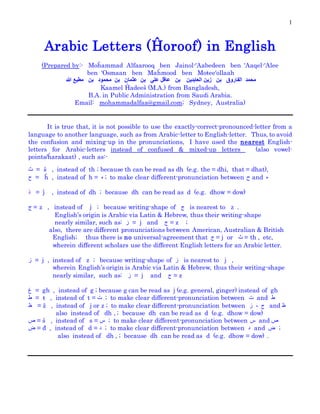
It is true that, it is not possible to use the exactly-correct-pronounced-letter from a
language to another language, such as from Arabic-letter to English-letter. Thus, to avoid
the confusion and mixing-up in the pronunciations, I have used the nearest English-
letters for Arabic-letters instead of confused & mixed-up letters (also vowel-
points/ĥarakaat) , such as:-
‫ث‬ = ŝ , instead of th ; because th can be read as dh (e.g. the = dhi, that = dhat),
‫ح‬ = ĥ , instead of h = ‫ه‬ ; to make clear different-pronunciation between ‫ح‬ and ‫ه‬
‫ذ‬ = ĵ , instead of dh ; because dh can be read as d (e.g. dhow = dow)
‫ج‬ = z , instead of j ; because writing-shape of ‫ج‬ is nearest to z .
English’s origin is Arabic via Latin & Hebrew, thus their writing-shape
nearly similar, such as: ‫ز‬ = j and ‫ج‬ = z ;
also, there are different pronunciations between American, Australian & British
English; thus there is no universal-agreement that ‫ج‬ = j or ‫ث‬ = th , etc,
wherein different scholars use the different English letters for an Arabic letter.
‫ز‬ = j , instead of z ; because writing-shape of ‫ز‬ is nearest to j ,
wherein English’s origin is Arabic via Latin & Hebrew, thus their writing-shape
nearly similar, such as: ‫ز‬ = j and ‫ج‬ = z
‫غ‬ = gh , instead of g ; because g can be read as j (e.g. general, ginger) instead of gh
‫ط‬ = ŧ , instead of t = ‫ت‬ ; to make clear different-pronunciation between ‫ت‬ and ‫ط‬
‫ظ‬ = ž , instead of j or z ; to make clear different-pronunciation between ‫ز‬ ، ‫ج‬ and ‫ظ‬
also instead of dh , ; because dh can be read as d (e.g. dhow = dow)
‫ص‬ = š , instead of s = ‫س‬ ; to make clear different-pronunciation between ‫س‬ and ‫ص‬
‫ض‬ = đ , instead of d = ‫د‬ ; to make clear different-pronunciation between ‫د‬ and ‫ض‬ ;
also instead of dh , ; because dh can be read as d (e.g. dhow = dow) .
2
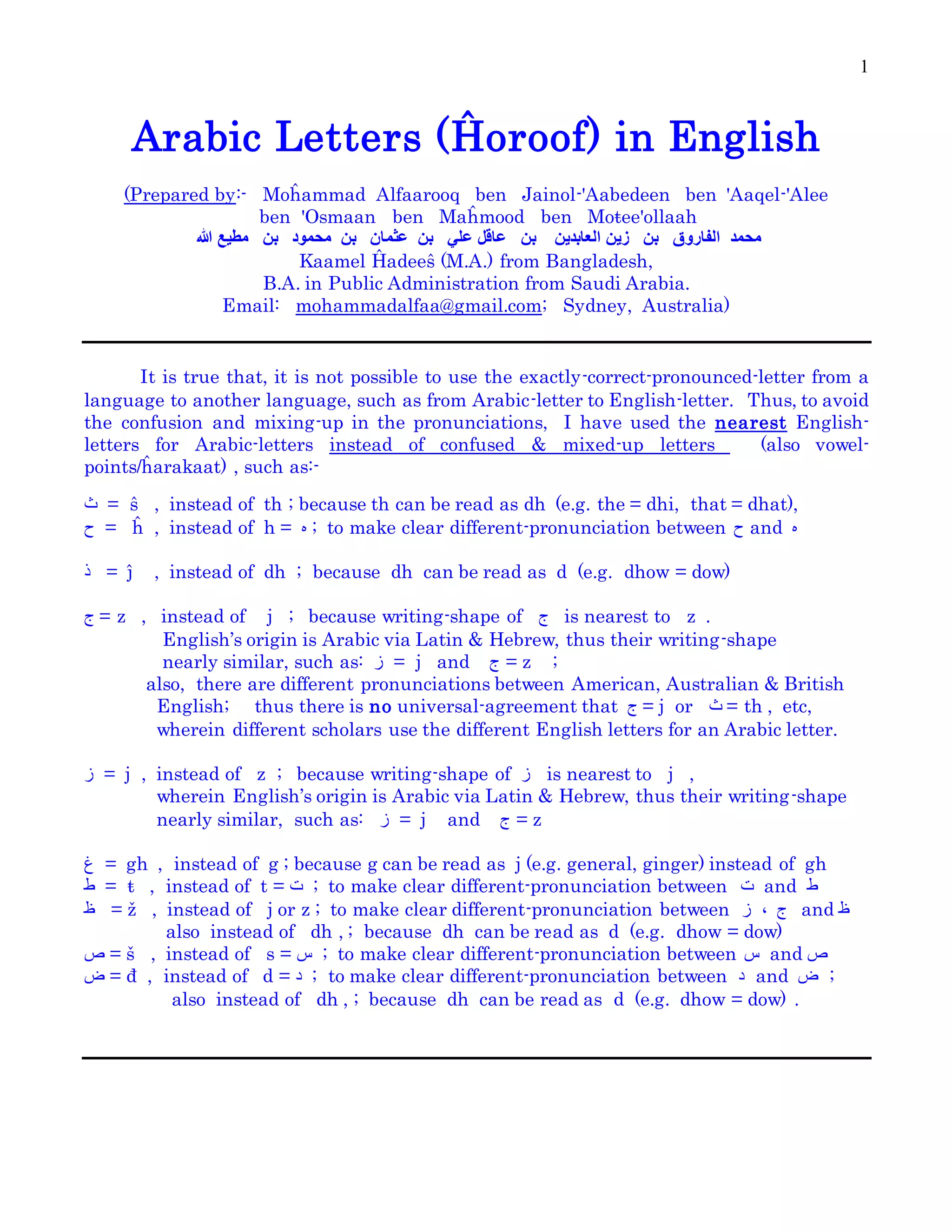
Arabic Vowel-Points (Ĥarakaat) in English
Fatĥa (Jabar) َ = A ; e.g. ‫م‬ = Ma, ‫ل‬ = La
Kasrah (Jer) َ = E ; e.g. ‫م‬ = Me, ‫ب‬ = Be, ‫ح‬ = Ĥe
Kasrah/Jer should not be write I ; because I can be read as Ai , e.g.
Library, Biology, Bible, Bilateral, Hide, Island, Idea, Iron.
Đammah (Pesh) َ = O ; e.g. ‫د‬ = Do , ‫ت‬ = To
Đammah/Pesh should not be write U ; because U can be read as Eu (e.g.
Cure, Unit, Uniform, Urine) or A (e.g. Uncle, Under, But).
Arabic Letters of Madde Ašlee/Ŧabee'ee )‫طبيعي‬ / ‫أصلي‬ ‫(مد‬ in English
Alef ( ‫ا‬ ) after Fatĥa ( ‫فتحة‬ ) = AA , e.g. ‫ا‬‫م‬ = Maa, ‫ال‬ = Laa
Ya ( ‫ي‬ ) after Kasrah ( ‫كسرة‬ ) = EE , e.g. ‫ي‬‫م‬ = Mee, ‫ي‬‫ل‬ = Lee
Oao ( ‫و‬ ) after Đammah ( ‫ضمة‬ ) = OO , e.g. ‫و‬‫م‬ = Moo, ‫و‬‫ل‬ = Loo
Different pronunciations in the similar letters:
‫أ‬ / ‫ء‬ = a /e /o / ` (apostrophe = ‫ء‬ ) : ‫أهلل‬ =Allaah, ‫ابن‬ =Ebn, ‫أسرة‬ = Osrah, ‫مالك‬ = Maalek,
‫مؤمن‬ = Mo`men, ‫قرأن‬ = Qor`aan
‫ع‬ = 'a / 'e / 'o / ' (inverted apostrophe = ‫ع‬ ) : ‫عبد‬ = 'Abd, ‫عباد‬ = 'Ebaad,
‫عمر‬ = 'Omar, ‫معبود‬ = Ma'bood
‫ت‬ = t : ‫توبة‬ = Taobah
‫ط‬ = ŧ : ‫طاهر‬ = Ŧaaher, ‫مصطفى‬ = Mošŧafaa
‫ث‬ = ŝ : ‫ثواب‬ = Ŝawaab, ‫كثير‬ = Kaŝeer, ‫حديث‬ = Ĥadeeŝ
‫س‬ = s : ‫سمآء‬ = Samaaa, ‫مسموع‬ = Masmoo'
‫ص‬ = š : ‫صابر‬ = Šaaber, ‫مصيبة‬ = Mošeebah
‫ش‬ = sh : ‫شمس‬ = Shams
‫ج‬ = z : ‫جنة‬ = Zannah, ‫مجيب‬ = Mozeeb
‫ز‬ = j : ‫زينة‬ = Jeenah, ‫زلزل‬ = Jeljal
‫ذ‬ = ĵ : ‫ذكر‬ = Ĵekr, ‫أذان‬ = Aĵaan, ‫مئذنة‬ = Me`ĵanah
‫ظ‬ = ž : ‫ظالم‬ = Žaalem, ‫مظلوم‬ = Mažloom
‫ح‬ = ĥ : ‫حميد‬ = Ĥameed, ‫محمد‬ = Moĥammad, ‫حديث‬ = Ĥadeeŝ
‫ه‬ = h : ‫هواء‬ = Hawaa
‫د‬ = d : ‫دين‬ = Deen, ‫مدينة‬ = Madeenah
‫ض‬ = đ : ‫ضياء‬ = Đeyaaa, ‫مضل‬ = Mođell
‫ق‬ = q : ‫قرآن‬ = Qor`aan, ‫فقيه‬ = Faqeeh
‫ك‬ = k : ‫كريم‬ = Kareem
3
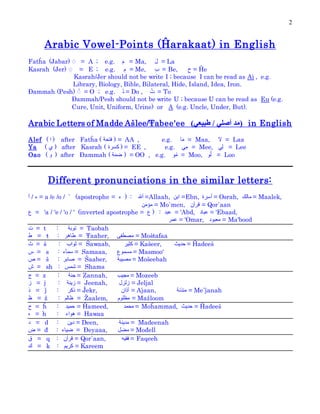
Arabic Letters (Ĥoroof) in English
‫أ‬ / ‫ء‬ = a /e /o / ‘ (apostrophe = ‫ء‬ ) : ‫أهلل‬ =Allaah, ‫ابن‬ = Ebn, ‫أسرة‬ = Osrah,
‫مالك‬ =Maalek, ‫مؤمن‬ = Mo`men, ‫قرأن‬ = Qor`aan
‫ب‬ = b : ‫بشر‬ = Bashar
‫ت‬ = t : ‫توبة‬ = Taobah
‫ث‬ = ŝ : ‫ثواب‬ = Ŝawaab, ‫كثير‬ = Kaŝeer, ‫حديث‬ = Ĥadeeŝ
‫ج‬ = z : ‫جنة‬ = Zannah, ‫مجيب‬ = Mozeeb
‫ح‬ = ĥ : ‫حميد‬ = Ĥameed, ‫محمد‬ = Moĥammad
‫خ‬ = kh : ‫خير‬ = Khair, ‫مختار‬ = Mokhtaar
‫د‬ = d : ‫دين‬ = Deen, ‫مدينة‬ = Madeenah
‫ذ‬ = ĵ : ‫ذكر‬ = Ĵekr, ‫أذان‬ = Aĵaan, ‫مئذنة‬ = Me`ĵanah
‫ر‬ = r : ‫رب‬ = Rabb
‫ز‬ = j : ‫زينة‬ = Jeenah, ‫زلزل‬ = Jeljal
‫س‬ = s : ‫سمآء‬ = Samaaa, ‫مسموع‬ = Masmoo’
‫ش‬ = sh : ‫شمس‬ = Shams
‫ص‬ = š : ‫صابر‬ = Šaaber, ‫مصيبة‬ = Mošeebah
‫ض‬ = đ : ‫ضياء‬ = Đeyaaa, ‫مضل‬ = Mođell
‫ط‬ = ŧ : ‫طاهر‬ = Ŧaaher, ‫مصطفى‬ = Mošŧafaa
‫ظ‬ = ž : ‫ظالم‬ = Žaalem, ‫مظلوم‬ = Mažloom
‫ع‬ = 'a/ 'e / 'e / ' (inverted apostrophe = ‫ع‬ ) : ‫عبد‬ = 'Abd, ‫عباد‬ = 'Ebaad, ‫عمر‬ = 'Omar,
‫معبود‬ = Ma'bood
‫غ‬ = gh : ‫غافل‬ = Ghaafel, ‫مغفور‬ = Maghfoor
‫ف‬ = f : ‫فاتحة‬ = Faateĥah
‫ق‬ = q : ‫قرآن‬ = Qor`aan, ‫فقيه‬ = Faqeeh
‫ك‬ = k : ‫كريم‬ = Kareem
‫ل‬ = L : ‫ليل‬ = Lail
‫م‬ = m : ‫مؤمن‬ = Mo`men
‫ن‬ = n : ‫نور‬ = Noor
‫و‬ = w/o : ‫ولد‬ = Walad, ‫محمود‬ = Maĥmood, ‫يوسوس‬ = Yowasweso
‫ه‬ = h : ‫هواء‬ = Hawaa
‫ي‬ = y / i / e : ‫يوم‬ = Yaom, ‫صيف‬ = Šaif, ‫رحيم‬ = Raĥeem .
‫أعلم‬ ‫وهللا‬ = Allaah (SWT) knows the best.

Arabic Letters in English

  • 1.
    1 Arabic Letters (Ĥoroof)in English (Prepared by:- Moĥammad Alfaarooq ben Jainol-'Aabedeen ben 'Aaqel-'Alee ben 'Osmaan ben Maĥmood ben Moŧee'ollaah ‫محمد‬‫الفاروق‬‫علي‬ ‫عاقل‬ ‫بن‬ ‫العابدين‬ ‫زين‬ ‫بن‬‫هللا‬ ‫مطيع‬ ‫بن‬ ‫محمود‬ ‫بن‬ ‫عثمان‬ ‫بن‬ Kaamel Ĥadeeŝ (M.A.) from Bangladesh, B.A. in Public Administration from Saudi Arabia. Email: mohammadalfaa@gmail.com; Sydney, Australia) It is true that, it is not possible to use the exactly-correct-pronounced-letter from a language to another language, such as from Arabic-letter to English-letter. Thus, to avoid the confusion and mixing-up in the pronunciations, I have used the nearest English- letters for Arabic-letters instead of confused & mixed-up letters (also vowel- points/ĥarakaat) , such as:- ‫ث‬ = ŝ , instead of th ; because th can be read as dh (e.g. the = dhi, that = dhat), ‫ح‬ = ĥ , instead of h = ‫ه‬ ; to make clear different-pronunciation between ‫ح‬ and ‫ه‬ ‫ذ‬ = ĵ , instead of dh ; because dh can be read as d (e.g. dhow = dow) ‫ج‬ = z , instead of j ; because writing-shape of ‫ج‬ is nearest to z . English’s origin is Arabic via Latin & Hebrew, thus their writing-shape nearly similar, such as: ‫ز‬ = j and ‫ج‬ = z ; also, there are different pronunciations between American, Australian & British English; thus there is no universal-agreement that ‫ج‬ = j or ‫ث‬ = th , etc, wherein different scholars use the different English letters for an Arabic letter. ‫ز‬ = j , instead of z ; because writing-shape of ‫ز‬ is nearest to j , wherein English’s origin is Arabic via Latin & Hebrew, thus their writing-shape nearly similar, such as: ‫ز‬ = j and ‫ج‬ = z ‫غ‬ = gh , instead of g ; because g can be read as j (e.g. general, ginger) instead of gh ‫ط‬ = ŧ , instead of t = ‫ت‬ ; to make clear different-pronunciation between ‫ت‬ and ‫ط‬ ‫ظ‬ = ž , instead of j or z ; to make clear different-pronunciation between ‫ز‬ ، ‫ج‬ and ‫ظ‬ also instead of dh , ; because dh can be read as d (e.g. dhow = dow) ‫ص‬ = š , instead of s = ‫س‬ ; to make clear different-pronunciation between ‫س‬ and ‫ص‬ ‫ض‬ = đ , instead of d = ‫د‬ ; to make clear different-pronunciation between ‫د‬ and ‫ض‬ ; also instead of dh , ; because dh can be read as d (e.g. dhow = dow) .
  • 2.
    2 Arabic Vowel-Points (Ĥarakaat)in English Fatĥa (Jabar) َ = A ; e.g. ‫م‬ = Ma, ‫ل‬ = La Kasrah (Jer) َ = E ; e.g. ‫م‬ = Me, ‫ب‬ = Be, ‫ح‬ = Ĥe Kasrah/Jer should not be write I ; because I can be read as Ai , e.g. Library, Biology, Bible, Bilateral, Hide, Island, Idea, Iron. Đammah (Pesh) َ = O ; e.g. ‫د‬ = Do , ‫ت‬ = To Đammah/Pesh should not be write U ; because U can be read as Eu (e.g. Cure, Unit, Uniform, Urine) or A (e.g. Uncle, Under, But). Arabic Letters of Madde Ašlee/Ŧabee'ee )‫طبيعي‬ / ‫أصلي‬ ‫(مد‬ in English Alef ( ‫ا‬ ) after Fatĥa ( ‫فتحة‬ ) = AA , e.g. ‫ا‬‫م‬ = Maa, ‫ال‬ = Laa Ya ( ‫ي‬ ) after Kasrah ( ‫كسرة‬ ) = EE , e.g. ‫ي‬‫م‬ = Mee, ‫ي‬‫ل‬ = Lee Oao ( ‫و‬ ) after Đammah ( ‫ضمة‬ ) = OO , e.g. ‫و‬‫م‬ = Moo, ‫و‬‫ل‬ = Loo Different pronunciations in the similar letters: ‫أ‬ / ‫ء‬ = a /e /o / ` (apostrophe = ‫ء‬ ) : ‫أهلل‬ =Allaah, ‫ابن‬ =Ebn, ‫أسرة‬ = Osrah, ‫مالك‬ = Maalek, ‫مؤمن‬ = Mo`men, ‫قرأن‬ = Qor`aan ‫ع‬ = 'a / 'e / 'o / ' (inverted apostrophe = ‫ع‬ ) : ‫عبد‬ = 'Abd, ‫عباد‬ = 'Ebaad, ‫عمر‬ = 'Omar, ‫معبود‬ = Ma'bood ‫ت‬ = t : ‫توبة‬ = Taobah ‫ط‬ = ŧ : ‫طاهر‬ = Ŧaaher, ‫مصطفى‬ = Mošŧafaa ‫ث‬ = ŝ : ‫ثواب‬ = Ŝawaab, ‫كثير‬ = Kaŝeer, ‫حديث‬ = Ĥadeeŝ ‫س‬ = s : ‫سمآء‬ = Samaaa, ‫مسموع‬ = Masmoo' ‫ص‬ = š : ‫صابر‬ = Šaaber, ‫مصيبة‬ = Mošeebah ‫ش‬ = sh : ‫شمس‬ = Shams ‫ج‬ = z : ‫جنة‬ = Zannah, ‫مجيب‬ = Mozeeb ‫ز‬ = j : ‫زينة‬ = Jeenah, ‫زلزل‬ = Jeljal ‫ذ‬ = ĵ : ‫ذكر‬ = Ĵekr, ‫أذان‬ = Aĵaan, ‫مئذنة‬ = Me`ĵanah ‫ظ‬ = ž : ‫ظالم‬ = Žaalem, ‫مظلوم‬ = Mažloom ‫ح‬ = ĥ : ‫حميد‬ = Ĥameed, ‫محمد‬ = Moĥammad, ‫حديث‬ = Ĥadeeŝ ‫ه‬ = h : ‫هواء‬ = Hawaa ‫د‬ = d : ‫دين‬ = Deen, ‫مدينة‬ = Madeenah ‫ض‬ = đ : ‫ضياء‬ = Đeyaaa, ‫مضل‬ = Mođell ‫ق‬ = q : ‫قرآن‬ = Qor`aan, ‫فقيه‬ = Faqeeh ‫ك‬ = k : ‫كريم‬ = Kareem
  • 3.
    3 Arabic Letters (Ĥoroof)in English ‫أ‬ / ‫ء‬ = a /e /o / ‘ (apostrophe = ‫ء‬ ) : ‫أهلل‬ =Allaah, ‫ابن‬ = Ebn, ‫أسرة‬ = Osrah, ‫مالك‬ =Maalek, ‫مؤمن‬ = Mo`men, ‫قرأن‬ = Qor`aan ‫ب‬ = b : ‫بشر‬ = Bashar ‫ت‬ = t : ‫توبة‬ = Taobah ‫ث‬ = ŝ : ‫ثواب‬ = Ŝawaab, ‫كثير‬ = Kaŝeer, ‫حديث‬ = Ĥadeeŝ ‫ج‬ = z : ‫جنة‬ = Zannah, ‫مجيب‬ = Mozeeb ‫ح‬ = ĥ : ‫حميد‬ = Ĥameed, ‫محمد‬ = Moĥammad ‫خ‬ = kh : ‫خير‬ = Khair, ‫مختار‬ = Mokhtaar ‫د‬ = d : ‫دين‬ = Deen, ‫مدينة‬ = Madeenah ‫ذ‬ = ĵ : ‫ذكر‬ = Ĵekr, ‫أذان‬ = Aĵaan, ‫مئذنة‬ = Me`ĵanah ‫ر‬ = r : ‫رب‬ = Rabb ‫ز‬ = j : ‫زينة‬ = Jeenah, ‫زلزل‬ = Jeljal ‫س‬ = s : ‫سمآء‬ = Samaaa, ‫مسموع‬ = Masmoo’ ‫ش‬ = sh : ‫شمس‬ = Shams ‫ص‬ = š : ‫صابر‬ = Šaaber, ‫مصيبة‬ = Mošeebah ‫ض‬ = đ : ‫ضياء‬ = Đeyaaa, ‫مضل‬ = Mođell ‫ط‬ = ŧ : ‫طاهر‬ = Ŧaaher, ‫مصطفى‬ = Mošŧafaa ‫ظ‬ = ž : ‫ظالم‬ = Žaalem, ‫مظلوم‬ = Mažloom ‫ع‬ = 'a/ 'e / 'e / ' (inverted apostrophe = ‫ع‬ ) : ‫عبد‬ = 'Abd, ‫عباد‬ = 'Ebaad, ‫عمر‬ = 'Omar, ‫معبود‬ = Ma'bood ‫غ‬ = gh : ‫غافل‬ = Ghaafel, ‫مغفور‬ = Maghfoor ‫ف‬ = f : ‫فاتحة‬ = Faateĥah ‫ق‬ = q : ‫قرآن‬ = Qor`aan, ‫فقيه‬ = Faqeeh ‫ك‬ = k : ‫كريم‬ = Kareem ‫ل‬ = L : ‫ليل‬ = Lail ‫م‬ = m : ‫مؤمن‬ = Mo`men ‫ن‬ = n : ‫نور‬ = Noor ‫و‬ = w/o : ‫ولد‬ = Walad, ‫محمود‬ = Maĥmood, ‫يوسوس‬ = Yowasweso ‫ه‬ = h : ‫هواء‬ = Hawaa ‫ي‬ = y / i / e : ‫يوم‬ = Yaom, ‫صيف‬ = Šaif, ‫رحيم‬ = Raĥeem . ‫أعلم‬ ‫وهللا‬ = Allaah (SWT) knows the best.