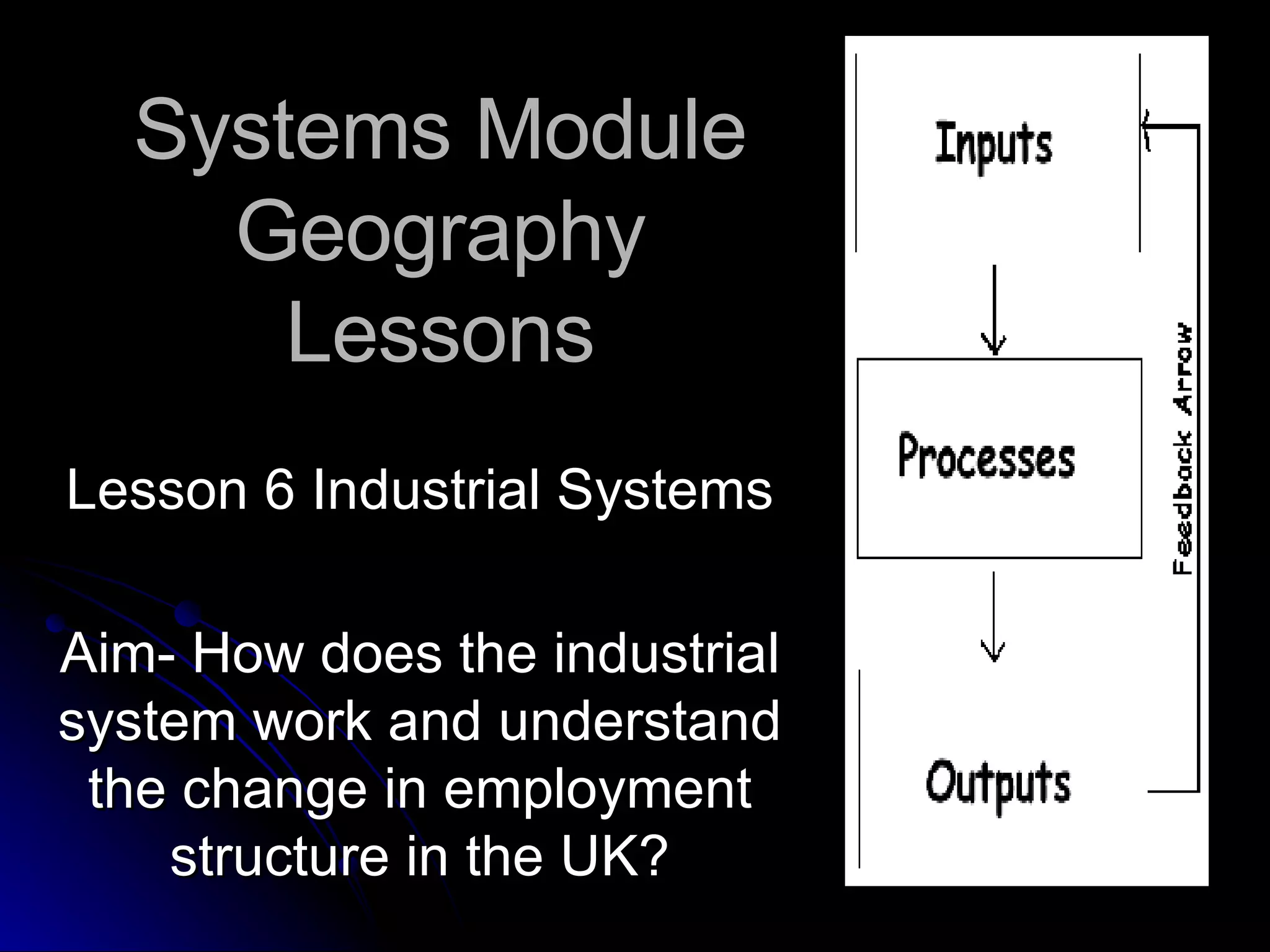
Systems Module Geography Lessons Lesson 6 Industrial Systems Aim- How does the industrial system work and understand the change in employment structure in the UK?
Types of Industrial activity There are four types of Industrial activity: Primary Secondary Tertiary Quaternary
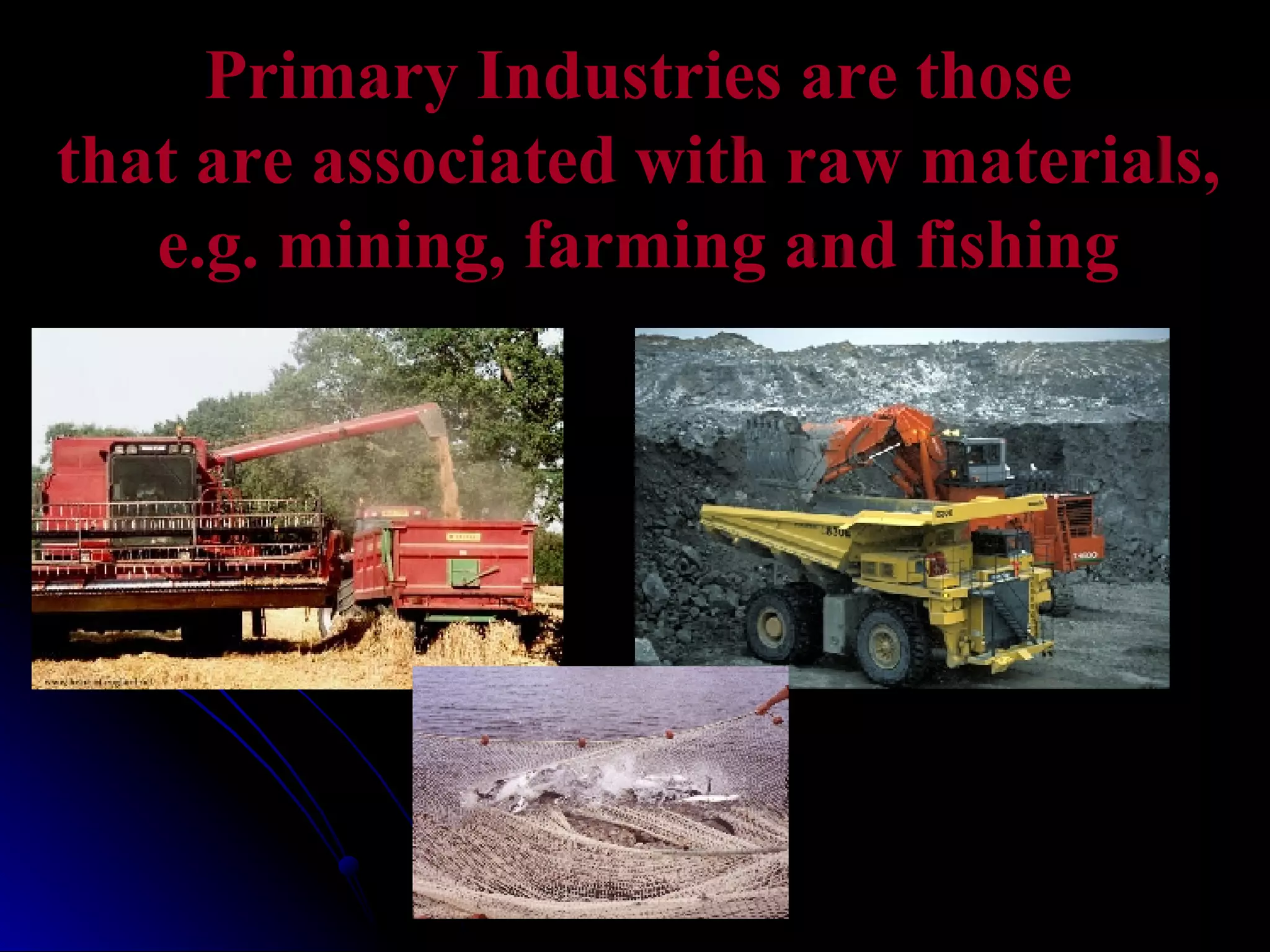
Primary Industries are those that are associated with raw materials, e.g. mining, farming and fishing
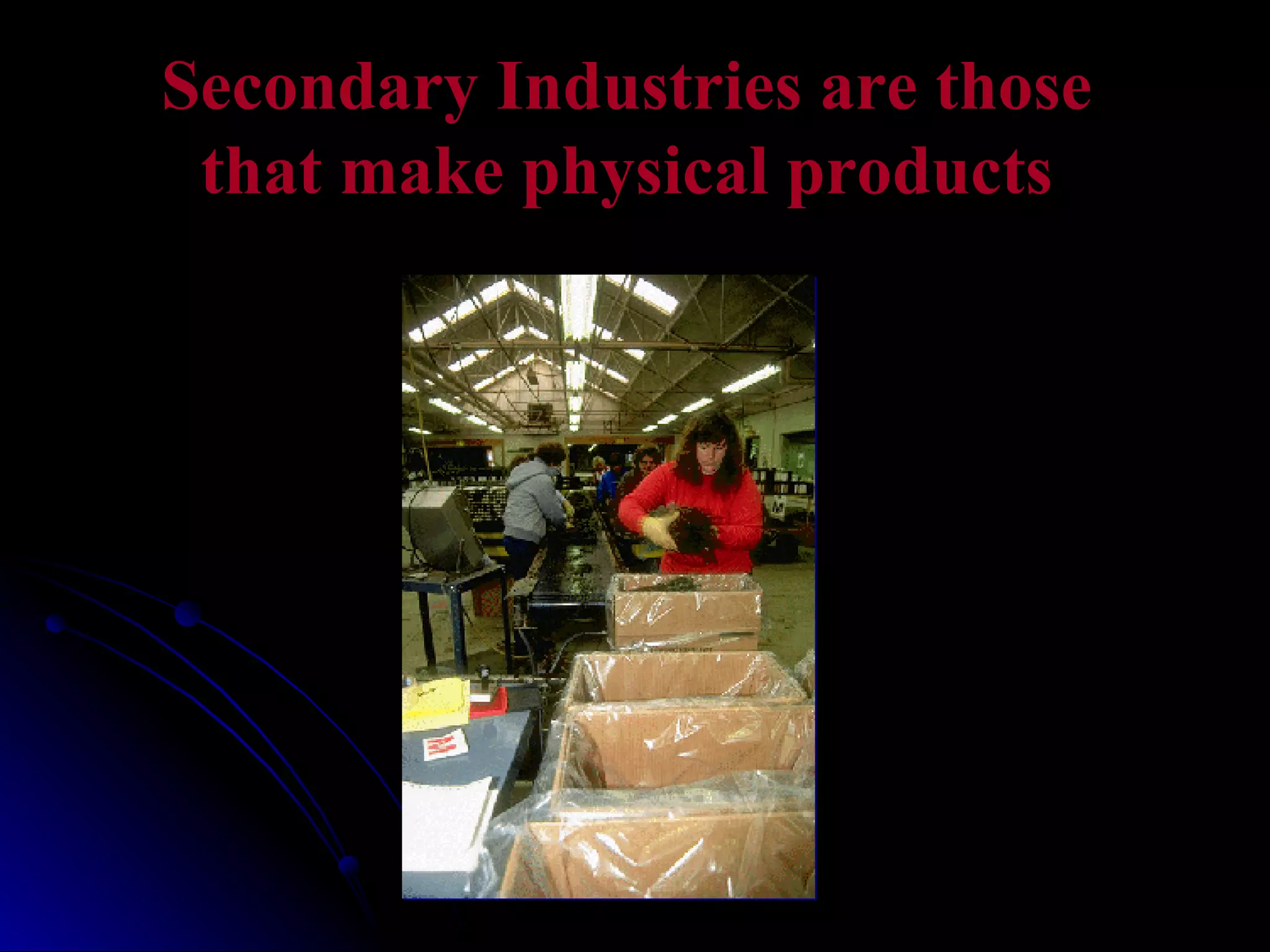
Secondary Industries are those that make physical products
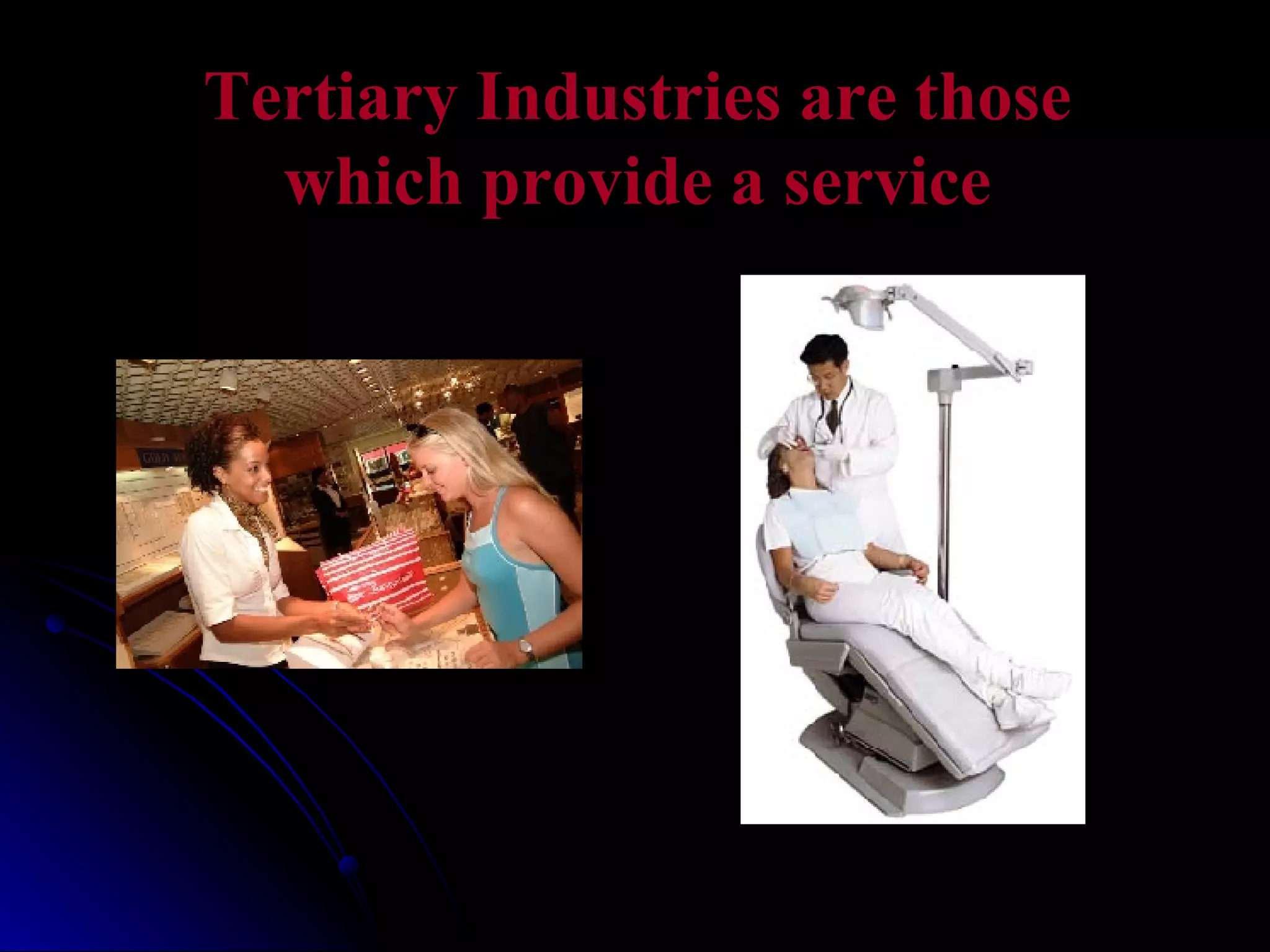
Tertiary Industries are those which provide a service
Quaternary Industries are those which involve research and development
Task 1 Complete the activity by sorting out which jobs belong to which category:  Primary Secondary Tertiary Quaternary Click here for word
Change over time – the UK Before 1800 majority of population was involved in primary industry i.e. farming During 19 th  Century, jobs changed as a result of the Industrial Revolution, people moved to the towns, finding work in coal mines, or heavy industries such as steel, ship building and machinery During the 20 th  Century, farming and industry have become mechanised and need fewer workers. However, there are many more schools, hospitals, shops and transport, therefore people are required to provide a service As we enter the 21 st  Century, although services is still important, there is a larger emphasis on hi-tech industries, such as computer chips and mobile phones, as well as medical research.
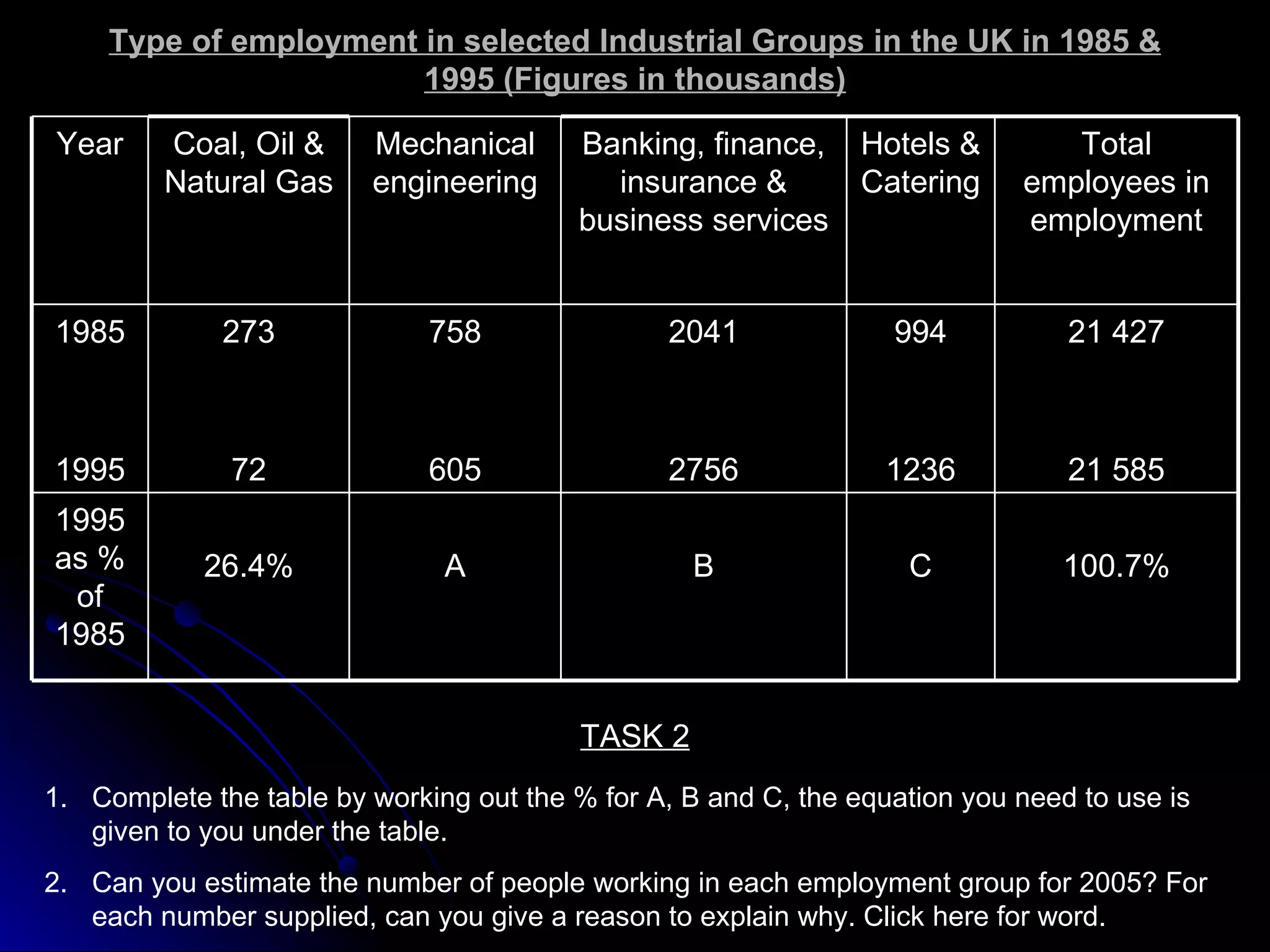
Type of employment in selected Industrial Groups in the UK in 1985 & 1995 (Figures in thousands) Complete the table by working out the % for A, B and C, the equation you need to use is given to you under the table. 2.  Can you estimate the number of people working in each employment group for 2005? For each number supplied, can you give a reason to explain why. Click here for word. TASK 2 100.7% C B A 26.4% 1995 as % of 1985 21 427 21 585 994 1236 2041 2756 758 605 273 72 1985 1995 Total employees in employment Hotels & Catering Banking, finance, insurance & business services Mechanical engineering Coal, Oil & Natural Gas Year
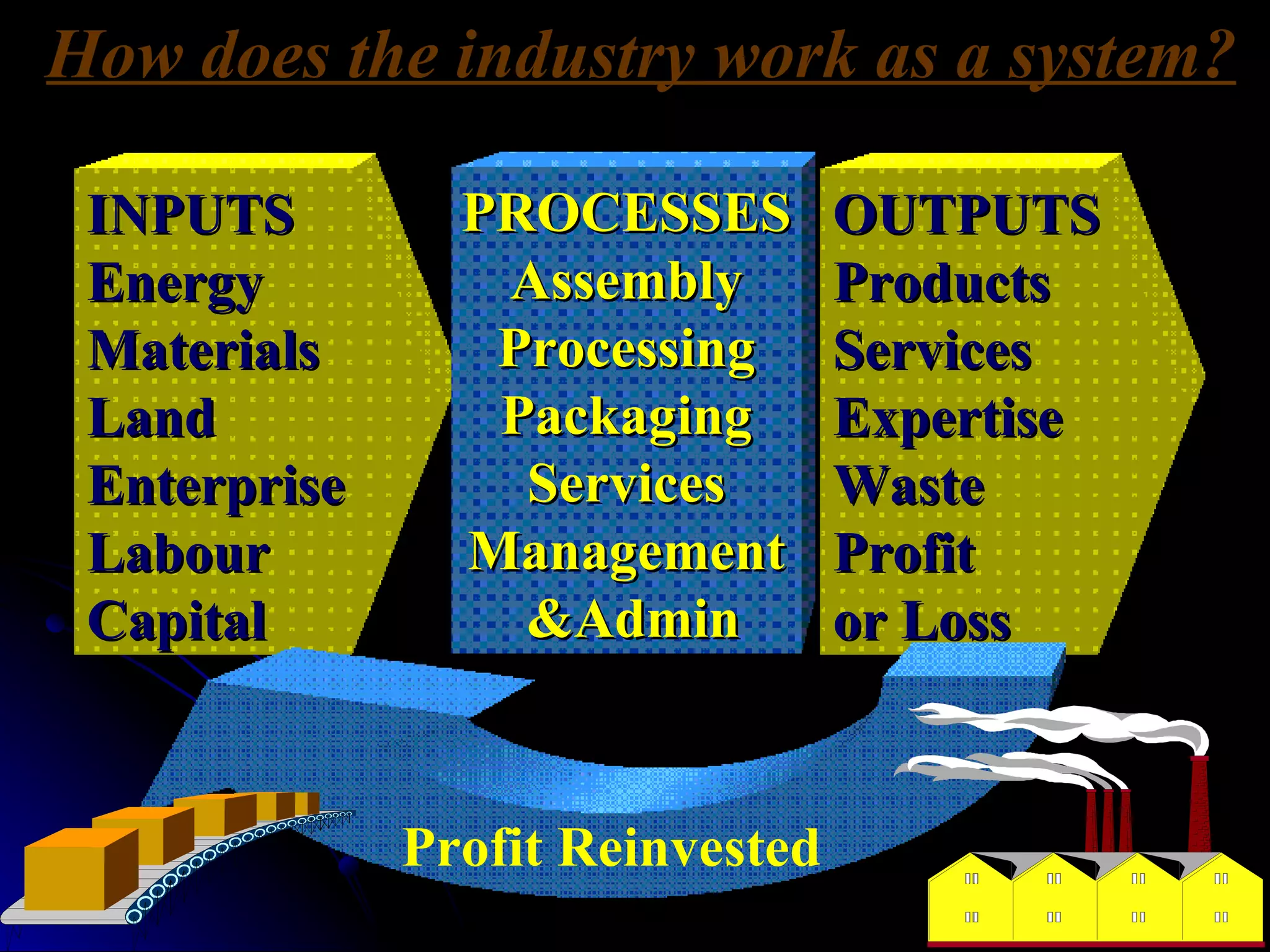
How does the industry work as a system? OUTPUTS Products Services Expertise Waste Profit or Loss INPUTS Energy Materials Land Enterprise Labour Capital PROCESSES Assembly Processing Packaging Services Management &Admin Profit Reinvested
MULTINATIONAL COMPANIES
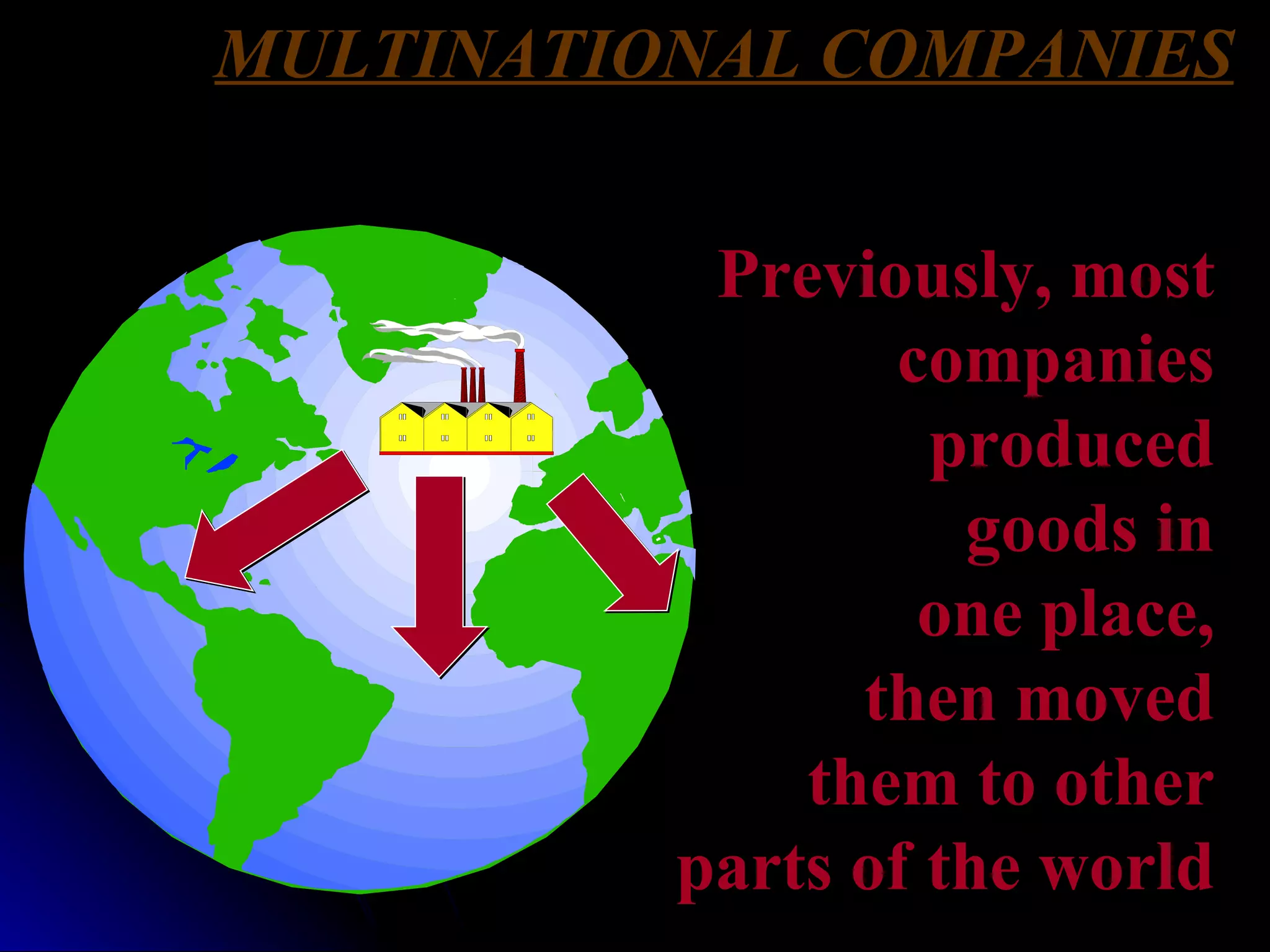
MULTINATIONAL COMPANIES Previously, most companies produced goods in one place, then moved them to other parts of the world
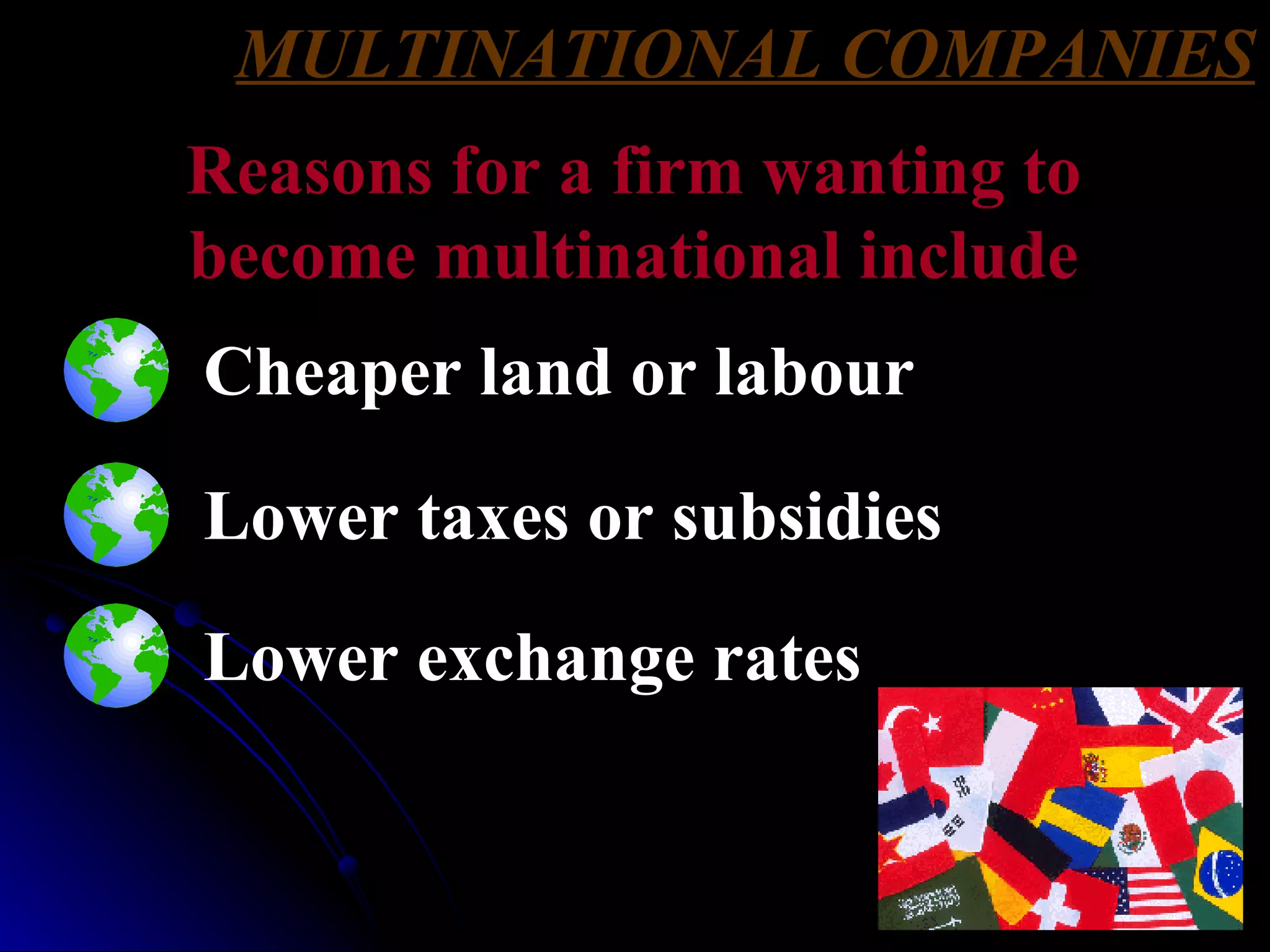
MULTINATIONAL COMPANIES Reasons for a firm wanting to become multinational include Cheaper land or labour Lower taxes or subsidies Lower exchange rates
MULTINATIONAL COMPANIES The positive effects on host countries of having multinationals include Investment, jobs and exports Transfer of technology & techniques
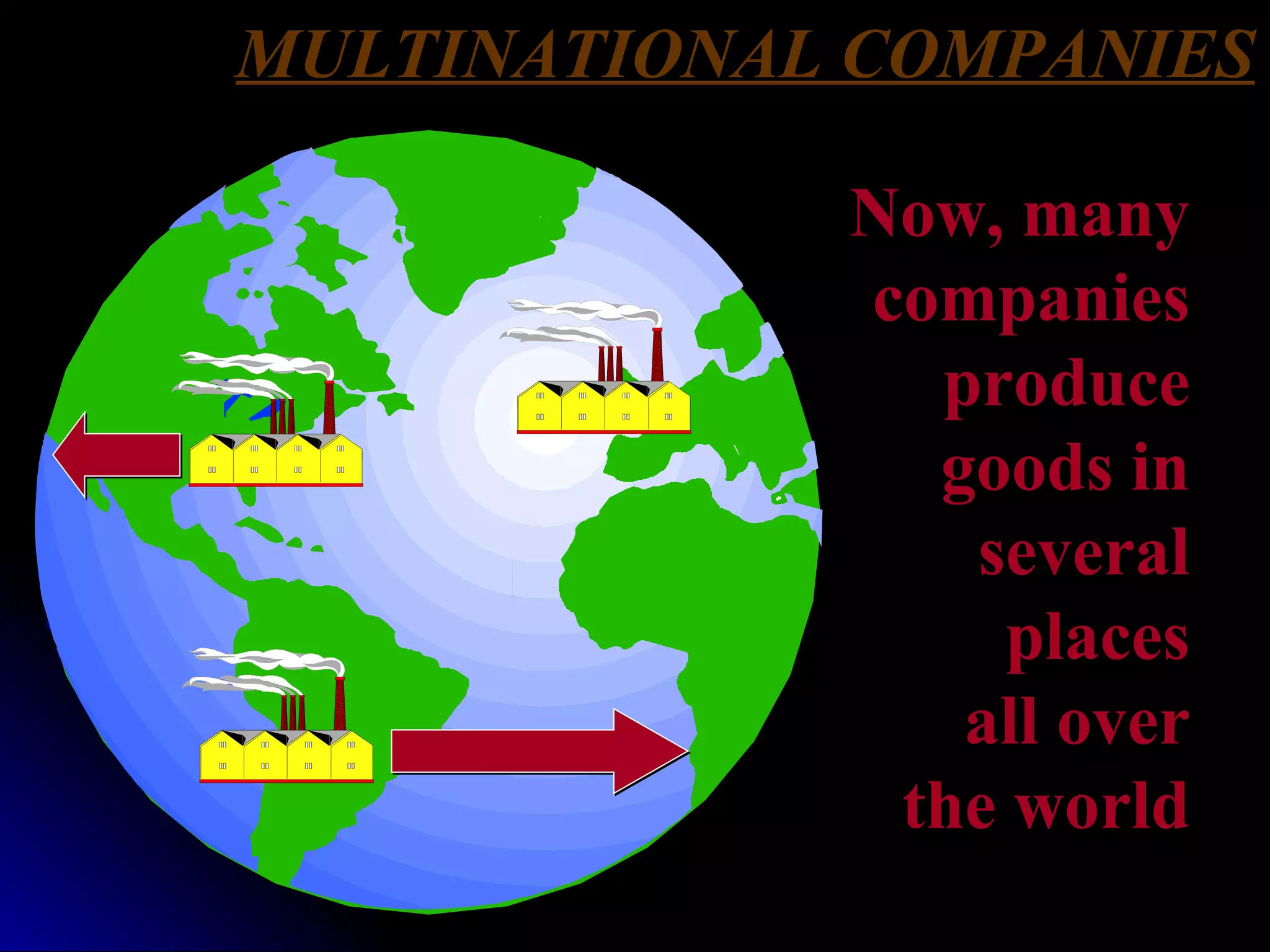
MULTINATIONAL COMPANIES Now, many companies produce goods in several places all over the world
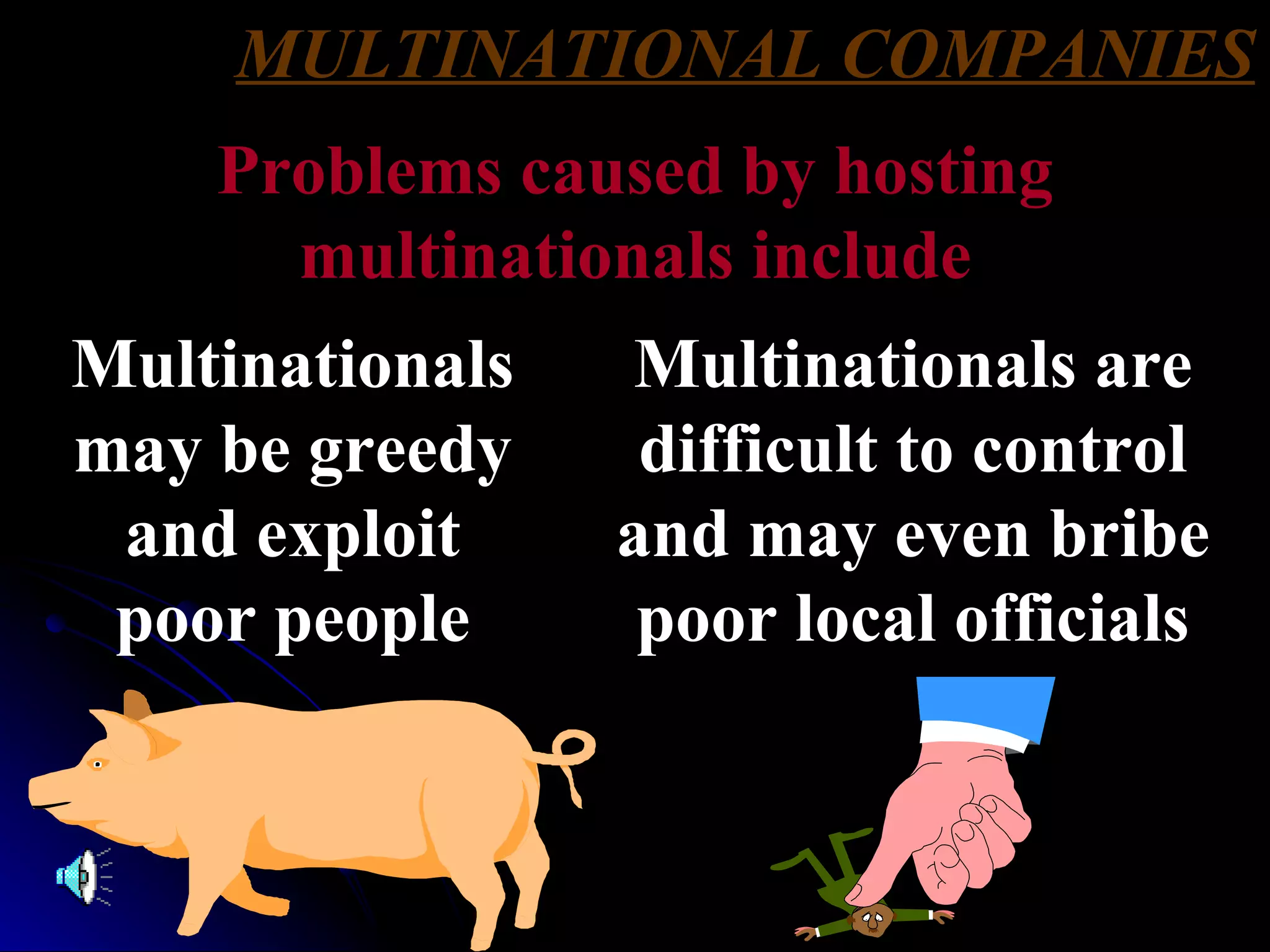
MULTINATIONAL COMPANIES Problems caused by hosting multinationals include Multinationals may be greedy and exploit poor people Multinationals are difficult to control and may even bribe poor local officials
http://www.geography.org.uk/resources/worldwise/globalvillagelife/fashion/ http://www.corpwatch.org/article.php?list=type&type=108 DETECTIVE TASK You have the remainder of the lesson to start your detective work. Research using the internet a Multinational Company, e.g Nike and find out as much as you can, of the negative impacts it has operating in an LEDC. Things to think about, the impact it has on the environment and the people working for them. Produce a short report outlining what you have found, the two websites are a good starting point.
Extension task Write a strong worded (polite) letter to the company you have researched into, outlining what you have discovered through your research

Lesson 6 Industry Systems

  • 1.
    Systems Module GeographyLessons Lesson 6 Industrial Systems Aim- How does the industrial system work and understand the change in employment structure in the UK?
  • 2.
    Types of Industrialactivity There are four types of Industrial activity: Primary Secondary Tertiary Quaternary
  • 3.
    Primary Industries arethose that are associated with raw materials, e.g. mining, farming and fishing
  • 4.
    Secondary Industries arethose that make physical products
  • 5.
    Tertiary Industries arethose which provide a service
  • 6.
    Quaternary Industries arethose which involve research and development
  • 7.
    Task 1 Completethe activity by sorting out which jobs belong to which category: Primary Secondary Tertiary Quaternary Click here for word
  • 8.
    Change over time– the UK Before 1800 majority of population was involved in primary industry i.e. farming During 19 th Century, jobs changed as a result of the Industrial Revolution, people moved to the towns, finding work in coal mines, or heavy industries such as steel, ship building and machinery During the 20 th Century, farming and industry have become mechanised and need fewer workers. However, there are many more schools, hospitals, shops and transport, therefore people are required to provide a service As we enter the 21 st Century, although services is still important, there is a larger emphasis on hi-tech industries, such as computer chips and mobile phones, as well as medical research.
  • 9.
    Type of employmentin selected Industrial Groups in the UK in 1985 & 1995 (Figures in thousands) Complete the table by working out the % for A, B and C, the equation you need to use is given to you under the table. 2. Can you estimate the number of people working in each employment group for 2005? For each number supplied, can you give a reason to explain why. Click here for word. TASK 2 100.7% C B A 26.4% 1995 as % of 1985 21 427 21 585 994 1236 2041 2756 758 605 273 72 1985 1995 Total employees in employment Hotels & Catering Banking, finance, insurance & business services Mechanical engineering Coal, Oil & Natural Gas Year
  • 10.
    How does theindustry work as a system? OUTPUTS Products Services Expertise Waste Profit or Loss INPUTS Energy Materials Land Enterprise Labour Capital PROCESSES Assembly Processing Packaging Services Management &Admin Profit Reinvested
  • 11.
  • 12.
    MULTINATIONAL COMPANIES Previously,most companies produced goods in one place, then moved them to other parts of the world
  • 13.
    MULTINATIONAL COMPANIES Reasonsfor a firm wanting to become multinational include Cheaper land or labour Lower taxes or subsidies Lower exchange rates
  • 14.
    MULTINATIONAL COMPANIES Thepositive effects on host countries of having multinationals include Investment, jobs and exports Transfer of technology & techniques
  • 15.
    MULTINATIONAL COMPANIES Now,many companies produce goods in several places all over the world
  • 16.
    MULTINATIONAL COMPANIES Problemscaused by hosting multinationals include Multinationals may be greedy and exploit poor people Multinationals are difficult to control and may even bribe poor local officials
  • 17.
    http://www.geography.org.uk/resources/worldwise/globalvillagelife/fashion/ http://www.corpwatch.org/article.php?list=type&type=108 DETECTIVETASK You have the remainder of the lesson to start your detective work. Research using the internet a Multinational Company, e.g Nike and find out as much as you can, of the negative impacts it has operating in an LEDC. Things to think about, the impact it has on the environment and the people working for them. Produce a short report outlining what you have found, the two websites are a good starting point.
  • 18.
    Extension task Writea strong worded (polite) letter to the company you have researched into, outlining what you have discovered through your research