Semiotics in Interactive Media
Find a website to use an example for
our discussion today
Learning Aims:
• All of you will be able to
analyse interactive media
design
• Most of you will be able to
use examples of the
interactive media uses
• Some of you
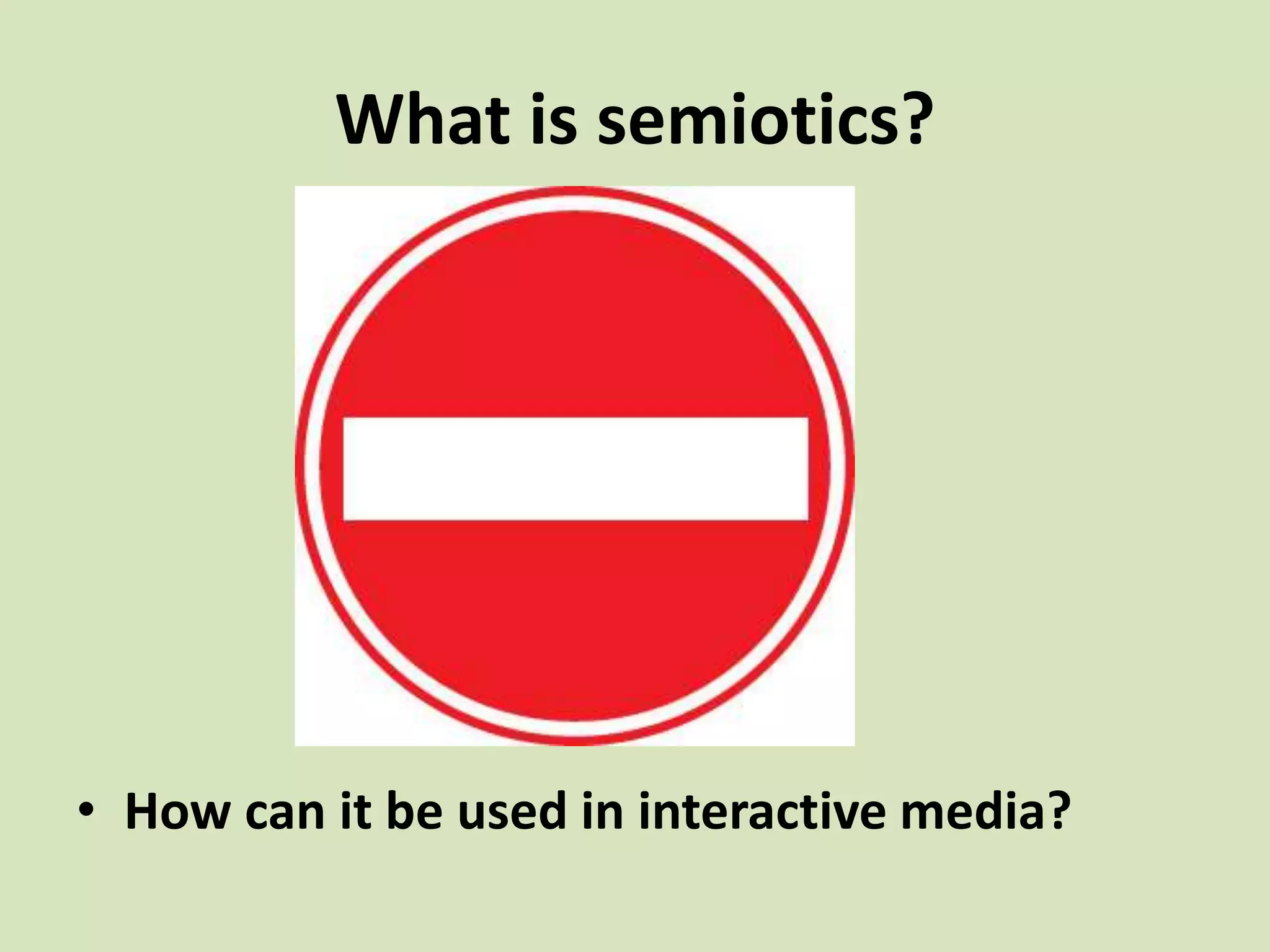
What is semiotics?
• How can it be used in interactive media?
Can you remember what the following
terms mean?
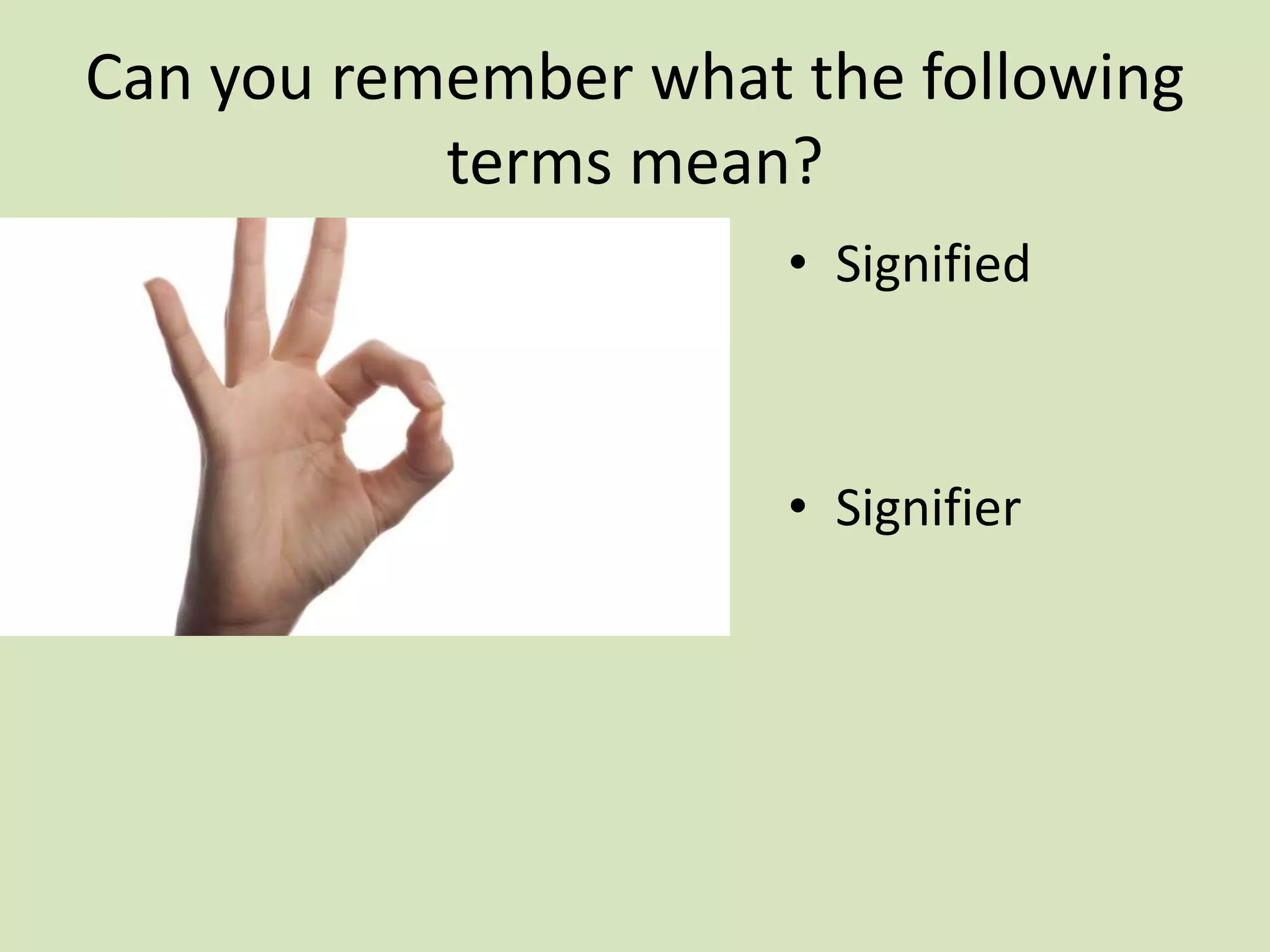
• Signified
• Signifier
Websites use semiotics in the
following ways:
• Colour
• Icons
• Imagery
• Words used
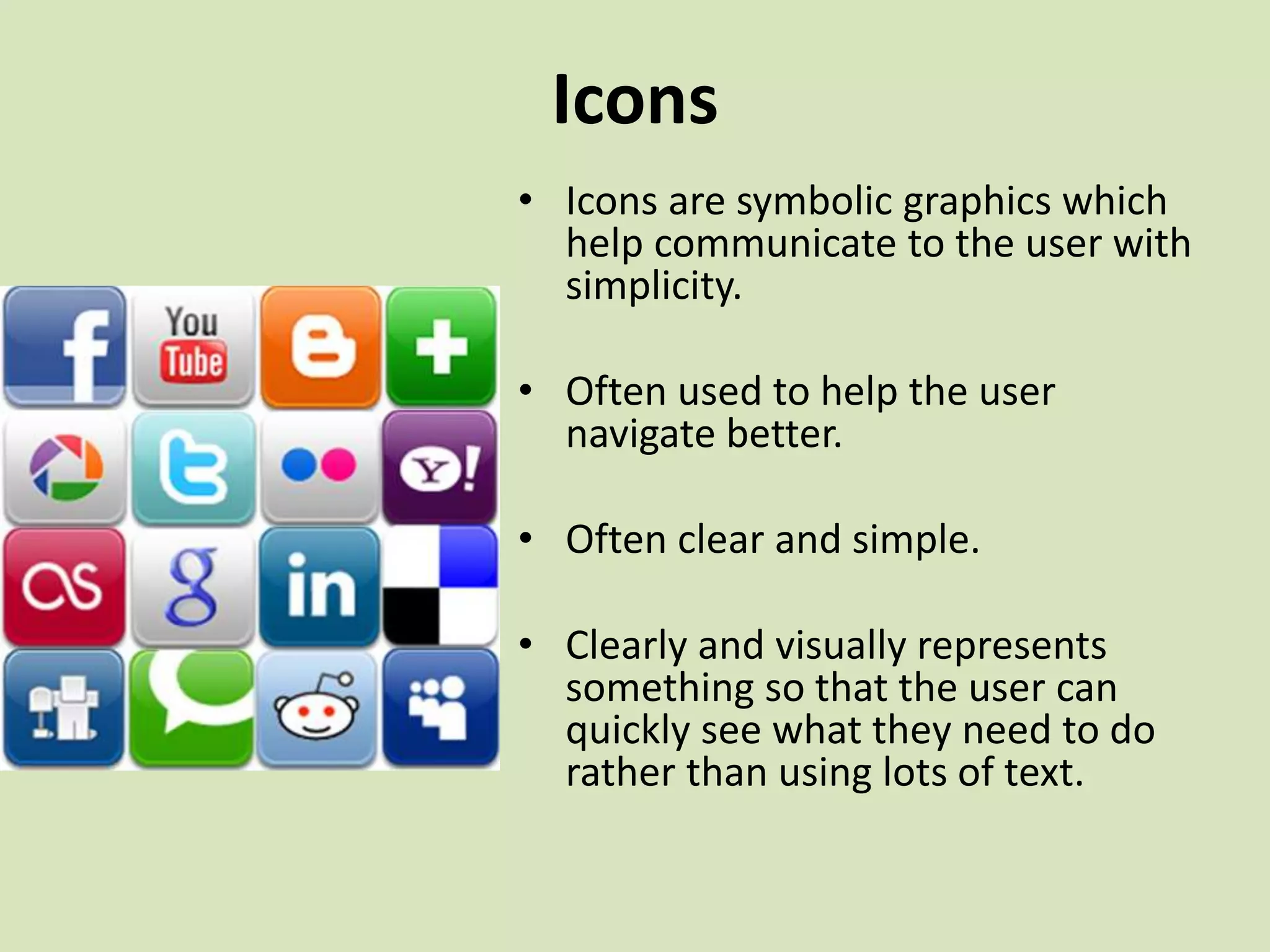
Icons
• Icons are symbolic graphics which
help communicate to the user with
simplicity.
• Often used to help the user
navigate better.
• Often clear and simple.
• Clearly and visually represents
something so that the user can
quickly see what they need to do
rather than using lots of text.
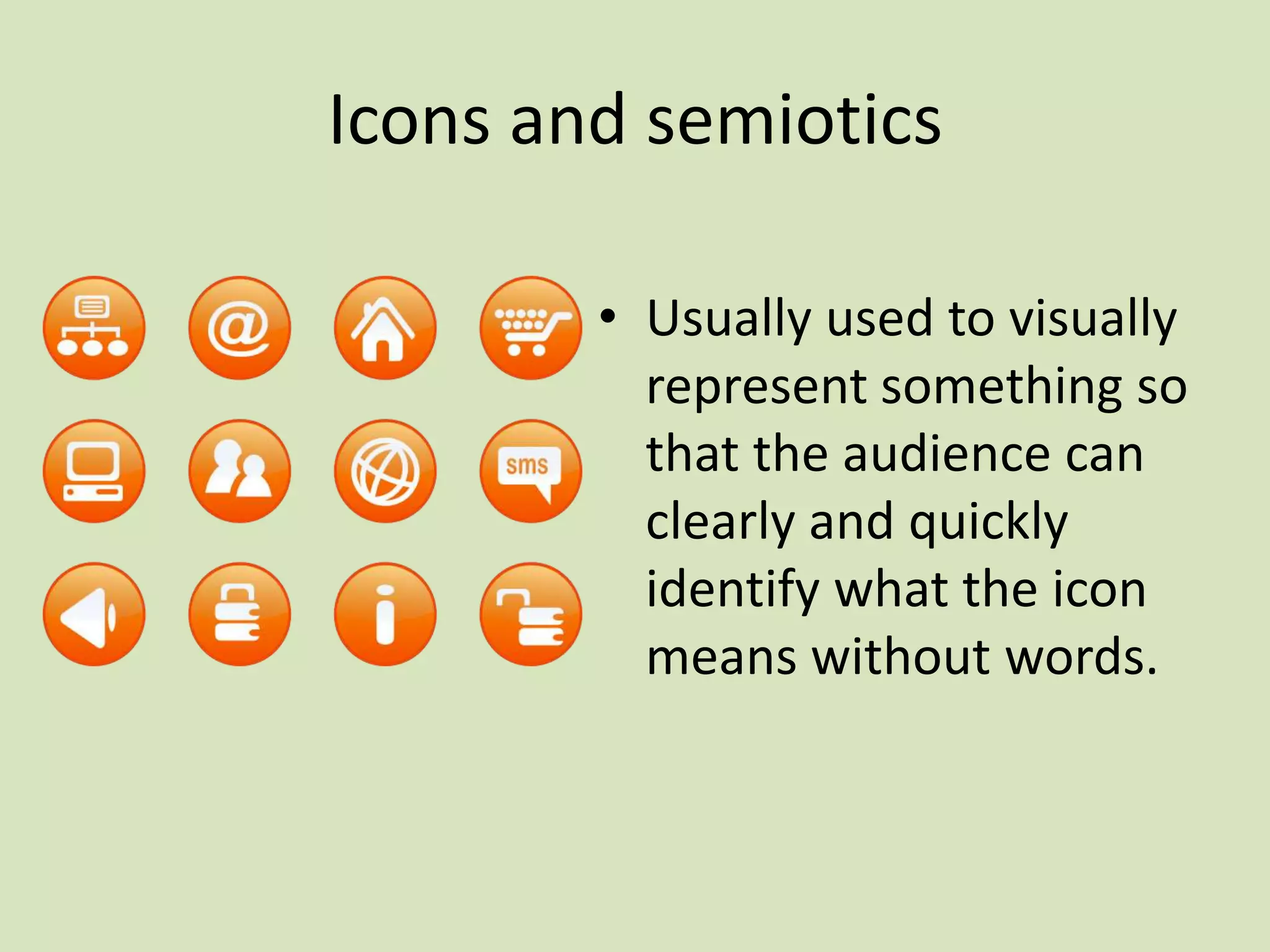
Icons and semiotics
• Usually used to visually
represent something so
that the audience can
clearly and quickly
identify what the icon
means without words.
What the icons on your website
example mean?
Colour
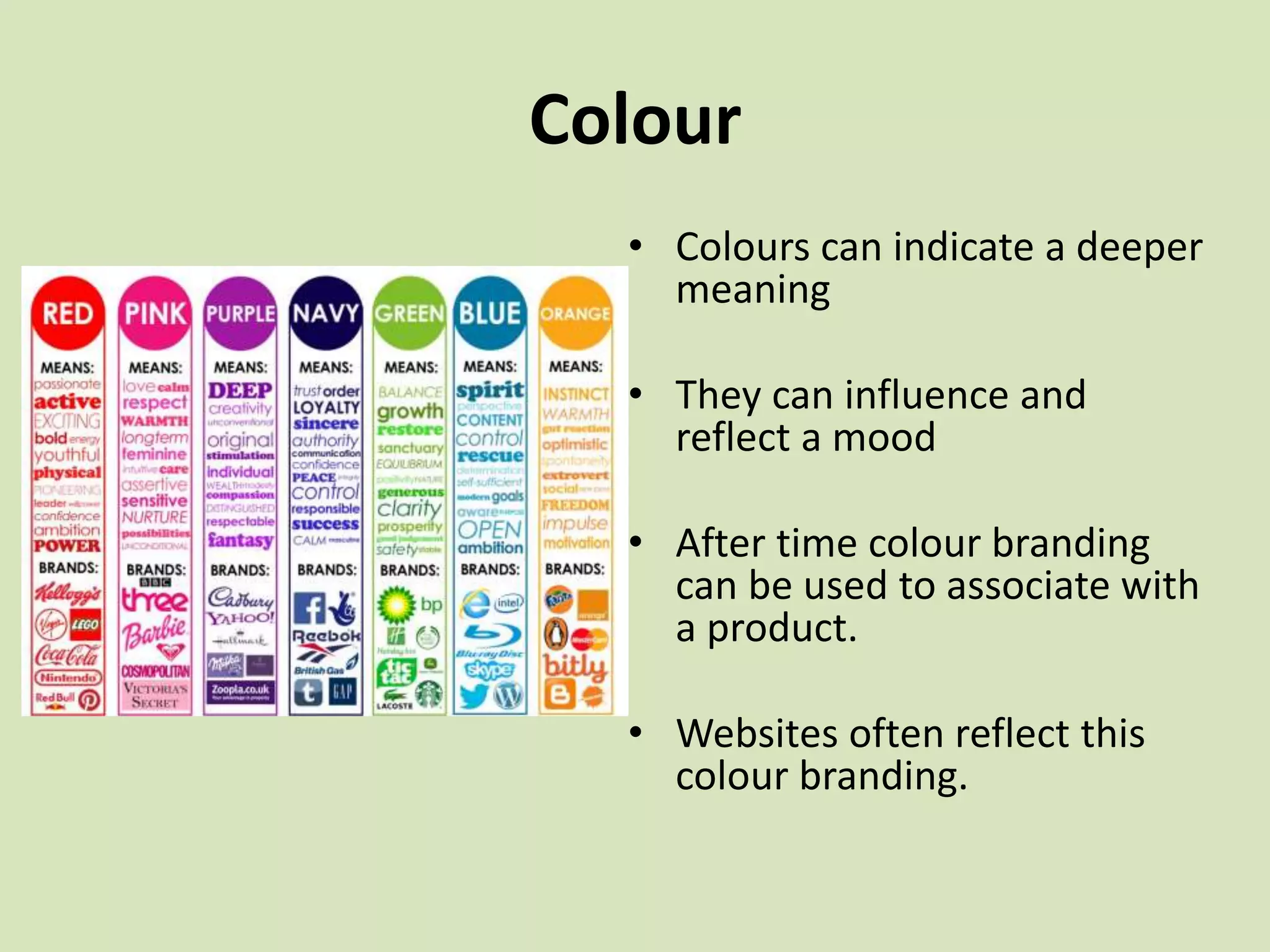
• Colours can indicate a deeper
meaning
• They can influence and
reflect a mood
• After time colour branding
can be used to associate with
a product.
• Websites often reflect this
colour branding.
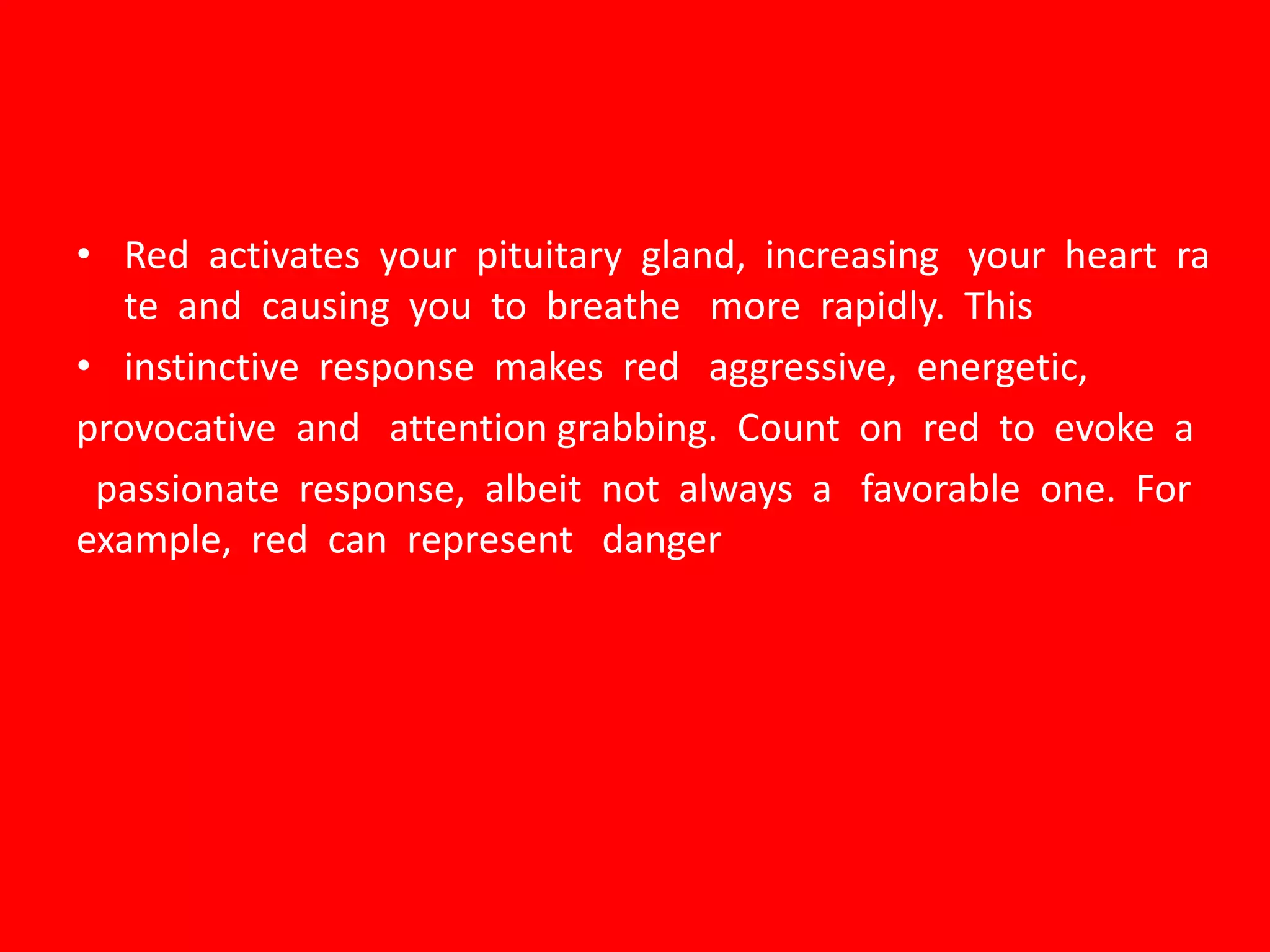
• Red activates your pituitary gland, increasing your heart ra
te and causing you to breathe more rapidly. This
• instinctive response makes red aggressive, energetic,
provocative and attention grabbing. Count on red to evoke a
passionate response, albeit not always a favorable one. For
example, red can represent danger
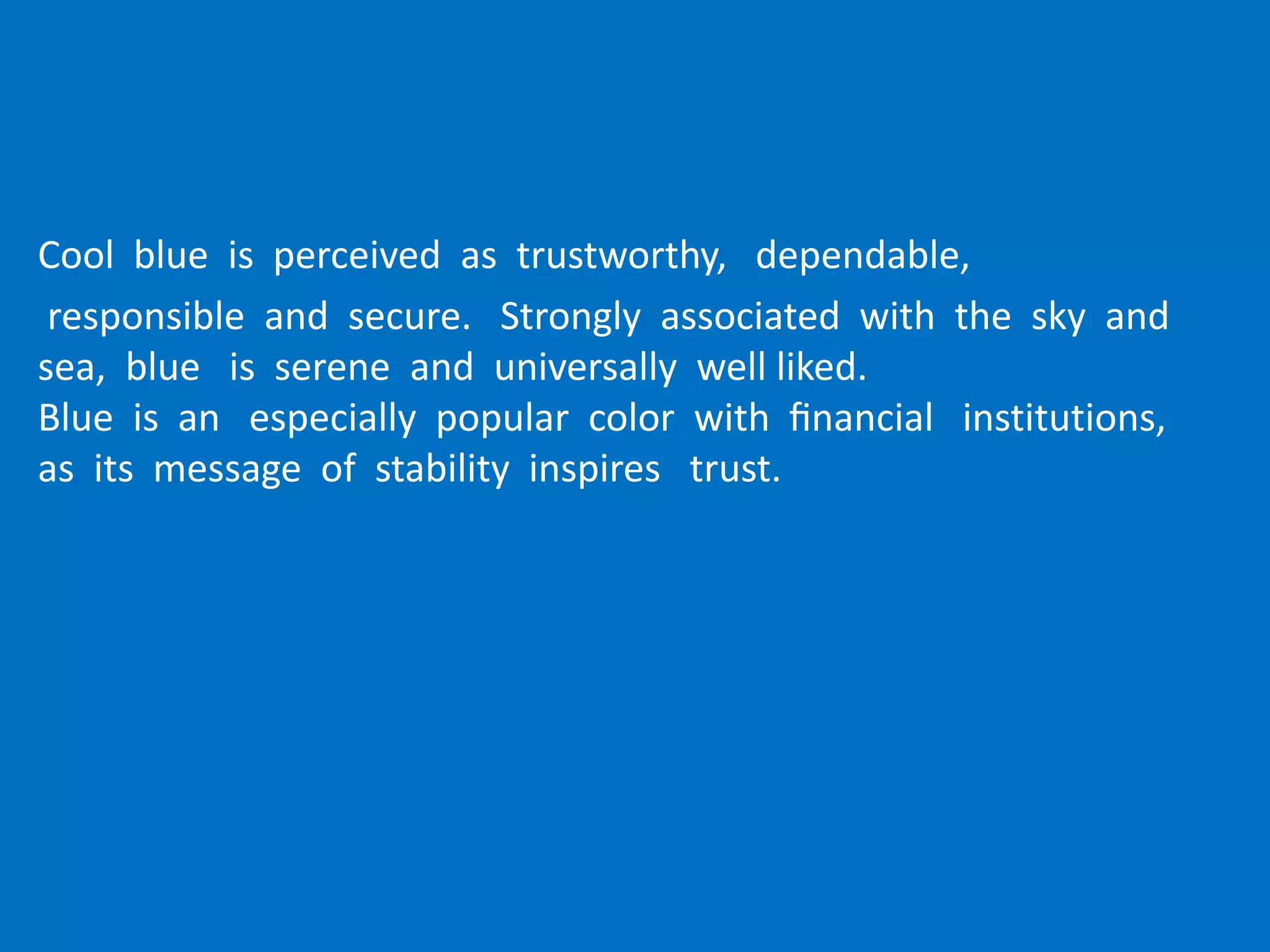
Cool blue is perceived as trustworthy, dependable,
responsible and secure. Strongly associated with the sky and
sea, blue is serene and universally well liked.
Blue is an especially popular color with financial institutions,
as its message of stability inspires trust.
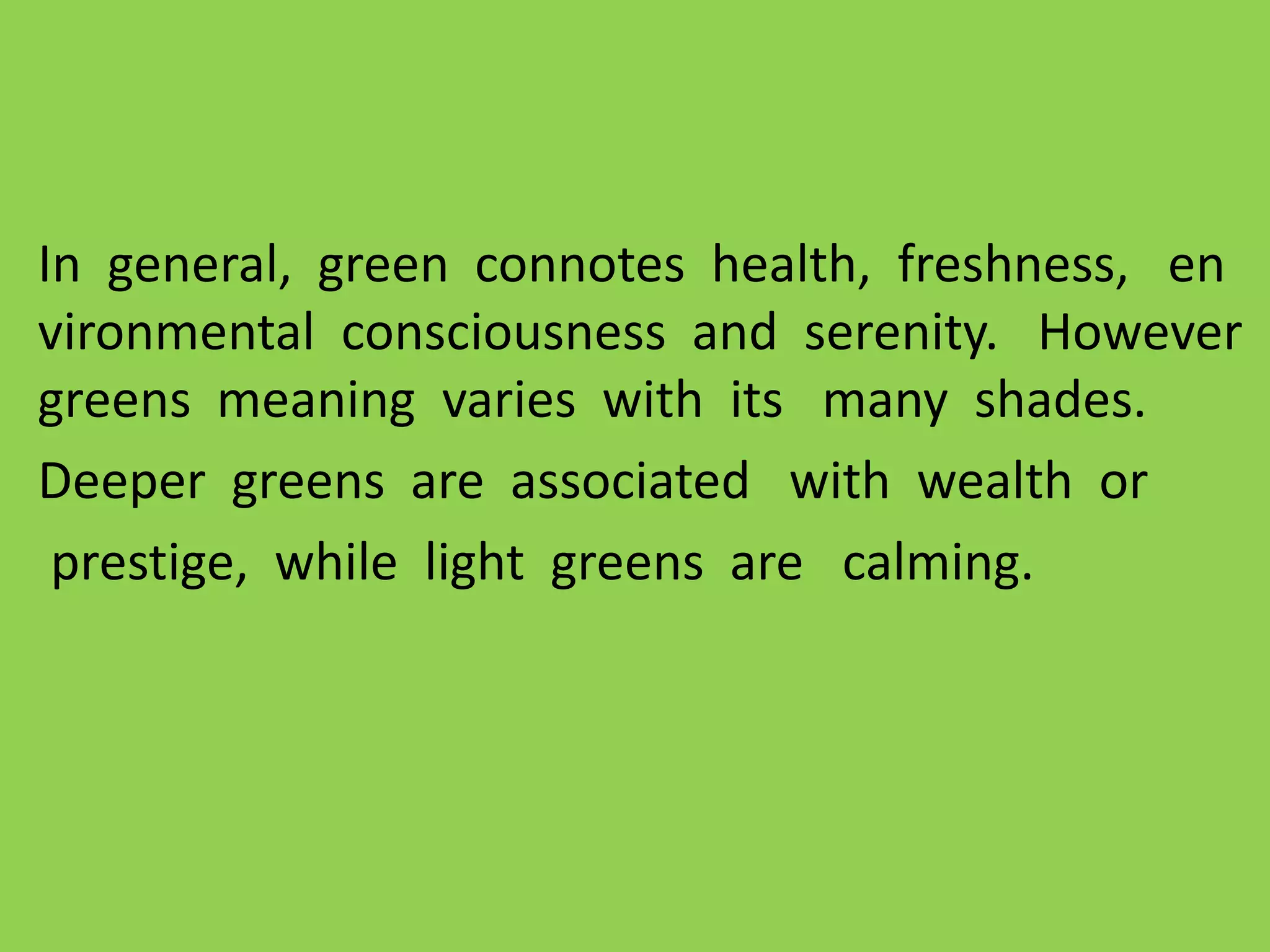
In general, green connotes health, freshness, en
vironmental consciousness and serenity. However
greens meaning varies with its many shades.
Deeper greens are associated with wealth or
prestige, while light greens are calming.
In every society, yellow is associated with the sun. Thus, it
communicates optimism, positivity, light and warmth. Certain
shades seem to motivate and stimulate creative thought and
energy, confidence and playfulness.
The eye sees bright yellows before any other color,
making them great for displays.
Purple is a color favored by creative types.
With its blend of passionate red and
tranquil blue, it evokes mystery, sophisticati
on, spirituality and royalty.
Pinks message varies by intensity. Hot pinks convey energy, youth
fulness, fun and excitement. Dusty pinks appear sentimental.
Lighter pinks are more romantic.
• This earthy color conveys simplicity,
naturalness durability and stability. It can
also elicit a negative response from consumer
s who relate to it as dirty. Certain shades of
brown, like terracotta
can convey an upscale look.
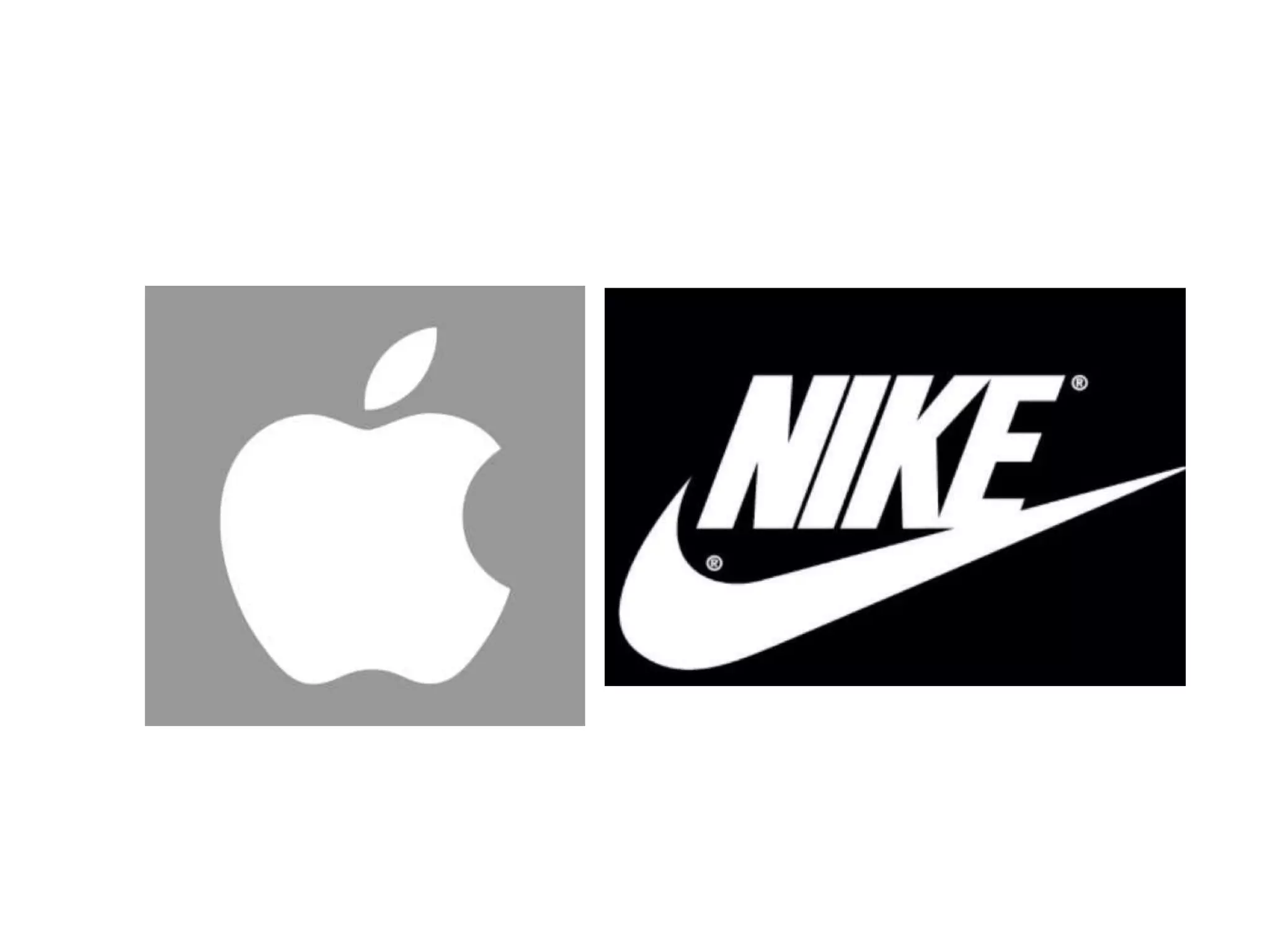
• White connotes simplicity, cleanliness and
purity. The human eye views white as a
dazzling colour, so it immediately catches
the eye in signage. White is often used wit
h infant and health-‐related products.
Black is serious, bold, powerful and classic. It
creates drama and connotes sophistication.
Black works well for expensive products, but
can also make a product look heavy
• Cheerful orange evokes exuberance, fun and
vitality. With the drama of red plus the
cheer of yellow, orange is viewed as sociable
and often childlike. Research indicates its
lighter shades appeal to an upscale market.
Peach tones work well with health care,
restaurants and beauty salons
How and why are colours used on your
website example?
Images
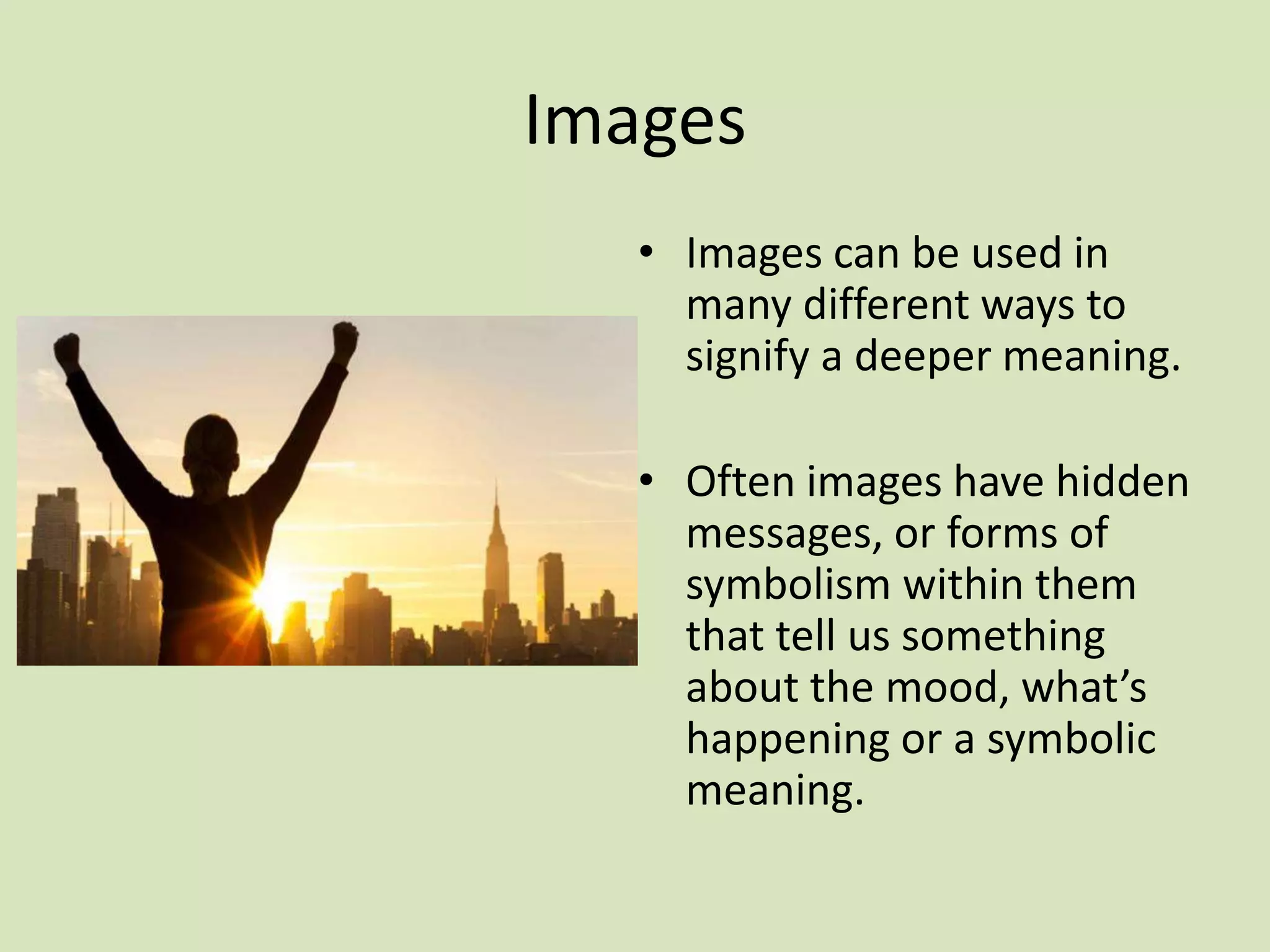
• Images can be used in
many different ways to
signify a deeper meaning.
• Often images have hidden
messages, or forms of
symbolism within them
that tell us something
about the mood, what’s
happening or a symbolic
meaning.
Words used
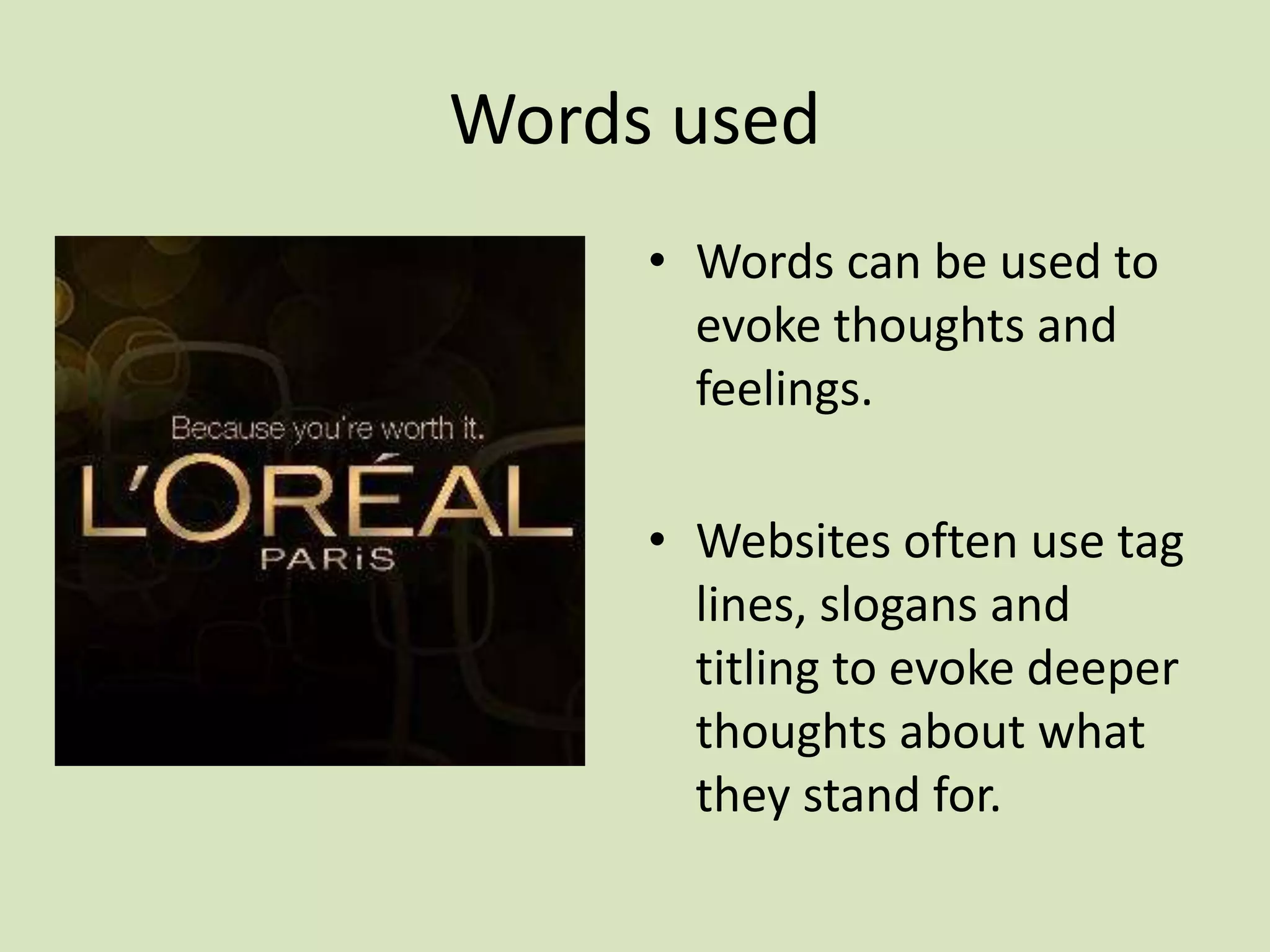
• Words can be used to
evoke thoughts and
feelings.
• Websites often use tag
lines, slogans and
titling to evoke deeper
thoughts about what
they stand for.
TASK: Use lesson 4 on Moodle and write for your assignment:
Interactive Media Design: What you
need to know.
Today’s Lesson:
• Discuss semiotics
• Give examples of how
it has been used in
interactive media.
• Discuss:
- Imagery
- Words
- Colours
- Icons

Lesson 4 interactive media (1)

  • 1.
  • 2.
    Find a websiteto use an example for our discussion today
  • 3.
    Learning Aims: • Allof you will be able to analyse interactive media design • Most of you will be able to use examples of the interactive media uses • Some of you
  • 4.
    What is semiotics? •How can it be used in interactive media?
  • 5.
    Can you rememberwhat the following terms mean? • Signified • Signifier
  • 6.
    Websites use semioticsin the following ways: • Colour • Icons • Imagery • Words used
  • 7.
    Icons • Icons aresymbolic graphics which help communicate to the user with simplicity. • Often used to help the user navigate better. • Often clear and simple. • Clearly and visually represents something so that the user can quickly see what they need to do rather than using lots of text.
  • 8.
    Icons and semiotics •Usually used to visually represent something so that the audience can clearly and quickly identify what the icon means without words.
  • 9.
    What the iconson your website example mean?
  • 10.
    Colour • Colours canindicate a deeper meaning • They can influence and reflect a mood • After time colour branding can be used to associate with a product. • Websites often reflect this colour branding.
  • 11.
    • Red activatesyour pituitary gland, increasing your heart ra te and causing you to breathe more rapidly. This • instinctive response makes red aggressive, energetic, provocative and attention grabbing. Count on red to evoke a passionate response, albeit not always a favorable one. For example, red can represent danger
  • 13.
    Cool blue isperceived as trustworthy, dependable, responsible and secure. Strongly associated with the sky and sea, blue is serene and universally well liked. Blue is an especially popular color with financial institutions, as its message of stability inspires trust.
  • 15.
    In general, greenconnotes health, freshness, en vironmental consciousness and serenity. However greens meaning varies with its many shades. Deeper greens are associated with wealth or prestige, while light greens are calming.
  • 17.
    In every society,yellow is associated with the sun. Thus, it communicates optimism, positivity, light and warmth. Certain shades seem to motivate and stimulate creative thought and energy, confidence and playfulness. The eye sees bright yellows before any other color, making them great for displays.
  • 19.
    Purple is acolor favored by creative types. With its blend of passionate red and tranquil blue, it evokes mystery, sophisticati on, spirituality and royalty.
  • 21.
    Pinks message variesby intensity. Hot pinks convey energy, youth fulness, fun and excitement. Dusty pinks appear sentimental. Lighter pinks are more romantic.
  • 23.
    • This earthycolor conveys simplicity, naturalness durability and stability. It can also elicit a negative response from consumer s who relate to it as dirty. Certain shades of brown, like terracotta can convey an upscale look.
  • 25.
    • White connotessimplicity, cleanliness and purity. The human eye views white as a dazzling colour, so it immediately catches the eye in signage. White is often used wit h infant and health-‐related products.
  • 27.
    Black is serious,bold, powerful and classic. It creates drama and connotes sophistication. Black works well for expensive products, but can also make a product look heavy
  • 29.
    • Cheerful orangeevokes exuberance, fun and vitality. With the drama of red plus the cheer of yellow, orange is viewed as sociable and often childlike. Research indicates its lighter shades appeal to an upscale market. Peach tones work well with health care, restaurants and beauty salons
  • 31.
    How and whyare colours used on your website example?
  • 32.
    Images • Images canbe used in many different ways to signify a deeper meaning. • Often images have hidden messages, or forms of symbolism within them that tell us something about the mood, what’s happening or a symbolic meaning.
  • 33.
    Words used • Wordscan be used to evoke thoughts and feelings. • Websites often use tag lines, slogans and titling to evoke deeper thoughts about what they stand for.
  • 34.
    TASK: Use lesson4 on Moodle and write for your assignment: Interactive Media Design: What you need to know. Today’s Lesson: • Discuss semiotics • Give examples of how it has been used in interactive media. • Discuss: - Imagery - Words - Colours - Icons