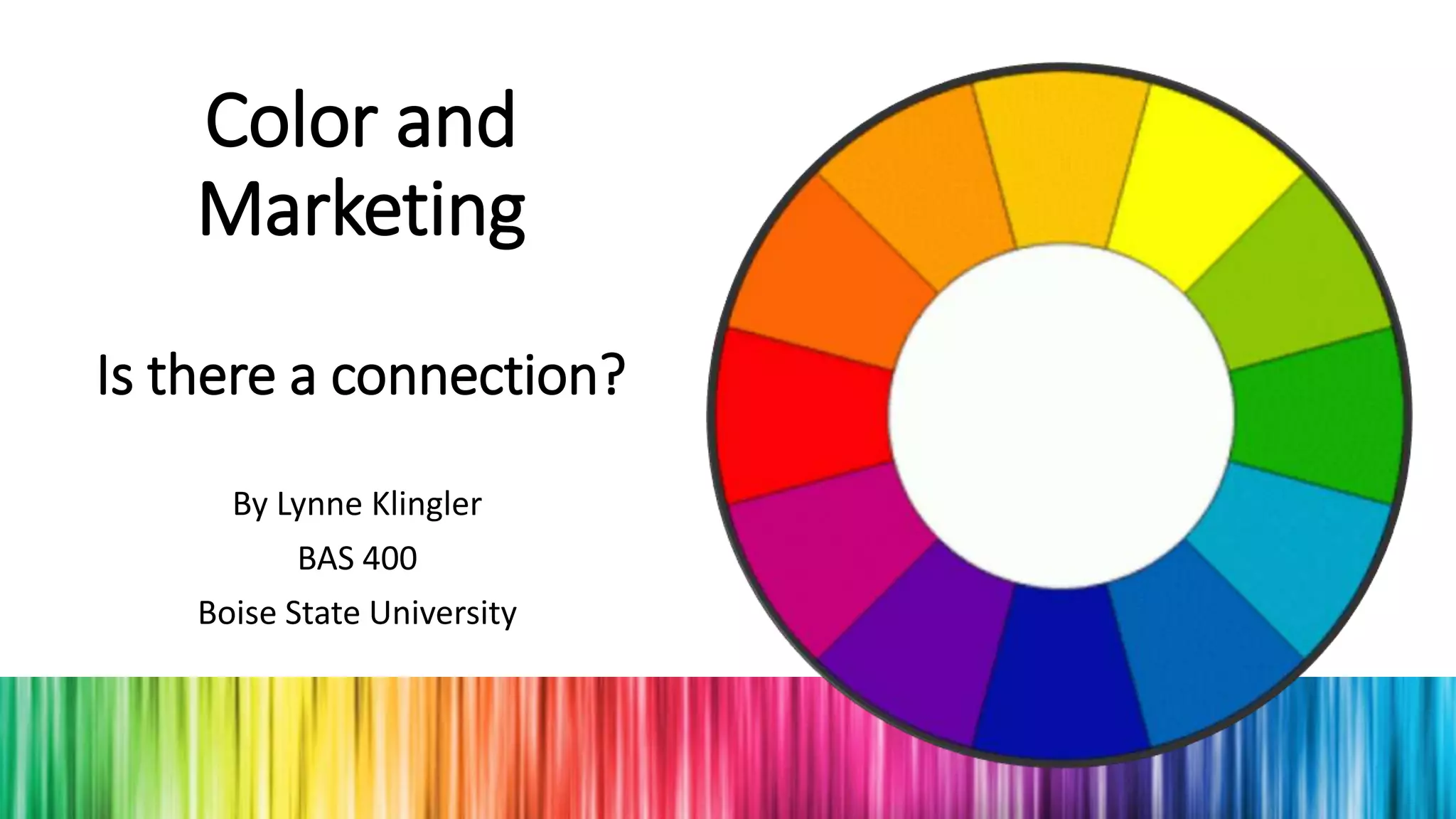
Color and
Marketing
Is there a connection?
By Lynne Klingler
BAS 400
Boise State University
Why this Topic?
• Small business
• Interested
• Marketable
• Why not?
Question:
Does color really matter to a business?
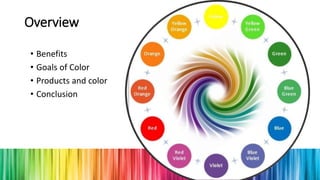
Overview
• Benefits
• Goals of Color
• Products and color
• Conclusion
• The human eye can see millions of
colors. The colors we see can affect our
interactions with the things around us.
• Colors can affect our emotions,
reactions, appetite and health as well as
how we perceive things and how we
spend our money.
Benefits
UX Designer at yugenelee.com
Psychologists have suggested that color impression can account
for 60% of the acceptance or rejection of a product or service.
As noted in a study by Lev-Wiesel (2000):
“Different colors evoke specific cognitive and emotional associations in the
individual (Exner, 1980). Cognitive responses involve remembering objects,
situations, and events associated with a particular color… People may be
drawn to a certain color, or feel aversion or ambivalence without
understanding why (p. 2).”
Lev-Wiesel, R. (2000). The self-revelation through color technique: understanding clients’
relations with significant others, silent language, and defense mechanisms through the
use of color. American Journal of Art Therapy, 39(2), 35.
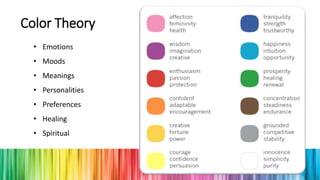
Color Theory
• Emotions
• Moods
• Meanings
• Personalities
• Preferences
• Healing
• Spiritual
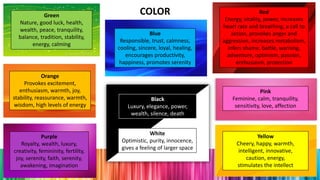
Red
Energy, vitality, power, increases
heart rate and breathing, a call to
action, provokes anger and
aggression, increases metabolism,
infers shame, battle, warning,
adventure, optimism, passion,
enthusiasm, protection
Blue
Responsible, trust, calmness,
cooling, sincere, loyal, healing,
encourages productivity,
happiness, promotes serenity
Yellow
Cheery, happy, warmth,
intelligent, innovative,
caution, energy,
stimulates the intellect
White
Optimistic, purity, innocence,
gives a feeling of larger space
Green
Nature, good luck, health,
wealth, peace, tranquility,
balance, tradition, stability,
energy, calming
Orange
Provokes excitement,
enthusiasm, warmth, joy,
stability, reassurance, warmth,
wisdom, high levels of energy
Purple
Royalty, wealth, luxury,
creativity, femininity, fertility,
joy, serenity, faith, serenity,
awakening, imagination
Pink
Feminine, calm, tranquility,
sensitivity, love, affection
Black
Luxury, elegance, power,
wealth, silence, death
COLOR
“Color is an influential ambassador of the brand and begins to unlock a message.”
- L. Grubow
Color and brand strategy can provide:
• Renewed interest
• Deeper, more personal connection with the customer
• Meaningful brand story
• Generates longer lasting customer loyalty
• Boost customer loyalty without a lot of additional effort
Grubow, L. (2009). Color talk--connecting with consumers
at shelf. Global Cosmetic Industry, 177(10), 16-18.
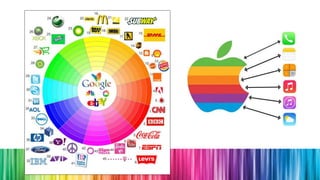
• The goal is to find colors that are in
harmony with the product or
message that the business is
promoting.
• The wrong use of color can hurt
business.
• The right use can boost sales.
Goals of Color
“Colors effect the subconscious interpretation
of the product or item.” Lev-Wiesel (2000)
Lev-Wiesel, R. (2000). The self-revelation through color technique: understanding clients’
relations with significant others, silent language, and defense mechanisms through the
use of color. American Journal of Art Therapy, 39(2), 35.
Article, Color and Emotion (2012)
• Color aids the brain to be able to organize and have clear direction.
• The brain interprets images in stages
• Shape
• Color
• “Color can give clear direction when language fails to translate.”
• It is important to choose colors that are in harmony with the product.
• To successfully bring harmony to the product, the color needs to
complement the brand and product.
Color and emotion. (2012). Design Matters, 32(5), 76.
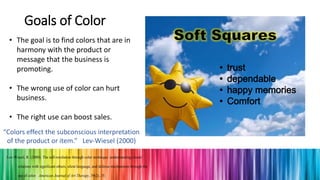
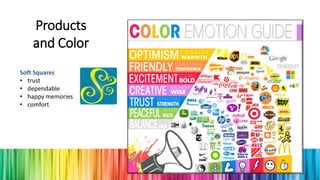
Soft Squares
• trust
• dependable
• happy memories
• comfort
Products
and Color
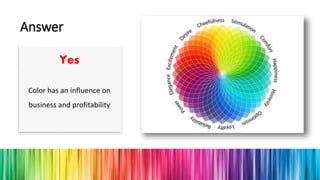
Answer
Yes
Color has an influence on
business and profitability
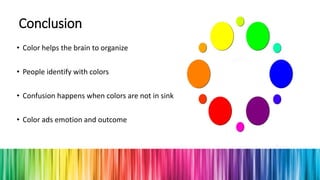
Conclusion
• Color helps the brain to organize
• People identify with colors
• Confusion happens when colors are not in sink
• Color ads emotion and outcome
References Color and clients. (2009). Design Matters, 14(7), 10.
Color and emotion. (2012). Design Matters, 32(5), 76.
Color theory program enhances work environments. (2003). Professional Safety, 48(11), 73.
Davies, J. (2006). Hue and cry. Design Week, 21(11), 10.
Grubow, L. (2009). Color talk--connecting with consumers at shelf. Global Cosmetic Industry,
177(10), 16-18.
Heath, R. (1997). The wonderful world of color. Marketing Tools, 4(9), 44.
Helping Psychology. (2010, May 10). (A. University, Producer) Retrieved March 1, 2015, from
You Tube: https://www.youtube.com/watch?v=oQTAzLhCNj8&feature=related
Lev-Wiesel, R. (2000). The self-revelation through color technique: understanding clients’
relations with significant others, silent language, and defense mechanisms through the
use of color. American Journal of Art Therapy, 39(2), 35.
Pandis, C. (2011). The somewhat mysterious and altogether ambiguous art of selecting the
"right color". Global Cosmetic Industry, 179(3), 54-55.
Scott-Kemmis, J. (2014) “Color Psychology to Empower and Inspire You” Empower Yourself
with Colors www.com. Retrieved February 16, 2015, from http://www.empower-
yourself-with-color-psychology.com/
Questions?

Klingler-PPT Presentation-Marketing and Color-FINAL

  • 1.
    Color and Marketing Is therea connection? By Lynne Klingler BAS 400 Boise State University
  • 2.
    Why this Topic? •Small business • Interested • Marketable • Why not?
  • 3.
    Question: Does color reallymatter to a business?
  • 4.
    Overview • Benefits • Goalsof Color • Products and color • Conclusion
  • 5.
    • The humaneye can see millions of colors. The colors we see can affect our interactions with the things around us. • Colors can affect our emotions, reactions, appetite and health as well as how we perceive things and how we spend our money. Benefits
  • 6.
    UX Designer atyugenelee.com Psychologists have suggested that color impression can account for 60% of the acceptance or rejection of a product or service.
  • 7.
    As noted ina study by Lev-Wiesel (2000): “Different colors evoke specific cognitive and emotional associations in the individual (Exner, 1980). Cognitive responses involve remembering objects, situations, and events associated with a particular color… People may be drawn to a certain color, or feel aversion or ambivalence without understanding why (p. 2).” Lev-Wiesel, R. (2000). The self-revelation through color technique: understanding clients’ relations with significant others, silent language, and defense mechanisms through the use of color. American Journal of Art Therapy, 39(2), 35.
  • 8.
    Color Theory • Emotions •Moods • Meanings • Personalities • Preferences • Healing • Spiritual
  • 9.
    Red Energy, vitality, power,increases heart rate and breathing, a call to action, provokes anger and aggression, increases metabolism, infers shame, battle, warning, adventure, optimism, passion, enthusiasm, protection Blue Responsible, trust, calmness, cooling, sincere, loyal, healing, encourages productivity, happiness, promotes serenity Yellow Cheery, happy, warmth, intelligent, innovative, caution, energy, stimulates the intellect White Optimistic, purity, innocence, gives a feeling of larger space Green Nature, good luck, health, wealth, peace, tranquility, balance, tradition, stability, energy, calming Orange Provokes excitement, enthusiasm, warmth, joy, stability, reassurance, warmth, wisdom, high levels of energy Purple Royalty, wealth, luxury, creativity, femininity, fertility, joy, serenity, faith, serenity, awakening, imagination Pink Feminine, calm, tranquility, sensitivity, love, affection Black Luxury, elegance, power, wealth, silence, death COLOR
  • 10.
    “Color is aninfluential ambassador of the brand and begins to unlock a message.” - L. Grubow Color and brand strategy can provide: • Renewed interest • Deeper, more personal connection with the customer • Meaningful brand story • Generates longer lasting customer loyalty • Boost customer loyalty without a lot of additional effort Grubow, L. (2009). Color talk--connecting with consumers at shelf. Global Cosmetic Industry, 177(10), 16-18.
  • 11.
    • The goalis to find colors that are in harmony with the product or message that the business is promoting. • The wrong use of color can hurt business. • The right use can boost sales. Goals of Color “Colors effect the subconscious interpretation of the product or item.” Lev-Wiesel (2000) Lev-Wiesel, R. (2000). The self-revelation through color technique: understanding clients’ relations with significant others, silent language, and defense mechanisms through the use of color. American Journal of Art Therapy, 39(2), 35.
  • 14.
    Article, Color andEmotion (2012) • Color aids the brain to be able to organize and have clear direction. • The brain interprets images in stages • Shape • Color • “Color can give clear direction when language fails to translate.” • It is important to choose colors that are in harmony with the product. • To successfully bring harmony to the product, the color needs to complement the brand and product. Color and emotion. (2012). Design Matters, 32(5), 76.
  • 16.
    Soft Squares • trust •dependable • happy memories • comfort Products and Color
  • 17.
    Answer Yes Color has aninfluence on business and profitability
  • 18.
    Conclusion • Color helpsthe brain to organize • People identify with colors • Confusion happens when colors are not in sink • Color ads emotion and outcome
  • 19.
    References Color andclients. (2009). Design Matters, 14(7), 10. Color and emotion. (2012). Design Matters, 32(5), 76. Color theory program enhances work environments. (2003). Professional Safety, 48(11), 73. Davies, J. (2006). Hue and cry. Design Week, 21(11), 10. Grubow, L. (2009). Color talk--connecting with consumers at shelf. Global Cosmetic Industry, 177(10), 16-18. Heath, R. (1997). The wonderful world of color. Marketing Tools, 4(9), 44. Helping Psychology. (2010, May 10). (A. University, Producer) Retrieved March 1, 2015, from You Tube: https://www.youtube.com/watch?v=oQTAzLhCNj8&feature=related Lev-Wiesel, R. (2000). The self-revelation through color technique: understanding clients’ relations with significant others, silent language, and defense mechanisms through the use of color. American Journal of Art Therapy, 39(2), 35. Pandis, C. (2011). The somewhat mysterious and altogether ambiguous art of selecting the "right color". Global Cosmetic Industry, 179(3), 54-55. Scott-Kemmis, J. (2014) “Color Psychology to Empower and Inspire You” Empower Yourself with Colors www.com. Retrieved February 16, 2015, from http://www.empower- yourself-with-color-psychology.com/
  • 20.

Editor's Notes

  • #13 When selecting a logo, product or packaging color, the overuse of color is cognitively challenging. Only one color should be the main focus and a secondary color should complement the first color. It two colors clash or have equal real estate on the logo it may be difficult for the customer to look at. On a subconscious level the brain cannot comprehend a lot of color in a small space and it is uncomfortable to look at. The over use of color would drive away business and take away from the profitability goals of the company. However, the absence of color all together does not get your attention and has the same effect as too much color; leaving you with black and white, which technically are still colors. Too much or too little color will take away from the product or goal.
  • #14 When selecting a logo, product or packaging color, the overuse of color is cognitively challenging. Only one color should be the main focus and a secondary color should complement the first color. It two colors clash or have equal real estate on the logo it may be difficult for the customer to look at. On a subconscious level the brain cannot comprehend a lot of color in a small space and it is uncomfortable to look at. The over use of color would drive away business and take away from the profitability goals of the company. However, the absence of color all together does not get your attention and has the same effect as too much color; leaving you with black and white, which technically are still colors. Too much or too little color will take away from the product or goal.
  • #15 When selecting a logo, product or packaging color, the overuse of color is cognitively challenging. Only one color should be the main focus and a secondary color should complement the first color. It two colors clash or have equal real estate on the logo it may be difficult for the customer to look at. On a subconscious level the brain cannot comprehend a lot of color in a small space and it is uncomfortable to look at. The over use of color would drive away business and take away from the profitability goals of the company. However, the absence of color all together does not get your attention and has the same effect as too much color; leaving you with black and white, which technically are still colors. Too much or too little color will take away from the product or goal.
  • #16 When selecting a logo, product or packaging color, the overuse of color is cognitively challenging. Only one color should be the main focus and a secondary color should complement the first color. It two colors clash or have equal real estate on the logo it may be difficult for the customer to look at. On a subconscious level the brain cannot comprehend a lot of color in a small space and it is uncomfortable to look at. The over use of color would drive away business and take away from the profitability goals of the company. However, the absence of color all together does not get your attention and has the same effect as too much color; leaving you with black and white, which technically are still colors. Too much or too little color will take away from the product or goal.