Lesson 3 Day 2
Question of the Day? 
 What surprised you about school? 
 What surprised me most about school 
was ________. 
T218
Today’s Read Aloud: First Day 
of School 
What is the purpose for listening or 
reading a poem? 
-For fun, or to understand someone else’s 
feelings.
Today’s Read Aloud: First Day 
of School 
When I left home that morning 
I thought the day would never end. 
I didn’t know that later on 
I’d Meet a new best friend. 
You came up and told me, “Hi there! 
Who are you? What’s your name?” 
And from that moment on 
Things just weren’t the same. 
You were a litter older- 
I was seven, and you were eight. 
I had been scared to go to school 
But you made it just great. 
So now I’m Saying thanks 
For what you did long ago. 
You’re still my closest friend, 
The best I’ll ever know.
Today’s Read Aloud: First Day 
of School 
 What happened to the writer on the 
first day of school? 
 How does the writer feel about the 
other person in the poem. 
 What pairs of rhyming words can you 
find in the poem? 
T219
Long Vowel Digraphs 
Words with ee and ea 
peg lean deep 
The e in peg stands alone between two consonants and 
that it is a short vowel. Lean and Deep have the 
vowel pairs ea and ee, which usually stand for /e/. I 
want you to repeat these words after me. Remember 
when a pair of vowels sits between two consonants, 
the first vowel usually has the long vowel sound.
Long Vowel Digraphs 
peg lean deep 
speed bed team 
set teeth seal 
tell leaf green 
three dream then 
mean tent sweet
Long Vowel Digraphs 
I want you to write these sentences in your notebook. I 
want you to circle the words with the long /e/ sound 
and underline words with the short /e/ sound. 
I had a dream about three men in a tree. 
Do you feel clean when you get out the bathtub? 
A hen does not drink tea, but it will eat a seed now and 
then.
Long Vowel Digraphs 
I had a dream about three men in a tree. 
Do you feel clean when you get out the 
bathtub? 
A hen does not drink tea, but it will eat a 
seed now and then.
Vocabulary 
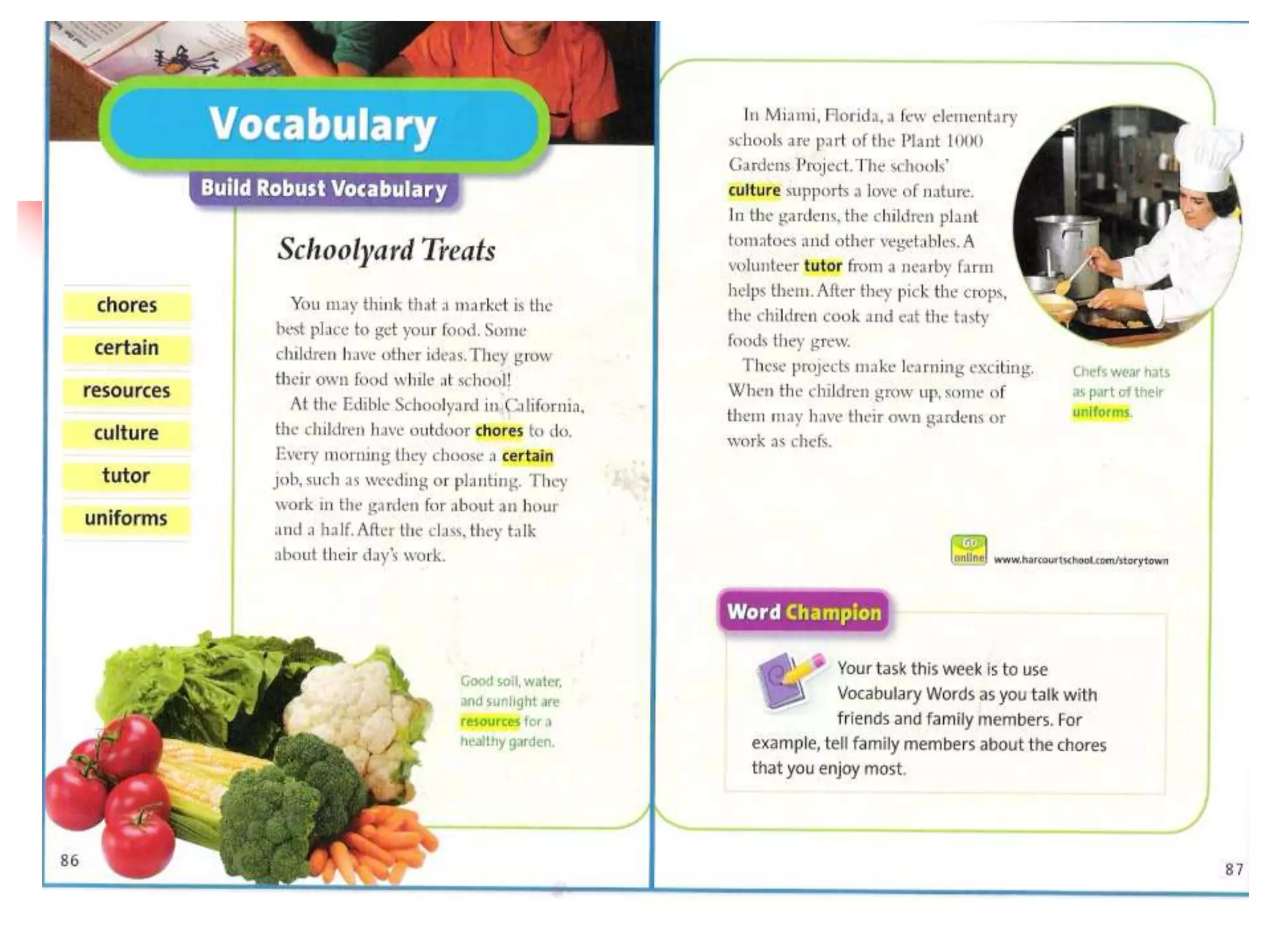
 Turn to page 86 and 87! 
Look for these words in “Schoolyard 
Treats” and how they are used within 
each sentence. 
chores, certain, resources, culture, 
tutor, and uniforms
Vocabulary 
“Schoolyard Treats” 
You may think that a market is the best place to get 
your food. Some children have other ideas. The 
grown their own food while at school! 
At the Edible Schoolyard in California, the children 
have outdoor chores to do. Every morning they 
choose a certain job, such as weeding or planting. 
They work in the garden for about an hour and a 
half. After the class, they talk about their day’s work.
Vocabulary 
“Schoolyard Treats” 
In Miami, Florida, a few elementary schools are part of the 
Plant 1000 Gardens Project. The schools’ culture supports a love 
of nature. Ion the gardens, the children plant tomatoes and 
other vegetables. A volunteer tutor from a nearby farm helps 
them. After they pick the crops, the children cook and eat the 
tasty foods they grew. 
These projects make learning exciting. When the children grow 
up, some of them may have their own gardens or work as 
chefs. 
T223
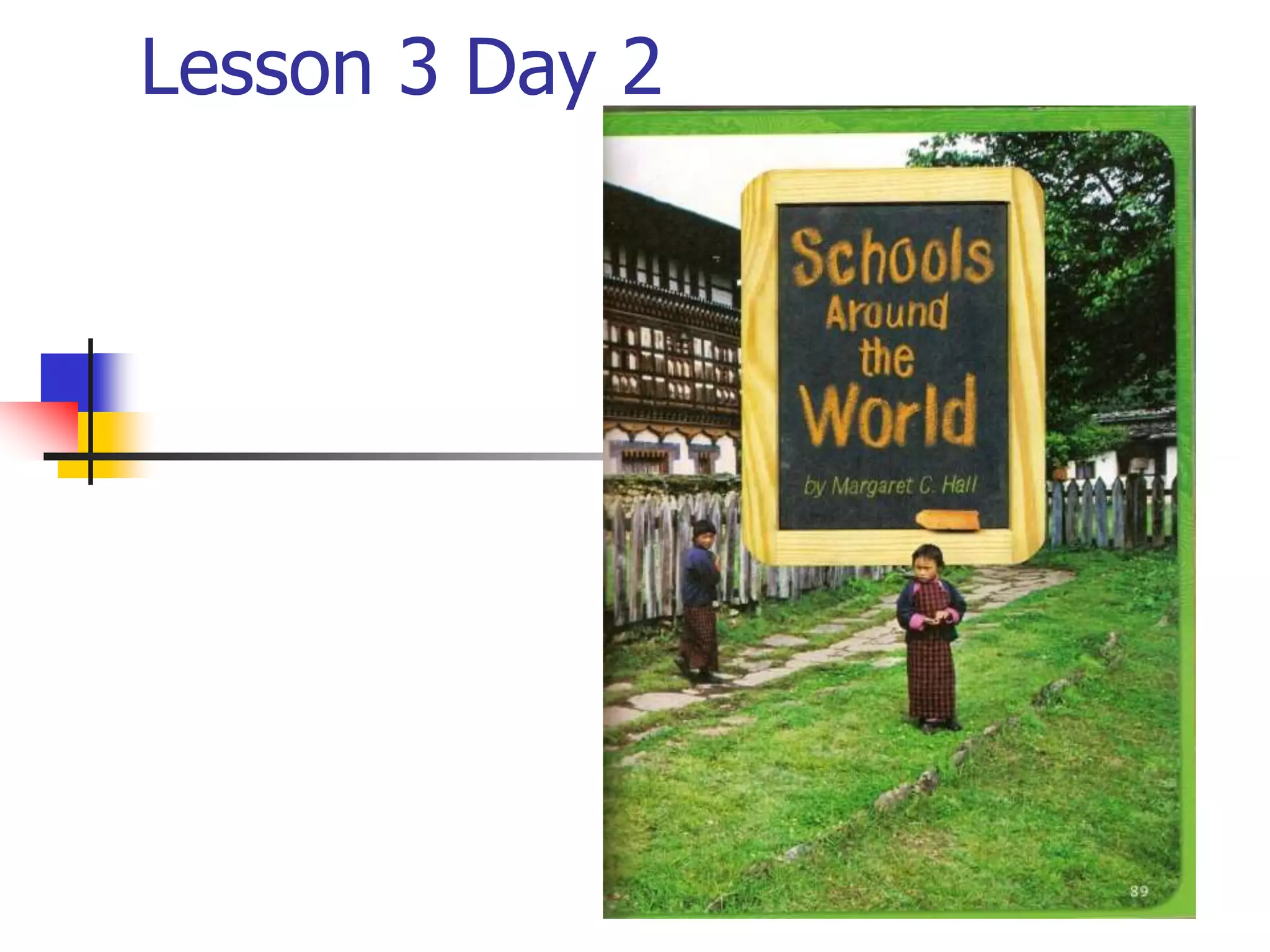
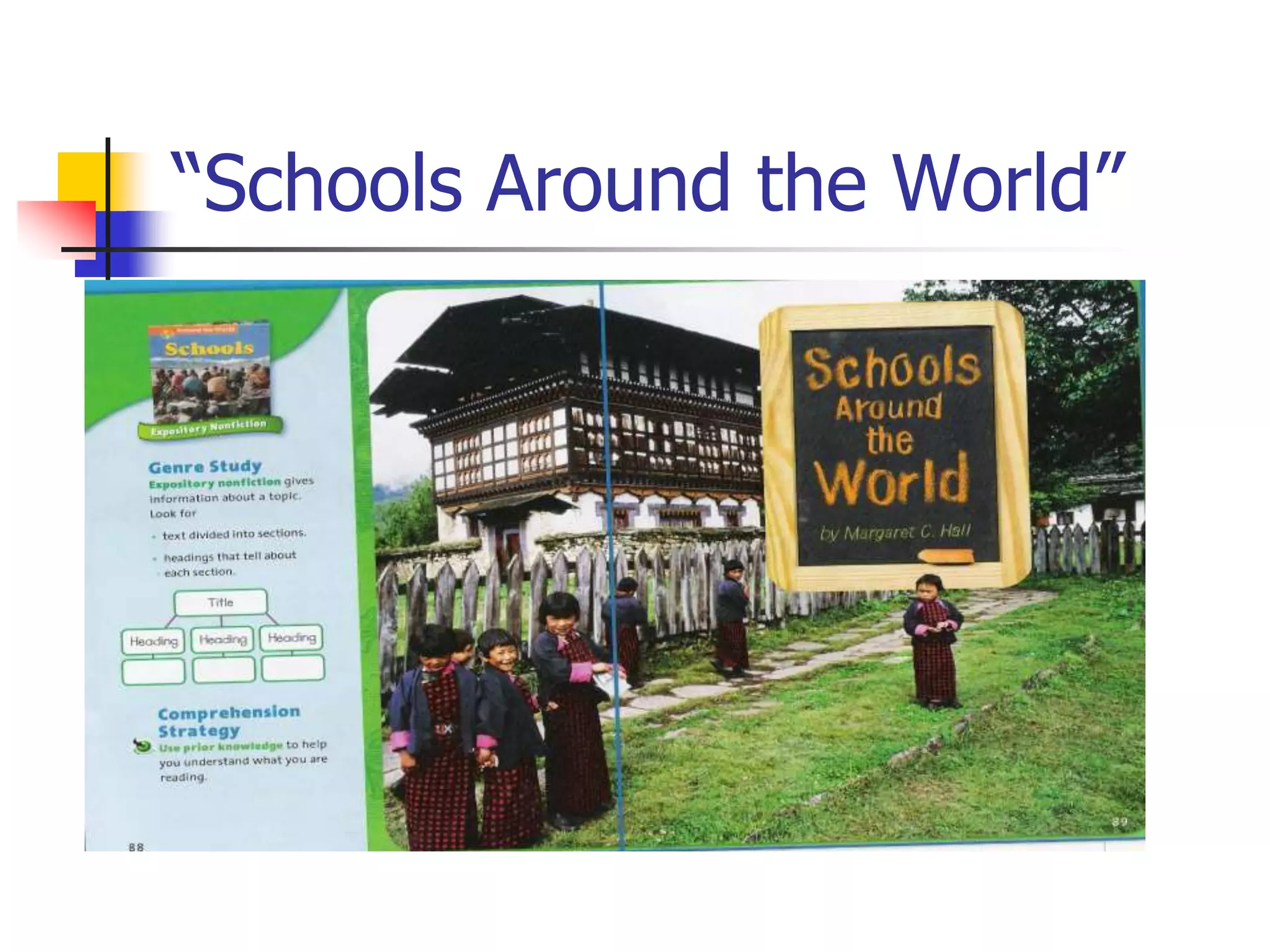
“Schools Around the World”
“Schools Around the World” 
 Genre: Expository Nonfiction 
Turn to page 90-91! Let’s read! 
What clues does the writer give to tell that you 
will be reading about some of the differences 
between schools around the world? 
How are all schools the same?
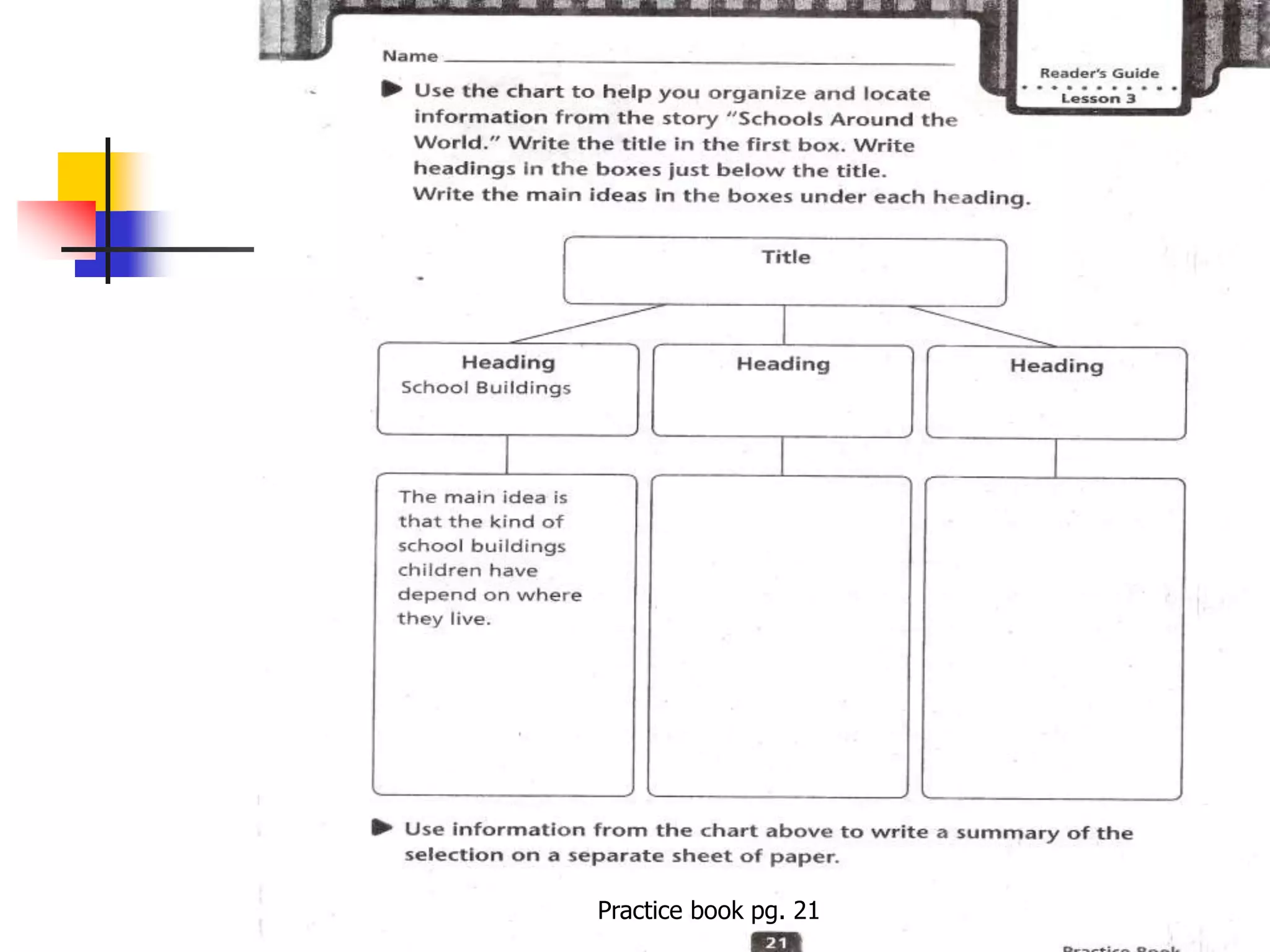
Practice book pg. 21
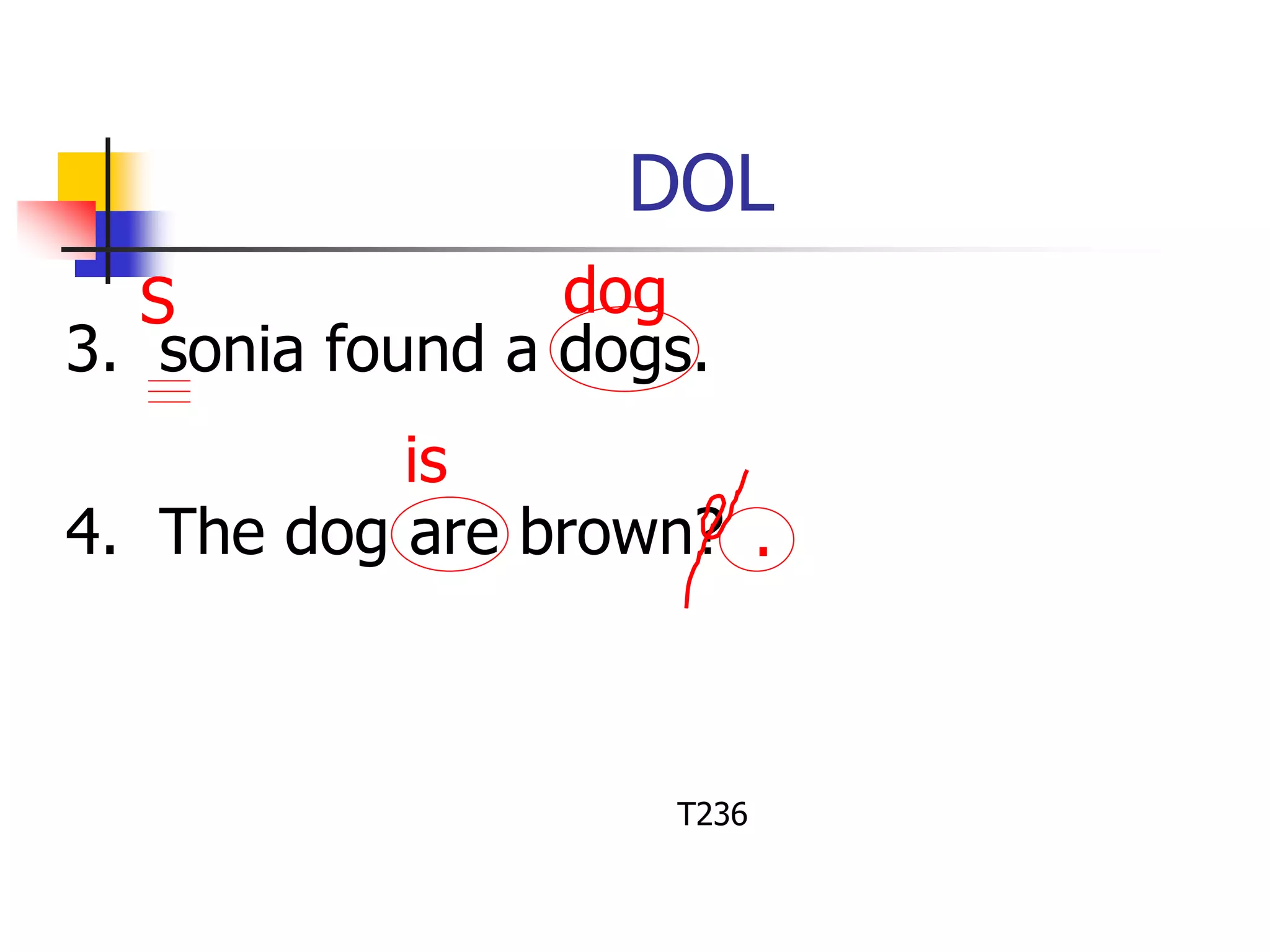
DOL 
3. sonia found a dogs. 
4. The dog are brown? 
T236 
S dog 
is 
.
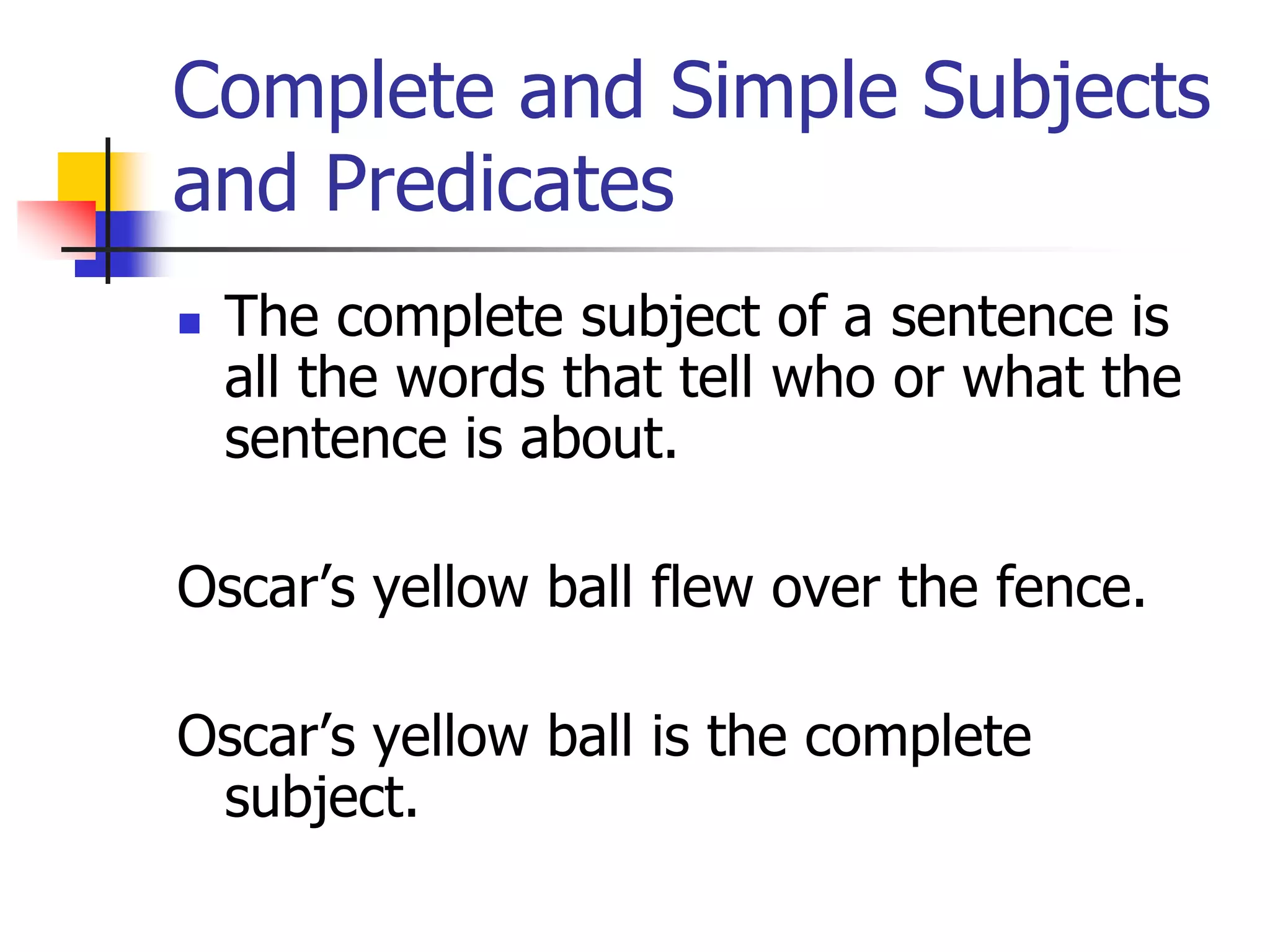
Complete and Simple Subjects 
and Predicates 
 The complete subject of a sentence is 
all the words that tell who or what the 
sentence is about. 
Oscar’s yellow ball flew over the fence. 
Oscar’s yellow ball is the complete 
subject.
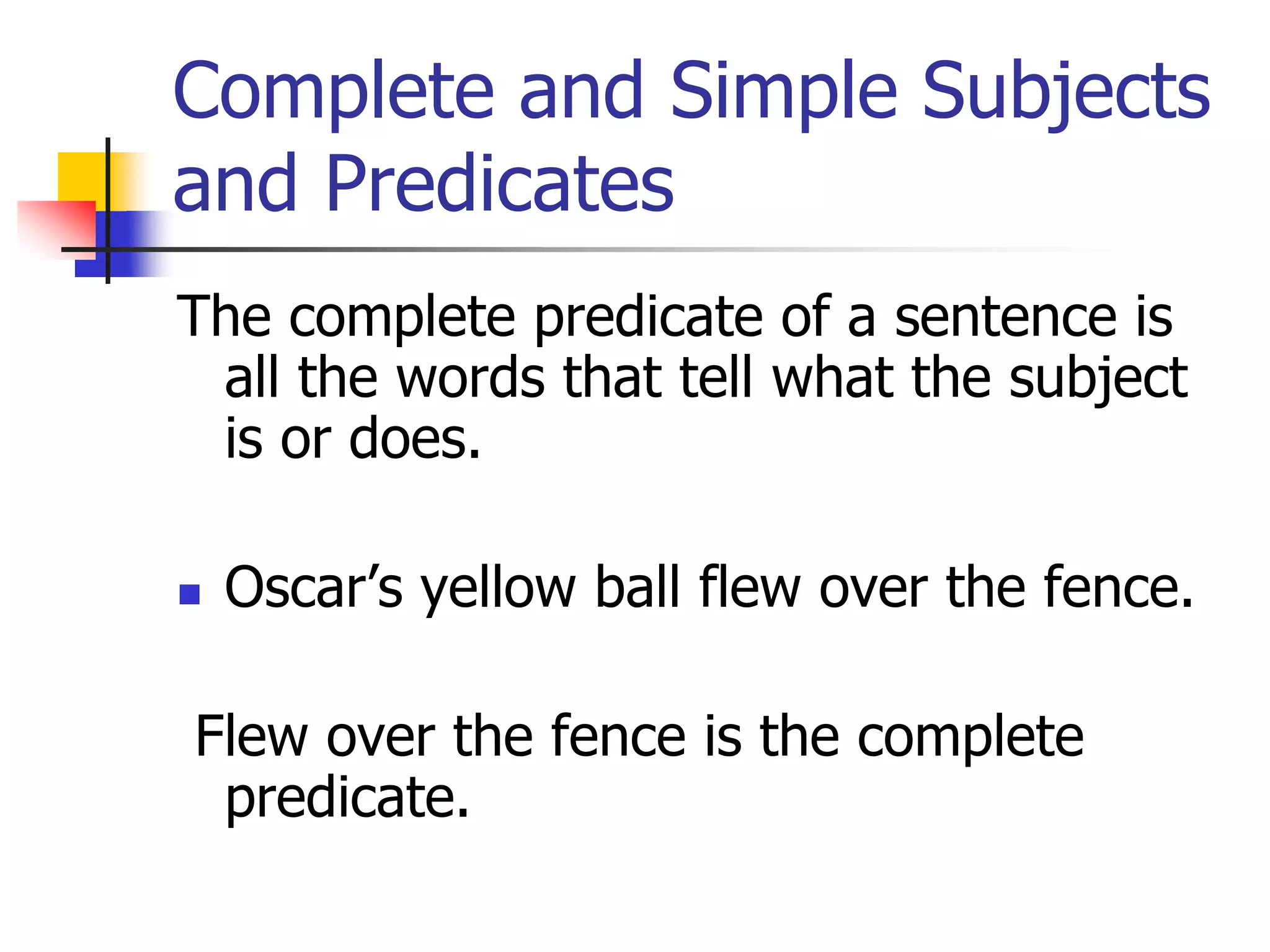
Complete and Simple Subjects 
and Predicates 
The complete predicate of a sentence is 
all the words that tell what the subject 
is or does. 
 Oscar’s yellow ball flew over the fence. 
Flew over the fence is the complete 
predicate.
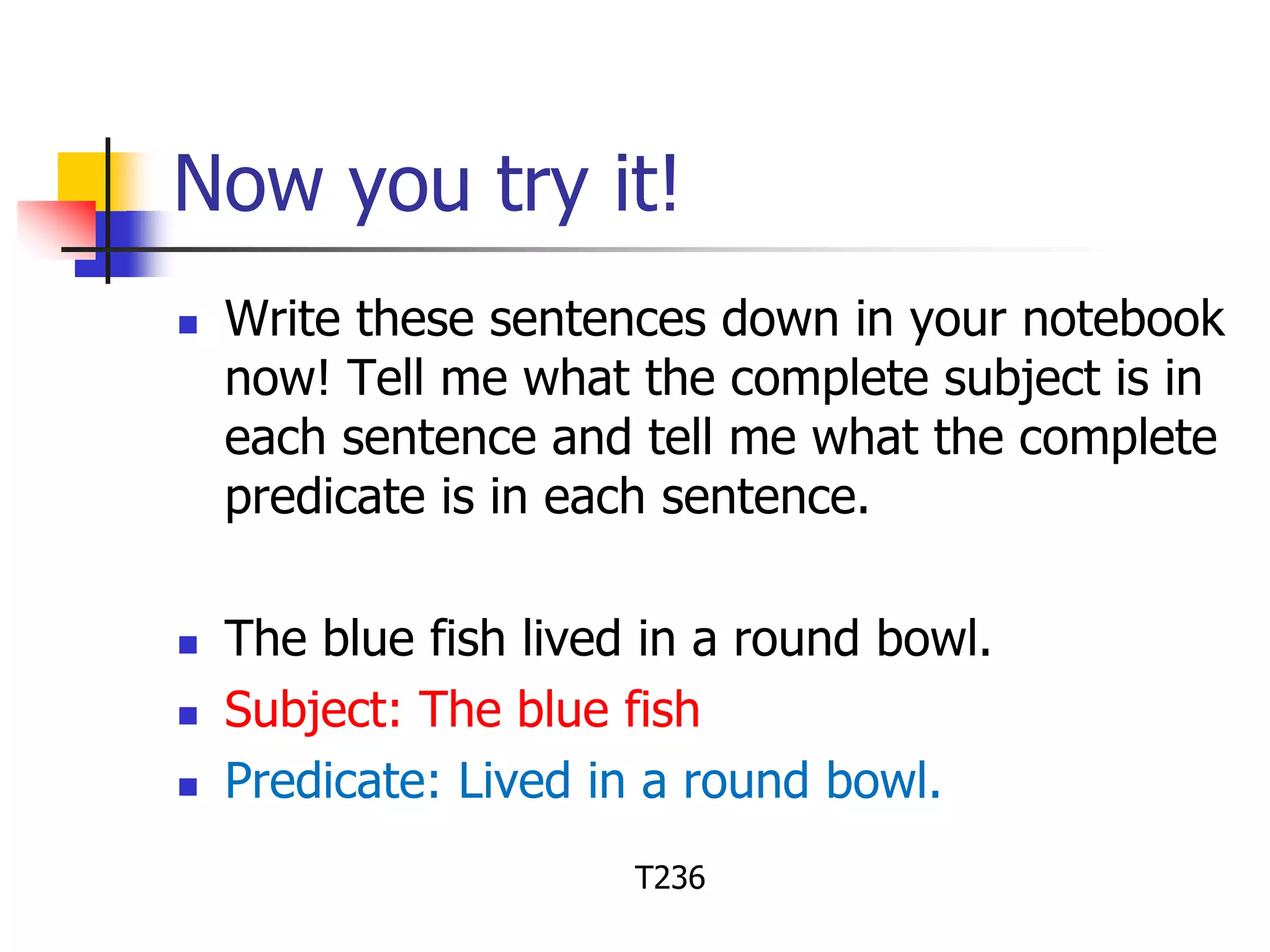
Now you try it! 
 Write these sentences down in your notebook 
now! Tell me what the complete subject is in 
each sentence and tell me what the complete 
predicate is in each sentence. 
 The blue fish lived in a round bowl. 
 Subject: The blue fish 
 Predicate: Lived in a round bowl. 
T236
Now you try it! 
 Write these sentences down in your notebook 
now! Tell me what the complete subject is in 
each sentence and tell me what the complete 
predicate is in each sentence. 
 My sister Wendy went to the movies. 
 Subject: My sister Wendy 
 Predicate: Went to the movies 
T236
Writing: 
Informative Paragraph 
 Gives facts about real things 
 Has a topic sentence 
 Discusses a topic that can be covered in 
one paragraph
Writing: 
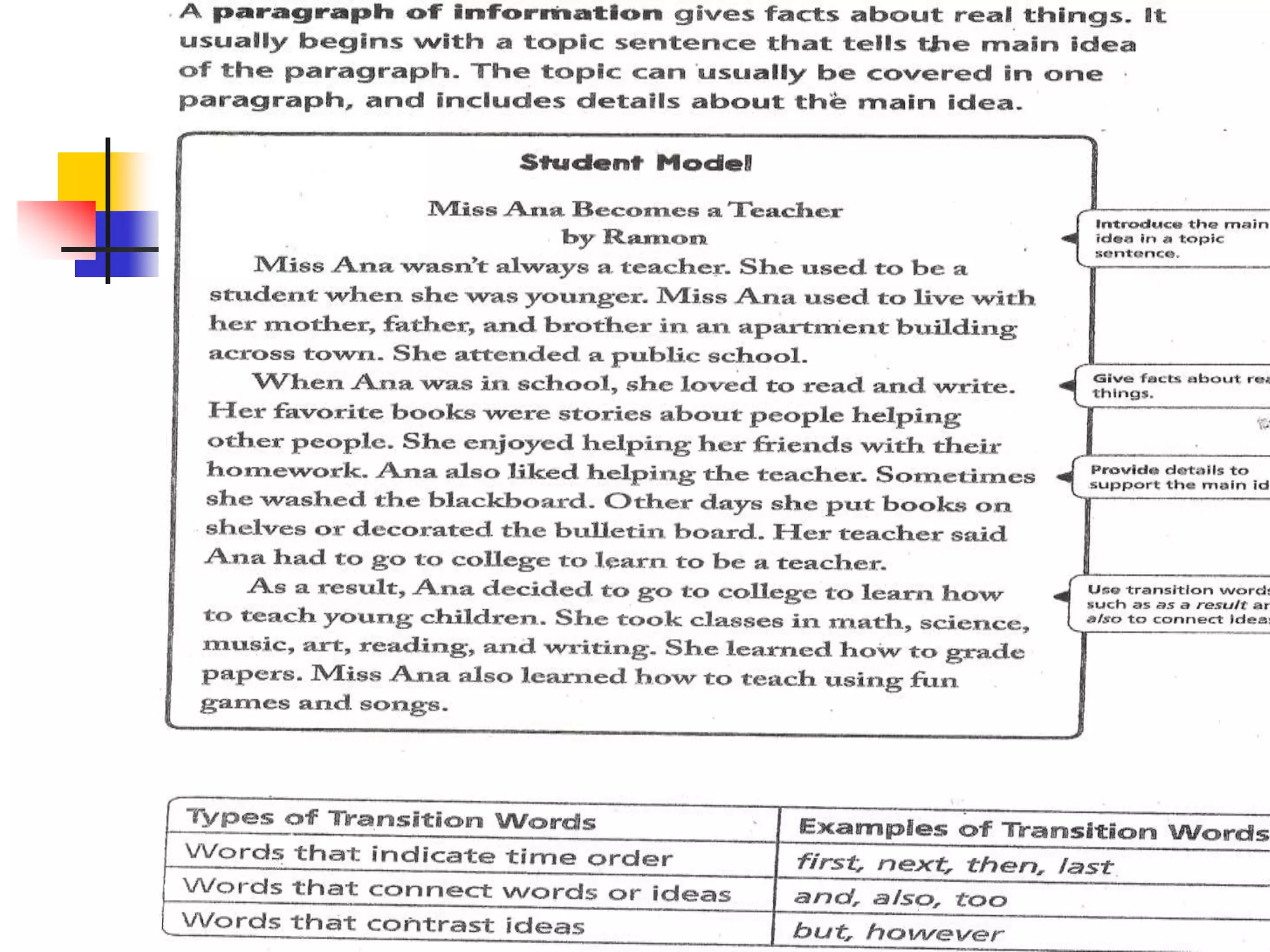
A paragraph of information 
 You need… 
 A topic sentence- this tells what the 
paragraph is going to be about. 
 Use details to explain. 
 Use transition words. 
 End the paragraph with a sentence that 
sums up the story.
Lesson 3 day 2

Lesson 3 day 2

  • 1.
  • 2.
    Question of theDay?  What surprised you about school?  What surprised me most about school was ________. T218
  • 3.
    Today’s Read Aloud:First Day of School What is the purpose for listening or reading a poem? -For fun, or to understand someone else’s feelings.
  • 4.
    Today’s Read Aloud:First Day of School When I left home that morning I thought the day would never end. I didn’t know that later on I’d Meet a new best friend. You came up and told me, “Hi there! Who are you? What’s your name?” And from that moment on Things just weren’t the same. You were a litter older- I was seven, and you were eight. I had been scared to go to school But you made it just great. So now I’m Saying thanks For what you did long ago. You’re still my closest friend, The best I’ll ever know.
  • 5.
    Today’s Read Aloud:First Day of School  What happened to the writer on the first day of school?  How does the writer feel about the other person in the poem.  What pairs of rhyming words can you find in the poem? T219
  • 6.
    Long Vowel Digraphs Words with ee and ea peg lean deep The e in peg stands alone between two consonants and that it is a short vowel. Lean and Deep have the vowel pairs ea and ee, which usually stand for /e/. I want you to repeat these words after me. Remember when a pair of vowels sits between two consonants, the first vowel usually has the long vowel sound.
  • 7.
    Long Vowel Digraphs peg lean deep speed bed team set teeth seal tell leaf green three dream then mean tent sweet
  • 8.
    Long Vowel Digraphs I want you to write these sentences in your notebook. I want you to circle the words with the long /e/ sound and underline words with the short /e/ sound. I had a dream about three men in a tree. Do you feel clean when you get out the bathtub? A hen does not drink tea, but it will eat a seed now and then.
  • 9.
    Long Vowel Digraphs I had a dream about three men in a tree. Do you feel clean when you get out the bathtub? A hen does not drink tea, but it will eat a seed now and then.
  • 10.
    Vocabulary  Turnto page 86 and 87! Look for these words in “Schoolyard Treats” and how they are used within each sentence. chores, certain, resources, culture, tutor, and uniforms
  • 12.
    Vocabulary “Schoolyard Treats” You may think that a market is the best place to get your food. Some children have other ideas. The grown their own food while at school! At the Edible Schoolyard in California, the children have outdoor chores to do. Every morning they choose a certain job, such as weeding or planting. They work in the garden for about an hour and a half. After the class, they talk about their day’s work.
  • 13.
    Vocabulary “Schoolyard Treats” In Miami, Florida, a few elementary schools are part of the Plant 1000 Gardens Project. The schools’ culture supports a love of nature. Ion the gardens, the children plant tomatoes and other vegetables. A volunteer tutor from a nearby farm helps them. After they pick the crops, the children cook and eat the tasty foods they grew. These projects make learning exciting. When the children grow up, some of them may have their own gardens or work as chefs. T223
  • 14.
  • 15.
    “Schools Around theWorld”  Genre: Expository Nonfiction Turn to page 90-91! Let’s read! What clues does the writer give to tell that you will be reading about some of the differences between schools around the world? How are all schools the same?
  • 16.
  • 17.
    DOL 3. soniafound a dogs. 4. The dog are brown? T236 S dog is .
  • 18.
    Complete and SimpleSubjects and Predicates  The complete subject of a sentence is all the words that tell who or what the sentence is about. Oscar’s yellow ball flew over the fence. Oscar’s yellow ball is the complete subject.
  • 19.
    Complete and SimpleSubjects and Predicates The complete predicate of a sentence is all the words that tell what the subject is or does.  Oscar’s yellow ball flew over the fence. Flew over the fence is the complete predicate.
  • 20.
    Now you tryit!  Write these sentences down in your notebook now! Tell me what the complete subject is in each sentence and tell me what the complete predicate is in each sentence.  The blue fish lived in a round bowl.  Subject: The blue fish  Predicate: Lived in a round bowl. T236
  • 21.
    Now you tryit!  Write these sentences down in your notebook now! Tell me what the complete subject is in each sentence and tell me what the complete predicate is in each sentence.  My sister Wendy went to the movies.  Subject: My sister Wendy  Predicate: Went to the movies T236
  • 22.
    Writing: Informative Paragraph  Gives facts about real things  Has a topic sentence  Discusses a topic that can be covered in one paragraph
  • 23.
    Writing: A paragraphof information  You need…  A topic sentence- this tells what the paragraph is going to be about.  Use details to explain.  Use transition words.  End the paragraph with a sentence that sums up the story.