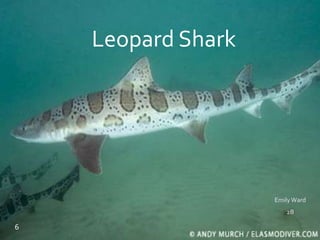
Leopard Shark
EmilyWard
2B
6
Description
• AverageWeight: 40lbs
• Length: 4-6 feet
• The shark is covered with dark
saddles and splotches. The
dorsal coloration varies from
silver to a bronzed gray.The
ventral coloration is lighter
and sometimes white. The
shark is referred to as
“pavement- toothed.” There
is a large flattened and rigged
surface on both jaws.
1, 2
Habitat
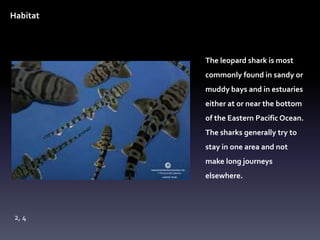
The leopard shark is most
commonly found in sandy or
muddy bays and in estuaries
either at or near the bottom
of the Eastern Pacific Ocean.
The sharks generally try to
stay in one area and not
make long journeys
elsewhere.
2, 4
Endangered Status
• The leopard shark is
considered to be at “lower
risk” of being endangered by
theWorld Conservation Union
(IUCN). The sharks have a
slow growth rate and
reproduction rate making the
numbers of the sharks drop.
The sharks are also
threatened by over- fishing.
2, 3
Diet
Zoo
• Leopard sharks eat
invertebrates, including:
shrimp, crabs, clams, and
octopi.
Wild
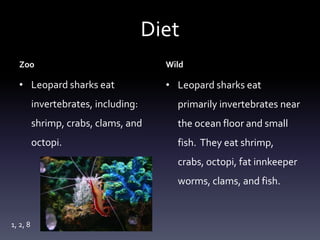
• Leopard sharks eat
primarily invertebrates near
the ocean floor and small
fish. They eat shrimp,
crabs, octopi, fat innkeeper
worms, clams, and fish.
1, 2, 8
Reproductive History
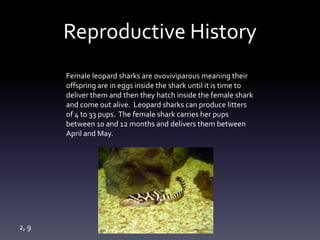
Female leopard sharks are ovoviviparous meaning their
offspring are in eggs inside the shark until it is time to
deliver them and then they hatch inside the female shark
and come out alive. Leopard sharks can produce litters
of 4 to 33 pups. The female shark carries her pups
between 10 and 12 months and delivers them between
April and May.
2, 9
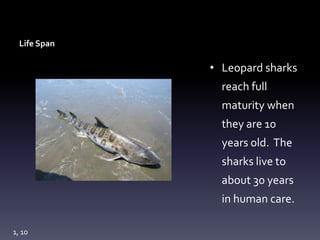
Life Span
• Leopard sharks
reach full
maturity when
they are 10
years old. The
sharks live to
about 30 years
in human care.
1, 10
Fun Facts
• Unlike most sharks, the leopard shark travels in
schools.
• Leopard sharks do not pose a threat to humans due
to their skittish and cautious nature. There has only
been one reported attack which was in 1955.
• The leopard shark has the ability to absorb oxygen
allowing it to swim in murky and muddy waters.
7
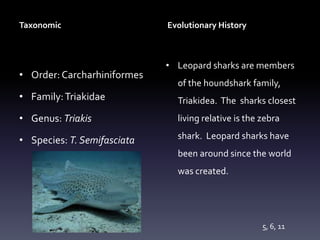
Taxonomic
• Order: Carcharhiniformes
• Family:Triakidae
• Genus: Triakis
• Species: T. Semifasciata
Evolutionary History
• Leopard sharks are members
of the houndshark family,
Triakidea. The sharks closest
living relative is the zebra
shark. Leopard sharks have
been around since the world
was created.
5, 6, 11
Works Cited
1. "Animals." Minnesota Zoo. N.p., n.d. Web. 02 Apr. 2014.
2. "FLMNH Ichthyology Department: Leopard Shark." FLMNH Ichthyology
3. Department: Leopard Shark. N.p., n.d. Web. 19 Apr. 2014.
4. "Leopard." Best Animal Facts. N.p., n.d. Web.
5. "Leopard Shark." Wikipedia. Wikimedia Foundation, 04 Feb. 2014. Web. 02 Apr. 2014.
6. "Leopard Sharks, Triakis Semifasciata." MarineBio.org. N.p., n.d. Web. 02 Apr. 2014.
7. "Leopard Shark Facts." Bite by a Shark. N.p., n.d. Web. 16 Apr. 2014.
8. "Made in the Ocean: Shrimps." Deep Blue Home. N.p., 6 July 2012. Web. 19 Apr. 2014.
9. "Management & Conservation." Management & Conservation. N.p., n.d. Web. 19 Apr. 2014.
10. "The Marine Mammal Center." The Marine Mammal Center. N.p., n.d. Web. 19 Apr. 2014.
11. "Zebra Shark." Wikipedia. Wikimedia Foundation, 18 Apr. 2014. Web. 19 Apr. 2014.

Leopard Shark

  • 1.
  • 2.
    Description • AverageWeight: 40lbs •Length: 4-6 feet • The shark is covered with dark saddles and splotches. The dorsal coloration varies from silver to a bronzed gray.The ventral coloration is lighter and sometimes white. The shark is referred to as “pavement- toothed.” There is a large flattened and rigged surface on both jaws. 1, 2
  • 3.
    Habitat The leopard sharkis most commonly found in sandy or muddy bays and in estuaries either at or near the bottom of the Eastern Pacific Ocean. The sharks generally try to stay in one area and not make long journeys elsewhere. 2, 4
  • 4.
    Endangered Status • Theleopard shark is considered to be at “lower risk” of being endangered by theWorld Conservation Union (IUCN). The sharks have a slow growth rate and reproduction rate making the numbers of the sharks drop. The sharks are also threatened by over- fishing. 2, 3
  • 5.
    Diet Zoo • Leopard sharkseat invertebrates, including: shrimp, crabs, clams, and octopi. Wild • Leopard sharks eat primarily invertebrates near the ocean floor and small fish. They eat shrimp, crabs, octopi, fat innkeeper worms, clams, and fish. 1, 2, 8
  • 6.
    Reproductive History Female leopardsharks are ovoviviparous meaning their offspring are in eggs inside the shark until it is time to deliver them and then they hatch inside the female shark and come out alive. Leopard sharks can produce litters of 4 to 33 pups. The female shark carries her pups between 10 and 12 months and delivers them between April and May. 2, 9
  • 7.
    Life Span • Leopardsharks reach full maturity when they are 10 years old. The sharks live to about 30 years in human care. 1, 10
  • 8.
    Fun Facts • Unlikemost sharks, the leopard shark travels in schools. • Leopard sharks do not pose a threat to humans due to their skittish and cautious nature. There has only been one reported attack which was in 1955. • The leopard shark has the ability to absorb oxygen allowing it to swim in murky and muddy waters. 7
  • 9.
    Taxonomic • Order: Carcharhiniformes •Family:Triakidae • Genus: Triakis • Species: T. Semifasciata Evolutionary History • Leopard sharks are members of the houndshark family, Triakidea. The sharks closest living relative is the zebra shark. Leopard sharks have been around since the world was created. 5, 6, 11
  • 10.
    Works Cited 1. "Animals."Minnesota Zoo. N.p., n.d. Web. 02 Apr. 2014. 2. "FLMNH Ichthyology Department: Leopard Shark." FLMNH Ichthyology 3. Department: Leopard Shark. N.p., n.d. Web. 19 Apr. 2014. 4. "Leopard." Best Animal Facts. N.p., n.d. Web. 5. "Leopard Shark." Wikipedia. Wikimedia Foundation, 04 Feb. 2014. Web. 02 Apr. 2014. 6. "Leopard Sharks, Triakis Semifasciata." MarineBio.org. N.p., n.d. Web. 02 Apr. 2014. 7. "Leopard Shark Facts." Bite by a Shark. N.p., n.d. Web. 16 Apr. 2014. 8. "Made in the Ocean: Shrimps." Deep Blue Home. N.p., 6 July 2012. Web. 19 Apr. 2014. 9. "Management & Conservation." Management & Conservation. N.p., n.d. Web. 19 Apr. 2014. 10. "The Marine Mammal Center." The Marine Mammal Center. N.p., n.d. Web. 19 Apr. 2014. 11. "Zebra Shark." Wikipedia. Wikimedia Foundation, 18 Apr. 2014. Web. 19 Apr. 2014.