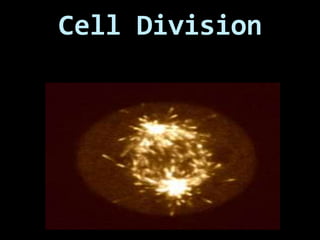
Cell Division
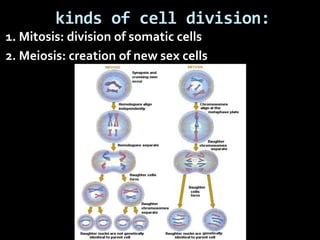
kinds of cell division:
1. Mitosis: division of somatic cells
2. Meiosis: creation of new sex cells
 Somatic cell – a body cell; a cell whose genes will
not be passed on to future generations.
 Germ cell - a cell that is destined to become a
gamete (egg or sperm), a cell whose genes can
be passed on to future generations.
 diploid (2N) – a cell with 2 chromosome sets in
each of its cells; all body (somatic) cells
 haploid (N) – a cell with 1 chromosome set in
each of its cells; all gametes (sperm, eggs)
What is mitosis?
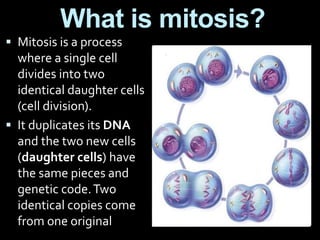
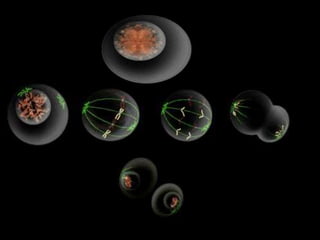
 Mitosis is a process
where a single cell
divides into two
identical daughter cells
(cell division).
 It duplicates its DNA
and the two new cells
(daughter cells) have
the same pieces and
genetic code.Two
identical copies come
from one original
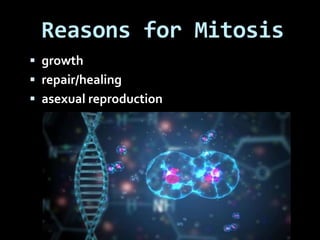
Reasons for Mitosis
 growth
 repair/healing
 asexual reproduction
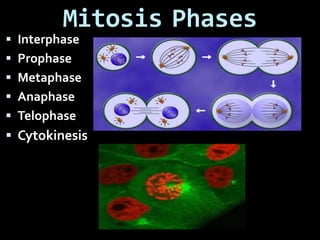
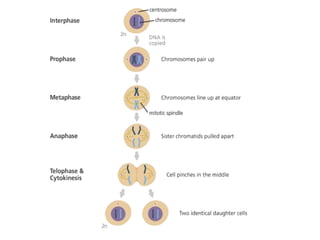
Mitosis Phases
 Interphase
 Prophase
 Metaphase
 Anaphase
 Telophase
 Cytokinesis
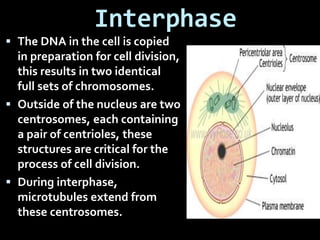
Interphase
 The DNA in the cell is copied
in preparation for cell division,
this results in two identical
full sets of chromosomes.
 Outside of the nucleus are two
centrosomes, each containing
a pair of centrioles, these
structures are critical for the
process of cell division.
 During interphase,
microtubules extend from
these centrosomes.
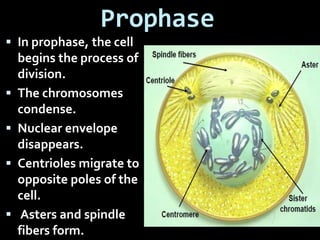
Prophase
 In prophase, the cell
begins the process of
division.
 The chromosomes
condense.
 Nuclear envelope
disappears.
 Centrioles migrate to
opposite poles of the
cell.
 Asters and spindle
fibers form.
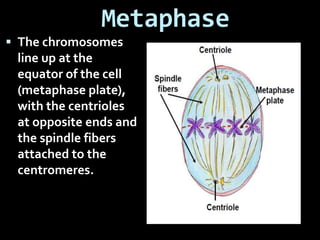
Metaphase
 The chromosomes
line up at the
equator of the cell
(metaphase plate),
with the centrioles
at opposite ends and
the spindle fibers
attached to the
centromeres.
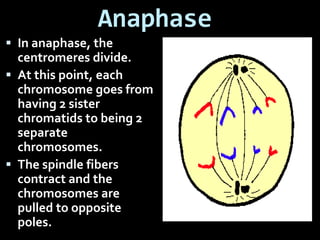
Anaphase
 In anaphase, the
centromeres divide.
 At this point, each
chromosome goes from
having 2 sister
chromatids to being 2
separate
chromosomes.
 The spindle fibers
contract and the
chromosomes are
pulled to opposite
poles.
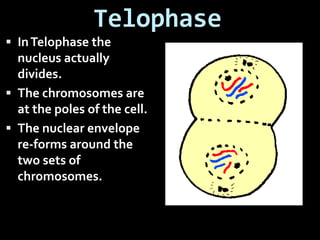
Telophase
 InTelophase the
nucleus actually
divides.
 The chromosomes are
at the poles of the cell.
 The nuclear envelope
re-forms around the
two sets of
chromosomes.
Cytokinesis
 The division of
the cytoplasm.
Experimental work
 Take the onion rootTip and put it in alcohol solution
for several minutes .
 Wash the roots with D.W
 Add the roots on a Petri dish and pour above It HCl
acid and leave it for several minutes
 Take the roots and wash it then add it on a slide
 Add 1 drop of stain and leave for several minutes
 Add the cover slide and press well with wiper
 See the results under the microscope
Thank you

Cell division

  • 1.
  • 2.
    kinds of celldivision: 1. Mitosis: division of somatic cells 2. Meiosis: creation of new sex cells
  • 3.
     Somatic cell– a body cell; a cell whose genes will not be passed on to future generations.  Germ cell - a cell that is destined to become a gamete (egg or sperm), a cell whose genes can be passed on to future generations.  diploid (2N) – a cell with 2 chromosome sets in each of its cells; all body (somatic) cells  haploid (N) – a cell with 1 chromosome set in each of its cells; all gametes (sperm, eggs)
  • 4.
    What is mitosis? Mitosis is a process where a single cell divides into two identical daughter cells (cell division).  It duplicates its DNA and the two new cells (daughter cells) have the same pieces and genetic code.Two identical copies come from one original
  • 5.
    Reasons for Mitosis growth  repair/healing  asexual reproduction
  • 6.
    Mitosis Phases  Interphase Prophase  Metaphase  Anaphase  Telophase  Cytokinesis
  • 7.
    Interphase  The DNAin the cell is copied in preparation for cell division, this results in two identical full sets of chromosomes.  Outside of the nucleus are two centrosomes, each containing a pair of centrioles, these structures are critical for the process of cell division.  During interphase, microtubules extend from these centrosomes.
  • 8.
    Prophase  In prophase,the cell begins the process of division.  The chromosomes condense.  Nuclear envelope disappears.  Centrioles migrate to opposite poles of the cell.  Asters and spindle fibers form.
  • 9.
    Metaphase  The chromosomes lineup at the equator of the cell (metaphase plate), with the centrioles at opposite ends and the spindle fibers attached to the centromeres.
  • 10.
    Anaphase  In anaphase,the centromeres divide.  At this point, each chromosome goes from having 2 sister chromatids to being 2 separate chromosomes.  The spindle fibers contract and the chromosomes are pulled to opposite poles.
  • 11.
    Telophase  InTelophase the nucleusactually divides.  The chromosomes are at the poles of the cell.  The nuclear envelope re-forms around the two sets of chromosomes.
  • 12.
  • 16.
    Experimental work  Takethe onion rootTip and put it in alcohol solution for several minutes .  Wash the roots with D.W  Add the roots on a Petri dish and pour above It HCl acid and leave it for several minutes  Take the roots and wash it then add it on a slide  Add 1 drop of stain and leave for several minutes  Add the cover slide and press well with wiper  See the results under the microscope
  • 17.