Topic - 2
Supply Chain and Procurement
Supply Chain and
Procurement
Procurement
Definition
• Procurement refers to the process of
identifying, shortlisting, selecting, and
acquiring suitable goods or services or
works from a third party vendor
through a direct purchase, competitive
bidding, or tendering process while
ensuring timely delivery in the right
quality and quantity.
Part of an Organization’s Corporate Strategy
• Procurement is nuanced and intertwined with several
core business functions, and as such, it should be
considered a core component of a company’s
corporate strategy. For example, if a company’s
identity is based on being environmentally conscious,
then the procurement specialist’s strategy must focus
on engaging green suppliers. If a company has
specific goals, it needs to procure the right workers to
help it achieve them.
How Procurement
Works
• Procurement and procurement processes can
require a substantial portion of a company’s
resources to manage.
• Comprehensively, this can involve purchase
planning, standards, specifications determination,
supplier research, selection, financing, price
negotiation, and inventory control. As such, many
large companies may require support from a few
different areas of a company for successful
procurement.
The Process Includes
• An end-to-end procurement process consists of the steps listed below:
• Surveying the market
• Spotting potential suppliers
• Creating an approved list of vendors
• Spotting internal needs
• Creating a purchase order online
• Requesting proposals and evaluating quotations
• Selecting the right supplier and negotiating effectively
• Receiving goods and performing quality checks
• Developing and managing contracts
• Obtaining invoice approvals and fulfilling payment terms
• Establishing a good supplier relationship
As Distinct from Purchasing
• Purchasing is the set of functions associated with acquiring
the goods and services that an organization requires.
Purchasing is a small subset of the broader procurement
function. This process includes activities like ordering,
expediting, receiving, and fulfilling payment.
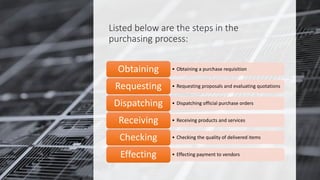
Listed below are the steps in the
purchasing process:
• Obtaining a purchase requisition
Obtaining
• Requesting proposals and evaluating quotations
Requesting
• Dispatching official purchase orders
Dispatching
• Receiving products and services
Receiving
• Checking the quality of delivered items
Checking
• Effecting payment to vendors
Effecting
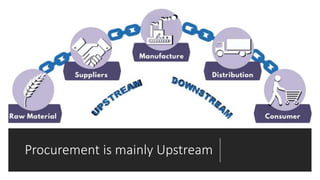
Procurement is mainly Upstream
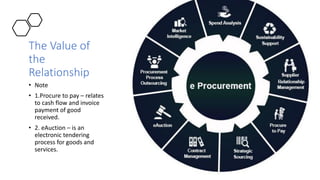
The Value of
the
Relationship
• Note
• 1.Procure to pay – relates
to cash flow and invoice
payment of good
received.
• 2. eAuction – is an
electronic tendering
process for goods and
services.
Be Risk
Alert!!
See
Managing
Risk Slides
Business
Relationships
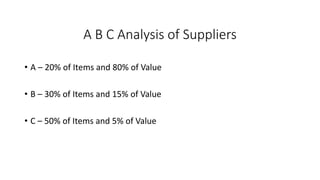
A B C Analysis of Suppliers
• A – 20% of Items and 80% of Value
• B – 30% of Items and 15% of Value
• C – 50% of Items and 5% of Value
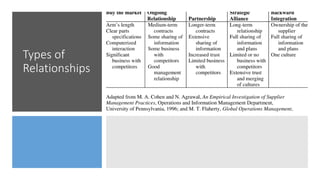
Types of
Relationships
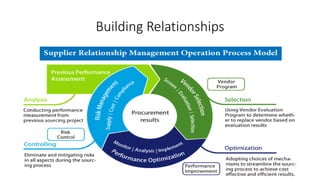
Building Relationships
Value Engineering
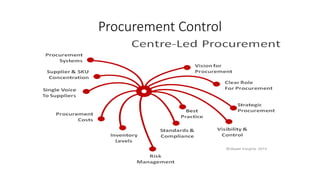
Procurement Control
Supply Chain Management
Purchasing and Logistics
Management
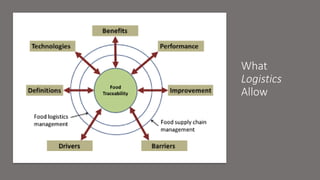
What
Logistics
Allow
Lecture 2 - Procurement.pdf

Lecture 2 - Procurement.pdf

  • 1.
    Topic - 2 SupplyChain and Procurement
  • 2.
  • 3.
    Procurement Definition • Procurement refersto the process of identifying, shortlisting, selecting, and acquiring suitable goods or services or works from a third party vendor through a direct purchase, competitive bidding, or tendering process while ensuring timely delivery in the right quality and quantity.
  • 4.
    Part of anOrganization’s Corporate Strategy • Procurement is nuanced and intertwined with several core business functions, and as such, it should be considered a core component of a company’s corporate strategy. For example, if a company’s identity is based on being environmentally conscious, then the procurement specialist’s strategy must focus on engaging green suppliers. If a company has specific goals, it needs to procure the right workers to help it achieve them.
  • 5.
    How Procurement Works • Procurementand procurement processes can require a substantial portion of a company’s resources to manage. • Comprehensively, this can involve purchase planning, standards, specifications determination, supplier research, selection, financing, price negotiation, and inventory control. As such, many large companies may require support from a few different areas of a company for successful procurement.
  • 6.
    The Process Includes •An end-to-end procurement process consists of the steps listed below: • Surveying the market • Spotting potential suppliers • Creating an approved list of vendors • Spotting internal needs • Creating a purchase order online • Requesting proposals and evaluating quotations • Selecting the right supplier and negotiating effectively • Receiving goods and performing quality checks • Developing and managing contracts • Obtaining invoice approvals and fulfilling payment terms • Establishing a good supplier relationship
  • 7.
    As Distinct fromPurchasing • Purchasing is the set of functions associated with acquiring the goods and services that an organization requires. Purchasing is a small subset of the broader procurement function. This process includes activities like ordering, expediting, receiving, and fulfilling payment.
  • 8.
    Listed below arethe steps in the purchasing process: • Obtaining a purchase requisition Obtaining • Requesting proposals and evaluating quotations Requesting • Dispatching official purchase orders Dispatching • Receiving products and services Receiving • Checking the quality of delivered items Checking • Effecting payment to vendors Effecting
  • 9.
  • 11.
    The Value of the Relationship •Note • 1.Procure to pay – relates to cash flow and invoice payment of good received. • 2. eAuction – is an electronic tendering process for goods and services.
  • 13.
  • 14.
  • 15.
    A B CAnalysis of Suppliers • A – 20% of Items and 80% of Value • B – 30% of Items and 15% of Value • C – 50% of Items and 5% of Value
  • 16.
  • 19.
  • 20.
  • 21.
  • 24.
    Supply Chain Management Purchasingand Logistics Management
  • 27.