CERAE
Context
Experience
Reflection
Action
Evaluate
The UNESCO’s Four (4) Pillars of Learning
Learning
to live
together
Learning
to live
together
Learning
to be
Learning
to be
Learning
to do
Learning
to do
Learning
to Know
Learning
to Know
 is more on the mastery of
learning tools than with the
acquisition of structured
knowledge
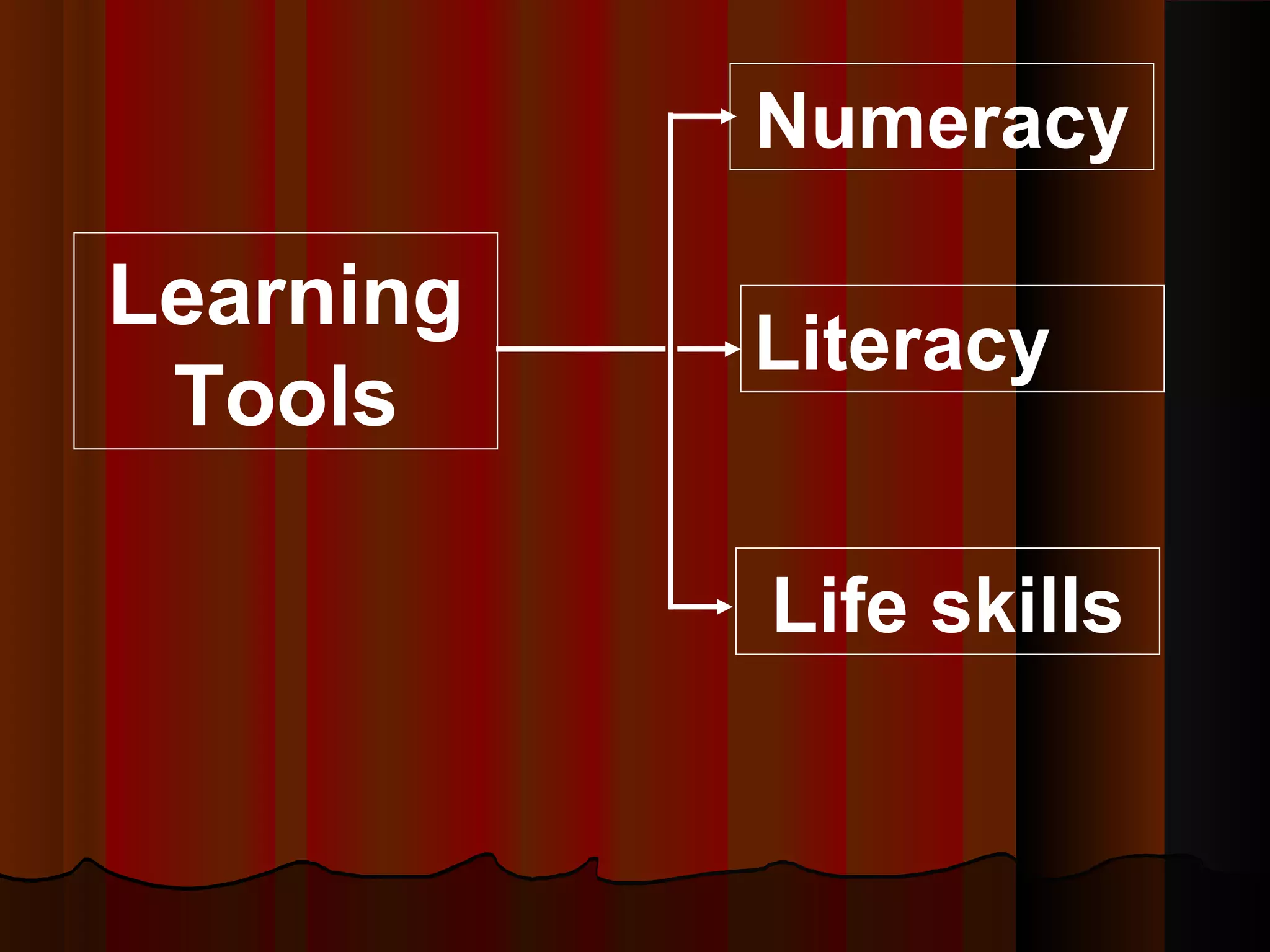
Learning
Tools
Numeracy
Literacy
Life skills
Mastery of these learning
tools is both a means and
an end
These are means for the
students to understand the
world around them.
These are ends for the
students that can be
derived from the
pleasures on
understanding,
knowledge and
discovery
Delors Commission learning
to know implies learning how
to learn
Components of Learning to Learn
ThinkingThinkingMemory SkillMemory SkillConcentrationConcentration
Concentration
 the process of
improving
concentration
skills can take
different forms and
can be aided with
various learning
skills.
Memory skills
 learnt by heart
 associative
memorization has
to be carefully
cultivated and
learned
Thinking skills
 should
encompass both
practical
problem-solving
and abstract
thought.
Traditional
Perspective
Certified
Skills
UNESCO’s
Perspective
Personal
Competence
Personal Competence
 mix of skills and talents,
 combining certified skills acquired
through technical and vocational
training, social behavior, personal
initiative and willingness to take risks
Inside the Classroom
 use of Multiple Intelligence and
learning Styles
 Key ingredients: creative and
innovative activities
To learn to live together:
 teach students about human
diversity
To learn to live together:
 instill in them an awareness of the
similarities and interdependence of all
people.
To learn to live together:
 children should be taught to
understand other people's reactions
by looking at things from their point of
view
 spirit of empathy is
encouraged in schools, it has a
positive effect on young
persons' social behaviour for
the rest of their lives
 School should promote social
awareness, acceptance and
respect.
Mind and body
Intelligence
Sensitivity
Aesthetics
Individuality
Imagination
Rights and Responsibilities
Spirituality
Independence
Judgment
Critical Thinking
Creativity
Human Freedom
The Commission powerfully re-
asserted a fundamental principle:
education should contribute to
every person's complete
development - mind and body,
intelligence, sensitivity, aesthetic
appreciation and spirituality.
All people should receive in their
childhood and youth an education that
equips them to develop their own
independent, critical way of thinking and
judgment so that they can make up
their own minds on the best courses of
action in the different circumstances in
their lives
the basic assumptions stated in the report
Learning to Be:.
The aim of development is the complete
fulfillment of man, in all the richness of his
personality,
The Commission embraces one of the
complexity of his forms of expression and his
various commitments –
• as individual,
• member of a family and of a community,
• citizen
• producer,
• inventor of techniques and
• creative dreamer
This human development, which
begins at birth and continues all
through a person's life, is a
dialectic process which is based
both on self-knowledge and on
relationships with other people.
by
Dr. Rizalina G. Gomez
Lect 2 the four pillars of learning (riza edited)

Lect 2 the four pillars of learning (riza edited)

  • 1.
  • 3.
    The UNESCO’s Four(4) Pillars of Learning Learning to live together Learning to live together Learning to be Learning to be Learning to do Learning to do Learning to Know Learning to Know
  • 4.
     is moreon the mastery of learning tools than with the acquisition of structured knowledge
  • 5.
  • 6.
    Mastery of theselearning tools is both a means and an end These are means for the students to understand the world around them.
  • 7.
    These are endsfor the students that can be derived from the pleasures on understanding, knowledge and discovery
  • 8.
    Delors Commission learning toknow implies learning how to learn Components of Learning to Learn ThinkingThinkingMemory SkillMemory SkillConcentrationConcentration
  • 9.
    Concentration  the processof improving concentration skills can take different forms and can be aided with various learning skills.
  • 10.
    Memory skills  learntby heart  associative memorization has to be carefully cultivated and learned
  • 11.
    Thinking skills  should encompassboth practical problem-solving and abstract thought.
  • 13.
  • 14.
    Personal Competence  mixof skills and talents,  combining certified skills acquired through technical and vocational training, social behavior, personal initiative and willingness to take risks
  • 15.
    Inside the Classroom use of Multiple Intelligence and learning Styles  Key ingredients: creative and innovative activities
  • 17.
    To learn tolive together:  teach students about human diversity
  • 18.
    To learn tolive together:  instill in them an awareness of the similarities and interdependence of all people.
  • 19.
    To learn tolive together:  children should be taught to understand other people's reactions by looking at things from their point of view
  • 20.
     spirit ofempathy is encouraged in schools, it has a positive effect on young persons' social behaviour for the rest of their lives
  • 21.
     School shouldpromote social awareness, acceptance and respect.
  • 23.
    Mind and body Intelligence Sensitivity Aesthetics Individuality Imagination Rightsand Responsibilities Spirituality Independence Judgment Critical Thinking Creativity Human Freedom
  • 24.
    The Commission powerfullyre- asserted a fundamental principle: education should contribute to every person's complete development - mind and body, intelligence, sensitivity, aesthetic appreciation and spirituality.
  • 25.
    All people shouldreceive in their childhood and youth an education that equips them to develop their own independent, critical way of thinking and judgment so that they can make up their own minds on the best courses of action in the different circumstances in their lives
  • 26.
    the basic assumptionsstated in the report Learning to Be:. The aim of development is the complete fulfillment of man, in all the richness of his personality,
  • 27.
    The Commission embracesone of the complexity of his forms of expression and his various commitments – • as individual, • member of a family and of a community, • citizen • producer, • inventor of techniques and • creative dreamer
  • 28.
    This human development,which begins at birth and continues all through a person's life, is a dialectic process which is based both on self-knowledge and on relationships with other people.
  • 29.