COMPUTER
PROGRAMMING
Lecture 03
Prepared By Mr. V. S. Patil Dept (CSE)/AEC
Unit 1 Problem Solving
Syllabus
Prepared By Mr. V. S. Patil Dept (CSE)/AEC
2
1
Explain the data processing cycle
Define the role of computers in the data
processing cycle
Objectives
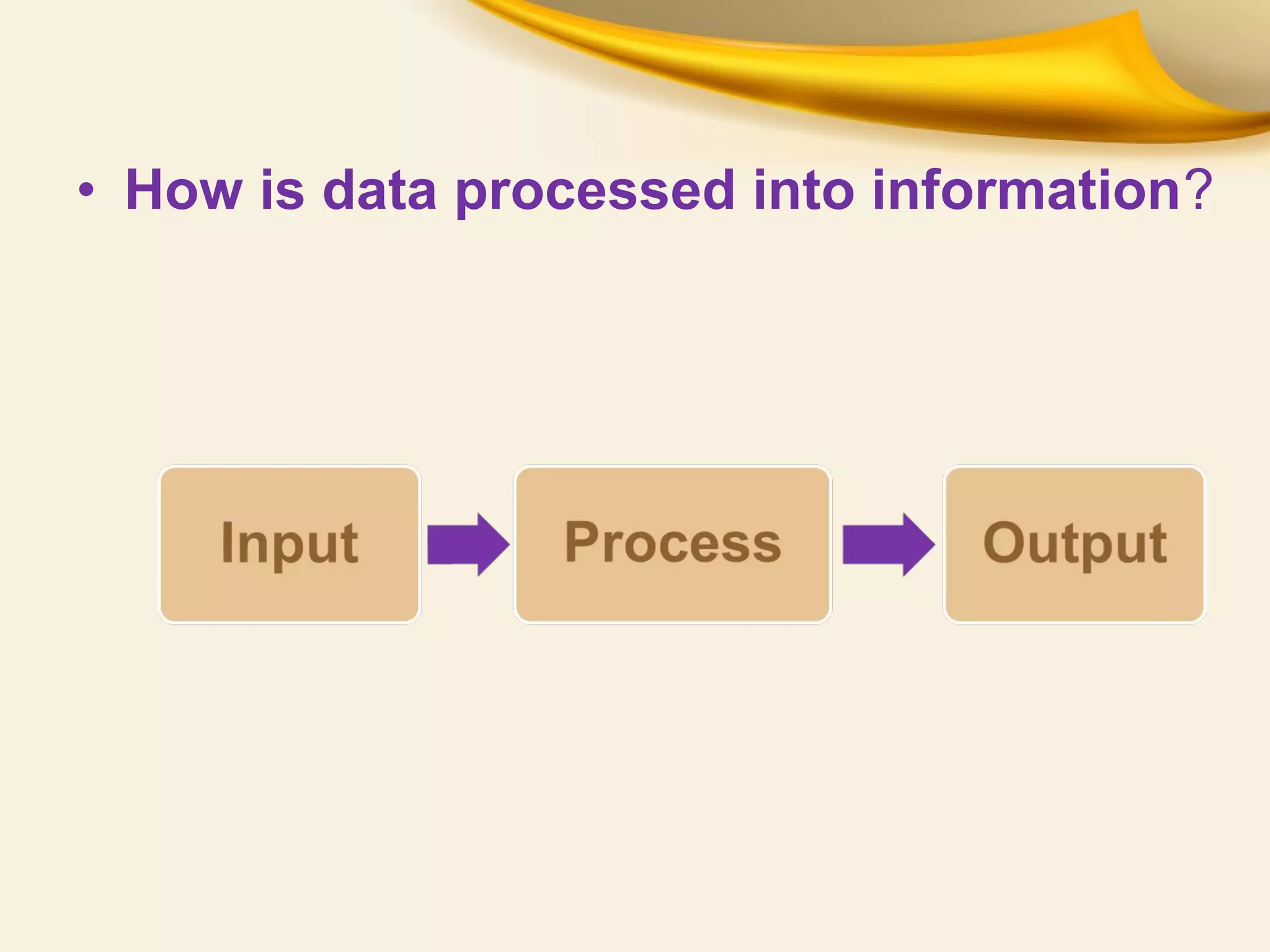
• How is data processed into information?
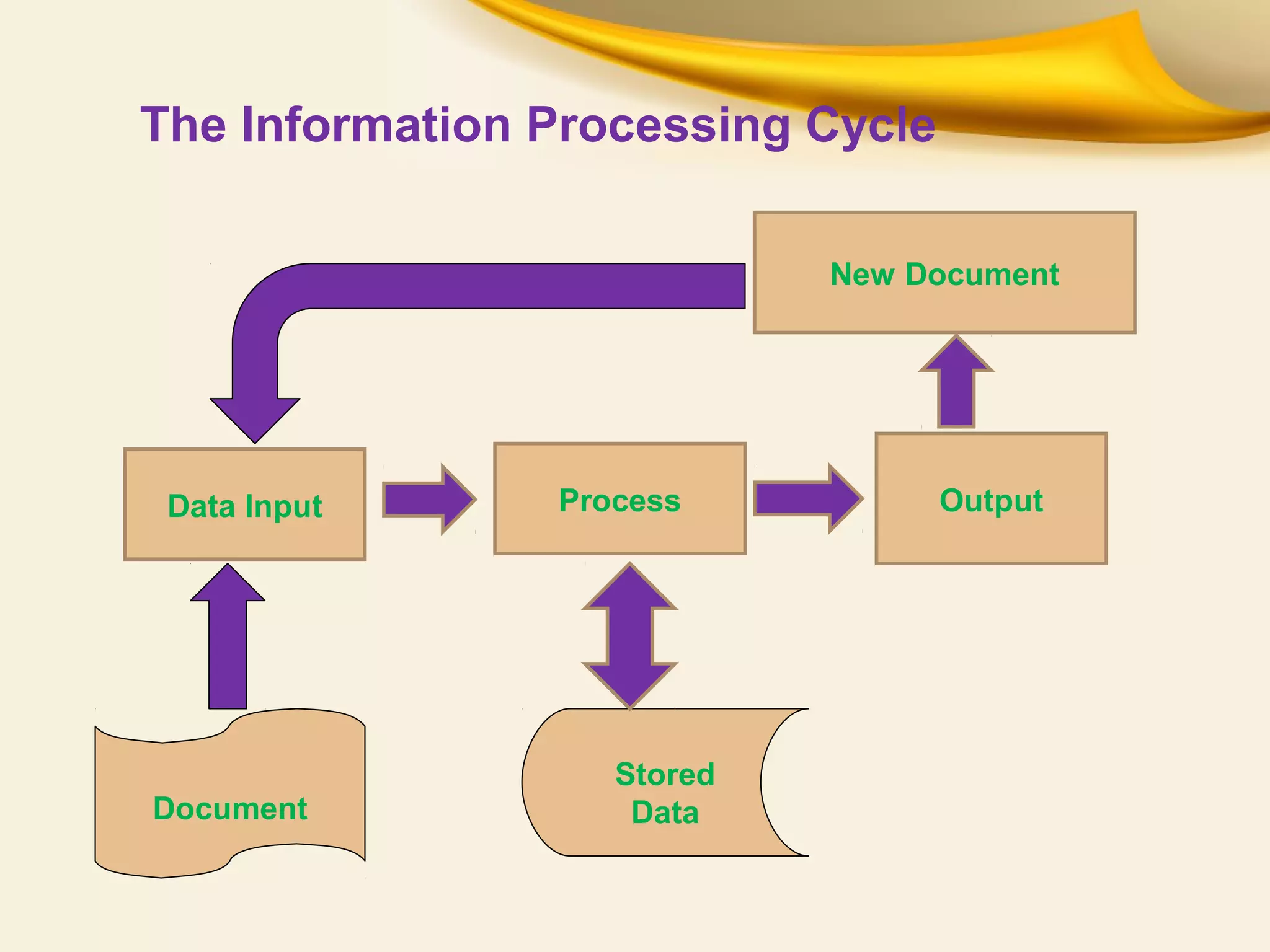
The Information Processing Cycle
Stored
DataDocument
Data Input Process Output
New Document
• Accept data through input devices
• Process data using microprocessors
• Store data for interactive use in the RAM and for longer
periods of storage in the ROM and hard disks
• Output data through output devices.
What is the role of computers in the information
cycle?
•Faster data input, processing and retrieval
•Tireless--can work 24 hours a day, 7 days a week
•Less prone to error
•Produce output requirements easily
•Could send and retrieve data from other computers if in a
network
What are the advantages of using computers
for data processing?
• Require skilled manpower for design and programming
and data encoding
• Require electricity
• Require air conditioning for non-stop work
• Expensive to acquire and maintain
• Require frequent upgrade due to fast developments in
hardware and software
• Require regular staff training
What are some disadvantages of using
computers?
What are some general trends in
computers?
•Moore’s Law: Computing power doubles approximately
every 18 months
•Faster processors
•Bigger storage capacity
•Bigger memory
•Stand alone>>>Network>>>Distributive computing
•Software bloat
•Lower cost
Computers are reliable and efficient tools for data
processing and information retrieval. There are
advantages and disadvantages in using them. The
efficiency of these tools is dependent on the
specifications of the computer hardware, the software,
database design and the user.
Overview
Question Bank
•What are the components of a data processing cycle?
•What is the role of a computer in the data processing
cycle?
•What are some trends in the development of computers?

COMPUTER PROGRAMMING UNIT 1 Lecture 3

  • 1.
    COMPUTER PROGRAMMING Lecture 03 Prepared ByMr. V. S. Patil Dept (CSE)/AEC
  • 2.
    Unit 1 ProblemSolving Syllabus Prepared By Mr. V. S. Patil Dept (CSE)/AEC
  • 3.
    2 1 Explain the dataprocessing cycle Define the role of computers in the data processing cycle Objectives
  • 4.
    • How isdata processed into information?
  • 5.
    The Information ProcessingCycle Stored DataDocument Data Input Process Output New Document
  • 6.
    • Accept datathrough input devices • Process data using microprocessors • Store data for interactive use in the RAM and for longer periods of storage in the ROM and hard disks • Output data through output devices. What is the role of computers in the information cycle?
  • 7.
    •Faster data input,processing and retrieval •Tireless--can work 24 hours a day, 7 days a week •Less prone to error •Produce output requirements easily •Could send and retrieve data from other computers if in a network What are the advantages of using computers for data processing?
  • 8.
    • Require skilledmanpower for design and programming and data encoding • Require electricity • Require air conditioning for non-stop work • Expensive to acquire and maintain • Require frequent upgrade due to fast developments in hardware and software • Require regular staff training What are some disadvantages of using computers?
  • 9.
    What are somegeneral trends in computers? •Moore’s Law: Computing power doubles approximately every 18 months •Faster processors •Bigger storage capacity •Bigger memory •Stand alone>>>Network>>>Distributive computing •Software bloat •Lower cost
  • 10.
    Computers are reliableand efficient tools for data processing and information retrieval. There are advantages and disadvantages in using them. The efficiency of these tools is dependent on the specifications of the computer hardware, the software, database design and the user. Overview
  • 11.
    Question Bank •What arethe components of a data processing cycle? •What is the role of a computer in the data processing cycle? •What are some trends in the development of computers?