








Design
Theories of
Instructional
Materials
Development
Jilliene Samantha C. Napil
University of Mindanao
BEEd- SpEd
Instructional Material
-> LEARNING
The Theories
for
Instructional
Materials
Design
Instructional Design
Theory
• Instructional Design is the systematic development of
instructional specifications using learning and
instructional theory to ensure the quality of
instruction. It is the entire process of analysis of
learning needs and goals and the development of a
delivery system to meet those needs. It includes
development of instructional materials and activities;
and try out and evaluation of all instruction and
learner activities.
Behaviorist Theories
• The hallmark of these theories is that one does not have to
delve into the invisible workings of the mind to understand
learning.
• Kearsley (1994) summarized three key principles that
dominated the behaviourist learning which includes:
– Behaviour that is positively reinforced will reoccur; intermittent
reinforcement is particularly effective.
– Information should be presented in smll amounts so that responses
can be reinforced (shaping).
– Reinforcements will generalize across similar stimuli (stimulus
generalization) producing secondary conditioning.
Cognitive Theories
• Cognitive learning theories have their origins with the Gestalt
Psychologist and their interest in perception of forms,
shapes and procedures.
• One influential cognitive theory is Gagne’s Conditions of
Learning. In which he came up to 5 major categories:
– Intellectual Skills
– Cognitive Strategies
– Verbal Information
– Attitudes
– Motor Skills
Humanist Theories
• Humanists are more concerned with
education’s role in the development of the
person as a person.
Social /Situated Learning
Theories
• The social learning theory of Bandura
emphasizes the importance of observing and
modeling the behaviors, attitudes, and
emotional reactions of others.
• The most common (and pervasive) examples
of social learning situations are television
commercials.
Cybernetic Theories
• These systems typically rely on error detection and
correction (through feedback) and provided a model
for a different view of learning, the cybernetic
orientation.
– Cybernetic orientation views the learner as an element in
a larger human-machine or a human-computer system.
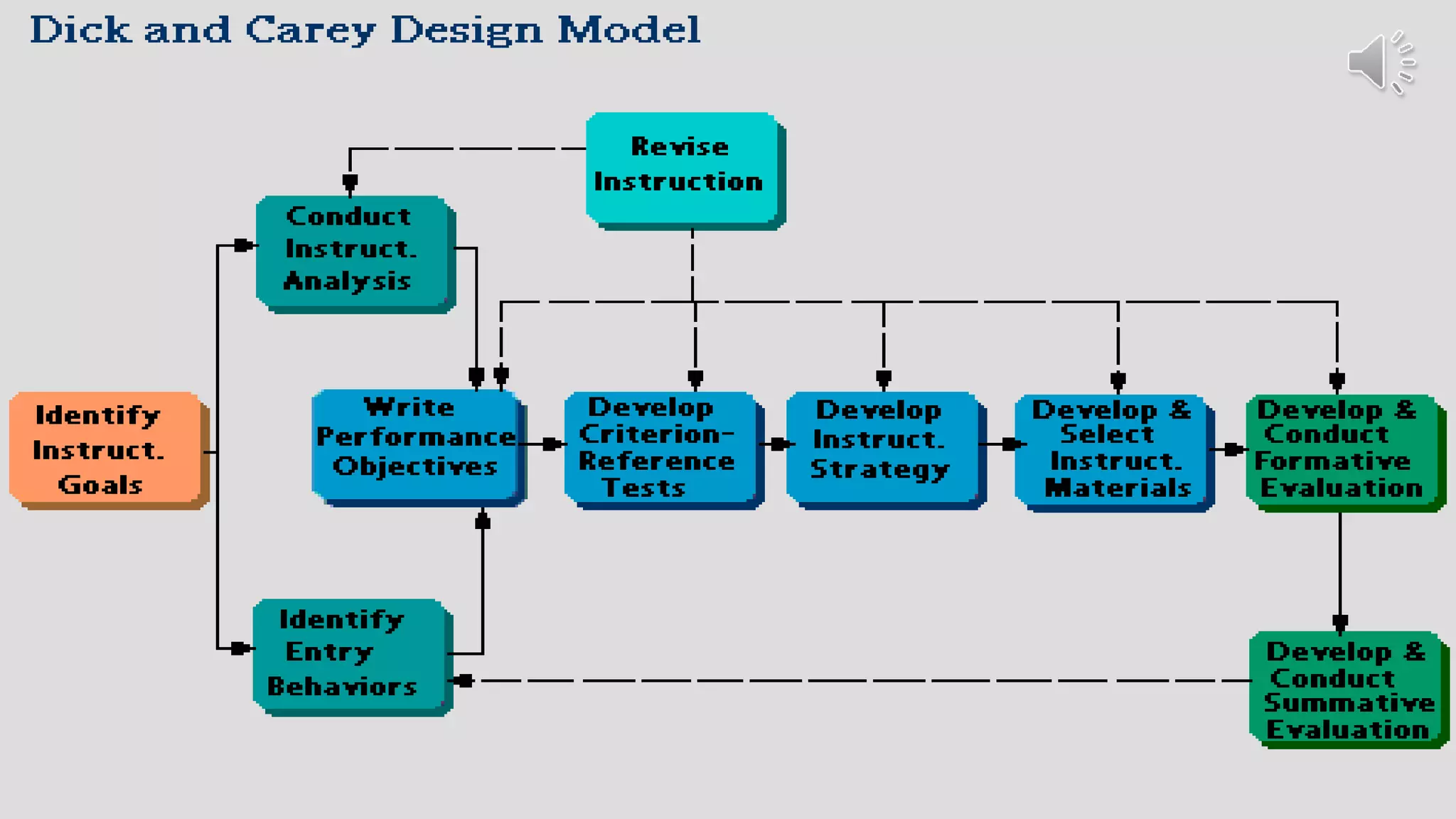
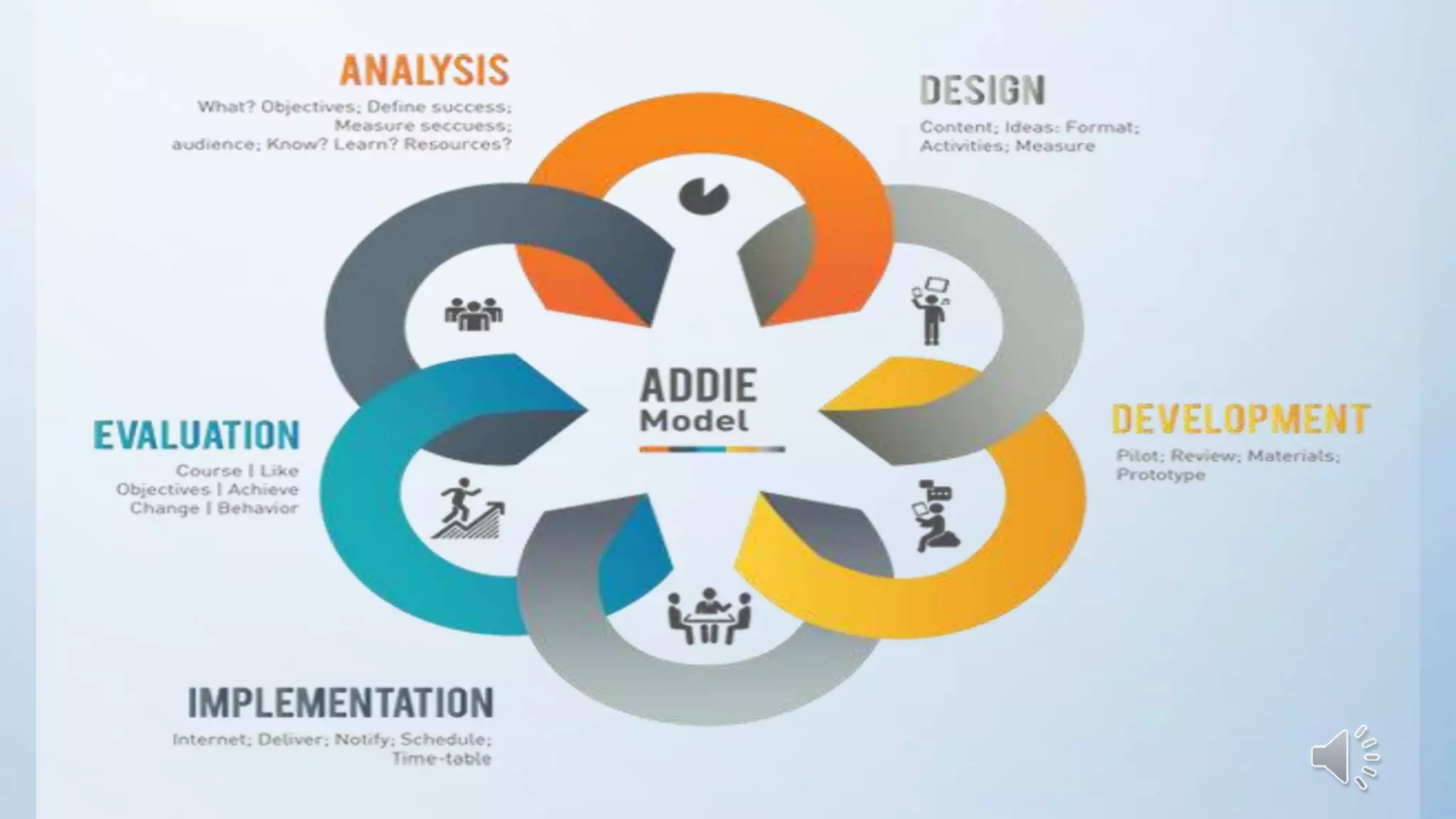
Instructional Systems
Design Model
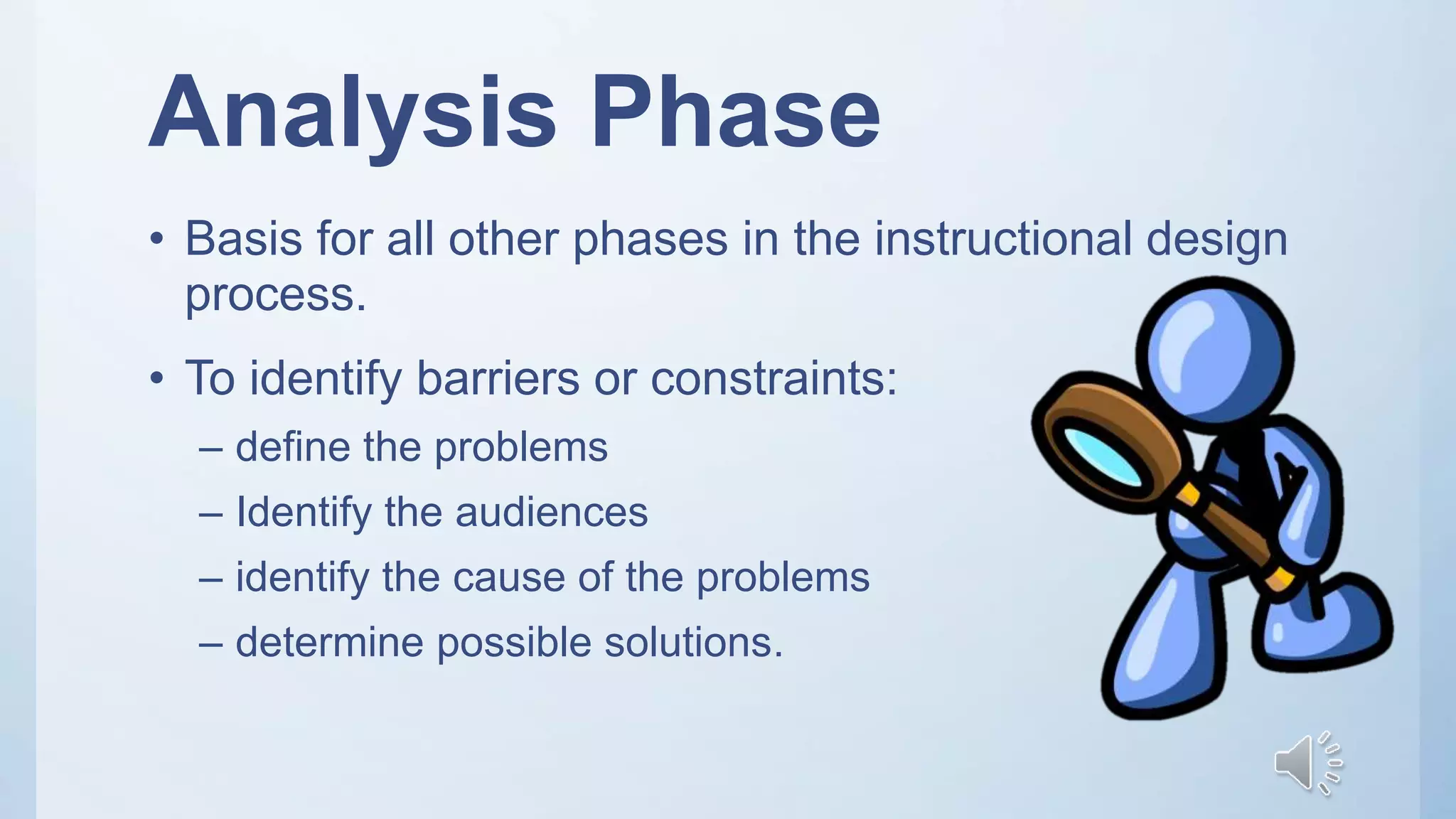
Analysis Phase
• Basis for all other phases in the instructional design
process.
• To identify barriers or constraints:
– define the problems
– Identify the audiences
– identify the cause of the problems
– determine possible solutions.
Design Phase
• How will the content be organized?
• How will it be presented to learners?
• What delivery format will be used?
• What types of activities and exercises will be
included?
• How will learners' accomplishments be measured?
Development Phase
• Focus on generating the course documents and materials
used by faculty, trainers and participants during the delivery
of the course.
• Outputs of this phase include competency-based learning
guides and checklists, pre- and midcourse
questionnaires,computer based learning/traning, web page,
trainer’s notes, presentation plans, assignment sheets, case
studies, etc.
Implementation Phase
• The implementation phase of the instructional design
process refers to the actual delivery of the instruction
as designed.
• Competency-based as part of mastery learning
• Inservice and preservice delivery
• Group-based, computer-based
Evaluation Phase
• The systematic collection, processing, analysis and
interpretation of data to determine whether education or
training has met its objectives and to identify aspects of the
process that should be strengthened.
• Types of evaluation include participant reaction, participant
learning, on-the-job performance and effect of training.
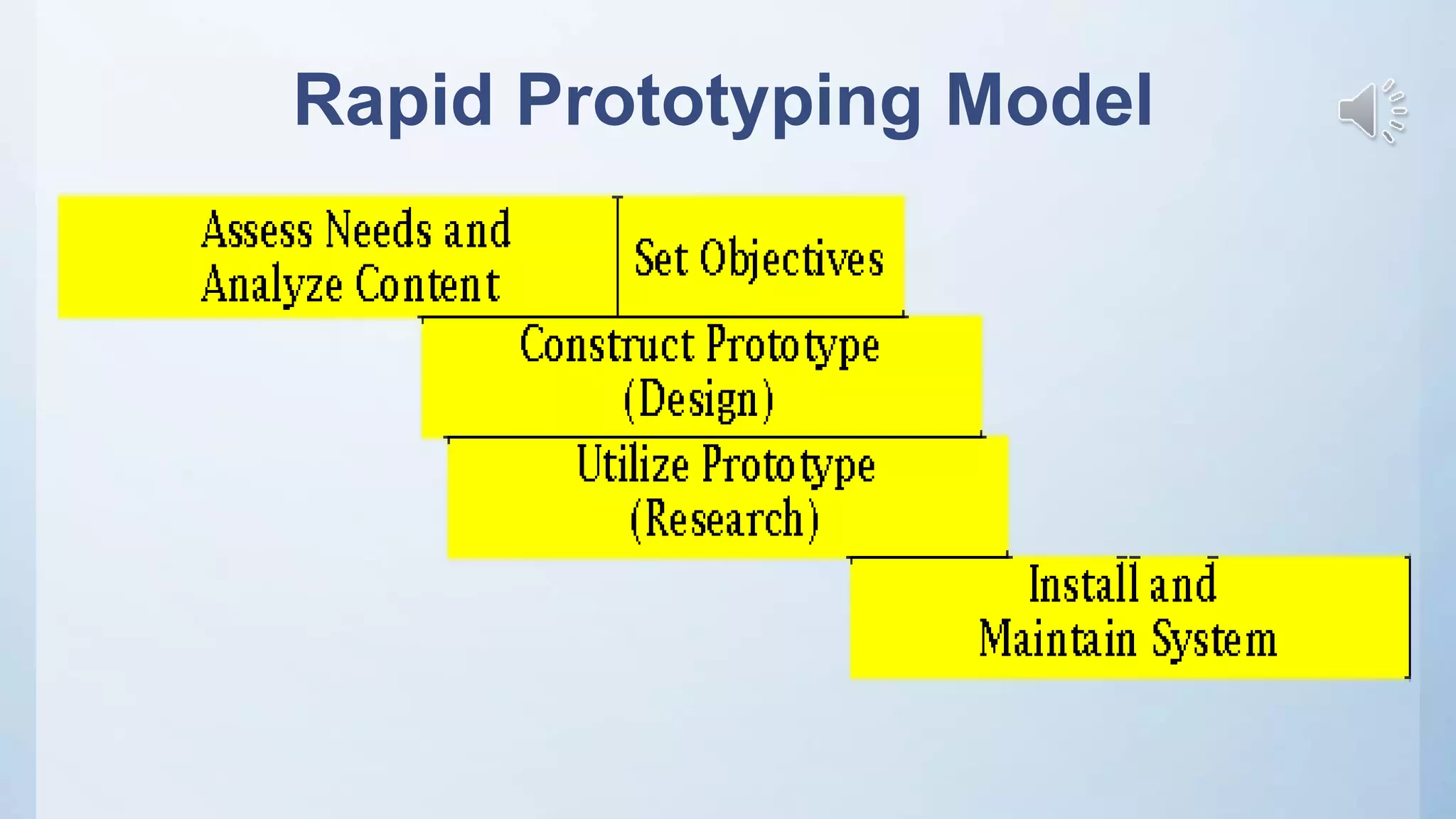
Rapid Prototyping Model
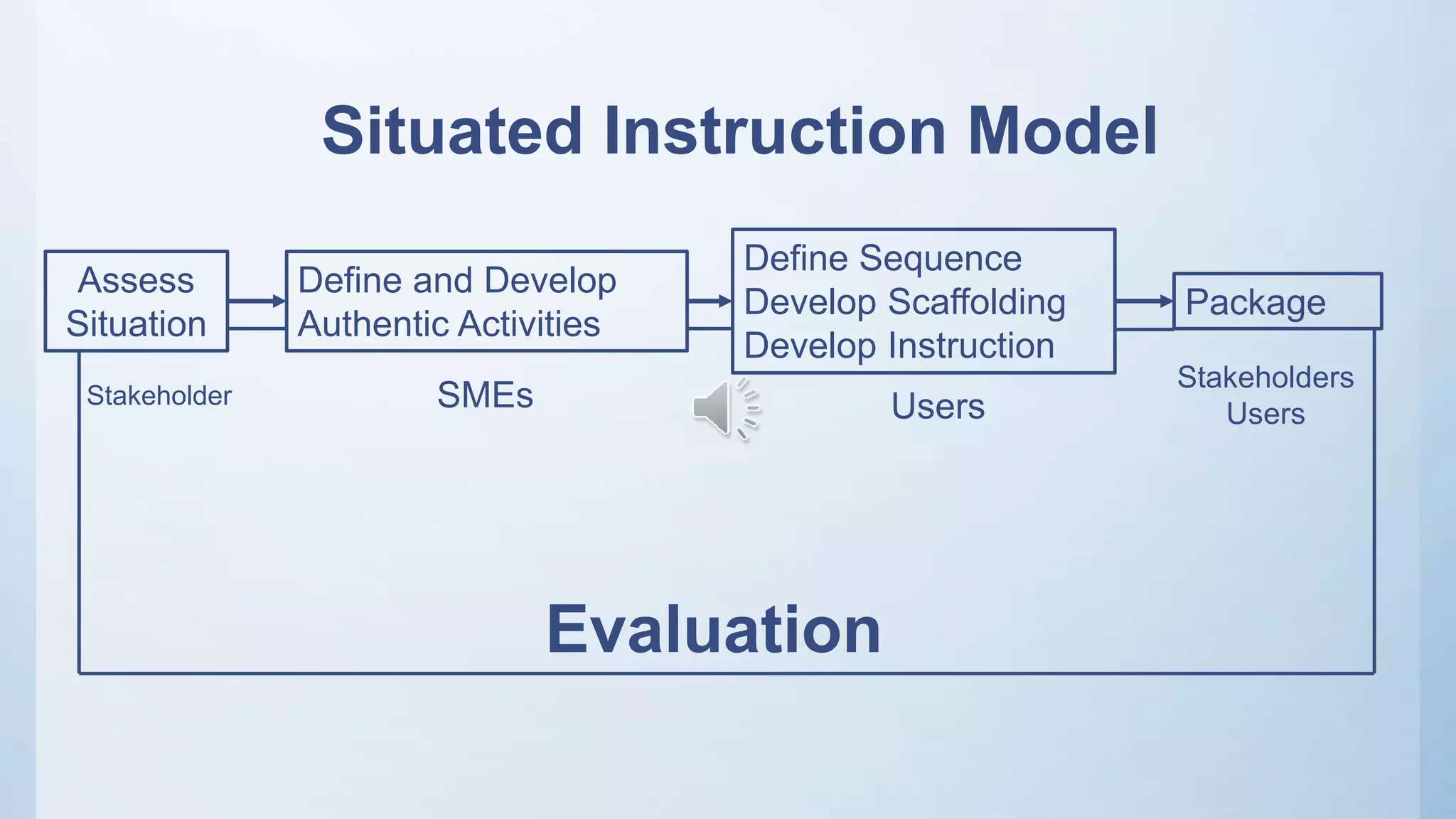
Situated Instruction Model
Assess
Situation
Define and Develop
Authentic Activities
Define Sequence
Develop Scaffolding
Develop Instruction
Package
Evaluation
Stakeholder SMEs Users
Stakeholders
Users
Learning theories of instructional design

Learning theories of instructional design

  • 1.
  • 2.
  • 3.
  • 4.
    Instructional Design Theory • InstructionalDesign is the systematic development of instructional specifications using learning and instructional theory to ensure the quality of instruction. It is the entire process of analysis of learning needs and goals and the development of a delivery system to meet those needs. It includes development of instructional materials and activities; and try out and evaluation of all instruction and learner activities.
  • 5.
    Behaviorist Theories • Thehallmark of these theories is that one does not have to delve into the invisible workings of the mind to understand learning. • Kearsley (1994) summarized three key principles that dominated the behaviourist learning which includes: – Behaviour that is positively reinforced will reoccur; intermittent reinforcement is particularly effective. – Information should be presented in smll amounts so that responses can be reinforced (shaping). – Reinforcements will generalize across similar stimuli (stimulus generalization) producing secondary conditioning.
  • 6.
    Cognitive Theories • Cognitivelearning theories have their origins with the Gestalt Psychologist and their interest in perception of forms, shapes and procedures. • One influential cognitive theory is Gagne’s Conditions of Learning. In which he came up to 5 major categories: – Intellectual Skills – Cognitive Strategies – Verbal Information – Attitudes – Motor Skills
  • 7.
    Humanist Theories • Humanistsare more concerned with education’s role in the development of the person as a person.
  • 8.
    Social /Situated Learning Theories •The social learning theory of Bandura emphasizes the importance of observing and modeling the behaviors, attitudes, and emotional reactions of others. • The most common (and pervasive) examples of social learning situations are television commercials.
  • 9.
    Cybernetic Theories • Thesesystems typically rely on error detection and correction (through feedback) and provided a model for a different view of learning, the cybernetic orientation. – Cybernetic orientation views the learner as an element in a larger human-machine or a human-computer system.
  • 10.
  • 13.
    Analysis Phase • Basisfor all other phases in the instructional design process. • To identify barriers or constraints: – define the problems – Identify the audiences – identify the cause of the problems – determine possible solutions.
  • 14.
    Design Phase • Howwill the content be organized? • How will it be presented to learners? • What delivery format will be used? • What types of activities and exercises will be included? • How will learners' accomplishments be measured?
  • 15.
    Development Phase • Focuson generating the course documents and materials used by faculty, trainers and participants during the delivery of the course. • Outputs of this phase include competency-based learning guides and checklists, pre- and midcourse questionnaires,computer based learning/traning, web page, trainer’s notes, presentation plans, assignment sheets, case studies, etc.
  • 16.
    Implementation Phase • Theimplementation phase of the instructional design process refers to the actual delivery of the instruction as designed. • Competency-based as part of mastery learning • Inservice and preservice delivery • Group-based, computer-based
  • 17.
    Evaluation Phase • Thesystematic collection, processing, analysis and interpretation of data to determine whether education or training has met its objectives and to identify aspects of the process that should be strengthened. • Types of evaluation include participant reaction, participant learning, on-the-job performance and effect of training.
  • 18.
  • 19.
    Situated Instruction Model Assess Situation Defineand Develop Authentic Activities Define Sequence Develop Scaffolding Develop Instruction Package Evaluation Stakeholder SMEs Users Stakeholders Users