LEARNING STRATEGIES
SIX MAIN CATEGORIES OF L2
   LEARNING STRATEGIES
COGNITIVE STRATEGIES
                   COGNITIVE STRATEGIES


 Reasoning deductively: This is a top-down strategy leading from general
to specific.
 Note-taking
 Summarizing
 Synthesizing
 Outlining
 Reorganizing
 Practicing structures and sounds formally
METACOGNITIVE STRATEGIES
     METACOGNITIVE STRATEGIES


Identifying one's own learning style preferences and needs.
Planning for an L2 task.
Gathering and organizing materials.
Arranging a study space and schedule.
Monitoring mistakes.
Evaluating task sucess.
Evaluating the success of any type of learning strategy.
MEMORY-RELATED STRATEGIES


Semantic mapping
Images
Body movement
Location
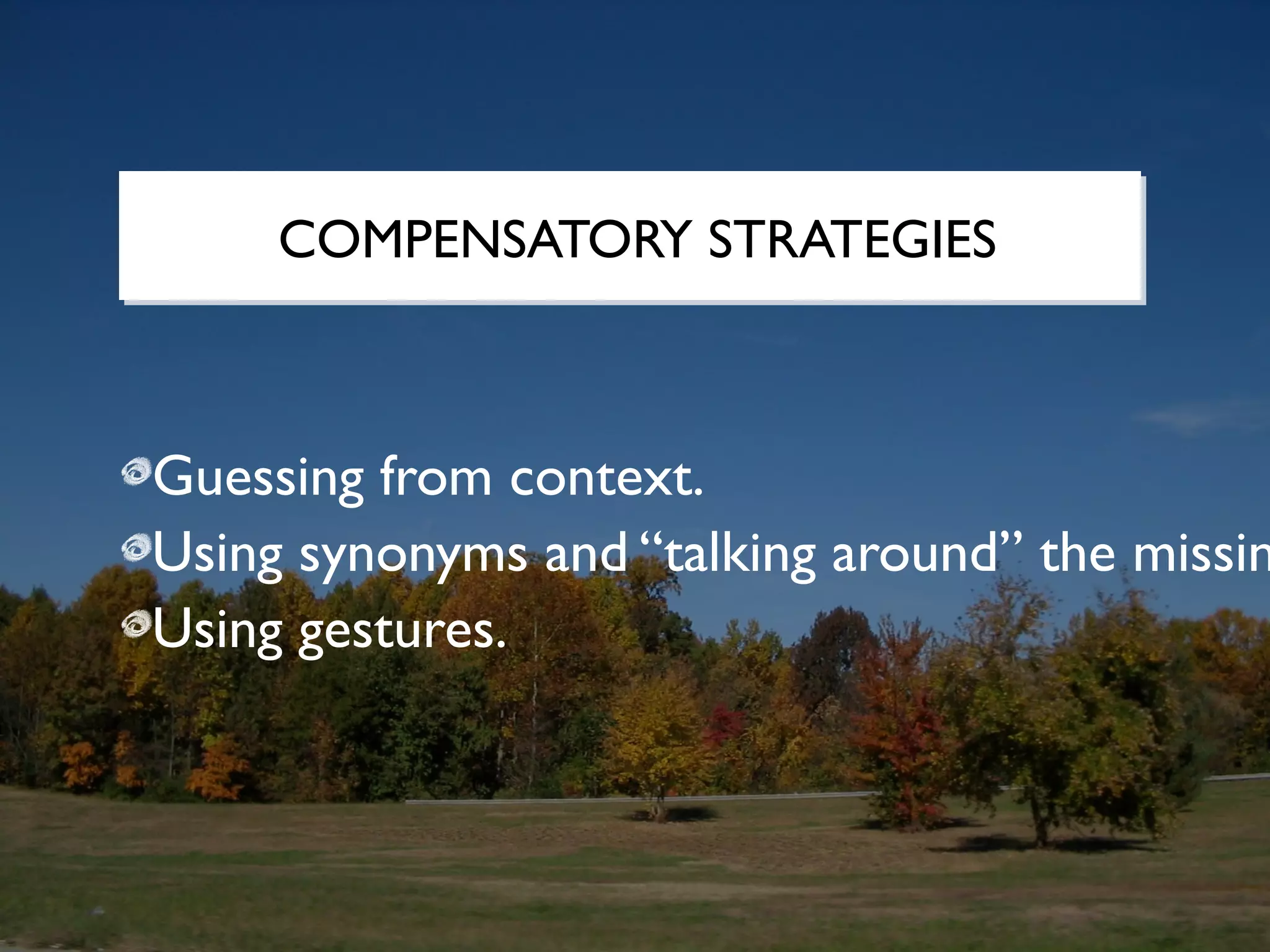
COMPENSATORY STRATEGIES


Guessing from context.
Using synonyms and “talking around” the missin
Using gestures.
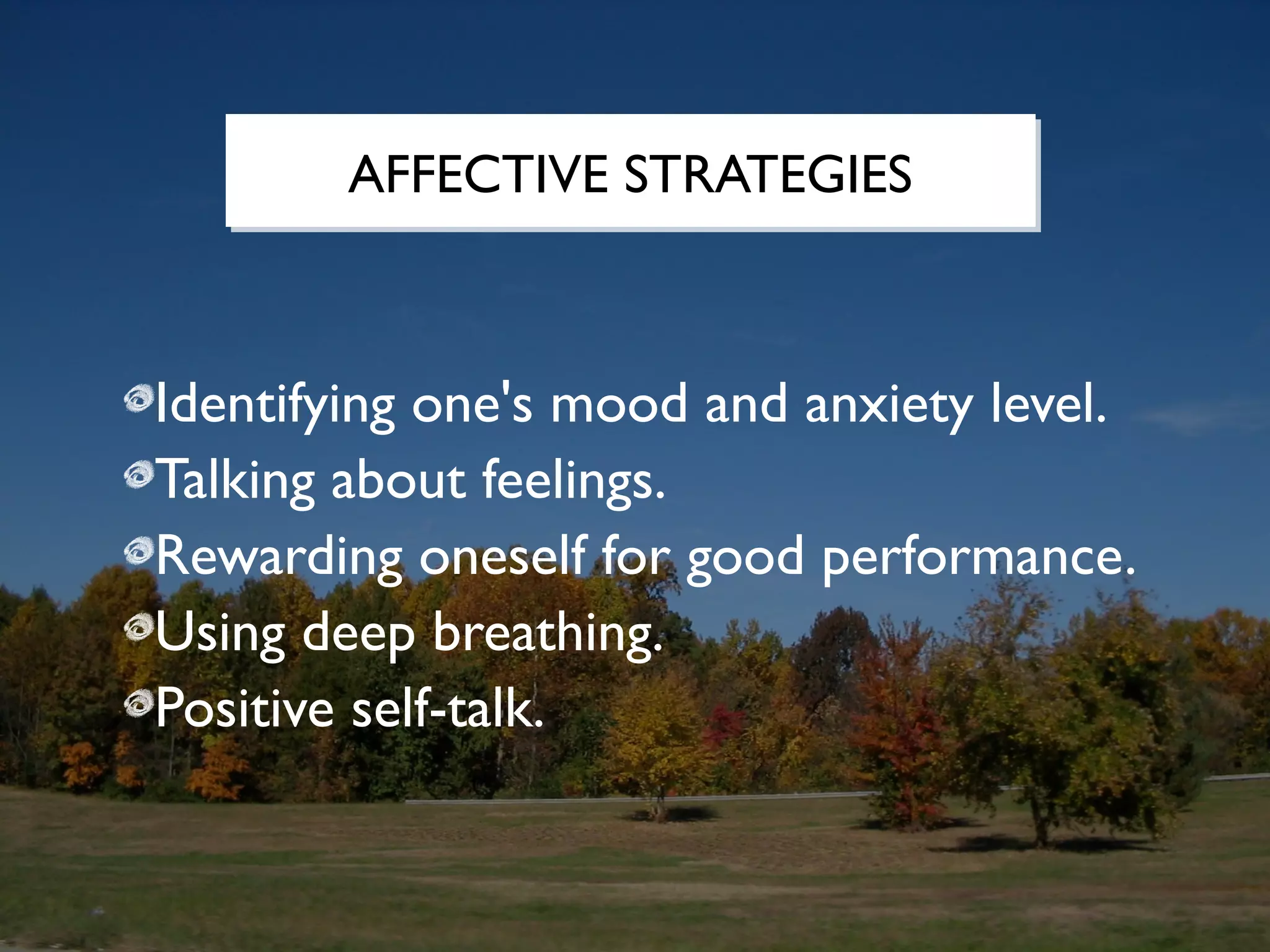
AFFECTIVE STRATEGIES


Identifying one's mood and anxiety level.
Talking about feelings.
Rewarding oneself for good performance.
Using deep breathing.
Positive self-talk.
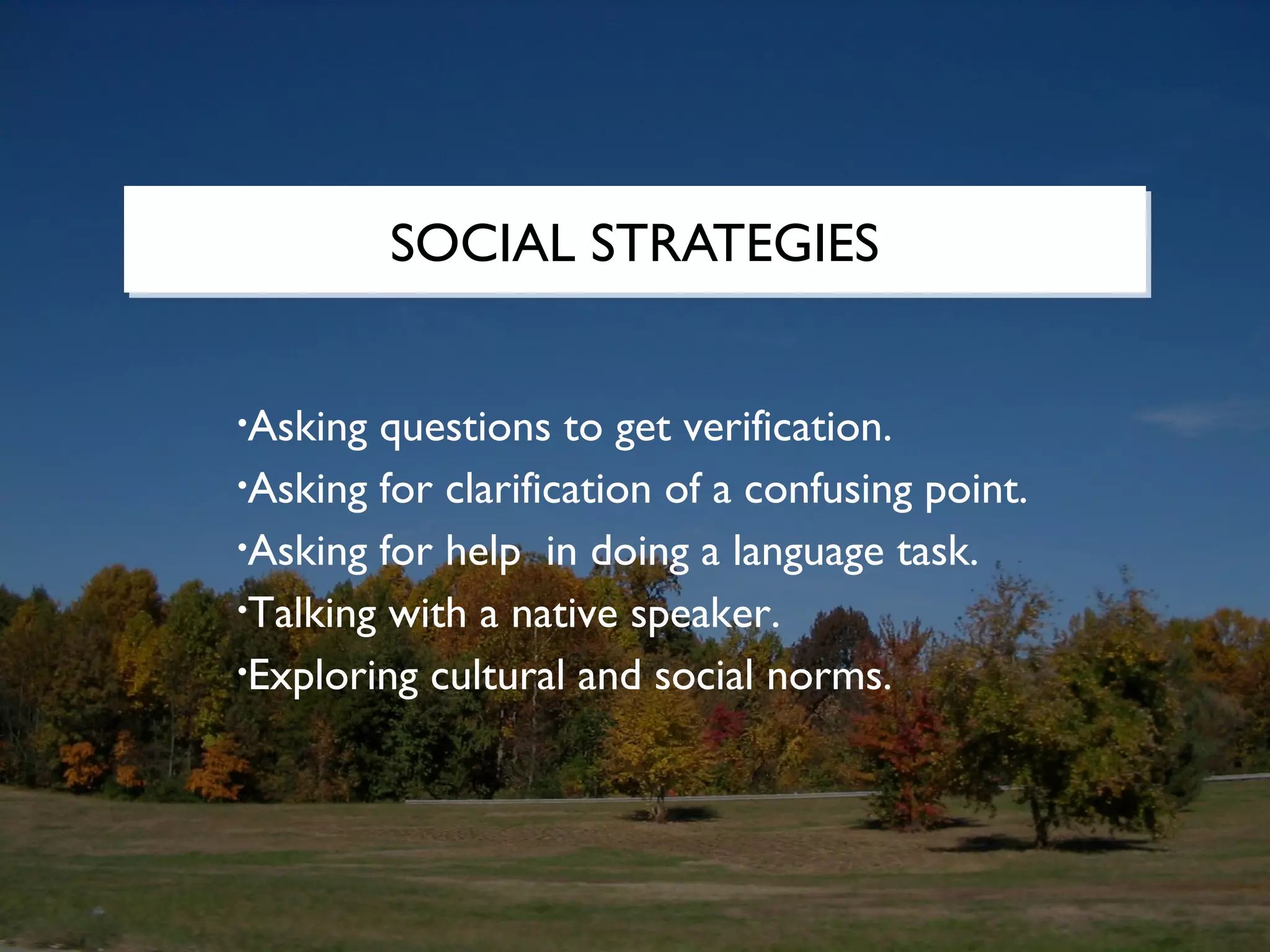
SOCIAL STRATEGIES


•Asking questions to get verification.
•Asking for clarification of a confusing point.

•Asking for help in doing a language task.

•Talking with a native speaker.

•Exploring cultural and social norms.
Didn’t have time to take notes?
   Find this presentation in:
   Find this presentation in:


   slideshare.net
And... Follow us at:
       And... Follow us at:


facebook.com/colomboresources
  pinterest.com/colomboedtech
 colomboresources.weebly.com

Learning strategies easy

  • 2.
  • 3.
    SIX MAIN CATEGORIESOF L2 LEARNING STRATEGIES
  • 4.
    COGNITIVE STRATEGIES COGNITIVE STRATEGIES Reasoning deductively: This is a top-down strategy leading from general to specific. Note-taking Summarizing Synthesizing Outlining Reorganizing Practicing structures and sounds formally
  • 5.
    METACOGNITIVE STRATEGIES METACOGNITIVE STRATEGIES Identifying one's own learning style preferences and needs. Planning for an L2 task. Gathering and organizing materials. Arranging a study space and schedule. Monitoring mistakes. Evaluating task sucess. Evaluating the success of any type of learning strategy.
  • 6.
  • 7.
    COMPENSATORY STRATEGIES Guessing fromcontext. Using synonyms and “talking around” the missin Using gestures.
  • 8.
    AFFECTIVE STRATEGIES Identifying one'smood and anxiety level. Talking about feelings. Rewarding oneself for good performance. Using deep breathing. Positive self-talk.
  • 9.
    SOCIAL STRATEGIES •Asking questionsto get verification. •Asking for clarification of a confusing point. •Asking for help in doing a language task. •Talking with a native speaker. •Exploring cultural and social norms.
  • 10.
    Didn’t have timeto take notes? Didn’t have time to take notes? Find this presentation in: Find this presentation in: slideshare.net
  • 11.
    And... Follow usat: And... Follow us at: facebook.com/colomboresources pinterest.com/colomboedtech colomboresources.weebly.com