CHAMPS:
PBIS in the
Classroom
Prepare Lessons to
Communicate Your
Expectations
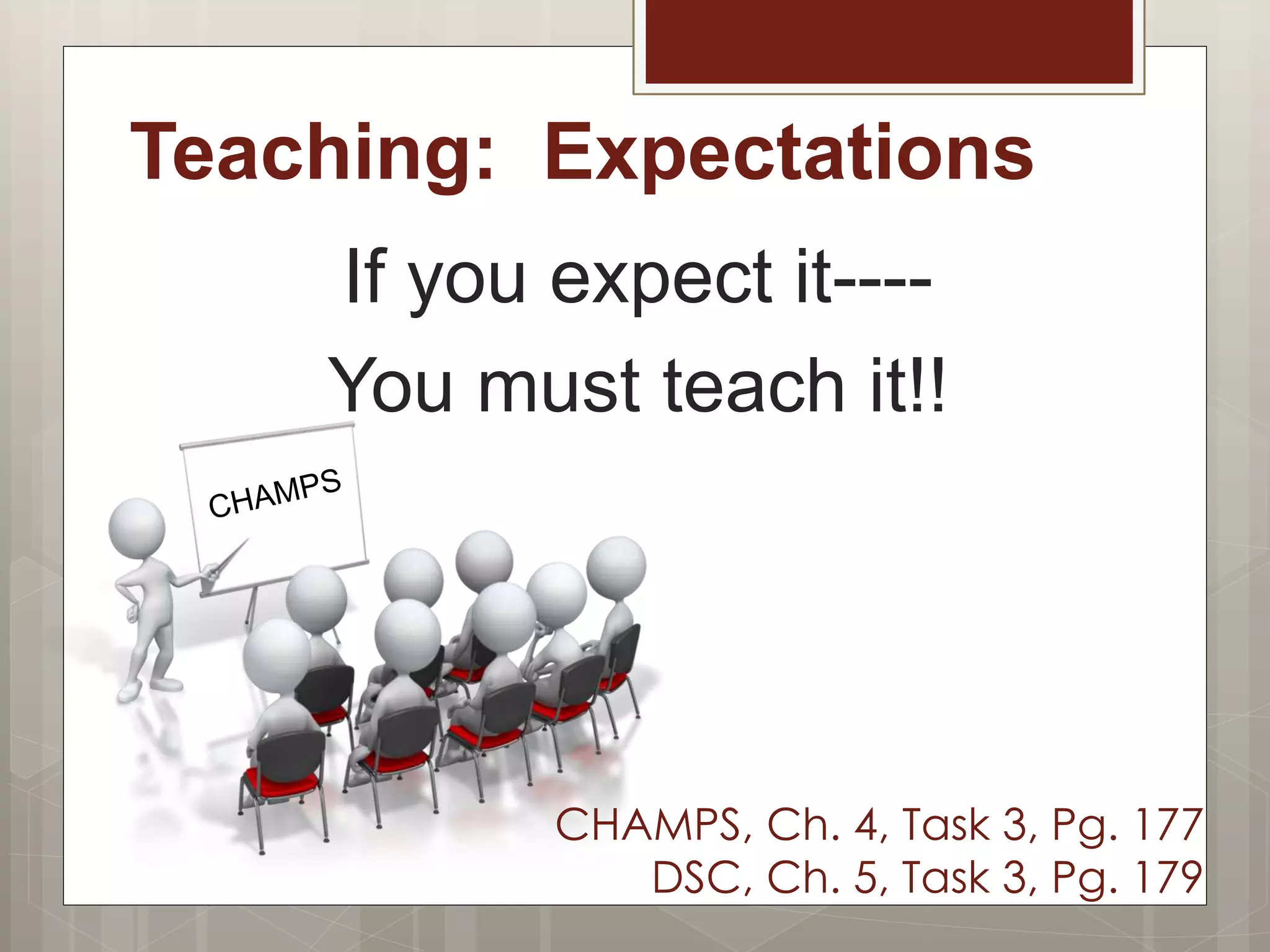
Teaching: Expectations
If you expect it----
You must teach it!!
CHAMPS, Ch. 4, Task 3, Pg. 177
DSC, Ch. 5, Task 3, Pg. 179
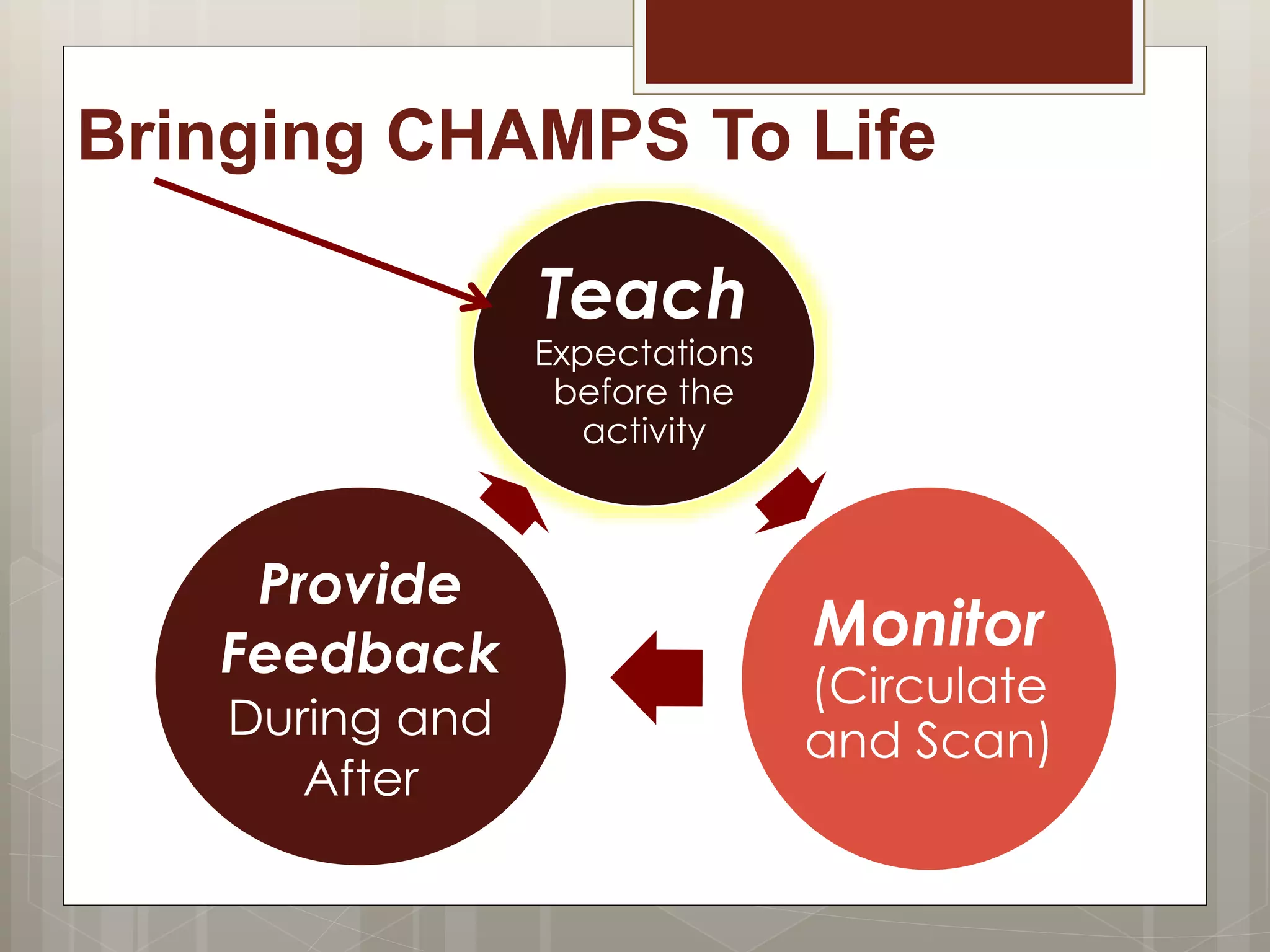
Bringing CHAMPS To Life
Teach
Expectations
before the
activity
Monitor
(Circulate
and Scan)
Provide
Feedback
During and
After
Teaching is necessary, but
teaching alone is not enough
We also need to provide:
 frequent opportunities to practice the
behavior
 frequent reinforcement and
acknowledgment for the desired
behavior
 frequent review and practice of the skill
 precorrection and reminders to cue the
expected behavior & develop the habit
 effective error correction procedures
Teach Expectations
High Structure Lessons
 Tell students about the upcoming
activity
 Tell students what to expect and
show expectations
 Model behaviors you expect
 Have some students demonstrate
 Model non-examples
 Model correct way once again
Teach Expectations
High Structure Lessons (cont.)
 Verify and check for understanding
(model behavior and have students
identify whether you are “doing it the
right way” or “doing it the wrong way”
 Review all positive expectations and
remodel the right way
 Have students get started
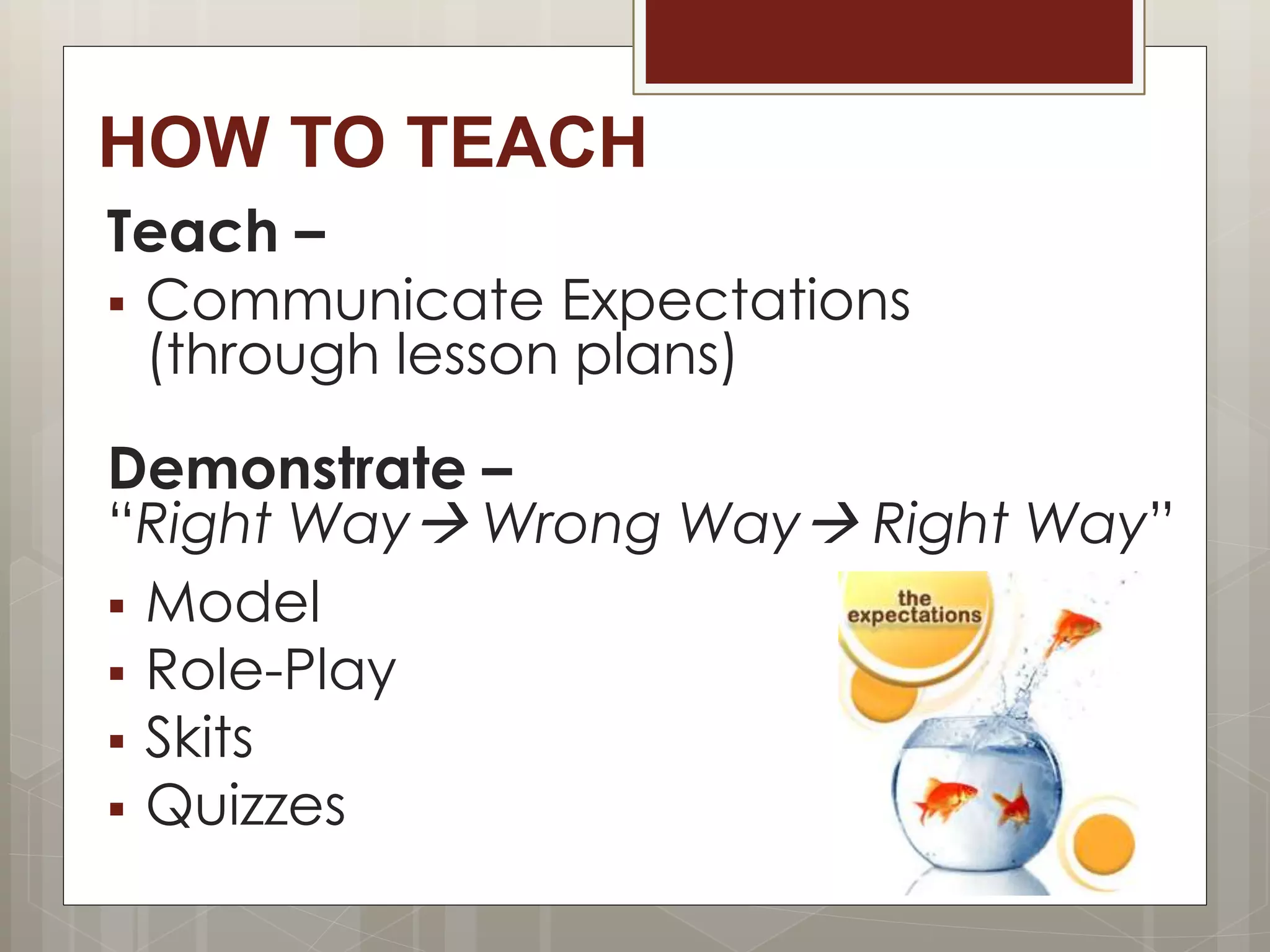
HOW TO TEACH
Demonstrate –
“Right Way Wrong Way Right Way”
 Model
 Role-Play
 Skits
 Quizzes
Teach –
 Communicate Expectations
(through lesson plans)
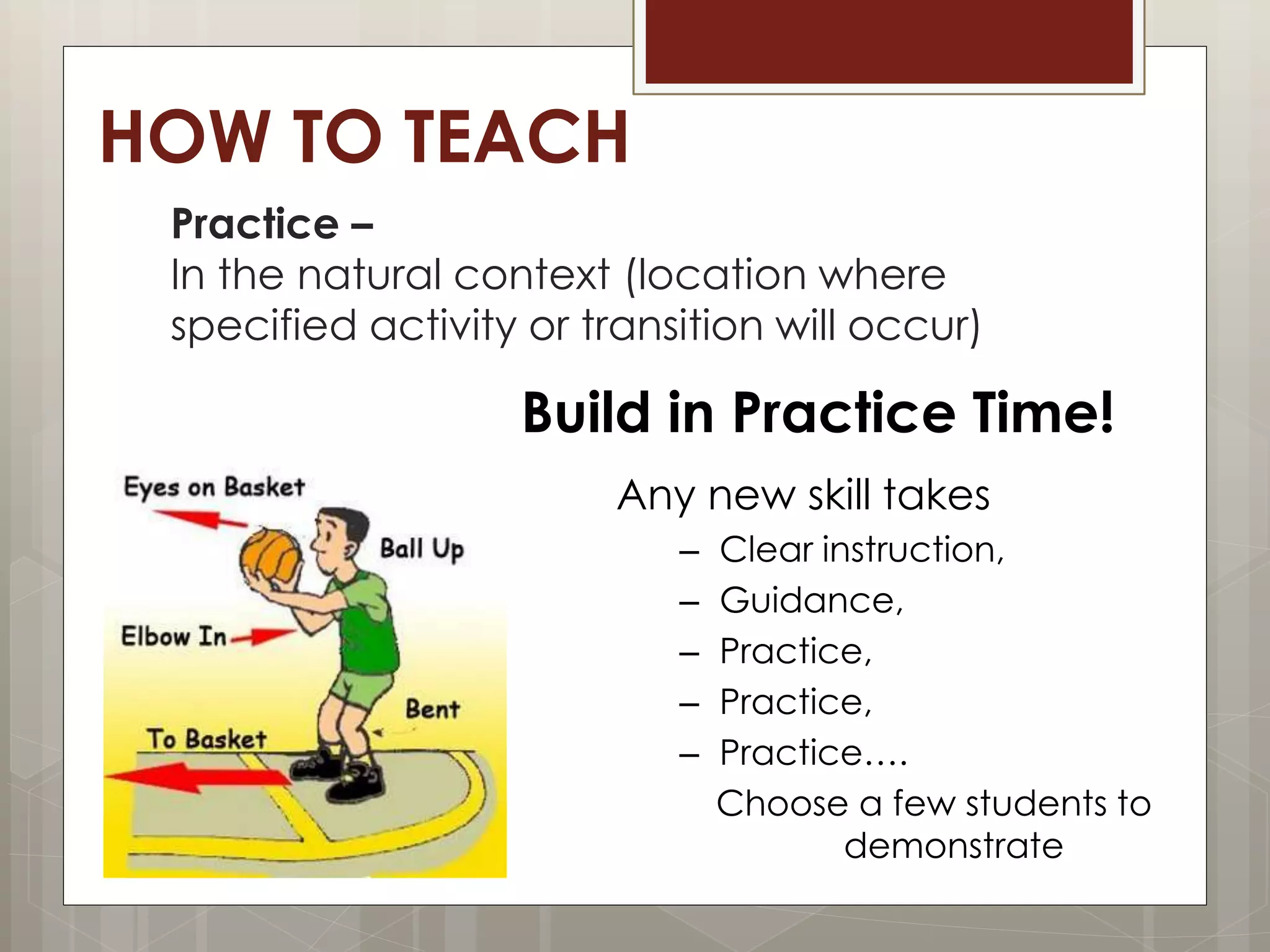
HOW TO TEACH
Practice –
In the natural context (location where
specified activity or transition will occur)
Build in Practice Time!
Any new skill takes
– Clear instruction,
– Guidance,
– Practice,
– Practice,
– Practice….
Choose a few students to
demonstrate
Teaching
Expectations
Examples
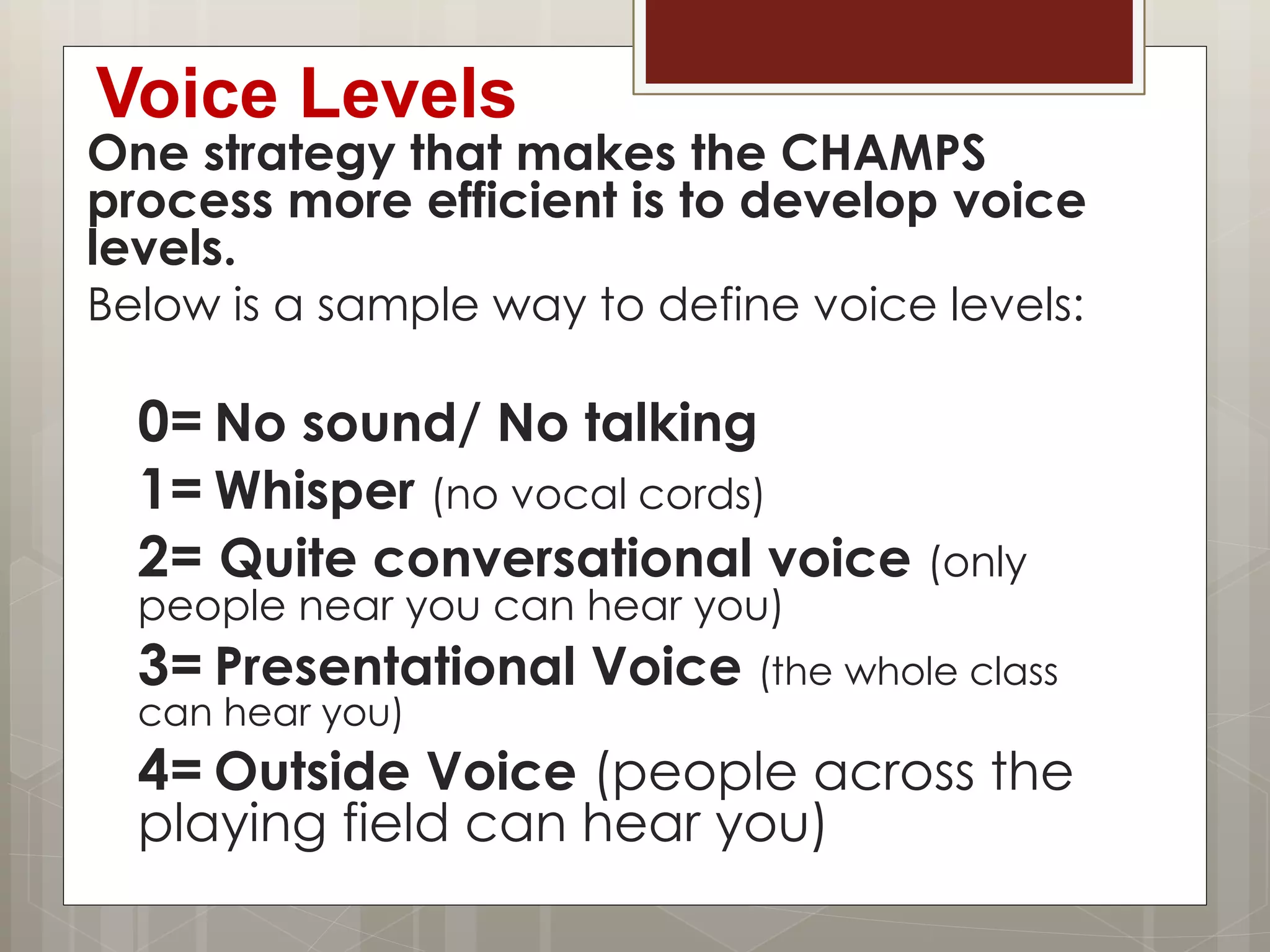
Voice Levels
One strategy that makes the CHAMPS
process more efficient is to develop voice
levels.
Below is a sample way to define voice levels:
0= No sound/ No talking
1= Whisper (no vocal cords)
2= Quite conversational voice (only
people near you can hear you)
3= Presentational Voice (the whole class
can hear you)
4= Outside Voice (people across the
playing field can hear you)
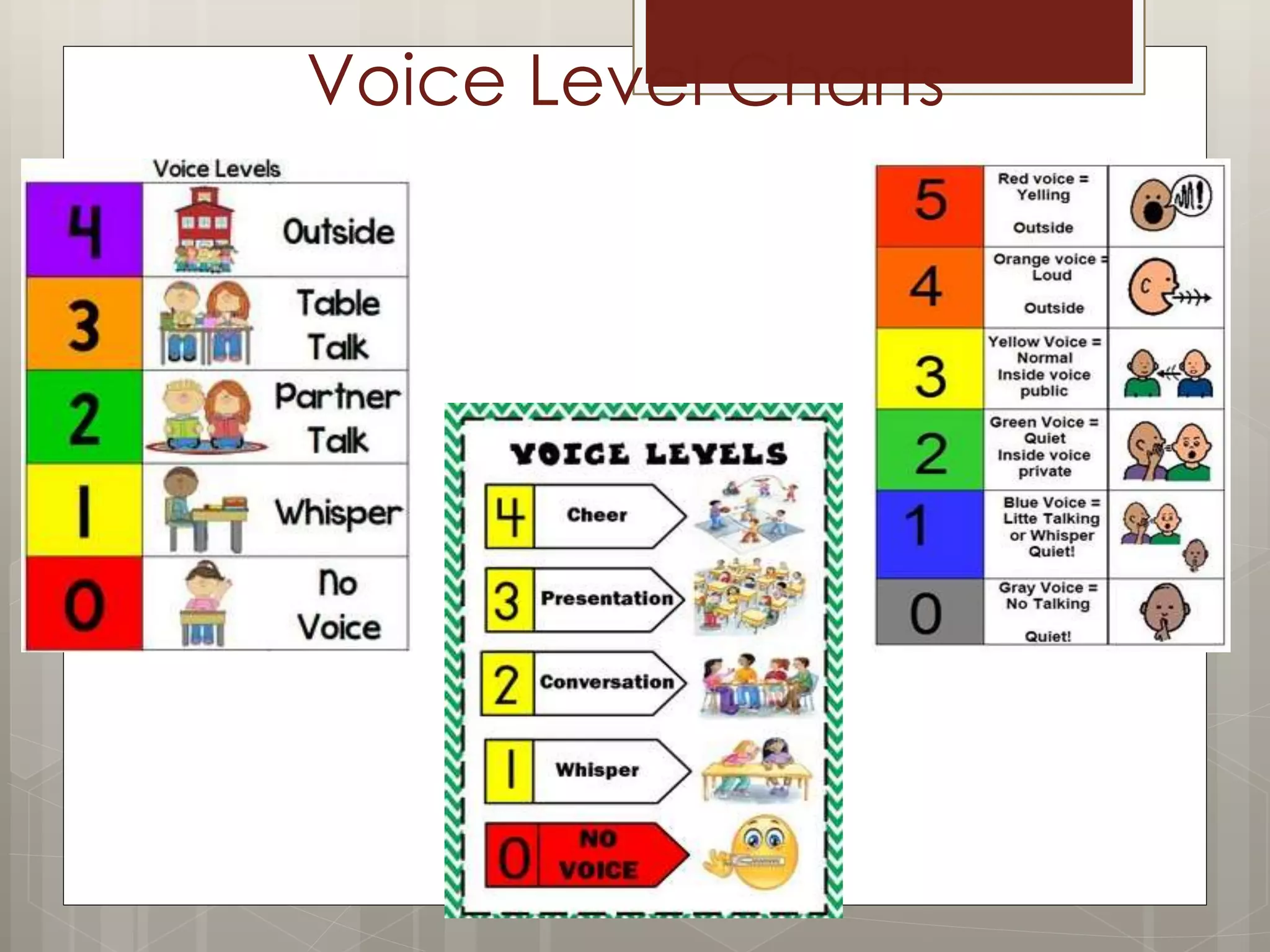
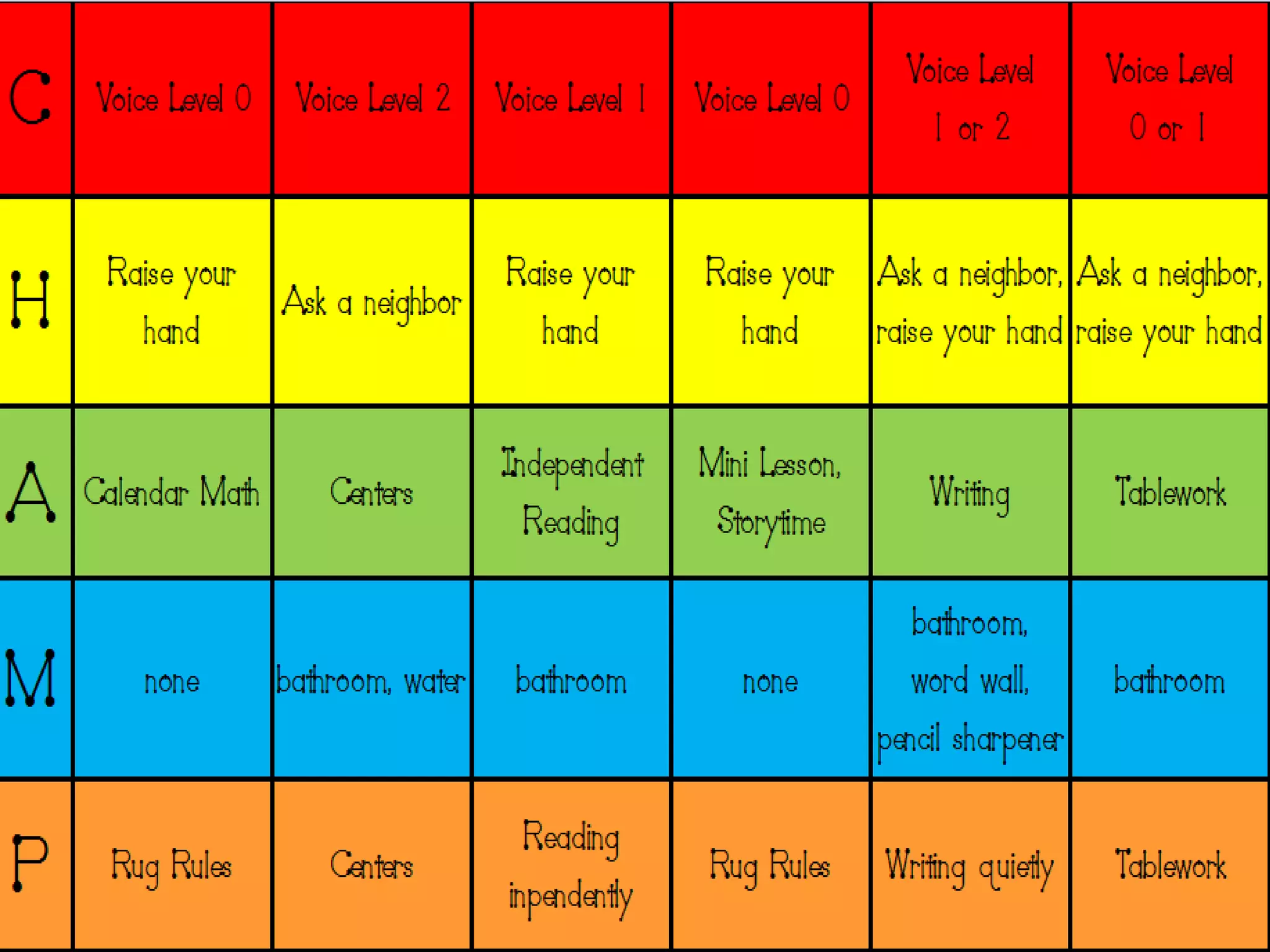
Voice Level Charts
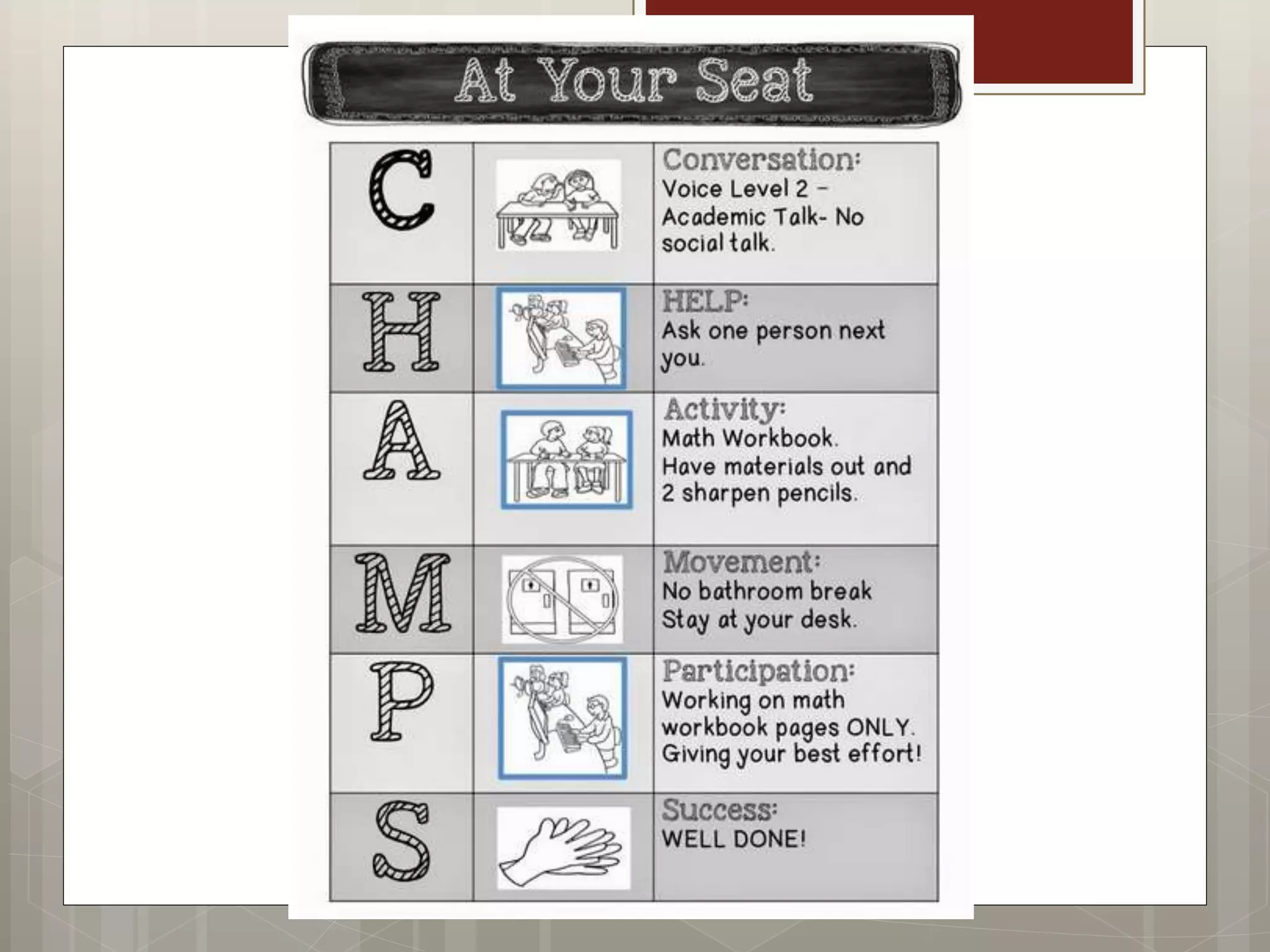
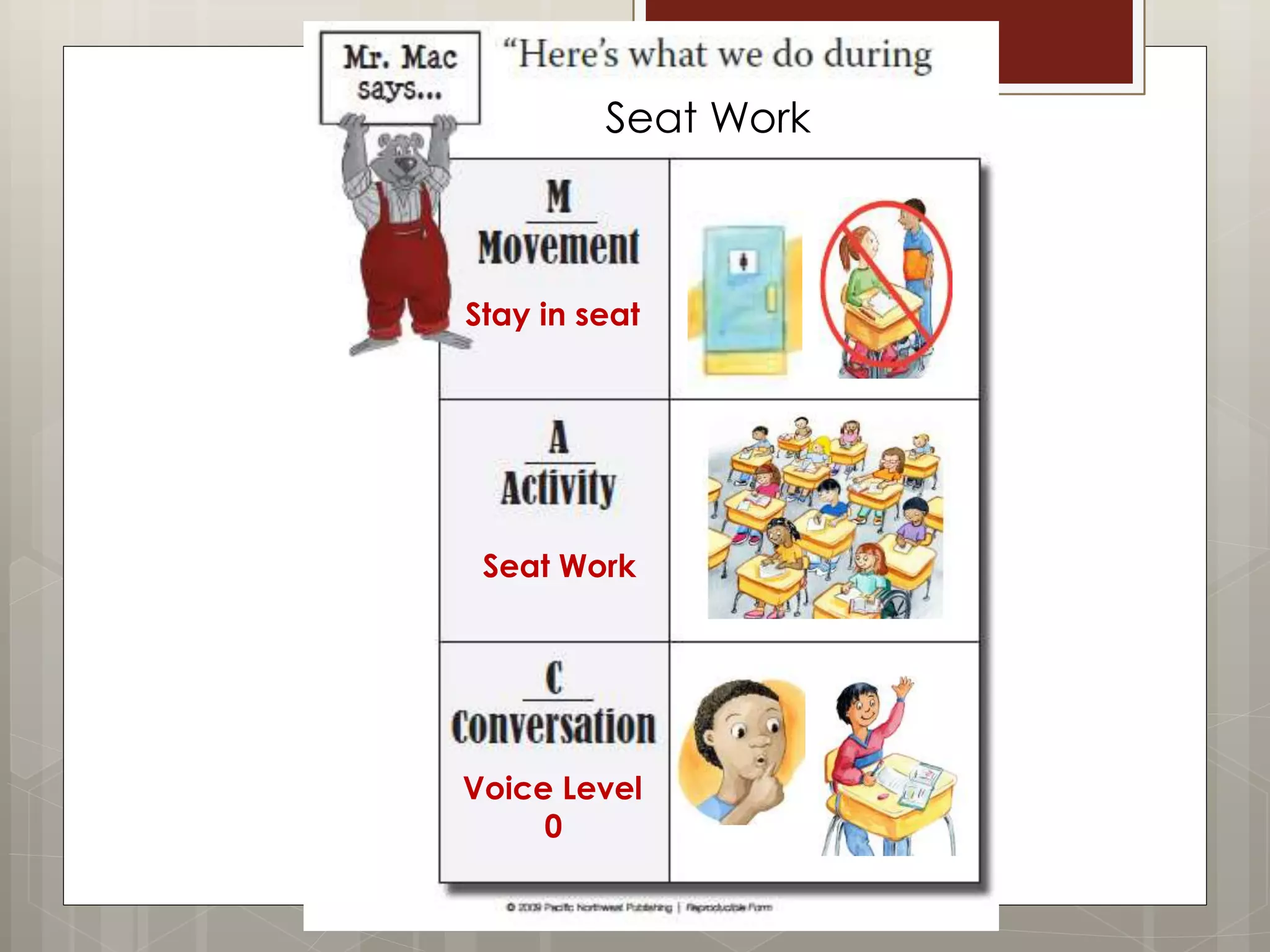
Seat Work
Stay in seat
Seat Work
Voice Level
0
HOW TO TEACH
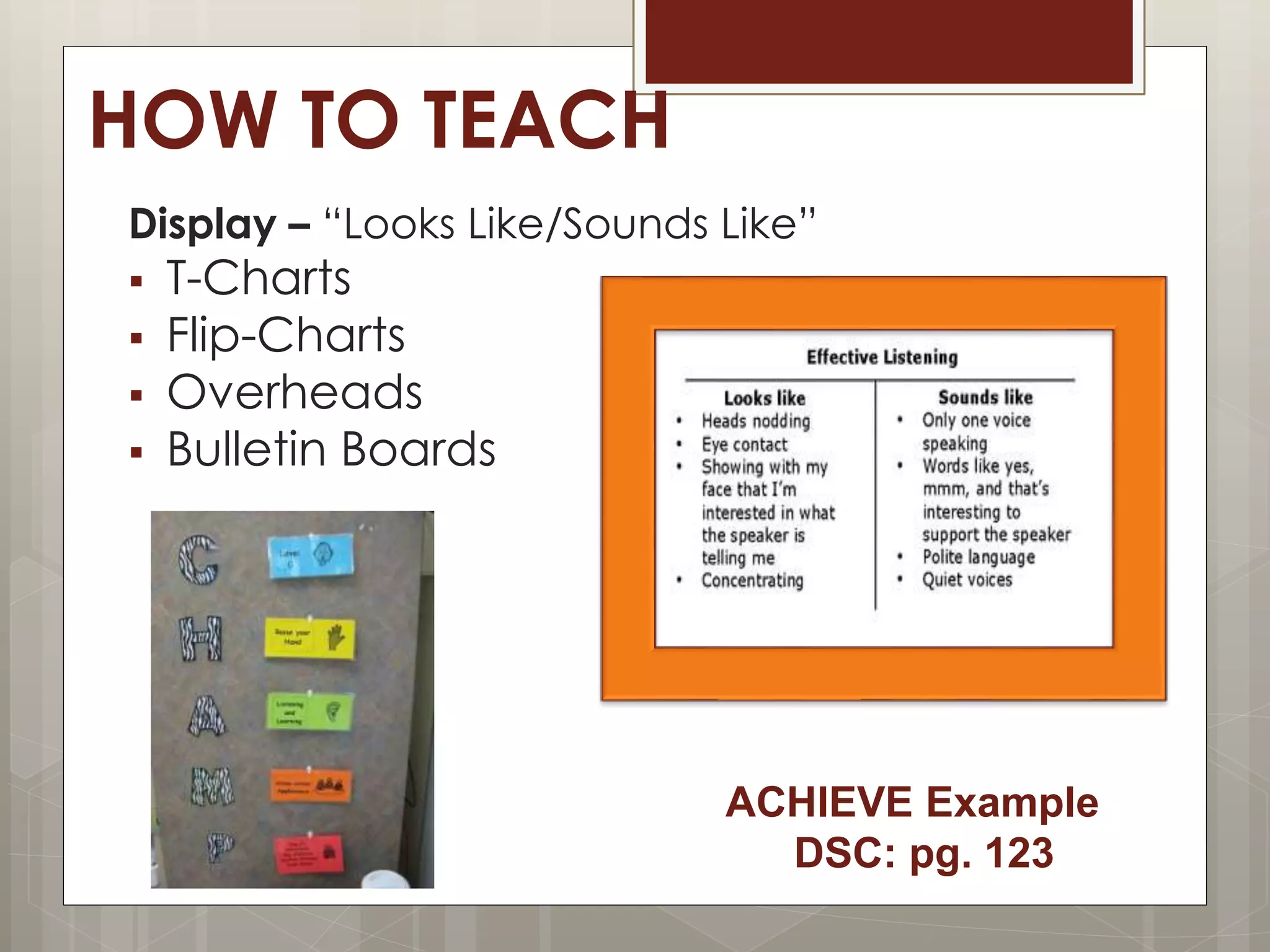
Display – “Looks Like/Sounds Like”
 T-Charts
 Flip-Charts
 Overheads
 Bulletin Boards
ACHIEVE Example
DSC: pg. 123
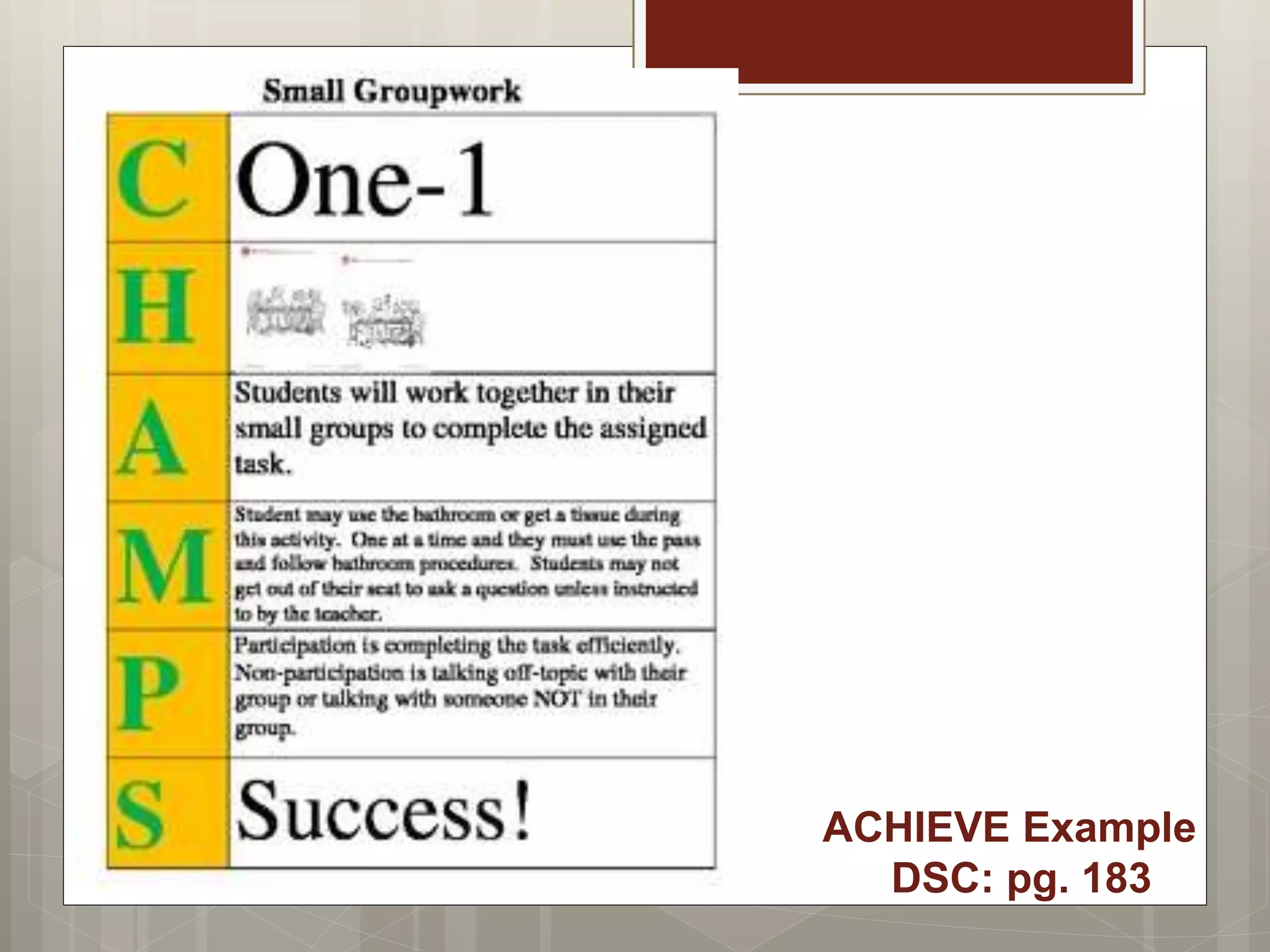
ACHIEVE Example
DSC: pg. 183
CHAMPS ICONS
The CD in the back of your book
contains icons that can be used in
creating your displays.
See pages 467-478 in CHAMPS and
pages 393-400 in DSC
HOW TO TEACH
Re-teach/Review/Remind –
 Teaching once or teaching only during the first
few weeks of school is not enough
 Expectations need to be retaught throughout the
school year and whenever necessary
 After vacations/breaks
 When rates of misbehavior increase
 When major changes to the classroom system
occur (i.e., several new students moving into
district/classroom, change in dynamics of
classroom)
HOW TO TEACH
Examples of how to organize
lessons and use visual displays
 Use CHAMPS worksheets
(Example on p. 184)
 Use Mr. Mac (younger students—
Example on p. 180)
 Use icons (p. 179)
 Use T-Charts (p.187)
 Use flip charts (p.182)
 DSC: 182-187

CHAMPS Module 8: Prepare Lessons to Communicate Your Expectations

  • 1.
    CHAMPS: PBIS in the Classroom PrepareLessons to Communicate Your Expectations
  • 2.
    Teaching: Expectations If youexpect it---- You must teach it!! CHAMPS, Ch. 4, Task 3, Pg. 177 DSC, Ch. 5, Task 3, Pg. 179
  • 3.
    Bringing CHAMPS ToLife Teach Expectations before the activity Monitor (Circulate and Scan) Provide Feedback During and After
  • 4.
    Teaching is necessary,but teaching alone is not enough We also need to provide:  frequent opportunities to practice the behavior  frequent reinforcement and acknowledgment for the desired behavior  frequent review and practice of the skill  precorrection and reminders to cue the expected behavior & develop the habit  effective error correction procedures
  • 5.
    Teach Expectations High StructureLessons  Tell students about the upcoming activity  Tell students what to expect and show expectations  Model behaviors you expect  Have some students demonstrate  Model non-examples  Model correct way once again
  • 6.
    Teach Expectations High StructureLessons (cont.)  Verify and check for understanding (model behavior and have students identify whether you are “doing it the right way” or “doing it the wrong way”  Review all positive expectations and remodel the right way  Have students get started
  • 7.
    HOW TO TEACH Demonstrate– “Right Way Wrong Way Right Way”  Model  Role-Play  Skits  Quizzes Teach –  Communicate Expectations (through lesson plans)
  • 8.
    HOW TO TEACH Practice– In the natural context (location where specified activity or transition will occur) Build in Practice Time! Any new skill takes – Clear instruction, – Guidance, – Practice, – Practice, – Practice…. Choose a few students to demonstrate
  • 9.
  • 10.
    Voice Levels One strategythat makes the CHAMPS process more efficient is to develop voice levels. Below is a sample way to define voice levels: 0= No sound/ No talking 1= Whisper (no vocal cords) 2= Quite conversational voice (only people near you can hear you) 3= Presentational Voice (the whole class can hear you) 4= Outside Voice (people across the playing field can hear you)
  • 11.
  • 15.
    Seat Work Stay inseat Seat Work Voice Level 0
  • 16.
    HOW TO TEACH Display– “Looks Like/Sounds Like”  T-Charts  Flip-Charts  Overheads  Bulletin Boards ACHIEVE Example DSC: pg. 123
  • 17.
  • 19.
    CHAMPS ICONS The CDin the back of your book contains icons that can be used in creating your displays. See pages 467-478 in CHAMPS and pages 393-400 in DSC
  • 20.
    HOW TO TEACH Re-teach/Review/Remind–  Teaching once or teaching only during the first few weeks of school is not enough  Expectations need to be retaught throughout the school year and whenever necessary  After vacations/breaks  When rates of misbehavior increase  When major changes to the classroom system occur (i.e., several new students moving into district/classroom, change in dynamics of classroom)
  • 21.
    HOW TO TEACH Examplesof how to organize lessons and use visual displays  Use CHAMPS worksheets (Example on p. 184)  Use Mr. Mac (younger students— Example on p. 180)  Use icons (p. 179)  Use T-Charts (p.187)  Use flip charts (p.182)  DSC: 182-187

Editor's Notes

  • #2 Page 21 in packet.
  • #3 If you expect it—you must teach it! Everybody say that.
  • #4 Trainers: This slide is animated. Teaching expectations is a 3 step process that doesn’t just mean teaching. Monitoring and providing feedback are just as important as teaching but frequently are omitted. CLICK ONCE: First we are going to talk about what the “Teach” portion is.
  • #6 This summarizes what is presented in the book. Presenters: Do not read this slide to them. Ask them to skim it over either on their handout of the power point or on the screen. Notes to facilitators: Randy discusses low/medium/high structure classrooms in his book and video. We are making the assumption that most teachers will want to start with high structure and can switch to a medium/low structure lesson format at a later time.
  • #7 This summarizes what is presented in the book. Presenters: Do not read this slide to them. Ask them to skim it over either on their handout of the power point or on the screen.
  • #8 To summarize: These components should be included in the teaching of expectations. It is very important that the teacher demonstrates the “wrong” way or the non-example. Students should be provided with “positive practice” which means they are practicing only the “right” way or the example. Always end the model/demonstration with the positive example (the right way).
  • #9 Trainers: It would be helpful to have some examples. As you begin working with teachers implementing CHAMPS, try to get some example T-Charts, pictures of bulleting boards, flip charts, etc. Flip charts are generally used at the secondary level where students change classes from hour to hour. If you currently do not have any products to show during trainings. It may help to create some examples.
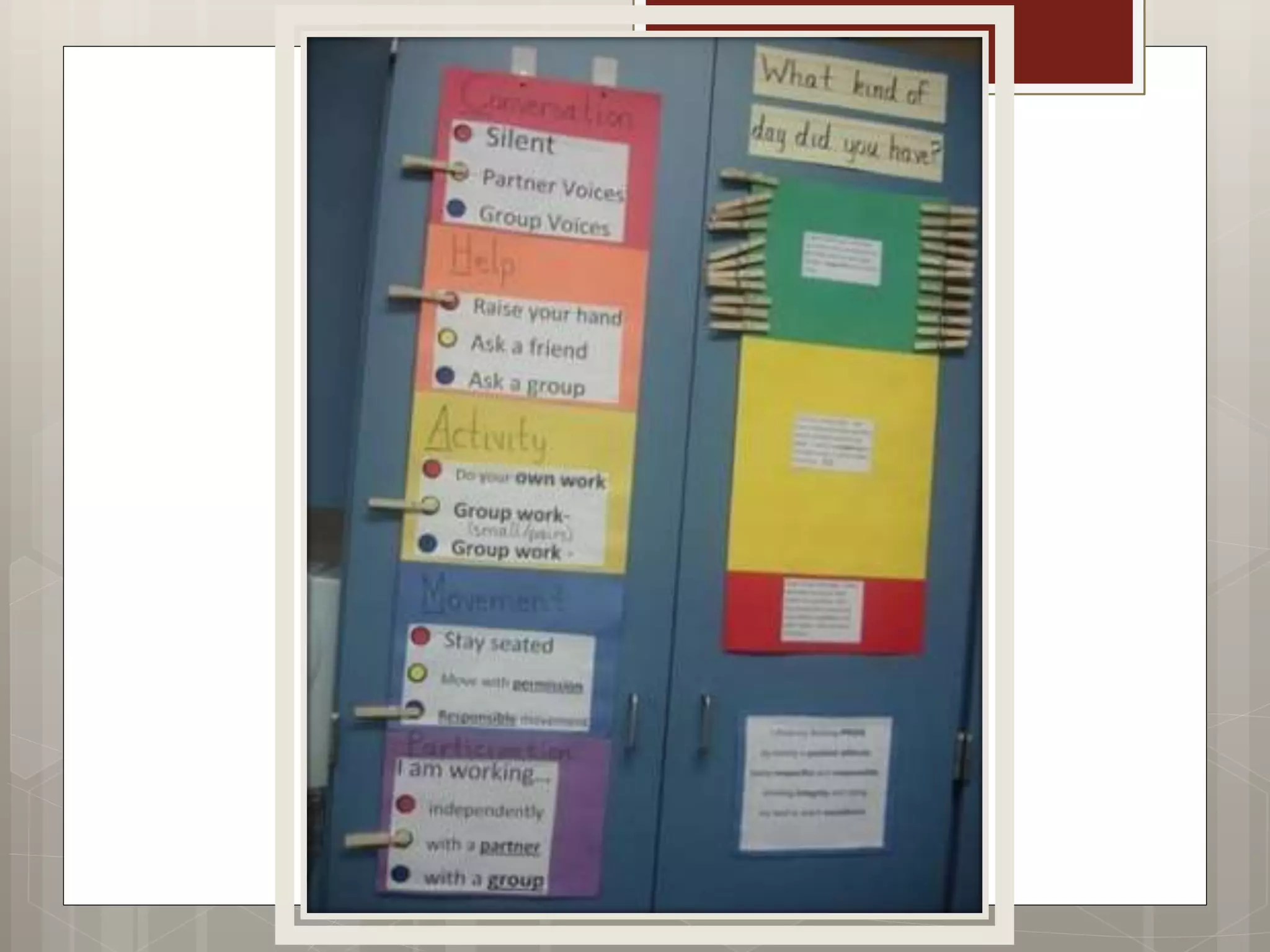
  • #11 Refer to page 155 in your book for more information on voice levels And, of course, you should modify this list to suit your style. If you plan to use levels, be sure to post a chart that students can easily see from anywhere in the room.
  • #12 Before we have you move onto the next activity, here are some examples of completed voice level charts
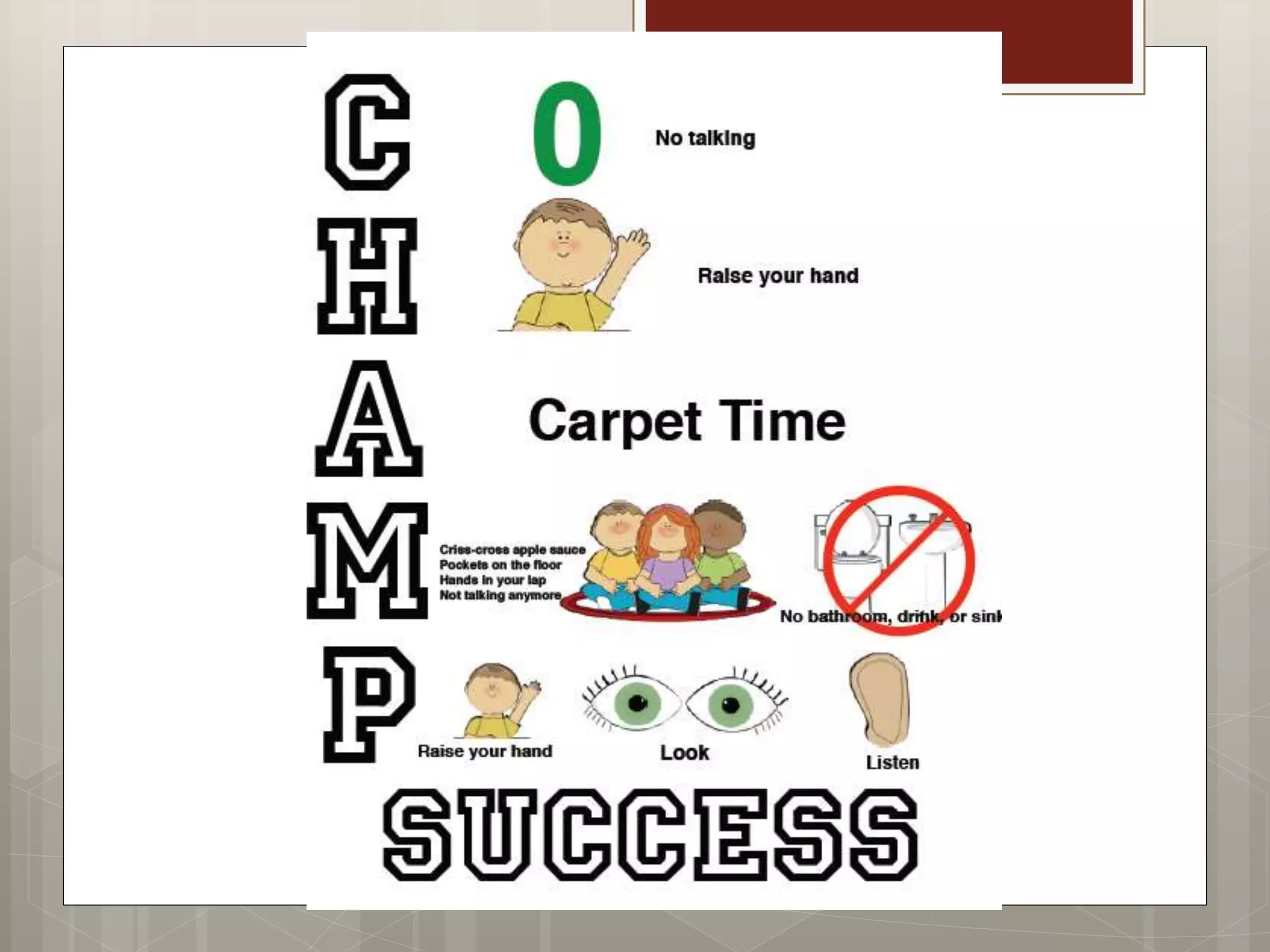
  • #13 Here are some examples of both CHAMPS and MAC posters that were created
  • #17 Trainers: It would be helpful to have some examples. As you begin working with teachers implementing CHAMPS, try to get some example T-Charts, pictures of bulleting boards, flip charts, etc. Flip charts are generally used at the secondary level where students change classes from hour to hour. If you currently do not have any products to show during trainings. It may help to create some examples.
  • #22 This slide gets participants into the book and using some of the tools that have been created by Safe and Civil Schools.