How to Write Effective
Learning Objectives
What are learning
objectives?
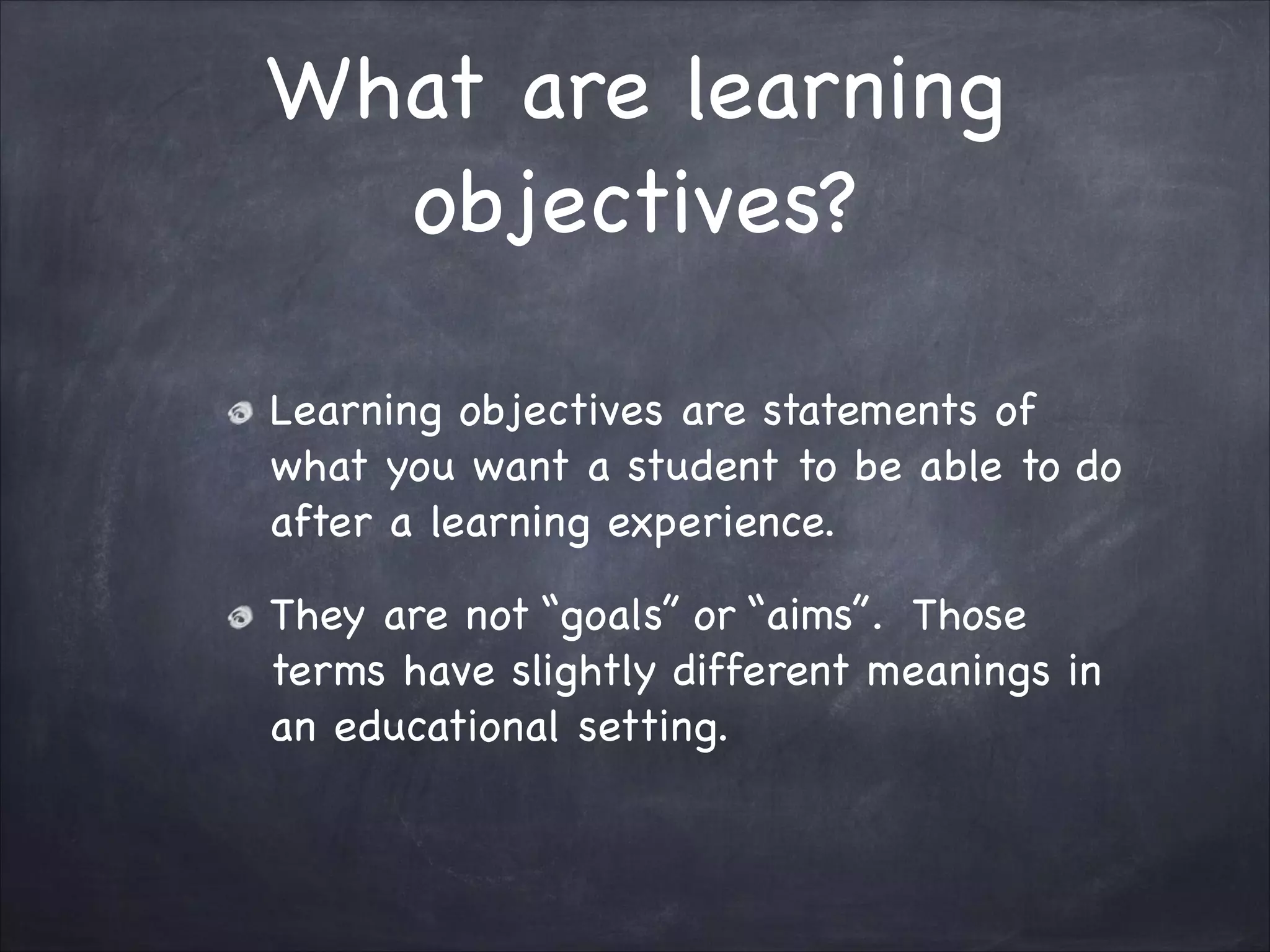
Learning objectives are statements of
what you want a student to be able to do
after a learning experience.

They are not “goals” or “aims”. Those
terms have slightly different meanings in
an educational setting.
What are learning
objectives?
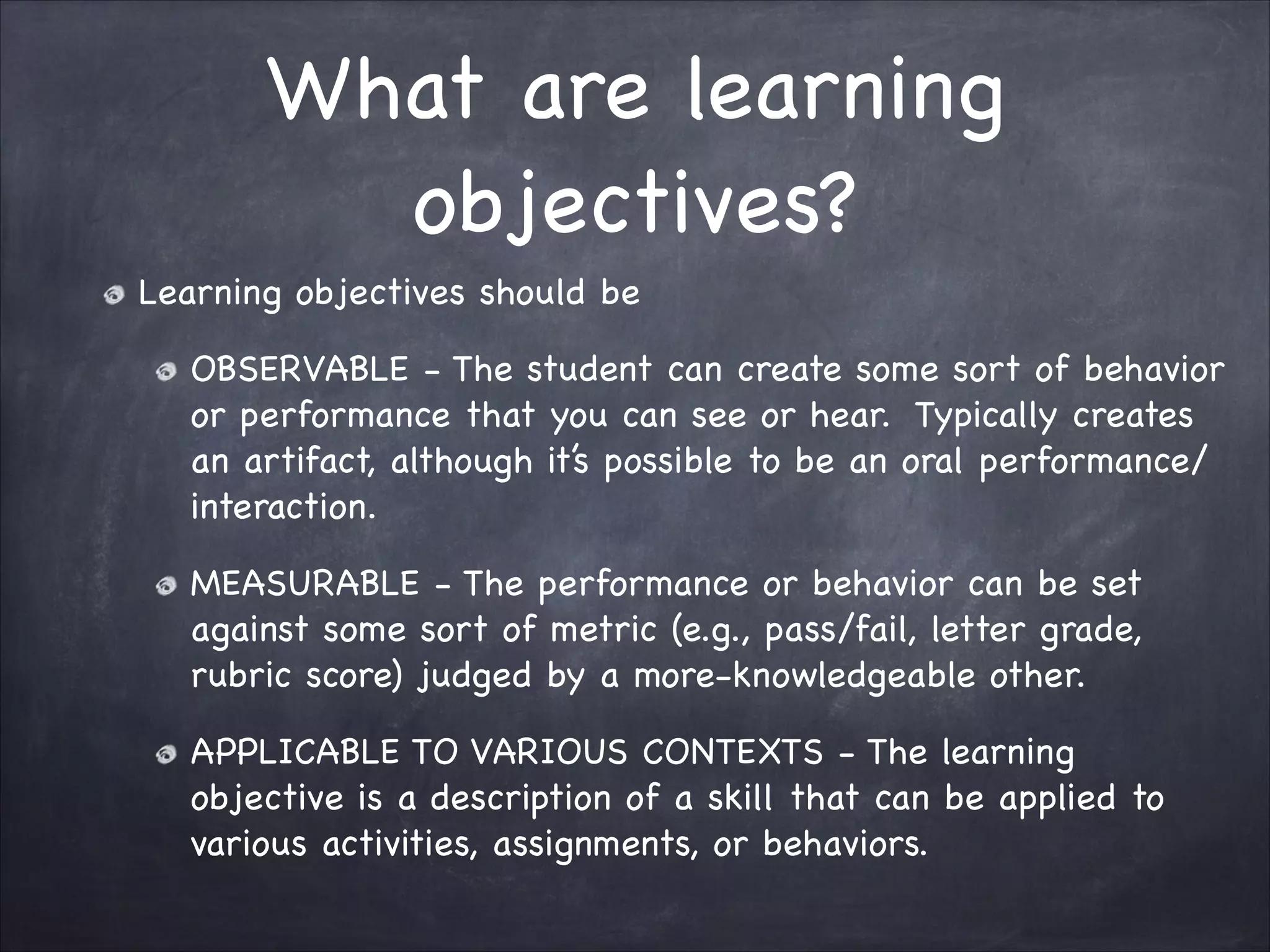
Learning objectives should be 

OBSERVABLE - The student can create some sort of behavior
or performance that you can see or hear. Typically creates
an artifact, although it’s possible to be an oral performance/
interaction.

MEASURABLE - The performance or behavior can be set
against some sort of metric (e.g., pass/fail, letter grade,
rubric score) judged by a more-knowledgeable other.

APPLICABLE TO VARIOUS CONTEXTS - The learning
objective is a description of a skill that can be applied to
various activities, assignments, or behaviors.
Structure of a Learning
Objective
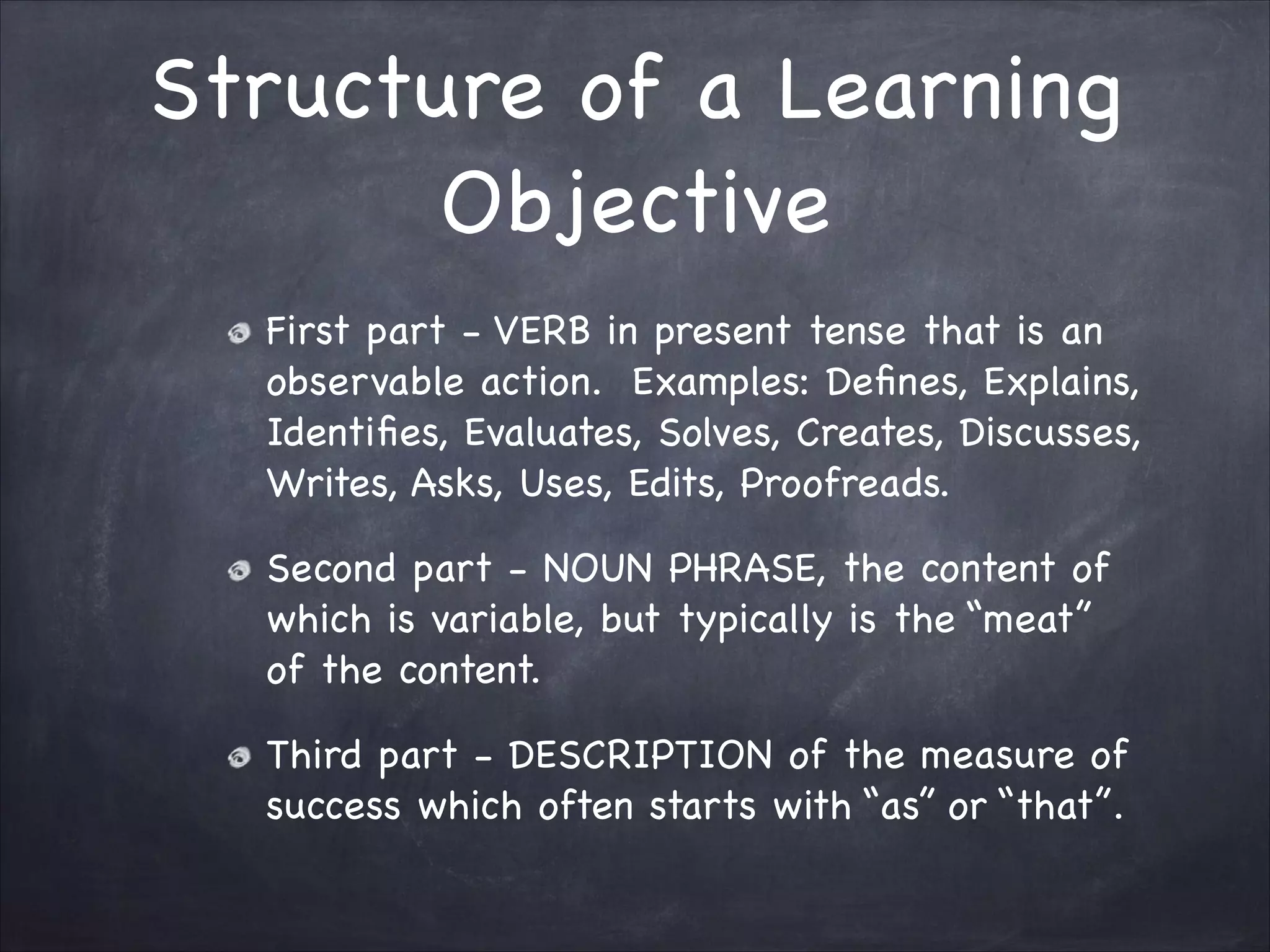
First part - VERB in present tense that is an
observable action. Examples: Defines, Explains,
Identifies, Evaluates, Solves, Creates, Discusses,
Writes, Asks, Uses, Edits, Proofreads.

Second part - NOUN PHRASE, the content of
which is variable, but typically is the “meat”
of the content. 

Third part - DESCRIPTION of the measure of
success which often starts with “as” or “that”.
Example Learning
Objective
Defines a noun as a person, place, or
thing.

Part 1: Defines

Part 2: a noun

Part 3: as a person, place or thing.
Example Learning
Objective
Writes a comparative essay that uses a
whole-to-whole or part-to-part
organizational structure.

Part 1: Writes

Part 2: a comparative essay

Part 3: that uses a whole-to-whole or
part-to-part organizational structure.
Example Learning
Objective
Selects a book for independent reading
that is an appropriate level for and
interest to the student.

Part 1: Selects

Part 2: a book for independent reading

Part 3: that is an appropriate level for
and interest to the student.
Example Learning
Objective
Brainstorms throughout the writing
process to come up with ideas for writing.

Part 1: Brainstorms

Part 2/3: throughout the writing process
to come up with ideas for writing.
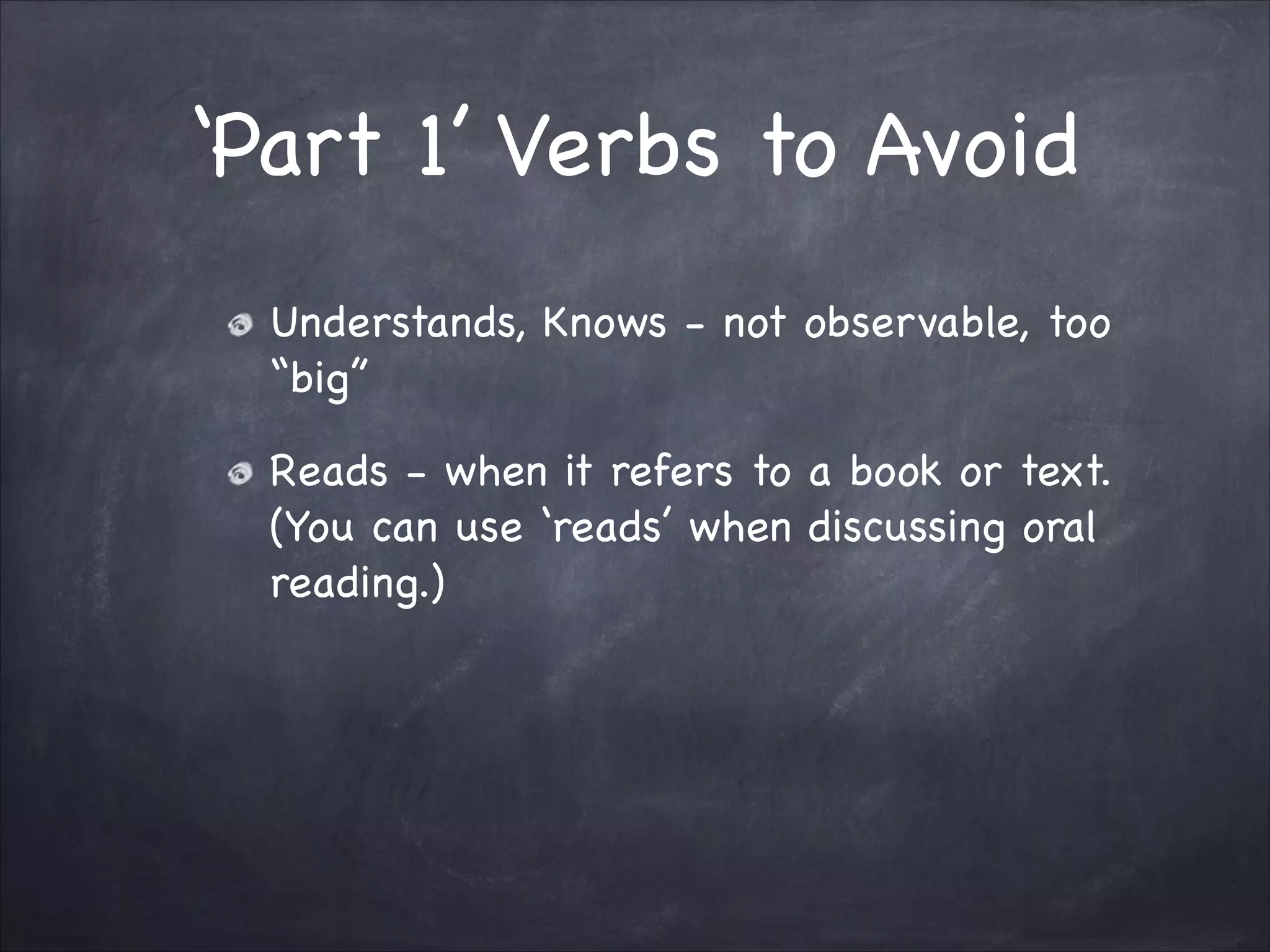
‘Part 1’ Verbs to Avoid
Understands, Knows - not observable, too
“big”

Reads - when it refers to a book or text.
(You can use ‘reads’ when discussing oral
reading.)
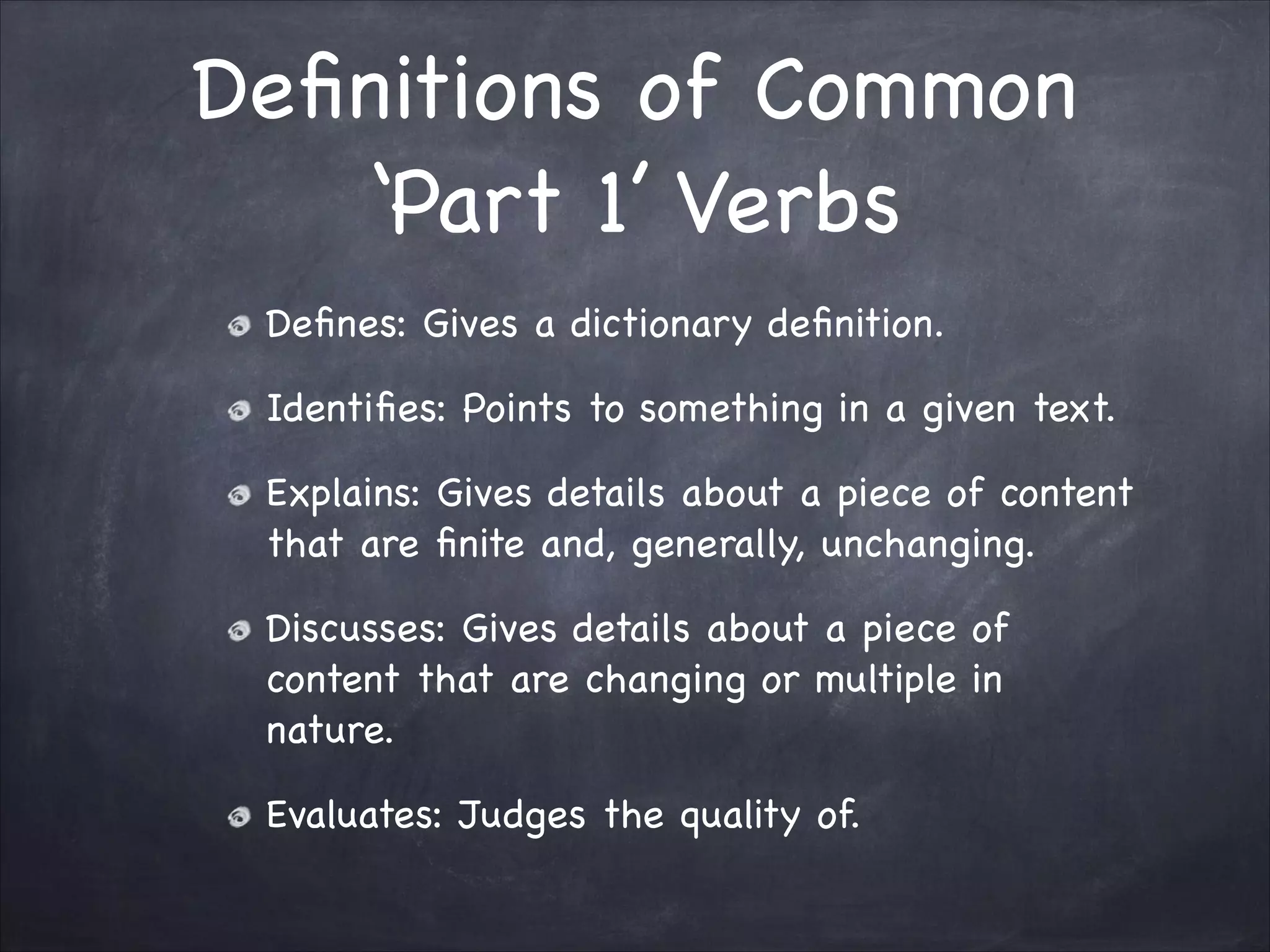
Definitions of Common
‘Part 1’ Verbs
Defines: Gives a dictionary definition.

Identifies: Points to something in a given text.

Explains: Gives details about a piece of content
that are finite and, generally, unchanging.

Discusses: Gives details about a piece of
content that are changing or multiple in
nature.

Evaluates: Judges the quality of.
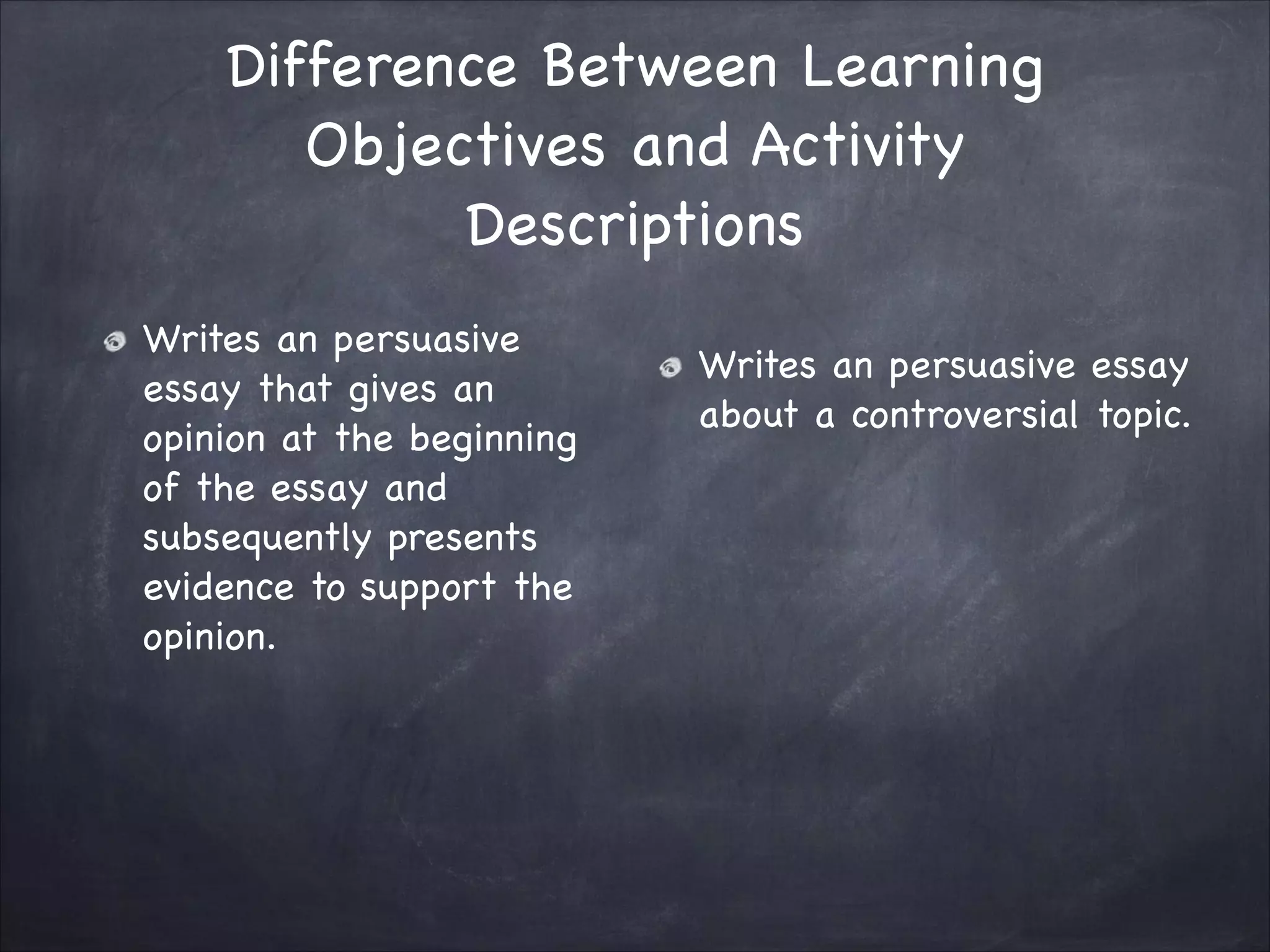
Difference Between Learning
Objectives and Activity
Descriptions
Writes an persuasive
essay that gives an
opinion at the beginning
of the essay and
subsequently presents
evidence to support the
opinion.
Writes an persuasive essay
about a controversial topic.
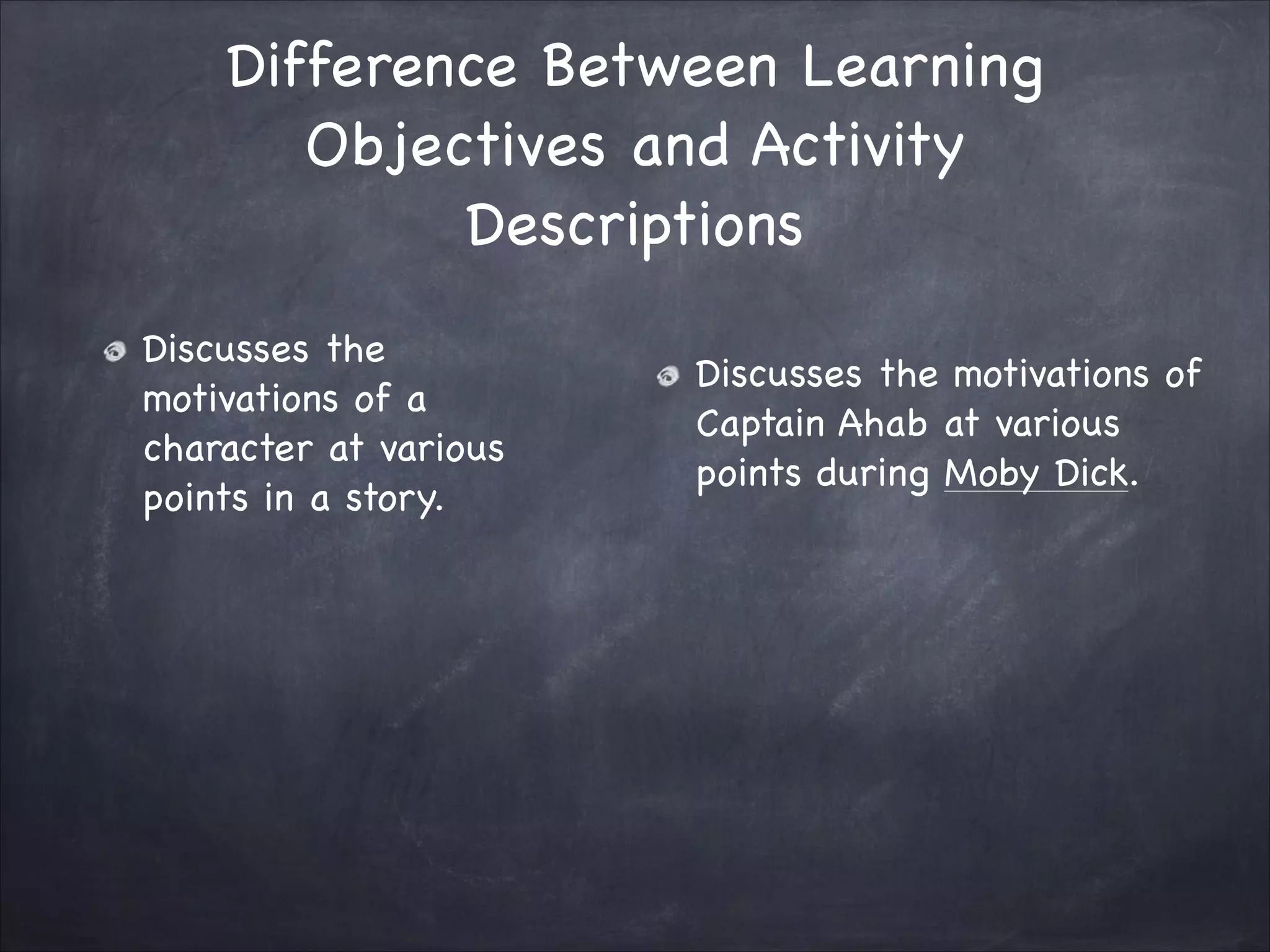
Difference Between Learning
Objectives and Activity
Descriptions
Discusses the
motivations of a
character at various
points in a story.
Discusses the motivations of
Captain Ahab at various
points during Moby Dick.
From Learning
Objectives . . .
Various possibilities for instruction and learning
experiences should be evident.

Various possibilities for assessment—methods
and criteria—should also be evident.

Learning objectives power point

  • 1.
    How to WriteEffective Learning Objectives
  • 2.
    What are learning objectives? Learningobjectives are statements of what you want a student to be able to do after a learning experience. They are not “goals” or “aims”. Those terms have slightly different meanings in an educational setting.
  • 3.
    What are learning objectives? Learningobjectives should be OBSERVABLE - The student can create some sort of behavior or performance that you can see or hear. Typically creates an artifact, although it’s possible to be an oral performance/ interaction. MEASURABLE - The performance or behavior can be set against some sort of metric (e.g., pass/fail, letter grade, rubric score) judged by a more-knowledgeable other. APPLICABLE TO VARIOUS CONTEXTS - The learning objective is a description of a skill that can be applied to various activities, assignments, or behaviors.
  • 4.
    Structure of aLearning Objective First part - VERB in present tense that is an observable action. Examples: Defines, Explains, Identifies, Evaluates, Solves, Creates, Discusses, Writes, Asks, Uses, Edits, Proofreads. Second part - NOUN PHRASE, the content of which is variable, but typically is the “meat” of the content. Third part - DESCRIPTION of the measure of success which often starts with “as” or “that”.
  • 5.
    Example Learning Objective Defines anoun as a person, place, or thing. Part 1: Defines Part 2: a noun Part 3: as a person, place or thing.
  • 6.
    Example Learning Objective Writes acomparative essay that uses a whole-to-whole or part-to-part organizational structure. Part 1: Writes Part 2: a comparative essay Part 3: that uses a whole-to-whole or part-to-part organizational structure.
  • 7.
    Example Learning Objective Selects abook for independent reading that is an appropriate level for and interest to the student. Part 1: Selects Part 2: a book for independent reading Part 3: that is an appropriate level for and interest to the student.
  • 8.
    Example Learning Objective Brainstorms throughoutthe writing process to come up with ideas for writing. Part 1: Brainstorms Part 2/3: throughout the writing process to come up with ideas for writing.
  • 9.
    ‘Part 1’ Verbsto Avoid Understands, Knows - not observable, too “big” Reads - when it refers to a book or text. (You can use ‘reads’ when discussing oral reading.)
  • 10.
    Definitions of Common ‘Part1’ Verbs Defines: Gives a dictionary definition. Identifies: Points to something in a given text. Explains: Gives details about a piece of content that are finite and, generally, unchanging. Discusses: Gives details about a piece of content that are changing or multiple in nature. Evaluates: Judges the quality of.
  • 11.
    Difference Between Learning Objectivesand Activity Descriptions Writes an persuasive essay that gives an opinion at the beginning of the essay and subsequently presents evidence to support the opinion. Writes an persuasive essay about a controversial topic.
  • 12.
    Difference Between Learning Objectivesand Activity Descriptions Discusses the motivations of a character at various points in a story. Discusses the motivations of Captain Ahab at various points during Moby Dick.
  • 13.
    From Learning Objectives .. . Various possibilities for instruction and learning experiences should be evident. Various possibilities for assessment—methods and criteria—should also be evident.