 PRESENTED BY
 Arun
 Arup
 Deepak
 Tamas
 Zubair
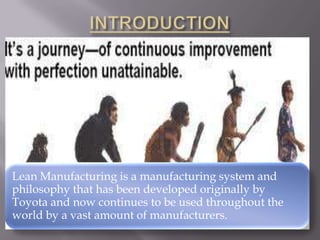
Lean Manufacturing is a manufacturing system and
philosophy that has been developed originally by
Toyota and now continues to be used throughout the
world by a vast amount of manufacturers.
Lean manufacturing is basically
the concept of eliminating waste
in its many forms in the
manufacturing process, waste
may be in the from of excessive
labor costs or excess materials.
Benefits of lean manufacturing
Improved Customer Service; delivering exactly
what the customer wants when they want it.
Improved Productivity.
Quality; Reductions in defects and rework.
Innovation; staff are fully involved so
improved morale and participation in
the business.
Reduced Waste; Less transport,
moving, waiting, space, and physical
waste.
Improved Lead Times; Business
able to respond quicker, quicker
set ups, fewer delays.
Improved Stock Turns; Less work
in progress and Inventory, so less
capital tied up.
Provides complete guidance for factory
conversion to Lean manufacturing without
the aid of a consultant.
Q . Discusses how Lean lines are designed
to meet future demand and the factors that
impact throughput, scrap, rework, and
optionality.
Covers resource
identification, calculation, line
design, operational
definition, and quality at the
task level.
Explores how company
culture is changed, identifies
the challenges of
implementation, and justifies
Lean transformation in dollars
and cents, plus much more.
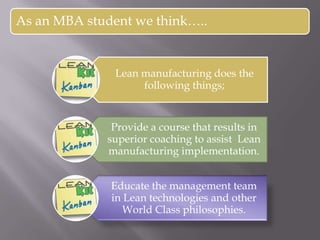
As an MBA student we think…..
Lean manufacturing does the
following things;
Provide a course that results in
superior coaching to assist Lean
manufacturing implementation.
Educate the management team
in Lean technologies and other
World Class philosophies.
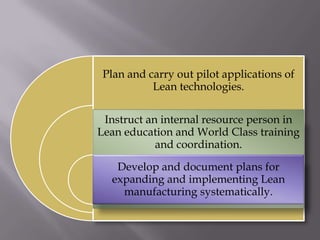
Plan and carry out pilot applications of
Lean technologies.
Instruct an internal resource person in
Lean education and World Class training
and coordination.
Develop and document plans for
expanding and implementing Lean
manufacturing systematically.
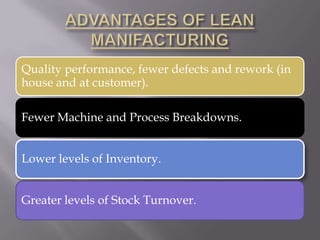
Quality performance, fewer defects and rework (in
house and at customer).
Fewer Machine and Process Breakdowns.
Lower levels of Inventory.
Greater levels of Stock Turnover.
Less Space Required.
Higher efficiencies, more output per man hour.
Improved delivery performance.
Faster Development.
Greater Customer Satisfaction.
Improved employee morale and involvement.
Improved Supplier Relations.
HIGHER PROFITS!
INCREASED BUSINESS!
Lean manufacturing (1)

Lean manufacturing (1)

  • 1.
     PRESENTED BY Arun  Arup  Deepak  Tamas  Zubair
  • 2.
    Lean Manufacturing isa manufacturing system and philosophy that has been developed originally by Toyota and now continues to be used throughout the world by a vast amount of manufacturers.
  • 3.
    Lean manufacturing isbasically the concept of eliminating waste in its many forms in the manufacturing process, waste may be in the from of excessive labor costs or excess materials.
  • 4.
    Benefits of leanmanufacturing Improved Customer Service; delivering exactly what the customer wants when they want it. Improved Productivity. Quality; Reductions in defects and rework.
  • 5.
    Innovation; staff arefully involved so improved morale and participation in the business. Reduced Waste; Less transport, moving, waiting, space, and physical waste.
  • 6.
    Improved Lead Times;Business able to respond quicker, quicker set ups, fewer delays. Improved Stock Turns; Less work in progress and Inventory, so less capital tied up.
  • 7.
    Provides complete guidancefor factory conversion to Lean manufacturing without the aid of a consultant. Q . Discusses how Lean lines are designed to meet future demand and the factors that impact throughput, scrap, rework, and optionality.
  • 8.
    Covers resource identification, calculation,line design, operational definition, and quality at the task level.
  • 9.
    Explores how company cultureis changed, identifies the challenges of implementation, and justifies Lean transformation in dollars and cents, plus much more.
  • 10.
    As an MBAstudent we think….. Lean manufacturing does the following things; Provide a course that results in superior coaching to assist Lean manufacturing implementation. Educate the management team in Lean technologies and other World Class philosophies.
  • 11.
    Plan and carryout pilot applications of Lean technologies. Instruct an internal resource person in Lean education and World Class training and coordination. Develop and document plans for expanding and implementing Lean manufacturing systematically.
  • 12.
    Quality performance, fewerdefects and rework (in house and at customer). Fewer Machine and Process Breakdowns. Lower levels of Inventory. Greater levels of Stock Turnover.
  • 13.
    Less Space Required. Higherefficiencies, more output per man hour. Improved delivery performance. Faster Development.
  • 14.
    Greater Customer Satisfaction. Improvedemployee morale and involvement. Improved Supplier Relations. HIGHER PROFITS! INCREASED BUSINESS!