LEADERSHIP & TEAM DEVELOPMENT
Barbara Bradbury
www.hallandsolutions.com
Definitions of Leadership
Leadership is the art of getting someone
else to do something you want done
because he wants to do it
Dwight D. Eisenhower
Leadership is the practice of motivating
people to give of their best to achieve a
worthwhile goal
Barbara C. Bradbury
Leadership
What is YOUR definition of leadership?
Be clear what being a good leader means
for yourself
Live up to your expectations – lead by
example
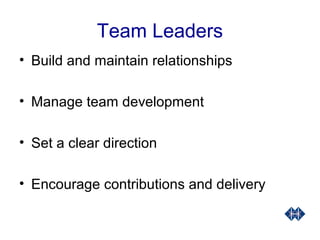
Team Leaders
• Build and maintain relationships
• Manage team development
• Set a clear direction
• Encourage contributions and delivery
Team Development
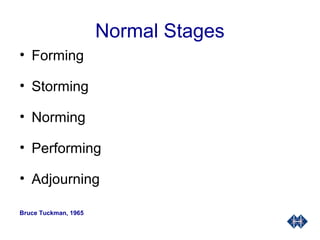
Normal Stages
• Forming
• Storming
• Norming
• Performing
• Adjourning
Bruce Tuckman, 1965
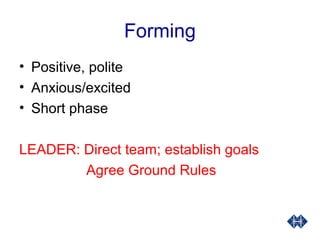
Forming
• Positive, polite
• Anxious/excited
• Short phase
LEADER: Direct team; establish goals
Agree Ground Rules
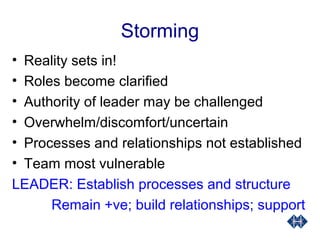
Storming
• Reality sets in!
• Roles become clarified
• Authority of leader may be challenged
• Overwhelm/discomfort/uncertain
• Processes and relationships not established
• Team most vulnerable
LEADER: Establish processes and structure
Remain +ve; build relationships; support
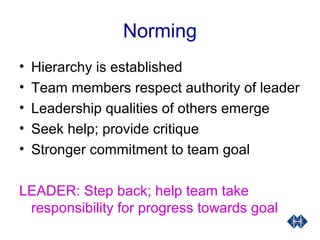
Norming
• Hierarchy is established
• Team members respect authority of leader
• Leadership qualities of others emerge
• Seek help; provide critique
• Stronger commitment to team goal
LEADER: Step back; help team take
responsibility for progress towards goal
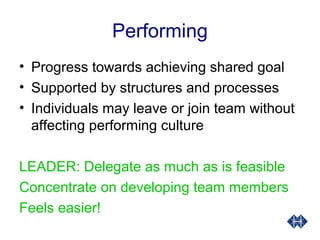
Performing
• Progress towards achieving shared goal
• Supported by structures and processes
• Individuals may leave or join team without
affecting performing culture
LEADER: Delegate as much as is feasible
Concentrate on developing team members
Feels easier!
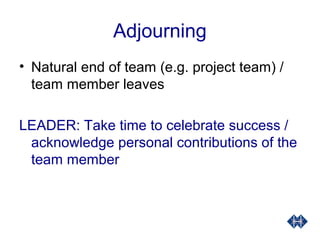
Adjourning
• Natural end of team (e.g. project team) /
team member leaves
LEADER: Take time to celebrate success /
acknowledge personal contributions of the
team member
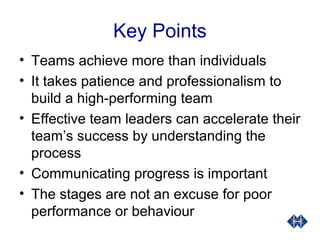
Key Points
• Teams achieve more than individuals
• It takes patience and professionalism to
build a high-performing team
• Effective team leaders can accelerate their
team’s success by understanding the
process
• Communicating progress is important
• The stages are not an excuse for poor
performance or behaviour
Team Effectiveness
Team Effectiveness
How effective is your team?
•Complete the assessment
•Any surprises?
•Identify top 3 priorities for progress
•Take action - implement
Effective Teams
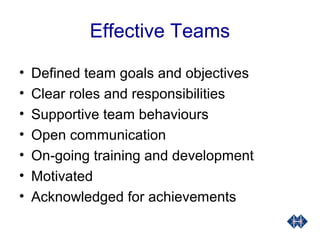
• Defined team goals and objectives
• Clear roles and responsibilities
• Supportive team behaviours
• Open communication
• On-going training and development
• Motivated
• Acknowledged for achievements
Team Behaviours
Team Behaviours
• How do we treat each other?
• How do we respond to new ideas?
• How do we respond to feedback from
students?
• How do others perceive us?
• How do we deal with change?
• What do we have in common?
• What are our values?
• How do we deal with struggle?
Self Assessment
• Identify what you want from your team
• Assess where you are at the moment –
complete assessment of Team
Behaviours
• Plan what you are going to do to bridge
the gap
Personal Learning Points
• What will I do more of?
• What will I change?
• What will I commit to doing differently
tomorrow?
Take Action
• Complete the Commitment Plan
• Take immediate action
• Share with your team
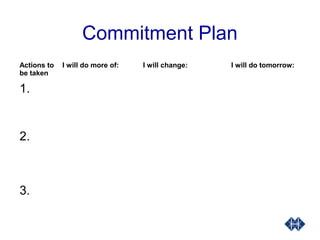
Commitment Plan
Actions to
be taken
I will do more of: I will change: I will do tomorrow:
1.
2.
3.
Leadership and Motivation
Motivational Differences
• Achievement
• The work itself
• Recognition
• Responsibility
• Advancement
• Growth
Hertzberg
Maintaining Motivation
• Be aware of your attitude and behaviour & how they
affect others
• Understand the motivations of your team colleagues
• Be positive – focus on your own happiness, well-
being and emotional intelligence
• Set clear direction and measurable goals
• Celebrate success
Benefits of a Positive Team
Impact of positivity on people:
• More successful in many areas of their lives
• Healthier and better able to cope with
challenges
• Increases ability to think creatively and work
with other people
• Positivity is an essential ingredient for
success
Fredrickson
Research shows that…….
The more positive emotions you experience,
the likelier you are to exhibit other positive
behaviours, such as curiosity, awareness,
discovery, and creativity – all essential for
successful innovation
This is true for individuals, as well as groups
Fredrickson
And Finally……
• Take personal responsibility to help make
your team work well
• Understand people’s needs
• Be a positive role model
• Motivate and take action
BE AUTHENTIC
Leadership & Team Development

Leadership & Team Development

  • 1.
    LEADERSHIP & TEAMDEVELOPMENT Barbara Bradbury www.hallandsolutions.com
  • 2.
    Definitions of Leadership Leadershipis the art of getting someone else to do something you want done because he wants to do it Dwight D. Eisenhower Leadership is the practice of motivating people to give of their best to achieve a worthwhile goal Barbara C. Bradbury
  • 3.
    Leadership What is YOURdefinition of leadership? Be clear what being a good leader means for yourself Live up to your expectations – lead by example
  • 4.
    Team Leaders • Buildand maintain relationships • Manage team development • Set a clear direction • Encourage contributions and delivery
  • 5.
  • 6.
    Normal Stages • Forming •Storming • Norming • Performing • Adjourning Bruce Tuckman, 1965
  • 7.
    Forming • Positive, polite •Anxious/excited • Short phase LEADER: Direct team; establish goals Agree Ground Rules
  • 8.
    Storming • Reality setsin! • Roles become clarified • Authority of leader may be challenged • Overwhelm/discomfort/uncertain • Processes and relationships not established • Team most vulnerable LEADER: Establish processes and structure Remain +ve; build relationships; support
  • 9.
    Norming • Hierarchy isestablished • Team members respect authority of leader • Leadership qualities of others emerge • Seek help; provide critique • Stronger commitment to team goal LEADER: Step back; help team take responsibility for progress towards goal
  • 10.
    Performing • Progress towardsachieving shared goal • Supported by structures and processes • Individuals may leave or join team without affecting performing culture LEADER: Delegate as much as is feasible Concentrate on developing team members Feels easier!
  • 11.
    Adjourning • Natural endof team (e.g. project team) / team member leaves LEADER: Take time to celebrate success / acknowledge personal contributions of the team member
  • 12.
    Key Points • Teamsachieve more than individuals • It takes patience and professionalism to build a high-performing team • Effective team leaders can accelerate their team’s success by understanding the process • Communicating progress is important • The stages are not an excuse for poor performance or behaviour
  • 13.
  • 14.
    Team Effectiveness How effectiveis your team? •Complete the assessment •Any surprises? •Identify top 3 priorities for progress •Take action - implement
  • 15.
    Effective Teams • Definedteam goals and objectives • Clear roles and responsibilities • Supportive team behaviours • Open communication • On-going training and development • Motivated • Acknowledged for achievements
  • 16.
  • 17.
    Team Behaviours • Howdo we treat each other? • How do we respond to new ideas? • How do we respond to feedback from students? • How do others perceive us? • How do we deal with change? • What do we have in common? • What are our values? • How do we deal with struggle?
  • 18.
    Self Assessment • Identifywhat you want from your team • Assess where you are at the moment – complete assessment of Team Behaviours • Plan what you are going to do to bridge the gap
  • 19.
    Personal Learning Points •What will I do more of? • What will I change? • What will I commit to doing differently tomorrow?
  • 20.
    Take Action • Completethe Commitment Plan • Take immediate action • Share with your team
  • 21.
    Commitment Plan Actions to betaken I will do more of: I will change: I will do tomorrow: 1. 2. 3.
  • 22.
  • 23.
    Motivational Differences • Achievement •The work itself • Recognition • Responsibility • Advancement • Growth Hertzberg
  • 24.
    Maintaining Motivation • Beaware of your attitude and behaviour & how they affect others • Understand the motivations of your team colleagues • Be positive – focus on your own happiness, well- being and emotional intelligence • Set clear direction and measurable goals • Celebrate success
  • 25.
    Benefits of aPositive Team Impact of positivity on people: • More successful in many areas of their lives • Healthier and better able to cope with challenges • Increases ability to think creatively and work with other people • Positivity is an essential ingredient for success Fredrickson
  • 26.
    Research shows that……. Themore positive emotions you experience, the likelier you are to exhibit other positive behaviours, such as curiosity, awareness, discovery, and creativity – all essential for successful innovation This is true for individuals, as well as groups Fredrickson
  • 27.
    And Finally…… • Takepersonal responsibility to help make your team work well • Understand people’s needs • Be a positive role model • Motivate and take action BE AUTHENTIC