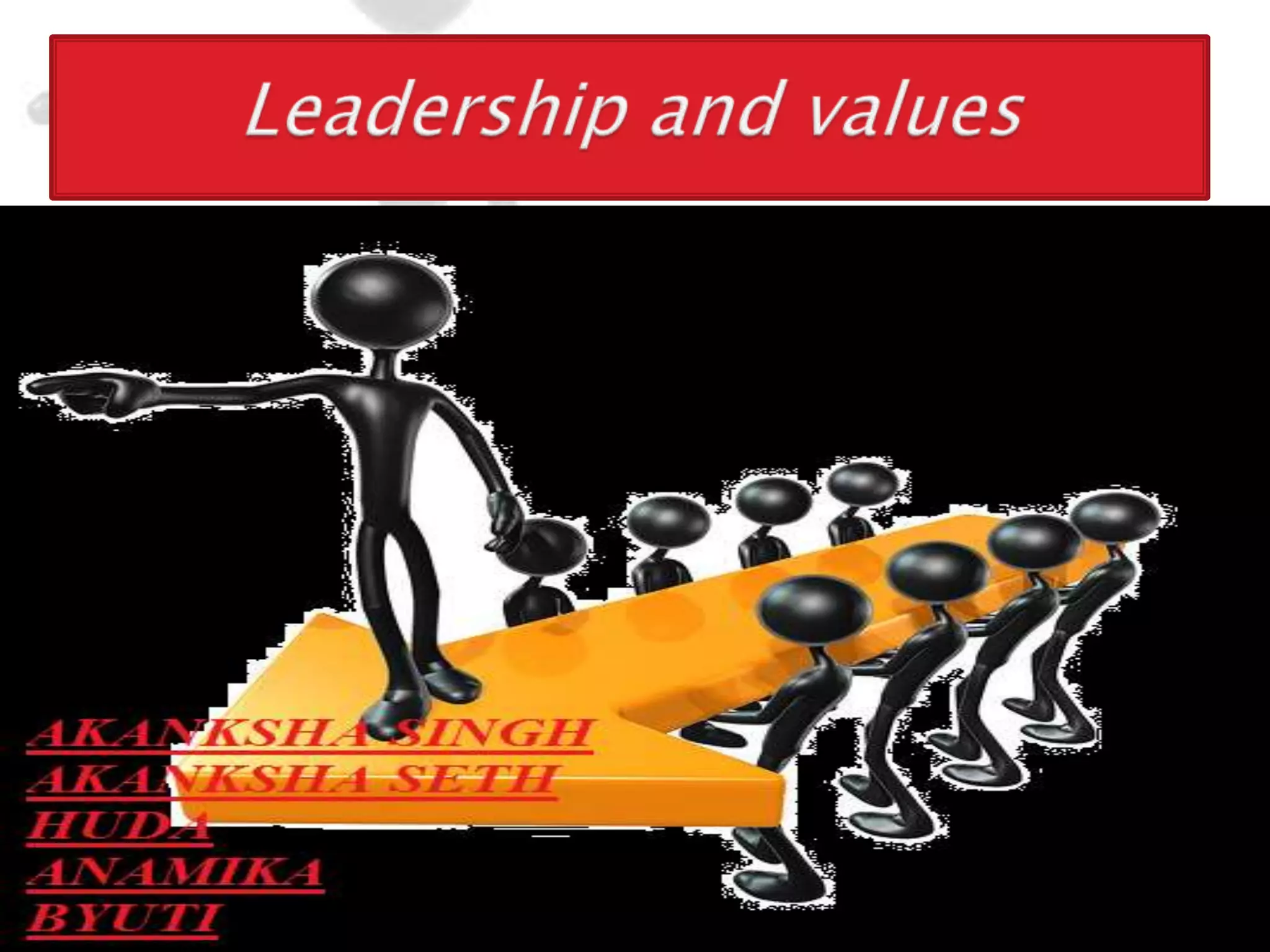
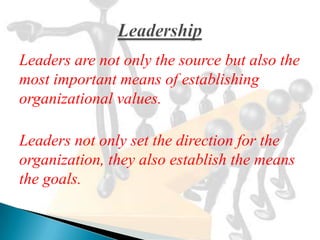
Leaders are not only the source but also the
most important means of establishing
organizational values.

Leaders not only set the direction for the
organization, they also establish the means
the goals.
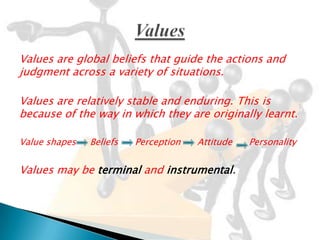
Values are global beliefs that guide the actions and
judgment across a variety of situations.

Values are relatively stable and enduring. This is
because of the way in which they are originally learnt.

Value shapes   Beliefs   Perception   Attitude   Personality


Values may be terminal and instrumental.
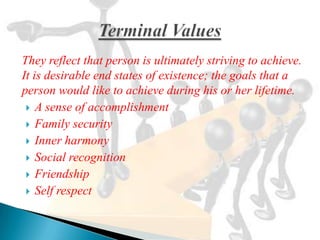
They reflect that person is ultimately striving to achieve.
It is desirable end states of existence; the goals that a
person would like to achieve during his or her lifetime.
  A sense of accomplishment
  Family security
  Inner harmony
  Social recognition
  Friendship
  Self respect
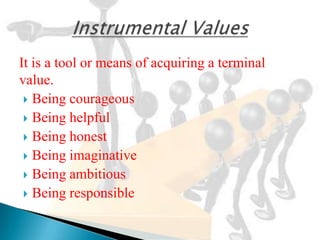
It is a tool or means of acquiring a terminal
value.
  Being courageous
  Being helpful
  Being honest
  Being imaginative
  Being ambitious
  Being responsible
   The GLOBE (GLOBE leadership and organizational
    behavior effectiveness ) project team comprises 170
    researchers who have collected data over seven years
    on cultural values and practical and leadership
    attributes from 17000 managers in 62 countries
    , covering as many as 825 organizations spread
    across the globe . The research team identified nine
    cultural dimensions that distinguish one society from
    another and have important managerial implication.
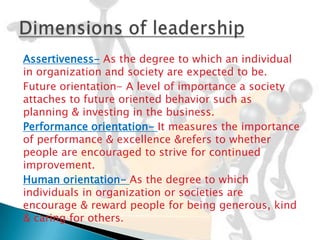
Assertiveness- As the degree to which an individual
in organization and society are expected to be.
Future orientation- A level of importance a society
attaches to future oriented behavior such as
planning & investing in the business.
Performance orientation- It measures the importance
of performance & excellence &refers to whether
people are encouraged to strive for continued
improvement.
Human orientation- As the degree to which
individuals in organization or societies are
encourage & reward people for being generous, kind
& caring for others.
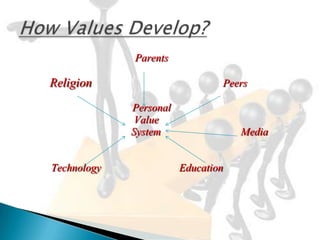
Parents

Religion                        Peers

             Personal
             Value
             System                 Media


Technology              Education
• Trust.
 We earn the trust of our co-workers, customers, leaders, and
  followers through a pattern of unquestioned
  integrity. When we lose our integrity, the trust we built is
  lost.
• Courage.
• A leader of integrity possesses moral courage and does
  what is right even when the personal cost is high. Doing
  the right thing is sometimes harder, but is always worth the
  effort.
• Honesty.
• Honesty must be our hallmark. Our word must be our
  bond. Honest people don't pencil-whip reports, don't cover
  up safety violations, and don't falsify documents. The
  bottom line is leaders of an honest organization do not
  lie, even in the face of negative consequences
•   Responsibility. Leaders acknowledge their responsibilities during failure as
    they do during success. True character is displayed when times get tough
    as well as during times of glory.

•   Accountability. No leader shifts blame or takes credit for the work of
    others. Integrity equates to accepting the consequences of our actions, no
    matter how extreme they may be.

•   Justice. A leader practices justice. Those who do similar things must get
    similar rewards or similar corrective actions.

•   Feedback. Free flow of information within the organization. Feedback
    from all directions is possible in an environment where integrity has built
    an atmosphere of trust.
I.     It play key role in the choices made by leader.

I.     Values also affect the solutions generated and the
       decision made about problems.
II.    Values often influence a leader’s perception of
       individual and organizational successes as well as
       the manner in which these successes are achieved.
III.   Leaders with a strong recognition values might
       likely choose a riskier solution that would thrust
       them in the spotlight.
•   Values are becoming the preferred mode of decision-
    making in business.
•   It is not surprising therefore to find ample research
    showing that adaptable and values-driven companies
    are the most successful organizations on the planet.
•   When organizations unite around a shared set of
    values, they become more flexible, less
    hierarchical, less bureaucratic, and they develop an
    enhanced capacity for collective action.
•   Shared values build trust, and trust is the glue that
    enhances performance.
   A strong desire to do right, to do the best, and to treat
    others as they would like to be treated.
   Values are not imposed, rather, selected. Values-
    Based leaders have critically examined these values
    and made a conscious decision to live by them.
   Values guide leaders in a way of living that feels good
    (and right) after the fact.
   Values-Based leaders expect good consequences if
    they embrace and live these values and bad
    consequences if they reject and don't follow them.
   Help leaders be their best.
•   Respect for Others. Appreciates the fundamental
    worth of all people as human beings.
•   Control of Emotions. Expects all members of their
    organization to refrain from displaying inappropriate
    emotions in such a way that would bring discredit
    upon themselves and/or their organization.
•   Acceptance of Diversity. Not only accepts diversity as
    a given, but also build off its strengths.
•   Self-Control
•   Ensures employees refrain from improper behaviors
    that cause hurt, anger, and frustration in
    others, inappropriate jokes, sexual advances, and racial
    or religious intolerance are unacceptable and
    undermine strong workplaces.
•   Feedback
•   Employees are provided with the proper feedback for
    personal excellence. Employees deserve honest
    feedback and most will be deeply appreciative of it.

Leadership

  • 3.
    Leaders are notonly the source but also the most important means of establishing organizational values. Leaders not only set the direction for the organization, they also establish the means the goals.
  • 6.
    Values are globalbeliefs that guide the actions and judgment across a variety of situations. Values are relatively stable and enduring. This is because of the way in which they are originally learnt. Value shapes Beliefs Perception Attitude Personality Values may be terminal and instrumental.
  • 7.
    They reflect thatperson is ultimately striving to achieve. It is desirable end states of existence; the goals that a person would like to achieve during his or her lifetime.  A sense of accomplishment  Family security  Inner harmony  Social recognition  Friendship  Self respect
  • 8.
    It is atool or means of acquiring a terminal value.  Being courageous  Being helpful  Being honest  Being imaginative  Being ambitious  Being responsible
  • 9.
    The GLOBE (GLOBE leadership and organizational behavior effectiveness ) project team comprises 170 researchers who have collected data over seven years on cultural values and practical and leadership attributes from 17000 managers in 62 countries , covering as many as 825 organizations spread across the globe . The research team identified nine cultural dimensions that distinguish one society from another and have important managerial implication.
  • 10.
    Assertiveness- As thedegree to which an individual in organization and society are expected to be. Future orientation- A level of importance a society attaches to future oriented behavior such as planning & investing in the business. Performance orientation- It measures the importance of performance & excellence &refers to whether people are encouraged to strive for continued improvement. Human orientation- As the degree to which individuals in organization or societies are encourage & reward people for being generous, kind & caring for others.
  • 12.
    Parents Religion Peers Personal Value System Media Technology Education
  • 13.
    • Trust. Weearn the trust of our co-workers, customers, leaders, and followers through a pattern of unquestioned integrity. When we lose our integrity, the trust we built is lost. • Courage. • A leader of integrity possesses moral courage and does what is right even when the personal cost is high. Doing the right thing is sometimes harder, but is always worth the effort. • Honesty. • Honesty must be our hallmark. Our word must be our bond. Honest people don't pencil-whip reports, don't cover up safety violations, and don't falsify documents. The bottom line is leaders of an honest organization do not lie, even in the face of negative consequences
  • 14.
    Responsibility. Leaders acknowledge their responsibilities during failure as they do during success. True character is displayed when times get tough as well as during times of glory. • Accountability. No leader shifts blame or takes credit for the work of others. Integrity equates to accepting the consequences of our actions, no matter how extreme they may be. • Justice. A leader practices justice. Those who do similar things must get similar rewards or similar corrective actions. • Feedback. Free flow of information within the organization. Feedback from all directions is possible in an environment where integrity has built an atmosphere of trust.
  • 16.
    I. It play key role in the choices made by leader. I. Values also affect the solutions generated and the decision made about problems. II. Values often influence a leader’s perception of individual and organizational successes as well as the manner in which these successes are achieved. III. Leaders with a strong recognition values might likely choose a riskier solution that would thrust them in the spotlight.
  • 17.
    Values are becoming the preferred mode of decision- making in business. • It is not surprising therefore to find ample research showing that adaptable and values-driven companies are the most successful organizations on the planet. • When organizations unite around a shared set of values, they become more flexible, less hierarchical, less bureaucratic, and they develop an enhanced capacity for collective action. • Shared values build trust, and trust is the glue that enhances performance.
  • 18.
    A strong desire to do right, to do the best, and to treat others as they would like to be treated.  Values are not imposed, rather, selected. Values- Based leaders have critically examined these values and made a conscious decision to live by them.  Values guide leaders in a way of living that feels good (and right) after the fact.  Values-Based leaders expect good consequences if they embrace and live these values and bad consequences if they reject and don't follow them.  Help leaders be their best.
  • 19.
    Respect for Others. Appreciates the fundamental worth of all people as human beings. • Control of Emotions. Expects all members of their organization to refrain from displaying inappropriate emotions in such a way that would bring discredit upon themselves and/or their organization. • Acceptance of Diversity. Not only accepts diversity as a given, but also build off its strengths.
  • 20.
    Self-Control • Ensures employees refrain from improper behaviors that cause hurt, anger, and frustration in others, inappropriate jokes, sexual advances, and racial or religious intolerance are unacceptable and undermine strong workplaces. • Feedback • Employees are provided with the proper feedback for personal excellence. Employees deserve honest feedback and most will be deeply appreciative of it.