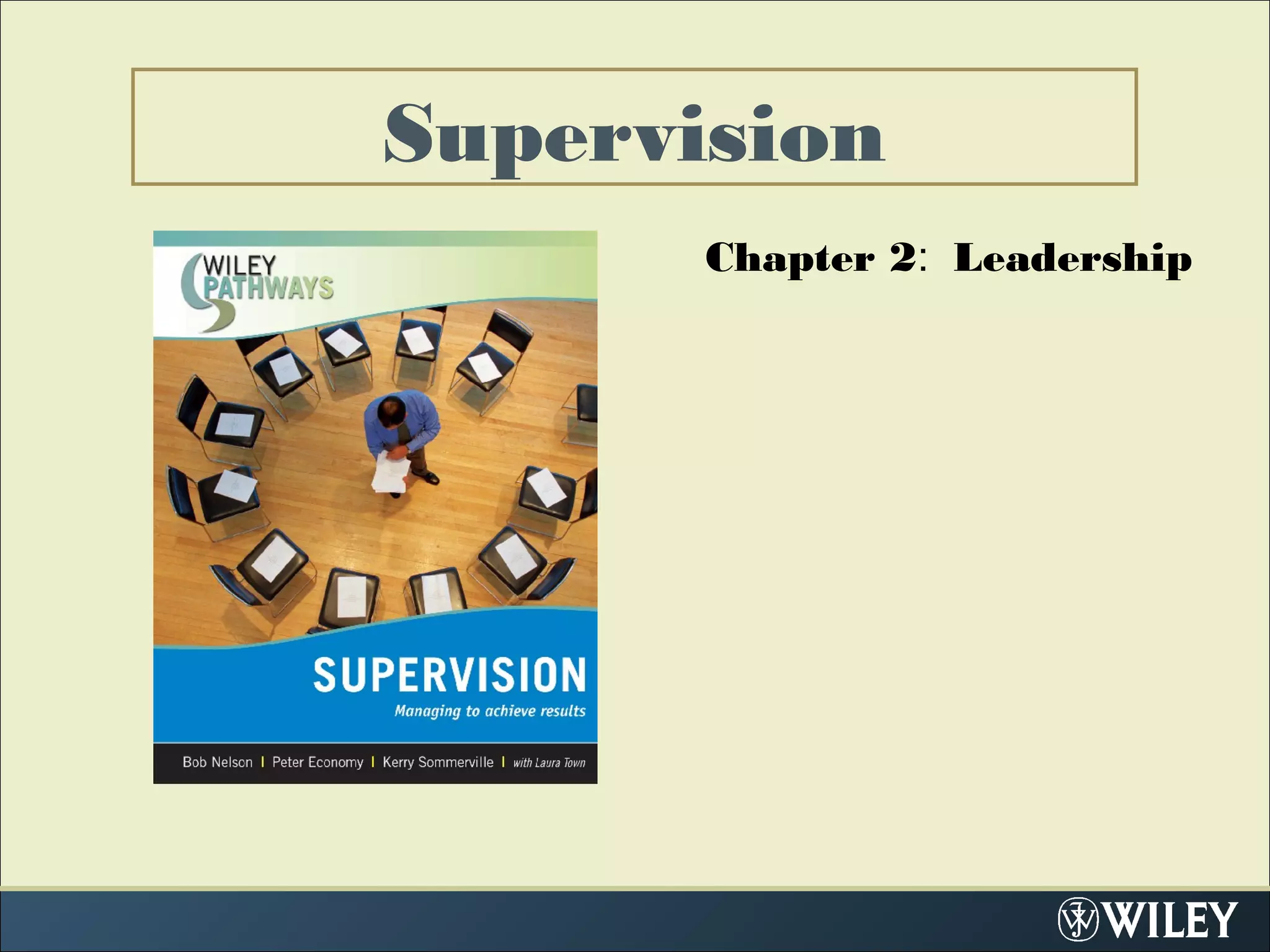
Supervision
Chapter 2: Leadership
• A manager is a person who supervises
others in an effort to complete tasks or
accomplish goals.
• A leader is a person who has commanding
authority or influence over others and
inspires them toward goals.
• Studies show that the primary traits that all
effective leaders have in common are (1) a
positive outlook and (2) forward thinking.  
Leadership
• Being a good manager is quite an
accomplishment.
• Managers use values, policies,
procedures, schedules, milestones,
incentives, discipline, and other
mechanisms to push their employees to
achieve the goals of the organization.
• Leaders, on the other hand, challenge
their employees to achieve the
organization’s goals by creating a
compelling vision of the future and then
Managers vs. Leaders
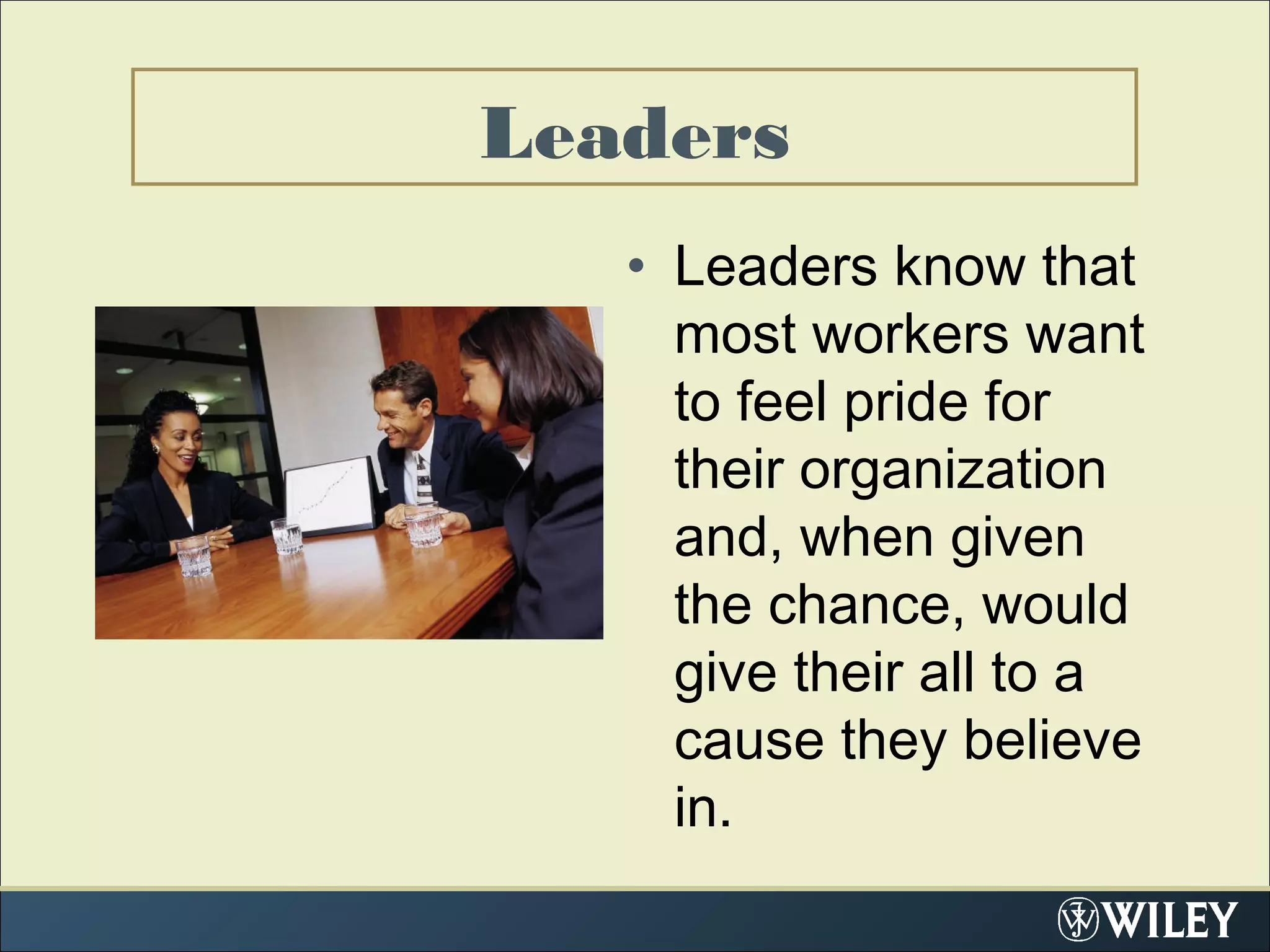
• Leaders know that
most workers want
to feel pride for
their organization
and, when given
the chance, would
give their all to a
cause they believe
in.
Leaders
• Leaders know the value of
employees and their critical
importance in achieving the
company’s goals.
• Few managers reward their
employees for being creative or for
going beyond the boundaries set by
their job descriptions.
Leaders
Communication
• Leaders make a commitment to
communicate with their employees and
to keep them informed about the
organization.
• Leadership today is a two-way
interchange of ideas where leaders
create a vision and workers
throughout an organization develop
and communicate ideas of how best
to reach the vision.
Facilitating Achievement
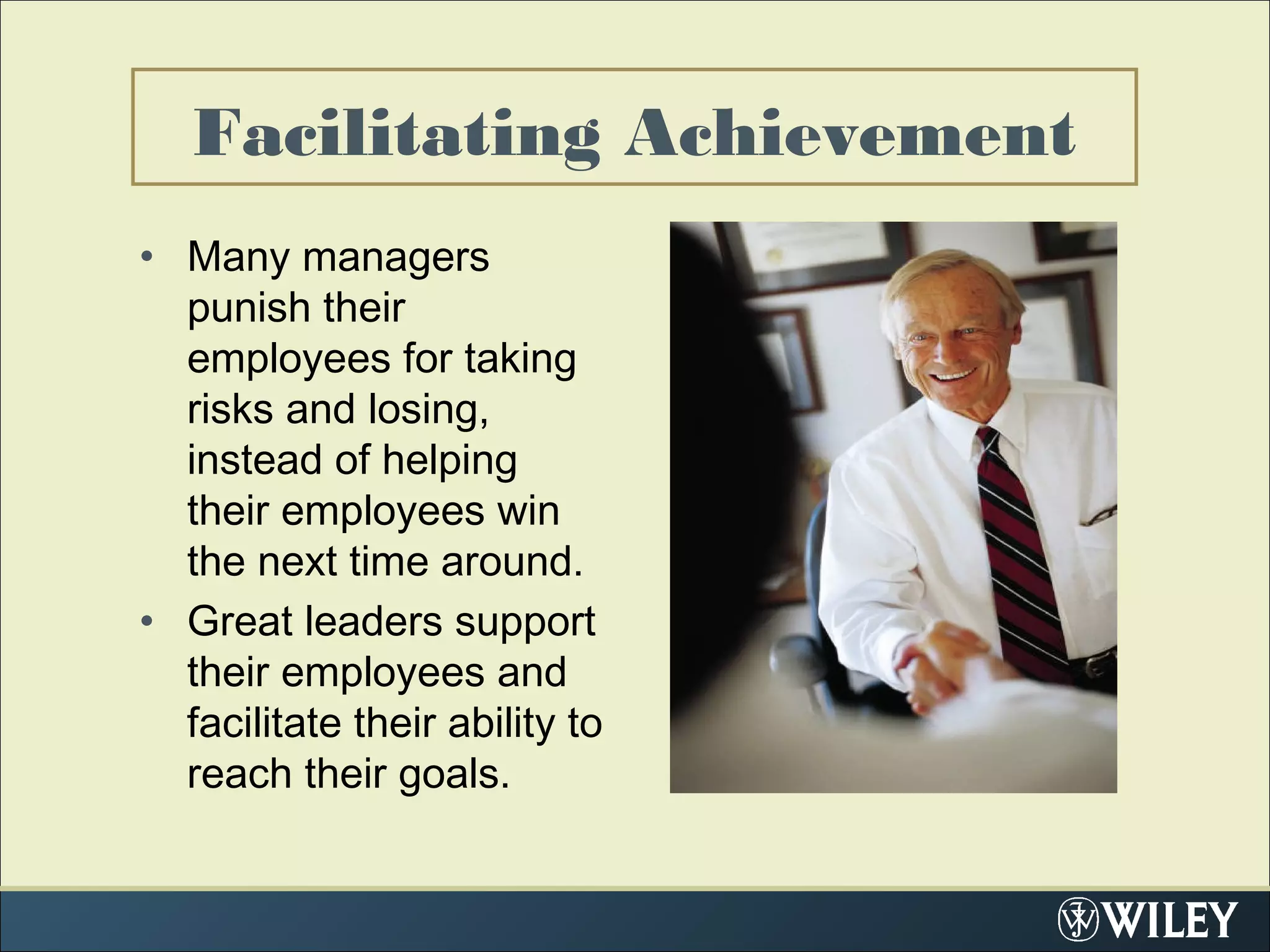
• Many managers
punish their
employees for taking
risks and losing,
instead of helping
their employees win
the next time around.
• Great leaders support
their employees and
facilitate their ability to
reach their goals.
Facilitating Achievement
(cont.)
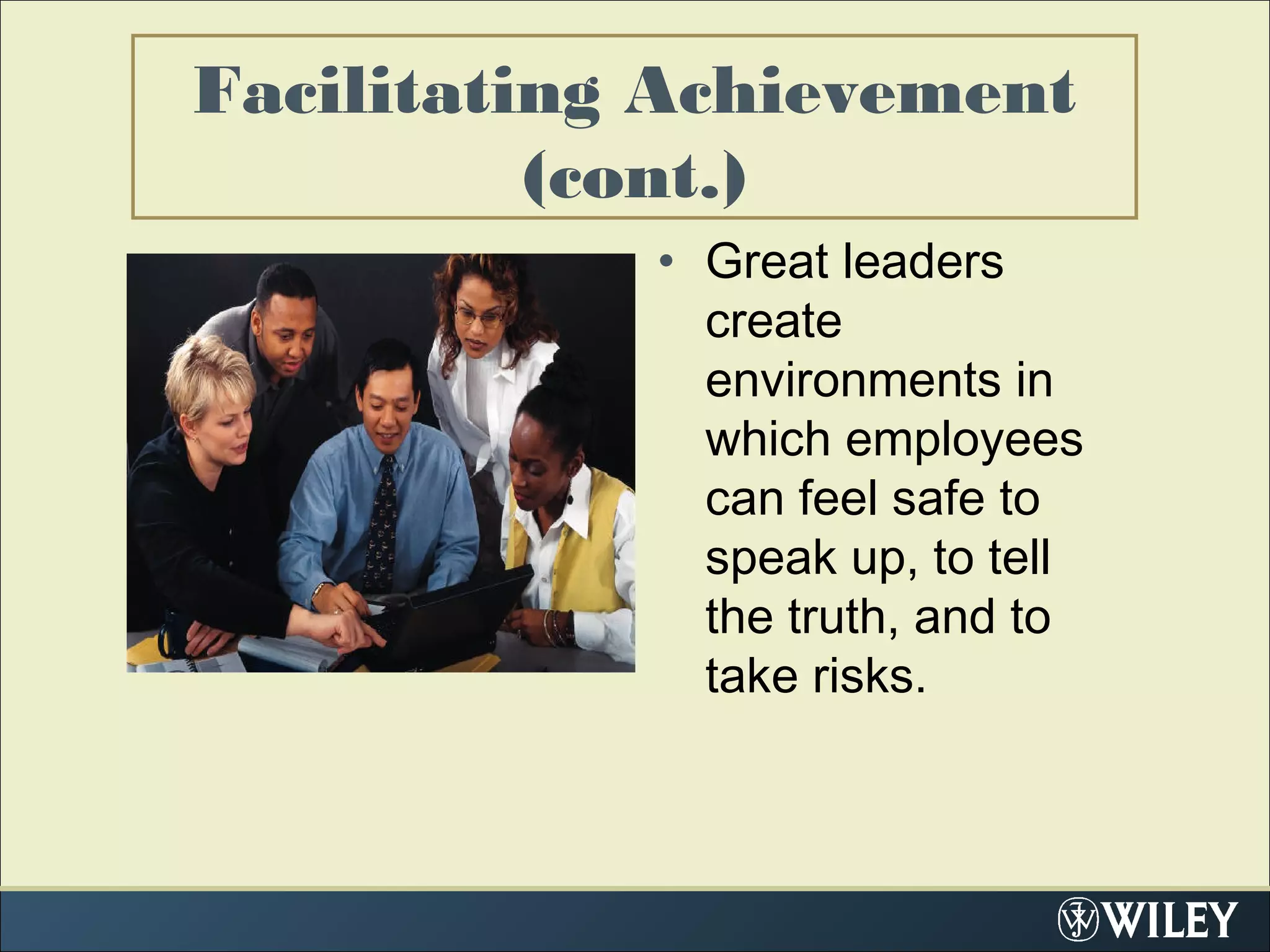
• Great leaders
create
environments in
which employees
can feel safe to
speak up, to tell
the truth, and to
take risks.
Optimistic Outlook
• Numerous traits of great leaders have
remained the same over the years and
are still highly valued today.
• Great leaders always see the future as a
wonderful place.
• People want to feel good about
themselves and their futures, and they
want to work for winners.
Leadership Traits
• Great leaders have no doubt—at least not
publicly—that they can accomplish any
task they set their minds to.
• One trait that sets great leaders apart
from the rest of the pack is integrity:
ethical behavior, values, and a sense of
fair play.
• When an organization’s leaders conduct
themselves with integrity, the organization
can make a very real and positive
difference in the lives of its employees, its
customers, and others who come in
contact with it.
Making Decisions
• The best leaders are decisive.
• Despite the fact that making decisions is
one of the key reasons that people are
hired to be managers, too few are willing to
risk the possibility of making a wrong
decision.
• Great leaders take whatever time is
necessary to gather whatever information,
people, or resources they need to make an
informed decision within a reasonable time
frame.
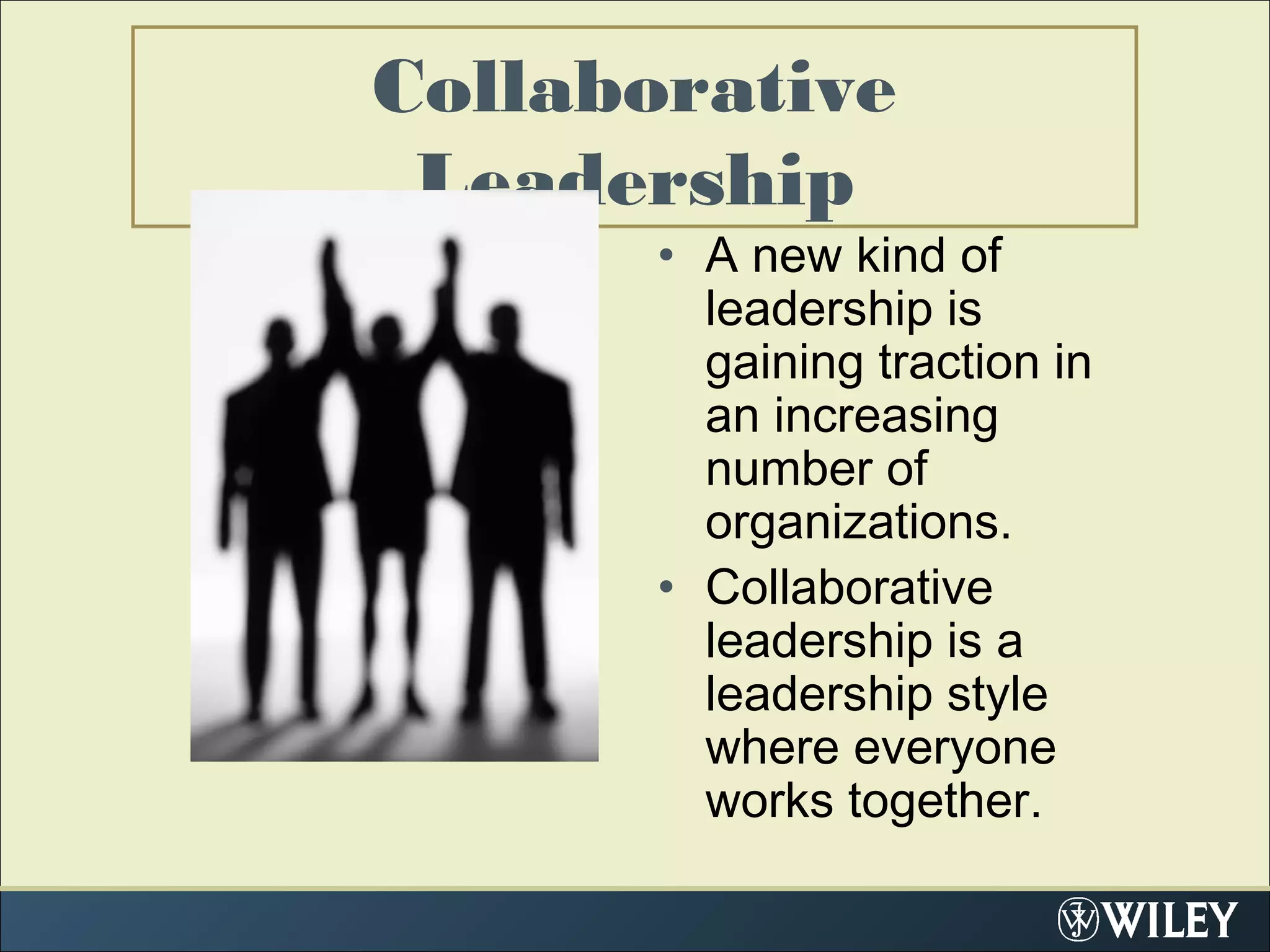
Collaborative
Leadership
• A new kind of
leadership is
gaining traction in
an increasing
number of
organizations.
• Collaborative
leadership is a
leadership style
where everyone
works together.
Collaborative
Leadership
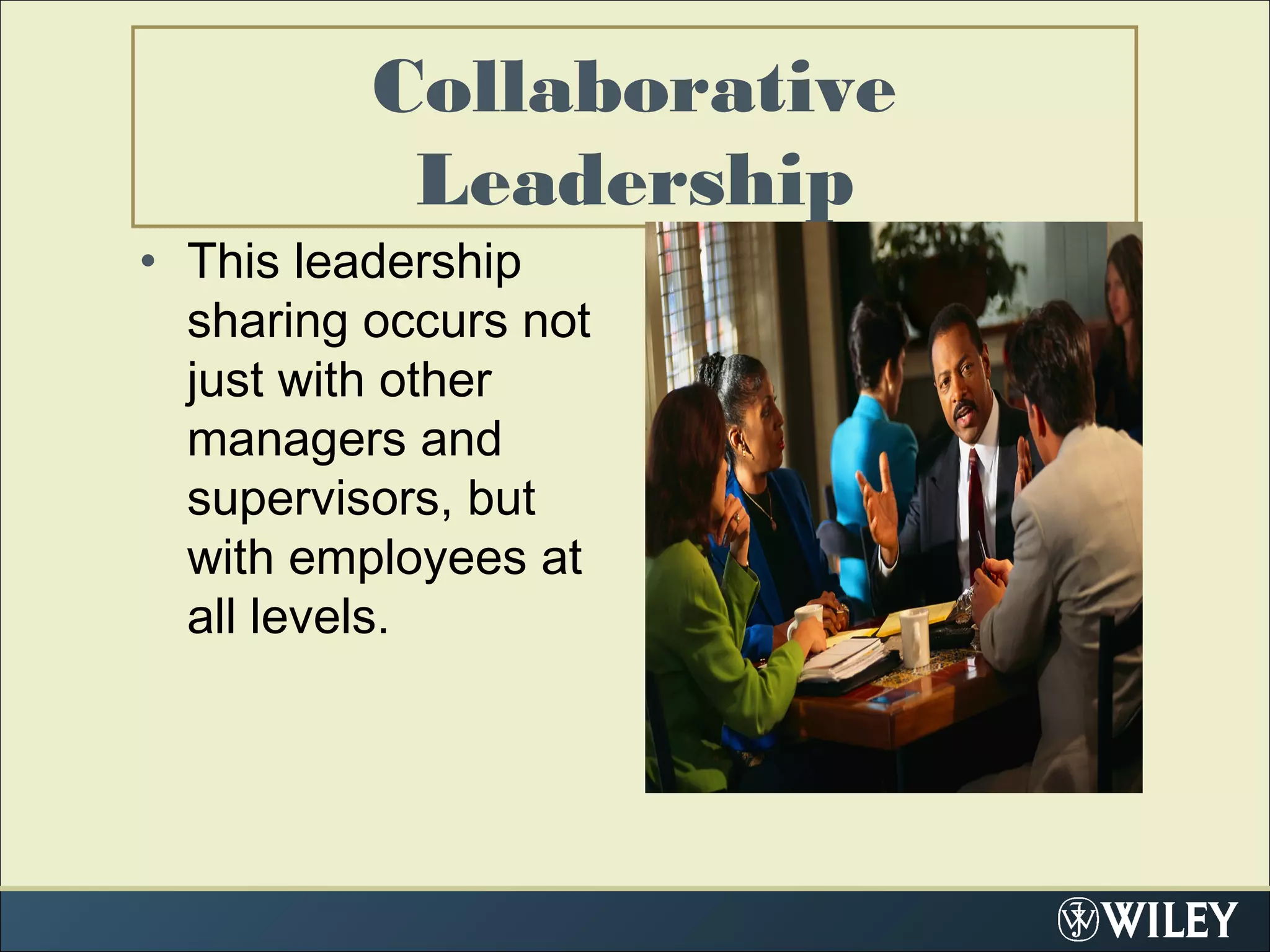
• This leadership
sharing occurs not
just with other
managers and
supervisors, but
with employees at
all levels.
Orpheus Process
• There is a unique brand of collaborative
leadership practiced by New York City’s
Orpheus Chamber Orchestra.
• At the heart of the Orpheus Process are
eight principles.
• To survive and prosper, today’s
organizations need to get the most out of
every employee and every employee
needs to take a leadership role in his or her
organization.
• Leaders inspire others to action by
communicating a vision for a better
tomorrow, communicating that vision, and
listening to input from others. A leader’s
vision becomes reality when employees
are encouraged to take risks and be
creative. One way to achieve the best for
an organization is through collaborative
leadership, a leadership style where
everyone works together and shares the
leadership role.
Summary
Copyright Notice
© 2007 John Wiley & Sons, Inc. All rights reserved.
Reproduction or translation of this work beyond that
permitted in section 117 of the 1976 United States
Copyright Act without express permission of the copyright
owner is unlawful. Request for further information should
be addressed to the Permissions Department, John Wiley
& Sons, Inc. The purchaser may make back-up copies for
his/her use only and not for distribution or resale. The
Publisher assumes no responsibility for errors, omissions,
or damages caused by the use of these programs or from
the use of the information herein.
All clipart and photos courtesy of Microsoft.com

Ldr151 orig-ch02

  • 1.
  • 2.
    • A manageris a person who supervises others in an effort to complete tasks or accomplish goals. • A leader is a person who has commanding authority or influence over others and inspires them toward goals. • Studies show that the primary traits that all effective leaders have in common are (1) a positive outlook and (2) forward thinking.   Leadership
  • 3.
    • Being agood manager is quite an accomplishment. • Managers use values, policies, procedures, schedules, milestones, incentives, discipline, and other mechanisms to push their employees to achieve the goals of the organization. • Leaders, on the other hand, challenge their employees to achieve the organization’s goals by creating a compelling vision of the future and then Managers vs. Leaders
  • 4.
    • Leaders knowthat most workers want to feel pride for their organization and, when given the chance, would give their all to a cause they believe in. Leaders
  • 5.
    • Leaders knowthe value of employees and their critical importance in achieving the company’s goals. • Few managers reward their employees for being creative or for going beyond the boundaries set by their job descriptions. Leaders
  • 6.
    Communication • Leaders makea commitment to communicate with their employees and to keep them informed about the organization. • Leadership today is a two-way interchange of ideas where leaders create a vision and workers throughout an organization develop and communicate ideas of how best to reach the vision.
  • 7.
    Facilitating Achievement • Manymanagers punish their employees for taking risks and losing, instead of helping their employees win the next time around. • Great leaders support their employees and facilitate their ability to reach their goals.
  • 8.
    Facilitating Achievement (cont.) • Greatleaders create environments in which employees can feel safe to speak up, to tell the truth, and to take risks.
  • 9.
    Optimistic Outlook • Numeroustraits of great leaders have remained the same over the years and are still highly valued today. • Great leaders always see the future as a wonderful place. • People want to feel good about themselves and their futures, and they want to work for winners.
  • 10.
    Leadership Traits • Greatleaders have no doubt—at least not publicly—that they can accomplish any task they set their minds to. • One trait that sets great leaders apart from the rest of the pack is integrity: ethical behavior, values, and a sense of fair play. • When an organization’s leaders conduct themselves with integrity, the organization can make a very real and positive difference in the lives of its employees, its customers, and others who come in contact with it.
  • 11.
    Making Decisions • Thebest leaders are decisive. • Despite the fact that making decisions is one of the key reasons that people are hired to be managers, too few are willing to risk the possibility of making a wrong decision. • Great leaders take whatever time is necessary to gather whatever information, people, or resources they need to make an informed decision within a reasonable time frame.
  • 12.
    Collaborative Leadership • A newkind of leadership is gaining traction in an increasing number of organizations. • Collaborative leadership is a leadership style where everyone works together.
  • 13.
    Collaborative Leadership • This leadership sharingoccurs not just with other managers and supervisors, but with employees at all levels.
  • 14.
    Orpheus Process • Thereis a unique brand of collaborative leadership practiced by New York City’s Orpheus Chamber Orchestra. • At the heart of the Orpheus Process are eight principles. • To survive and prosper, today’s organizations need to get the most out of every employee and every employee needs to take a leadership role in his or her organization.
  • 15.
    • Leaders inspireothers to action by communicating a vision for a better tomorrow, communicating that vision, and listening to input from others. A leader’s vision becomes reality when employees are encouraged to take risks and be creative. One way to achieve the best for an organization is through collaborative leadership, a leadership style where everyone works together and shares the leadership role. Summary
  • 16.
    Copyright Notice © 2007John Wiley & Sons, Inc. All rights reserved. Reproduction or translation of this work beyond that permitted in section 117 of the 1976 United States Copyright Act without express permission of the copyright owner is unlawful. Request for further information should be addressed to the Permissions Department, John Wiley & Sons, Inc. The purchaser may make back-up copies for his/her use only and not for distribution or resale. The Publisher assumes no responsibility for errors, omissions, or damages caused by the use of these programs or from the use of the information herein. All clipart and photos courtesy of Microsoft.com