Leadership in an Organization
           “Management is doing things right, Leadership is doing the right things.
                                       Peter F- Management Consultant.


 “If your actions inspire others to dream more, learn more, do more and become more, you
                                         are a leader.
                                                    th
                                          John Q, 6 US President


Your favorite Leader

   •   List the qualities that makes him a leader


What is Leadership?

   •   Leadership is the ability to attain objectives by working with and through people.

   •   Leadership implies the need to guide and influence rather than to order.

   •   A leader creates conditions that motivate employees by establishing goals, and influencing
       employees to attain those goals.
Types of leaders

Autocratic: - We are going to it my way!

        These leaders are result oriented, not staff oriented.
        An assumption is made that employees are self-motivated and there is No delegation of duties.
        Decisions are made without employees input, minimal information is passed down and ‘order’ is
        to be obeyed.
        Using just this style of leadership can create low staff moral with high absenteeism and staff
        often unhappy in the workplace.
        This style can be effective with new terms , new staff, or a replacement of a management team
        that suffered from poor performance records/


Democratic: - We are going to vote on it!

        There leaders are driven by “ group decision making” they are focused on the team as opposed
        to individual employees.
        They tend to be open-minded and down to earth.
        Using just this style of leadership can create highly motivated and creative teams.
        This style of leadership also helps employees creates a sense of ownership and stronger loyalty
        to the company.
        This style can be effective if you are trying to create a team environment or working with a team
        that has been in the company for while.
        This style is also effective when a company change is going to be made that is going to have a
        negative effects on staffs.


Bureaucratic: - we are going to what the operation manual says!

        There leaders are driven by “group decision making” they are focused on the team as opposed
        to individual employees.
         They tend to be open-minded and down to earth.
        Using just this style of leadership can create highly motivated and creative teams.
        This style of leadership also helps employees creates a sense of ownership and stronger loyalty
        to the company.
        This style can be effective if you are trying to create a team environment or working with a team
        that has been in the company for while.
        This style is also effective when a company change is going to be made that is going to have a
        negative effects on staffs.
Two main leadership styles

Supportive style

        Supportive leaders are interested in result for company
        Believe employees should be free to exercise their own initiatives to getting the job done.
         Relying on teamwork, group interaction and positive reinforcement describe a supportive
        leader.
        Supportive leader stands in the middle of the pack and says “well team, we have a huge
        marathon ahead of us, how do you think we should tackle this?

Directive style

        Directive leaders are also interested in the company result but believe they need to tell
        employees exactly what to do to get the desired results.
        Think of movie directors sitting in their chair yelling “Cur, action, take two” Directive managers
        give the orders and people listen.
        A directive style also uses positive reinforcement, but direction and structure are the primary
        directives.
        A directive style approach would be to stand in front of the team and say “okay team” were
        running a marathon today, any question? No? then let’s go!


Leaders Personalities

There are three main personalities leaders portray. They can be broken down to passive, Assertive and
Aggressive personalities.

Passive personality
Tends to focus on negative
       Let other to make decisions
       Does not share feeling
       Does not respect themselves
       Employee does not respect the leader
       Effective if employee has done something wrong
       Possibly better result of discipline the employees

Aggressive Personality

       Tends not care about other feeling
       Does not like open discussion
       Focus on negative and has little self –respect
       The leader approach is hard, controlling and non feeling.
       Type can create bitterness with employees

Assertive personality

       Great amount of self respect
       Set goals and plans
       Self confidence, respect others and encourage discussions
       Effective to get employees to perform well
       Open and honest with employees
       Positive mental attitude
       Employees follow leaders personality


An Organizational Leader

Maybe you find yourself in a new team environment. Leading a team for the first time, or maybe you
have been working with and leading teams forever. Either ways, the following pointers can make a
world difference in morale, productivity and result.
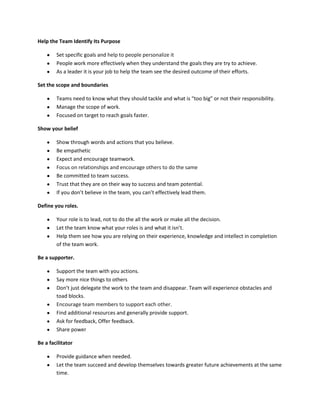
Help the Team Identify Its Purpose

        Set specific goals and help to people personalize it
        People work more effectively when they understand the goals they are try to achieve.
        As a leader it is your job to help the team see the desired outcome of their efforts.

Set the scope and boundaries

        Teams need to know what they should tackle and what is “too big” or not their responsibility.
        Manage the scope of work.
        Focused on target to reach goals faster.

Show your belief

        Show through words and actions that you believe.
        Be empathetic
        Expect and encourage teamwork.
        Focus on relationships and encourage others to do the same
        Be committed to team success.
        Trust that they are on their way to success and team potential.
        If you don’t believe in the team, you can’t effectively lead them.

Define you roles.

        Your role is to lead, not to do the all the work or make all the decision.
        Let the team know what your roles is and what it isn’t.
        Help them see how you are relying on their experience, knowledge and intellect in completion
        of the team work.

Be a supporter.

        Support the team with you actions.
        Say more nice things to others
        Don’t just delegate the work to the team and disappear. Team will experience obstacles and
        toad blocks.
        Encourage team members to support each other.
        Find additional resources and generally provide support.
        Ask for feedback, Offer feedback.
        Share power

Be a facilitator

        Provide guidance when needed.
        Let the team succeed and develop themselves towards greater future achievements at the same
        time.
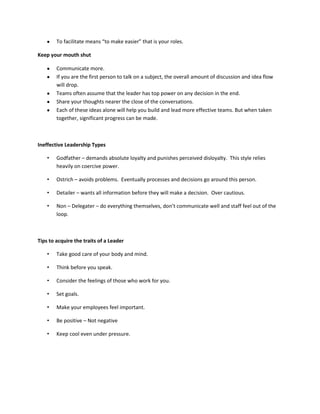
To facilitate means “to make easier” that is your roles.

Keep your mouth shut

        Communicate more.
        If you are the first person to talk on a subject, the overall amount of discussion and idea flow
        will drop.
        Teams often assume that the leader has top power on any decision in the end.
        Share your thoughts nearer the close of the conversations.
        Each of these ideas alone will help you build and lead more effective teams. But when taken
        together, significant progress can be made.


Ineffective Leadership Types

    •   Godfather – demands absolute loyalty and punishes perceived disloyalty. This style relies
        heavily on coercive power.

    •   Ostrich – avoids problems. Eventually processes and decisions go around this person.

    •   Detailer – wants all information before they will make a decision. Over cautious.

    •   Non – Delegater – do everything themselves, don’t communicate well and staff feel out of the
        loop.


Tips to acquire the traits of a Leader

    •   Take good care of your body and mind.

    •   Think before you speak.

    •   Consider the feelings of those who work for you.

    •   Set goals.

    •   Make your employees feel important.

    •   Be positive – Not negative

    •   Keep cool even under pressure.

Leadership in organization

  • 1.
    Leadership in anOrganization “Management is doing things right, Leadership is doing the right things. Peter F- Management Consultant. “If your actions inspire others to dream more, learn more, do more and become more, you are a leader. th John Q, 6 US President Your favorite Leader • List the qualities that makes him a leader What is Leadership? • Leadership is the ability to attain objectives by working with and through people. • Leadership implies the need to guide and influence rather than to order. • A leader creates conditions that motivate employees by establishing goals, and influencing employees to attain those goals.
  • 2.
    Types of leaders Autocratic:- We are going to it my way! These leaders are result oriented, not staff oriented. An assumption is made that employees are self-motivated and there is No delegation of duties. Decisions are made without employees input, minimal information is passed down and ‘order’ is to be obeyed. Using just this style of leadership can create low staff moral with high absenteeism and staff often unhappy in the workplace. This style can be effective with new terms , new staff, or a replacement of a management team that suffered from poor performance records/ Democratic: - We are going to vote on it! There leaders are driven by “ group decision making” they are focused on the team as opposed to individual employees. They tend to be open-minded and down to earth. Using just this style of leadership can create highly motivated and creative teams. This style of leadership also helps employees creates a sense of ownership and stronger loyalty to the company. This style can be effective if you are trying to create a team environment or working with a team that has been in the company for while. This style is also effective when a company change is going to be made that is going to have a negative effects on staffs. Bureaucratic: - we are going to what the operation manual says! There leaders are driven by “group decision making” they are focused on the team as opposed to individual employees. They tend to be open-minded and down to earth. Using just this style of leadership can create highly motivated and creative teams. This style of leadership also helps employees creates a sense of ownership and stronger loyalty to the company. This style can be effective if you are trying to create a team environment or working with a team that has been in the company for while. This style is also effective when a company change is going to be made that is going to have a negative effects on staffs.
  • 3.
    Two main leadershipstyles Supportive style Supportive leaders are interested in result for company Believe employees should be free to exercise their own initiatives to getting the job done. Relying on teamwork, group interaction and positive reinforcement describe a supportive leader. Supportive leader stands in the middle of the pack and says “well team, we have a huge marathon ahead of us, how do you think we should tackle this? Directive style Directive leaders are also interested in the company result but believe they need to tell employees exactly what to do to get the desired results. Think of movie directors sitting in their chair yelling “Cur, action, take two” Directive managers give the orders and people listen. A directive style also uses positive reinforcement, but direction and structure are the primary directives. A directive style approach would be to stand in front of the team and say “okay team” were running a marathon today, any question? No? then let’s go! Leaders Personalities There are three main personalities leaders portray. They can be broken down to passive, Assertive and Aggressive personalities. Passive personality
  • 4.
    Tends to focuson negative Let other to make decisions Does not share feeling Does not respect themselves Employee does not respect the leader Effective if employee has done something wrong Possibly better result of discipline the employees Aggressive Personality Tends not care about other feeling Does not like open discussion Focus on negative and has little self –respect The leader approach is hard, controlling and non feeling. Type can create bitterness with employees Assertive personality Great amount of self respect Set goals and plans Self confidence, respect others and encourage discussions Effective to get employees to perform well Open and honest with employees Positive mental attitude Employees follow leaders personality An Organizational Leader Maybe you find yourself in a new team environment. Leading a team for the first time, or maybe you have been working with and leading teams forever. Either ways, the following pointers can make a world difference in morale, productivity and result.
  • 5.
    Help the TeamIdentify Its Purpose Set specific goals and help to people personalize it People work more effectively when they understand the goals they are try to achieve. As a leader it is your job to help the team see the desired outcome of their efforts. Set the scope and boundaries Teams need to know what they should tackle and what is “too big” or not their responsibility. Manage the scope of work. Focused on target to reach goals faster. Show your belief Show through words and actions that you believe. Be empathetic Expect and encourage teamwork. Focus on relationships and encourage others to do the same Be committed to team success. Trust that they are on their way to success and team potential. If you don’t believe in the team, you can’t effectively lead them. Define you roles. Your role is to lead, not to do the all the work or make all the decision. Let the team know what your roles is and what it isn’t. Help them see how you are relying on their experience, knowledge and intellect in completion of the team work. Be a supporter. Support the team with you actions. Say more nice things to others Don’t just delegate the work to the team and disappear. Team will experience obstacles and toad blocks. Encourage team members to support each other. Find additional resources and generally provide support. Ask for feedback, Offer feedback. Share power Be a facilitator Provide guidance when needed. Let the team succeed and develop themselves towards greater future achievements at the same time.
  • 6.
    To facilitate means“to make easier” that is your roles. Keep your mouth shut Communicate more. If you are the first person to talk on a subject, the overall amount of discussion and idea flow will drop. Teams often assume that the leader has top power on any decision in the end. Share your thoughts nearer the close of the conversations. Each of these ideas alone will help you build and lead more effective teams. But when taken together, significant progress can be made. Ineffective Leadership Types • Godfather – demands absolute loyalty and punishes perceived disloyalty. This style relies heavily on coercive power. • Ostrich – avoids problems. Eventually processes and decisions go around this person. • Detailer – wants all information before they will make a decision. Over cautious. • Non – Delegater – do everything themselves, don’t communicate well and staff feel out of the loop. Tips to acquire the traits of a Leader • Take good care of your body and mind. • Think before you speak. • Consider the feelings of those who work for you. • Set goals. • Make your employees feel important. • Be positive – Not negative • Keep cool even under pressure.