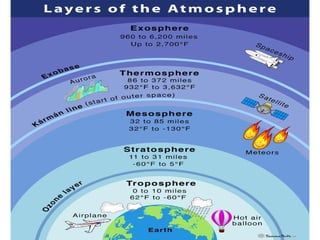
Layers of the Atmosphere!
Troposphere
• “Tropo” means
turning or changing
• This is where all
weather occurs.
• Anywhere from
9km to 16km
above sea level.
• Temperature goes
from warm to cold as
you increase in
altitude.
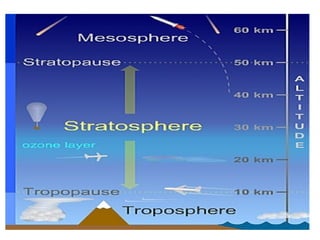
Stratosphere
• Strato means layer or
spread out.
• Contains the Ozone
layer.
• From 10km to 50km
above sea level.
• Planes often fly here.
• Temperature goes up as
you rise in altitude due
to the ozone absorbing
the suns heat.
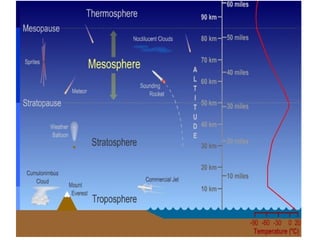
Mesosphere
• “Meso” means
middle and is the
middle layer of the
atmosphere.
• Starts at 50km above
sea level and ends at
80km.
• Protects the earth
from meteoroids.
• Temperature goes
down as altitude
goes up.
Thermosphere
• “thermo” means heat.
• Temperatures reach up
to 1,800 degrees Celsius
or 3,272 degrees
Fahrenheit.
• You actually would not
feel warm in the
thermosphere!
• 80km above sea level
and has no definite end.
• As you increase in
altitude, temperature
goes up.
Ionosphere
• Called ionosphere
because suns energy
heats molecules to
become ions.
• 80km to 400km in the
atmosphere.
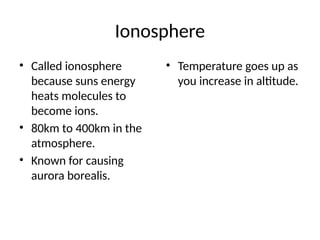
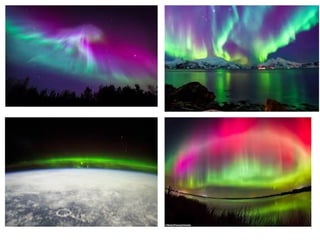
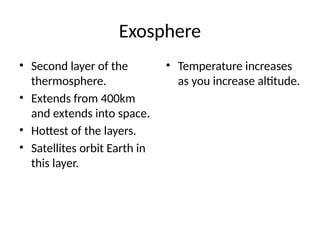
• Known for causing
aurora borealis.
• Temperature goes up as
you increase in altitude.
Exosphere
• Second layer of the
thermosphere.
• Extends from 400km
and extends into space.
• Hottest of the layers.
• Satellites orbit Earth in
this layer.
• Temperature increases
as you increase altitude.
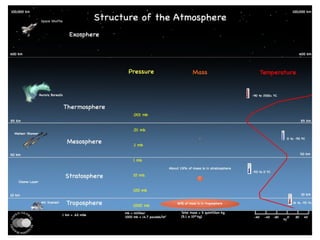
Structure of Atmosphere
Stratospheric ozone is good ozone
—protects Earth from harmful UV
radiation
—depletion is detrimental to life
Tropospheric ozone is bad ozone
—In the troposphere, ozone is a
pollutant .
• CFCs (pollutant)
Ozone Depletion
• main cause is CFC pollution
• radiation from the sun causes the
CFCs to break down
• releases one chlorine atom
• Chlorine atom reacts with ozone
(O3 ) molecules forming chlorine
oxide(ClO) and oxygen gas ( O2).
Global Warming
• An increase in Earth’s average
surface temperature caused by an
increase in greenhouse gases.
• caused by Greenhouse Effect
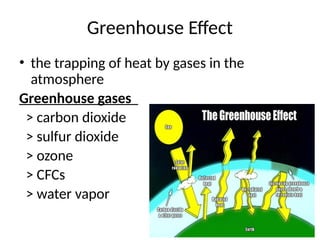
Greenhouse Effect
• the trapping of heat by gases in the
atmosphere
Greenhouse gases
> carbon dioxide
> sulfur dioxide
> ozone
> CFCs
> water vapor
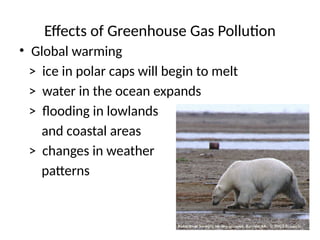
Effects of Greenhouse Gas Pollution
• Global warming
> ice in polar caps will begin to melt
> water in the ocean expands
> flooding in lowlands
and coastal areas
> changes in weather
patterns
Recall
Identify the layers of the atmosphere based on
the given descriptions.
1. the layer where weather occurs
2. the coldest layer
3. the ozone layer is part of this layer
4. the hottest layer
5. the layer above the troposphere
I. DIRECTIONS: Match the items in column A with those in
column B. Write the letter of the correct answer on your
size 2.
A B
____6. Troposphere A. reflects radio waves
____7. Stratosphere B. lowest layer in the
atmosphere
____8. Ionosphere C. highest layer in the
atmosphere
____9. Exosphere D. layer where jets fly to
minimize the effects of
____10. Thermosphere weather.
E. keeps most of the UV
radiation from the sun from
reaching the earth’s
atmosphere.
II. DIRECTIONS: Answer in not more than 5 sentences.
Air pollution due to suspended particulate
matter in the air -----primarily dust and smoke pose a
major health problem to city dwellers. This is a concern
not only in Metro Manila but all over the world, where
urban cities are becoming highly industrialized.
11. – 15. What can factories do or implement to control air
pollution that reaches the most affected layer of the
atmosphere?
16 – 20. Write down at least one latest/recent discovery or
breakthrough in utilizing other energy sources that
create less air pollution.
layersoftheatmosphereppt.pptx KJGGIGKHFF

layersoftheatmosphereppt.pptx KJGGIGKHFF

  • 1.
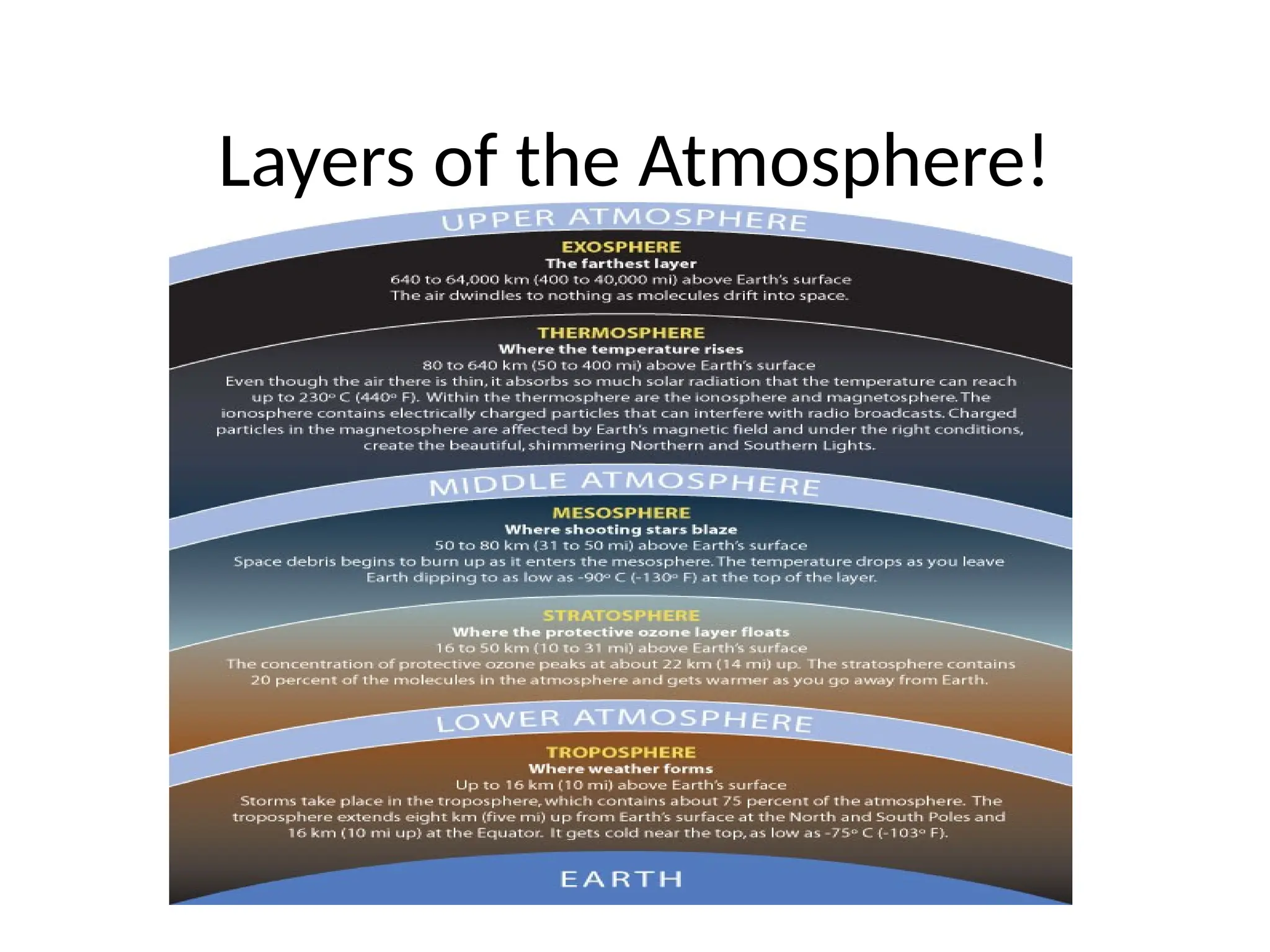
    Layers of theAtmosphere!
  • 2.
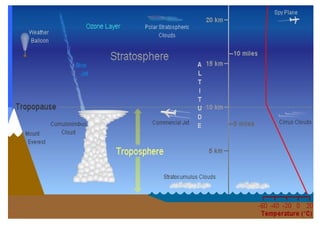
    Troposphere • “Tropo” means turningor changing • This is where all weather occurs. • Anywhere from 9km to 16km above sea level. • Temperature goes from warm to cold as you increase in altitude.
  • 4.
    Stratosphere • Strato meanslayer or spread out. • Contains the Ozone layer. • From 10km to 50km above sea level. • Planes often fly here. • Temperature goes up as you rise in altitude due to the ozone absorbing the suns heat.
  • 6.
    Mesosphere • “Meso” means middleand is the middle layer of the atmosphere. • Starts at 50km above sea level and ends at 80km. • Protects the earth from meteoroids. • Temperature goes down as altitude goes up.
  • 8.
    Thermosphere • “thermo” meansheat. • Temperatures reach up to 1,800 degrees Celsius or 3,272 degrees Fahrenheit. • You actually would not feel warm in the thermosphere! • 80km above sea level and has no definite end. • As you increase in altitude, temperature goes up.
  • 9.
    Ionosphere • Called ionosphere becausesuns energy heats molecules to become ions. • 80km to 400km in the atmosphere. • Known for causing aurora borealis. • Temperature goes up as you increase in altitude.
  • 11.
    Exosphere • Second layerof the thermosphere. • Extends from 400km and extends into space. • Hottest of the layers. • Satellites orbit Earth in this layer. • Temperature increases as you increase altitude.
  • 13.
    Structure of Atmosphere Stratosphericozone is good ozone —protects Earth from harmful UV radiation —depletion is detrimental to life Tropospheric ozone is bad ozone —In the troposphere, ozone is a pollutant . • CFCs (pollutant)
  • 14.
    Ozone Depletion • maincause is CFC pollution • radiation from the sun causes the CFCs to break down • releases one chlorine atom • Chlorine atom reacts with ozone (O3 ) molecules forming chlorine oxide(ClO) and oxygen gas ( O2).
  • 15.
    Global Warming • Anincrease in Earth’s average surface temperature caused by an increase in greenhouse gases. • caused by Greenhouse Effect
  • 16.
    Greenhouse Effect • thetrapping of heat by gases in the atmosphere Greenhouse gases > carbon dioxide > sulfur dioxide > ozone > CFCs > water vapor
  • 17.
    Effects of GreenhouseGas Pollution • Global warming > ice in polar caps will begin to melt > water in the ocean expands > flooding in lowlands and coastal areas > changes in weather patterns
  • 18.
    Recall Identify the layersof the atmosphere based on the given descriptions. 1. the layer where weather occurs 2. the coldest layer 3. the ozone layer is part of this layer 4. the hottest layer 5. the layer above the troposphere
  • 19.
    I. DIRECTIONS: Matchthe items in column A with those in column B. Write the letter of the correct answer on your size 2. A B ____6. Troposphere A. reflects radio waves ____7. Stratosphere B. lowest layer in the atmosphere ____8. Ionosphere C. highest layer in the atmosphere ____9. Exosphere D. layer where jets fly to minimize the effects of ____10. Thermosphere weather. E. keeps most of the UV radiation from the sun from reaching the earth’s atmosphere.
  • 20.
    II. DIRECTIONS: Answerin not more than 5 sentences. Air pollution due to suspended particulate matter in the air -----primarily dust and smoke pose a major health problem to city dwellers. This is a concern not only in Metro Manila but all over the world, where urban cities are becoming highly industrialized. 11. – 15. What can factories do or implement to control air pollution that reaches the most affected layer of the atmosphere? 16 – 20. Write down at least one latest/recent discovery or breakthrough in utilizing other energy sources that create less air pollution.