Laxatives and purgative
drugs
Presented by
Mr. Praveen Jaiswal
MSN(CCN)
PG Tutor
Subharti University, Dehradun
Laxatives/Purgatives
• These drugs are combined known as purgatives, which
includes laxatives and cathartics these drugs are used to
overcome constipation and proper evacuation of bowels.
• They are used to thoroughly clean the intestines before
medical procedures or surgeries.
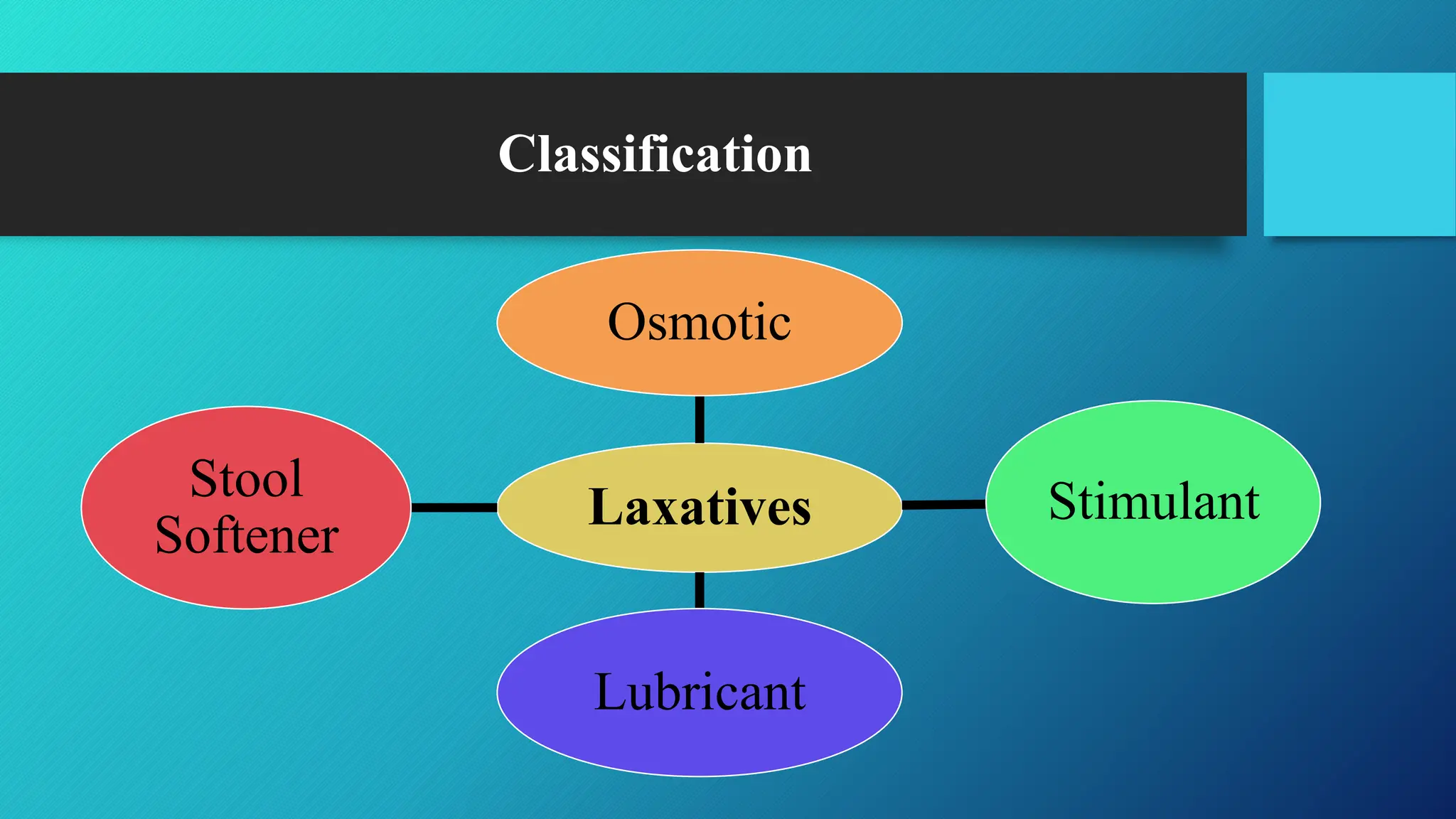
Classification
Laxatives
Osmotic
Stimulant
Lubricant
Stool
Softener
Mechanism of action
• Osmotic laxatives (Magnesium hydroxide) draw water into the
intestine to increase the mass of stool, stretching musculature which
results in peristalsis.
• Stimulant laxatives result in stimulation of intestinal
peristalsis.
• Lubricant laxatives increase water retention in the stool, and prevent
water absorption from the stool, and lubricate as well as soften
intestinal contents.
• Stool softener allows more fluid and fat to penetrate the faeces,
producing a softer faecal mass.
Drug example and doses
• Bilk forming laxatives (Methyl Cellulose) – 2 tablets 1000mg
orally with 8oz of liquid up to 6 times a day.
• Lubricant laxatives include mineral oil (Kondremal, Fleet
mineral oil enema.
• Hyperosmotic laxatives include lactulose. – 10mg BD
• Stimulant laxatives (Bisacodyl, Castor oil) – 5 -10 mg
sodium Pico sulfate 15-20 ml
• Stool softener (Docusate Calcium, Docusate potassium) – 240mg
50-400mg orally 1to 4 equally divided doses each day.
Indications / Uses
• To treat or prevent constipation.
• To prepare the bowel for radiologic or endoscopic procedures.
• Short-term treatment of constipation caused by high dose of
opioid use.
• Osmotic laxatives are used to rapid evacuation of the bowel after
ingestion of poison or following anti-helminthic therapy to rid the body of dead
parasites.
• Methyl cellulose and psyllium are used to many chronic diarrhoea.
Contraindications
• Contraindicated if patient with parasites.
• Severe abdominal pain of unknown cause.
Adverse effects
• GI irritation.
• Rectal burning sensation.
• Osmotic laxatives may cause Dehydration.
• Long-term use and abuse of laxatives may cause permanent
loss of colonic motility.
Adverse effects: cont.
• Laxative dependence and electrolyte imbalances.
• Nutritional deficiencies (with lubricant laxatives).
• Belching (with osmotic laxatives)
• Electrolyte imbalance. (With saline laxatives)
Drug interactions
• Laxative decreases intestinal transit time and reduces
absorption of orally administered drugs.
Nurses role and responsibility
Client Teaching
• Take as directed with at least 250 ml of water.
• Increase daily fluid intake.
• Prolonged use of laxatives can cause dependence.
Contact the health care provider:
• If constipation is unrelieved
• Signs or symptoms of dehydration or electrolyte imbalance.
Contd.
Lifestyle modifications
• Increase fiber-containing food, physical activity, and fluids
• Do not ignore the urge to defecate.
Osmotic laxatives-Follow each dose with 250 ml of water.
Contd.
• Bulk-forming agents- powder: take with a full 250 ml glass of water or juice, drink
right after mixing, and immediately follow with an additional 250 ml of water.
• Separate fiber laxative and other medications by 1–2 hours.
• Stimulant laxatives-Temporary discoloration in urine.
• Emollient laxatives (stool softeners)-May take up to three days for results.
laxatives and purgatives. Pharma pptx by Mr. Praveen Jaiswal

laxatives and purgatives. Pharma pptx by Mr. Praveen Jaiswal

  • 1.
    Laxatives and purgative drugs Presentedby Mr. Praveen Jaiswal MSN(CCN) PG Tutor Subharti University, Dehradun
  • 2.
    Laxatives/Purgatives • These drugsare combined known as purgatives, which includes laxatives and cathartics these drugs are used to overcome constipation and proper evacuation of bowels. • They are used to thoroughly clean the intestines before medical procedures or surgeries.
  • 3.
  • 4.
    Mechanism of action •Osmotic laxatives (Magnesium hydroxide) draw water into the intestine to increase the mass of stool, stretching musculature which results in peristalsis. • Stimulant laxatives result in stimulation of intestinal peristalsis. • Lubricant laxatives increase water retention in the stool, and prevent water absorption from the stool, and lubricate as well as soften intestinal contents. • Stool softener allows more fluid and fat to penetrate the faeces, producing a softer faecal mass.
  • 5.
    Drug example anddoses • Bilk forming laxatives (Methyl Cellulose) – 2 tablets 1000mg orally with 8oz of liquid up to 6 times a day. • Lubricant laxatives include mineral oil (Kondremal, Fleet mineral oil enema. • Hyperosmotic laxatives include lactulose. – 10mg BD • Stimulant laxatives (Bisacodyl, Castor oil) – 5 -10 mg sodium Pico sulfate 15-20 ml • Stool softener (Docusate Calcium, Docusate potassium) – 240mg 50-400mg orally 1to 4 equally divided doses each day.
  • 6.
    Indications / Uses •To treat or prevent constipation. • To prepare the bowel for radiologic or endoscopic procedures. • Short-term treatment of constipation caused by high dose of opioid use. • Osmotic laxatives are used to rapid evacuation of the bowel after ingestion of poison or following anti-helminthic therapy to rid the body of dead parasites. • Methyl cellulose and psyllium are used to many chronic diarrhoea.
  • 7.
    Contraindications • Contraindicated ifpatient with parasites. • Severe abdominal pain of unknown cause.
  • 8.
    Adverse effects • GIirritation. • Rectal burning sensation. • Osmotic laxatives may cause Dehydration. • Long-term use and abuse of laxatives may cause permanent loss of colonic motility.
  • 9.
    Adverse effects: cont. •Laxative dependence and electrolyte imbalances. • Nutritional deficiencies (with lubricant laxatives). • Belching (with osmotic laxatives) • Electrolyte imbalance. (With saline laxatives)
  • 10.
    Drug interactions • Laxativedecreases intestinal transit time and reduces absorption of orally administered drugs.
  • 11.
    Nurses role andresponsibility Client Teaching • Take as directed with at least 250 ml of water. • Increase daily fluid intake. • Prolonged use of laxatives can cause dependence. Contact the health care provider: • If constipation is unrelieved • Signs or symptoms of dehydration or electrolyte imbalance.
  • 12.
    Contd. Lifestyle modifications • Increasefiber-containing food, physical activity, and fluids • Do not ignore the urge to defecate. Osmotic laxatives-Follow each dose with 250 ml of water.
  • 13.
    Contd. • Bulk-forming agents-powder: take with a full 250 ml glass of water or juice, drink right after mixing, and immediately follow with an additional 250 ml of water. • Separate fiber laxative and other medications by 1–2 hours. • Stimulant laxatives-Temporary discoloration in urine. • Emollient laxatives (stool softeners)-May take up to three days for results.