Larry D Bob, BI Architect, Boeing
The Boeing Company
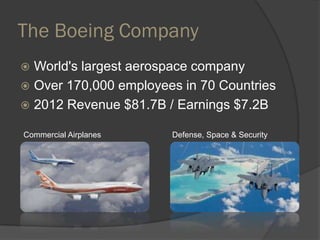
 World's largest aerospace company
 Over 170,000 employees in 70 Countries
 2012 Revenue $81.7B / Earnings $7.2B
Commercial Airplanes Defense, Space & Security
Enterprise Finance BI (EFBI)
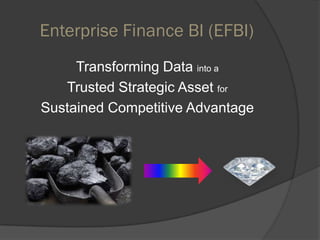
Transforming Data into a
Trusted Strategic Asset for
Sustained Competitive Advantage
EFBI Stats
 BI and Data Warehouse Services
 Supporting over 7,000 Finance Users
 ~95 Teammates
 ~$30M Annual Budget
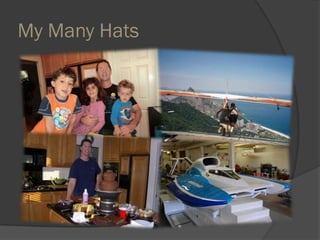
My Many Hats
Timing is Everything
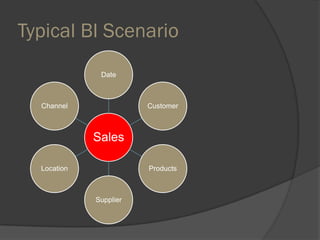
Typical BI Scenario
Sales
Date
Customer
Products
Supplier
Location
Channel
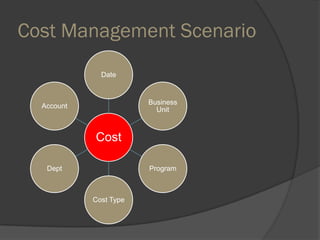
Cost Management Scenario
Cost
Date
Business
Unit
Program
Cost Type
Dept
Account
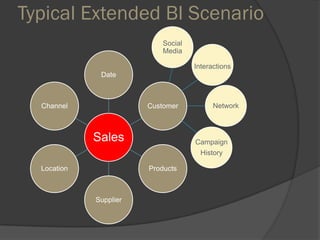
Typical Extended BI Scenario
Sales
Date
Customer
Products
Supplier
Location
Channel
Social
Media
Interactions
Campaign
History
Network
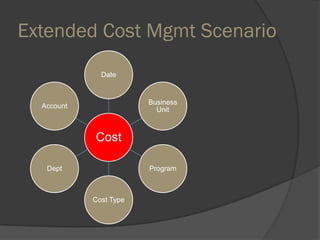
Extended Cost Mgmt Scenario
Cost
Date
Business
Unit
Program
Cost Type
Dept
Account
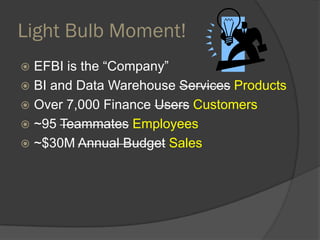
Light Bulb Moment!
 EFBI is the “Company”
 BI and Data Warehouse Services Products
 Over 7,000 Finance Users Customers
 ~95 Teammates Employees
 ~$30M Annual Budget Sales
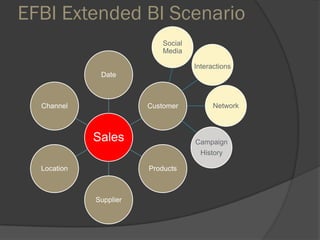
EFBI Extended BI Scenario
Sales
Date
Customer
Products
Supplier
Location
Channel
Social
Media
Interactions
Campaign
History
Network
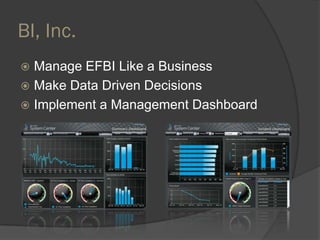
BI, Inc.
 Manage EFBI Like a Business
 Make Data Driven Decisions
 Implement a Management Dashboard
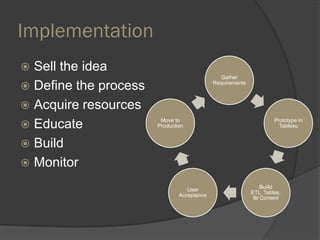
Implementation
 Sell the idea
 Define the process
 Acquire resources
 Educate
 Build
 Monitor
Gather
Requirements
Prototype in
Tableau
Buiild
ETL, Tables,
BI Content
User
Acceptance
Move to
Production
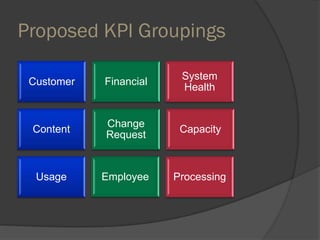
Proposed KPI Groupings
Customer
Content
System
Health
Usage
Capacity
Processing
Change
Request
Employee
Financial
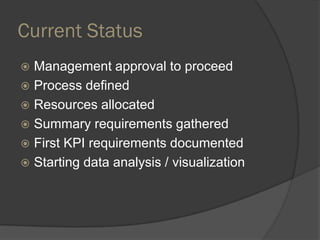
Current Status
 Management approval to proceed
 Process defined
 Resources allocated
 Summary requirements gathered
 First KPI requirements documented
 Starting data analysis / visualization
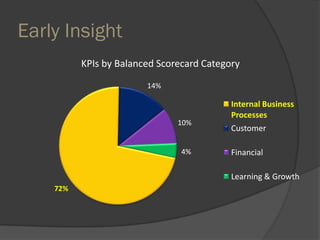
Early Insight
72%
14%
10%
4%
KPIs by Balanced Scorecard Category
Internal Business
Processes
Customer
Financial
Learning & Growth
Questions?
Contact me at: Larry.D.Bob@Boeing.com

BI, INC - BI, INC, Boeing

Editor's Notes

  • #3 Revenue is almost evenly split between the 2 primary business segments787 Dreamliner – in the news re: battery issueF15, F18, Apache Helicopter, C-17Smaller segments include BCC, Jeppesen, etcHeritage companies include:McDonnell Douglas, Rockwell, & Hughes Satellites
  • #5 Multiple DW platforms: SQL Server, Oracle, TeradataCognos is the enterprise standard BI toolWe’re 1 of 3 Cognos implementations within BoeingWe support the Finance communityCurrently consolidating Finance DWs and moving to Teradata
  • #6 Father, Traveler, Cook, Boater, BI Architect1999-2004 – Cognos Post Sales Consultant2005 Cognos Leadership through Technology, CIO Leadership Award2007 Cognos Performance Leadership, Impact Through Technical Innovation Award2008 TDWI Best Practice Award for Operational Business Intelligence 2011 TDWI CBIP Certification – 1st at Boeing
  • #9 The questions are very different…
  • #11 The questions are very different…
  • #14 Demonstrate the art of the possibleBuild the skill set within the team (experience)Gain credibility
  • #15 Hold initial interviews (1/7-1/10) to gather:Each Manager’s area of responsibilityBusiness processes within each area of responsibilityMetrics to support the business processesConsolidate input and prepare management summaryPresent management summary at Howard’s staff on 1/16 and get consensus on prioritizationDevelop mockup of overall dashboard look and feel (framework, design elements, etc)Develop detailed metric requirements templateInitiate development process for a group of metrics:Get detailed requirements (owner, source, update frequency, thresholds, plan, etc)Use Tableau to mockup visualization optionsHave metric owner select visualizationPrepare requirements document for DW and BI teams to support DashboardDW and BI teams build tables, ETL, BI content, and assemble into DashboardUser testing and acceptanceRoll to ProdValidate the prioritization and then iterate through step 6 for next group of metrics until dashboard is complete. Step 6 will be a series of overlapping Sprints with the requirements team coming up with the requirements, including mockups, and then the development team doing the actual build. While the development team is building Sprint 1, the requirements team would be getting the requirements for Sprint 2 and so on.