Exploring Business Intelligence:
How BI Transforms Business
Operations and Fuels Growth
• Introduction
• Challenges in Business Intelligence
• Illusion of BI Efficiency
• BI Best Practices Overview - DAMA DMBOK
• Management Models of BI
• Leveraging Business Intelligence
• Q&A and Closing Remarks
Webinar Agenda
Understanding
Business Intelligence
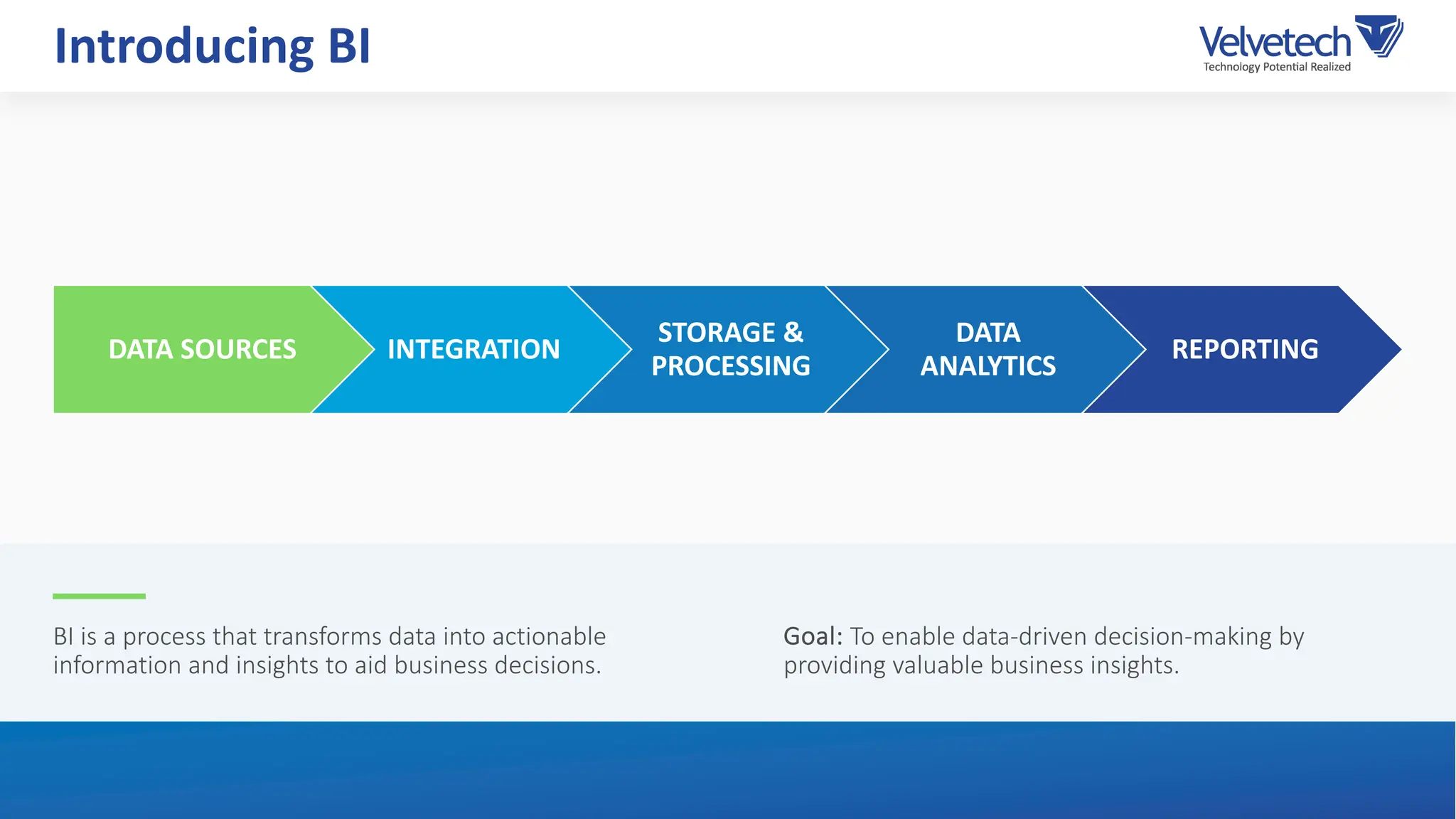
BI is a process that transforms data into actionable
information and insights to aid business decisions.
Goal: To enable data-driven decision-making by
providing valuable business insights.
Introducing BI
DATA SOURCES INTEGRATION
STORAGE &
PROCESSING
DATA
ANALYTICS
REPORTING
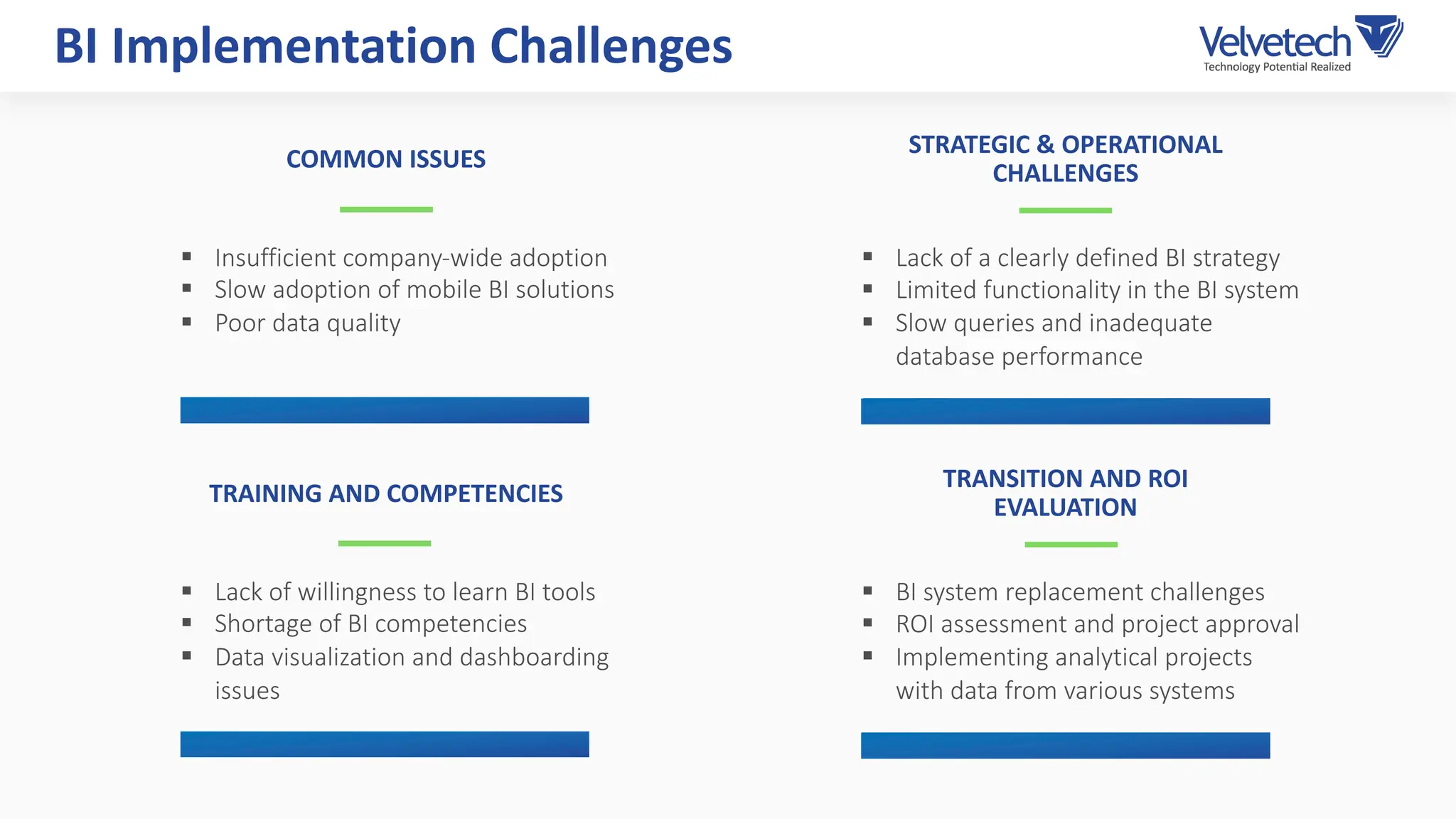
COMMON ISSUES
STRATEGIC & OPERATIONAL
CHALLENGES
§ Insufficient company-wide adoption
§ Slow adoption of mobile BI solutions
§ Poor data quality
§ Lack of a clearly defined BI strategy
§ Limited functionality in the BI system
§ Slow queries and inadequate
database performance
BI Implementation Challenges
TRAINING AND COMPETENCIES
TRANSITION AND ROI
EVALUATION
§ Lack of willingness to learn BI tools
§ Shortage of BI competencies
§ Data visualization and dashboarding
issues
§ BI system replacement challenges
§ ROI assessment and project approval
§ Implementing analytical projects
with data from various systems
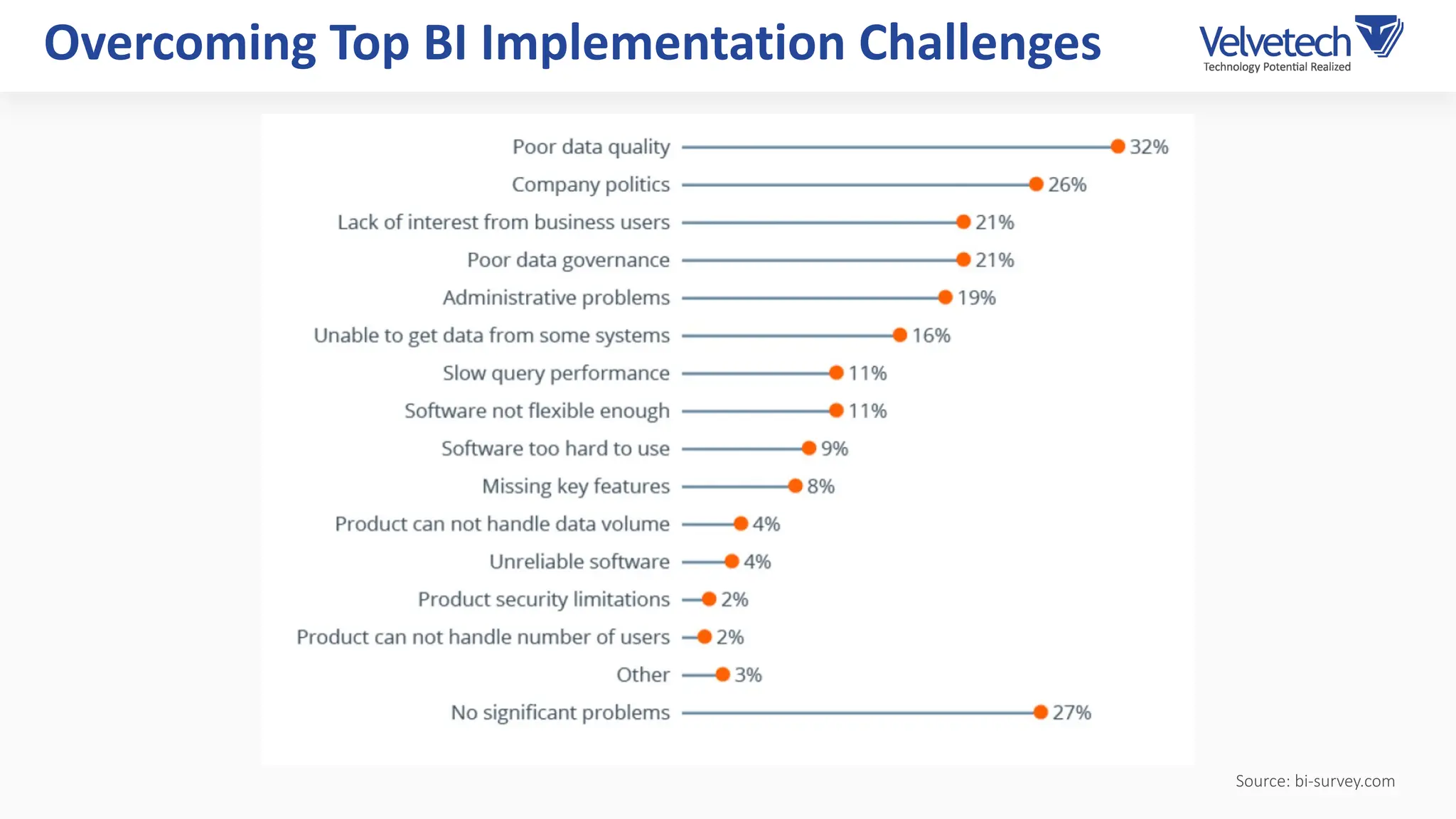
Overcoming Top BI Implementation Challenges
Source: bi-survey.com
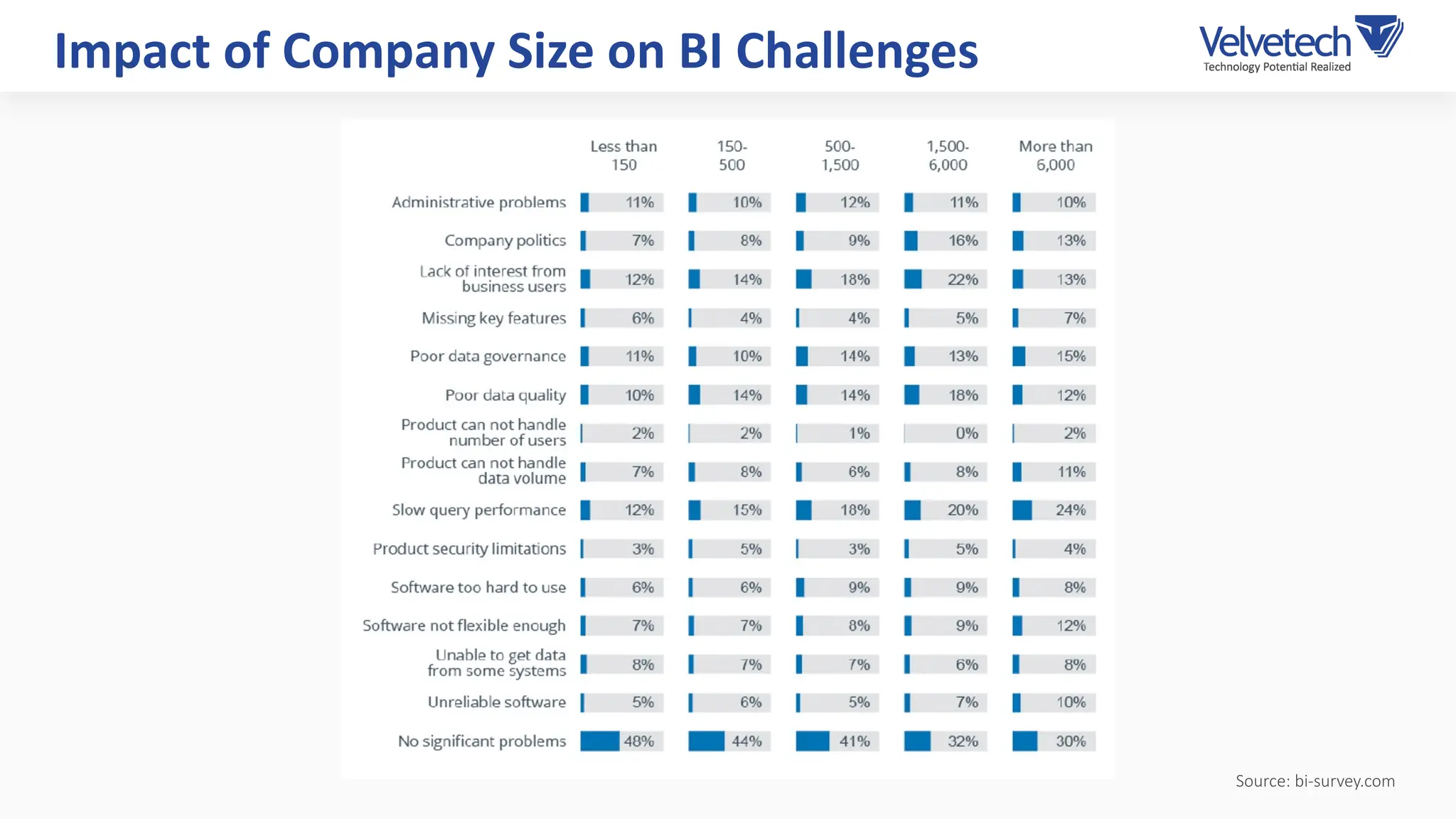
Impact of Company Size on BI Challenges
Source: bi-survey.com
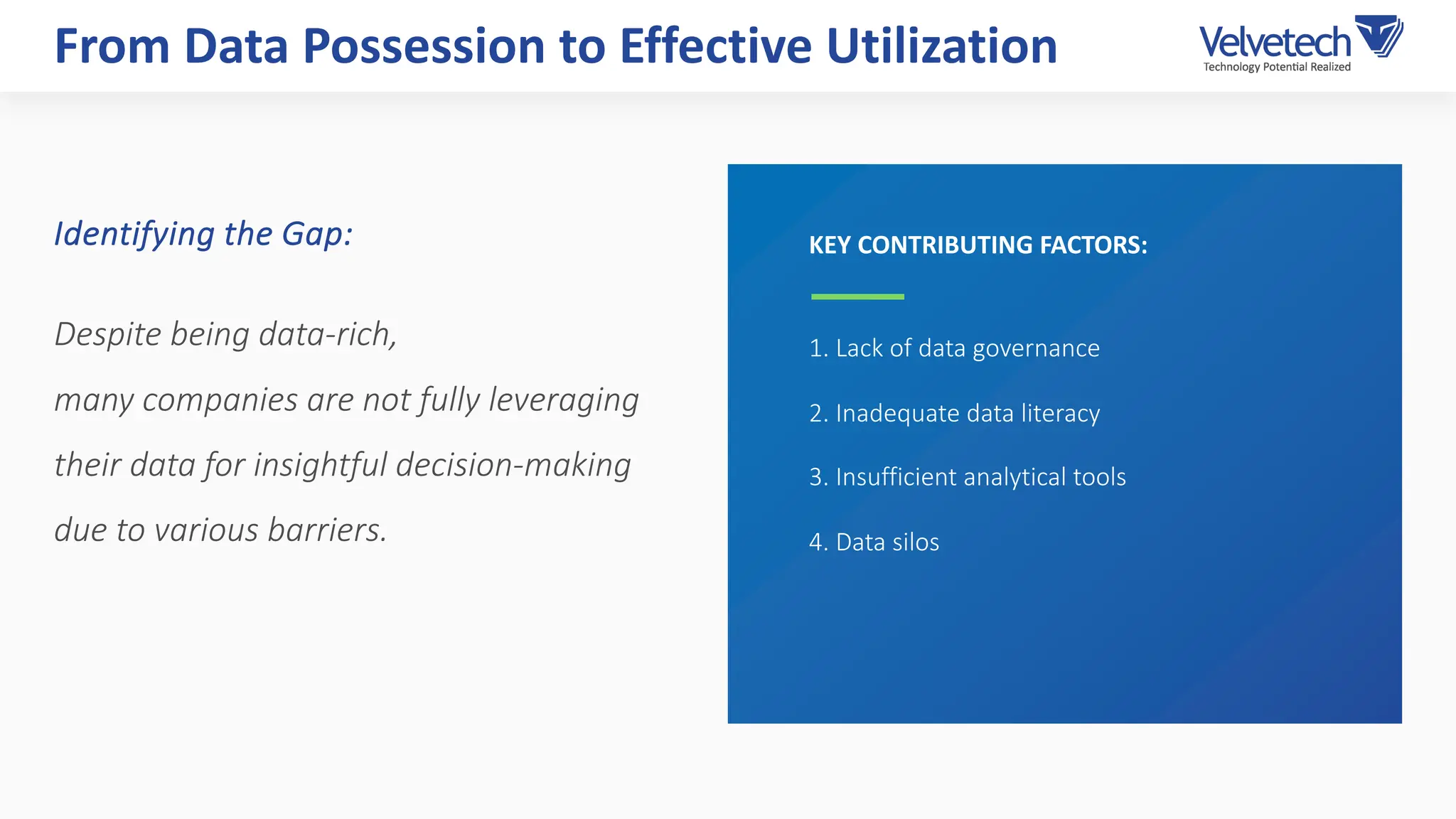
1. Lack of data governance
2. Inadequate data literacy
3. Insufficient analytical tools
4. Data silos
From Data Possession to Effective Utilization
KEY CONTRIBUTING FACTORS:
Identifying the Gap:
Despite being data-rich,
many companies are not fully leveraging
their data for insightful decision-making
due to various barriers.
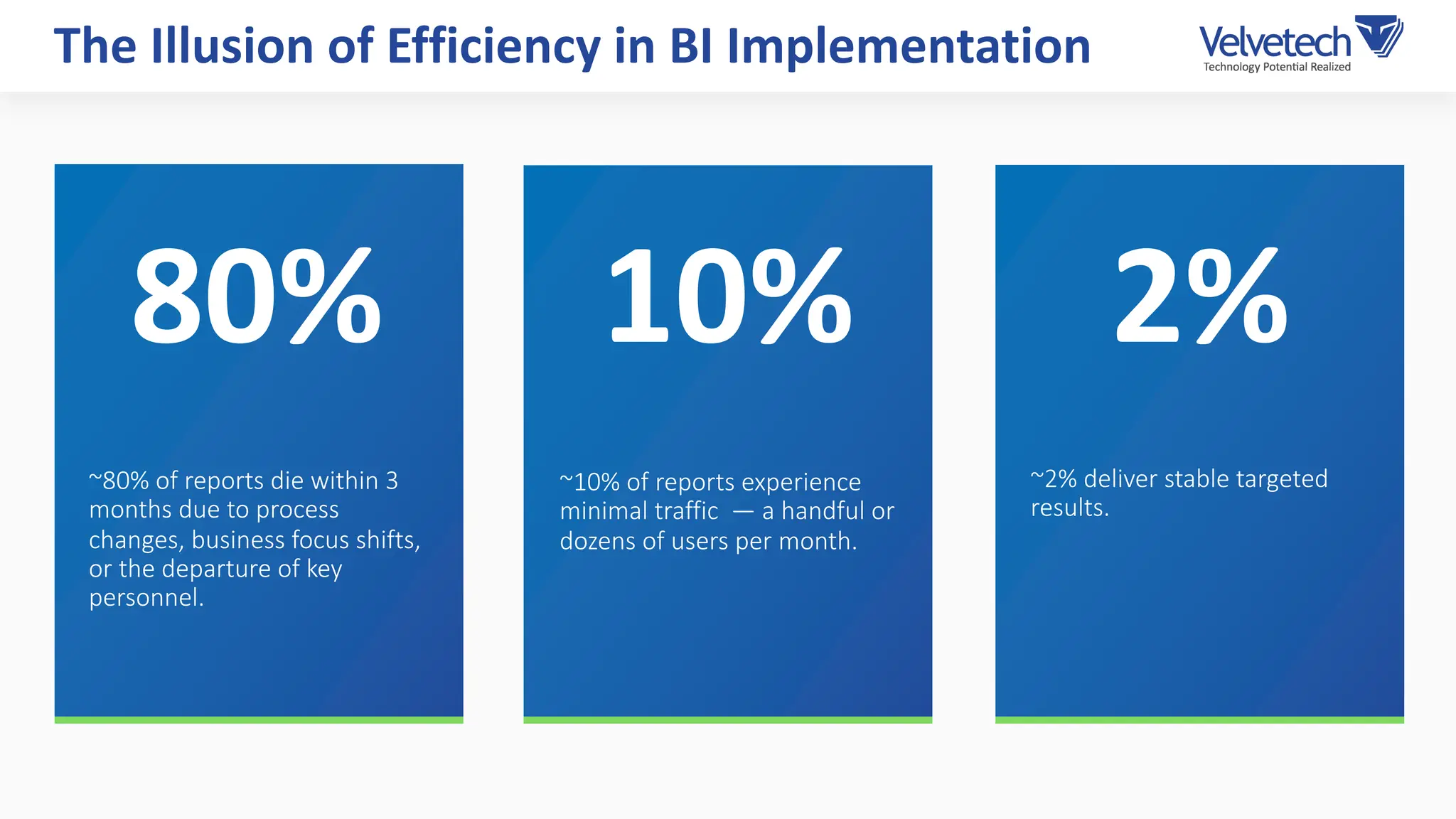
~80% of reports die within 3
months due to process
changes, business focus shifts,
or the departure of key
personnel.
~10% of reports experience
minimal traffic — a handful or
dozens of users per month.
~2% deliver stable targeted
results.
80% 10% 2%
The Illusion of Efficiency in BI Implementation
BI Best Practices
• Assessing organizational stage
• Charting a clear path forward
• Fostering systematic improvement
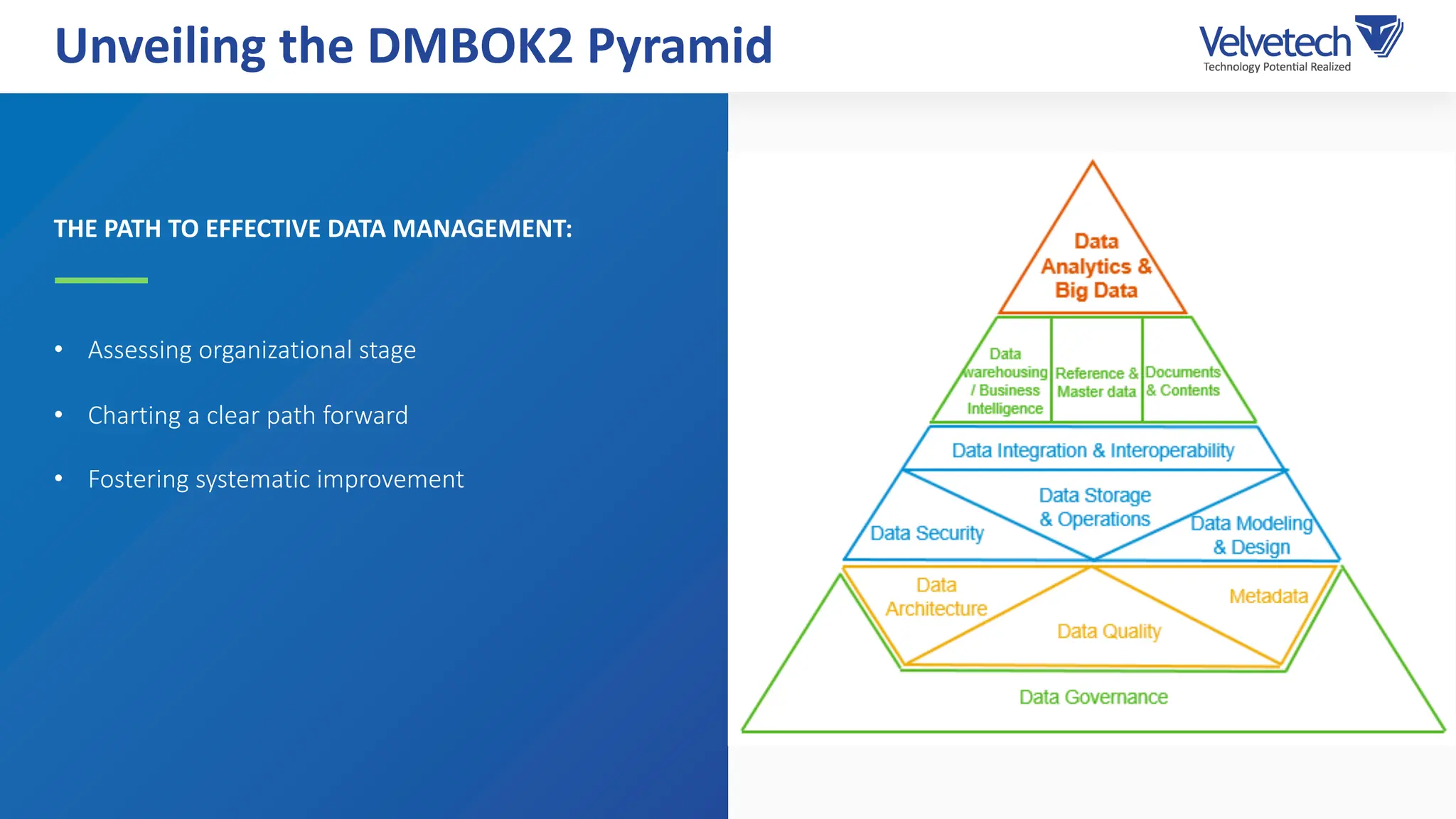
Unveiling the DMBOK2 Pyramid
THE PATH TO EFFECTIVE DATA MANAGEMENT:
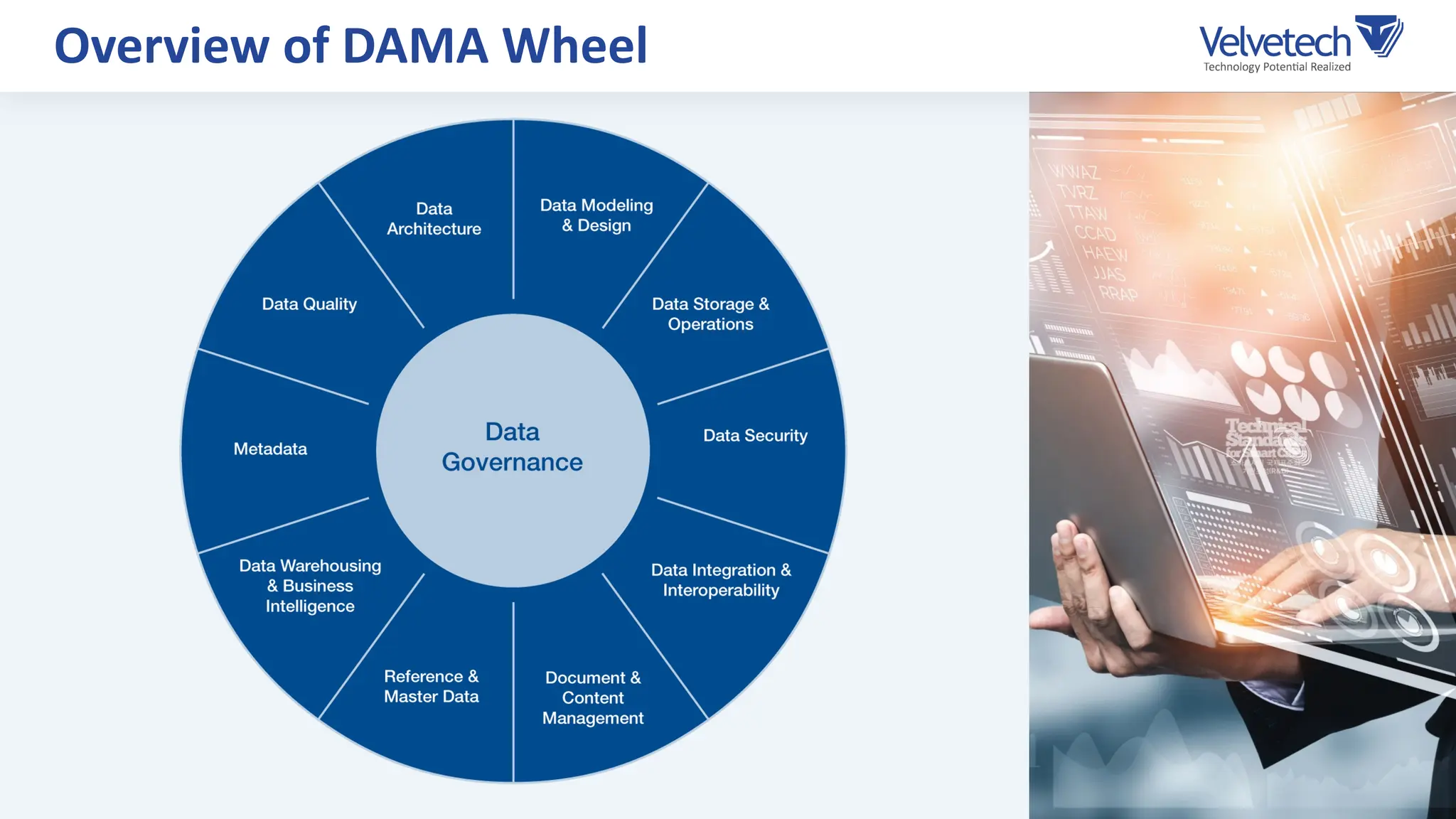
Overview of DAMA Wheel
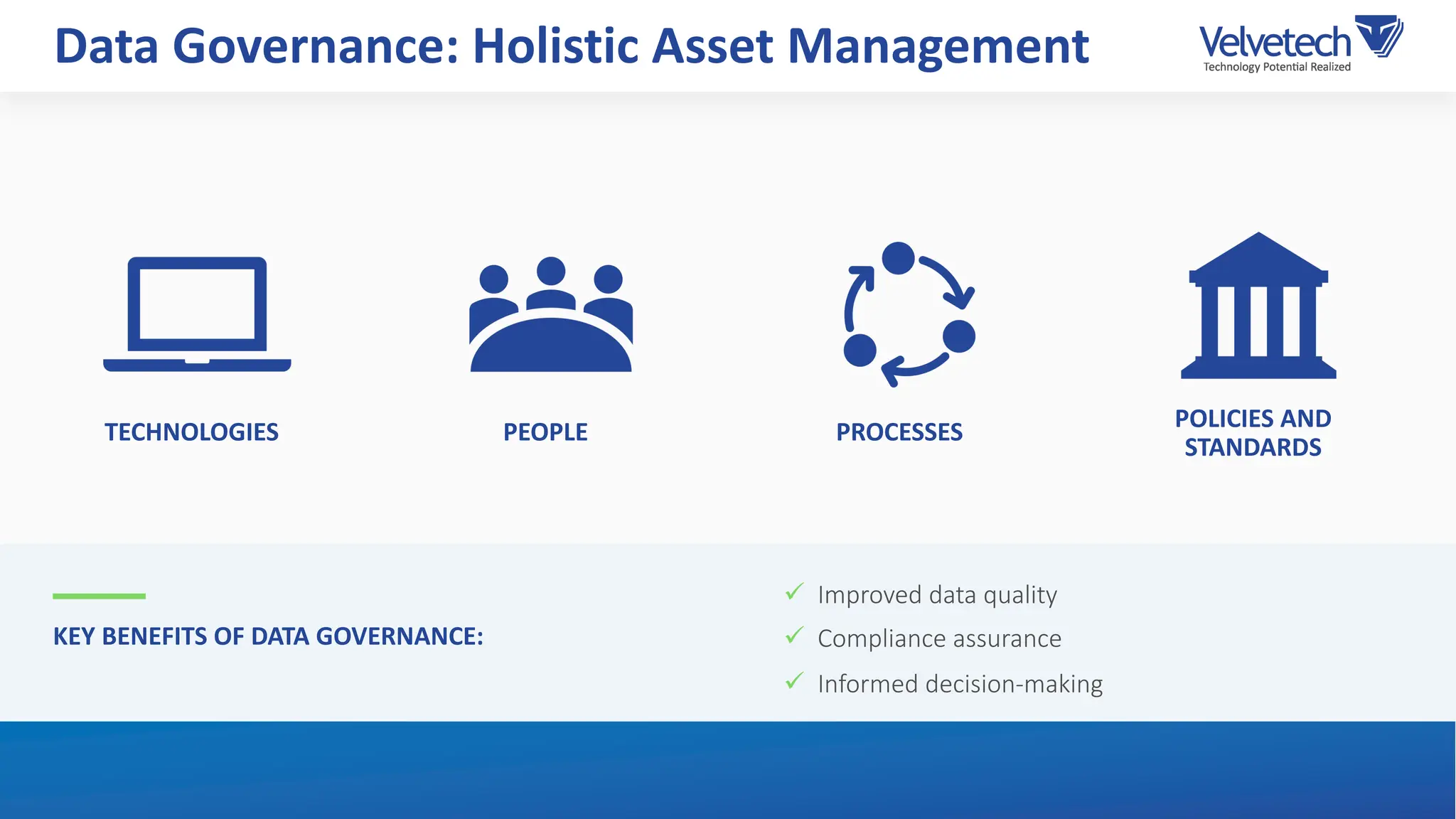
KEY BENEFITS OF DATA GOVERNANCE:
ü Improved data quality
ü Compliance assurance
ü Informed decision-making
Data Governance: Holistic Asset Management
TECHNOLOGIES PEOPLE PROCESSES POLICIES AND
STANDARDS
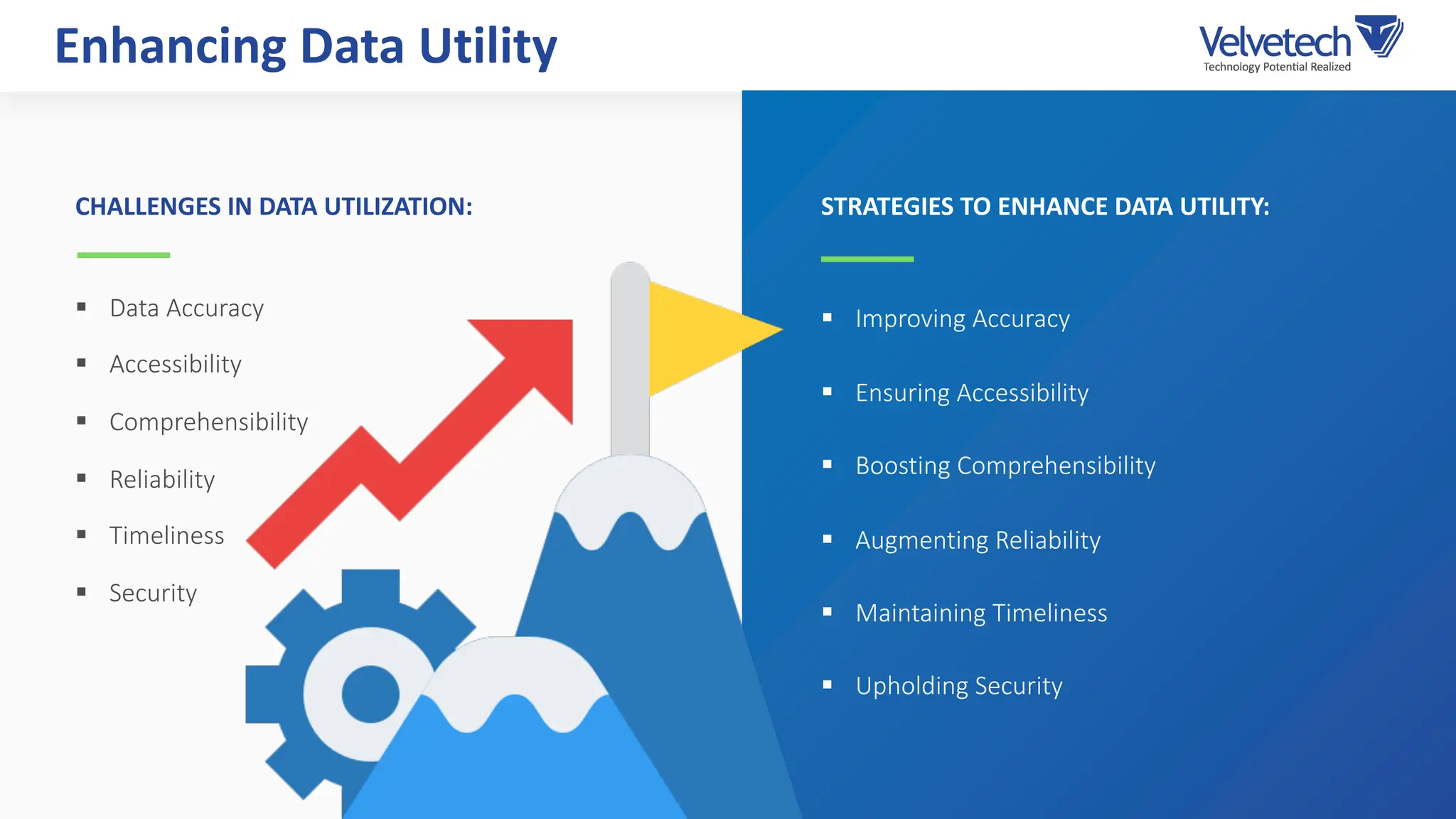
§ Data Accuracy
§ Accessibility
§ Comprehensibility
§ Reliability
§ Timeliness
§ Security
CHALLENGES IN DATA UTILIZATION:
Enhancing Data Utility
§ Improving Accuracy
§ Ensuring Accessibility
§ Boosting Comprehensibility
§ Augmenting Reliability
§ Maintaining Timeliness
§ Upholding Security
STRATEGIES TO ENHANCE DATA UTILITY:
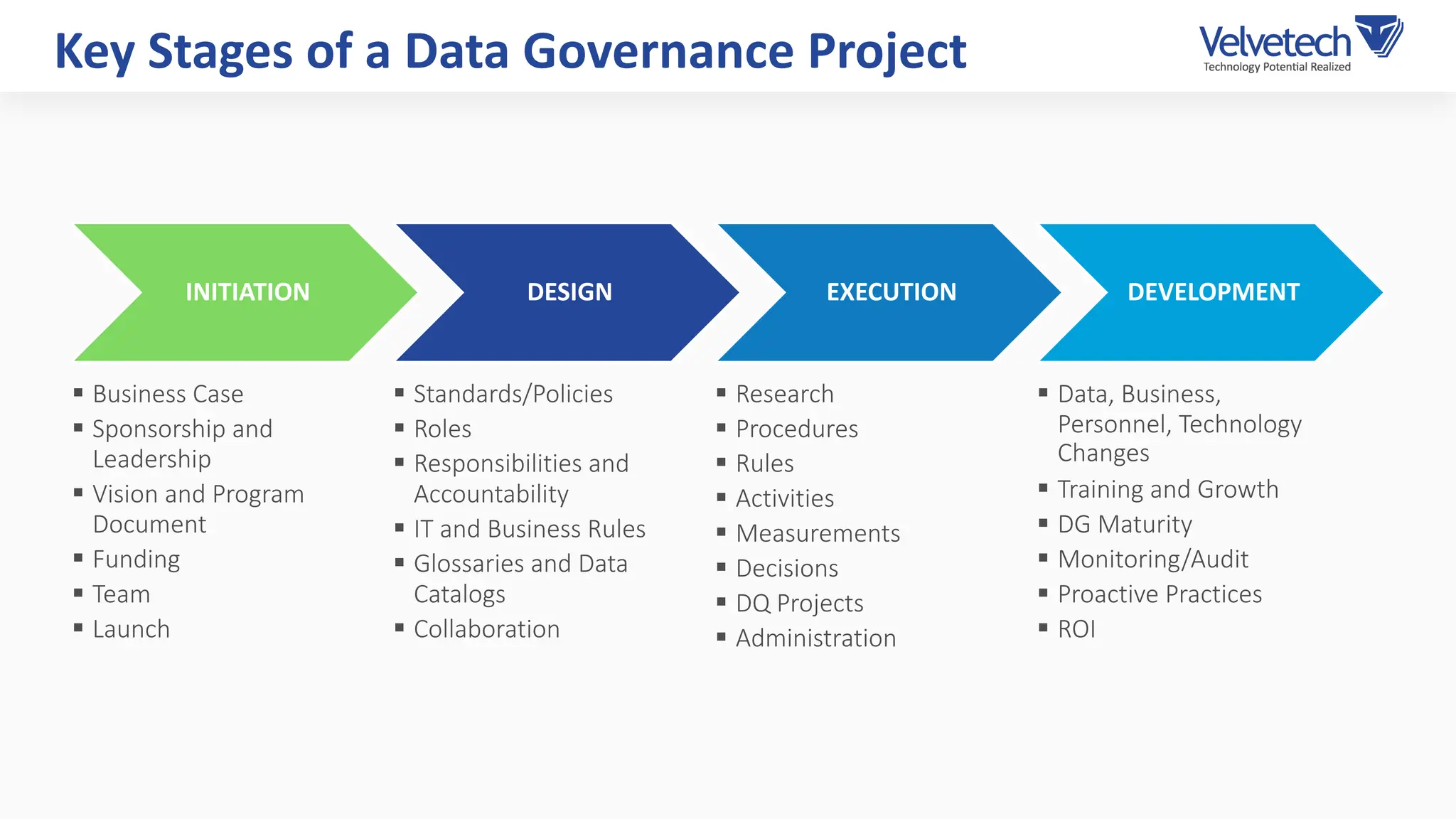
Key Stages of a Data Governance Project
INITIATION
§ Business Case
§ Sponsorship and
Leadership
§ Vision and Program
Document
§ Funding
§ Team
§ Launch
DESIGN
§ Standards/Policies
§ Roles
§ Responsibilities and
Accountability
§ IT and Business Rules
§ Glossaries and Data
Catalogs
§ Collaboration
EXECUTION
§ Research
§ Procedures
§ Rules
§ Activities
§ Measurements
§ Decisions
§ DQ Projects
§ Administration
DEVELOPMENT
§ Data, Business,
Personnel, Technology
Changes
§ Training and Growth
§ DG Maturity
§ Monitoring/Audit
§ Proactive Practices
§ ROI
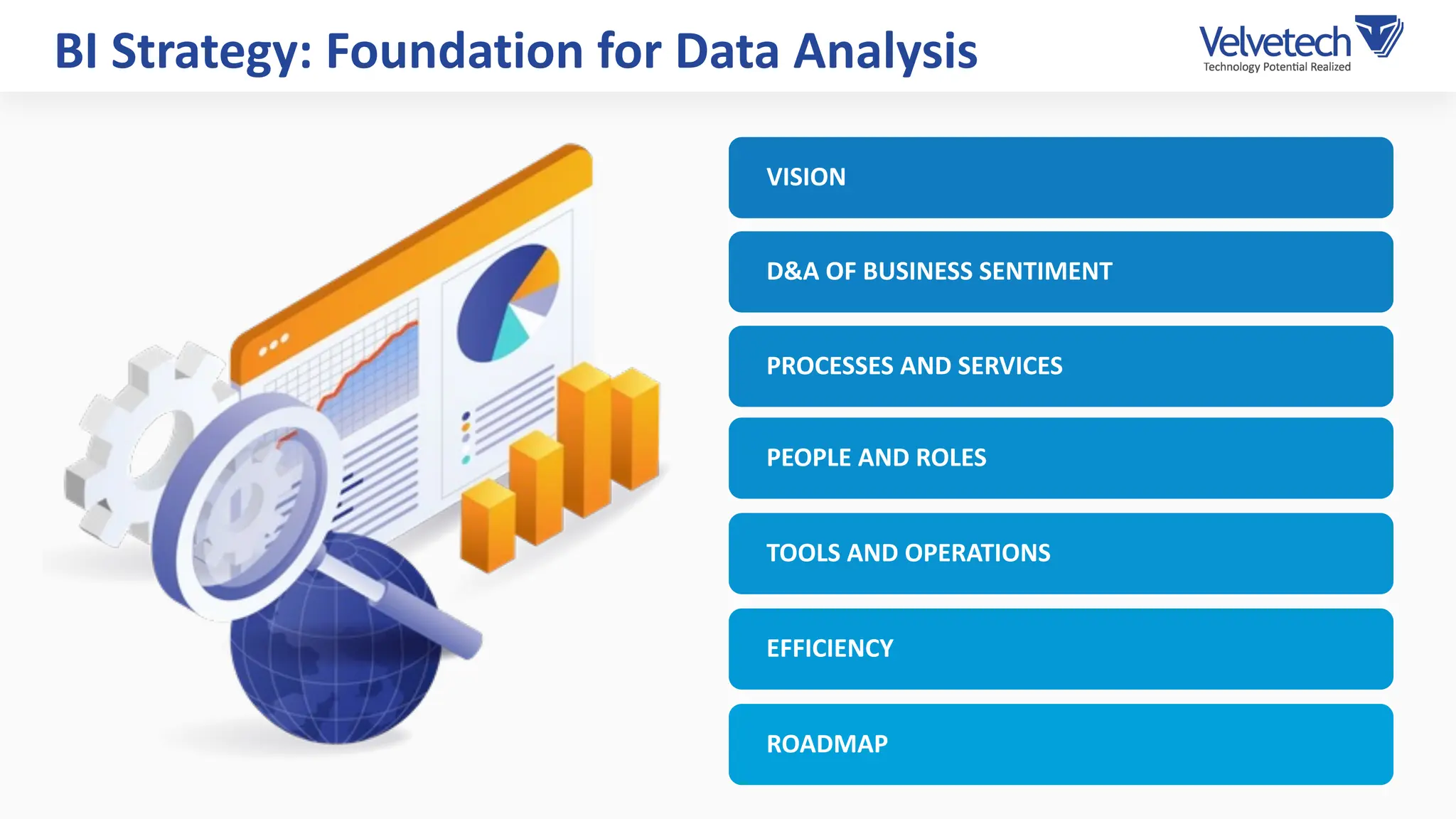
VISION
D&A OF BUSINESS SENTIMENT
PROCESSES AND SERVICES
PEOPLE AND ROLES
TOOLS AND OPERATIONS
EFFICIENCY
ROADMAP
BI Strategy: Foundation for Data Analysis
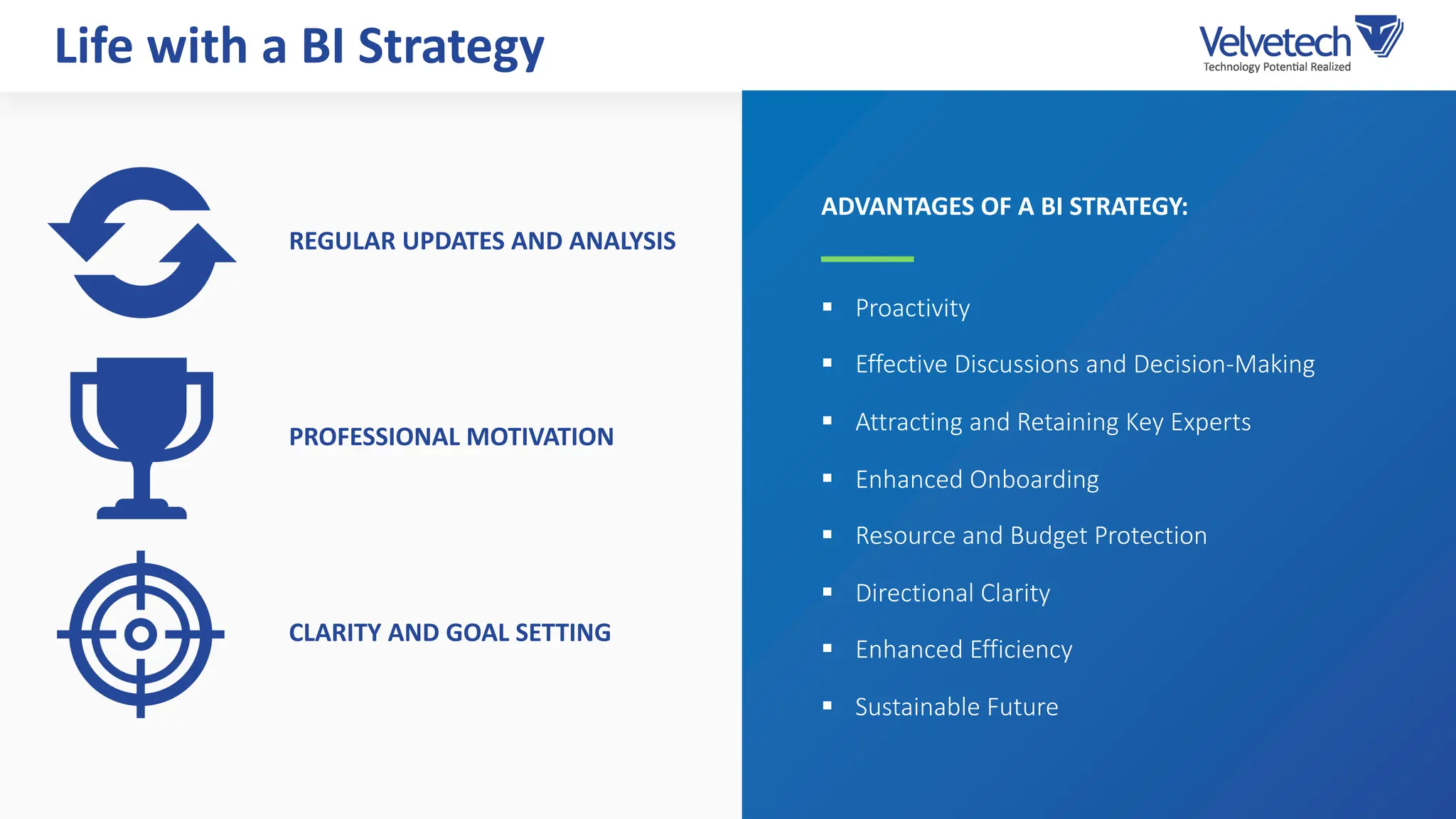
Life with a BI Strategy
§ Proactivity
§ Effective Discussions and Decision-Making
§ Attracting and Retaining Key Experts
§ Enhanced Onboarding
§ Resource and Budget Protection
§ Directional Clarity
§ Enhanced Efficiency
§ Sustainable Future
ADVANTAGES OF A BI STRATEGY:
REGULAR UPDATES AND ANALYSIS
PROFESSIONAL MOTIVATION
CLARITY AND GOAL SETTING
Management Models of
Business Intelligence
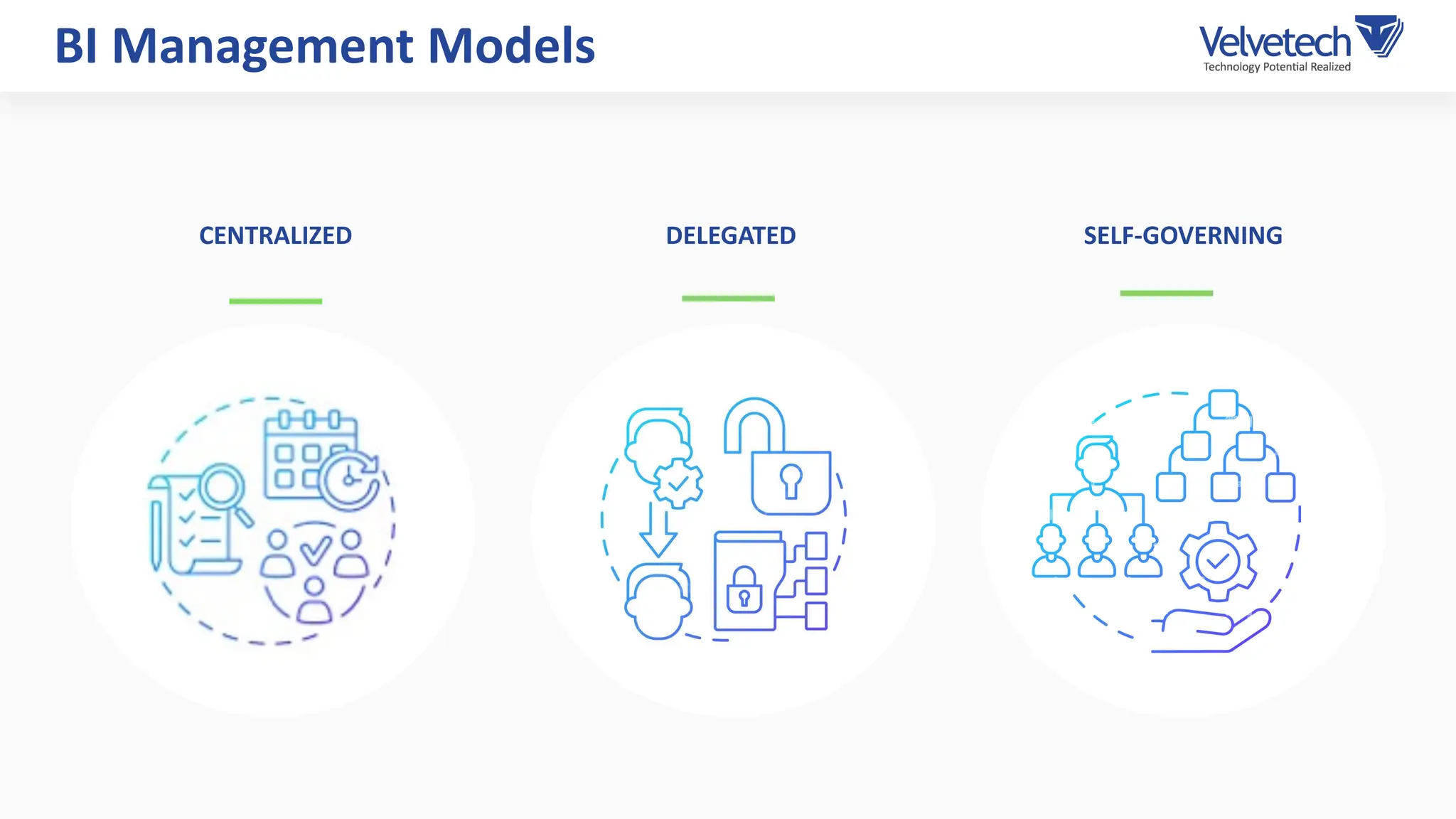
BI Management Models
CENTRALIZED DELEGATED SELF-GOVERNING
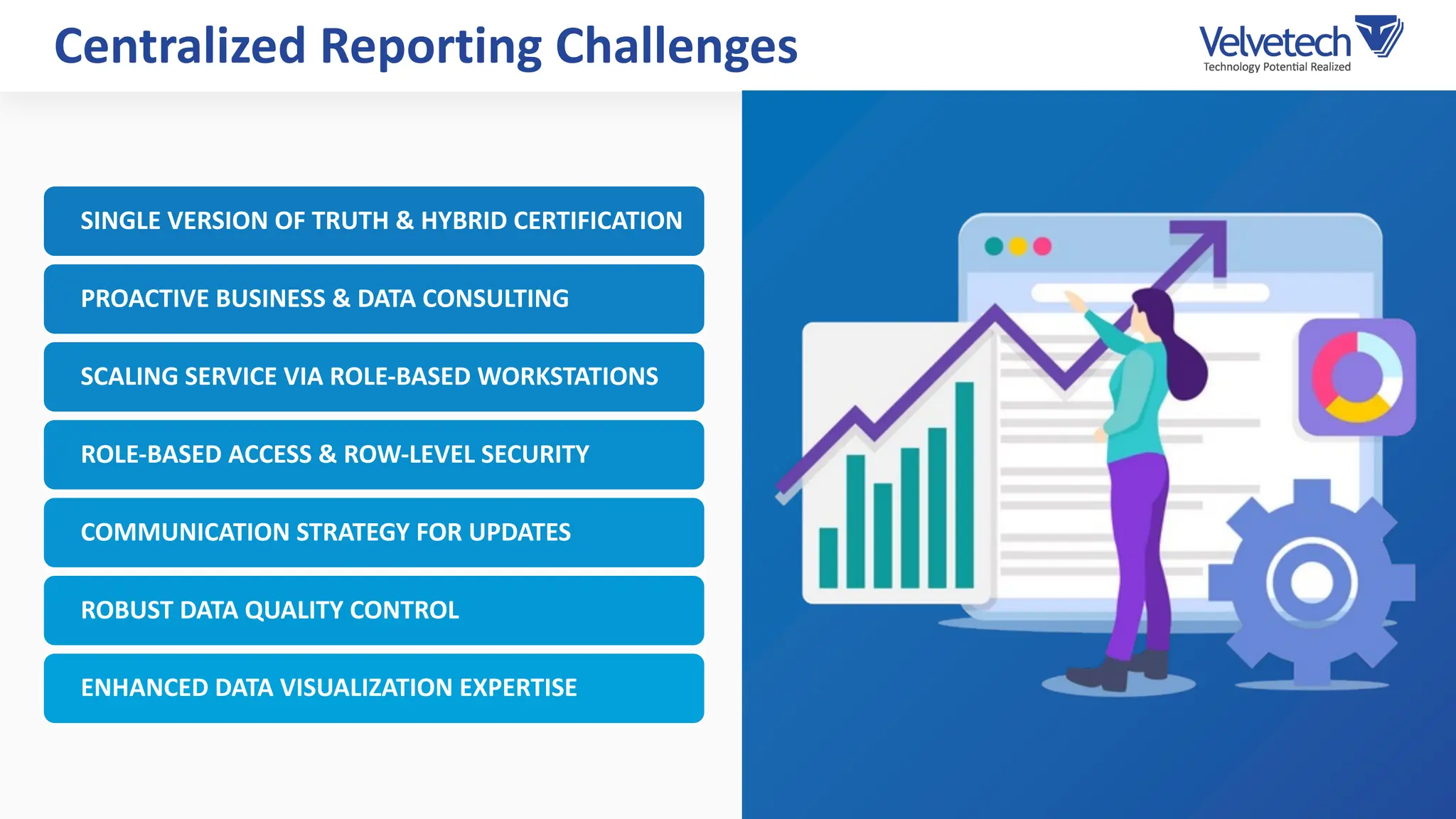
Centralized Reporting Challenges
SINGLE VERSION OF TRUTH & HYBRID CERTIFICATION
PROACTIVE BUSINESS & DATA CONSULTING
SCALING SERVICE VIA ROLE-BASED WORKSTATIONS
ROLE-BASED ACCESS & ROW-LEVEL SECURITY
COMMUNICATION STRATEGY FOR UPDATES
ROBUST DATA QUALITY CONTROL
ENHANCED DATA VISUALIZATION EXPERTISE
• Lack of Quality Governance
• Loss of a "Single Version of Truth"
• New IT Responsibilities
• Reduced IT Burden
• Democratization of BI Access
• BI Competence Development
NEGATIVE ASPECTS
POSITIVE ASPECTS
Exploring Self-Service Business Intelligence (SSBI)
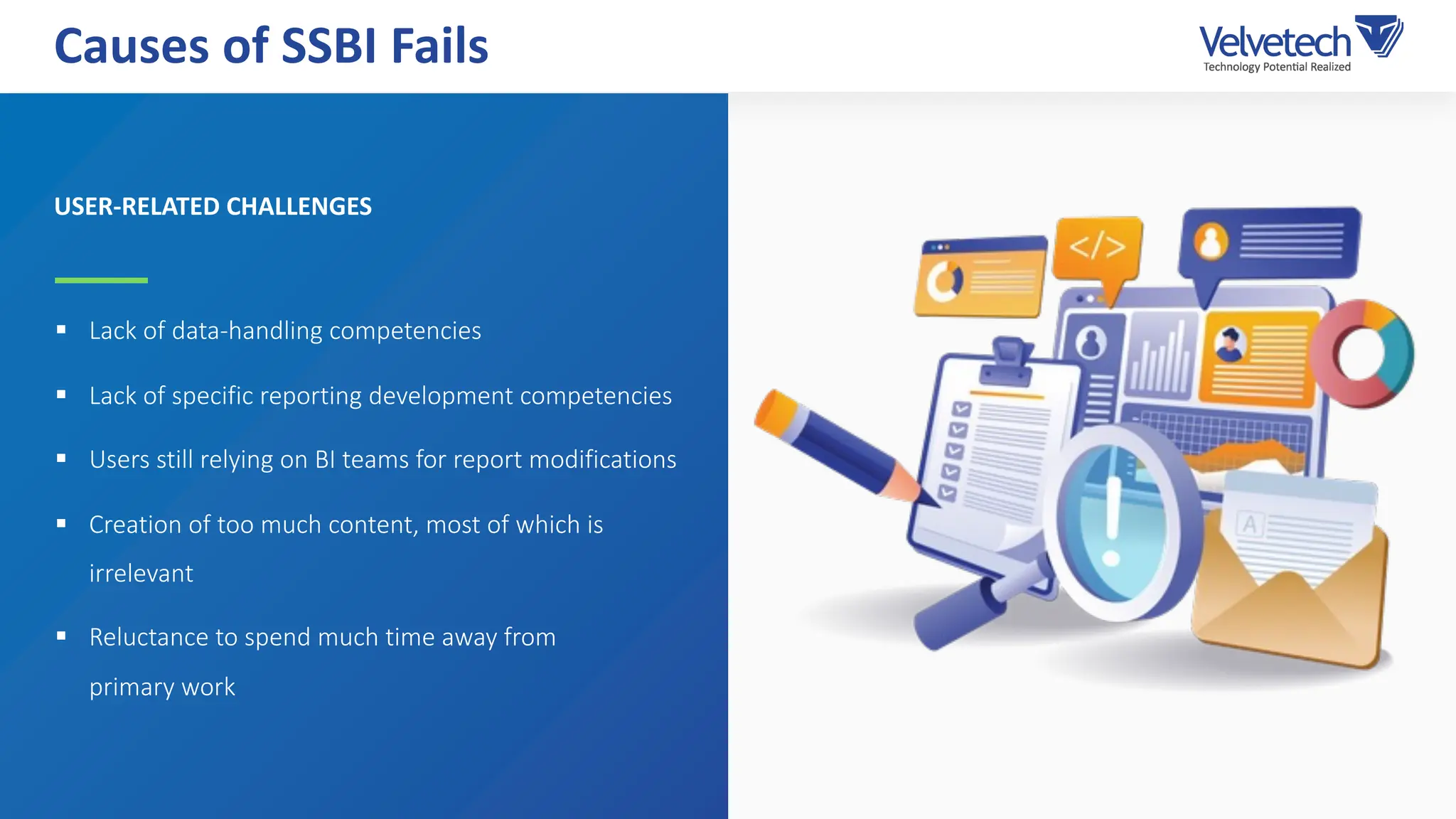
§ Lack of data-handling competencies
§ Lack of specific reporting development competencies
§ Users still relying on BI teams for report modifications
§ Creation of too much content, most of which is
irrelevant
§ Reluctance to spend much time away from
primary work
Causes of SSBI Fails
USER-RELATED CHALLENGES
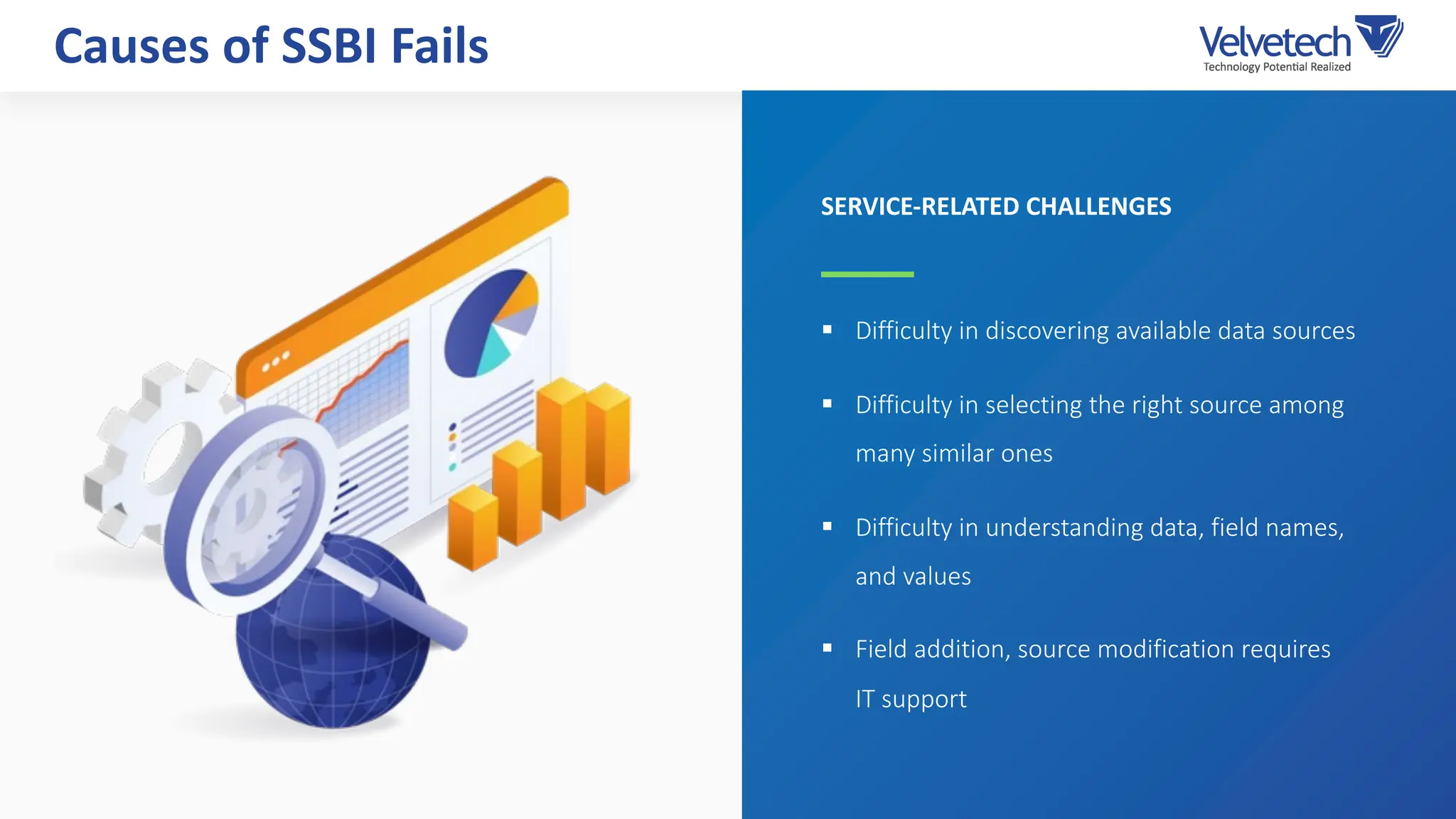
Causes of SSBI Fails
§ Difficulty in discovering available data sources
§ Difficulty in selecting the right source among
many similar ones
§ Difficulty in understanding data, field names,
and values
§ Field addition, source modification requires
IT support
SERVICE-RELATED CHALLENGES
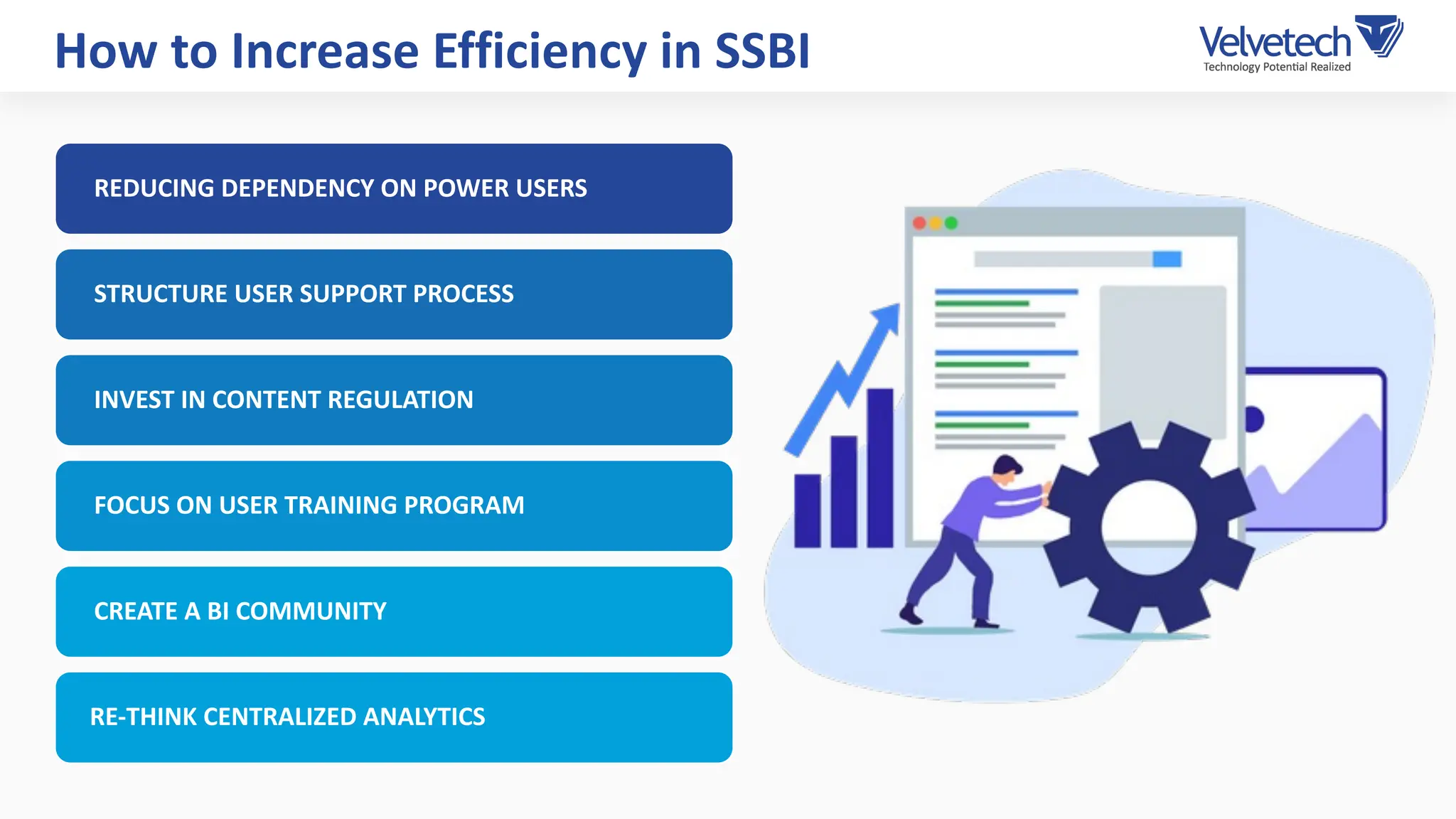
How to Increase Efficiency in SSBI
REDUCING DEPENDENCY ON POWER USERS
STRUCTURE USER SUPPORT PROCESS
INVEST IN CONTENT REGULATION
FOCUS ON USER TRAINING PROGRAM
CREATE A BI COMMUNITY
RE-THINK CENTRALIZED ANALYTICS
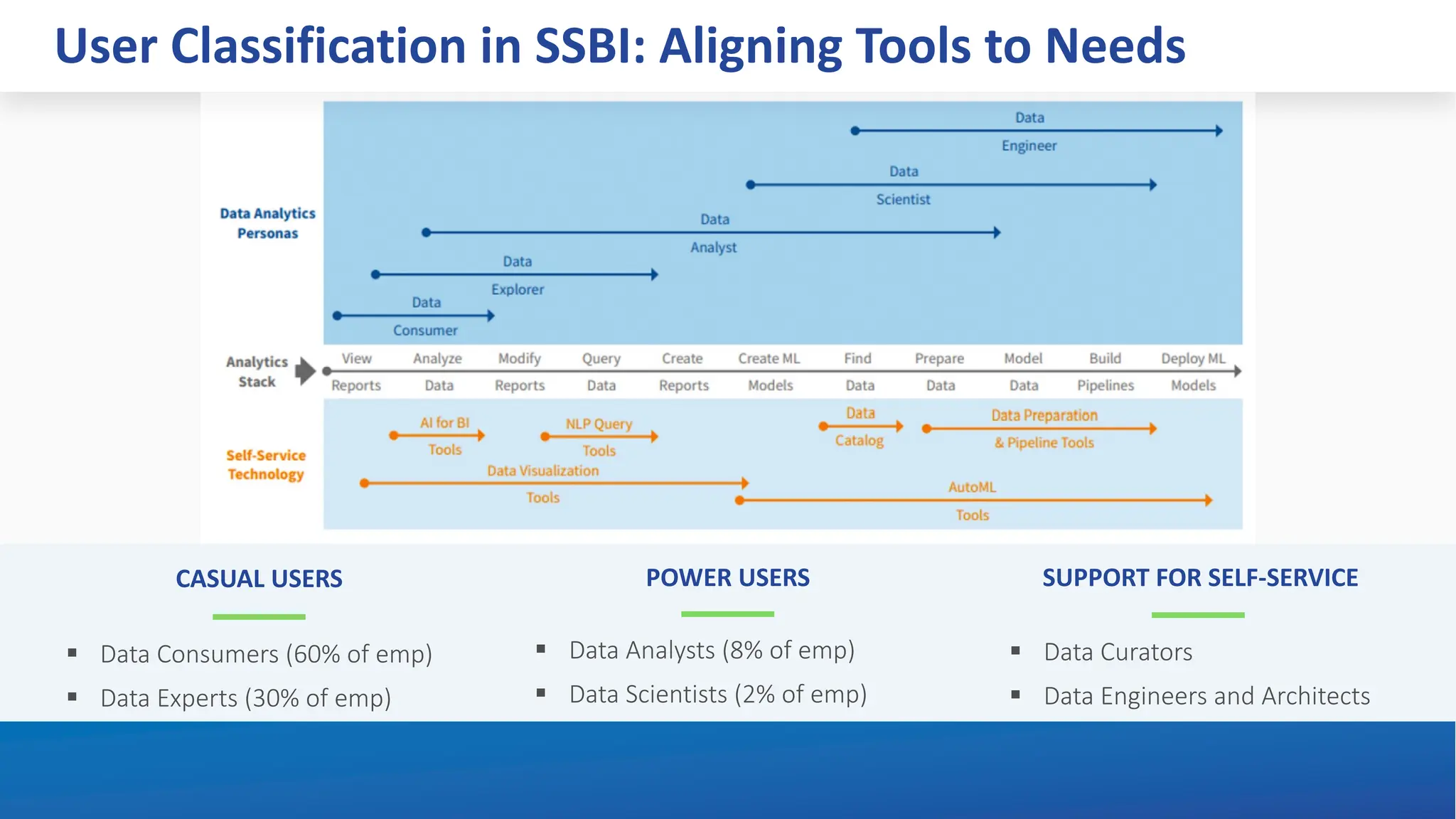
User Classification in SSBI: Aligning Tools to Needs
CASUAL USERS POWER USERS SUPPORT FOR SELF-SERVICE
§ Data Consumers (60% of emp)
§ Data Experts (30% of emp)
§ Data Analysts (8% of emp)
§ Data Scientists (2% of emp)
§ Data Curators
§ Data Engineers and Architects
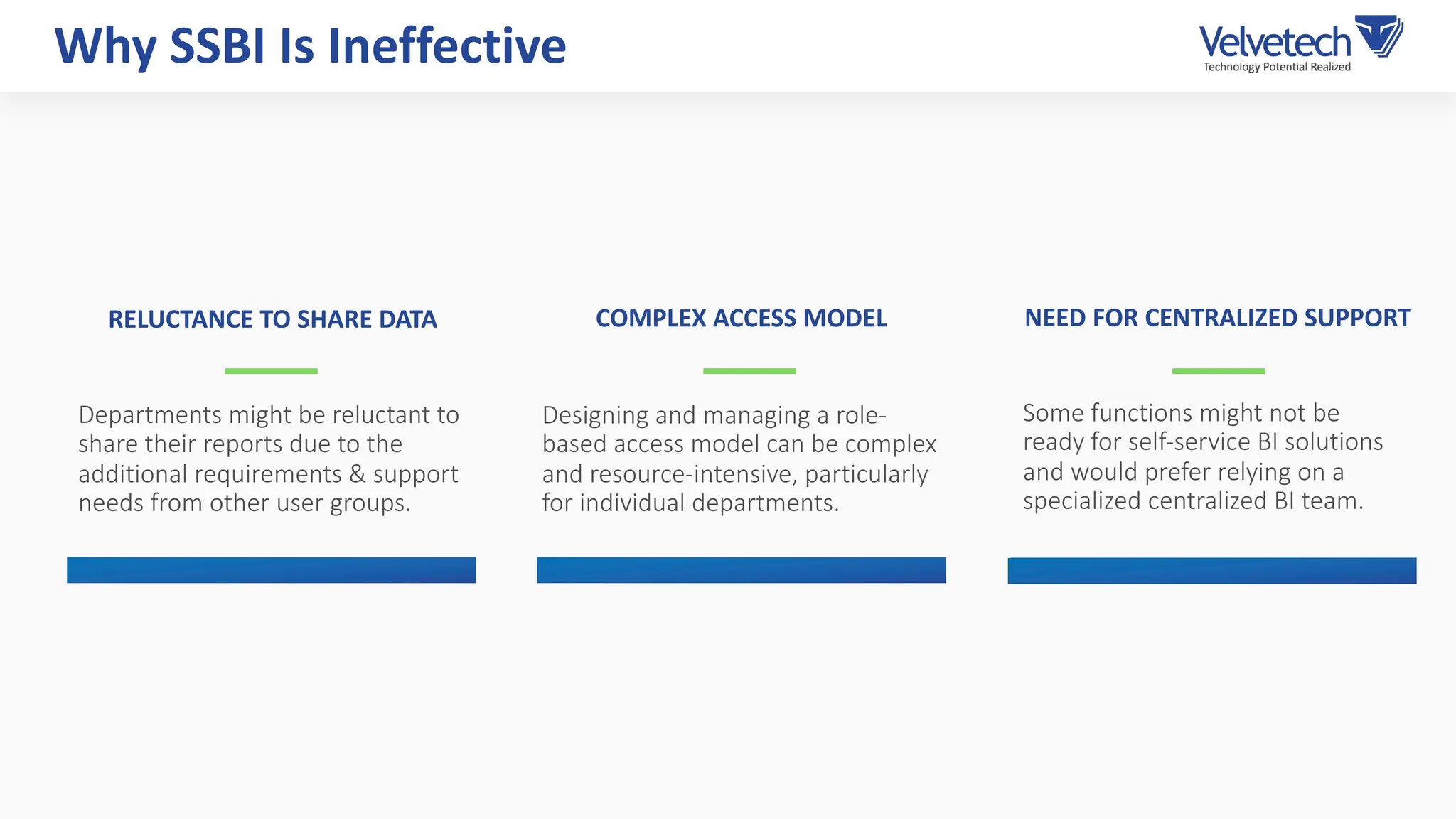
RELUCTANCE TO SHARE DATA COMPLEX ACCESS MODEL NEED FOR CENTRALIZED SUPPORT
Departments might be reluctant to
share their reports due to the
additional requirements & support
needs from other user groups.
Designing and managing a role-
based access model can be complex
and resource-intensive, particularly
for individual departments.
Some functions might not be
ready for self-service BI solutions
and would prefer relying on a
specialized centralized BI team.
Why SSBI Is Ineffective
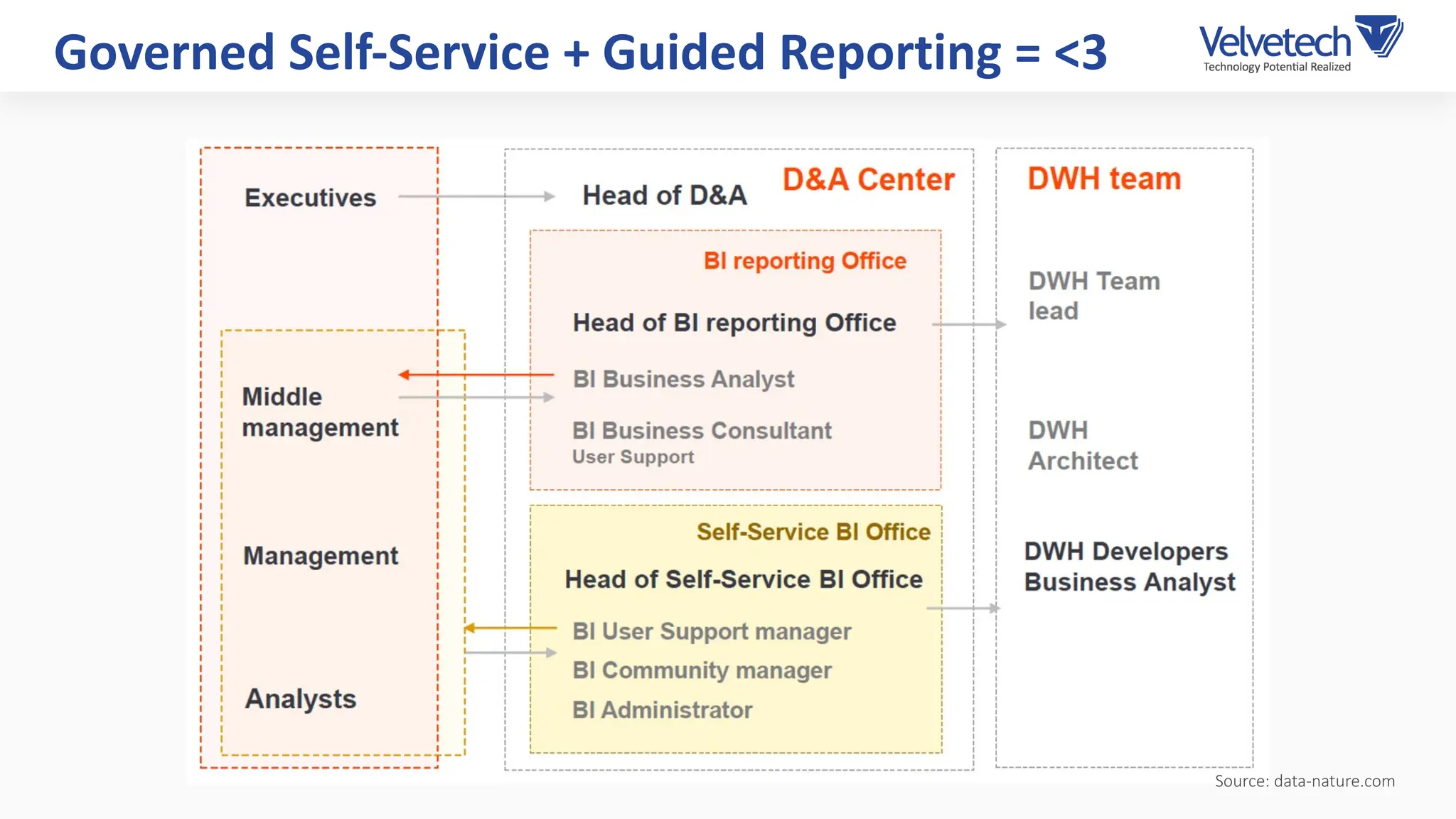
Governed Self-Service + Guided Reporting = <3
Source: data-nature.com
The Ways to Leverage
Business Intelligence
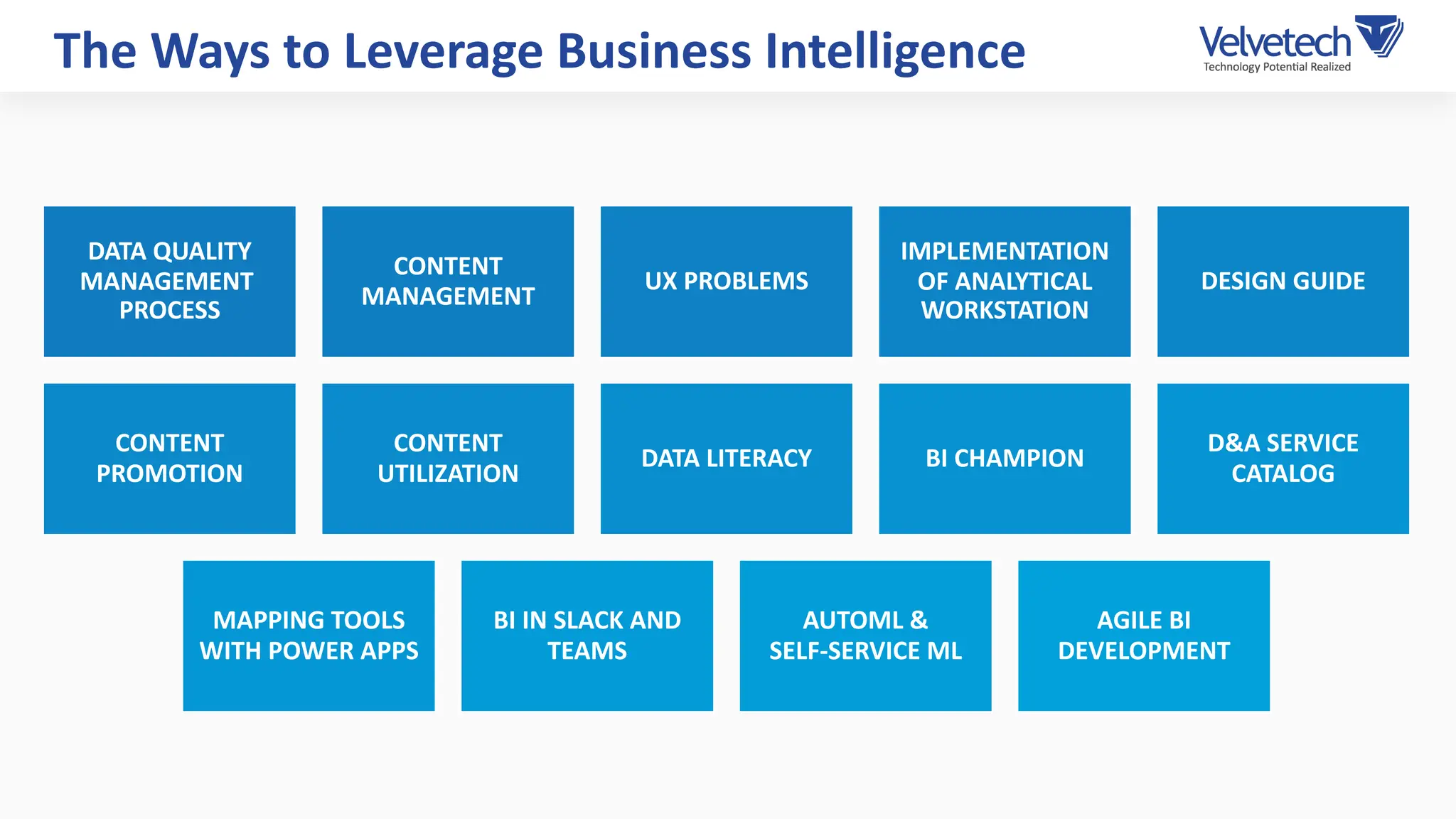
The Ways to Leverage Business Intelligence
DATA QUALITY
MANAGEMENT
PROCESS
CONTENT
MANAGEMENT
UX PROBLEMS
IMPLEMENTATION
OF ANALYTICAL
WORKSTATION
DESIGN GUIDE
CONTENT
PROMOTION
CONTENT
UTILIZATION
DATA LITERACY BI CHAMPION
D&A SERVICE
CATALOG
MAPPING TOOLS
WITH POWER APPS
BI IN SLACK AND
TEAMS
AUTOML &
SELF-SERVICE ML
AGILE BI
DEVELOPMENT
Analytics Maturity
Assessment
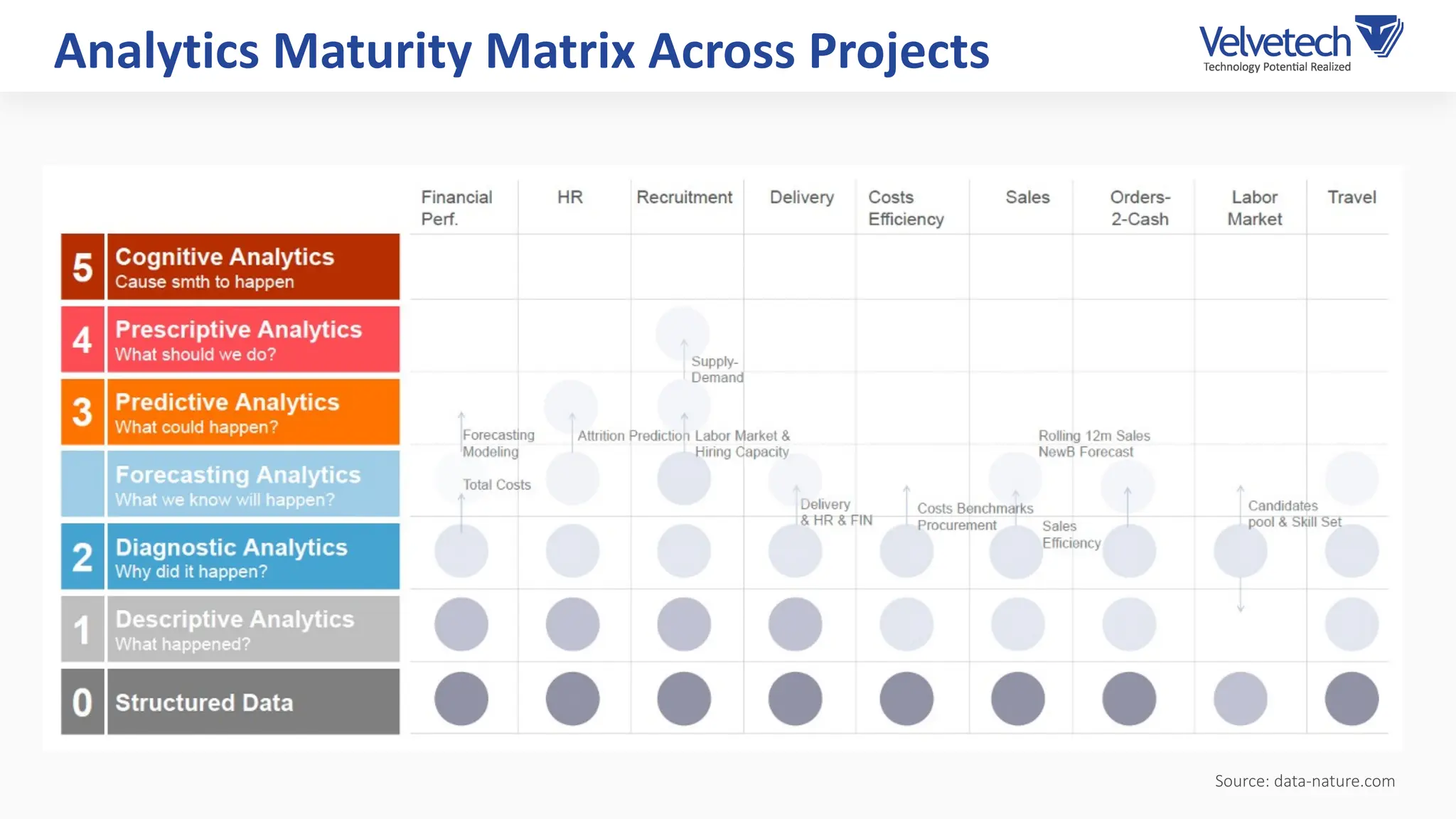
Analytics Maturity Matrix Across Projects
Source: data-nature.com
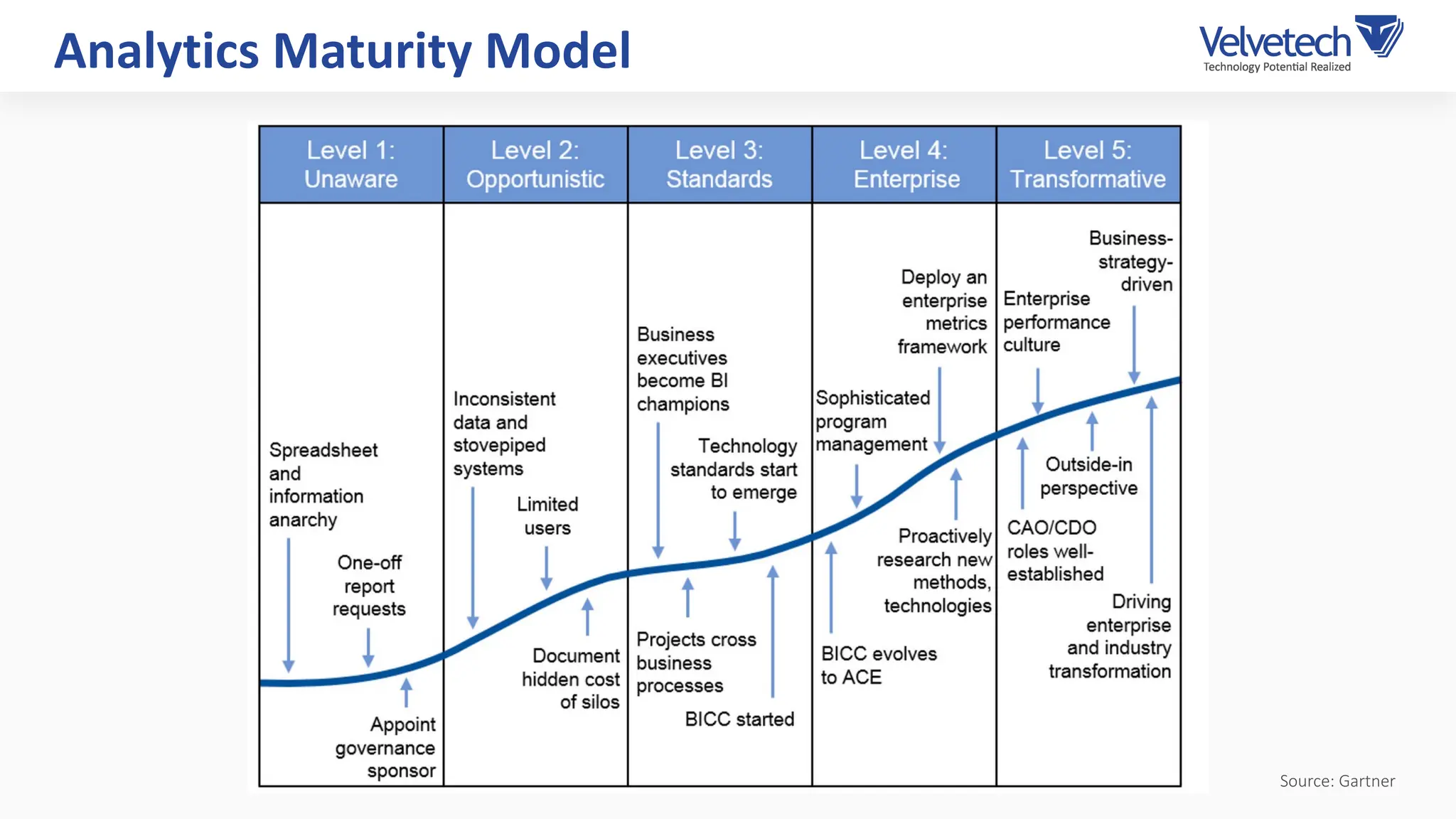
Analytics Maturity Model
Source: Gartner
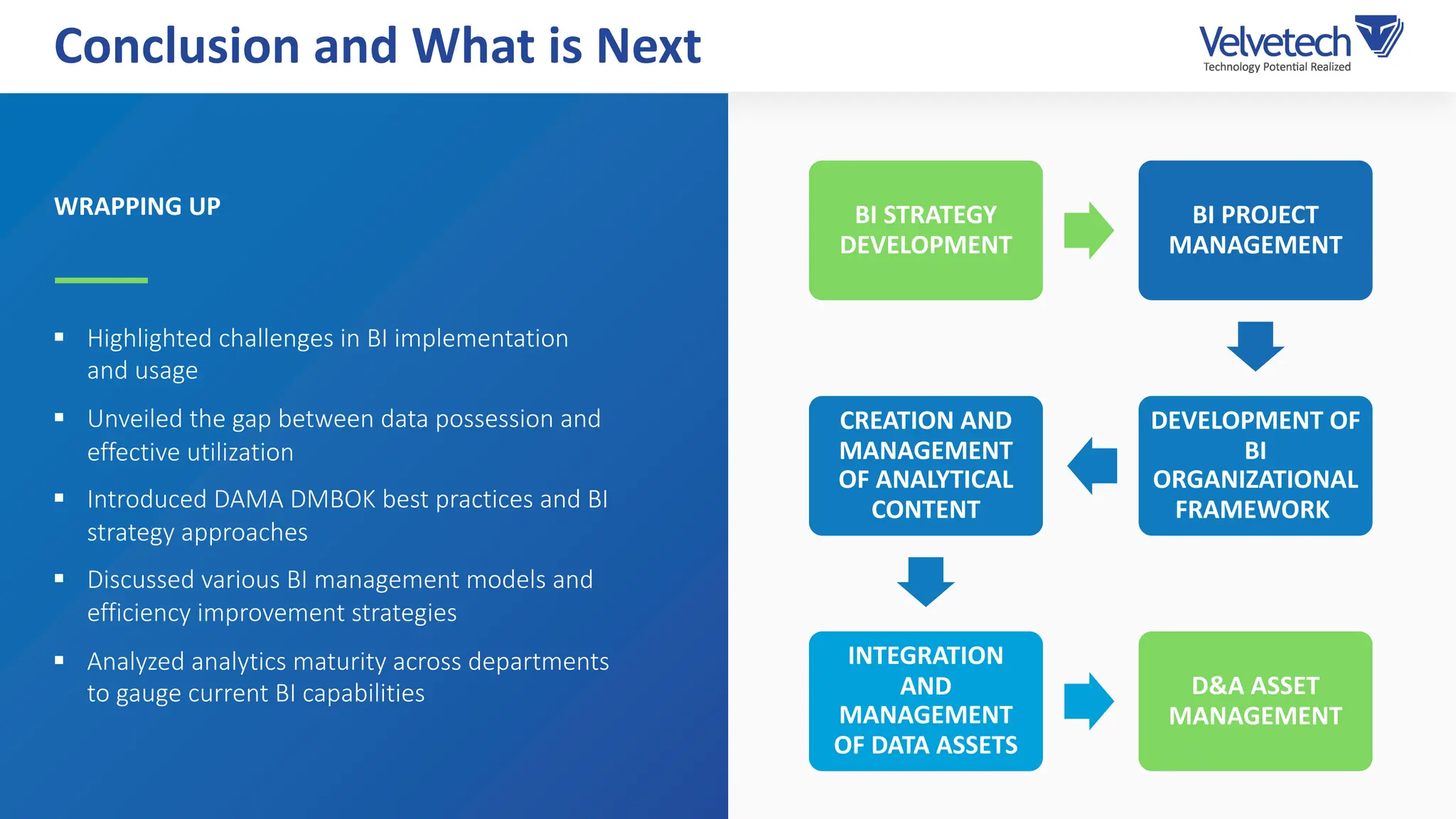
§ Highlighted challenges in BI implementation
and usage
§ Unveiled the gap between data possession and
effective utilization
§ Introduced DAMA DMBOK best practices and BI
strategy approaches
§ Discussed various BI management models and
efficiency improvement strategies
§ Analyzed analytics maturity across departments
to gauge current BI capabilities
Conclusion and What is Next
BI STRATEGY
DEVELOPMENT
BI PROJECT
MANAGEMENT
DEVELOPMENT OF
BI
ORGANIZATIONAL
FRAMEWORK
CREATION AND
MANAGEMENT
OF ANALYTICAL
CONTENT
INTEGRATION
AND
MANAGEMENT
OF DATA ASSETS
D&A ASSET
MANAGEMENT
WRAPPING UP
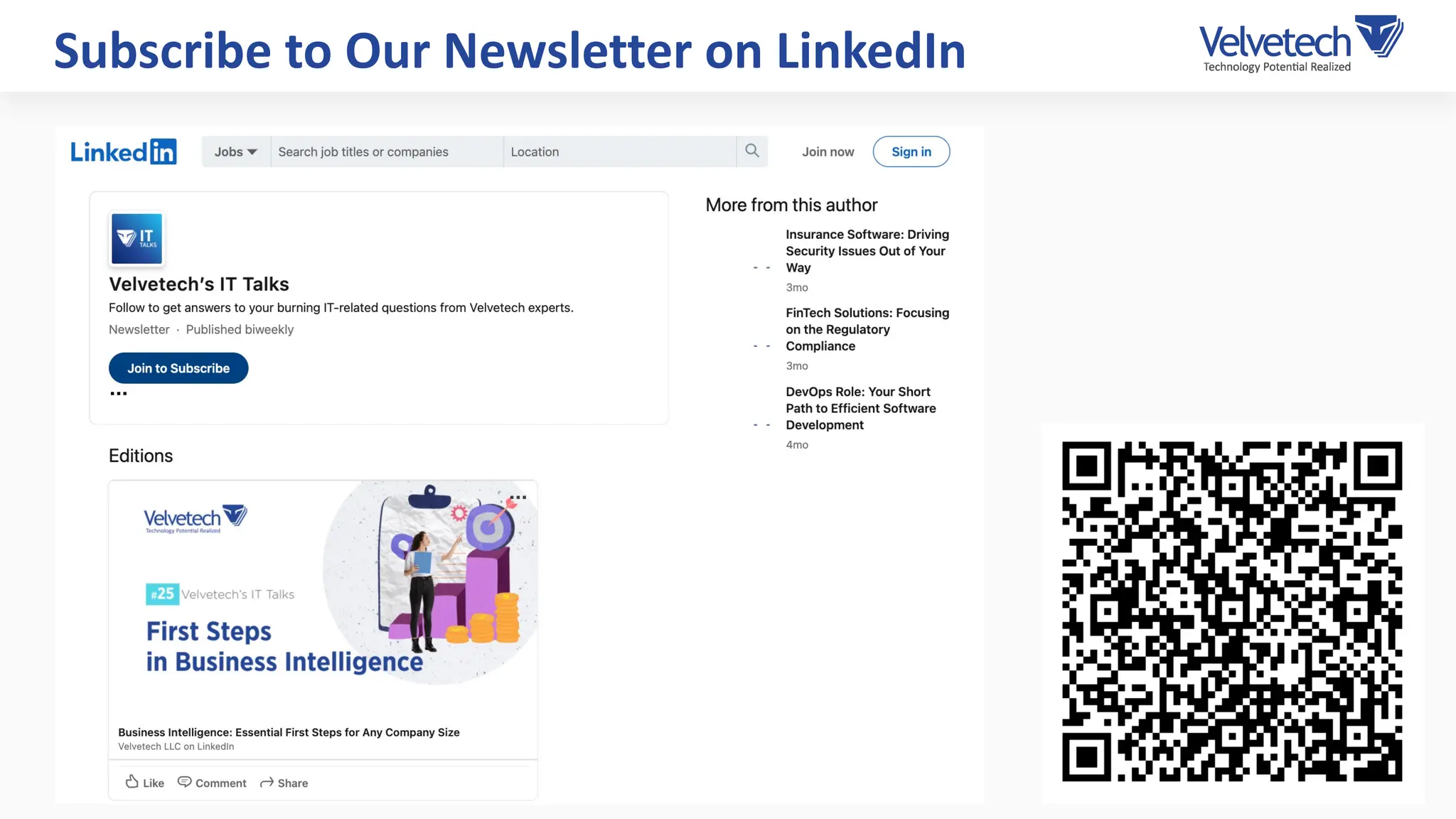
Subscribe to Our Newsletter on LinkedIn
Thank You!
+1 (847) 559-0864
sales@velvetech.com
www.velvetech.com
601 Skokie Blvd.,
Suite105,
Northbrook, IL 60062

Exploring Business Intelligence: How BI Transforms Business Operations and Fuels Growth

  • 1.
    Exploring Business Intelligence: HowBI Transforms Business Operations and Fuels Growth
  • 2.
    • Introduction • Challengesin Business Intelligence • Illusion of BI Efficiency • BI Best Practices Overview - DAMA DMBOK • Management Models of BI • Leveraging Business Intelligence • Q&A and Closing Remarks Webinar Agenda
  • 3.
  • 4.
    BI is aprocess that transforms data into actionable information and insights to aid business decisions. Goal: To enable data-driven decision-making by providing valuable business insights. Introducing BI DATA SOURCES INTEGRATION STORAGE & PROCESSING DATA ANALYTICS REPORTING
  • 5.
    COMMON ISSUES STRATEGIC &OPERATIONAL CHALLENGES § Insufficient company-wide adoption § Slow adoption of mobile BI solutions § Poor data quality § Lack of a clearly defined BI strategy § Limited functionality in the BI system § Slow queries and inadequate database performance BI Implementation Challenges TRAINING AND COMPETENCIES TRANSITION AND ROI EVALUATION § Lack of willingness to learn BI tools § Shortage of BI competencies § Data visualization and dashboarding issues § BI system replacement challenges § ROI assessment and project approval § Implementing analytical projects with data from various systems
  • 6.
    Overcoming Top BIImplementation Challenges Source: bi-survey.com
  • 7.
    Impact of CompanySize on BI Challenges Source: bi-survey.com
  • 8.
    1. Lack ofdata governance 2. Inadequate data literacy 3. Insufficient analytical tools 4. Data silos From Data Possession to Effective Utilization KEY CONTRIBUTING FACTORS: Identifying the Gap: Despite being data-rich, many companies are not fully leveraging their data for insightful decision-making due to various barriers.
  • 9.
    ~80% of reportsdie within 3 months due to process changes, business focus shifts, or the departure of key personnel. ~10% of reports experience minimal traffic — a handful or dozens of users per month. ~2% deliver stable targeted results. 80% 10% 2% The Illusion of Efficiency in BI Implementation
  • 10.
  • 11.
    • Assessing organizationalstage • Charting a clear path forward • Fostering systematic improvement Unveiling the DMBOK2 Pyramid THE PATH TO EFFECTIVE DATA MANAGEMENT:
  • 12.
  • 13.
    KEY BENEFITS OFDATA GOVERNANCE: ü Improved data quality ü Compliance assurance ü Informed decision-making Data Governance: Holistic Asset Management TECHNOLOGIES PEOPLE PROCESSES POLICIES AND STANDARDS
  • 14.
    § Data Accuracy §Accessibility § Comprehensibility § Reliability § Timeliness § Security CHALLENGES IN DATA UTILIZATION: Enhancing Data Utility § Improving Accuracy § Ensuring Accessibility § Boosting Comprehensibility § Augmenting Reliability § Maintaining Timeliness § Upholding Security STRATEGIES TO ENHANCE DATA UTILITY:
  • 15.
    Key Stages ofa Data Governance Project INITIATION § Business Case § Sponsorship and Leadership § Vision and Program Document § Funding § Team § Launch DESIGN § Standards/Policies § Roles § Responsibilities and Accountability § IT and Business Rules § Glossaries and Data Catalogs § Collaboration EXECUTION § Research § Procedures § Rules § Activities § Measurements § Decisions § DQ Projects § Administration DEVELOPMENT § Data, Business, Personnel, Technology Changes § Training and Growth § DG Maturity § Monitoring/Audit § Proactive Practices § ROI
  • 16.
    VISION D&A OF BUSINESSSENTIMENT PROCESSES AND SERVICES PEOPLE AND ROLES TOOLS AND OPERATIONS EFFICIENCY ROADMAP BI Strategy: Foundation for Data Analysis
  • 17.
    Life with aBI Strategy § Proactivity § Effective Discussions and Decision-Making § Attracting and Retaining Key Experts § Enhanced Onboarding § Resource and Budget Protection § Directional Clarity § Enhanced Efficiency § Sustainable Future ADVANTAGES OF A BI STRATEGY: REGULAR UPDATES AND ANALYSIS PROFESSIONAL MOTIVATION CLARITY AND GOAL SETTING
  • 18.
  • 19.
    BI Management Models CENTRALIZEDDELEGATED SELF-GOVERNING
  • 20.
    Centralized Reporting Challenges SINGLEVERSION OF TRUTH & HYBRID CERTIFICATION PROACTIVE BUSINESS & DATA CONSULTING SCALING SERVICE VIA ROLE-BASED WORKSTATIONS ROLE-BASED ACCESS & ROW-LEVEL SECURITY COMMUNICATION STRATEGY FOR UPDATES ROBUST DATA QUALITY CONTROL ENHANCED DATA VISUALIZATION EXPERTISE
  • 21.
    • Lack ofQuality Governance • Loss of a "Single Version of Truth" • New IT Responsibilities • Reduced IT Burden • Democratization of BI Access • BI Competence Development NEGATIVE ASPECTS POSITIVE ASPECTS Exploring Self-Service Business Intelligence (SSBI)
  • 22.
    § Lack ofdata-handling competencies § Lack of specific reporting development competencies § Users still relying on BI teams for report modifications § Creation of too much content, most of which is irrelevant § Reluctance to spend much time away from primary work Causes of SSBI Fails USER-RELATED CHALLENGES
  • 23.
    Causes of SSBIFails § Difficulty in discovering available data sources § Difficulty in selecting the right source among many similar ones § Difficulty in understanding data, field names, and values § Field addition, source modification requires IT support SERVICE-RELATED CHALLENGES
  • 24.
    How to IncreaseEfficiency in SSBI REDUCING DEPENDENCY ON POWER USERS STRUCTURE USER SUPPORT PROCESS INVEST IN CONTENT REGULATION FOCUS ON USER TRAINING PROGRAM CREATE A BI COMMUNITY RE-THINK CENTRALIZED ANALYTICS
  • 25.
    User Classification inSSBI: Aligning Tools to Needs CASUAL USERS POWER USERS SUPPORT FOR SELF-SERVICE § Data Consumers (60% of emp) § Data Experts (30% of emp) § Data Analysts (8% of emp) § Data Scientists (2% of emp) § Data Curators § Data Engineers and Architects
  • 26.
    RELUCTANCE TO SHAREDATA COMPLEX ACCESS MODEL NEED FOR CENTRALIZED SUPPORT Departments might be reluctant to share their reports due to the additional requirements & support needs from other user groups. Designing and managing a role- based access model can be complex and resource-intensive, particularly for individual departments. Some functions might not be ready for self-service BI solutions and would prefer relying on a specialized centralized BI team. Why SSBI Is Ineffective
  • 27.
    Governed Self-Service +Guided Reporting = <3 Source: data-nature.com
  • 28.
    The Ways toLeverage Business Intelligence
  • 29.
    The Ways toLeverage Business Intelligence DATA QUALITY MANAGEMENT PROCESS CONTENT MANAGEMENT UX PROBLEMS IMPLEMENTATION OF ANALYTICAL WORKSTATION DESIGN GUIDE CONTENT PROMOTION CONTENT UTILIZATION DATA LITERACY BI CHAMPION D&A SERVICE CATALOG MAPPING TOOLS WITH POWER APPS BI IN SLACK AND TEAMS AUTOML & SELF-SERVICE ML AGILE BI DEVELOPMENT
  • 30.
  • 31.
    Analytics Maturity MatrixAcross Projects Source: data-nature.com
  • 32.
  • 33.
    § Highlighted challengesin BI implementation and usage § Unveiled the gap between data possession and effective utilization § Introduced DAMA DMBOK best practices and BI strategy approaches § Discussed various BI management models and efficiency improvement strategies § Analyzed analytics maturity across departments to gauge current BI capabilities Conclusion and What is Next BI STRATEGY DEVELOPMENT BI PROJECT MANAGEMENT DEVELOPMENT OF BI ORGANIZATIONAL FRAMEWORK CREATION AND MANAGEMENT OF ANALYTICAL CONTENT INTEGRATION AND MANAGEMENT OF DATA ASSETS D&A ASSET MANAGEMENT WRAPPING UP
  • 34.
    Subscribe to OurNewsletter on LinkedIn
  • 35.
    Thank You! +1 (847)559-0864 sales@velvetech.com www.velvetech.com 601 Skokie Blvd., Suite105, Northbrook, IL 60062