Also known as:

   Grammatical syllabus.
   Formal Syllabus.
   Traditional syllabus.
   Synthetic syllabus,
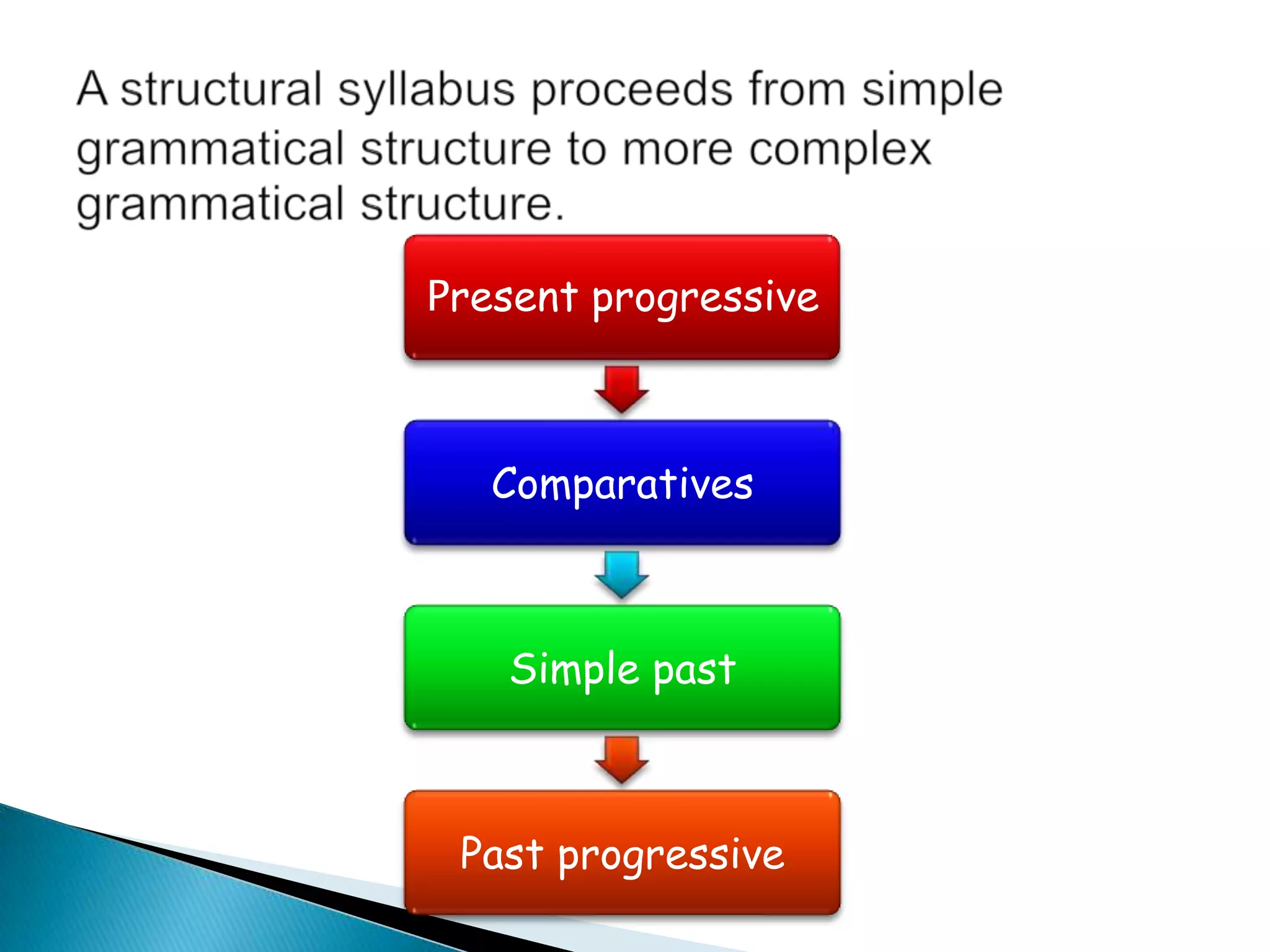
Present progressive


   Comparatives


   Simple past


 Past progressive
   It’s one in which grammatical structures form
    the central organizing characteristic, focus on
    the knowledge and skills which learners should
    gain as a result of instruction.
   The structural syllabus is the key to teach
    in all kinds of language. In which the
    people can absorb and assimilate
    information.
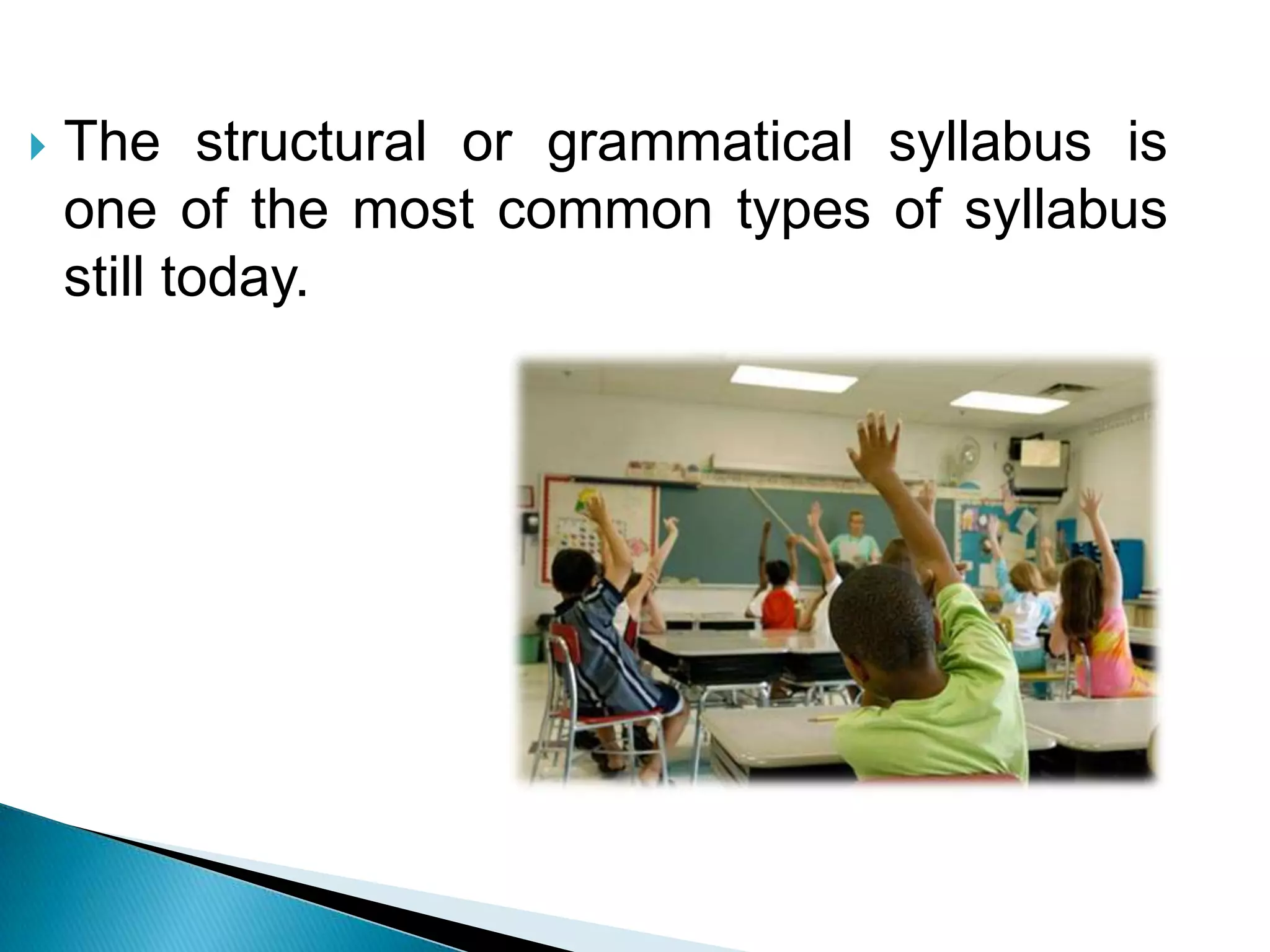
   The structural or grammatical syllabus is
    one of the most common types of syllabus
    still today.
   Examples include:

o Nouns
o Verbs
o Adjectives
o Statements
o Questions
o Subordinate clauses
   Simplicity and centrality

   Frequency

   Learn ability
    Structural syllabus have most frequently been
    associated with cognitive methods.

    The modern syllabus differs from the structural
    syllabus because their focus is on the
    communicative approach.


    It is designed so that different parts of the
    language are taught systematically in a step by
    step.
 Language is a system which consists of a set of
grammatical rules; learning language means
learning these rules and then applying them to
practical language use.
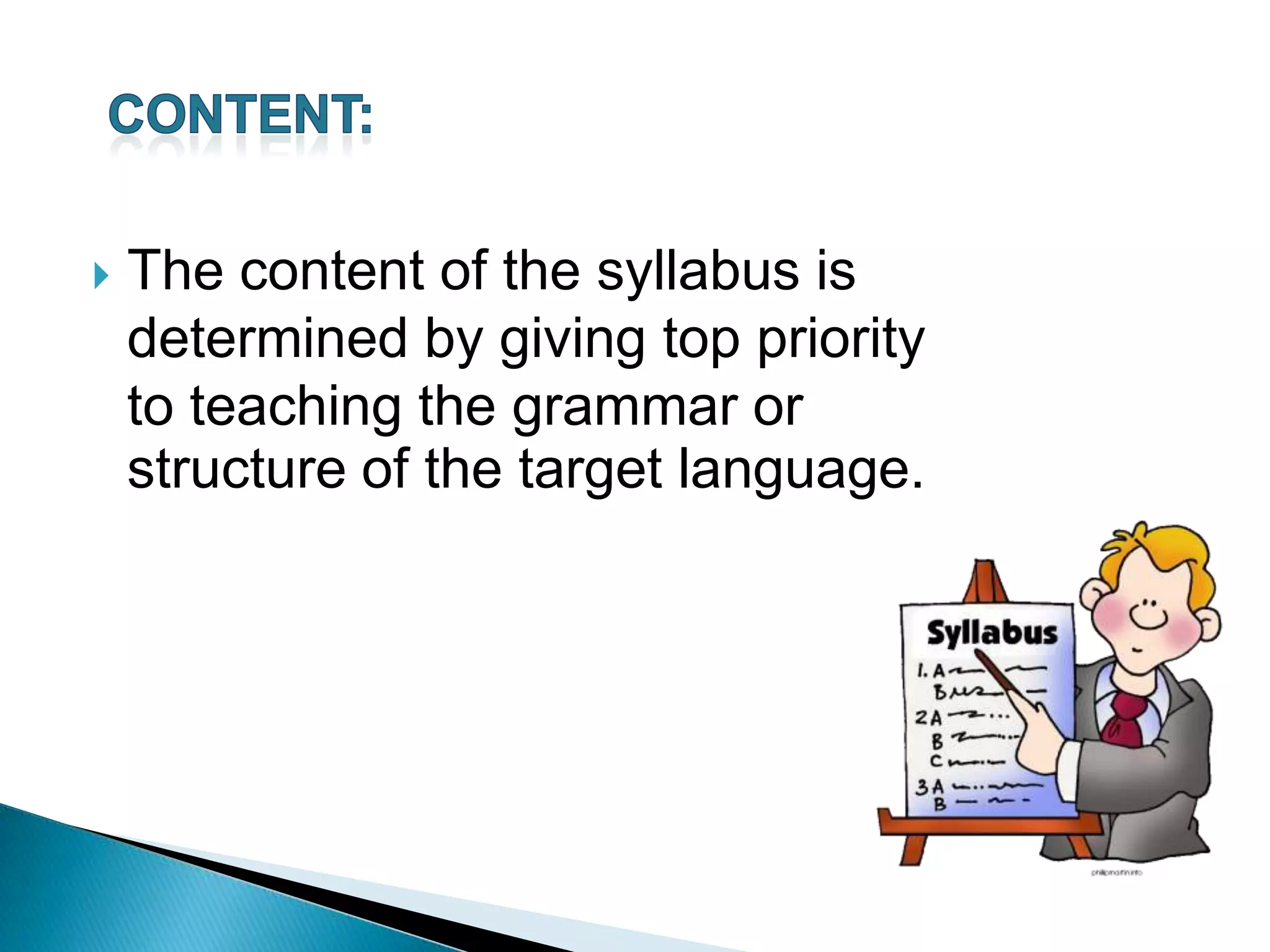
   The content of the syllabus is
    determined by giving top priority
    to teaching the grammar or
    structure of the target language.
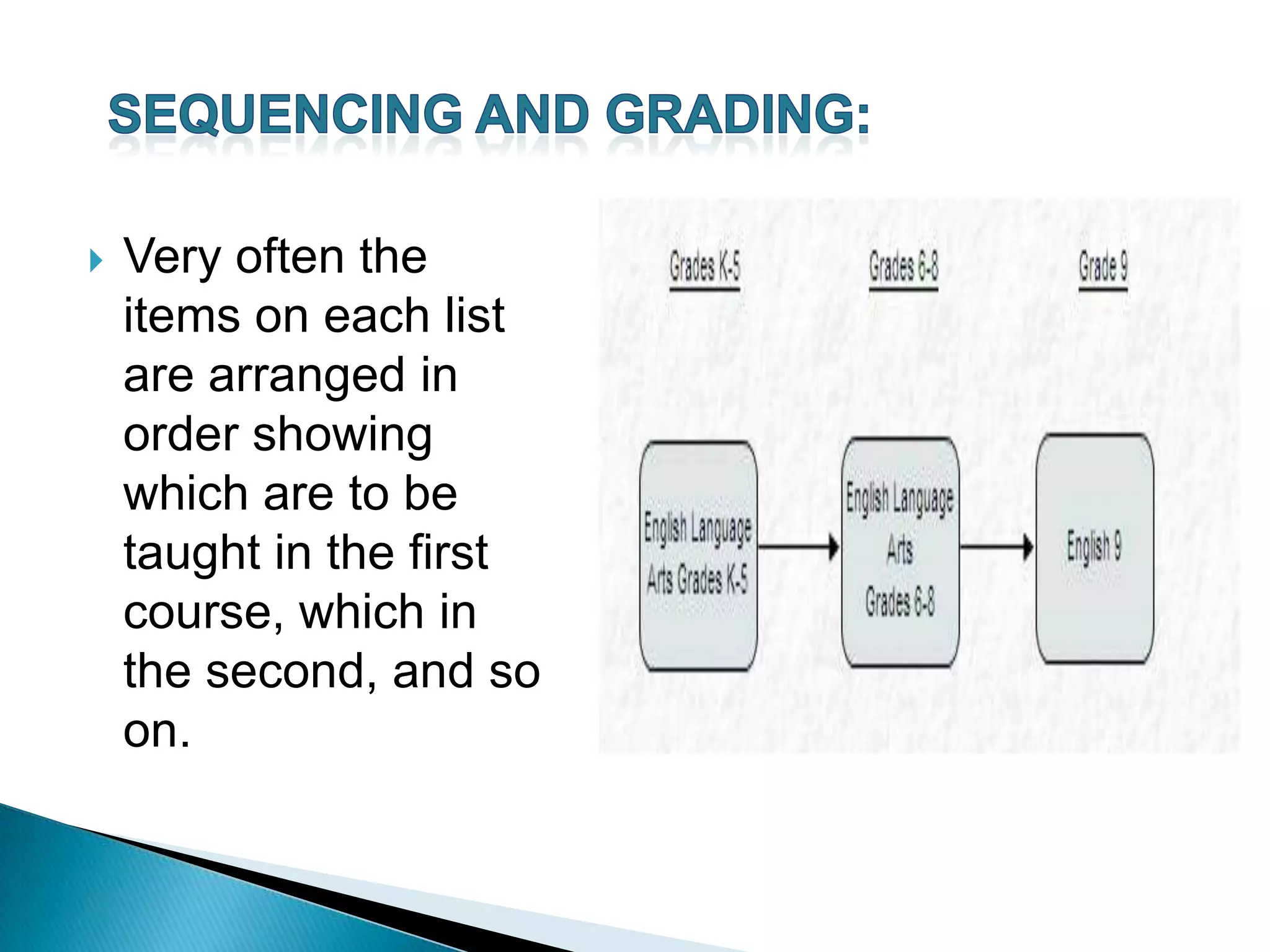
   Very often the
    items on each list
    are arranged in
    order showing
    which are to be
    taught in the first
    course, which in
    the second, and so
    on.
   Grammar makes up the core of the syllabus.
    Whatever rules are followed, learning a
    language means learning to master the
    grammar rules of the target language.
   In the initial stage of teaching, the linguistic
    components of the type of performance desired
    are analyzed. Next the language is broken
    down into small grammatical components and
    presented in a strictly controlled sequence.
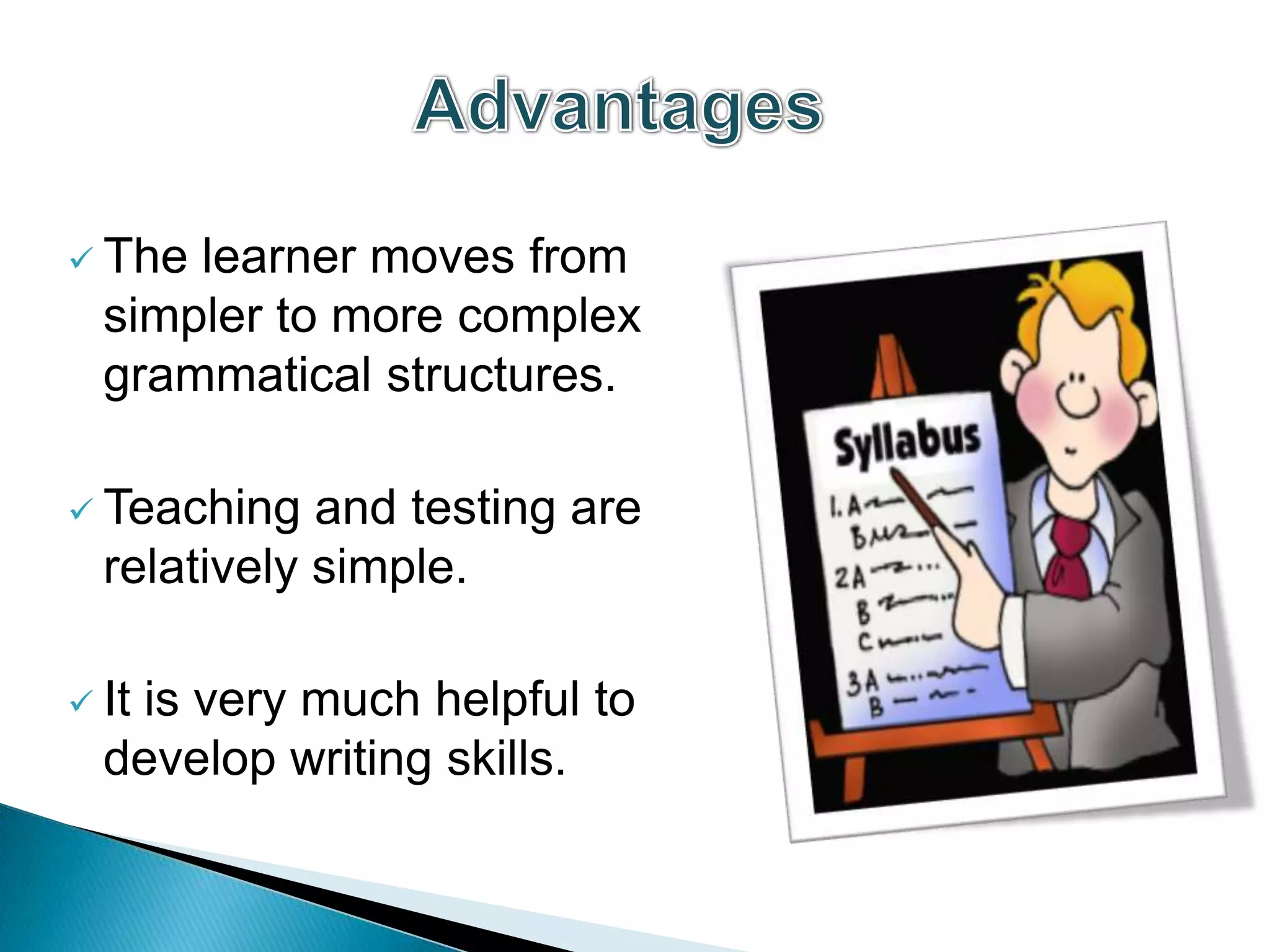
 The learner moves from
  simpler to more complex
  grammatical structures.

 Teaching   and testing are
  relatively simple.

 It
   is very much helpful to
  develop writing skills.
 Itenriches student’s
  basic vocabulary.

 Sequencing    and
  selection of teaching
  items is not as difficult.

 The   learner is expected
  to master each
  structural step and add
  it to her grammar
  collection.
   Made sure you know how use in the correct
    way the structural syllabus.

   Try to help your students to interact with
    others.

   Think how your methodology could help or
    affect the process of learning a second
    language with the structural syllabus
    program.
   Motivate your students.

   Make emphasizes in that every people
    can learn whatever they want and they
    only need interest and motivation to be
    better every day.
Thank you and
good afternoon.

Structural syllabusppw

  • 2.
    Also known as:  Grammatical syllabus.  Formal Syllabus.  Traditional syllabus.  Synthetic syllabus,
  • 3.
    Present progressive Comparatives Simple past Past progressive
  • 4.
    It’s one in which grammatical structures form the central organizing characteristic, focus on the knowledge and skills which learners should gain as a result of instruction.
  • 5.
    The structural syllabus is the key to teach in all kinds of language. In which the people can absorb and assimilate information.
  • 6.
    The structural or grammatical syllabus is one of the most common types of syllabus still today.
  • 7.
    Examples include: o Nouns o Verbs o Adjectives o Statements o Questions o Subordinate clauses
  • 8.
    Simplicity and centrality  Frequency  Learn ability
  • 9.
    Structural syllabus have most frequently been associated with cognitive methods.  The modern syllabus differs from the structural syllabus because their focus is on the communicative approach.  It is designed so that different parts of the language are taught systematically in a step by step.
  • 10.
     Language isa system which consists of a set of grammatical rules; learning language means learning these rules and then applying them to practical language use.
  • 11.
    The content of the syllabus is determined by giving top priority to teaching the grammar or structure of the target language.
  • 12.
    Very often the items on each list are arranged in order showing which are to be taught in the first course, which in the second, and so on.
  • 13.
    Grammar makes up the core of the syllabus. Whatever rules are followed, learning a language means learning to master the grammar rules of the target language.
  • 14.
    In the initial stage of teaching, the linguistic components of the type of performance desired are analyzed. Next the language is broken down into small grammatical components and presented in a strictly controlled sequence.
  • 15.
     The learnermoves from simpler to more complex grammatical structures.  Teaching and testing are relatively simple.  It is very much helpful to develop writing skills.
  • 16.
     Itenriches student’s basic vocabulary.  Sequencing and selection of teaching items is not as difficult.  The learner is expected to master each structural step and add it to her grammar collection.
  • 18.
    Made sure you know how use in the correct way the structural syllabus.  Try to help your students to interact with others.  Think how your methodology could help or affect the process of learning a second language with the structural syllabus program.
  • 19.
    Motivate your students.  Make emphasizes in that every people can learn whatever they want and they only need interest and motivation to be better every day.
  • 21.