LADDER SAFETY
LADDER SAFETY
LADDER SAFETY
PURPOSE OF LADDERS
To control and minimize any potential risks
to site employees while performing works
at a minimum height of 2m and above.
There are 8 Types of Ladders.
To safely ascend and safely descend to
perform all kind of Activities.
LADDER SAFETY
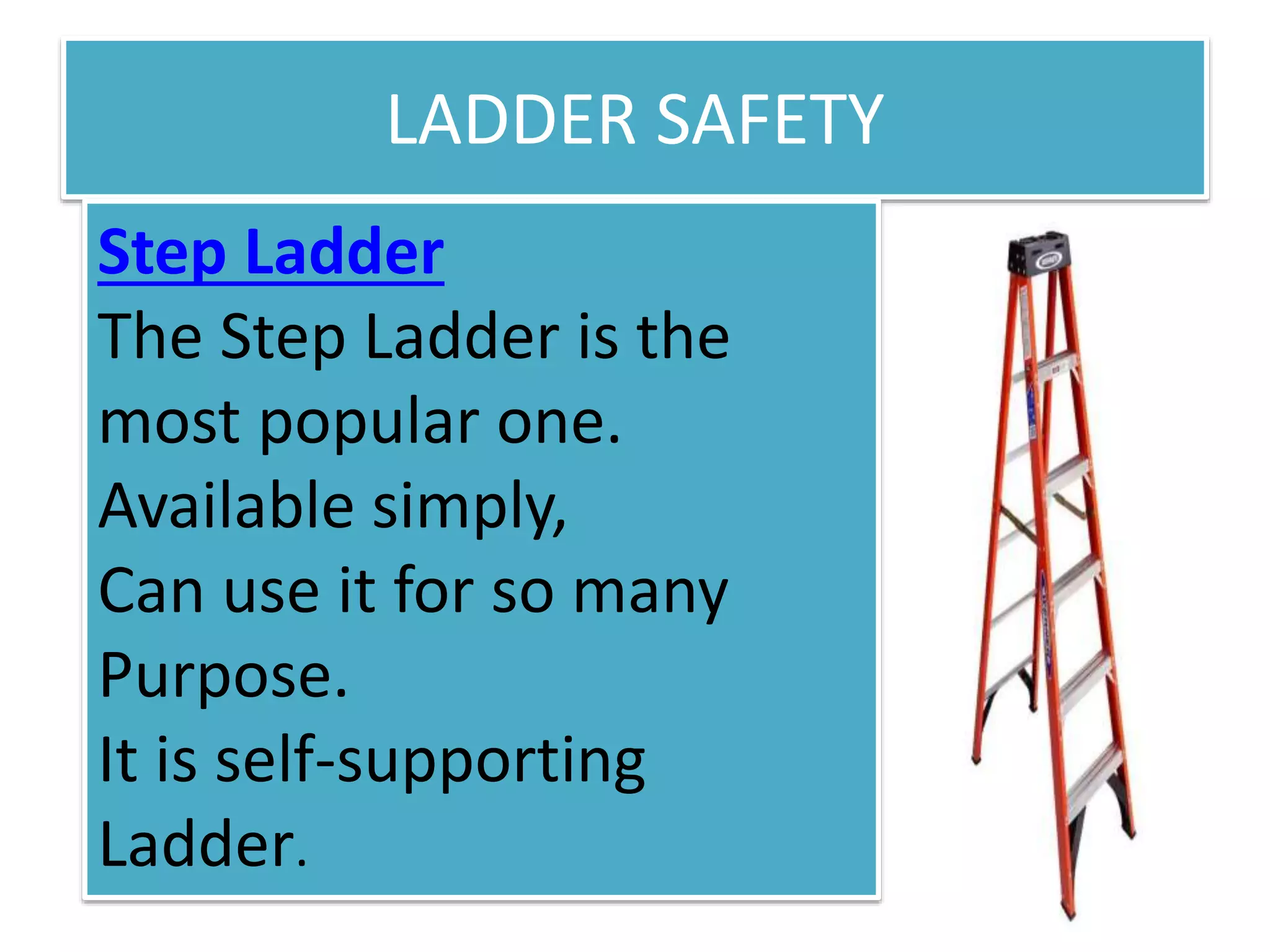
Step Ladder
The Step Ladder is the
most popular one.
Available simply,
Can use it for so many
Purpose.
It is self-supporting
Ladder.
LADDER SAFETY
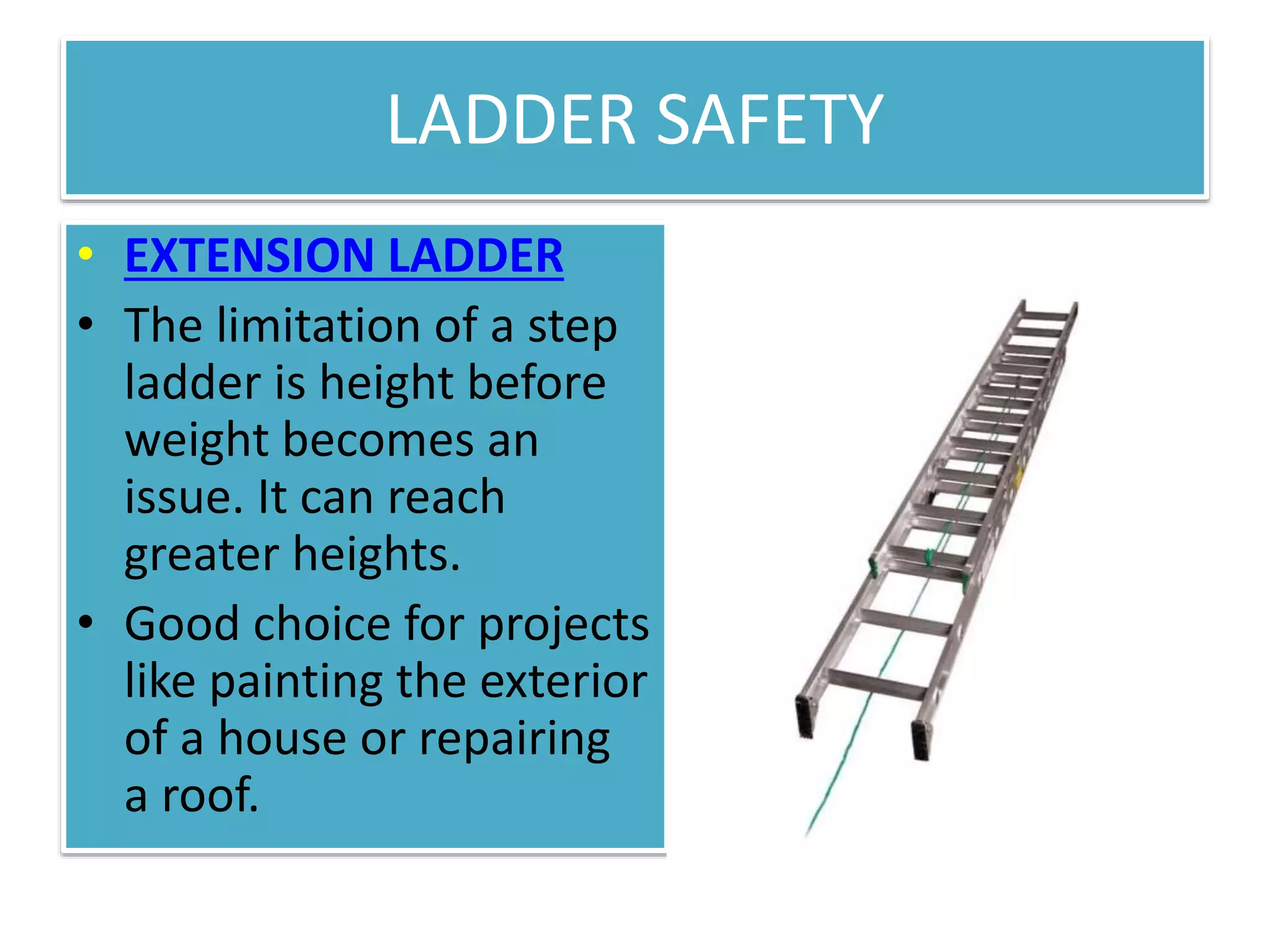
• EXTENSION LADDER
• The limitation of a step
ladder is height before
weight becomes an
issue. It can reach
greater heights.
• Good choice for projects
like painting the exterior
of a house or repairing
a roof.
LADDER SAFETY
• Multipurpose Ladder
• This Ladder combines the
features of the step and
extension models.
• It can be self-supporting.
• It can even stand in as
scaffolding, depending on
the product.
• It’s a smart choice for a
contractor
LADDER SAFETY
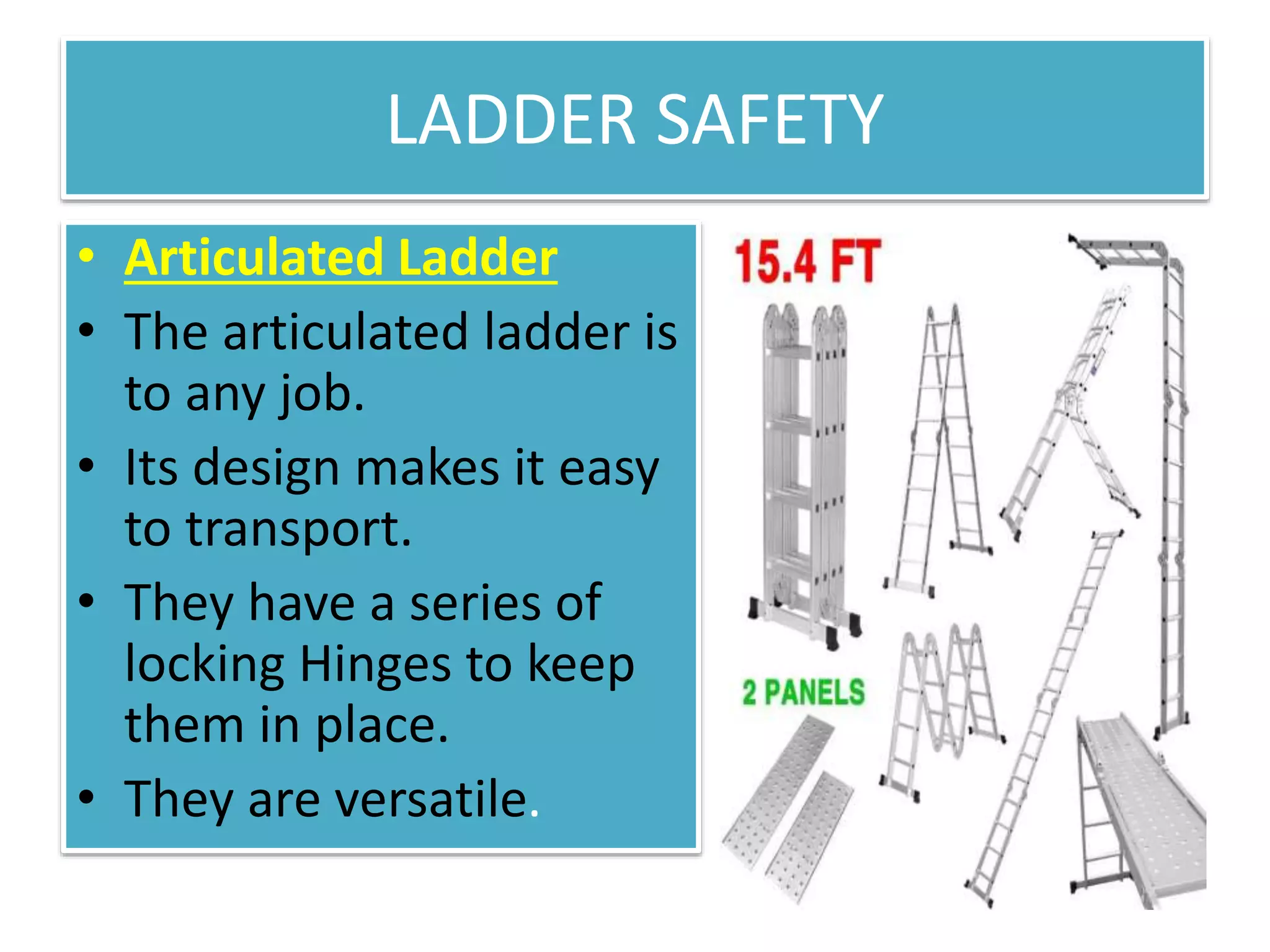
• Articulated Ladder
• The articulated ladder is
to any job.
• Its design makes it easy
to transport.
• They have a series of
locking Hinges to keep
them in place.
• They are versatile.
LADDER SAFETY
• Step Stool
• Step stools are handy.
• Easy to reach top shelf.
• Most useful in shops.
• Easy to handle Single
Person.
• Fold up for easy storage.
• cost and convenience.
LADDER SAFETY
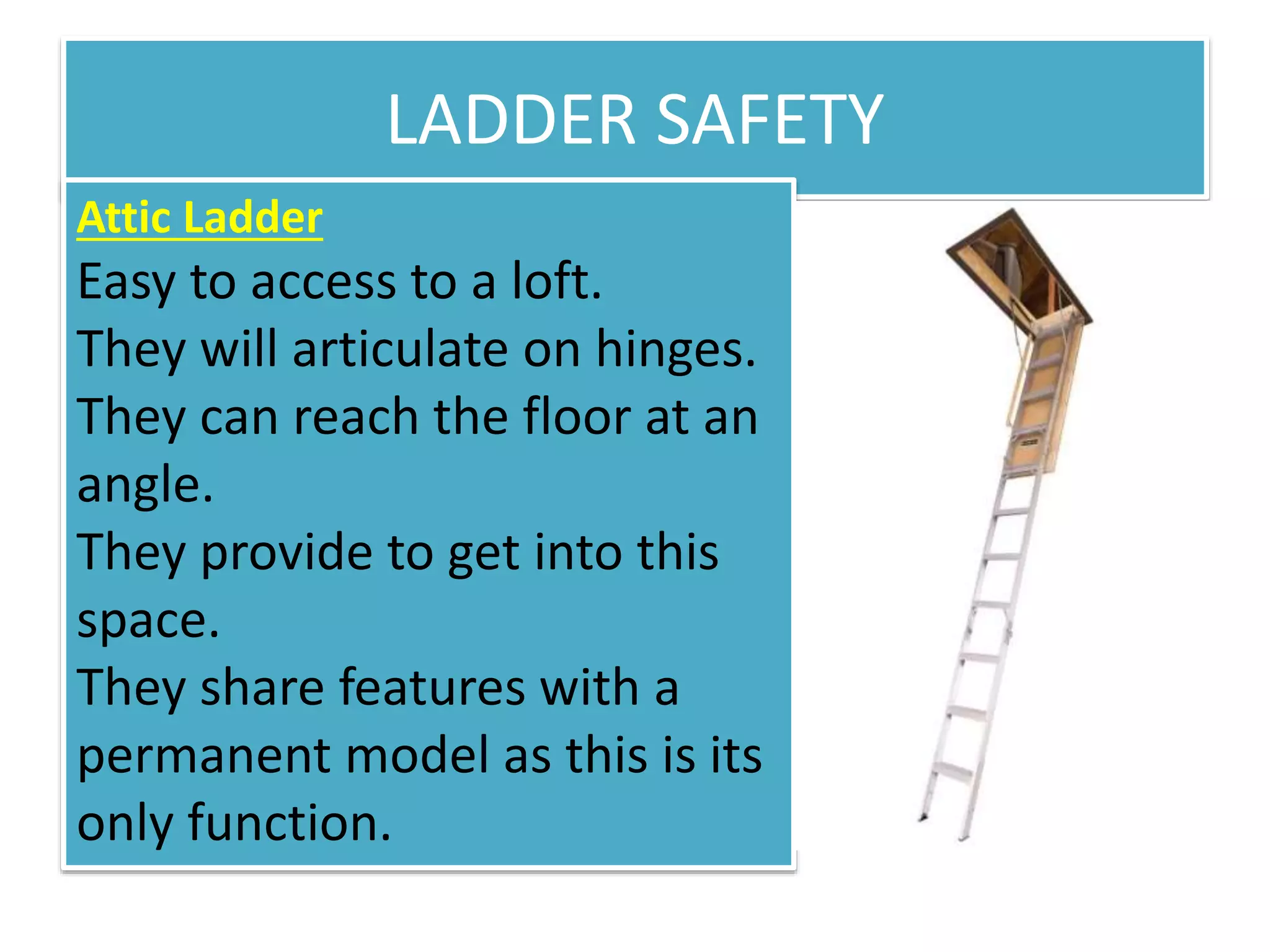
Attic Ladder
Easy to access to a loft.
They will articulate on hinges.
They can reach the floor at an
angle.
They provide to get into this
space.
They share features with a
permanent model as this is its
only function.
LADDER SAFETY
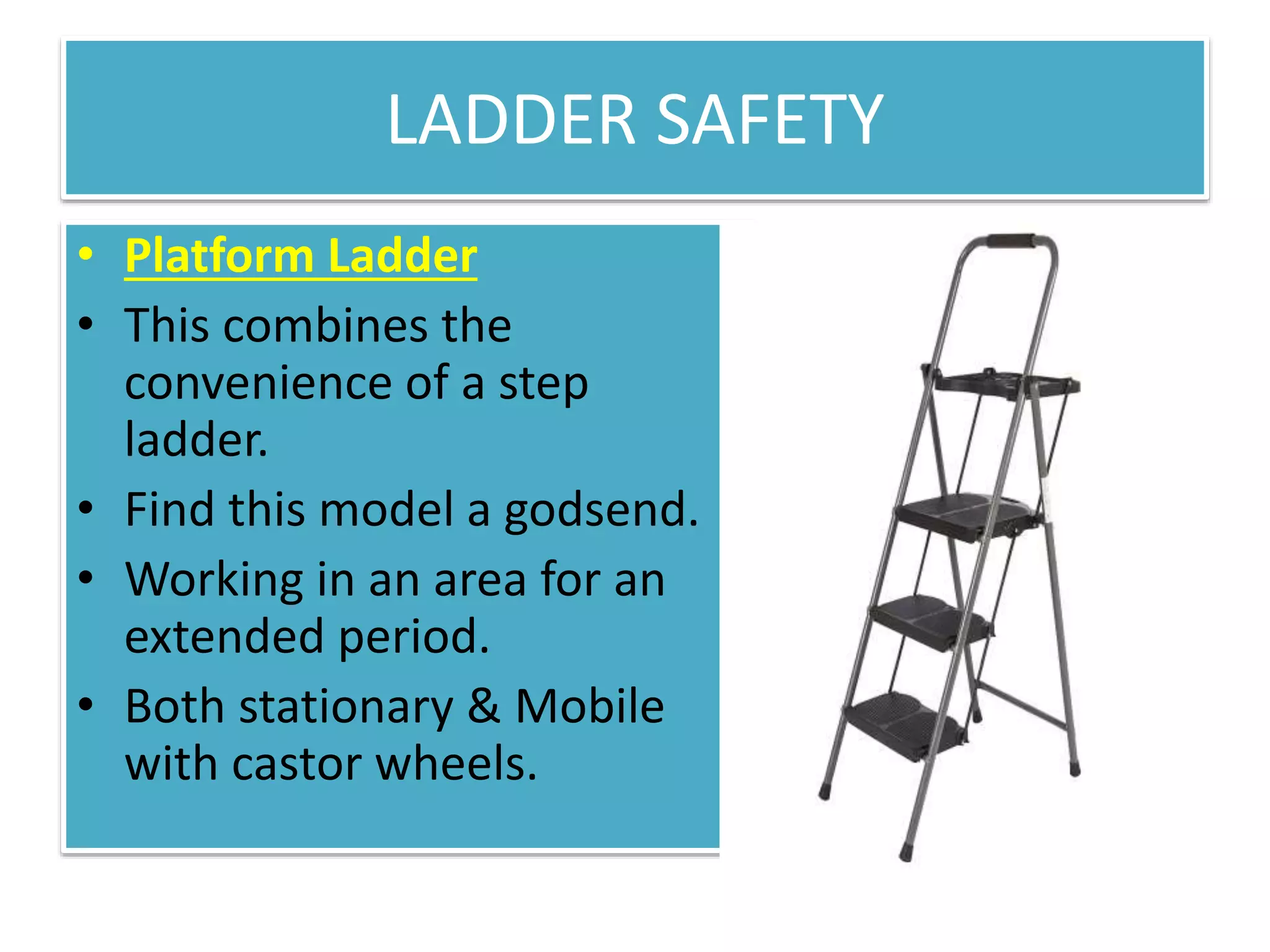
• Platform Ladder
• This combines the
convenience of a step
ladder.
• Find this model a godsend.
• Working in an area for an
extended period.
• Both stationary & Mobile
with castor wheels.
LADDER SAFETY
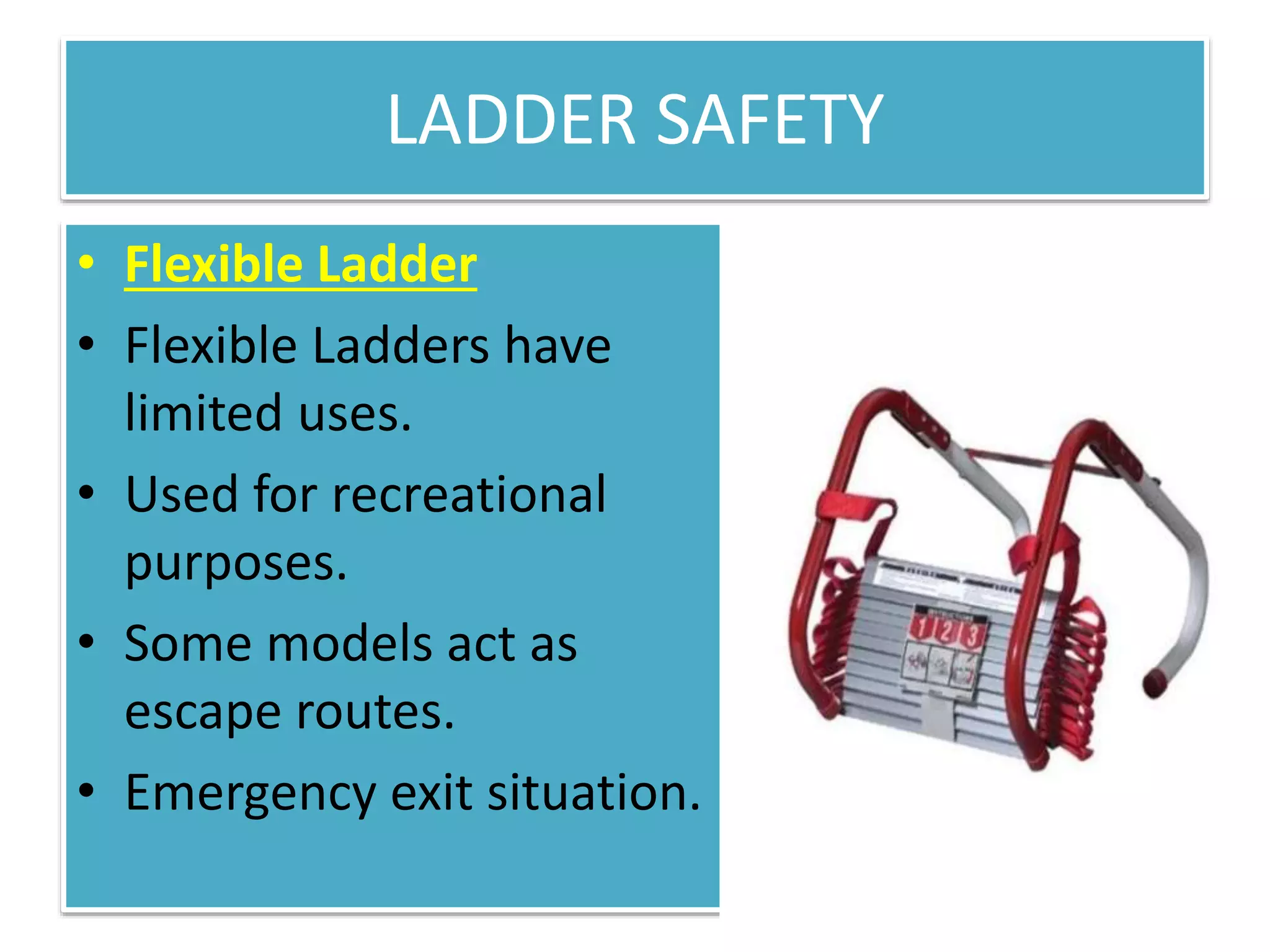
• Flexible Ladder
• Flexible Ladders have
limited uses.
• Used for recreational
purposes.
• Some models act as
escape routes.
• Emergency exit situation.
LADDER SAFETY
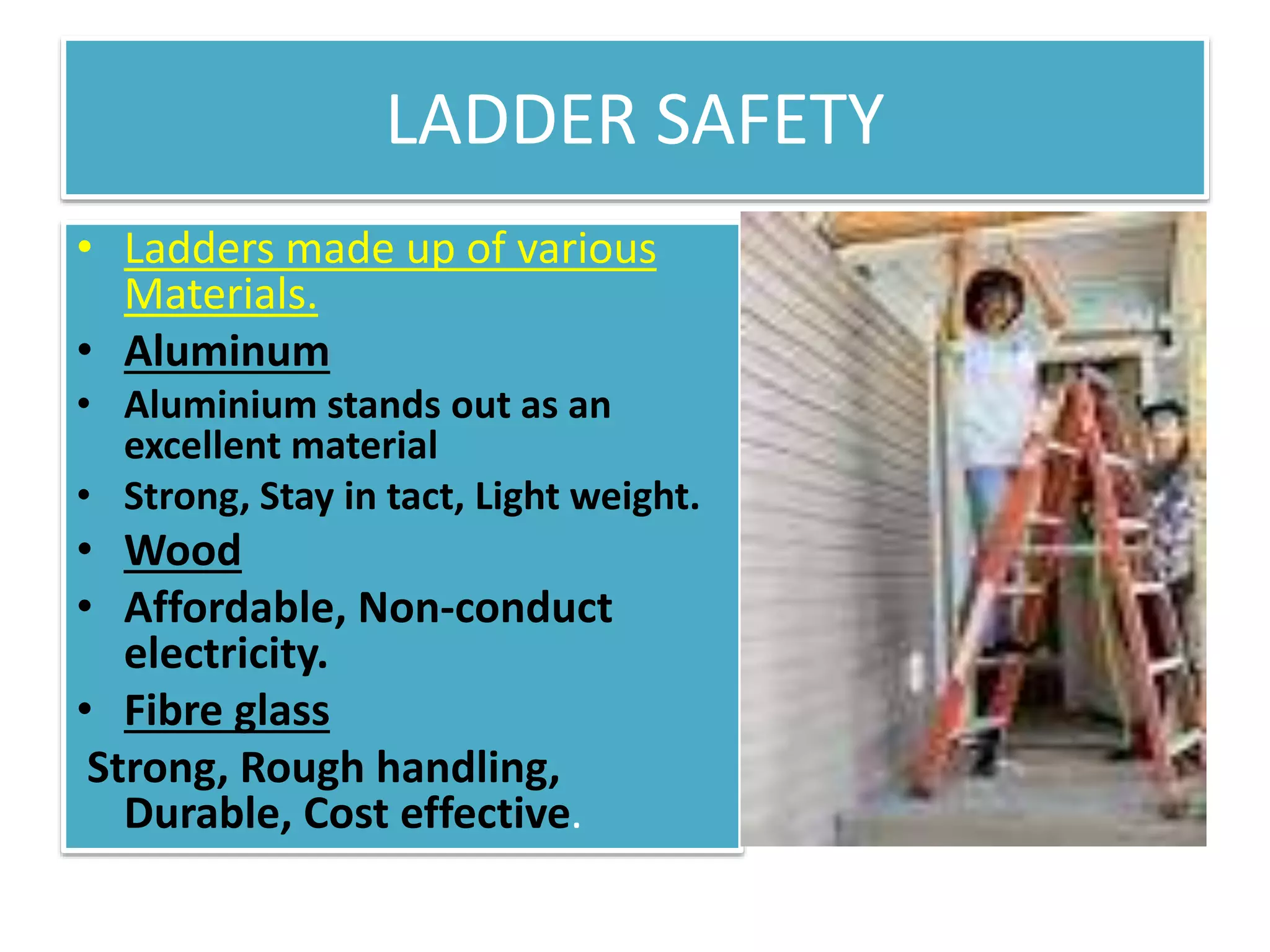
• Ladders made up of various
Materials.
• Aluminum
• Aluminium stands out as an
excellent material
• Strong, Stay in tact, Light weight.
• Wood
• Affordable, Non-conduct
electricity.
• Fibre glass
Strong, Rough handling,
Durable, Cost effective.
LADDER SAFETY
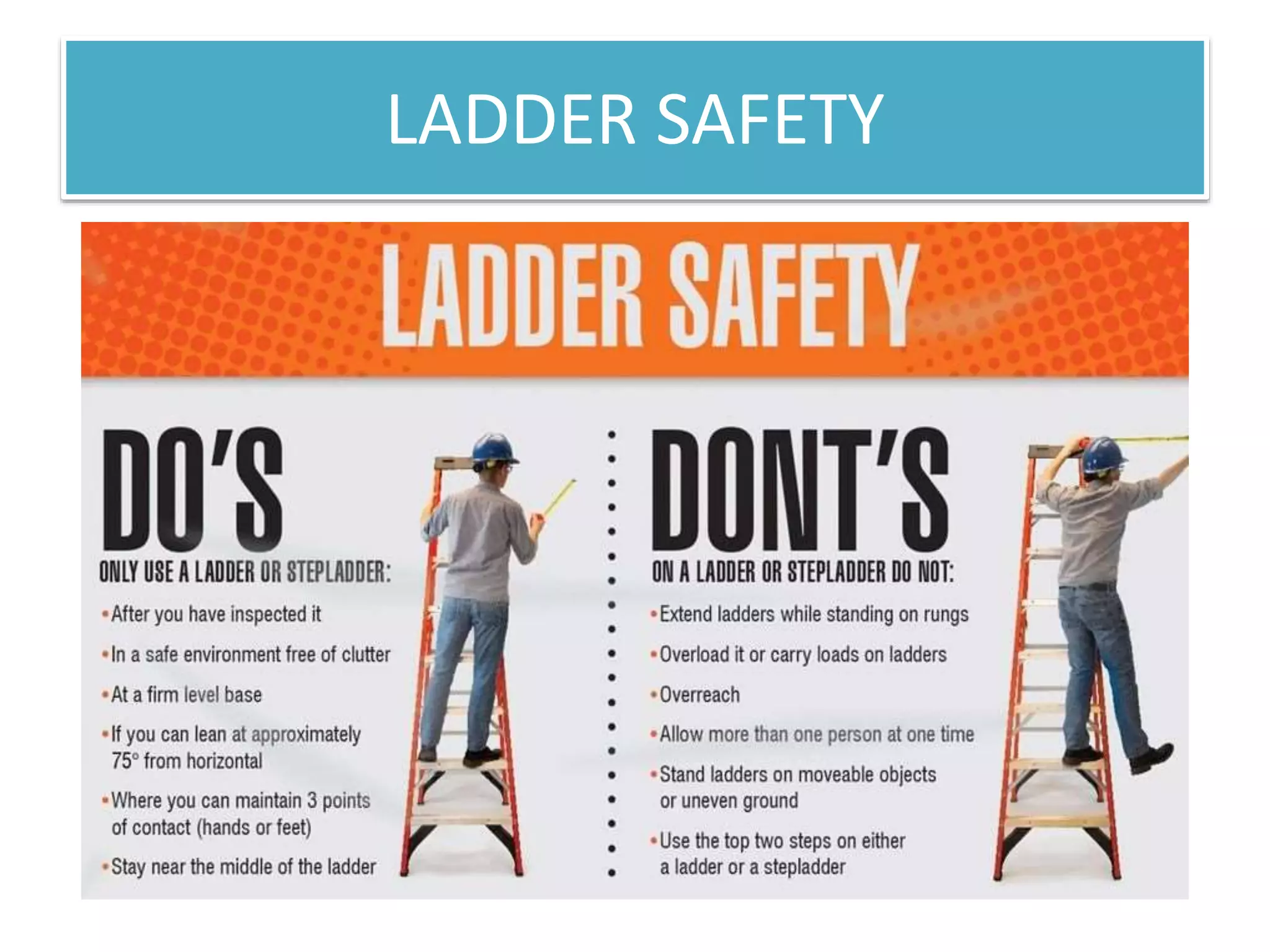
• Three Points of Contact
• Climbing ladders is to maintain three points of
contact .
• Keeping either both feet and a hand.
• Both hands and a foot on it always.
• It helps distribute your weight more evenly and
prevent tripping.
• Adding safety, someone must hold the ladder at
the bottom.
LADDER SAFETY
LADDER SAFETY
• LADDERS – SAFE WORK PRACTICES
•
• Ladders shall be used only for the purpose for which they were
designed, and they shall not be modified.
•
• Every portable ladder shall be fitted with suitable effective non-
skid devices.
•
• Ladders shall be without structural defects, and in obviously good
condition.
•
• Defective ladders shall be taken out of circulation, and tagged
until repairs are made. Damaged ladders shall be destroyed
LADDER SAFETY
• Ladders shall not be placed in front of doors unless the door
is blocked open, locked or guarded.
•
• Ladders shall not be placed on unstable bases to obtain
additional height.
•
• Tops of ladders shall not be used as steps.
• When using a ladder for access to high places, securely lash
or otherwise fasten the ladder to prevent it from slipping.
•
LADDER SAFETY
• Secure both bottom and top to prevent the displacement when using the
ladder for access to a scaffold.
•
• Portable ladder shall be so placed that both side rails have a secure
footing.
•
• Do not use ladders during strong winds except in an emergency and then
only when they are securely tied.
•
• Do not leave placed ladders unattended.
• Never lean a ladder against un-secure backing such as loose boxes or
barrels.
LADDER SAFETY
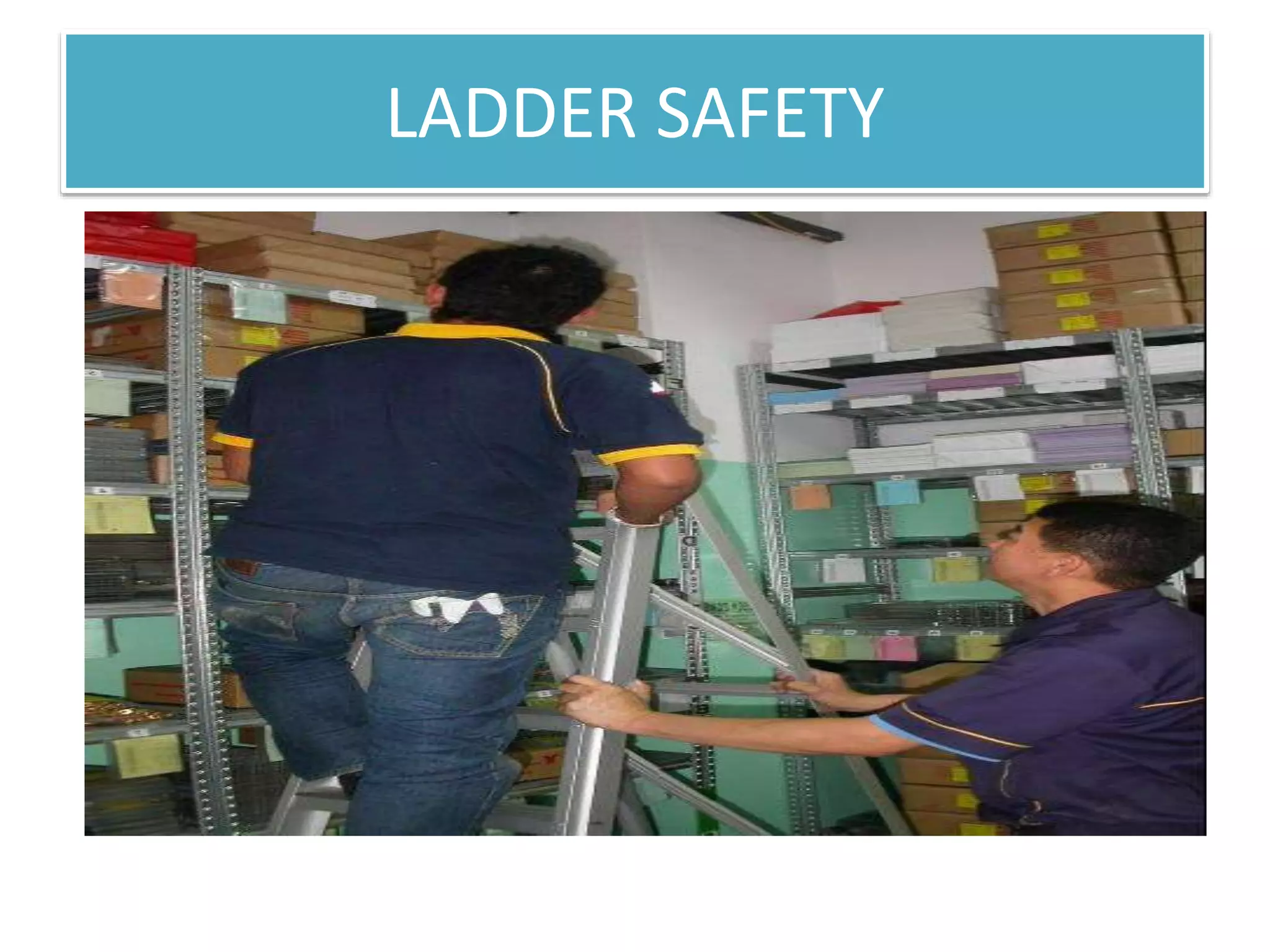
• Buddy System
• Buddy System – a person
who gains access to height
by climbing up a ladder
shall be guided by buddy
(another person) on the
ground.
LADDER SAFETY
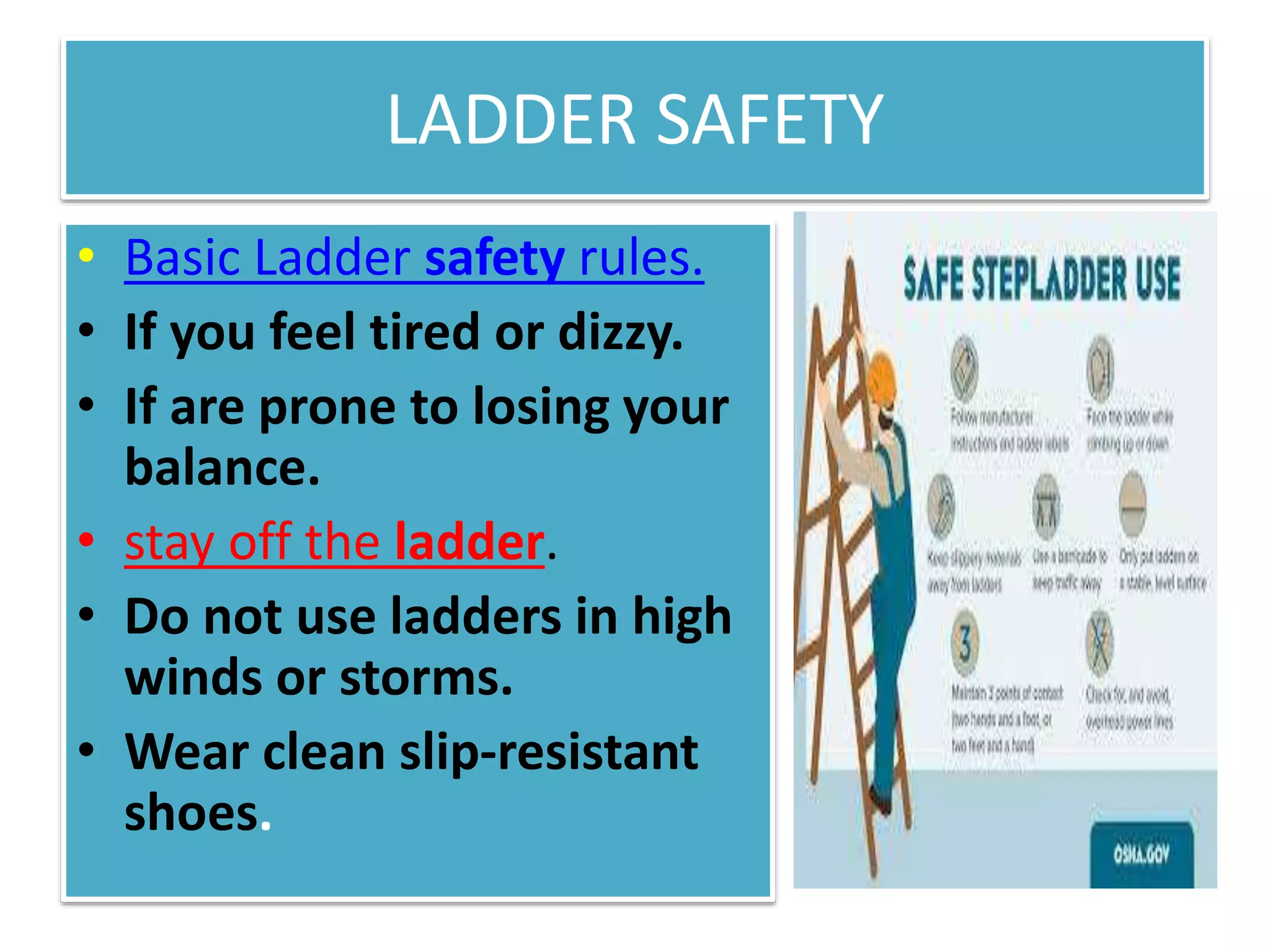
• Basic Ladder safety rules.
• If you feel tired or dizzy.
• If are prone to losing your
balance.
• stay off the ladder.
• Do not use ladders in high
winds or storms.
• Wear clean slip-resistant
shoes.
LADDER SAFETY
ANY DOUDTS?
THANK YOU!

Ladder safety

  • 1.
  • 2.
  • 3.
  • 4.
    PURPOSE OF LADDERS Tocontrol and minimize any potential risks to site employees while performing works at a minimum height of 2m and above. There are 8 Types of Ladders. To safely ascend and safely descend to perform all kind of Activities.
  • 5.
    LADDER SAFETY Step Ladder TheStep Ladder is the most popular one. Available simply, Can use it for so many Purpose. It is self-supporting Ladder.
  • 6.
    LADDER SAFETY • EXTENSIONLADDER • The limitation of a step ladder is height before weight becomes an issue. It can reach greater heights. • Good choice for projects like painting the exterior of a house or repairing a roof.
  • 7.
    LADDER SAFETY • MultipurposeLadder • This Ladder combines the features of the step and extension models. • It can be self-supporting. • It can even stand in as scaffolding, depending on the product. • It’s a smart choice for a contractor
  • 8.
    LADDER SAFETY • ArticulatedLadder • The articulated ladder is to any job. • Its design makes it easy to transport. • They have a series of locking Hinges to keep them in place. • They are versatile.
  • 9.
    LADDER SAFETY • StepStool • Step stools are handy. • Easy to reach top shelf. • Most useful in shops. • Easy to handle Single Person. • Fold up for easy storage. • cost and convenience.
  • 10.
    LADDER SAFETY Attic Ladder Easyto access to a loft. They will articulate on hinges. They can reach the floor at an angle. They provide to get into this space. They share features with a permanent model as this is its only function.
  • 11.
    LADDER SAFETY • PlatformLadder • This combines the convenience of a step ladder. • Find this model a godsend. • Working in an area for an extended period. • Both stationary & Mobile with castor wheels.
  • 12.
    LADDER SAFETY • FlexibleLadder • Flexible Ladders have limited uses. • Used for recreational purposes. • Some models act as escape routes. • Emergency exit situation.
  • 13.
    LADDER SAFETY • Laddersmade up of various Materials. • Aluminum • Aluminium stands out as an excellent material • Strong, Stay in tact, Light weight. • Wood • Affordable, Non-conduct electricity. • Fibre glass Strong, Rough handling, Durable, Cost effective.
  • 14.
    LADDER SAFETY • ThreePoints of Contact • Climbing ladders is to maintain three points of contact . • Keeping either both feet and a hand. • Both hands and a foot on it always. • It helps distribute your weight more evenly and prevent tripping. • Adding safety, someone must hold the ladder at the bottom.
  • 15.
  • 16.
    LADDER SAFETY • LADDERS– SAFE WORK PRACTICES • • Ladders shall be used only for the purpose for which they were designed, and they shall not be modified. • • Every portable ladder shall be fitted with suitable effective non- skid devices. • • Ladders shall be without structural defects, and in obviously good condition. • • Defective ladders shall be taken out of circulation, and tagged until repairs are made. Damaged ladders shall be destroyed
  • 17.
    LADDER SAFETY • Laddersshall not be placed in front of doors unless the door is blocked open, locked or guarded. • • Ladders shall not be placed on unstable bases to obtain additional height. • • Tops of ladders shall not be used as steps. • When using a ladder for access to high places, securely lash or otherwise fasten the ladder to prevent it from slipping. •
  • 18.
    LADDER SAFETY • Secureboth bottom and top to prevent the displacement when using the ladder for access to a scaffold. • • Portable ladder shall be so placed that both side rails have a secure footing. • • Do not use ladders during strong winds except in an emergency and then only when they are securely tied. • • Do not leave placed ladders unattended. • Never lean a ladder against un-secure backing such as loose boxes or barrels.
  • 19.
    LADDER SAFETY • BuddySystem • Buddy System – a person who gains access to height by climbing up a ladder shall be guided by buddy (another person) on the ground.
  • 20.
    LADDER SAFETY • BasicLadder safety rules. • If you feel tired or dizzy. • If are prone to losing your balance. • stay off the ladder. • Do not use ladders in high winds or storms. • Wear clean slip-resistant shoes.
  • 21.