1
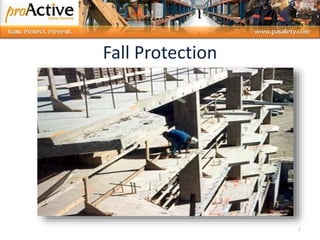
Fall Protection
2
This presentation will discuss:
• Types of Fall protection and prevention.
• Key areas where Fall protection/prevention are
commonly used.
• How to assess the Fall Hazard in order to utilize
the proper Fall protection/ prevention methods.
Fall Protection
3
•Falls are the leading cause of deaths in the
construction industry.
•Most fatalities occur when employees fall from open-
sided floors and through floor openings.
•Falls from as little as 4 to 6 feet can cause serious
lost-time accidents and sometimes death.
•Open-sided floors and platforms 6 feet or more in
height must be guarded.
Falls in Construction
4
At the end of this topic, you will be able to:
• List at least four methods of fall protection
available for protecting workers.
• Understand how to assess a Fall hazard and
whether or not to use Fall prevention or protection
measures.
• State the main criteria that prompts use of fall
protection for construction workers.
Fall Protection
5
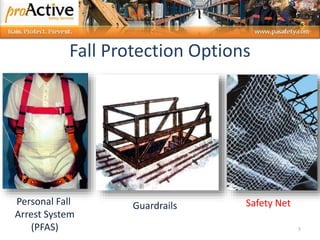
Personal Fall
Arrest System
(PFAS)
Guardrails Safety Net
Fall Protection Options
6
Fall protection systems and work practices
must be in place before you start work.
Fall Protection Planning and
Assessment
Improper use and
assessment of Fall
Prevention!!!
7
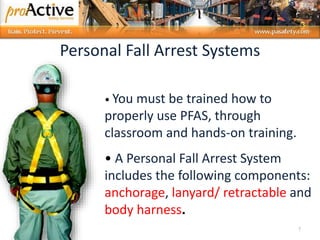
Personal Fall Arrest Systems
• You must be trained how to
properly use PFAS, through
classroom and hands-on training.
• A Personal Fall Arrest System
includes the following components:
anchorage, lanyard/ retractable and
body harness.
8
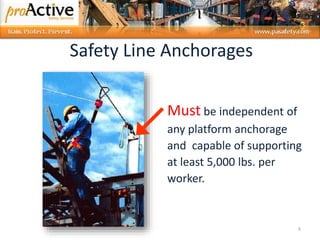
Must be independent of
any platform anchorage
and capable of supporting
at least 5,000 lbs. per
worker.
Safety Line Anchorages
9
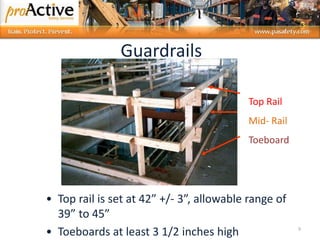
• Top rail is set at 42” +/- 3”, allowable range of
39” to 45”
• Toeboards at least 3 1/2 inches high
Top Rail
Mid- Rail
Toeboard
Guardrails
10
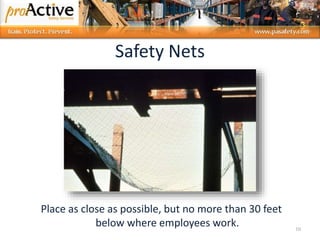
Place as close as possible, but no more than 30 feet
below where employees work.
Safety Nets
Work Positioning Device
• A Work Positioning Device is utilized as a
means of Fall Prevention versus Fall
Protection.
• The components of a Work Positioning
Device are similar to using a PFAS; generally
consisting of an anchorage point, lifeline
and body harness.
• A Work Positioning Device is utilized
horizontally versus vertically as a PFAS.
OSHA Office of Training & Education 11
When Fall Protection is Needed
• Walkways & ramps
• Open sides & edges
• Holes
• Concrete forms &
rebar
• Excavations
• Roofs
• Wall openings
• Bricklaying
• Residential
Construction
12
13
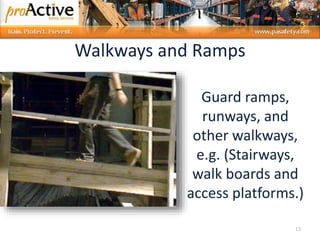
Guard ramps,
runways, and
other walkways,
e.g. (Stairways,
walk boards and
access platforms.)
Walkways and Ramps
14
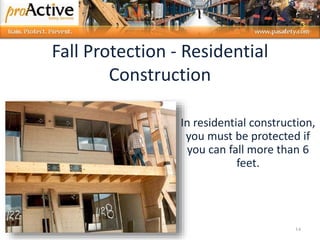
In residential construction,
you must be protected if
you can fall more than 6
feet.
Fall Protection - Residential
Construction
15
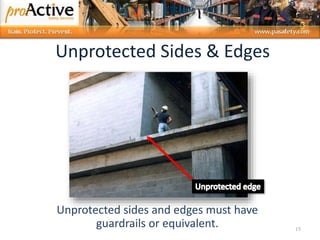
Unprotected Sides & Edges
Unprotected sides and edges must have
guardrails or equivalent.
16
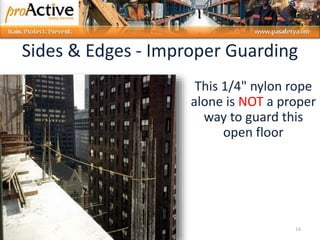
Sides & Edges - Improper Guarding
This 1/4" nylon rope
alone is NOT a proper
way to guard this
open floor
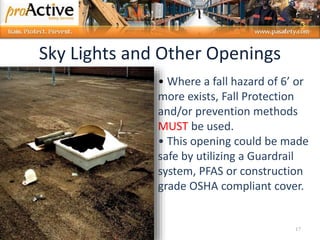
17
• Where a fall hazard of 6’ or
more exists, Fall Protection
and/or prevention methods
MUST be used.
• This opening could be made
safe by utilizing a Guardrail
system, PFAS or construction
grade OSHA compliant cover.
Sky Lights and Other Openings
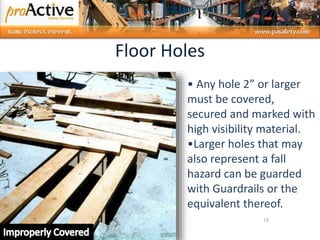
18
• Any hole 2” or larger
must be covered,
secured and marked with
high visibility material.
•Larger holes that may
also represent a fall
hazard can be guarded
with Guardrails or the
equivalent thereof.
Floor Holes
19
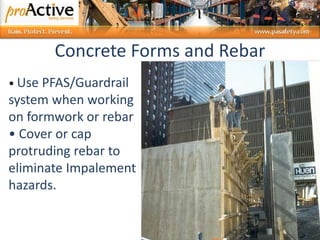
• Use PFAS/Guardrail
system when working
on formwork or rebar
• Cover or cap
protruding rebar to
eliminate Impalement
hazards.
Concrete Forms and Rebar
20
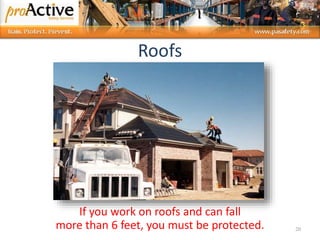
If you work on roofs and can fall
more than 6 feet, you must be protected.
Roofs
21
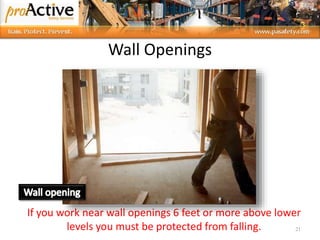
If you work near wall openings 6 feet or more above lower
levels you must be protected from falling.
Wall Openings
Good Work Practices
• Perform work at ground level if possible
Example: building prefab roofs on the ground and
lifting into place with a crane
• Tether or restrain workers so they can't reach the
edge
• Designate and use safety monitors (This is less
desirable of all the systems)
• Use conventional fall protection
22
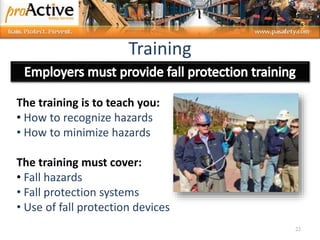
23
The training is to teach you:
• How to recognize hazards
• How to minimize hazards
The training must cover:
• Fall hazards
• Fall protection systems
• Use of fall protection devices
Training
Summary
• If you can fall more than 6 feet, you must be
protected and/or prevented from falling.
• Use fall protection on:
• walkways & ramps, open sides & edges, holes,
concrete forms & rebar, excavations, roofs, wall
openings, bricklaying, residential construction
• Protective measures include guardrails, covers,
safety nets, work positioning device and Personal
Fall Arrest Systems.
24

Fall Protection in Construction

  • 1.
  • 2.
    2 This presentation willdiscuss: • Types of Fall protection and prevention. • Key areas where Fall protection/prevention are commonly used. • How to assess the Fall Hazard in order to utilize the proper Fall protection/ prevention methods. Fall Protection
  • 3.
    3 •Falls are theleading cause of deaths in the construction industry. •Most fatalities occur when employees fall from open- sided floors and through floor openings. •Falls from as little as 4 to 6 feet can cause serious lost-time accidents and sometimes death. •Open-sided floors and platforms 6 feet or more in height must be guarded. Falls in Construction
  • 4.
    4 At the endof this topic, you will be able to: • List at least four methods of fall protection available for protecting workers. • Understand how to assess a Fall hazard and whether or not to use Fall prevention or protection measures. • State the main criteria that prompts use of fall protection for construction workers. Fall Protection
  • 5.
    5 Personal Fall Arrest System (PFAS) GuardrailsSafety Net Fall Protection Options
  • 6.
    6 Fall protection systemsand work practices must be in place before you start work. Fall Protection Planning and Assessment Improper use and assessment of Fall Prevention!!!
  • 7.
    7 Personal Fall ArrestSystems • You must be trained how to properly use PFAS, through classroom and hands-on training. • A Personal Fall Arrest System includes the following components: anchorage, lanyard/ retractable and body harness.
  • 8.
    8 Must be independentof any platform anchorage and capable of supporting at least 5,000 lbs. per worker. Safety Line Anchorages
  • 9.
    9 • Top railis set at 42” +/- 3”, allowable range of 39” to 45” • Toeboards at least 3 1/2 inches high Top Rail Mid- Rail Toeboard Guardrails
  • 10.
    10 Place as closeas possible, but no more than 30 feet below where employees work. Safety Nets
  • 11.
    Work Positioning Device •A Work Positioning Device is utilized as a means of Fall Prevention versus Fall Protection. • The components of a Work Positioning Device are similar to using a PFAS; generally consisting of an anchorage point, lifeline and body harness. • A Work Positioning Device is utilized horizontally versus vertically as a PFAS. OSHA Office of Training & Education 11
  • 12.
    When Fall Protectionis Needed • Walkways & ramps • Open sides & edges • Holes • Concrete forms & rebar • Excavations • Roofs • Wall openings • Bricklaying • Residential Construction 12
  • 13.
    13 Guard ramps, runways, and otherwalkways, e.g. (Stairways, walk boards and access platforms.) Walkways and Ramps
  • 14.
    14 In residential construction, youmust be protected if you can fall more than 6 feet. Fall Protection - Residential Construction
  • 15.
    15 Unprotected Sides &Edges Unprotected sides and edges must have guardrails or equivalent.
  • 16.
    16 Sides & Edges- Improper Guarding This 1/4" nylon rope alone is NOT a proper way to guard this open floor
  • 17.
    17 • Where afall hazard of 6’ or more exists, Fall Protection and/or prevention methods MUST be used. • This opening could be made safe by utilizing a Guardrail system, PFAS or construction grade OSHA compliant cover. Sky Lights and Other Openings
  • 18.
    18 • Any hole2” or larger must be covered, secured and marked with high visibility material. •Larger holes that may also represent a fall hazard can be guarded with Guardrails or the equivalent thereof. Floor Holes
  • 19.
    19 • Use PFAS/Guardrail systemwhen working on formwork or rebar • Cover or cap protruding rebar to eliminate Impalement hazards. Concrete Forms and Rebar
  • 20.
    20 If you workon roofs and can fall more than 6 feet, you must be protected. Roofs
  • 21.
    21 If you worknear wall openings 6 feet or more above lower levels you must be protected from falling. Wall Openings
  • 22.
    Good Work Practices •Perform work at ground level if possible Example: building prefab roofs on the ground and lifting into place with a crane • Tether or restrain workers so they can't reach the edge • Designate and use safety monitors (This is less desirable of all the systems) • Use conventional fall protection 22
  • 23.
    23 The training isto teach you: • How to recognize hazards • How to minimize hazards The training must cover: • Fall hazards • Fall protection systems • Use of fall protection devices Training
  • 24.
    Summary • If youcan fall more than 6 feet, you must be protected and/or prevented from falling. • Use fall protection on: • walkways & ramps, open sides & edges, holes, concrete forms & rebar, excavations, roofs, wall openings, bricklaying, residential construction • Protective measures include guardrails, covers, safety nets, work positioning device and Personal Fall Arrest Systems. 24