LABOR
WHAT ARE WE GOING TO DO ABOUT
NEXT YEAR?
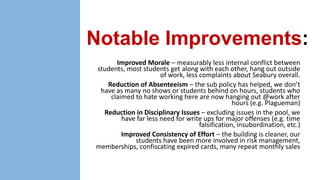
Notable Improvements:
Improved Morale – measurably less internal conflict between
students, most students get along with each other, hang out outside
of work, less complaints about Seabury overall.
Reduction of Absenteeism – the sub policy has helped, we don’t
have as many no shows or students behind on hours, students who
claimed to hate working here are now hanging out @work after
hours (e.g. Plagueman)
Reduction in Disciplinary Issues – excluding issues in the pool, we
have far less need for write ups for major offenses (e.g. time
falsification, insubordination, etc.)
Improved Consistency of Effort – the building is cleaner, our
students have been more involved in risk
management, memberships, confiscating expired cards, many repeat
monthly sales
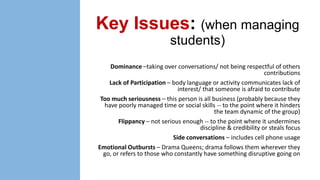
Key Issues: (when managing
students)
Dominance –taking over conversations/ not being respectful of others
contributions
Lack of Participation – body language or activity communicates lack of
interest/ that someone is afraid to contribute
Too much seriousness – this person is all business (probably because they
have poorly managed time or social skills -- to the point where it hinders
the team dynamic of the group)
Flippancy – not serious enough -- to the point where it undermines
discipline & credibility or steals focus
Side conversations – includes cell phone usage
Emotional Outbursts – Drama Queens; drama follows them wherever they
go, or refers to those who constantly have something disruptive going on
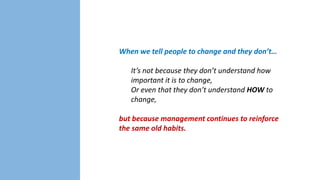
When we tell people to change and they don’t…

It’s not because they don’t understand how
important it is to change,
Or even that they don’t understand HOW to
change,
but because management continues to reinforce
the same old habits.
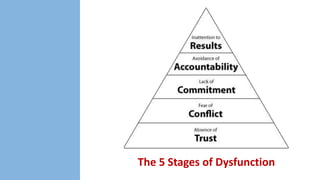
The 5 Stages of Dysfunction
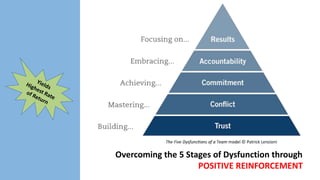
Overcoming the 5 Stages of Dysfunction through
POSITIVE REINFORCEMENT
What are some ways that we can reinforce the
behaviors we’d like to see when addressing these:
Dominance
Lack of Participation
Too much seriousness
Flippancy
Emotional Outbursts?
Build trust • Encourage Healthy Conflict •
Encourage Accountability • Secure Commitment*
• Produce Measurable long-term results
*Note: Buy in (does not always signify commitment)
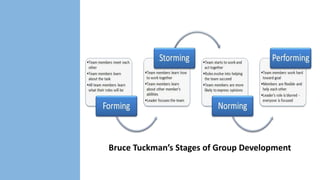
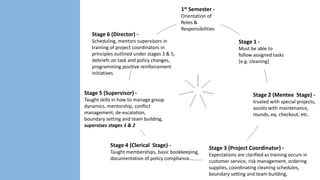
Bruce Tuckman’s Stages of Group Development
1st Semester -

Stage 6 (Director) -

Orientation of
Roles &
Responsibilities

Scheduling, mentors supervisors in
training of project coordinators in
principles outlined under stages 3 & 5,
debriefs on task and policy changes,
programming positive reinforcement
initiatives

Proposed:

Stage 5 (Supervisor) Taught skills in how to manage group
dynamics, mentorship, conflict
management, de-escalation,
boundary setting and team building,
supervises stages 1 & 2

Stage 4 (Clerical Stage) Taught memberships, basic bookkeeping,
documentation of policy compliance

Stage 1 Must be able to
follow assigned tasks
(e.g. cleaning)

Stage 2 (Mentee Stage) trusted with special projects,
assists with maintenance,
rounds, eq. checkout, etc.

Stage 3 (Project Coordinator) Expectations are clarified as training occurs in
customer service, risk management, ordering
supplies, coordinating cleaning schedules,
boundary setting and team building,
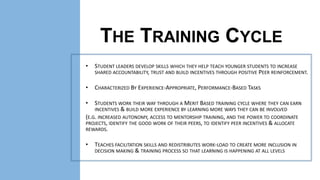
THE TRAINING CYCLE
•

STUDENT LEADERS DEVELOP SKILLS WHICH THEY HELP TEACH YOUNGER STUDENTS TO INCREASE
SHARED ACCOUNTABILITY, TRUST AND BUILD INCENTIVES THROUGH POSITIVE PEER REINFORCEMENT.

•

CHARACTERIZED BY EXPERIENCE-APPROPRIATE, PERFORMANCE-BASED TASKS

•

STUDENTS WORK THEIR WAY THROUGH A MERIT BASED TRAINING CYCLE WHERE THEY CAN EARN
INCENTIVES & BUILD MORE EXPERIENCE BY LEARNING MORE WAYS THEY CAN BE INVOLVED
(E.G. INCREASED AUTONOMY, ACCESS TO MENTORSHIP TRAINING, AND THE POWER TO COORDINATE
PROJECTS, IDENTIFY THE GOOD WORK OF THEIR PEERS, TO IDENTIFY PEER INCENTIVES & ALLOCATE
REWARDS.
•

TEACHES FACILITATION SKILLS AND REDISTRIBUTES WORK-LOAD TO CREATE MORE INCLUSION IN
DECISION MAKING & TRAINING PROCESS SO THAT LEARNING IS HAPPENING AT ALL LEVELS
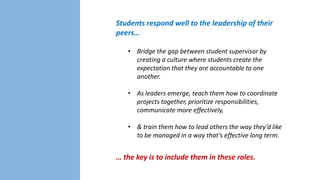
Students respond well to the leadership of their
peers…
• Bridge the gap between student supervisor by
creating a culture where students create the
expectation that they are accountable to one
another.
• As leaders emerge, teach them how to coordinate
projects together, prioritize
responsibilities, communicate more effectively,
• & train them how to lead others the way they’d like
to be managed in a way that’s effective long term.

… the key is to include them in these roles.
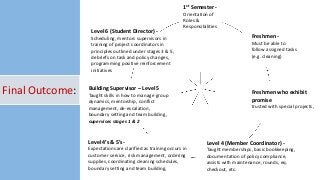
1st Semester -

Level 6 (Student Director) -

Orientation of
Roles &
Responsibilities

Scheduling, mentors supervisors in
training of project coordinators in
principles outlined under stages 3 & 5,
debriefs on task and policy changes,
programming positive reinforcement
initiatives

Final Outcome:

Building Supervisor – Level 5
Taught skills in how to manage group
dynamics, mentorship, conflict
management, de-escalation,
boundary setting and team building,
supervises stages 1 & 2

Freshmen Must be able to
follow assigned tasks
(e.g. cleaning)

Freshmen who exhibit
promise
trusted with special projects,

Level 4’s & 5’s-

Level 4 (Member Coordinator) -

Expectations are clarified as training occurs in
customer service, risk management, ordering
supplies, coordinating cleaning schedules,
boundary setting and team building,

Taught memberships, basic bookkeeping,
documentation of policy compliance,
assists with maintenance, rounds, eq.
checkout, etc.

2014-2015 Labor proposal

  • 1.
    LABOR WHAT ARE WEGOING TO DO ABOUT NEXT YEAR?
  • 2.
    Notable Improvements: Improved Morale– measurably less internal conflict between students, most students get along with each other, hang out outside of work, less complaints about Seabury overall. Reduction of Absenteeism – the sub policy has helped, we don’t have as many no shows or students behind on hours, students who claimed to hate working here are now hanging out @work after hours (e.g. Plagueman) Reduction in Disciplinary Issues – excluding issues in the pool, we have far less need for write ups for major offenses (e.g. time falsification, insubordination, etc.) Improved Consistency of Effort – the building is cleaner, our students have been more involved in risk management, memberships, confiscating expired cards, many repeat monthly sales
  • 3.
    Key Issues: (whenmanaging students) Dominance –taking over conversations/ not being respectful of others contributions Lack of Participation – body language or activity communicates lack of interest/ that someone is afraid to contribute Too much seriousness – this person is all business (probably because they have poorly managed time or social skills -- to the point where it hinders the team dynamic of the group) Flippancy – not serious enough -- to the point where it undermines discipline & credibility or steals focus Side conversations – includes cell phone usage Emotional Outbursts – Drama Queens; drama follows them wherever they go, or refers to those who constantly have something disruptive going on
  • 4.
    When we tellpeople to change and they don’t… It’s not because they don’t understand how important it is to change, Or even that they don’t understand HOW to change, but because management continues to reinforce the same old habits.
  • 5.
    The 5 Stagesof Dysfunction
  • 6.
    Overcoming the 5Stages of Dysfunction through POSITIVE REINFORCEMENT
  • 7.
    What are someways that we can reinforce the behaviors we’d like to see when addressing these: Dominance Lack of Participation Too much seriousness Flippancy Emotional Outbursts? Build trust • Encourage Healthy Conflict • Encourage Accountability • Secure Commitment* • Produce Measurable long-term results *Note: Buy in (does not always signify commitment)
  • 8.
    Bruce Tuckman’s Stagesof Group Development
  • 9.
    1st Semester - Stage6 (Director) - Orientation of Roles & Responsibilities Scheduling, mentors supervisors in training of project coordinators in principles outlined under stages 3 & 5, debriefs on task and policy changes, programming positive reinforcement initiatives Proposed: Stage 5 (Supervisor) Taught skills in how to manage group dynamics, mentorship, conflict management, de-escalation, boundary setting and team building, supervises stages 1 & 2 Stage 4 (Clerical Stage) Taught memberships, basic bookkeeping, documentation of policy compliance Stage 1 Must be able to follow assigned tasks (e.g. cleaning) Stage 2 (Mentee Stage) trusted with special projects, assists with maintenance, rounds, eq. checkout, etc. Stage 3 (Project Coordinator) Expectations are clarified as training occurs in customer service, risk management, ordering supplies, coordinating cleaning schedules, boundary setting and team building,
  • 10.
    THE TRAINING CYCLE • STUDENTLEADERS DEVELOP SKILLS WHICH THEY HELP TEACH YOUNGER STUDENTS TO INCREASE SHARED ACCOUNTABILITY, TRUST AND BUILD INCENTIVES THROUGH POSITIVE PEER REINFORCEMENT. • CHARACTERIZED BY EXPERIENCE-APPROPRIATE, PERFORMANCE-BASED TASKS • STUDENTS WORK THEIR WAY THROUGH A MERIT BASED TRAINING CYCLE WHERE THEY CAN EARN INCENTIVES & BUILD MORE EXPERIENCE BY LEARNING MORE WAYS THEY CAN BE INVOLVED (E.G. INCREASED AUTONOMY, ACCESS TO MENTORSHIP TRAINING, AND THE POWER TO COORDINATE PROJECTS, IDENTIFY THE GOOD WORK OF THEIR PEERS, TO IDENTIFY PEER INCENTIVES & ALLOCATE REWARDS. • TEACHES FACILITATION SKILLS AND REDISTRIBUTES WORK-LOAD TO CREATE MORE INCLUSION IN DECISION MAKING & TRAINING PROCESS SO THAT LEARNING IS HAPPENING AT ALL LEVELS
  • 11.
    Students respond wellto the leadership of their peers… • Bridge the gap between student supervisor by creating a culture where students create the expectation that they are accountable to one another. • As leaders emerge, teach them how to coordinate projects together, prioritize responsibilities, communicate more effectively, • & train them how to lead others the way they’d like to be managed in a way that’s effective long term. … the key is to include them in these roles.
  • 12.
    1st Semester - Level6 (Student Director) - Orientation of Roles & Responsibilities Scheduling, mentors supervisors in training of project coordinators in principles outlined under stages 3 & 5, debriefs on task and policy changes, programming positive reinforcement initiatives Final Outcome: Building Supervisor – Level 5 Taught skills in how to manage group dynamics, mentorship, conflict management, de-escalation, boundary setting and team building, supervises stages 1 & 2 Freshmen Must be able to follow assigned tasks (e.g. cleaning) Freshmen who exhibit promise trusted with special projects, Level 4’s & 5’s- Level 4 (Member Coordinator) - Expectations are clarified as training occurs in customer service, risk management, ordering supplies, coordinating cleaning schedules, boundary setting and team building, Taught memberships, basic bookkeeping, documentation of policy compliance, assists with maintenance, rounds, eq. checkout, etc.

Editor's Notes

  • #2 I’ve been reading a lot of HR books and articles about studies that have been done with employee motivation in the past year and a half. Because there are so many, I’ve tried to narrow my studies to research-based findings to see how they compare to our model and have experimented with some interventions to see how they affect the performance of our employees.
  • #3 Direct costs to the employing organization are expenses related to the withdrawal behaviours or attitudes of the employee. In most cases, these include estimated loss of revenue related to work that either isn’t completed to quality or isn’t completed at all1, unmet commitments, missed opportunities, and/or having to train a new employee to replace one that has left the organization