LAA treatment results in adults 
J. Januska, M. Poloczek*, M. Branny 
Podlesi Hospital, Trinec,* Faculty Hospital Brno 
Bohunice Czech Republic
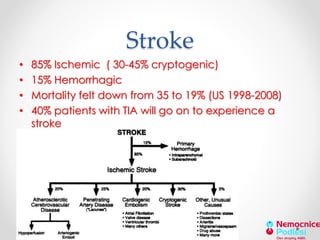
Stroke 
• 85% Ischemic ( 30-45% cryptogenic) 
• 15% Hemorrhagic 
• Mortality felt down from 35 to 19% (US 1998-2008) 
• 40% patients with TIA will go on to experience a 
stroke
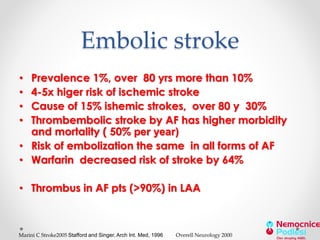
Embolic stroke 
• Prevalence 1%, over 80 yrs more than 10% 
• 4-5x higer risk of ischemic stroke 
• Cause of 15% ishemic strokes, over 80 y 30% 
• Thrombembolic stroke by AF has higher morbidity 
and mortality ( 50% per year) 
• Risk of embolization the same in all forms of AF 
• Warfarin decreased risk of stroke by 64% 
• Thrombus in AF pts (>90%) in LAA 
Marini C Stroke2005 Stafford and Singer, Arch Int. Med, 1996 Overell Neurology 2000
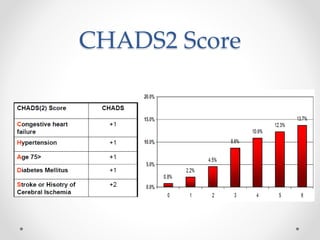
CHADS2 Score
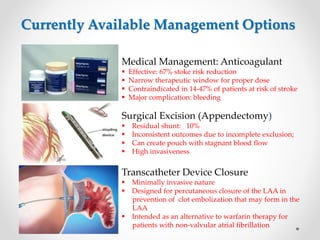
Currently Available Management Options 
5 
Medical Management: Anticoagulant 
 Effective: 67% stoke risk reduction 
 Narrow therapeutic window for proper dose 
 Contraindicated in 14-47% of patients at risk of stroke 
 Major complication: bleeding 
Surgical Excision (Appendectomy) 
 Residual shunt: 10% 
 Inconsistent outcomes due to incomplete exclusion; 
 Can create pouch with stagnant blood flow 
 High invasiveness 
Transcatheter Device Closure 
 Minimally invasive nature 
 Designed for percutaneous closure of the LAA in 
prevention of clot embolization that may form in the 
LAA 
 Intended as an alternative to warfarin therapy for 
patients with non-valvular atrial fibrillation
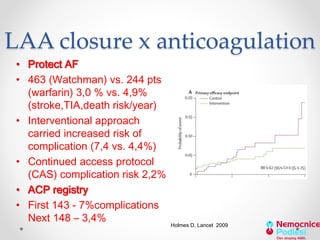
LAA closure x anticoagulation 
• Protect AF 
• 463 (Watchman) vs. 244 pts 
(warfarin) 3,0 % vs. 4,9% 
(stroke,TIA,death risk/year) 
• Interventional approach 
carried increased risk of 
complication (7,4 vs. 4,4%) 
• Continued access protocol 
(CAS) complication risk 2,2% 
• ACP registry 
• First 143 - 7%complications 
Next 148 – 3,4% 
Holmes D, Lancet 2009
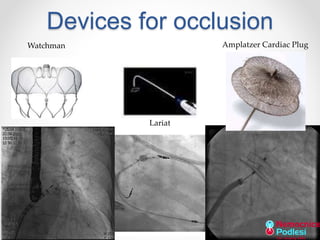
Devices for occlusion 
Amplatzer Cardiac Plug 
Lariat 
Watchman
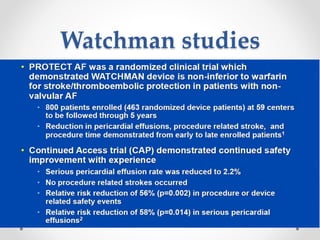
Watchman studies
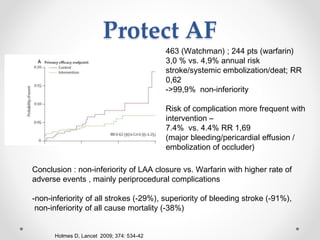
Protect AF 
Holmes D, Lancet 2009; 374: 534-42 
463 (Watchman) ; 244 pts (warfarin) 
3,0 % vs. 4,9% annual risk 
stroke/systemic embolization/deat; RR 
0,62 
->99,9% non-inferiority 
Risk of complication more frequent with 
intervention – 
7.4% vs. 4.4% RR 1,69 
(major bleeding/pericardial effusion / 
embolization of occluder) 
Conclusion : non-inferiority of LAA closure vs. Warfarin with higher rate of 
adverse events , mainly periprocedural complications 
-non-inferiority of all strokes (-29%), superiority of bleeding stroke (-91%), 
non-inferiority of all cause mortality (-38%)
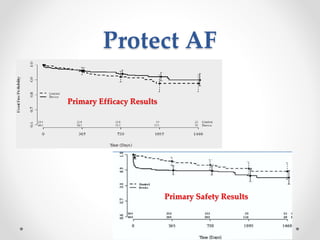
Protect AF 
Primary Efficacy Results 
Primary Safety Results
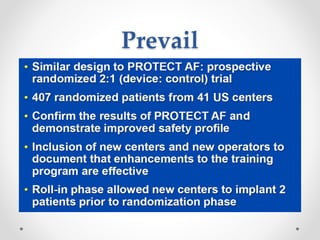
Prevail
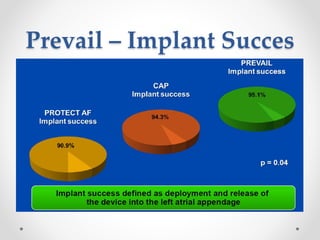
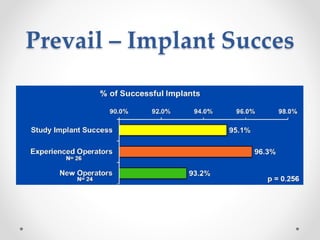
Prevail – Implant Succes
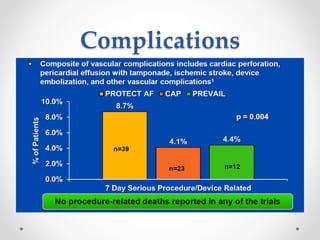
Complications
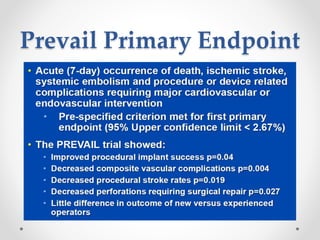
Prevail Primary Endpoint
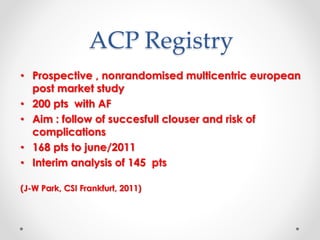
ACP Registry 
• Prospective , nonrandomised multicentric european 
post market study 
• 200 pts with AF 
• Aim : follow of succesfull clouser and risk of 
complications 
• 168 pts to june/2011 
• Interim analysis of 145 pts 
(J-W Park, CSI Frankfurt, 2011)
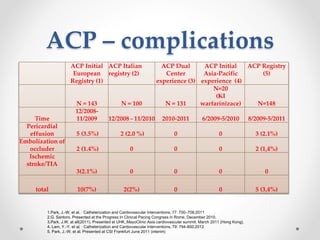
ACP – complications 
ACP Initial 
European 
Registry (1) 
ACP Italian 
registry (2) 
ACP Dual 
Center 
experience (3) 
ACP Initial 
Asia-Pacific 
experience (4) 
ACP Registry 
(5) 
N = 143 N = 100 N = 131 
N=20 
(KI 
warfarinizace) N=148 
Time 
12/2008- 
11/2009 12/2008 - 11/2010 2010-2011 6/2009-5/2010 8/2009-5/2011 
Pericardial 
effusion 5 (3.5%) 2 (2.0 %) 0 0 3 (2.1%) 
Embolization of 
occluder 2 (1.4%) 0 0 0 2 (1,4%) 
Ischemic 
stroke/TIA 
3(2.1%) 0 0 0 0 
total 10(7%) 2(2%) 0 0 5 (3,4%) 
1.Park, J.-W. et al. : Catheterization and Cardiovascular Interventions, 77: 700–706;2011 
2.G. Santoro. Presented at the Progress In Clinical Pacing Congress in Rome, December 2010. 
3.Park, J.W. at all(2011). Presented at UHK_MayoClinic Asia cardiovascular summit. March 2011 (Hong Kong). 
4. Lam, Y.-Y. et al. : Catheterization and Cardiovascular Interventions, 79: 794-800;2012 
5. Park, J.-W. et al. Presented at CSI Frankfurt June 2011 (interim)
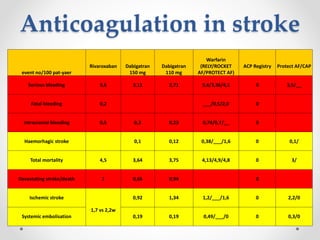
Anticoagulation in stroke 
event no/100 pat-yaer 
Rivaroxaban Dabigatran 
150 mg 
Dabigatran 
110 mg 
Warfarin 
(RELY/ROCKET 
AF/PROTECT AF) 
ACP Registry Protect AF/CAP 
Serious bleeding 3,6 3,11 2,71 3,4/3,36/4,1 0 3,5/__ 
Fatal bleeding 0,2 ___/0,5/2,0 0 
Intracranial bleeding 0,5 0,3 0,23 0,74/0,7/__ 0 
Haemorhagic stroke 0,1 0,12 0,38/___/1,6 0 0,1/ 
Total mortality 4,5 3,64 3,75 4,13/4,9/4,8 0 3/ 
Devastating stroke/death 1 0,66 0,94 0 
Ischemic stroke 
1,7 vs 2,2w 
0,92 1,34 1,2/___/1,6 0 2,2/0 
Systemic embolisation 0,19 0,19 0,49/___/0 0 0,3/0
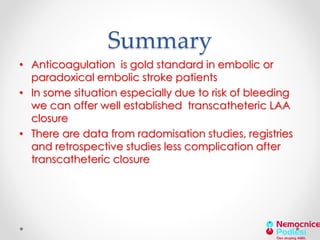
Summary 
• Anticoagulation is gold standard in embolic or 
paradoxical embolic stroke patients 
• In some situation especially due to risk of bleeding 
we can offer well established transcatheteric LAA 
closure 
• There are data from radomisation studies, registries 
and retrospective studies less complication after 
transcatheteric closure
Prevail – Implant Succes
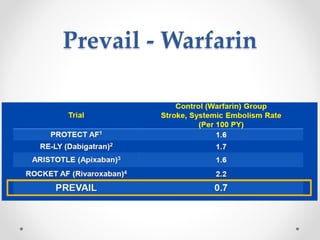
Prevail -Warfarin
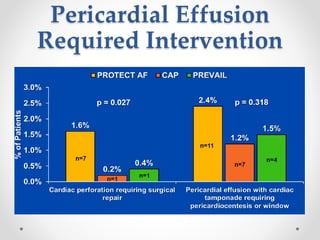
Pericardial Effusion 
Required Intervention

LAA closure - prof. Jaroslav Januska

  • 1.
    LAA treatment resultsin adults J. Januska, M. Poloczek*, M. Branny Podlesi Hospital, Trinec,* Faculty Hospital Brno Bohunice Czech Republic
  • 2.
    Stroke • 85%Ischemic ( 30-45% cryptogenic) • 15% Hemorrhagic • Mortality felt down from 35 to 19% (US 1998-2008) • 40% patients with TIA will go on to experience a stroke
  • 3.
    Embolic stroke •Prevalence 1%, over 80 yrs more than 10% • 4-5x higer risk of ischemic stroke • Cause of 15% ishemic strokes, over 80 y 30% • Thrombembolic stroke by AF has higher morbidity and mortality ( 50% per year) • Risk of embolization the same in all forms of AF • Warfarin decreased risk of stroke by 64% • Thrombus in AF pts (>90%) in LAA Marini C Stroke2005 Stafford and Singer, Arch Int. Med, 1996 Overell Neurology 2000
  • 4.
  • 5.
    Currently Available ManagementOptions 5 Medical Management: Anticoagulant  Effective: 67% stoke risk reduction  Narrow therapeutic window for proper dose  Contraindicated in 14-47% of patients at risk of stroke  Major complication: bleeding Surgical Excision (Appendectomy)  Residual shunt: 10%  Inconsistent outcomes due to incomplete exclusion;  Can create pouch with stagnant blood flow  High invasiveness Transcatheter Device Closure  Minimally invasive nature  Designed for percutaneous closure of the LAA in prevention of clot embolization that may form in the LAA  Intended as an alternative to warfarin therapy for patients with non-valvular atrial fibrillation
  • 6.
    LAA closure xanticoagulation • Protect AF • 463 (Watchman) vs. 244 pts (warfarin) 3,0 % vs. 4,9% (stroke,TIA,death risk/year) • Interventional approach carried increased risk of complication (7,4 vs. 4,4%) • Continued access protocol (CAS) complication risk 2,2% • ACP registry • First 143 - 7%complications Next 148 – 3,4% Holmes D, Lancet 2009
  • 7.
    Devices for occlusion Amplatzer Cardiac Plug Lariat Watchman
  • 8.
  • 9.
    Protect AF HolmesD, Lancet 2009; 374: 534-42 463 (Watchman) ; 244 pts (warfarin) 3,0 % vs. 4,9% annual risk stroke/systemic embolization/deat; RR 0,62 ->99,9% non-inferiority Risk of complication more frequent with intervention – 7.4% vs. 4.4% RR 1,69 (major bleeding/pericardial effusion / embolization of occluder) Conclusion : non-inferiority of LAA closure vs. Warfarin with higher rate of adverse events , mainly periprocedural complications -non-inferiority of all strokes (-29%), superiority of bleeding stroke (-91%), non-inferiority of all cause mortality (-38%)
  • 10.
    Protect AF PrimaryEfficacy Results Primary Safety Results
  • 11.
  • 12.
  • 13.
  • 14.
  • 15.
    ACP Registry •Prospective , nonrandomised multicentric european post market study • 200 pts with AF • Aim : follow of succesfull clouser and risk of complications • 168 pts to june/2011 • Interim analysis of 145 pts (J-W Park, CSI Frankfurt, 2011)
  • 16.
    ACP – complications ACP Initial European Registry (1) ACP Italian registry (2) ACP Dual Center experience (3) ACP Initial Asia-Pacific experience (4) ACP Registry (5) N = 143 N = 100 N = 131 N=20 (KI warfarinizace) N=148 Time 12/2008- 11/2009 12/2008 - 11/2010 2010-2011 6/2009-5/2010 8/2009-5/2011 Pericardial effusion 5 (3.5%) 2 (2.0 %) 0 0 3 (2.1%) Embolization of occluder 2 (1.4%) 0 0 0 2 (1,4%) Ischemic stroke/TIA 3(2.1%) 0 0 0 0 total 10(7%) 2(2%) 0 0 5 (3,4%) 1.Park, J.-W. et al. : Catheterization and Cardiovascular Interventions, 77: 700–706;2011 2.G. Santoro. Presented at the Progress In Clinical Pacing Congress in Rome, December 2010. 3.Park, J.W. at all(2011). Presented at UHK_MayoClinic Asia cardiovascular summit. March 2011 (Hong Kong). 4. Lam, Y.-Y. et al. : Catheterization and Cardiovascular Interventions, 79: 794-800;2012 5. Park, J.-W. et al. Presented at CSI Frankfurt June 2011 (interim)
  • 17.
    Anticoagulation in stroke event no/100 pat-yaer Rivaroxaban Dabigatran 150 mg Dabigatran 110 mg Warfarin (RELY/ROCKET AF/PROTECT AF) ACP Registry Protect AF/CAP Serious bleeding 3,6 3,11 2,71 3,4/3,36/4,1 0 3,5/__ Fatal bleeding 0,2 ___/0,5/2,0 0 Intracranial bleeding 0,5 0,3 0,23 0,74/0,7/__ 0 Haemorhagic stroke 0,1 0,12 0,38/___/1,6 0 0,1/ Total mortality 4,5 3,64 3,75 4,13/4,9/4,8 0 3/ Devastating stroke/death 1 0,66 0,94 0 Ischemic stroke 1,7 vs 2,2w 0,92 1,34 1,2/___/1,6 0 2,2/0 Systemic embolisation 0,19 0,19 0,49/___/0 0 0,3/0
  • 18.
    Summary • Anticoagulationis gold standard in embolic or paradoxical embolic stroke patients • In some situation especially due to risk of bleeding we can offer well established transcatheteric LAA closure • There are data from radomisation studies, registries and retrospective studies less complication after transcatheteric closure
  • 21.
  • 22.
  • 23.