Guidelines for DVT prophylaxis
in Surgical Patients
Dr Lajpat Rathore
Post Graduate Resident
Year – 1
Guideline for the Prevention of Venous
Thromboembolism (VTE) in Adult Hospitalized Patients
AUSTRALIAN GUIDELINES DECEMBER 2018
Introduction
• Venous thromboembolism (VTE), a disease which encompasses deep vein
thrombosis (DVT) and pulmonary embolism (PE) is a major health-care
problem, resulting in significant mortality and morbidity, and expenditure
in healthcare resources.
• PE remains one of the leading causes of preventable in-hospital deaths.
• The prevention of VTE, or VTE prophylaxis, is an important patient safety
strategy in hospital settings where patients are at risk of developing VTE.
Objectives of this guideline are to:
• Provide guidance to clinicians on the prevention of VTE
• Minimise the incidence of VTE in patients admitted to hospital or
discharged from the emergency department, and
• Optimise VTE prophylaxis to reduce adverse patient outcomes.
Guidelines Review
Padua Prediction Score 2010.
Padua VTE Risk
Assessment
Model
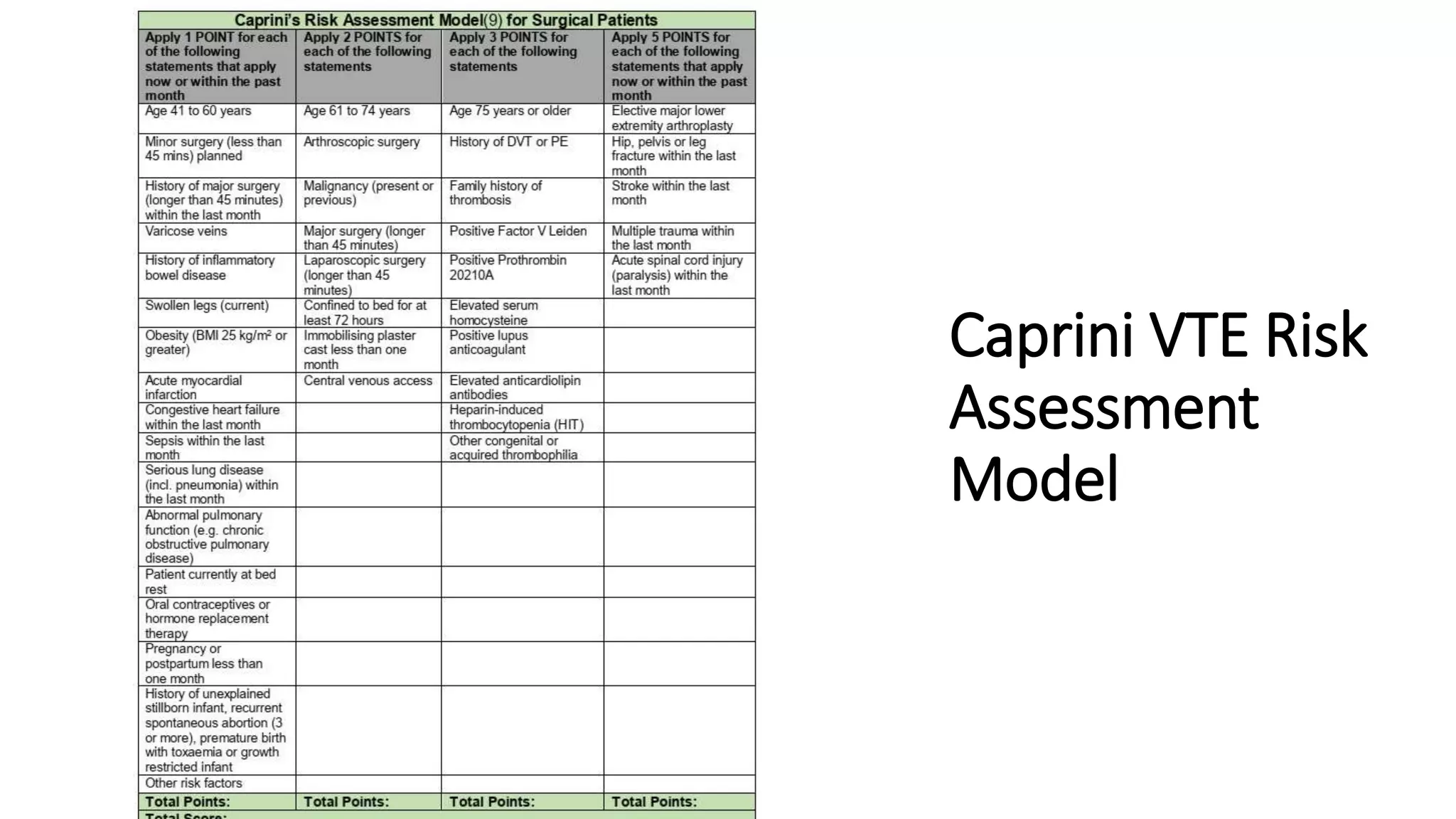
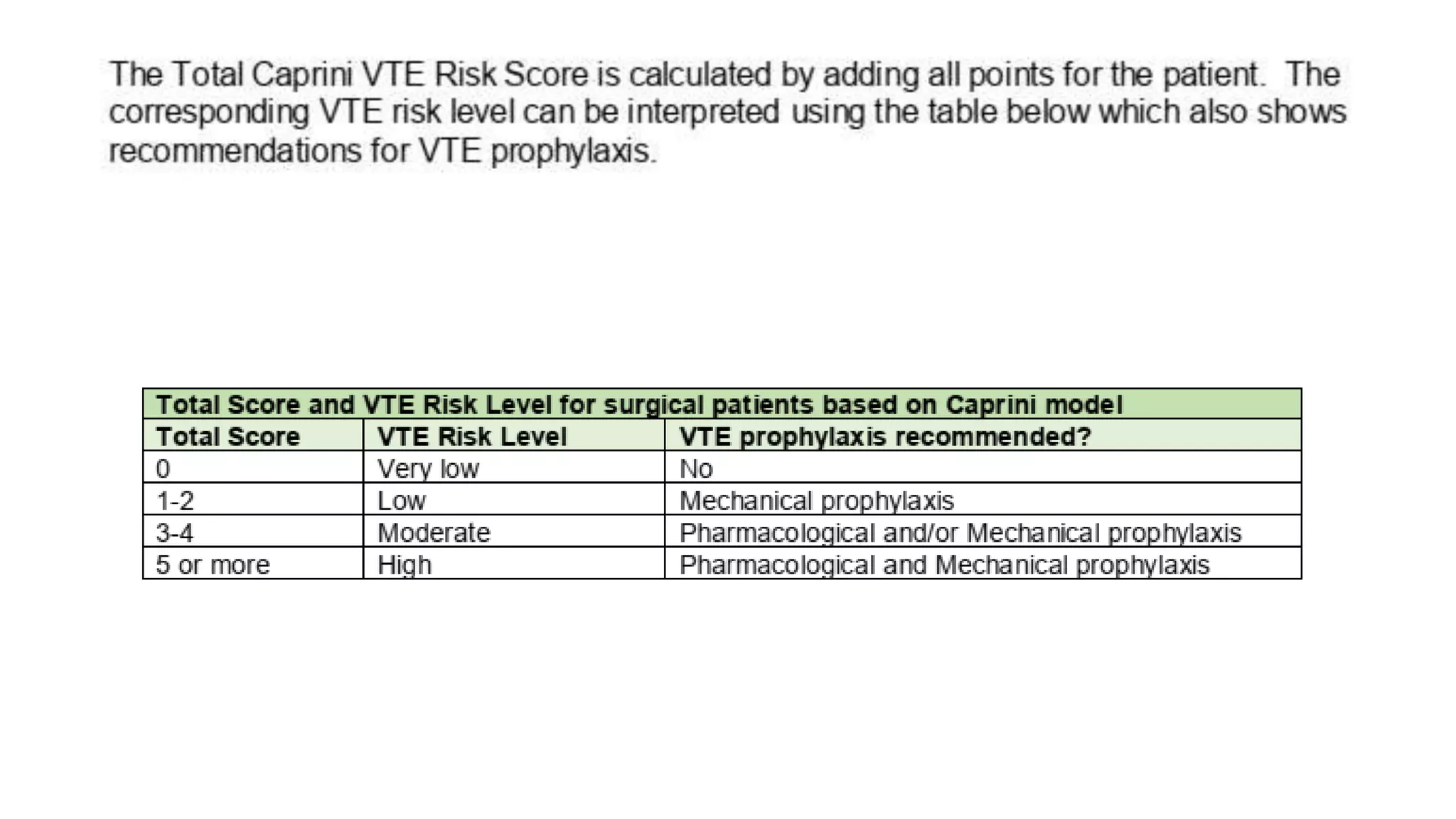
Caprini VTE Risk
Assessment
Model
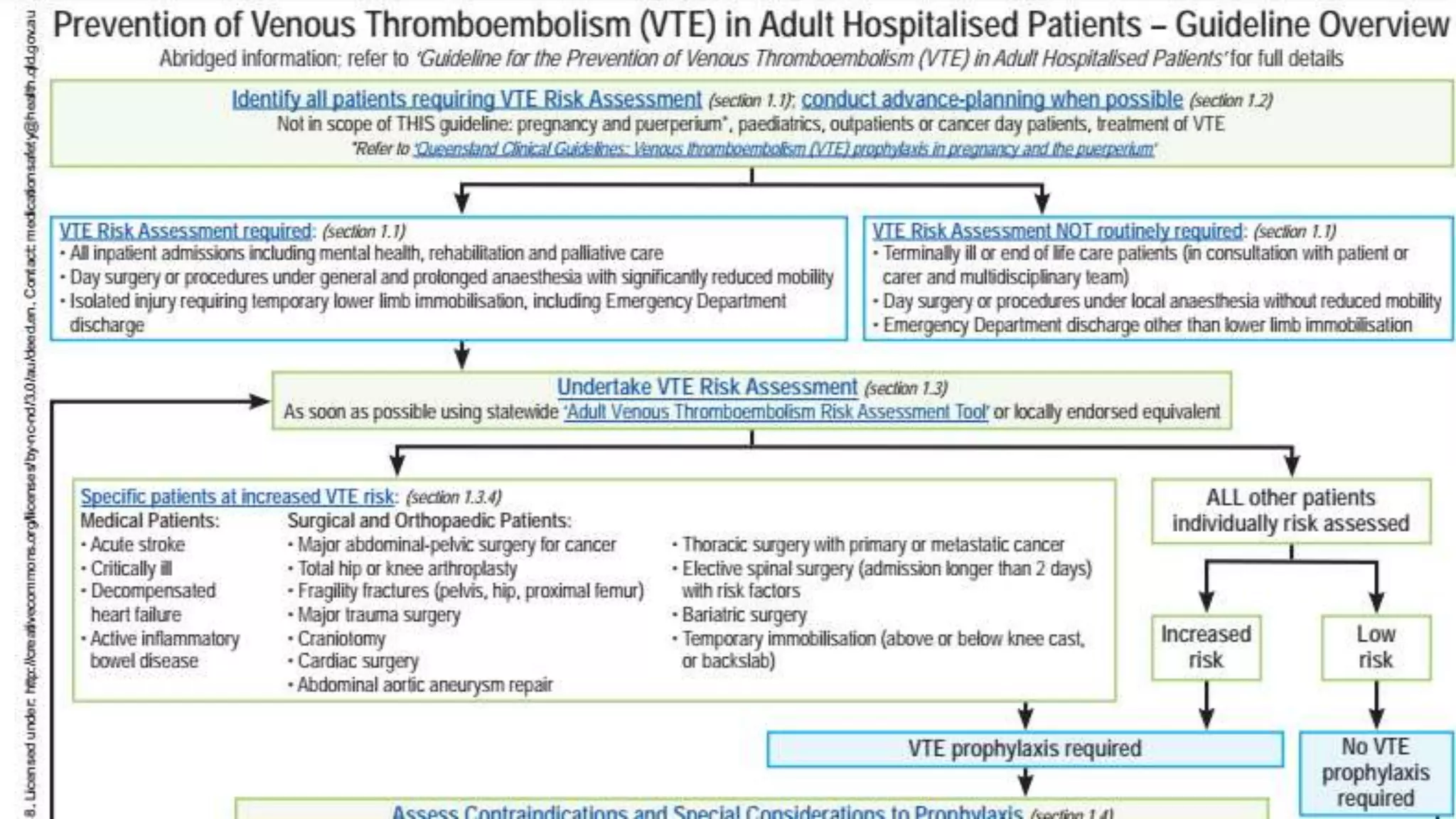
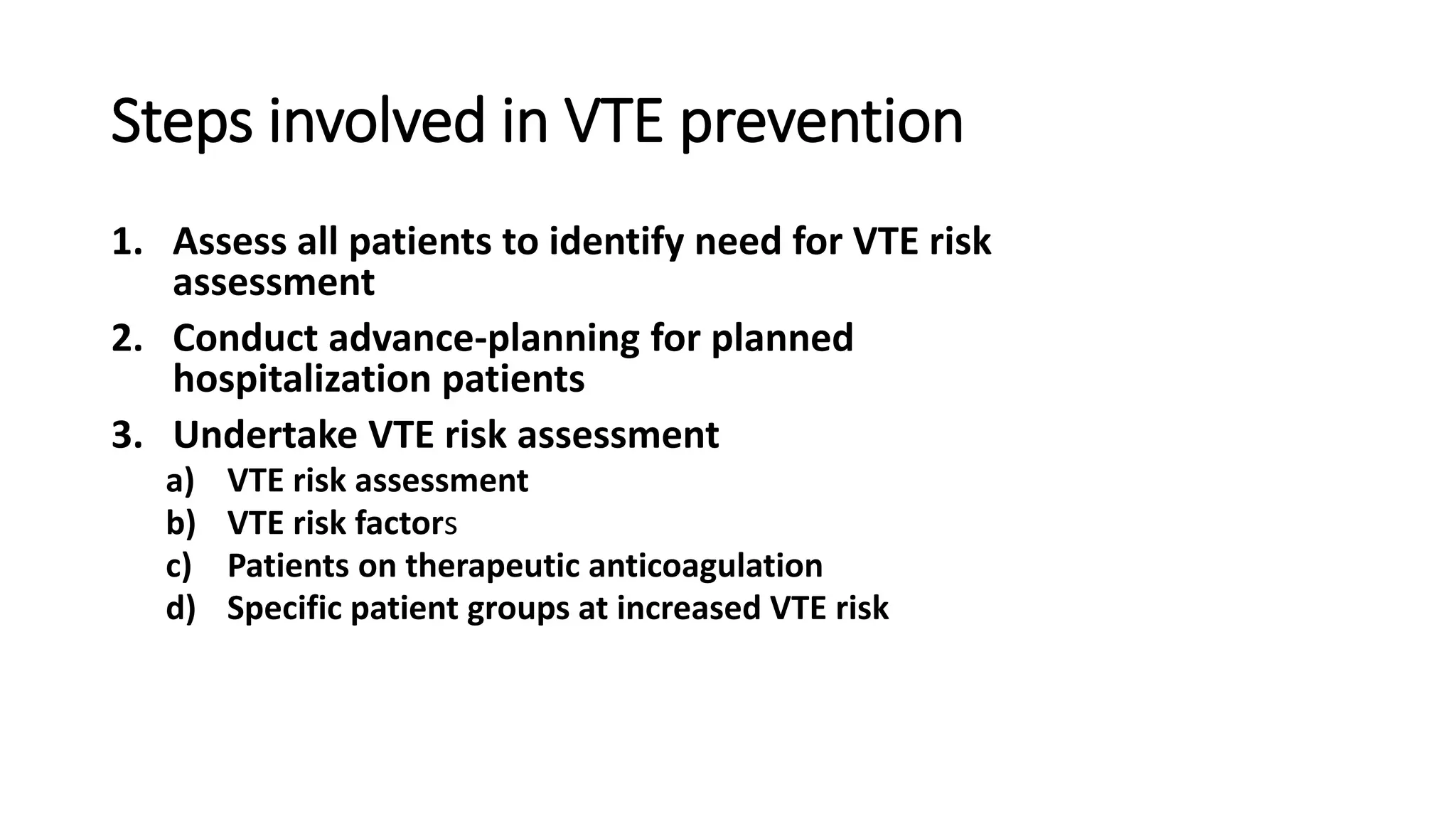
Steps involved in VTE prevention
1. Assess all patients to identify need for VTE risk
assessment
2. Conduct advance-planning for planned
hospitalization patients
3. Undertake VTE risk assessment
a) VTE risk assessment
b) VTE risk factors
c) Patients on therapeutic anticoagulation
d) Specific patient groups at increased VTE risk
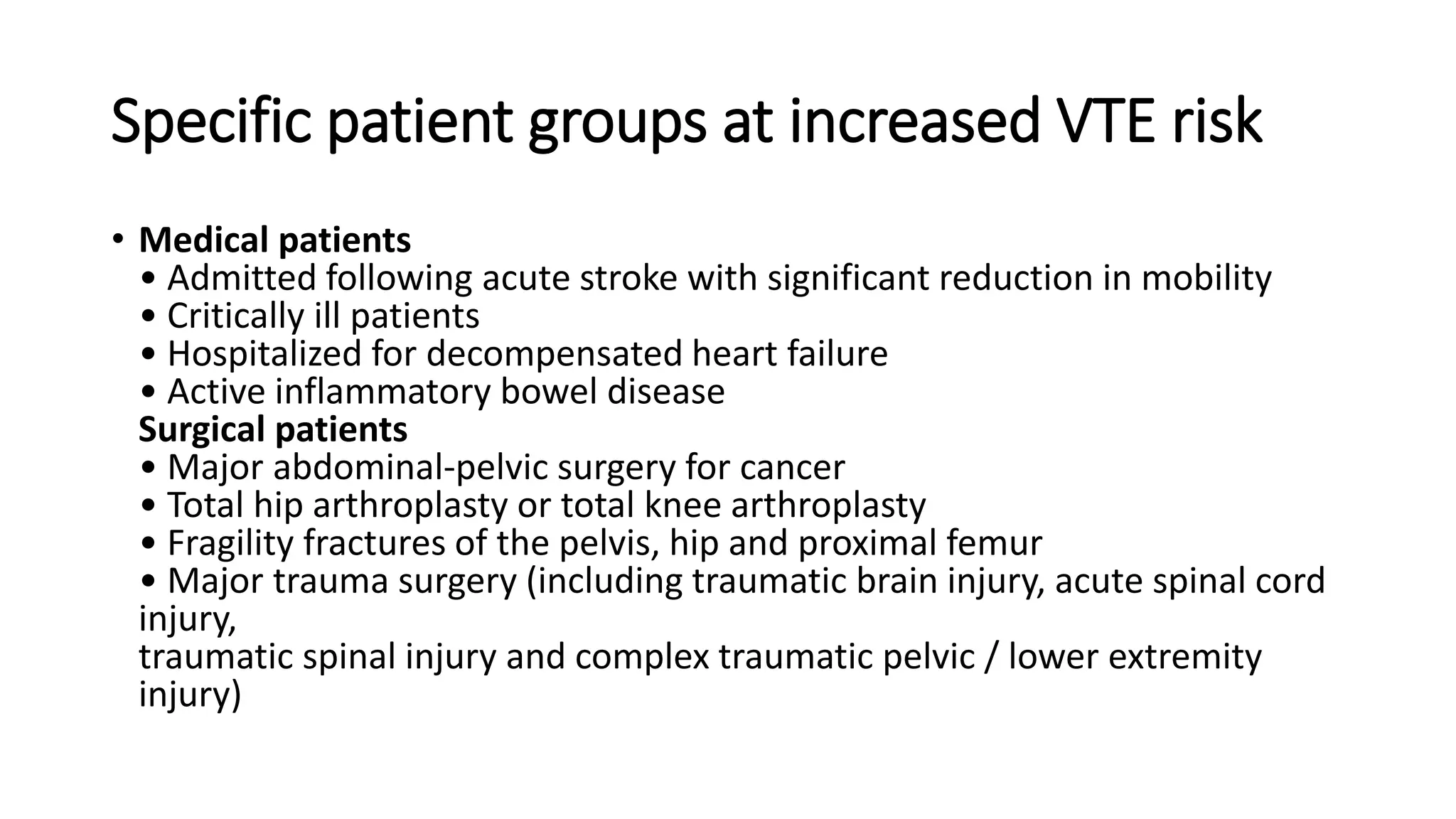
Specific patient groups at increased VTE risk
• Medical patients
• Admitted following acute stroke with significant reduction in mobility
• Critically ill patients
• Hospitalized for decompensated heart failure
• Active inflammatory bowel disease
Surgical patients
• Major abdominal-pelvic surgery for cancer
• Total hip arthroplasty or total knee arthroplasty
• Fragility fractures of the pelvis, hip and proximal femur
• Major trauma surgery (including traumatic brain injury, acute spinal cord
injury,
traumatic spinal injury and complex traumatic pelvic / lower extremity
injury)
Specific patient groups at increased VTE risk
• Craniotomy
• Cardiac surgery
• Abdominal aortic aneurysm repair surgery
• Thoracic surgery patients with primary or metastatic cancer
• Elective spinal surgery (with hospital admission) resulting in reduced
mobility
• Bariatric surgery
Ambulatory patients with isolated lower limb immobilisation
• Ambulatory patients temporarily immobilised with above or below
knee cast, or
backslab with additional risk factors
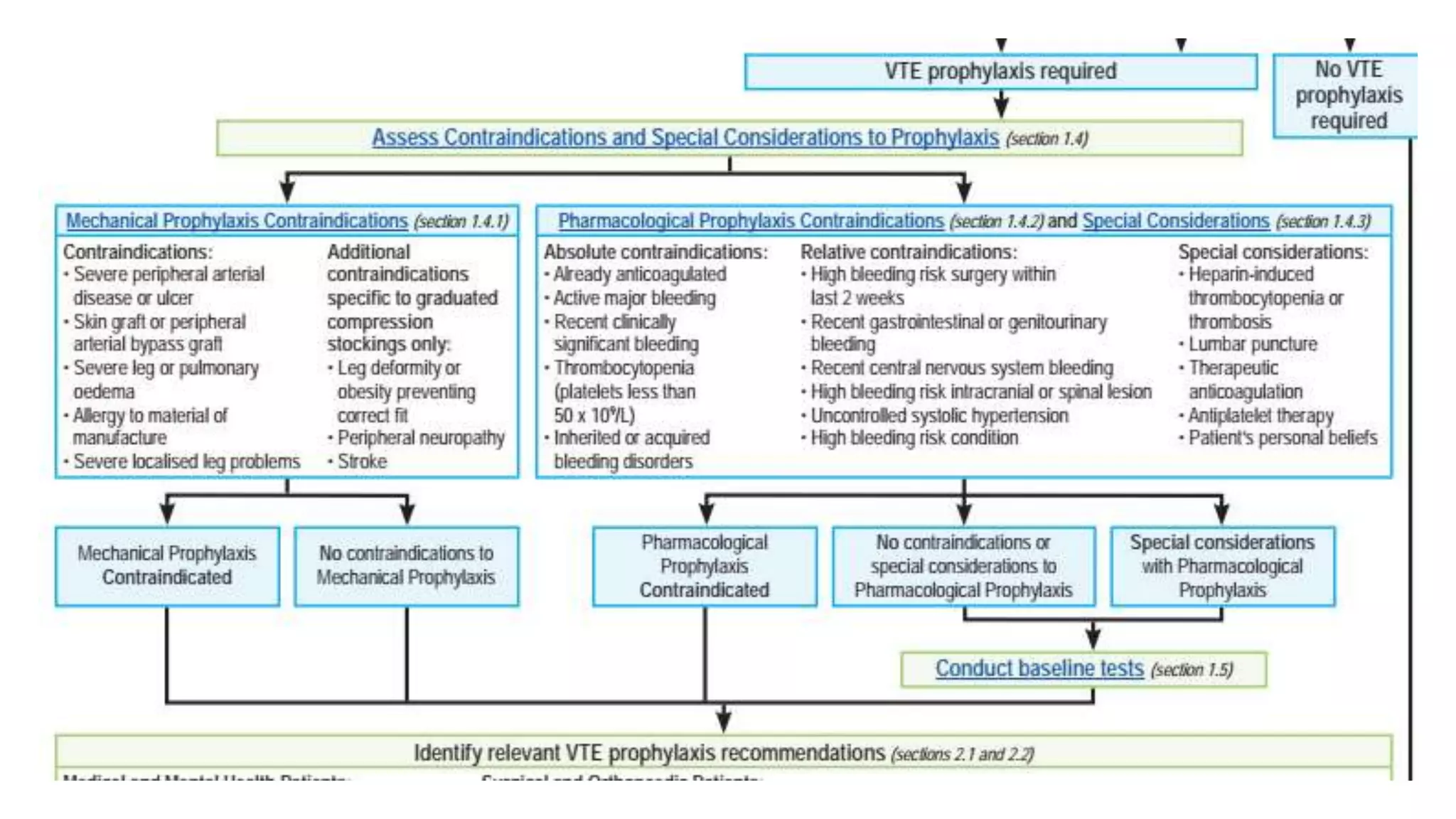
Pharmacological Prophylaxis
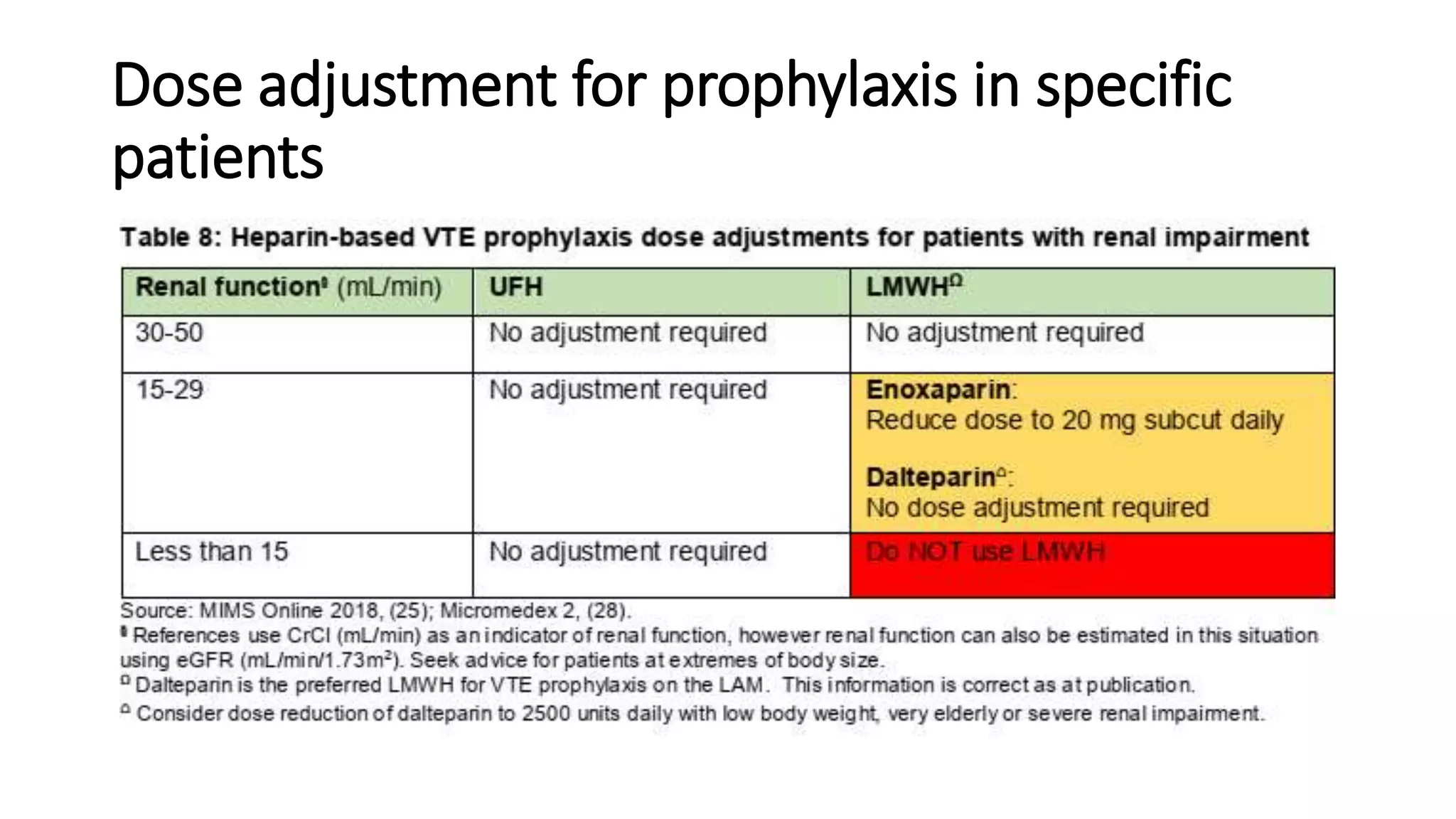
Dose adjustment for prophylaxis in specific
patients
Dose adjustment for Obese patients
Mechanical prophylaxis
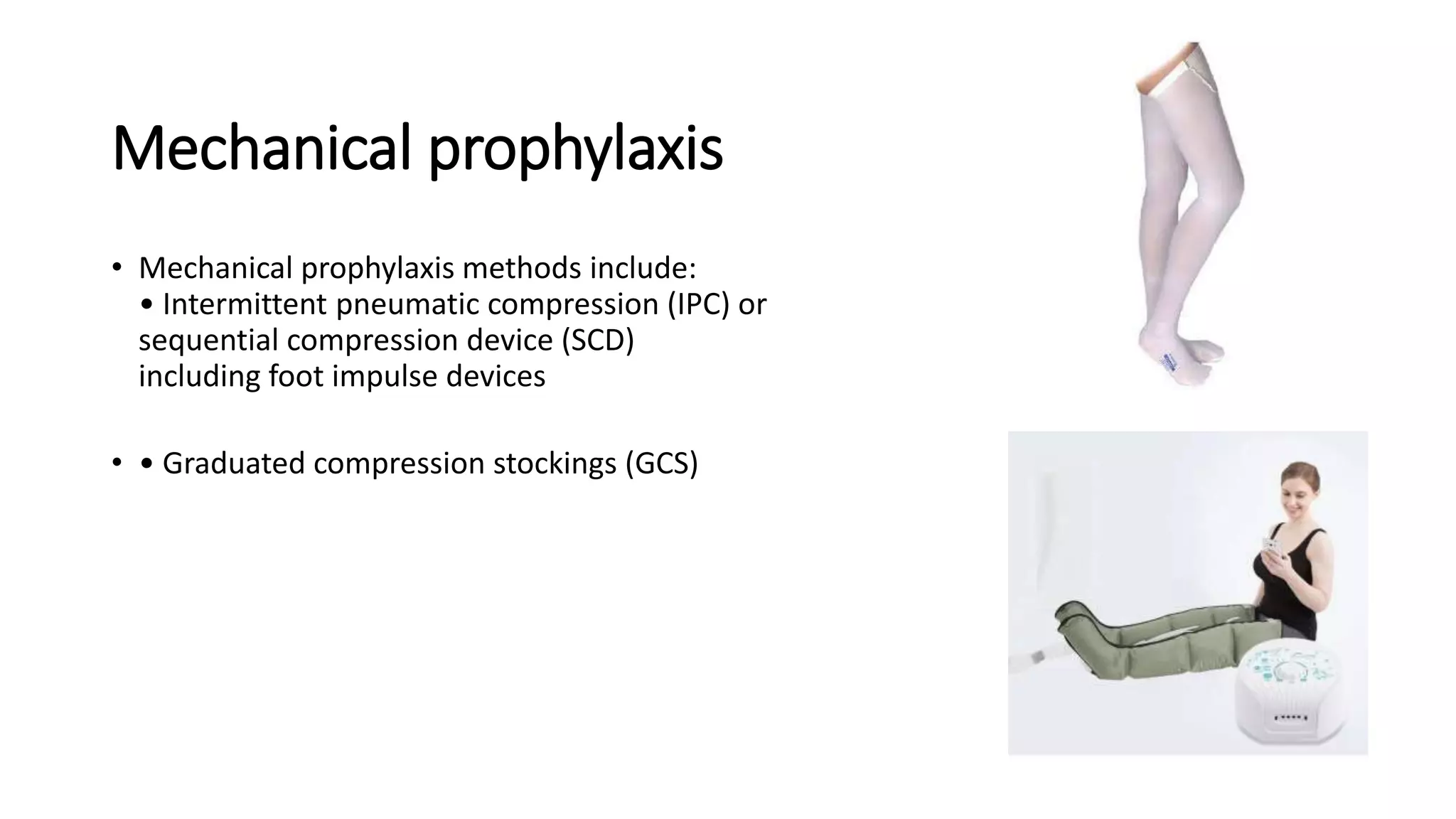
• Mechanical prophylaxis methods include:
• Intermittent pneumatic compression (IPC) or
sequential compression device (SCD)
including foot impulse devices
• • Graduated compression stockings (GCS)
Inferior Vena Cava (IVC) filters
• An IVC filter is a type of vascular filter, a medical device placed within
the inferior vena cava to reduce the risk of PE.
• There is currently no strong evidence to support prophylactic IVC
filter placement in patients with contraindications to both
pharmacological and mechanical prophylaxis, with benefits
potentially outweighed by complications resulting from the filter.(32)
• It is strongly recommended that temporary IVC filter placement is
only reserved for use in exceptional circumstances (i.e. very high VTE
risk patients that have absolute contraindications to both
pharmacological and mechanical prophylaxis).
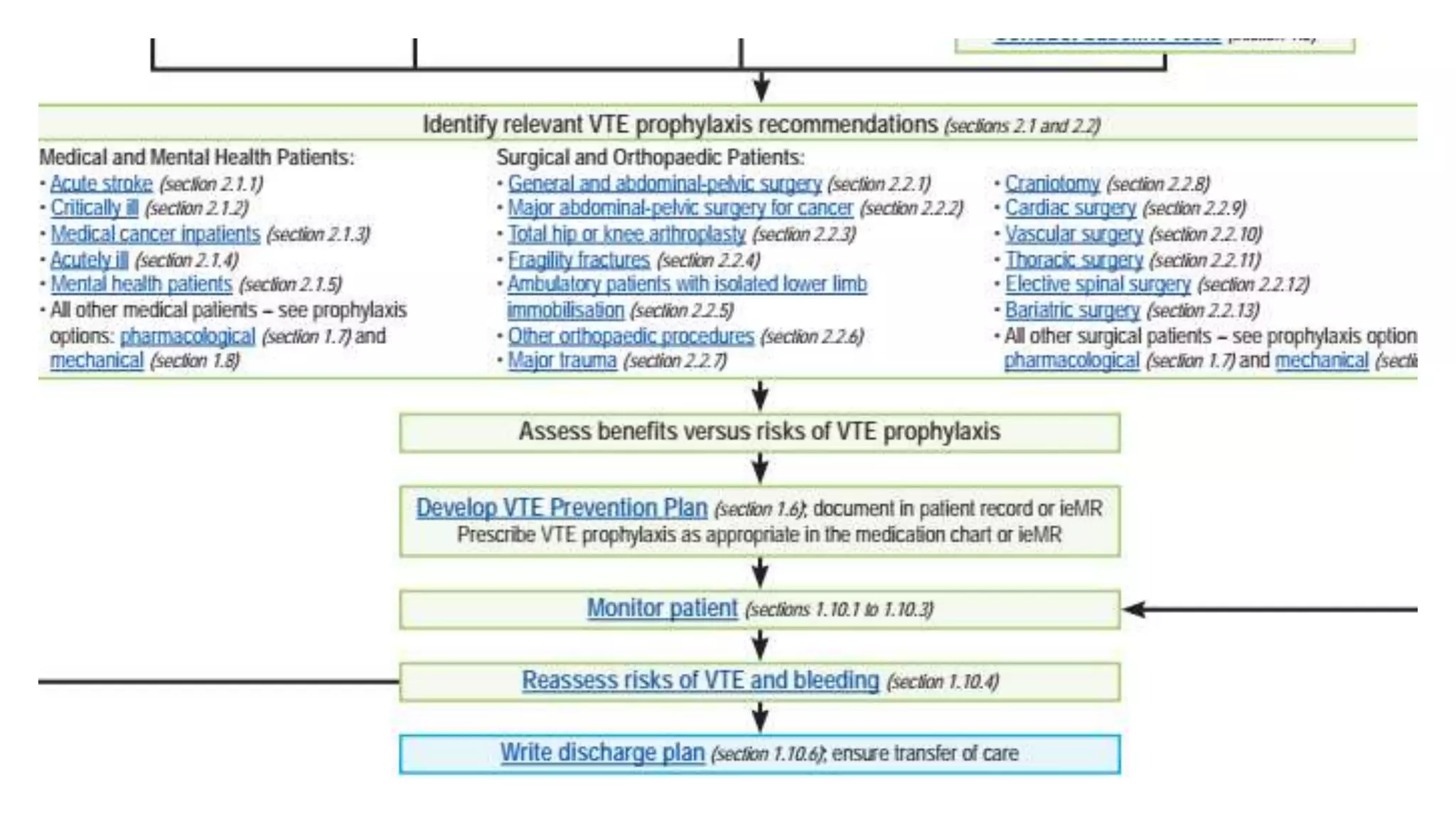
Monitor, reassess and update VTE prevention
plan
1. General VTE prophylaxis monitoring
2. Pharmacological VTE prophylaxis monitoring
a) Over-anticoagulation and bleeding
b) Drug interactions
c) Full blood count and renal function
d) Heparin-induced thrombocytopenia or thrombosis (HIT/HITT)
3. Mechanical VTE prophylaxis monitoring
Reassess for risks of VTE and bleeding
• Patients should be reassessed for risks of VTE and bleeding:
• regularly as clinically appropriate
• as clinical condition changes (e.g. after surgery/procedure, with
changes in mobility)
• when goals of care change
• at the request of the patient, their family
• • at transfer of care
• on discharge.
Update VTE prevention plan
• Best practice for updating the VTE prevention plan includes:
• • informing and engaging the patient of any changes in risks with
reassessment and changes to the VTE prevention plan
• • documenting the results from reassessment of risk and changes to
the plan.(4)
Write discharge plan and ensure transfer of
care
• Upon the patient’s discharge from hospital, ensure a plan for ongoing
VTE prevention has been developed incorporating:
• summary of patient’s reason for admission and VTE risk
• details of VTE prophylaxis received during their hospitalisation
• VTE prophylaxis prescribed at discharge including intended duration
• additional instructions about precautions
• ongoing monitoring and follow up requirements
• a current list of medications.
VTE prophylaxis guideline for
individual patient cohorts
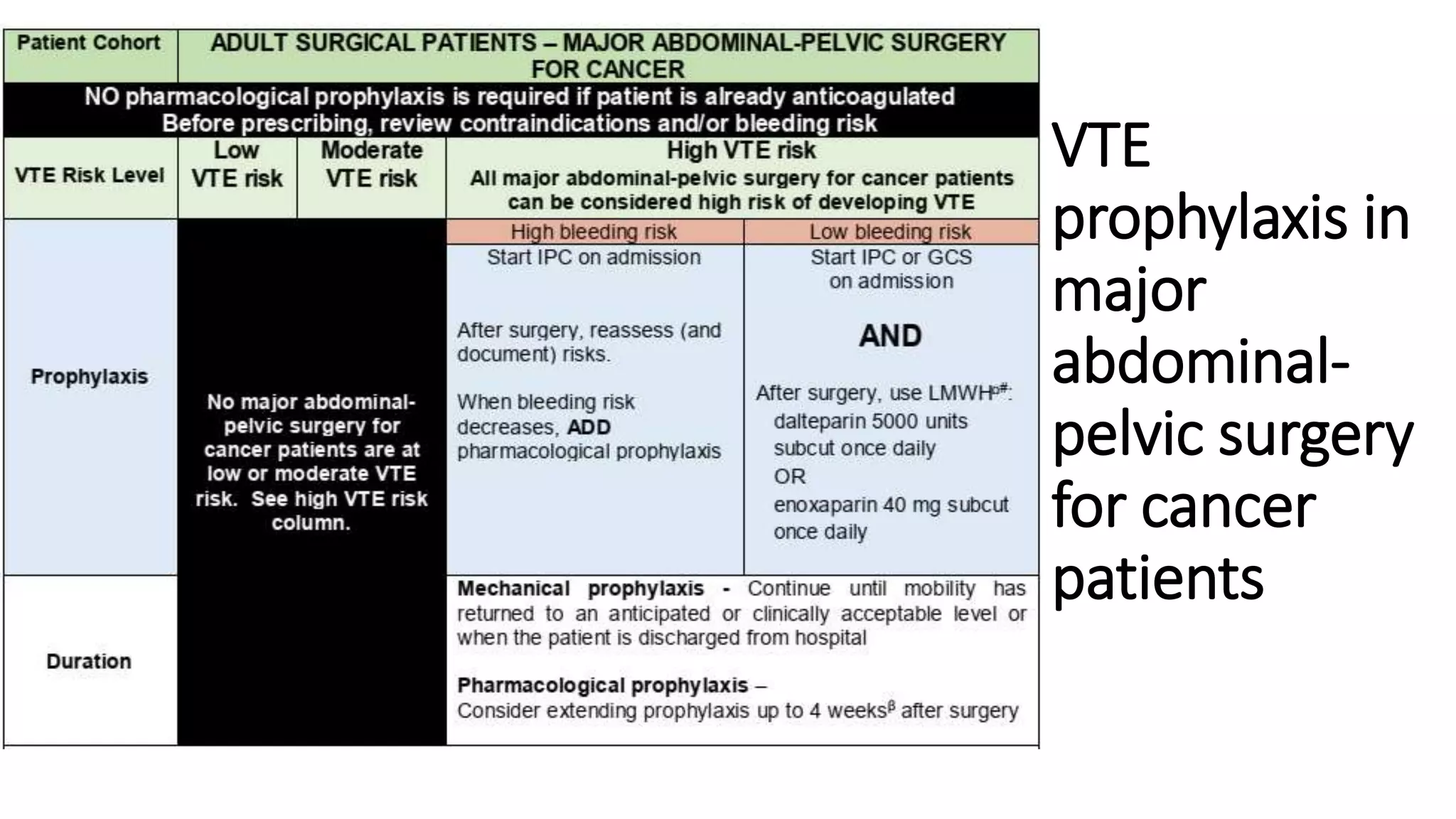
• General and abdominal-pelvic surgery
• VTE prophylaxis in general and abdominal-pelvic surgery (non-
cancer) patients
VTE
prophylaxis in
major
abdominal-
pelvic surgery
for cancer
patients
• Venous thromboembolism in over 16s: reducing the risk of hospital-
acquired deep vein thrombosis or pulmonary embolism
•
NICE guideline
Published: 21 March 2018
www.nice.org.uk/guidance/ng89
• European guidelines on perioperative venous
thromboembolism prophylaxis
• 2017
THANK YOU

Guidelines for dvt prophylaxis in surgical patients

  • 1.
    Guidelines for DVTprophylaxis in Surgical Patients Dr Lajpat Rathore Post Graduate Resident Year – 1
  • 2.
    Guideline for thePrevention of Venous Thromboembolism (VTE) in Adult Hospitalized Patients AUSTRALIAN GUIDELINES DECEMBER 2018
  • 3.
    Introduction • Venous thromboembolism(VTE), a disease which encompasses deep vein thrombosis (DVT) and pulmonary embolism (PE) is a major health-care problem, resulting in significant mortality and morbidity, and expenditure in healthcare resources. • PE remains one of the leading causes of preventable in-hospital deaths. • The prevention of VTE, or VTE prophylaxis, is an important patient safety strategy in hospital settings where patients are at risk of developing VTE.
  • 4.
    Objectives of thisguideline are to: • Provide guidance to clinicians on the prevention of VTE • Minimise the incidence of VTE in patients admitted to hospital or discharged from the emergency department, and • Optimise VTE prophylaxis to reduce adverse patient outcomes.
  • 5.
  • 7.
    Padua Prediction Score2010. Padua VTE Risk Assessment Model
  • 8.
  • 12.
    Steps involved inVTE prevention 1. Assess all patients to identify need for VTE risk assessment 2. Conduct advance-planning for planned hospitalization patients 3. Undertake VTE risk assessment a) VTE risk assessment b) VTE risk factors c) Patients on therapeutic anticoagulation d) Specific patient groups at increased VTE risk
  • 13.
    Specific patient groupsat increased VTE risk • Medical patients • Admitted following acute stroke with significant reduction in mobility • Critically ill patients • Hospitalized for decompensated heart failure • Active inflammatory bowel disease Surgical patients • Major abdominal-pelvic surgery for cancer • Total hip arthroplasty or total knee arthroplasty • Fragility fractures of the pelvis, hip and proximal femur • Major trauma surgery (including traumatic brain injury, acute spinal cord injury, traumatic spinal injury and complex traumatic pelvic / lower extremity injury)
  • 14.
    Specific patient groupsat increased VTE risk • Craniotomy • Cardiac surgery • Abdominal aortic aneurysm repair surgery • Thoracic surgery patients with primary or metastatic cancer • Elective spinal surgery (with hospital admission) resulting in reduced mobility • Bariatric surgery Ambulatory patients with isolated lower limb immobilisation • Ambulatory patients temporarily immobilised with above or below knee cast, or backslab with additional risk factors
  • 15.
  • 16.
    Dose adjustment forprophylaxis in specific patients
  • 17.
    Dose adjustment forObese patients
  • 18.
    Mechanical prophylaxis • Mechanicalprophylaxis methods include: • Intermittent pneumatic compression (IPC) or sequential compression device (SCD) including foot impulse devices • • Graduated compression stockings (GCS)
  • 19.
    Inferior Vena Cava(IVC) filters • An IVC filter is a type of vascular filter, a medical device placed within the inferior vena cava to reduce the risk of PE. • There is currently no strong evidence to support prophylactic IVC filter placement in patients with contraindications to both pharmacological and mechanical prophylaxis, with benefits potentially outweighed by complications resulting from the filter.(32) • It is strongly recommended that temporary IVC filter placement is only reserved for use in exceptional circumstances (i.e. very high VTE risk patients that have absolute contraindications to both pharmacological and mechanical prophylaxis).
  • 20.
    Monitor, reassess andupdate VTE prevention plan 1. General VTE prophylaxis monitoring 2. Pharmacological VTE prophylaxis monitoring a) Over-anticoagulation and bleeding b) Drug interactions c) Full blood count and renal function d) Heparin-induced thrombocytopenia or thrombosis (HIT/HITT) 3. Mechanical VTE prophylaxis monitoring
  • 21.
    Reassess for risksof VTE and bleeding • Patients should be reassessed for risks of VTE and bleeding: • regularly as clinically appropriate • as clinical condition changes (e.g. after surgery/procedure, with changes in mobility) • when goals of care change • at the request of the patient, their family • • at transfer of care • on discharge.
  • 22.
    Update VTE preventionplan • Best practice for updating the VTE prevention plan includes: • • informing and engaging the patient of any changes in risks with reassessment and changes to the VTE prevention plan • • documenting the results from reassessment of risk and changes to the plan.(4)
  • 23.
    Write discharge planand ensure transfer of care • Upon the patient’s discharge from hospital, ensure a plan for ongoing VTE prevention has been developed incorporating: • summary of patient’s reason for admission and VTE risk • details of VTE prophylaxis received during their hospitalisation • VTE prophylaxis prescribed at discharge including intended duration • additional instructions about precautions • ongoing monitoring and follow up requirements • a current list of medications.
  • 24.
    VTE prophylaxis guidelinefor individual patient cohorts • General and abdominal-pelvic surgery • VTE prophylaxis in general and abdominal-pelvic surgery (non- cancer) patients
  • 26.
  • 27.
    • Venous thromboembolismin over 16s: reducing the risk of hospital- acquired deep vein thrombosis or pulmonary embolism • NICE guideline Published: 21 March 2018 www.nice.org.uk/guidance/ng89
  • 28.
    • European guidelineson perioperative venous thromboembolism prophylaxis • 2017
  • 29.