Prevention of Cardioembolic Stroke in 2025
PRESENTED BY:
DR JEREMY CHOW
Consultant Cardiologist & Electrophysiologist
Director of Electrophysiology Service
MBBS, M.Med (Int Med), FAMS
FRCP (London), FESC, FHRS, FAsCC
Certified Cardiac Device Specialist
Website: www.ahvc.com.sg
Email: drchow.jeremy@ahvc.com.sg
AHVC ASM 16 August 2025
Where do the clots come from?
AHVC ASM 16 August 2025
So How Can We Prevent Cardioembolic Stroke?
1. Restore AF to Sinus Rhythm
Antiarrhythmic vs Ablation to maintain SR
2. Prevent blood clot formation in LAA
Anticoagulation vs LAAC
3. PFO Closure in young stroke patients?
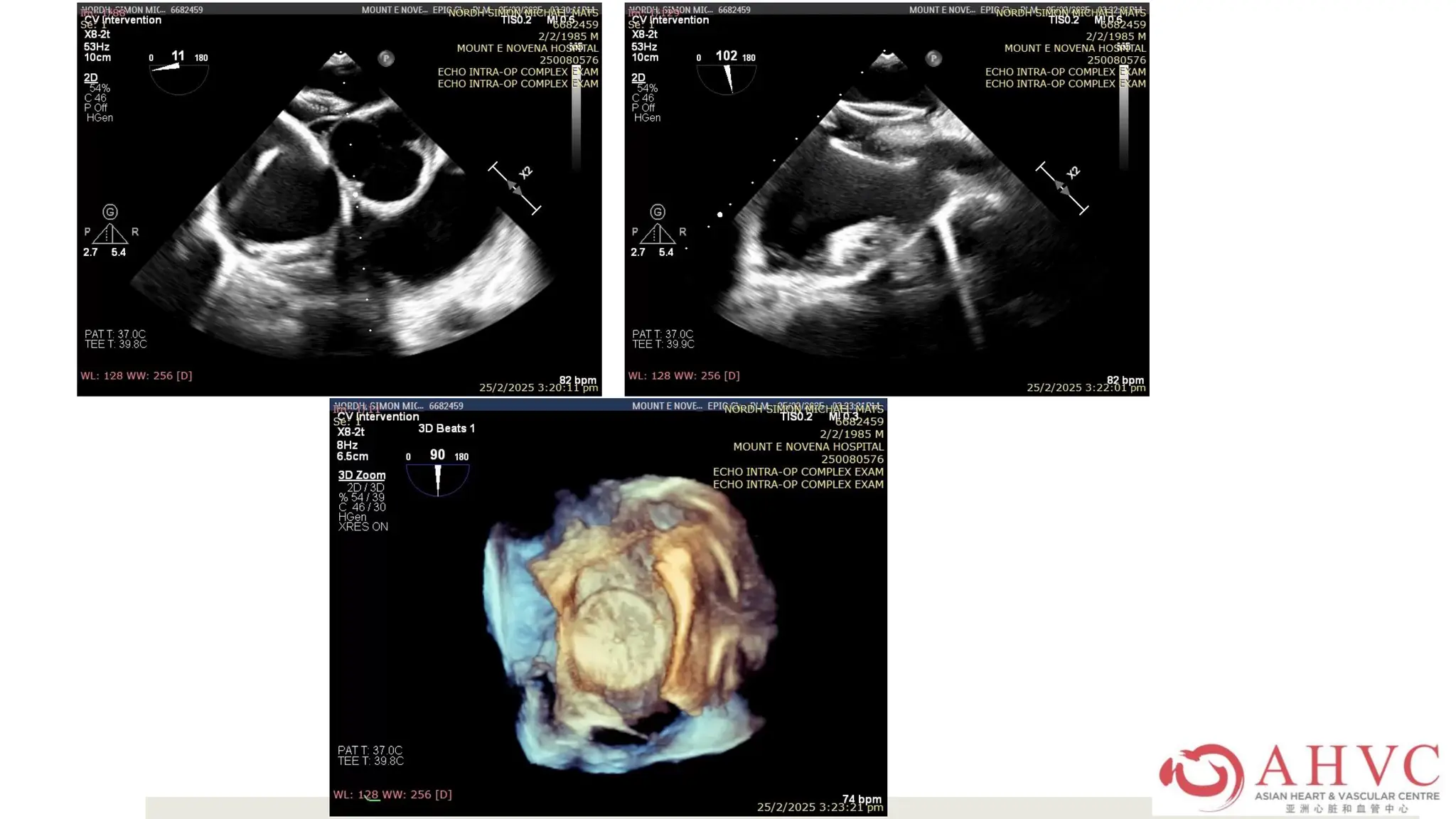
Case – Mr VA
35 year old Executive Chef
No CV Risk Factor
Saw me in 2020 for second opinion.
Presented with left sided transient
numbness with transient loss of tone.
No facial asymmetry
MRI confirmed right parietal, occipital
and frontal subacute infarcts. MRA
normal.
Case – Mr VA
Did 72H telemetry monitoring- No AF
24H Holter - No AF
First TTE with bubble - negative
US carotid – No plaque or stenosis.
Transcranial doppler bubble study
showed - positive for right to left
shunt
Auto-immune screen negative
What are high risk PFO?
➢ Current evidence indicates that patients with moderate/large PFOs or
atrial septal aneurysm (ASA) have a higher risk of stroke recurrence
and are more likely to benefit from PFO closure.
➢ The size of the PFO is often quantified by the number of bubbles that
cross into the left atrium. A large PFO has been defined as the
appearance of more than 20 microbubbles in the left atrium within 3
cardiac cycles after opacification of the right atrium.
➢ An ASA is defined as a septum primum excursion ≥10 mm from the
plane of the atrial septum into the right atrium or left atrium and is also
considered a high-risk feature.
Case – Mr VA
Patient agreed for PFO closure.
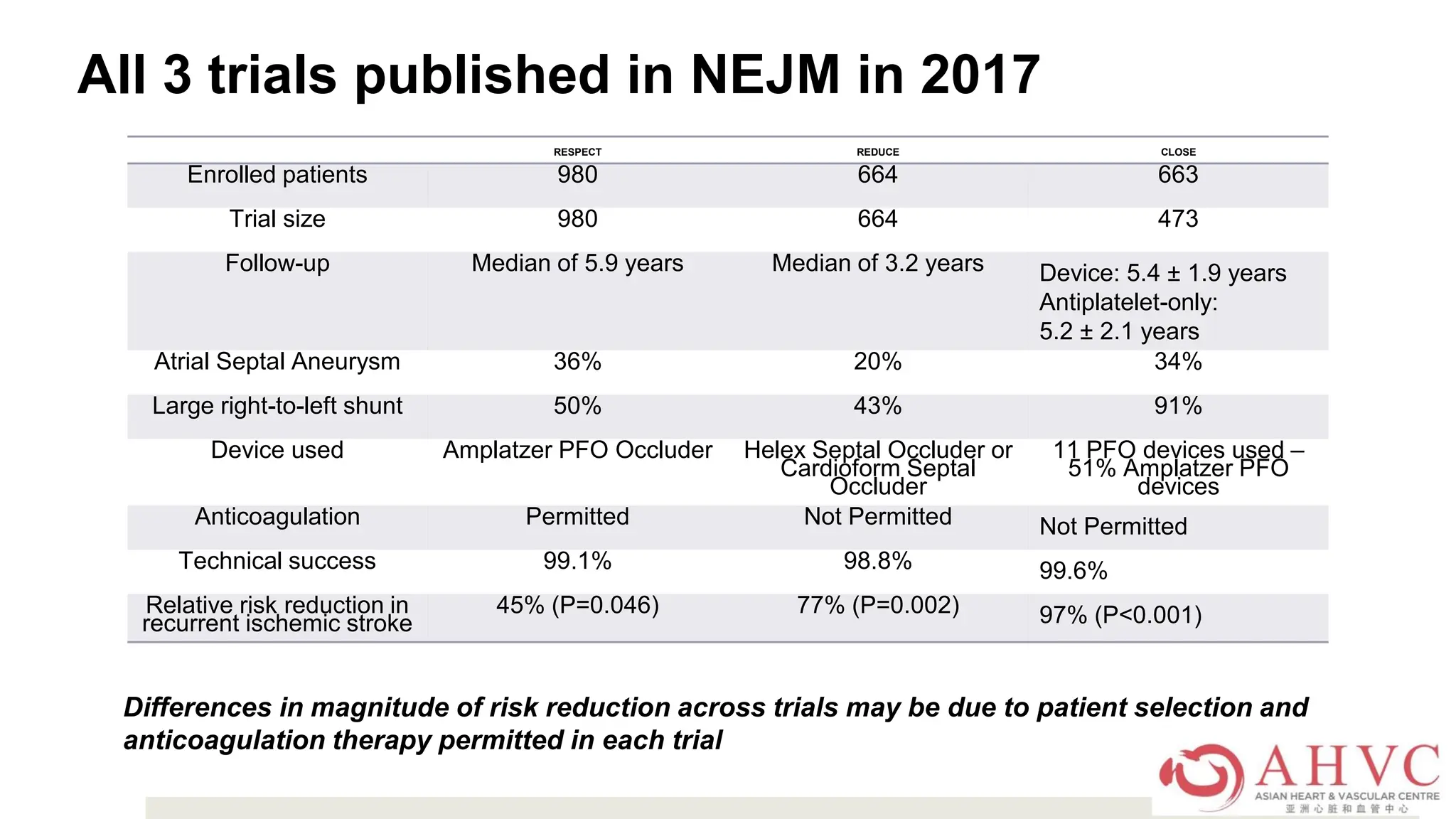
Whose PFO should be close?
RESPECT REDUCE CLOSE
Enrolled patients 980 664 663
Trial size 980 664 473
Follow-up Median of 5.9 years Median of 3.2 years Device: 5.4 ± 1.9 years
Antiplatelet-only:
5.2 ± 2.1 years
Atrial Septal Aneurysm 36% 20% 34%
Large right-to-left shunt 50% 43% 91%
Device used Amplatzer PFO Occluder Helex Septal Occluder or
Cardioform Septal
Occluder
11 PFO devices used –
51% Amplatzer PFO
devices
Anticoagulation Permitted Not Permitted Not Permitted
Technical success 99.1% 98.8% 99.6%
Relative risk reduction in
recurrent ischemic stroke
45% (P=0.046) 77% (P=0.002) 97% (P<0.001)
Differences in magnitude of risk reduction across trials may be due to patient selection and
anticoagulation therapy permitted in each trial
All 3 trials published in NEJM in 2017
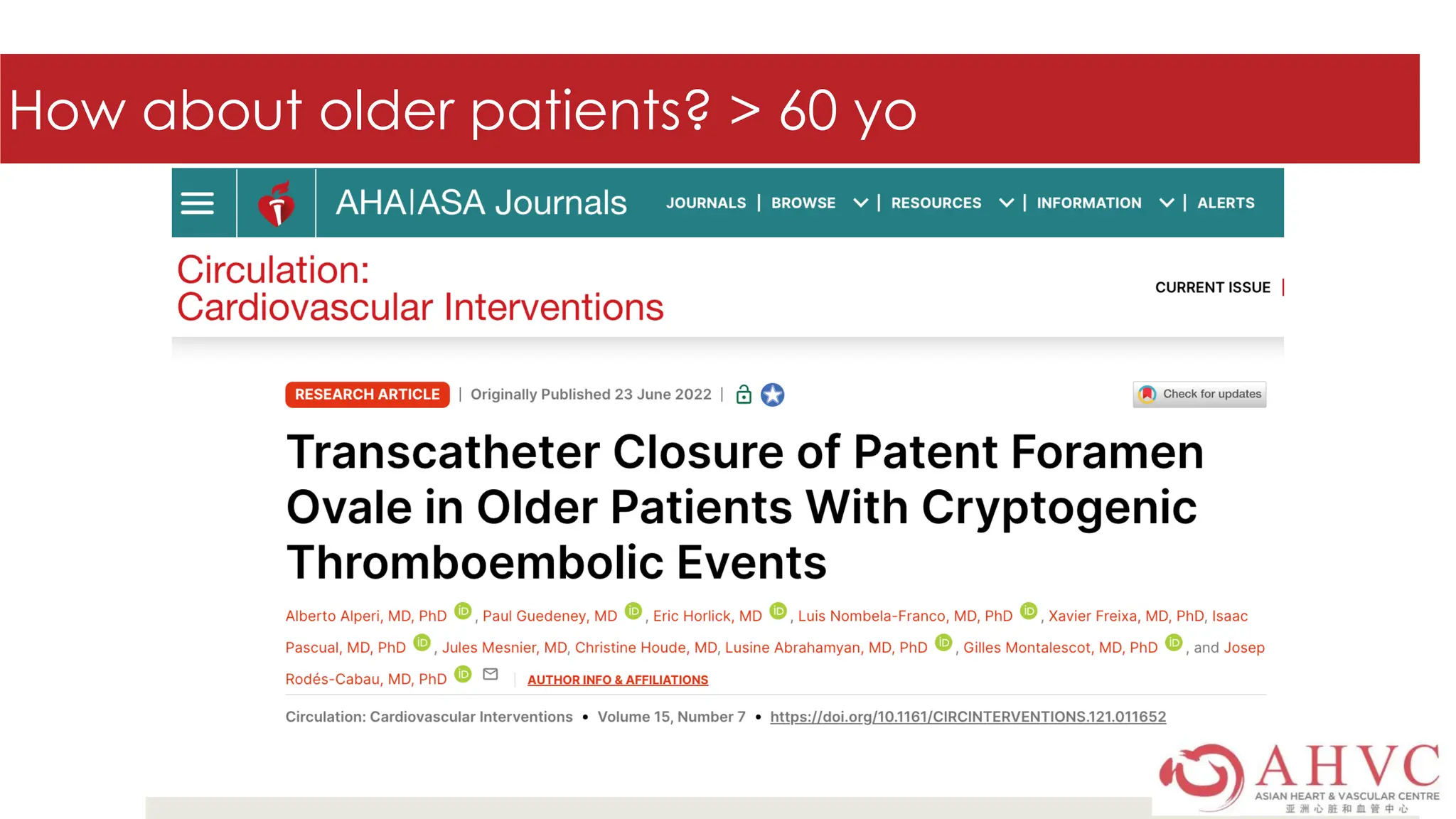
How about older patients? > 60 yo
(1) the procedural success rate was high (99.9%) and major procedural-related
complications low (<2%), similar to their younger counterparts;
(2) the incidence of cerebrovascular ischemic events after a median follow-up
of 3 years was lower than expected according to the RoPE score in the older
group (<1 and <2 per 100 patient-years for stroke and stroke/TIA,
respectively) but higher compared to that observed in younger PFO closure
patients; and
(3) the rate of new-onset AF after the procedure was 2.66 per 100 patient-
years, higher than expected compared to the general population of the
same age.
AHVC ASM 16 August 2025
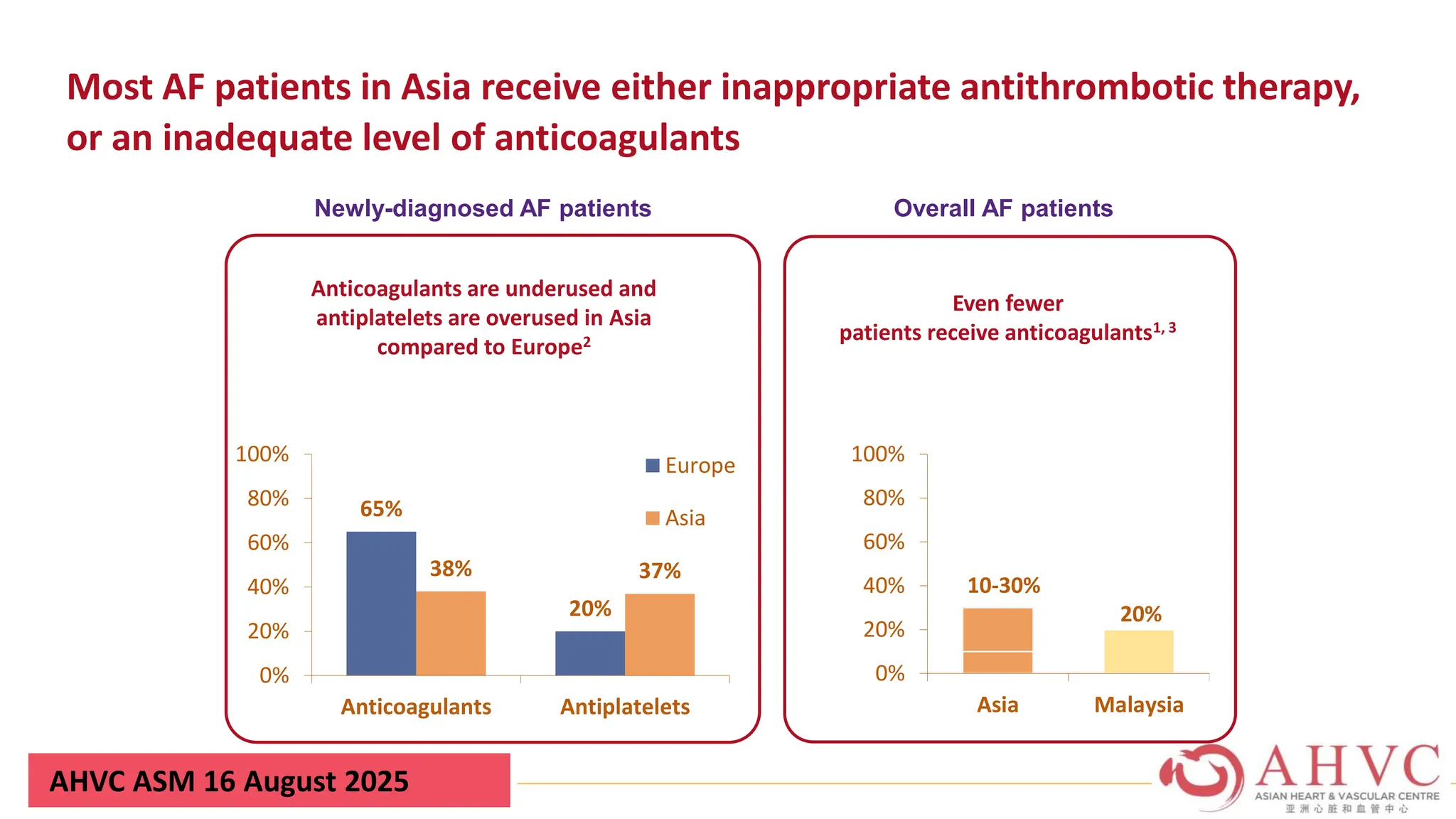
Most AF patients in Asia receive either inappropriate antithrombotic therapy,
or an inadequate level of anticoagulants
Proportion on anticoagulants or antiplatelets
by region
Proportion on anticoagulants
Newly-diagnosed AF patients Overall AF patients
Anticoagulants are underused and
antiplatelets are overused in Asia
compared to Europe2
65%
20%
38% 37%
0%
20%
40%
60%
80%
100%
Anticoagulants Antiplatelets
Europe
Asia
10-30%
20%
0%
20%
40%
60%
80%
100%
Asia Malaysia
Even fewer
patients receive anticoagulants1, 3
AHVC ASM 16 August 2025
Even in Singapore according to the GARFIELD Registry
Antithrombotic treatment according to CHA2DS2-VASc score, Singapore (N=70)
AHVC ASM 16 August 2025
• Took more than 10 years to plan
• Nearly 5k patients recruited from 105
centres in 27 countries
• Final follow-up in March 2021
• Mean follow-up – 3.8 years
Validating the concept of closing the left
atrial appendage to prevent stroke
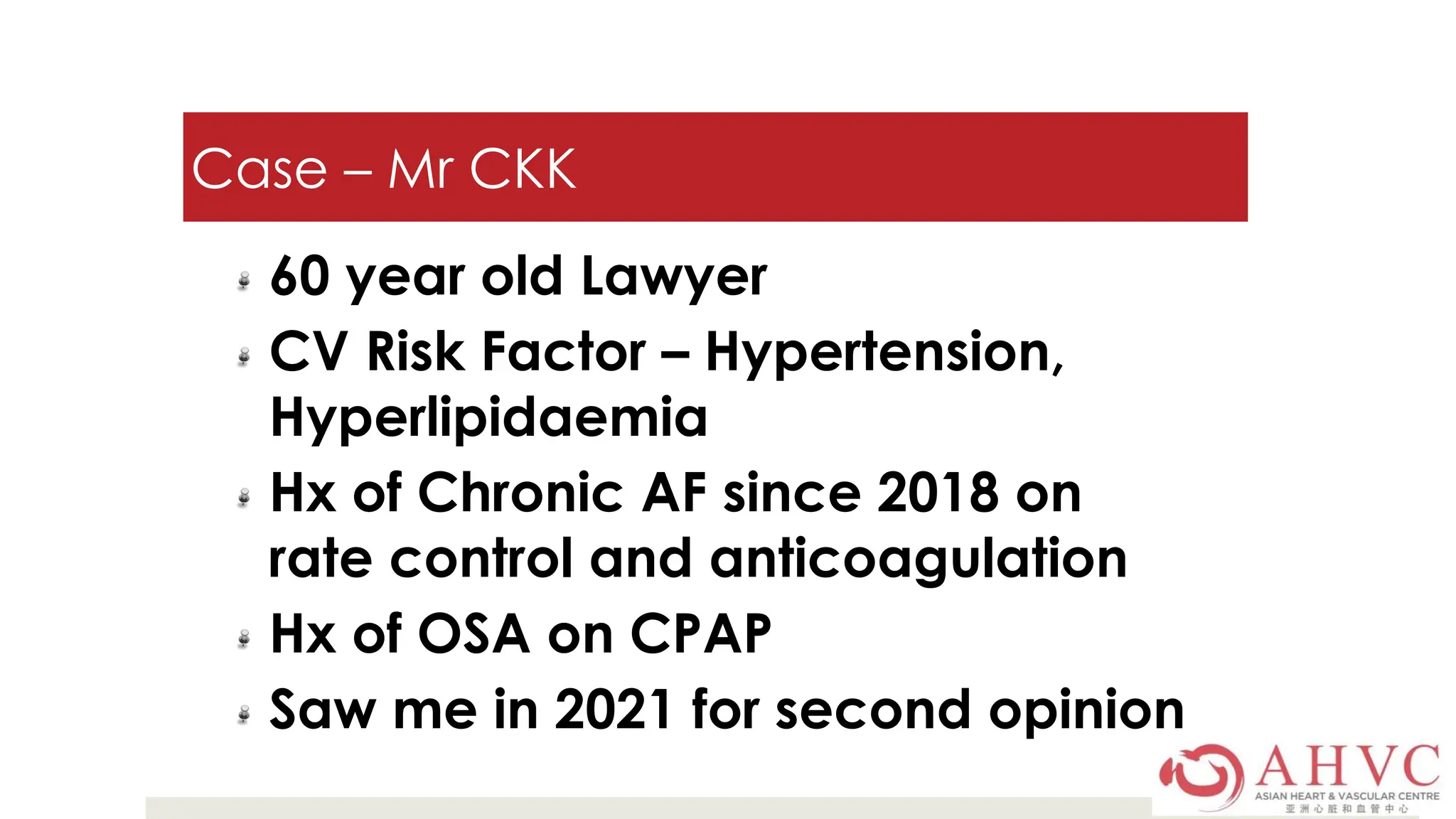
Case – Mr CKK
60 year old Lawyer
CV Risk Factor – Hypertension,
Hyperlipidaemia
Hx of Chronic AF since 2018 on
rate control and anticoagulation
Hx of OSA on CPAP
Saw me in 2021 for second opinion
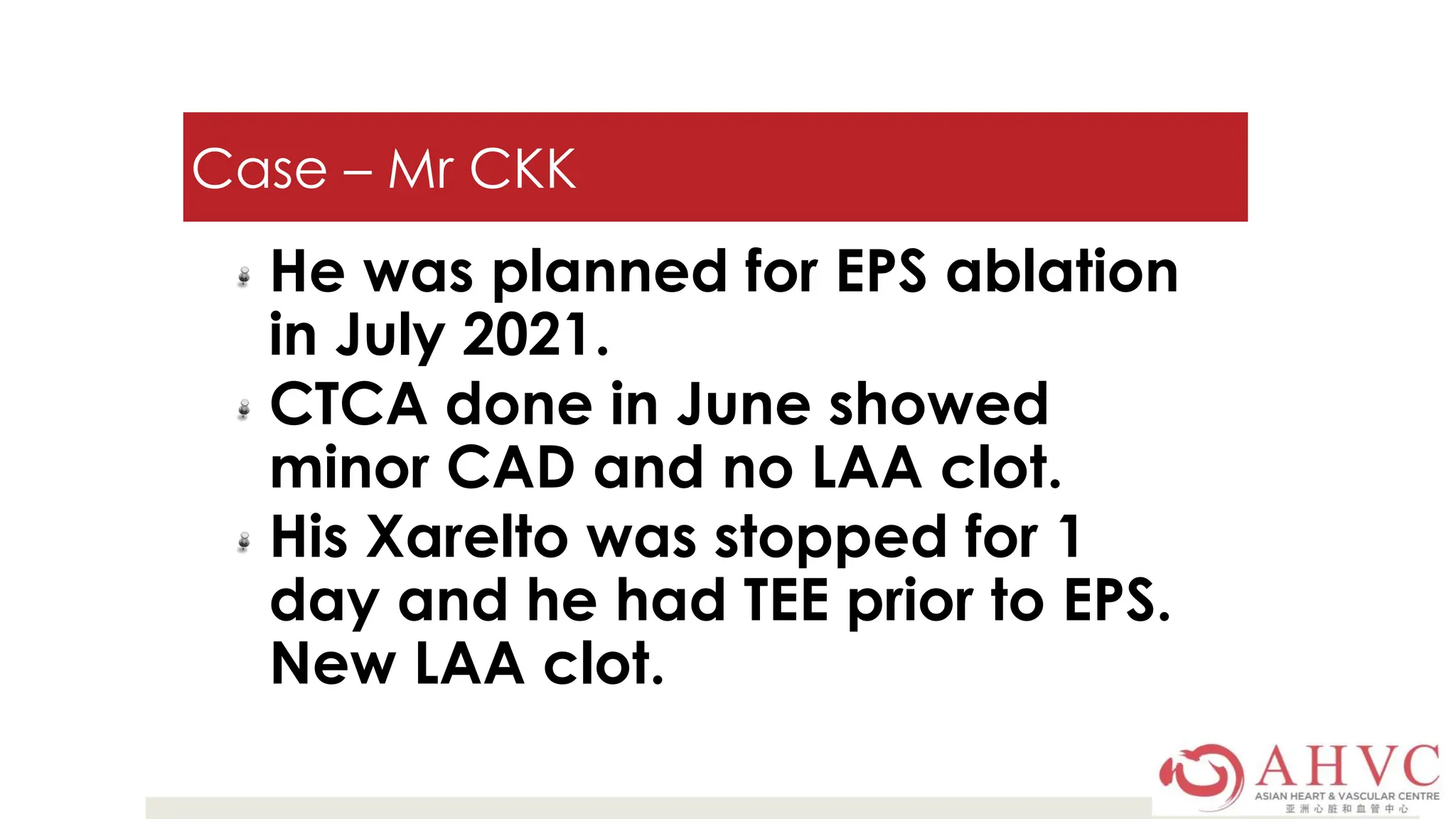
Case – Mr CKK
He was planned for EPS ablation
in July 2021.
CTCA done in June showed
minor CAD and no LAA clot.
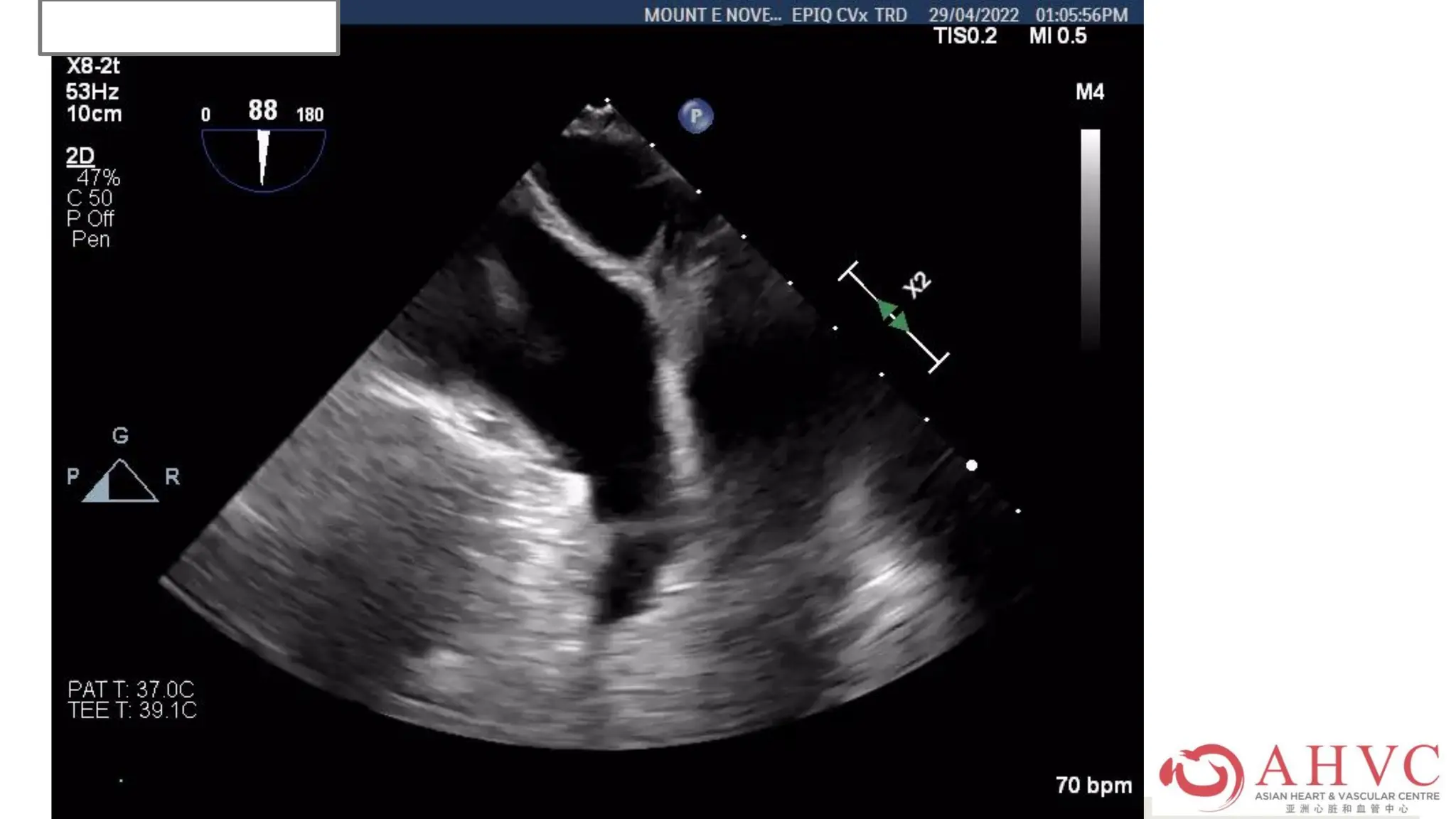
His Xarelto was stopped for 1
day and he had TEE prior to EPS.
New LAA clot.
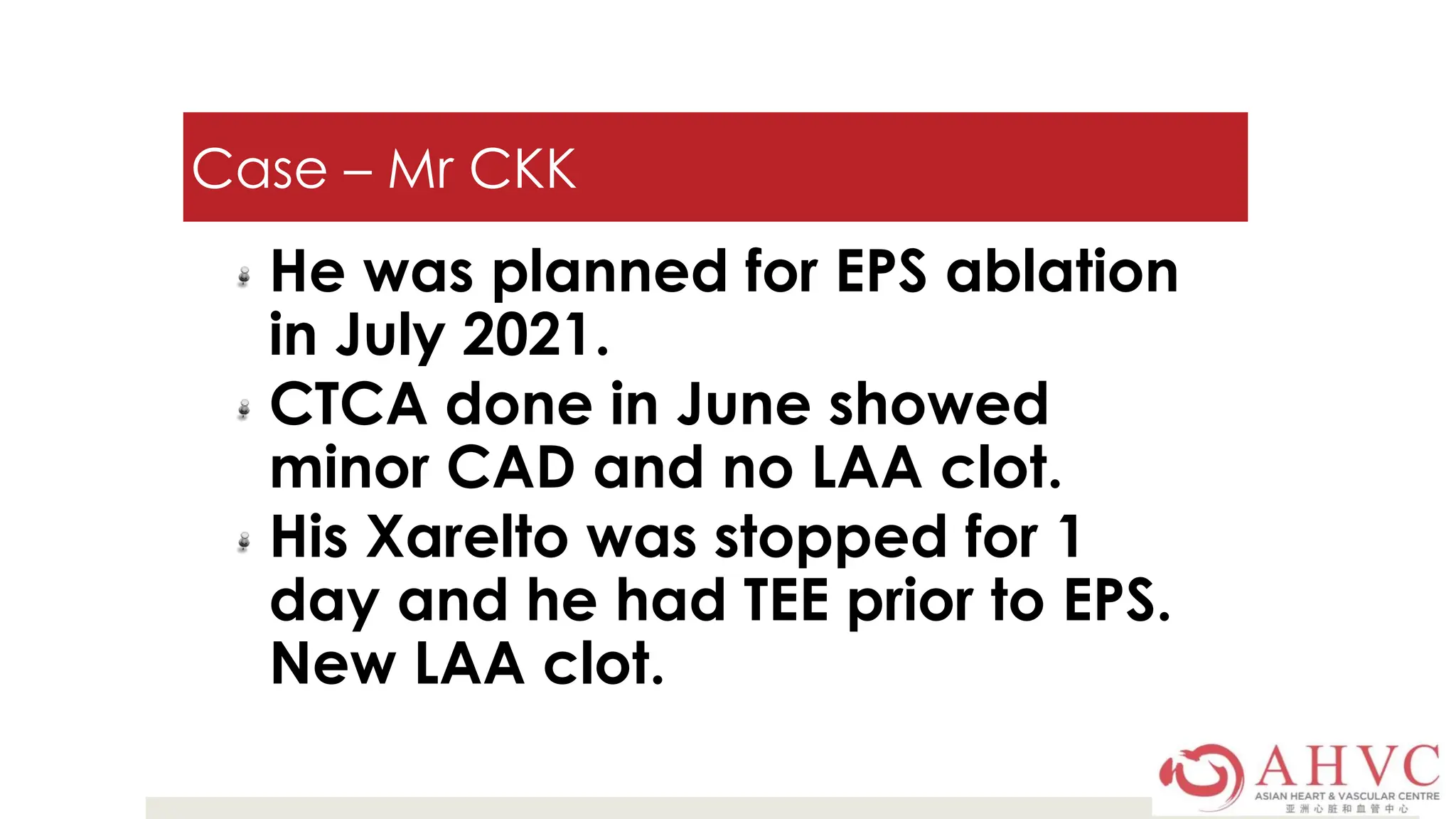
Case – Mr CKK
He was planned for EPS ablation
in July 2021.
CTCA done in June showed
minor CAD and no LAA clot.
His Xarelto was stopped for 1
day and he had TEE prior to EPS.
New LAA clot.
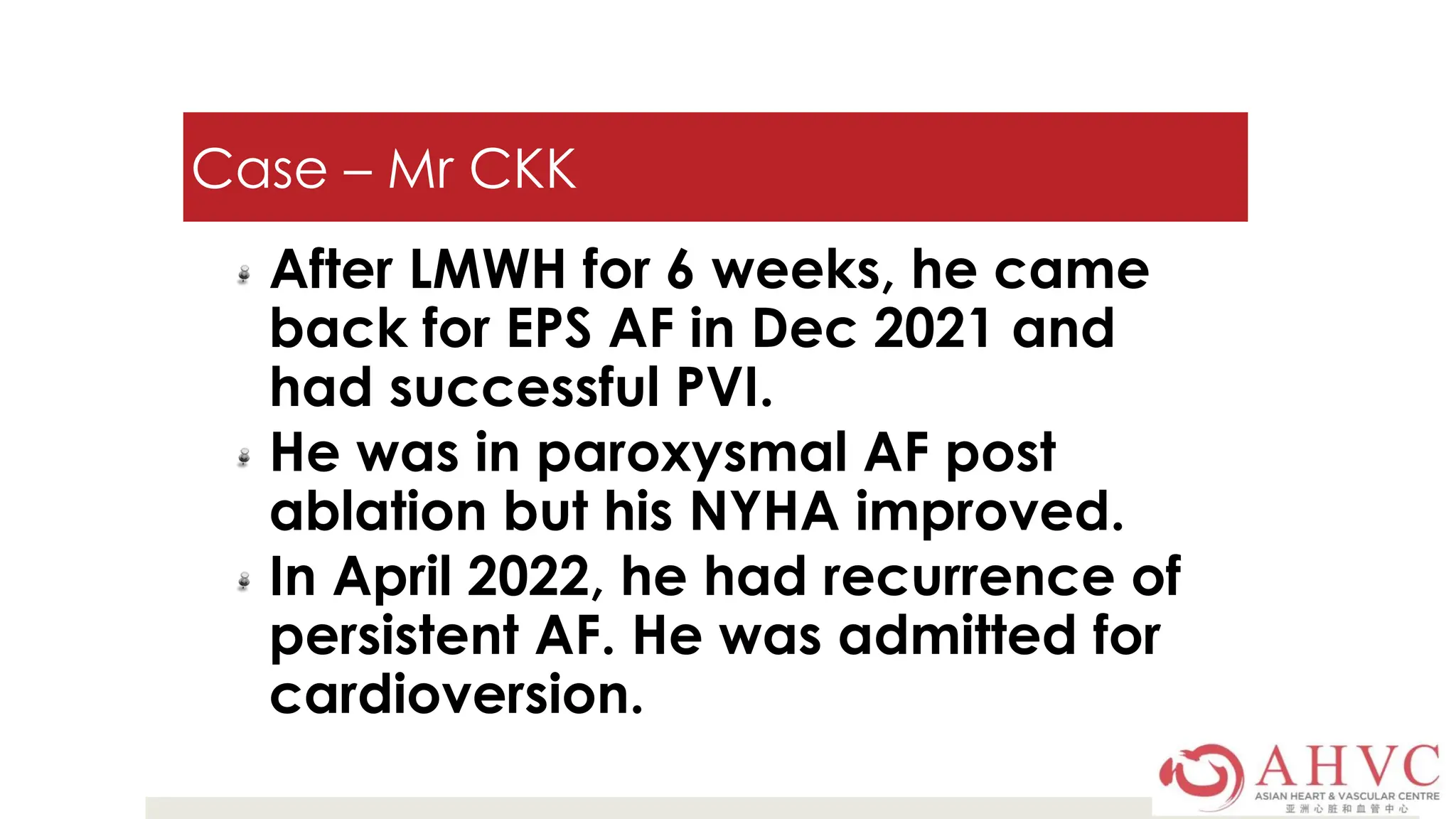
Case – Mr CKK
After LMWH for 6 weeks, he came
back for EPS AF in Dec 2021 and
had successful PVI.
He was in paroxysmal AF post
ablation but his NYHA improved.
In April 2022, he had recurrence of
persistent AF. He was admitted for
cardioversion.
Case – Mr CKK
TEE was done before
cardioversion which showed no
clot in LAA.
His Lixiana was uninterrupted.
Case – Mr CKK
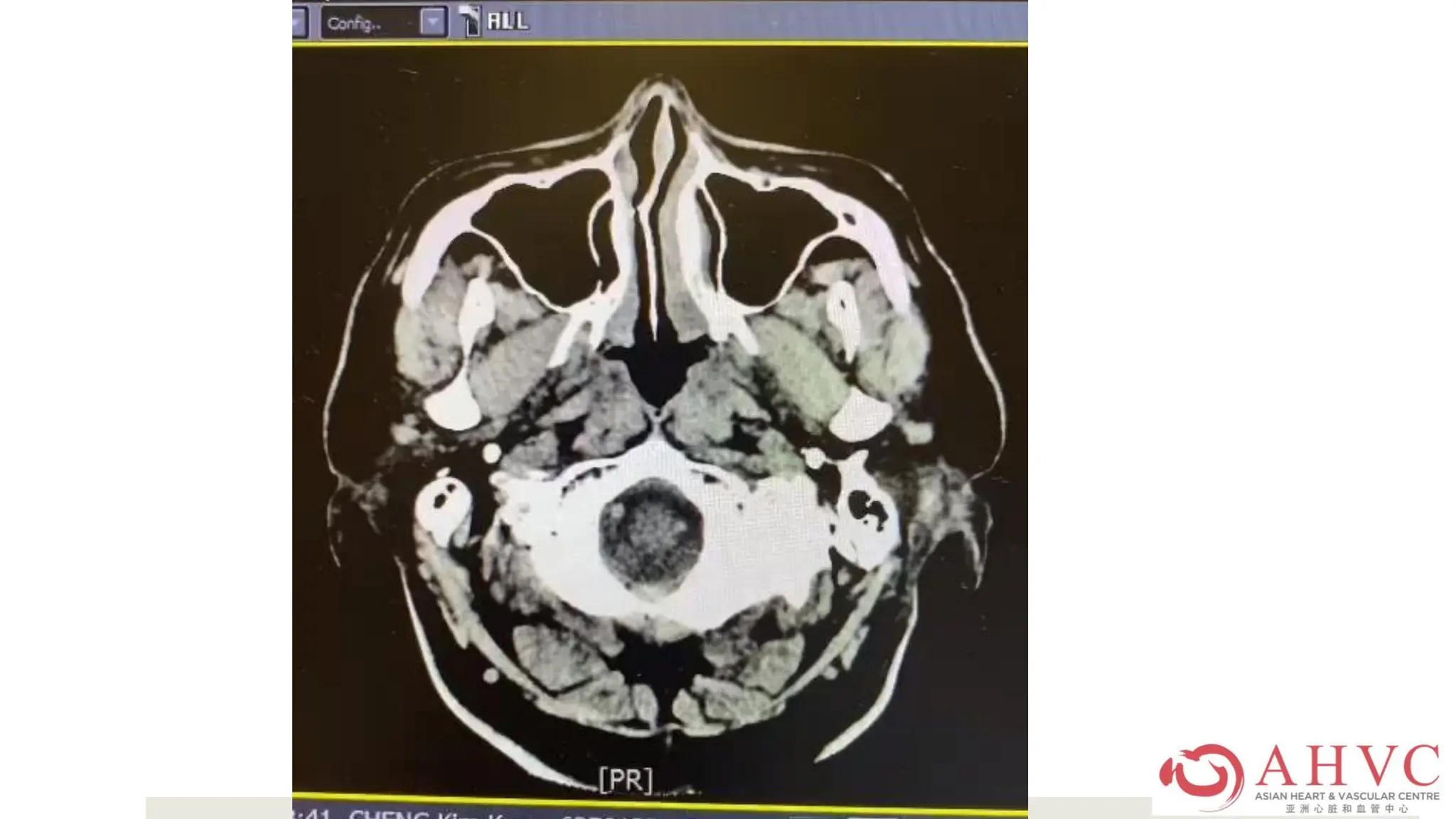
Cardioversion was successful, he
was planned for home the next
morning when he suddenly had
acute vertigo with incoordination.
MRI showed acute right cerebellar
stroke.
Now what can I do? Stroke despite
DOAC
AHVC ASM 16 August 2025
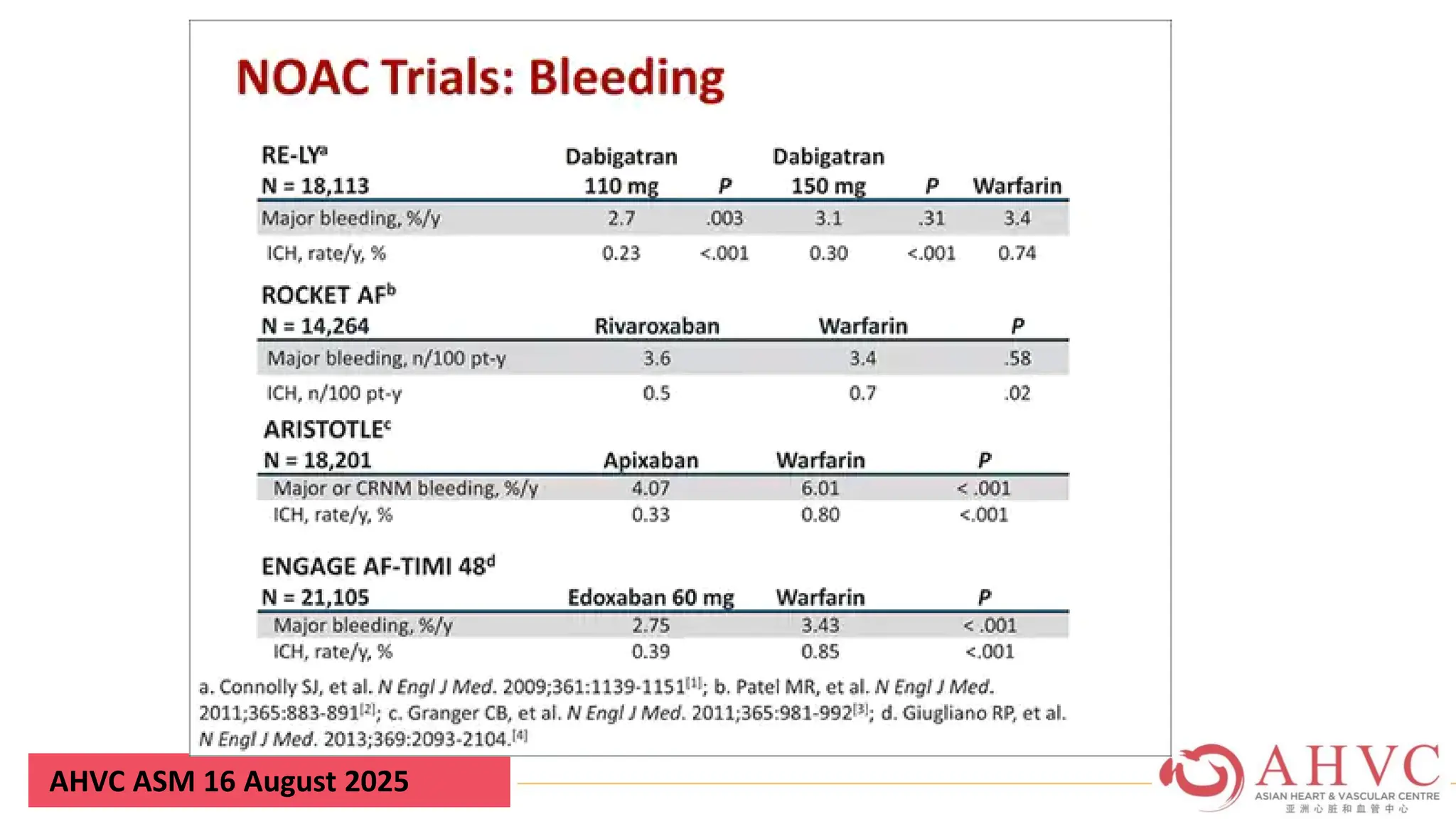
Is LAAC Superior to anticoagulation?
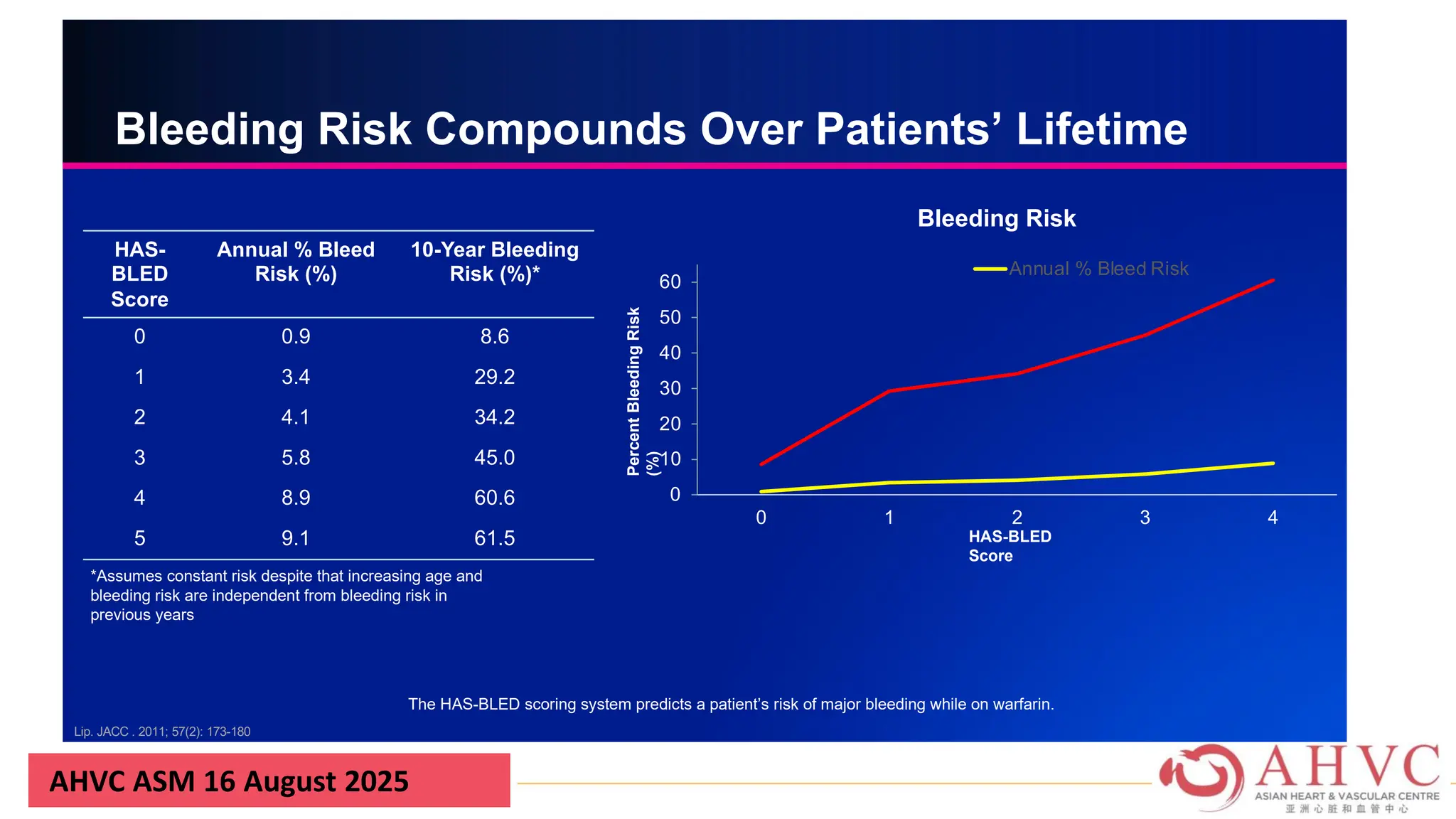
1. Cumulative bleeding risk of DOAC
2. Cost effectiveness of LAAC
3. Mortality benefit ?
AHVC ASM 16 August 2025
0
10
20
30
40
50
60
0 1 2 3 4
Annual % Bleed Risk
Bleeding Risk Compounds Over Patients’ Lifetime
HAS-BLED
Score
Percent
Bleeding
Risk
(%)
HAS-
BLED
Score
Annual % Bleed
Risk (%)
10-Year Bleeding
Risk (%)*
0 0.9 8.6
1 3.4 29.2
2 4.1 34.2
3 5.8 45.0
4 8.9 60.6
5 9.1 61.5
Lip. JACC . 2011; 57(2): 173-180
*Assumes constant risk despite that increasing age and
bleeding risk are independent from bleeding risk in
previous years
Bleeding Risk
The HAS-BLED scoring system predicts a patient’s risk of major bleeding while on warfarin.
AHVC ASM 16 August 2025
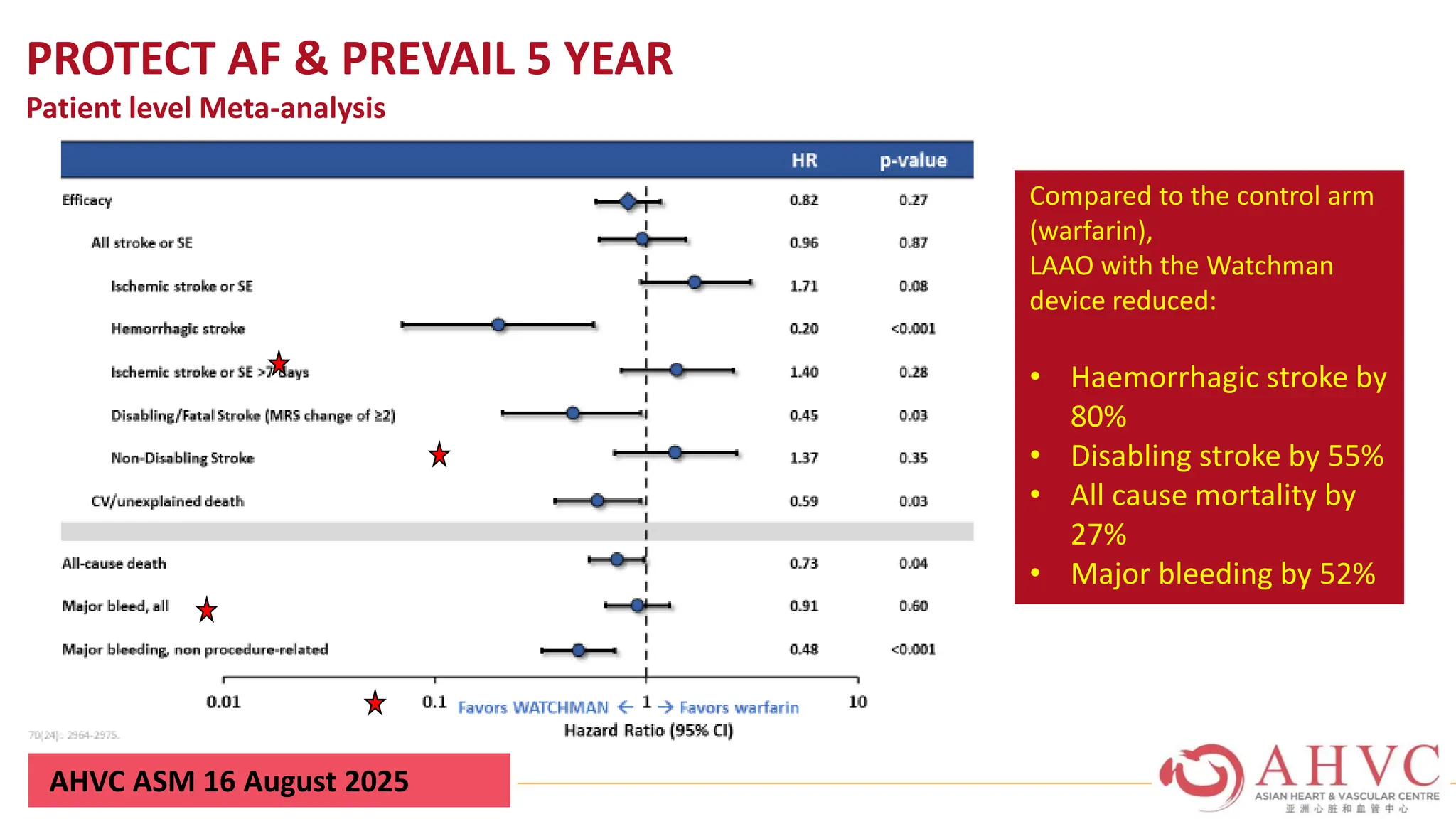
PROTECT AF & PREVAIL 5 YEAR
Patient level Meta-analysis
Compared to the control arm
(warfarin),
LAAO with the Watchman
device reduced:
• Haemorrhagic stroke by
80%
• Disabling stroke by 55%
• All cause mortality by
27%
• Major bleeding by 52%
AHVC ASM 16 August 2025
Take Home Message….
High risk PFO should be closed in young
patients < 60 yo.
LAAC is superior to DOAC if we want to
achieve - less bleeding with similar degree
of stroke prevention in the long term.
LAAC is the more cost-effective treatment in
stroke prevention.

Prevention of Cardioembolic Stroke - Dr Jeremy Chow

  • 1.
    Prevention of CardioembolicStroke in 2025 PRESENTED BY: DR JEREMY CHOW Consultant Cardiologist & Electrophysiologist Director of Electrophysiology Service MBBS, M.Med (Int Med), FAMS FRCP (London), FESC, FHRS, FAsCC Certified Cardiac Device Specialist Website: www.ahvc.com.sg Email: drchow.jeremy@ahvc.com.sg
  • 2.
    AHVC ASM 16August 2025 Where do the clots come from?
  • 3.
    AHVC ASM 16August 2025 So How Can We Prevent Cardioembolic Stroke? 1. Restore AF to Sinus Rhythm Antiarrhythmic vs Ablation to maintain SR 2. Prevent blood clot formation in LAA Anticoagulation vs LAAC 3. PFO Closure in young stroke patients?
  • 4.
    Case – MrVA 35 year old Executive Chef No CV Risk Factor Saw me in 2020 for second opinion. Presented with left sided transient numbness with transient loss of tone. No facial asymmetry MRI confirmed right parietal, occipital and frontal subacute infarcts. MRA normal.
  • 5.
    Case – MrVA Did 72H telemetry monitoring- No AF 24H Holter - No AF First TTE with bubble - negative US carotid – No plaque or stenosis. Transcranial doppler bubble study showed - positive for right to left shunt Auto-immune screen negative
  • 7.
    What are highrisk PFO? ➢ Current evidence indicates that patients with moderate/large PFOs or atrial septal aneurysm (ASA) have a higher risk of stroke recurrence and are more likely to benefit from PFO closure. ➢ The size of the PFO is often quantified by the number of bubbles that cross into the left atrium. A large PFO has been defined as the appearance of more than 20 microbubbles in the left atrium within 3 cardiac cycles after opacification of the right atrium. ➢ An ASA is defined as a septum primum excursion ≥10 mm from the plane of the atrial septum into the right atrium or left atrium and is also considered a high-risk feature.
  • 8.
    Case – MrVA Patient agreed for PFO closure.
  • 9.
  • 11.
    RESPECT REDUCE CLOSE Enrolledpatients 980 664 663 Trial size 980 664 473 Follow-up Median of 5.9 years Median of 3.2 years Device: 5.4 ± 1.9 years Antiplatelet-only: 5.2 ± 2.1 years Atrial Septal Aneurysm 36% 20% 34% Large right-to-left shunt 50% 43% 91% Device used Amplatzer PFO Occluder Helex Septal Occluder or Cardioform Septal Occluder 11 PFO devices used – 51% Amplatzer PFO devices Anticoagulation Permitted Not Permitted Not Permitted Technical success 99.1% 98.8% 99.6% Relative risk reduction in recurrent ischemic stroke 45% (P=0.046) 77% (P=0.002) 97% (P<0.001) Differences in magnitude of risk reduction across trials may be due to patient selection and anticoagulation therapy permitted in each trial All 3 trials published in NEJM in 2017
  • 12.
    How about olderpatients? > 60 yo
  • 13.
    How about olderpatients? > 60 yo
  • 14.
    How about olderpatients? > 60 yo (1) the procedural success rate was high (99.9%) and major procedural-related complications low (<2%), similar to their younger counterparts; (2) the incidence of cerebrovascular ischemic events after a median follow-up of 3 years was lower than expected according to the RoPE score in the older group (<1 and <2 per 100 patient-years for stroke and stroke/TIA, respectively) but higher compared to that observed in younger PFO closure patients; and (3) the rate of new-onset AF after the procedure was 2.66 per 100 patient- years, higher than expected compared to the general population of the same age.
  • 15.
    AHVC ASM 16August 2025
  • 16.
    AHVC ASM 16August 2025
  • 17.
    AHVC ASM 16August 2025
  • 18.
    AHVC ASM 16August 2025
  • 19.
    AHVC ASM 16August 2025
  • 20.
    AHVC ASM 16August 2025 Most AF patients in Asia receive either inappropriate antithrombotic therapy, or an inadequate level of anticoagulants Proportion on anticoagulants or antiplatelets by region Proportion on anticoagulants Newly-diagnosed AF patients Overall AF patients Anticoagulants are underused and antiplatelets are overused in Asia compared to Europe2 65% 20% 38% 37% 0% 20% 40% 60% 80% 100% Anticoagulants Antiplatelets Europe Asia 10-30% 20% 0% 20% 40% 60% 80% 100% Asia Malaysia Even fewer patients receive anticoagulants1, 3
  • 21.
    AHVC ASM 16August 2025 Even in Singapore according to the GARFIELD Registry Antithrombotic treatment according to CHA2DS2-VASc score, Singapore (N=70)
  • 22.
    AHVC ASM 16August 2025 • Took more than 10 years to plan • Nearly 5k patients recruited from 105 centres in 27 countries • Final follow-up in March 2021 • Mean follow-up – 3.8 years Validating the concept of closing the left atrial appendage to prevent stroke
  • 23.
    Case – MrCKK 60 year old Lawyer CV Risk Factor – Hypertension, Hyperlipidaemia Hx of Chronic AF since 2018 on rate control and anticoagulation Hx of OSA on CPAP Saw me in 2021 for second opinion
  • 24.
    Case – MrCKK He was planned for EPS ablation in July 2021. CTCA done in June showed minor CAD and no LAA clot. His Xarelto was stopped for 1 day and he had TEE prior to EPS. New LAA clot.
  • 25.
    Case – MrCKK He was planned for EPS ablation in July 2021. CTCA done in June showed minor CAD and no LAA clot. His Xarelto was stopped for 1 day and he had TEE prior to EPS. New LAA clot.
  • 27.
    Case – MrCKK After LMWH for 6 weeks, he came back for EPS AF in Dec 2021 and had successful PVI. He was in paroxysmal AF post ablation but his NYHA improved. In April 2022, he had recurrence of persistent AF. He was admitted for cardioversion.
  • 28.
    Case – MrCKK TEE was done before cardioversion which showed no clot in LAA. His Lixiana was uninterrupted.
  • 30.
    Case – MrCKK Cardioversion was successful, he was planned for home the next morning when he suddenly had acute vertigo with incoordination. MRI showed acute right cerebellar stroke. Now what can I do? Stroke despite DOAC
  • 35.
    AHVC ASM 16August 2025 Is LAAC Superior to anticoagulation? 1. Cumulative bleeding risk of DOAC 2. Cost effectiveness of LAAC 3. Mortality benefit ?
  • 36.
    AHVC ASM 16August 2025
  • 37.
    AHVC ASM 16August 2025 0 10 20 30 40 50 60 0 1 2 3 4 Annual % Bleed Risk Bleeding Risk Compounds Over Patients’ Lifetime HAS-BLED Score Percent Bleeding Risk (%) HAS- BLED Score Annual % Bleed Risk (%) 10-Year Bleeding Risk (%)* 0 0.9 8.6 1 3.4 29.2 2 4.1 34.2 3 5.8 45.0 4 8.9 60.6 5 9.1 61.5 Lip. JACC . 2011; 57(2): 173-180 *Assumes constant risk despite that increasing age and bleeding risk are independent from bleeding risk in previous years Bleeding Risk The HAS-BLED scoring system predicts a patient’s risk of major bleeding while on warfarin.
  • 38.
    AHVC ASM 16August 2025
  • 39.
    AHVC ASM 16August 2025
  • 40.
    AHVC ASM 16August 2025 PROTECT AF & PREVAIL 5 YEAR Patient level Meta-analysis Compared to the control arm (warfarin), LAAO with the Watchman device reduced: • Haemorrhagic stroke by 80% • Disabling stroke by 55% • All cause mortality by 27% • Major bleeding by 52%
  • 41.
    AHVC ASM 16August 2025
  • 42.
    Take Home Message…. Highrisk PFO should be closed in young patients < 60 yo. LAAC is superior to DOAC if we want to achieve - less bleeding with similar degree of stroke prevention in the long term. LAAC is the more cost-effective treatment in stroke prevention.