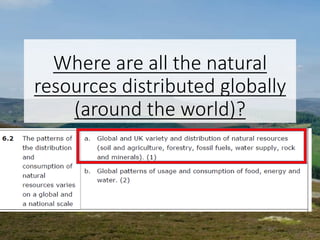
Where are all the natural
resources distributed globally
(around the world)?
Key Term
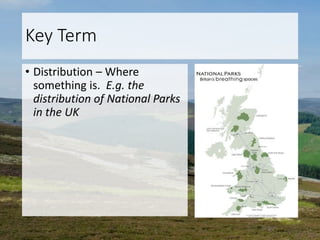
• Distribution – Where
something is. E.g. the
distribution of National Parks
in the UK
1. Global distribution of resources
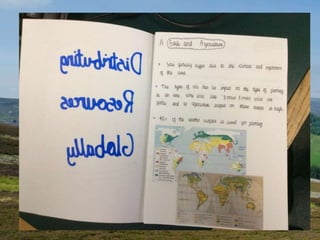
A. Soils and Agriculture
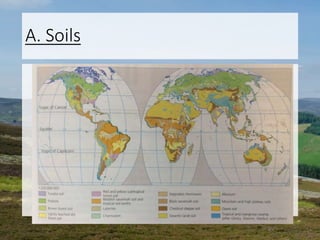
Soils globally differ due to the climate and vegetation
of the area.
The types of soil has an impact on the type of
farming in an area. Some soils like Brown Forest Soils
are fertile and so agricultural output in these areas is
high.
40% of earths surface is used for farming,
A. Soils
B. Forestry
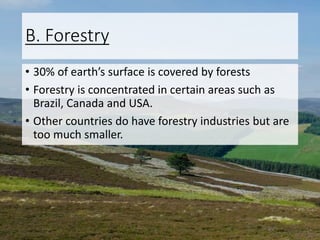
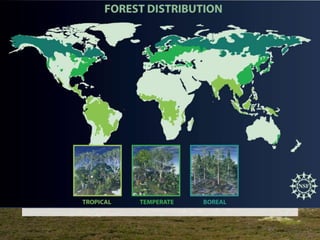
• 30% of earth’s surface is covered by forests
• Forestry is concentrated in certain areas such as
Brazil, Canada and USA.
• Other countries do have forestry industries but are
too much smaller.
B. Forestry
• Insert map scanned from p
C. Fossil Fuels (Oil, Gas and Coal)
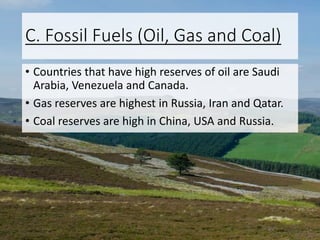
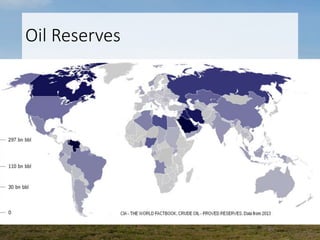
• Countries that have high reserves of oil are Saudi
Arabia, Venezuela and Canada.
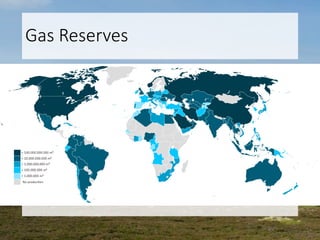
• Gas reserves are highest in Russia, Iran and Qatar.
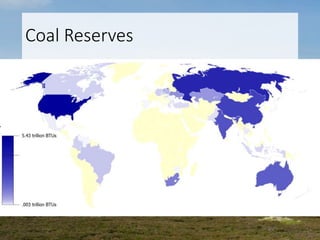
• Coal reserves are high in China, USA and Russia.
Oil Reserves
Gas Reserves
Coal Reserves
D. Rocks and Minerals
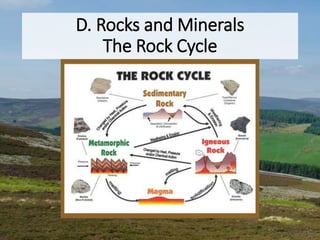
The Rock Cycle
D. Rocks and Minerals
• Rocks can be either:
1. Igneous. These are formed by magma from the molten
interior of the Earth. When magma erupts it cools to
form volcanic landforms. If magma cools inside the
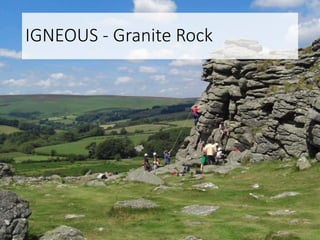
Earth it forms intrusive rock. E.g. Granite – large crystal
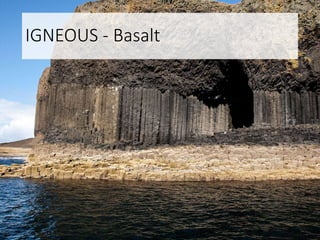
If on the surface - it forms extrusive rock e.g. Basalt –
small crystals as cools quickly
IGNEOUS - Granite Rock
IGNEOUS - Basalt
D. Rocks and Minerals
• Rocks can be either:
1. Igneous. These are formed by magma from the molten
interior of the Earth. When magma erupts it cools to form
volcanic landforms. If magma cools inside the Earth it
forms intrusive rock. E.g. Granite or Basalt.
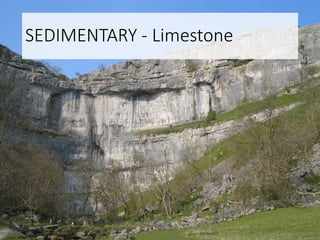
2. Sedimentary. These are formed from sediments that have
settled at the bottom of a lake, sea or ocean, and have
been compressed over millions of years. The sediment
comes from eroded rocks carried there by rivers or ice, and
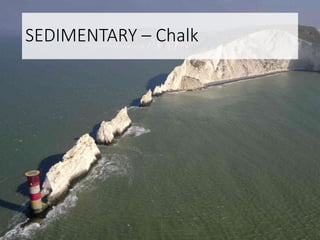
from the skeletons of sea creatures. E.g. Chalk or limestone.
SEDIMENTARY – Chalk
SEDIMENTARY - Limestone
D. Rocks and Minerals
• Rocks can be either:
1. Igneous. These are formed by magma from the molten
interior of the Earth. When magma erupts it cools to form
volcanic landforms. If magma cools inside the Earth it
forms intrusive rock. E.g. Granite or Basalt.
2. Sedimentary. These are formed from sediments that have
settled at the bottom of a lake, sea or ocean, and have
been compressed over millions of years. The sediment
comes from eroded rocks carried there by rivers or ice, and
from the skeletons of sea creatures. E.g. Chalk or limestone.
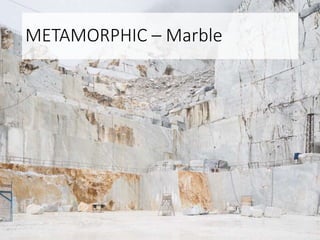
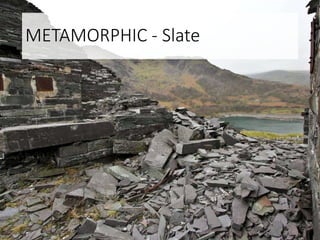
3. Metamorphic. These have been subjected to tremendous
heat and/or pressure, causing them to change into another
type of rock. They are usually resistant to weathering and
erosion and are therefore very hard-wearing. Examples of
metamorphic rocks include marble, which originates from
limestone, slate, which originates from clay. This is the most
common in the world.
METAMORPHIC – Marble
METAMORPHIC - Slate
D. Rocks and Minerals
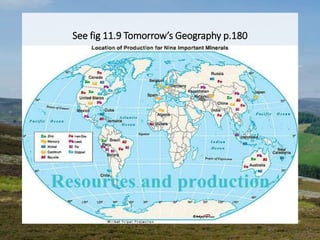
• Minerals are found round different areas of the
world. E.g. Diamonds in Sub-Saharan Africa,
Russia and Australia, but not in other continents.
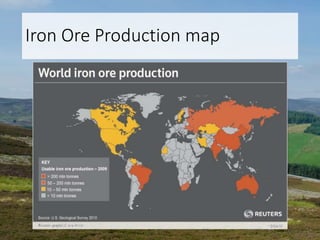
Iron ore are is in every continent expect Africa.
• If a mineral is rare it is more expensive (e.g.
diamonds)
See fig 11.9 Tomorrow’s Geography p.180
Iron Ore Production map
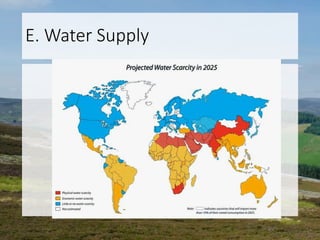
E. Water Supply
• Water that is fit for human consumption comes
from rivers, rainfall and even from the sea now.
• Some countries like China, who have a large
population are worried about whether on not they
will be able to provide enough water for its
population in the future. As a result they are
building a major water transfer project to drought
prone areas.
• With climate change other countries are getting
worried too.
E. Water Supply
Your Turn –
Resources to use: pdf on Showbie of ppt
p179-181 Tomorrow’s Geography
maps on the handout
• Design a homework handout on the global distribution
of resources. Can work in pairs – not triplets.
• You need to cover the MAIN points about this
distribution of the following:
1. Soil and agriculture
2. Forestry
3. Fossil fuels
4. Water supply
5. Rock and minerals
• Make each section interesting by asking questions,
including activities e.g. missing words passages (but
provide the answers for the activities at the end too!)
Finish for HWK
You will have a go at each other’s activities at the
start of next lesson!
Resources to use: pdf on Showbie
p179-181 Tomorrow’s Geography
maps on the handout
Take pictures on your iPads of the relevant pages of
Tomorrow’s Geography if you need to use them
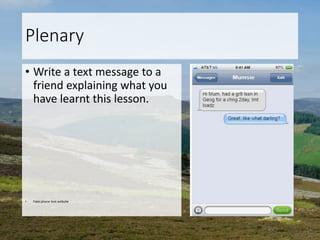
Plenary
• Write a text message to a
friend explaining what you
have learnt this lesson.
• Fake phone text website

L2a resource distribution

  • 1.
    Where are allthe natural resources distributed globally (around the world)?
  • 2.
    Key Term • Distribution– Where something is. E.g. the distribution of National Parks in the UK
  • 3.
    1. Global distributionof resources A. Soils and Agriculture Soils globally differ due to the climate and vegetation of the area. The types of soil has an impact on the type of farming in an area. Some soils like Brown Forest Soils are fertile and so agricultural output in these areas is high. 40% of earths surface is used for farming,
  • 4.
  • 5.
    B. Forestry • 30%of earth’s surface is covered by forests • Forestry is concentrated in certain areas such as Brazil, Canada and USA. • Other countries do have forestry industries but are too much smaller.
  • 6.
    B. Forestry • Insertmap scanned from p
  • 7.
    C. Fossil Fuels(Oil, Gas and Coal) • Countries that have high reserves of oil are Saudi Arabia, Venezuela and Canada. • Gas reserves are highest in Russia, Iran and Qatar. • Coal reserves are high in China, USA and Russia.
  • 8.
  • 9.
  • 10.
  • 11.
    D. Rocks andMinerals The Rock Cycle
  • 12.
    D. Rocks andMinerals • Rocks can be either: 1. Igneous. These are formed by magma from the molten interior of the Earth. When magma erupts it cools to form volcanic landforms. If magma cools inside the Earth it forms intrusive rock. E.g. Granite – large crystal If on the surface - it forms extrusive rock e.g. Basalt – small crystals as cools quickly
  • 13.
  • 14.
  • 15.
    D. Rocks andMinerals • Rocks can be either: 1. Igneous. These are formed by magma from the molten interior of the Earth. When magma erupts it cools to form volcanic landforms. If magma cools inside the Earth it forms intrusive rock. E.g. Granite or Basalt. 2. Sedimentary. These are formed from sediments that have settled at the bottom of a lake, sea or ocean, and have been compressed over millions of years. The sediment comes from eroded rocks carried there by rivers or ice, and from the skeletons of sea creatures. E.g. Chalk or limestone.
  • 16.
  • 17.
  • 18.
    D. Rocks andMinerals • Rocks can be either: 1. Igneous. These are formed by magma from the molten interior of the Earth. When magma erupts it cools to form volcanic landforms. If magma cools inside the Earth it forms intrusive rock. E.g. Granite or Basalt. 2. Sedimentary. These are formed from sediments that have settled at the bottom of a lake, sea or ocean, and have been compressed over millions of years. The sediment comes from eroded rocks carried there by rivers or ice, and from the skeletons of sea creatures. E.g. Chalk or limestone. 3. Metamorphic. These have been subjected to tremendous heat and/or pressure, causing them to change into another type of rock. They are usually resistant to weathering and erosion and are therefore very hard-wearing. Examples of metamorphic rocks include marble, which originates from limestone, slate, which originates from clay. This is the most common in the world.
  • 19.
  • 20.
  • 21.
    D. Rocks andMinerals • Minerals are found round different areas of the world. E.g. Diamonds in Sub-Saharan Africa, Russia and Australia, but not in other continents. Iron ore are is in every continent expect Africa. • If a mineral is rare it is more expensive (e.g. diamonds)
  • 22.
    See fig 11.9Tomorrow’s Geography p.180
  • 23.
  • 24.
    E. Water Supply •Water that is fit for human consumption comes from rivers, rainfall and even from the sea now. • Some countries like China, who have a large population are worried about whether on not they will be able to provide enough water for its population in the future. As a result they are building a major water transfer project to drought prone areas. • With climate change other countries are getting worried too.
  • 25.
  • 26.
    Your Turn – Resourcesto use: pdf on Showbie of ppt p179-181 Tomorrow’s Geography maps on the handout • Design a homework handout on the global distribution of resources. Can work in pairs – not triplets. • You need to cover the MAIN points about this distribution of the following: 1. Soil and agriculture 2. Forestry 3. Fossil fuels 4. Water supply 5. Rock and minerals • Make each section interesting by asking questions, including activities e.g. missing words passages (but provide the answers for the activities at the end too!)
  • 28.
    Finish for HWK Youwill have a go at each other’s activities at the start of next lesson! Resources to use: pdf on Showbie p179-181 Tomorrow’s Geography maps on the handout Take pictures on your iPads of the relevant pages of Tomorrow’s Geography if you need to use them
  • 29.
    Plenary • Write atext message to a friend explaining what you have learnt this lesson. • Fake phone text website